Warehouse Roofing in Brooklyn, NY
Climb the ladder at the back of a Brooklyn warehouse and read the line where the roof meets the wall before you read anything else. If the counterflashing has pulled loose or the coping joint has opened, water runs down the inside face of the block long before a forklift driver sees a drip. A warehouse roof is mostly open field with a few penetrations, and that plainness hides trouble. A single failed seam or a packed drain can wet insulation across several bays long before the racking below shows a drip. Our job is to find which one it is and say so before a scope is written.
What you see up there
The field of a warehouse roof tells its own story. Patch after patch in one spot says the water keeps finding the same way in. Gravel scoured off in one corner points to wind pulling at the edge. A dark halo around a hatch curb says the flashing there has let go. Walking the field in a grid, we press the surface with a boot heel, because a spongy spot means wet insulation, and wet insulation never dries on its own under a closed membrane.
Where warehouse roofs fail
On a low-slope warehouse the failures cluster at the same few places. Drains come first. When grit chokes a basket, water sits at the drain and the membrane around it tires. Next are the seams in a single-ply or the laps in a modified bitumen sheet, where a hot July afternoon and a freezing January night open the joint a little more each year. With snow near 30 inches a year, repeated freezing and thawing works water into each weak lap.
Then come the walls. Where a long parapet has a cracked coping joint, water gets into the masonry, and a wall that stays wet sends the damage back down to the roof edge. A failed flashing at a parapet is cheap to fix early and expensive to fix after the wall has soaked for two winters.
Why this building
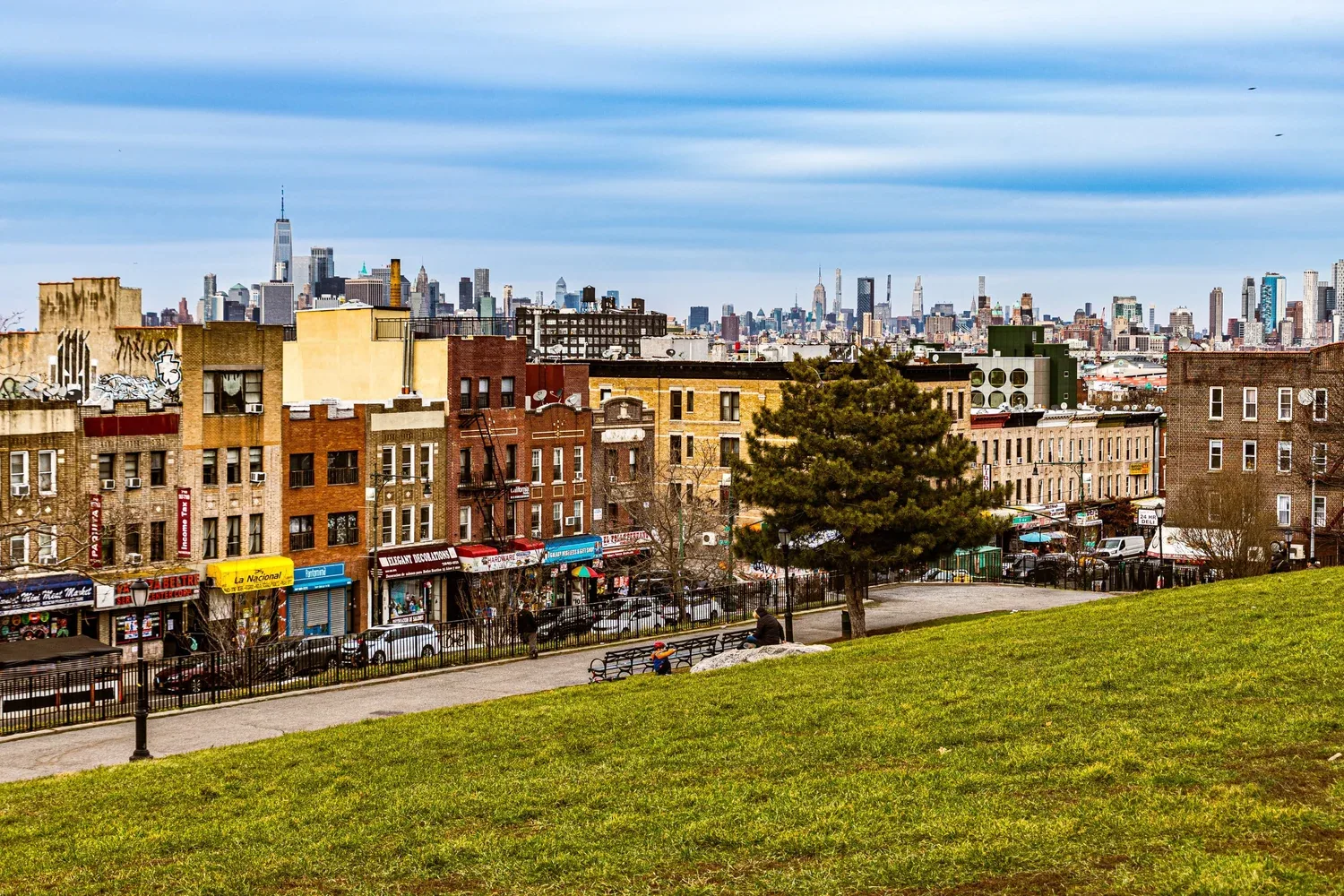
Brooklyn warehouses sit in clusters, and each cluster has its own habits. West of Third Avenue in Sunset Park the land is zoned mostly for light industry, with factories, cargo storage and other industrial buildings. Bush Terminal, between 32nd and 51st Streets, was built in stages from 1911 to 1926 before it became an industrial park in the 1960s. Where a complex grew in stages, bays from different periods can share a wall, and the tie-in to the old roof becomes a detail we inspect closely.
Flatlands Industrial Park covers 93 acres from East 99th to 108th Streets, and the 44-block East Brooklyn Industrial Park, set up in 1980, adds more. These are different yards with different loading patterns, so we look at how trucks, snow and tenants use each building before we pick a fix. In Sunset Park that kind of reading comes first.
Fixing it in order
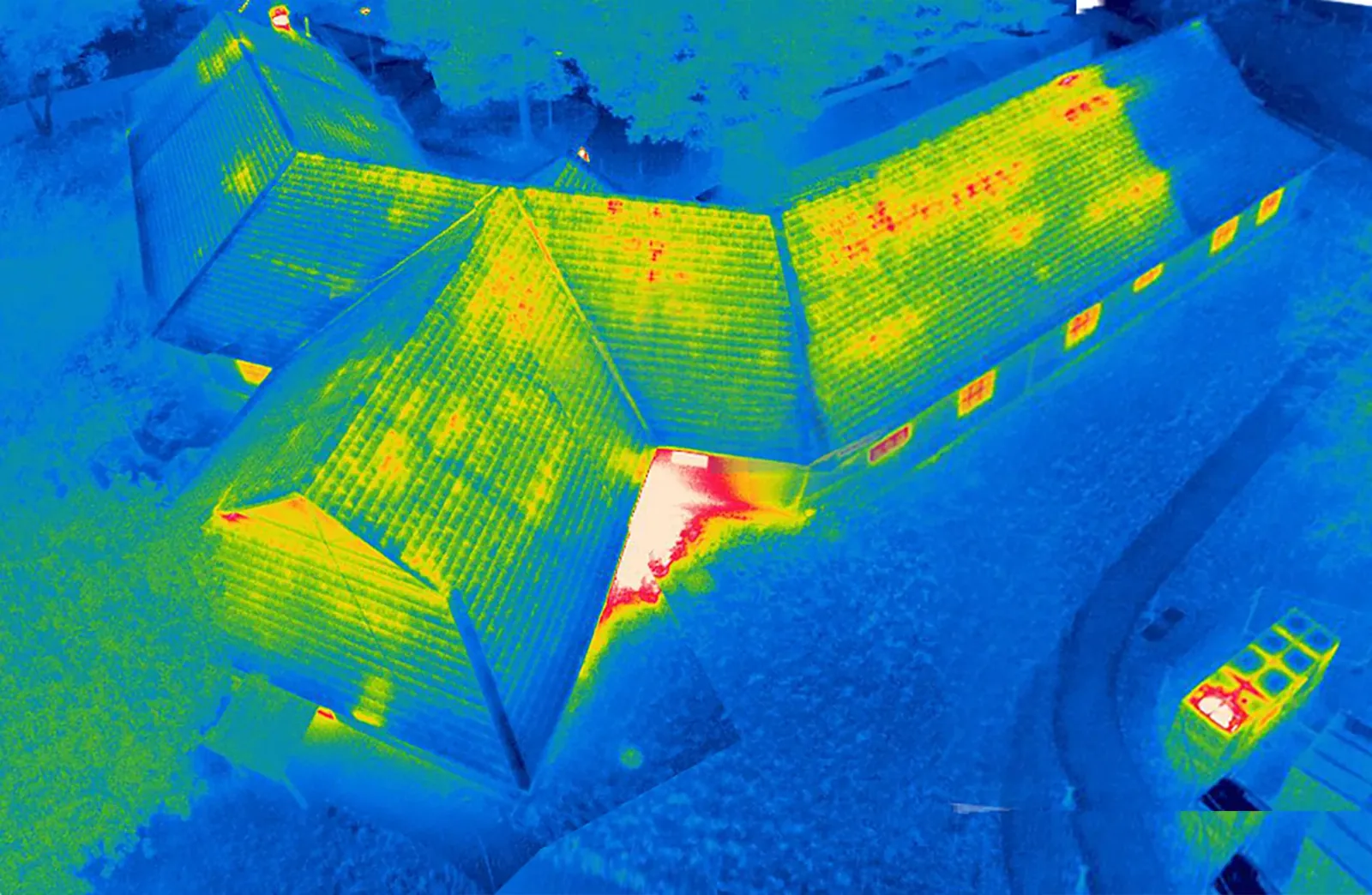
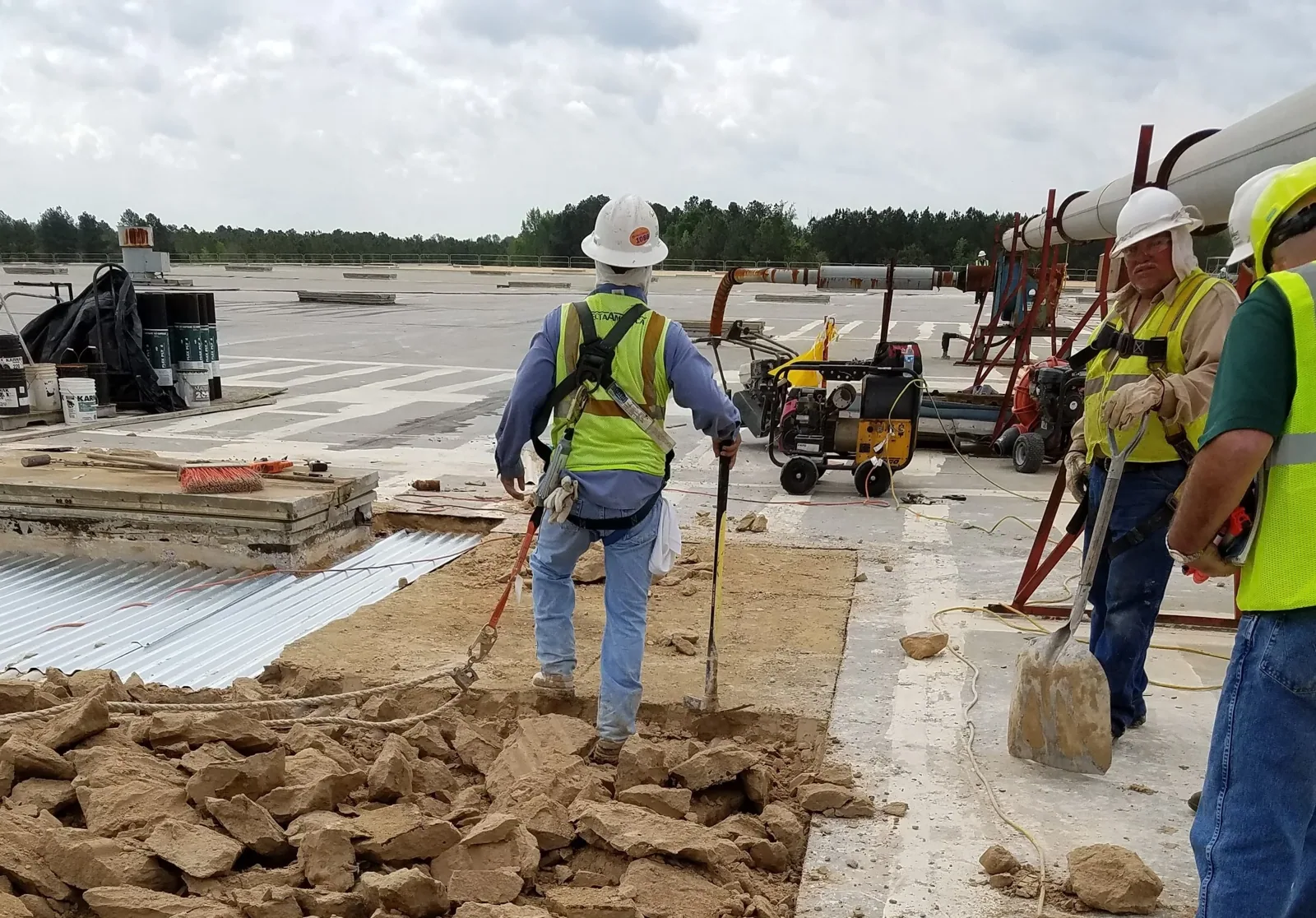
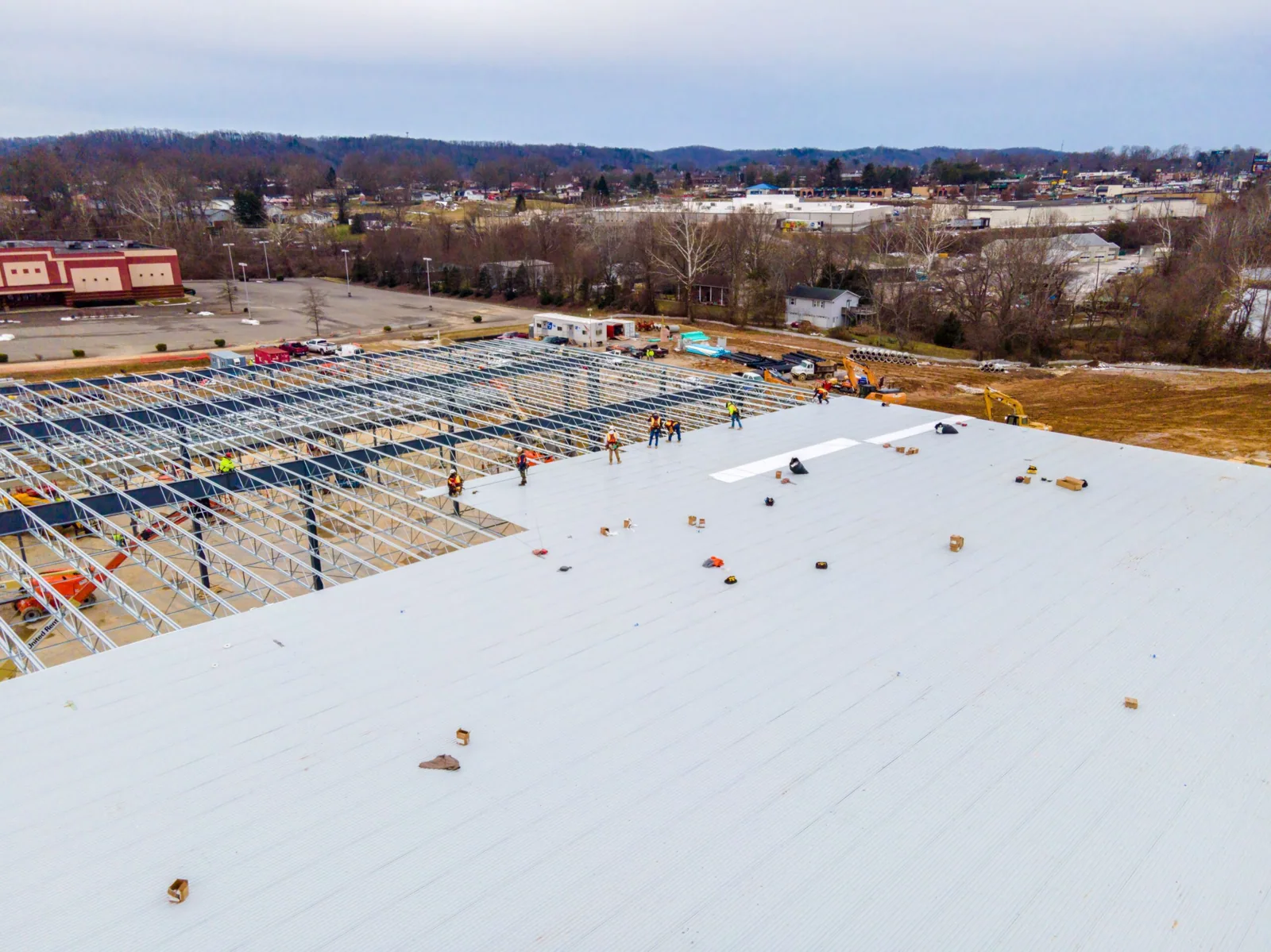
The first question is how much of the roof is wet. An infrared moisture survey maps the insulation, and core cuts confirm what the camera suggests. If the wet area is small, a targeted repair and new flashing at the drain or curb may carry the roof for several more years. If the wet area is wide, the choice is between a recover over a dry existing roof and a full tear-off and replacement.
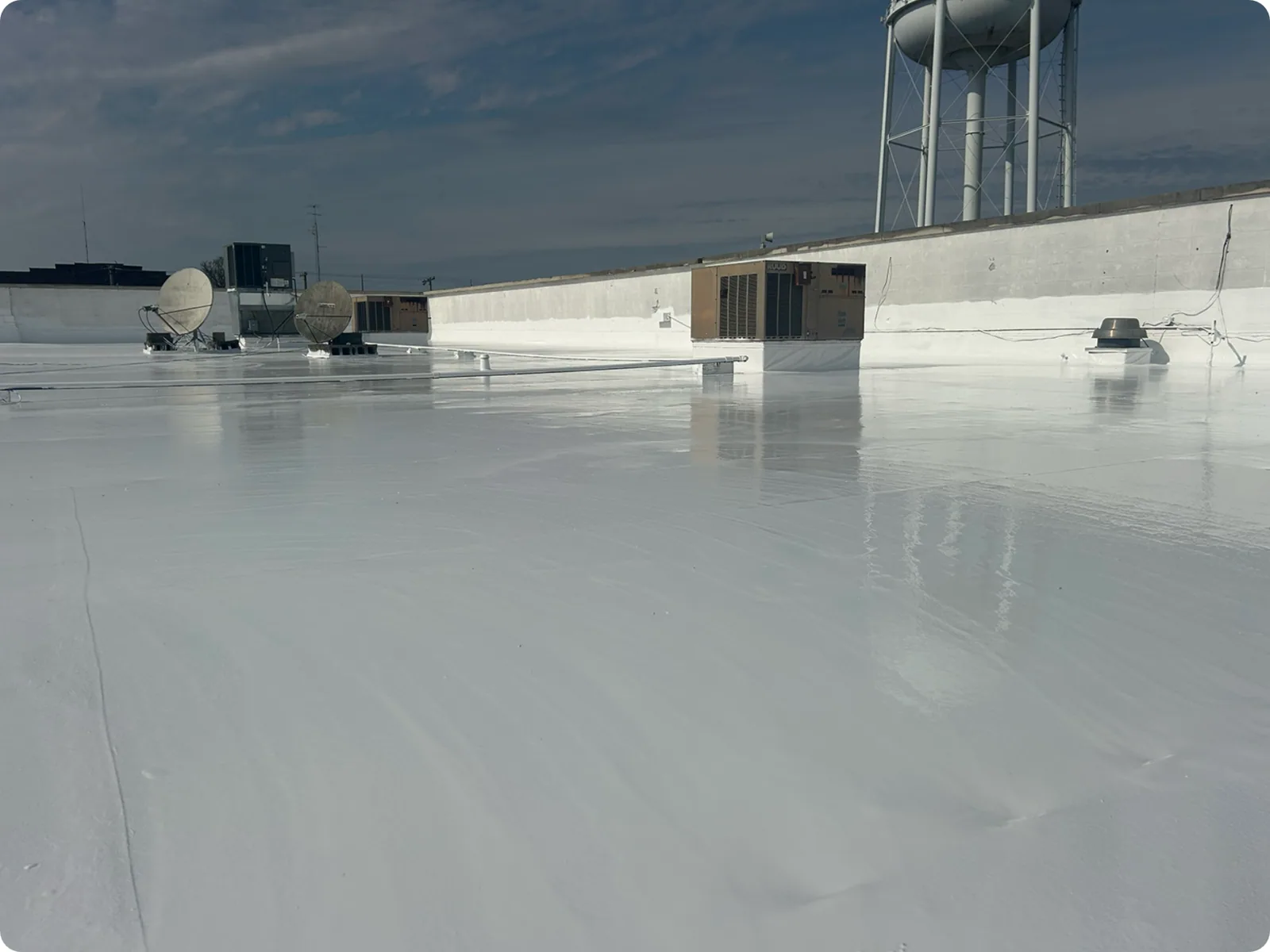
The new membrane depends on the building. A big open bay with few penetrations suits a white TPO sheet that sheds summer heat, while a roof that carries foot traffic and mechanical gear may call for a built-up system with a thick surfacing. We sequence the work so inventory below stays covered each day.
Drains and edges
Ida's remnants brought the first flash flood emergency in New York City's history on September 1, 2021, a test any warehouse drain layout can be measured against. Ponding shows up wherever the deck has dipped or the drain sits proud of the surface. Fixing the water path, with a clean basket, tapered insulation or a second drain where the slope allows, matters as much as the membrane itself. A ponding repair that ignores the deck simply moves the pool.
Edges take the wind. When the 2007 EF2 tornado crossed Bay Ridge it took the roof off a nearby Nissan dealership, and a warehouse with a loose perimeter faces the same lift on a smaller scale. We secure the perimeter with heavier edge metal and tighter fastening, which is the standard way to resist wind uplift at the edge.
Access and neighbors
A working warehouse leaves little room to stage a roof job. Trucks wait on narrow streets, dock doors open and close all day, and the yard is often the only place for a dumpster or a hoist. We agree on a loading zone, a protected path for forklifts and a daily closing routine before the first sheet comes off. Where the work sits above a cold storage space or a fulfillment floor, as on a distribution center roof, we also plan for dust and odor control.
Neighbors count, too. Industrial blocks here often sit close to apartments and lofts, and noise, torch work and kettle smoke all travel. We schedule loud work for hours the block can tolerate and warn the building next door before materials lift overhead.
Closeout walk
When the last seam is welded or mopped, we walk the whole roof with the building manager. Every drain gets water poured into it. Every flashing gets photographed, and the punch list gets signed off item by item before we strip our gear. Those photographs and notes become the owner's file.
A yearly pass through the drains and edges, the kind of work a preventive maintenance visit covers, keeps small problems small.
Commercial Roofing Questions
How can I tell whether a warehouse roof needs repair or a full replacement?
Start with a moisture map rather than a guess. If the wet insulation is limited to a few spots around drains, curbs or one section of seam, repair is usually the sensible route and a replacement budget can wait. If the wet area covers a large share of the field, or the membrane is cracking and shrinking across the whole roof, spending on patches is poor value and we price a recover or tear-off.
Can the roof be replaced while the warehouse stays in operation?
In most cases the building keeps running. We work in sections, close each one to the weather at the end of the shift and keep forklift lanes and dock doors clear. Racking directly below a tear-off section is the exception, and we plan to protect or relocate that stock before we open the roof above it.
Why does water show up at the dock end when the leak seems to be near the roof center?
Water runs along the top of the deck and the underside of the insulation until it finds a joint, a conduit or a drop to the wall. A leak at a fan curb in the middle can surface on the dock side thirty feet away. That is why we trace from the stain back across the field, check each curb and seam along the way, and open a core where the trail ends.
Does a light-colored membrane actually matter in a Brooklyn warehouse?
It matters most in summer. A July afternoon near 85 degrees under a strong heat island means a dark roof soaks up heat that a white sheet sends back. Offices, mezzanines and any conditioned space below feel the difference, and the membrane itself ages more slowly when it runs cooler.
What should a warehouse owner collect before asking for a roof scope?
Send the building address area, the approximate roof age, any past leak records and photographs of the worst drain and the worst parapet. A note on rooftop equipment changes helps, since each unit means curbs and penetrations.