Built-Up Roofing in Brooklyn, NY
Kick the gravel back with a boot on an old Brooklyn, NY mill roof and you find black. Push a knife in and the tar gives like leather. Under it are felts, one over another, and each layer is a year somebody tried to stop a leak. A built-up roof is made of those layers: alternating coats of bitumen and reinforcing felt, topped with gravel, a mineral cap or a coating. It is the oldest flat roof still in service. The question on any BUR roof is how many layers are really there, which ones are still bonded and where the water has been getting in.
What you see up there
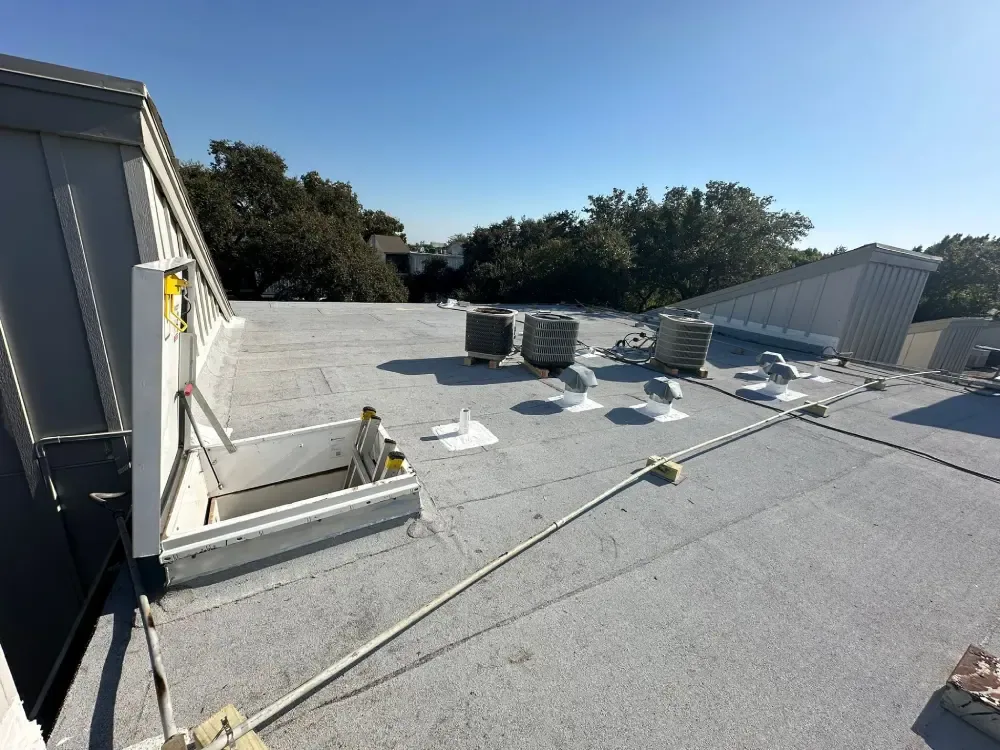
Gravel scattered unevenly, bare tar showing through and a rippled surface are the first signs. Blisters, the size of a hand or a dinner plate, mean air or water trapped between plies. Splits along the edge of a ply show where the roof moved. Dark stained patches under the gravel show where water sits.
We sweep gravel from a few test squares and cut cores. The core shows the number of plies, whether they stick together and whether the insulation is dry or soaked. We read it like a history: patched here, recovered there, coated in between. That count matters twice. It tells us how much roof is left, and it tells us how close the building is to the layer limit the code allows.
Why this building
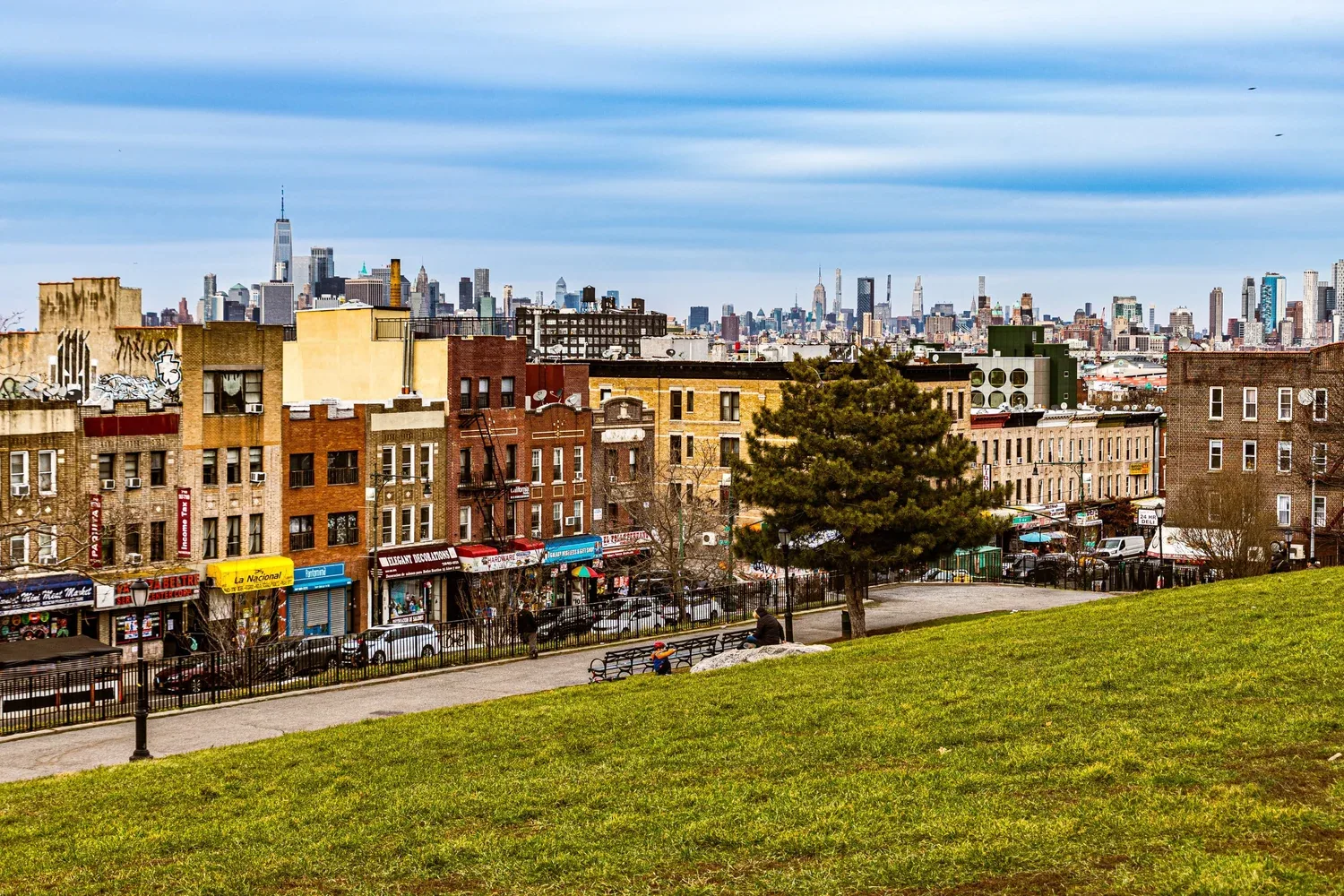
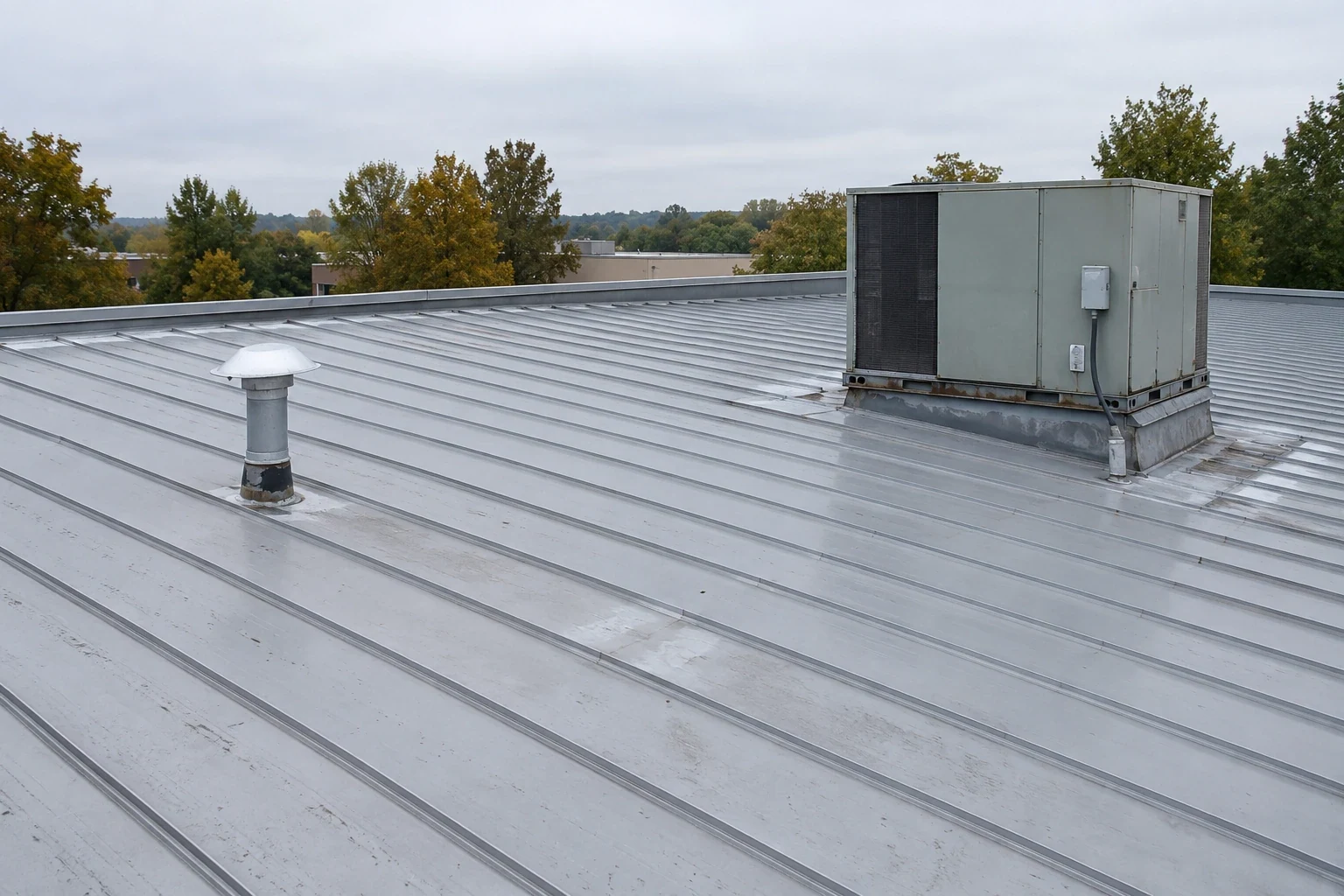
Old industrial buildings are where built-up roofs tend to turn up, and Brooklyn has plenty of that stock. Bush Terminal in Sunset Park was built in stages from 1911 to 1926 and converted to an industrial park in the 1960s, and Brooklyn Army Terminal, between 58th and 65th Streets, was bought by the city in 1981 and renovated for manufacturing. Flatlands Industrial Park, 93 acres opened in 1969, and the factories, warehouses and loft buildings of the East Williamsburg Industrial Park add more. Mill-building roofs and loft-building roofs often have an old tar-and-gravel build-up under whatever was laid later. Parapet flashing on those buildings was built into the wall long ago, and coping joints have been opened by many winters. A close look at the wall is part of any BUR job. Where the framing is too light for gravel, a standing seam metal retrofit over the old layers is another route, and we price it next to the new-membrane option. Either way, the report records the number of plies we found, so the next owner does not have to cut again to know.
Weight and what the deck can carry
Gravel is heavy, and several layers are heavier. An old deck may not have room for more. Before we recommend a recover or a gravel surface, the building's engineer checks the framing and the deck. Snow load comes on top of the dead weight: New York City sees near 30 inches a year, and January 23, 2016 alone brought 27.3.
If the deck is tight, a lighter surface helps: a mineral cap sheet, a coating or a thin single-ply such as TPO over a firm cover board. If the deck has rust or rot, it is repaired before anything is laid. A deck problem found at tear-off is priced as a unit rate, so the owner pays for what is found and not a guess. We measure each repair and photograph it for the file.
Hot asphalt and open flame
Traditional BUR goes down with hot asphalt from a kettle. A kettle on a roof in a tight block is a fire risk and a smell. Permits, a fire watch and extinguishers at the kettle are the minimum, and some owners and insurers want it avoided. Cold-applied adhesives and self-adhering plies avoid the heat. The method is picked with the owner and the insurer, and the neighbors are told the dates.
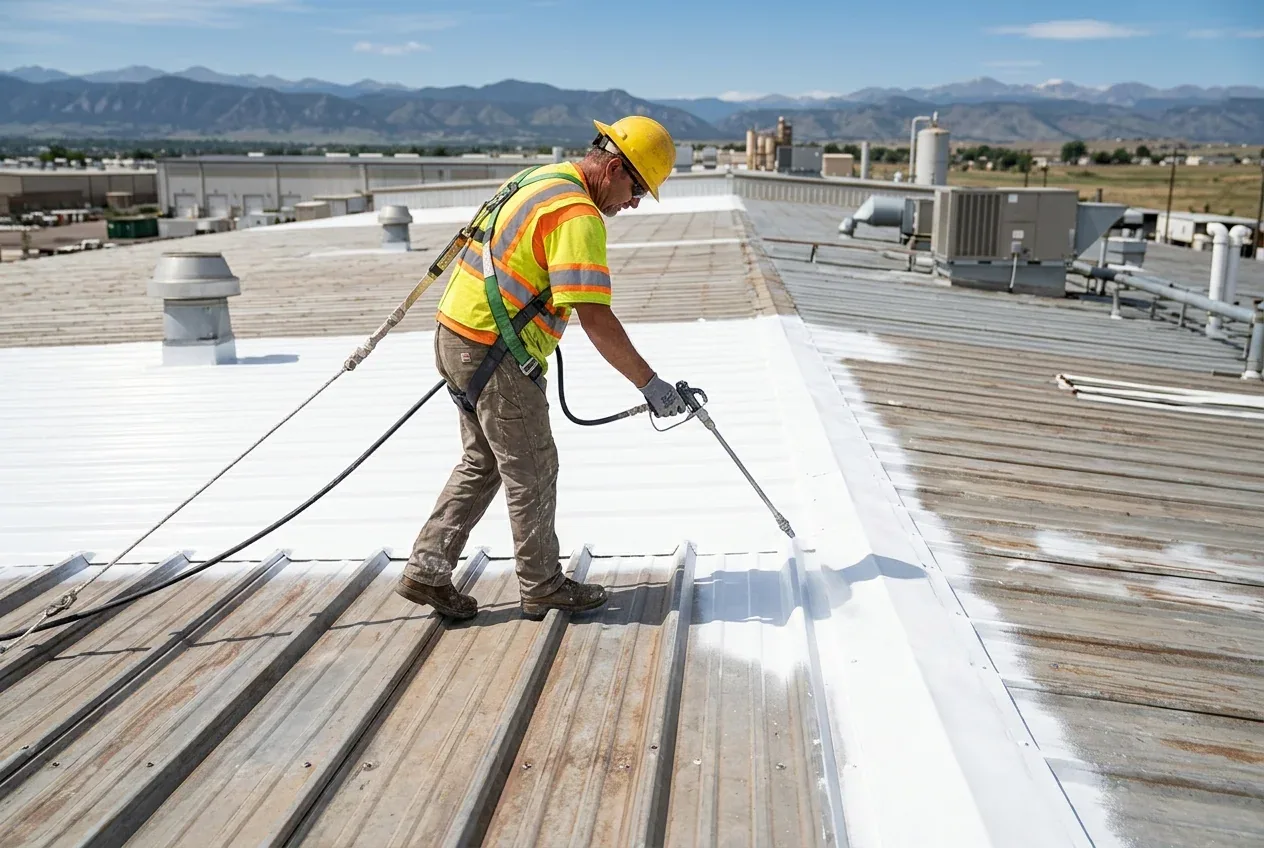
Summer adds its own problem. July highs near 85 F plus a strong heat island leave a black roof very hot. Hot-weather work starts early and stops when the surface is too hot to handle. We log temperature and wind at each stage. A modified bitumen cap over a sound base is a common way to renew a BUR roof without starting over.
Blisters, ponding and storms
Blisters grow in the sun and break under foot. We cut and repair the ones at laps, drains and walking routes, and we watch the small ones. Ponding is worse. Check the sump of water at the drain a day after rain. If it is still there, note its depth and the date, because a pond that returns after every storm points at the deck or the drain height, not at the membrane. A pond leaches the surface, softens the tar and freezes in winter. Rain like the Ida downpour of September 1, 2021 puts a pond on a BUR roof, and standing water loads the deck.
We clear the drain basket, test the flow and measure the depth of the pond. The fix is slope: tapered insulation, a new drain or a cricket behind a curb. A ponding water repair that only patches the surface comes back the next storm. Coastal roofs get an edge and wind check after any storm.
Closeout walk
The owner or super joins the closeout walk, and every flashing and seam is checked. A few corners are hosed, the ceilings below get a look, and every punch list item is closed before the crew goes. The file holds the core photographs, the ply schedule, the weight check, the method and the weather log. If the owner wants to cover the roof later with a roof recover, that file shows how many layers are already there. In a tight block it also shows which neighbor was told about which day.
Commercial Roofing Questions
How many layers can our roof carry before we have to tear off?
The code limits the number of roof coverings, and the structure limits the weight. A core cut counts what is there, and the building's engineer checks the deck. When either limit is reached, tear-off is required. Send the age of the roof and any record of earlier layers, and we will tell you before the survey how close you are.
Is gravel better than a smooth surface?
Gravel protects the tar from sun and adds fire resistance, and it adds weight and hides leaks. You have to sweep it aside to see the surface. A mineral cap sheet or a coating is lighter and easier to inspect. We choose with the owner after the weight check, and we note which surface a later repair will have to match.
Can a built-up roof be repaired, or is it time to replace it?
It can be repaired when the plies are dry and bonded. Blisters, splits and failed flashings are cut out and rebuilt. If the plies have separated across the field, or the insulation is wet over a wide area, replacement of those sections is the sound answer. The core cuts and the moisture scan make the call, and we write down what they show.
Why did our BUR roof blister so badly this summer?
Moisture and air trapped between plies expand in the heat and lift the surface. July highs sit near 85 F, and a dark roof surface runs far hotter than the air. Blisters often point at wet insulation or a failed vapor layer. Photograph them and send them to us, and we scan the area to see how far the moisture goes.