Cold Storage Roofing in Brooklyn, NY
Kneel by a drain on a freezer building in February and feel the roof under your knee. If it is colder than the air above it, or if frost has crept up through a penetration, warm moist air is finding its way into the insulation from inside. Cold storage reverses the usual roof problem. In most buildings water comes from outside and heads down. In a freezer, vapor comes from the warm side of the weather and freezes inside the roof, where nobody can see it, until the insulation stops working and the compressors run harder to make up the loss.
Frost in the wrong place
The failure we look for first is a vapor path. A freezer roof sits at a steep temperature difference all year, so any gap in the vapor retarder at a curb, a pipe or a wall lets moist air ride up into cold insulation and condense. Over a few winters that moisture becomes ice, the board loses its R-value and the deck below starts to rust. The dull stain on the ceiling is a late symptom.
We trace the path from the inside when the owner allows, looking for frost lines, wet fasteners and ice at the flutes. Then we correlate it with the roof above, because the leak into the insulation may begin in summer, when warm humid air is pushed hardest against a cold ceiling.
What lies under the membrane
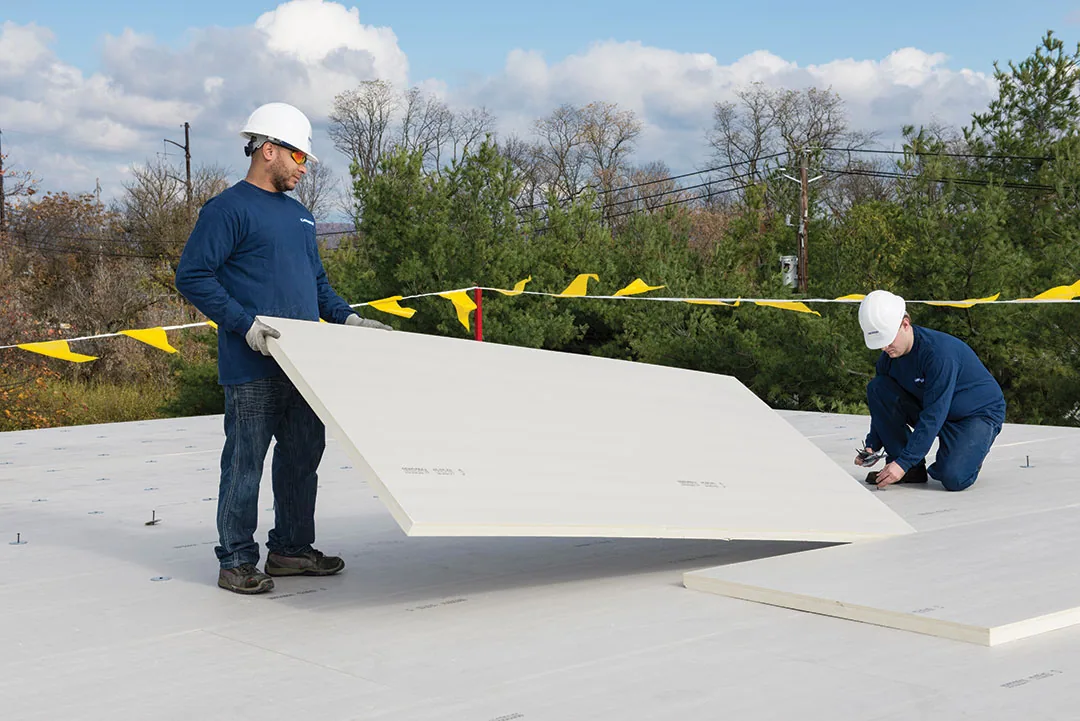
A good cold-storage roof is a stack of layers, each doing one job. The vapor retarder keeps interior air out of the insulation, the insulation is thick and tightly joined, the cover board protects it from the membrane fasteners and foot traffic, and the membrane sheds rain. Replace one layer carelessly and the others pay. The insulation and cover board choice matters as much as the sheet on top.
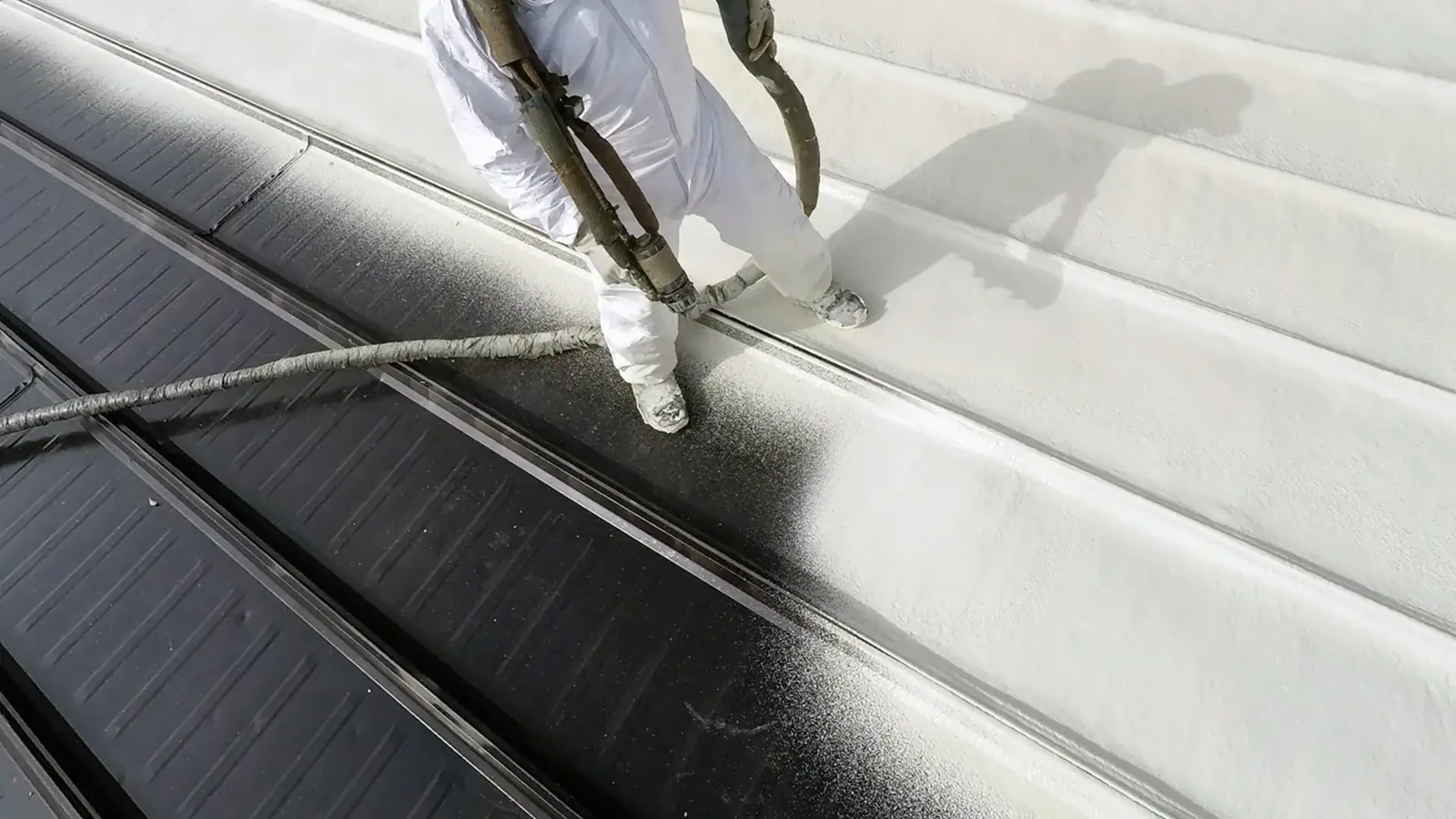
Where the deck is concrete or steel, we plan how the vapor retarder is lapped and sealed to the walls and penetrations. Tape alone is rarely enough at a pipe, so we build a boot, seal it to the retarder and flash it to the membrane. Spray foam can seal complex penetrations well when the substrate is dry, which is why spray polyurethane foam sometimes fits a freezer building.
Finding wet insulation
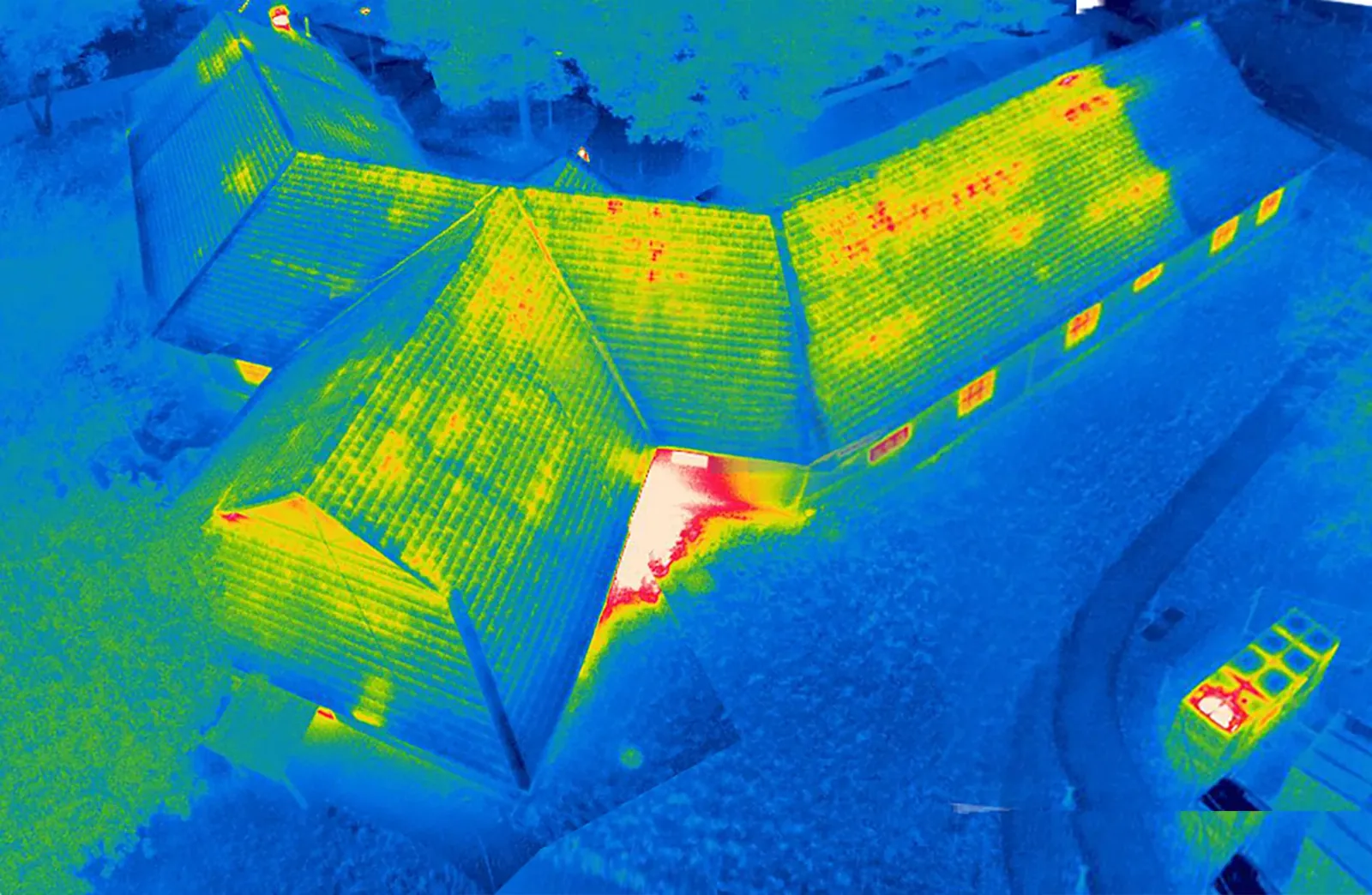
Cold roofs hide moisture more stubbornly than ordinary ones. An infrared scan works best on a warm evening after a sunny day, and a roof over a freezer behaves differently because the interior pulls heat out of the roof. We pair the scan with core samples, moisture probes and a hands-on check of the deck, then map the wet zones before deciding how far a repair should go.
If only a corner is wet, we can cut it out and rebuild the layers locally. If the vapor retarder itself has failed across the roof, patching a corner buys little, and a new retarder with replacement insulation is the sound answer. We tell the owner which one the cores support.
Storm water and the waterfront
Red Hook shows why the waterfront matters to a freezer building. Hurricane Sandy put large parts of the neighborhood under water in 2012, with flooding in Brooklyn reaching 4.5 feet at its worst. A freezer there depends on trucks and power staying up, so the roof must never add a leak to the problem.
In a coastal storm the edges and flashings take the load, so on a Red Hook roof the attention goes to perimeter metal, loose coping and drains that must pass a heavy cloudburst. Ida's remnants set off the first flash flood emergency for New York City on September 1, 2021. After a downpour that heavy, baskets get pulled, leaders get flushed and the low points get checked for fresh ponding.
Summer adds its own stress. With July highs near 85 degrees and a strong heat island, the roof surface swings from hot sun to cold rain, and the vapor retarder below is asked to hold through every swing.
Working above a cold room
A freezer building cannot lose its envelope for a day without harm to what is inside. We plan the job in small sections so the vapor retarder and insulation are replaced and sealed before the end of each shift. Wet or cold weather stops the work, because adhesives and sealants will not cure properly below their working range.
Product and refrigeration both set the sequence. Defrost cycles, loading windows and compressor maintenance weeks are all inputs. We talk with the facilities manager about which bays can be disturbed, and we put temporary protection under any opening. The planning is the same one we apply in a distribution building, with tighter tolerances.
Closeout walk
The last step is the walk. We photograph every penetration seal, record the retarder lap locations and note the insulation type and thickness in the report. The file becomes the baseline for the next scan, which we suggest after the first full winter to catch frost at an early stage. Food handlers also get a clean-up check so no debris, fibers or sealant spill remain.
A grocer or a food processor can use the same record. The grocery store roof over a walk-in cooler is a small version of the same problem, and a maintenance program keeps drains and seals under review.
Insurers want the same file after a storm. Dated photographs of the roof and the interior ceiling, together with the moisture map, support a claim for storm-related roof damage far better than a description from memory.
Commercial Roofing Questions
Why would a freezer roof have wet insulation if it has never leaked?
Vapor from inside the building can condense and freeze in the roof layers without any rain entering. A small gap in the vapor retarder, usually at a pipe, curb or wall joint, is enough. Over a few years the insulation fills with ice and frost, then melts in the warm months and looks like a leak. A scan from the roof plus a look at the ceiling from inside usually separates a true leak from a vapor problem within one visit.
Can a coating fix a cold storage roof?
Only if the insulation is dry and the vapor retarder is intact. A coating renews the top surface, but it cannot seal a vapor path from below. We test first and recommend a coating only when the layers underneath are sound.
Does the work require shutting down the cold rooms?
Normally not. We replace the roof in sections and seal each one before we leave, which keeps the envelope closed. The facilities team tells us about defrost cycles and loading, and we build around those hours. If a section must stay open overnight for a delivery, we install a temporary seal and keep a crew on call until the permanent layers go down.
How thick should insulation be on a freezer roof in a city like Brooklyn?
Thicker than on a dry-goods building, and the exact figure comes from the design temperature and the energy code. The energy provisions and the roof assembly chapter of the NYC Building Code both apply, so we coordinate with the designer of record when the interior setpoint is below freezing.
What do I send to start a cold storage roof review?
Send the building address area, the roof age, the interior temperature range and photos of the worst penetration and the nearest drain. A record of past ceiling frost or condensation helps us decide where to cut first.