Roofing for School Districts in Brooklyn, NY
Open the roof door of an older Brooklyn, NY school in February and look at the stair landing. If the plaster is bubbled under the hatch and the floor has a stain shaped like a map, the roof has been leaking for a while. A school cannot fix that in February. It waits for July. That wait is the whole planning problem: a roof that fails in winter gets a bucket, and a roof that is surveyed in the fall gets a scope, a bid and a crew in the summer break. Send the building list and the break dates.
We survey, repair and replace roofs on school buildings, and we sequence the work around the school year.
The calendar comes first
The summer break is the one window when a roof can be opened with nobody underneath. Everyone wants it. Survey in the autumn, design and cost by winter, approval and bid in the spring, install in July and August. Miss a step and the work slides a year.
Weather trims the window. Late-day thundershowers are frequent in summer, so we plan sections that can be closed at the end of each day and keep dry-in material on the roof. For work that cannot wait, a repair during the school year is limited to small areas away from entrances and play yards. We give the school a one-page schedule that says which wing is open on which date. Send the break dates and any summer program that uses the building.
Kids, noise and fumes
Protection starts at the fence. We close the work zone, the hoist and the chute from the yard. Debris bins sit away from entrances. A permit and a fire watch cover any hot work, and where fumes could reach a classroom the crew uses cold-applied or mechanically attached systems instead.
Fresh-air intakes on the roof are located and protected. Noisy steps like tear-off and fastening are timed for hours when the rooms below are empty, such as testing days or assemblies in the other wing. Each day ends with a sweep and a check for loose fasteners. The occupied building plan goes to the principal and the facilities office before the crew arrives. Give us the bell schedule with the first request.
Parents and staff want to know what the noise is and when it ends. We supply a one-page notice with dates, hours and a contact, and the principal posts it. The foreman reports to the main office each morning and again at close. A school that hears about the work in advance rarely calls it a surprise, and the crew spends the day on the roof instead of at the front door.
Old schools, flat roofs
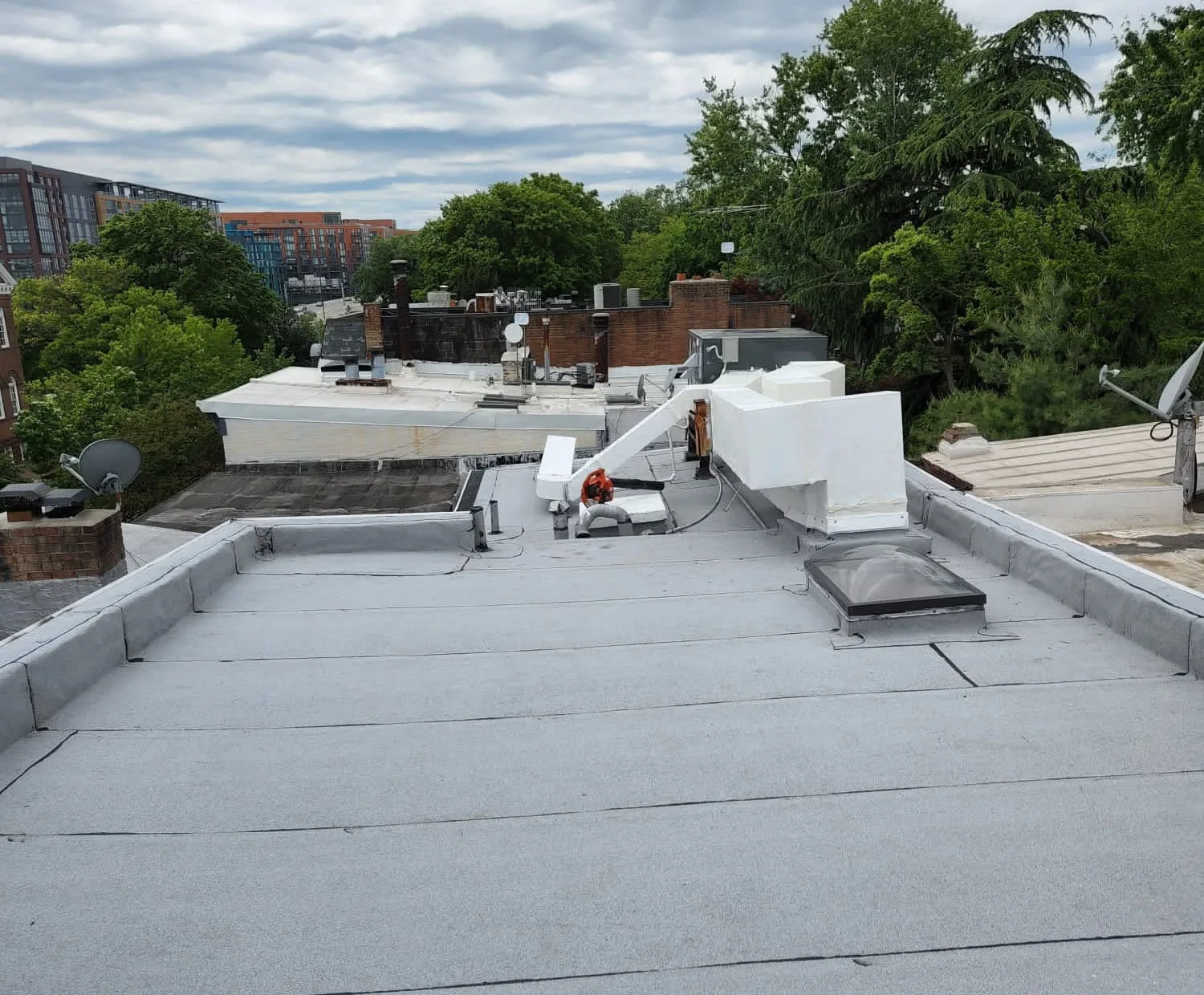
Older multi-story school buildings often have parapets, bulkheads, chimneys and many penetrations, and their flat roofs have been patched many times. Gyms and auditoriums have tall, wide roofs with their own drains. Kitchens add exhaust that stains the membrane. Newer buildings may have large flat decks with rooftop units.
Seams at walls and curbs weaken as the freeze-thaw cycle works on about 30 inches of snow a year, and a dark roof labors through July highs near 85 F beneath a strong heat island. We survey each building, name its roof system and rate it on one scale. A district with many buildings then ranks them. Ask the survey to flag the roofs over gyms, kitchens and boiler rooms.
Those three have their own habits. A gym roof is wide and tall, so wind lifts its edges first and snow drifts against its walls. A kitchen roof takes grease from the exhaust fan and softens near it. A boiler room roof carries stacks and heat, and its flashings crack early. We walk each with the custodian, who usually knows where the water comes in better than any drawing.
After the storm
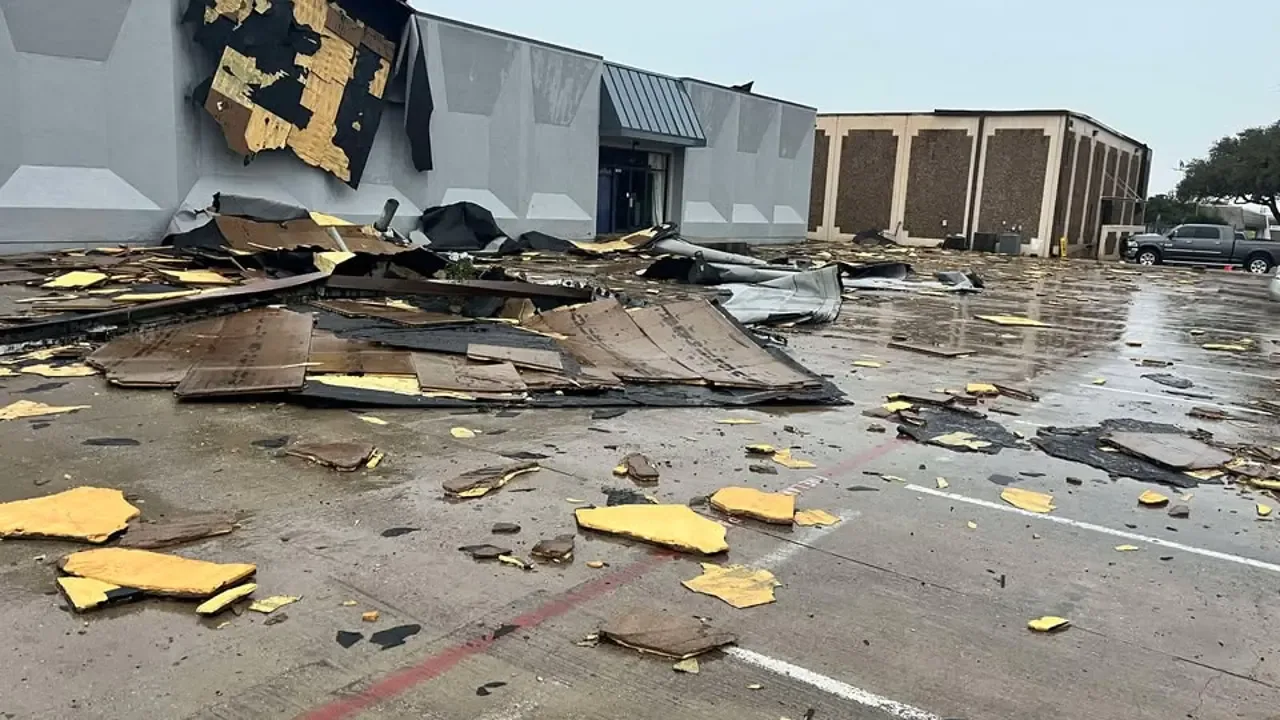
Ida's remnants on September 1, 2021 set off a flash flood emergency that also shut down much of the subway, and a school roof with a short drain count and old baskets fills fast in rain like that while the water finds the lowest wall flashing.
We check drain capacity and clean baskets before the school year, and again after any named storm. When Sandy came through in October 2012, Coney Island and Brighton Beach were inside the evacuation zone. Schools near the water need a dry-in plan on paper. A hurricane damage plan names who calls whom. Keep the plan in the main office.
Snow adds its own check. A heavy storm leaves drifts at parapets and bulkheads, and the melt later sits at drains that may be frozen. The one-day snow record is 27.3 inches, set on January 23, 2016. Drains are inspected before the first freeze, ice is cleared from inlets after storms and flashings get a look after hard cold. Plastic tools and a protective layer of snow protect the membrane when a drift must be cleared.
Pricing and procurement
Public bids need quantities that bidders can price. The survey gives square feet of wet insulation, feet of flashing, the count of drains and the depth of the deck damage. The specification then names the system, the thickness, the attachment and the testing. Alternates cover options like tapered insulation or a cover board.
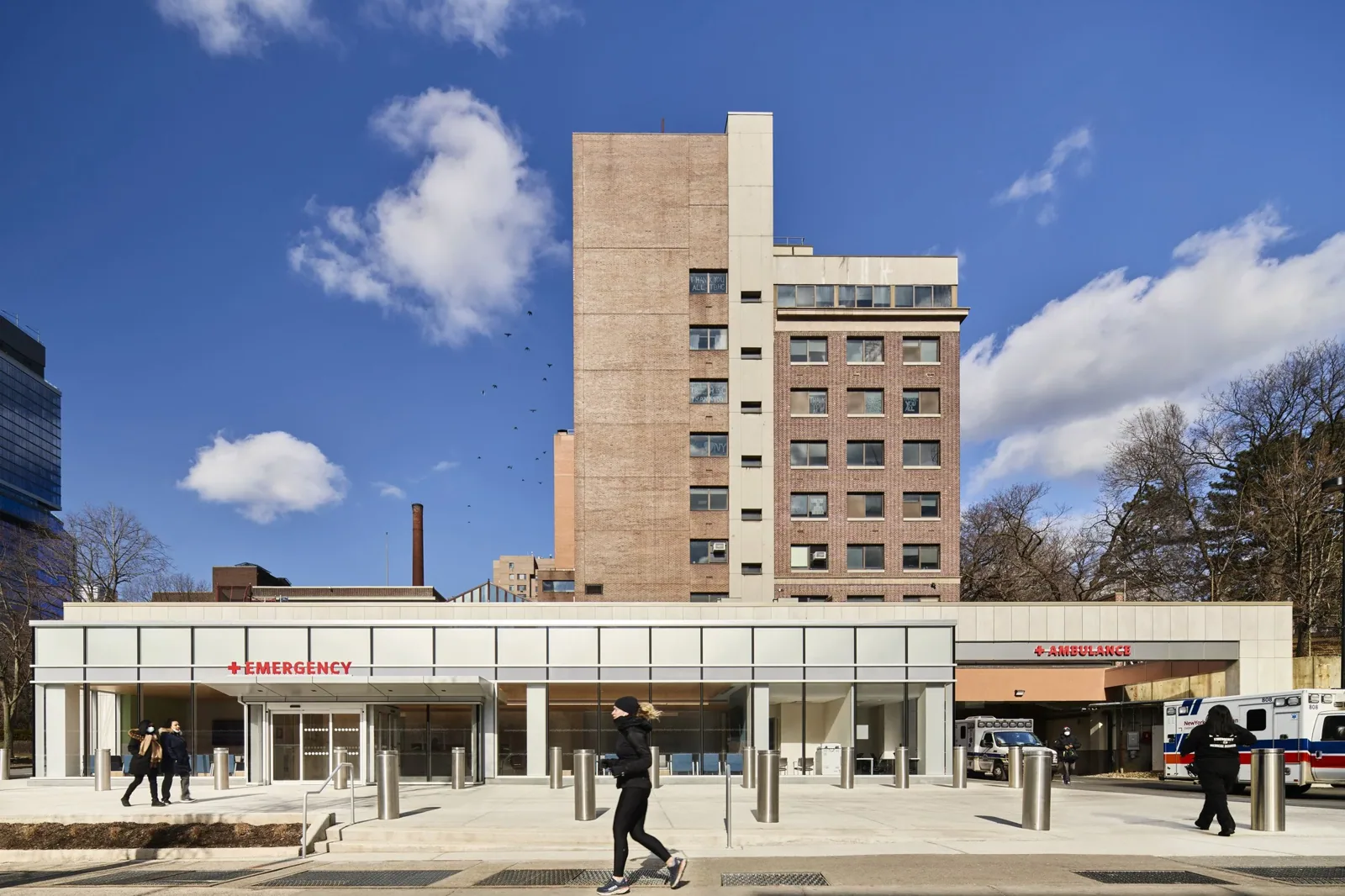
Each line is backed by photos and measurements, useful when a change order comes up. A replacement follows the energy and roof assembly provisions of the 2022 NYC Construction Codes, and the specification cites them. A district that works with public agencies on funding gets the drawings in the form the agency wants. A school with a clinic inside may also answer to healthcare systems that run it. Make the roof its own line in the capital plan.
Warranty terms need a careful read in a public contract. The specification should name the membrane system, the minimum thickness, the attachment method and the inspection schedule, and it should require a closeout file. Without that, a district can end up with a roof it cannot repair in kind. We write the scope so the next facilities director can read it years later and know what lies under the surface, down to the fastener pattern and the board type.
Records that outlast the principal
Principals and facilities directors change. The roof file stays. It holds the survey, the core log, the drawings, the warranty papers and the repair history, one folder per school. A roof condition report for every building lets the district rank its needs.
For buildings in Flatbush and other neighborhoods with older stock, the file often starts with old patches, and we note them on the plan. Hand the folder to the next facilities director and keep a copy in the district archive.
Commercial Roofing Questions
Which school roof gets replaced this summer?
The roof with the worst combination of condition and consequence goes first. Widespread wet insulation over classrooms outranks a local problem over storage. The survey gives the condition, and the district gives the consequence.
Can repairs be made while classes are in session?
Small ones, yes, at the building edge or over spaces without students, outside class hours. Larger work waits for the break.
What if the break is too short for the whole roof?
We phase the work: the worst sections one summer and the rest the next. Each phase is closed and weathertight at the end of the break, and the plan states the order.
How do you handle a leak during a storm?
A leak at night brings a crew: the roof is dried in, the room below is protected with the facilities staff and the cause is documented. Permanent repair follows when the weather allows.
What does the district receive at the end?
Photos, the core log, material data, warranty papers and a rating for the finished roof. It supports audits, claims and the next capital plan.