Roof Recover and Overlay in Brooklyn, NY
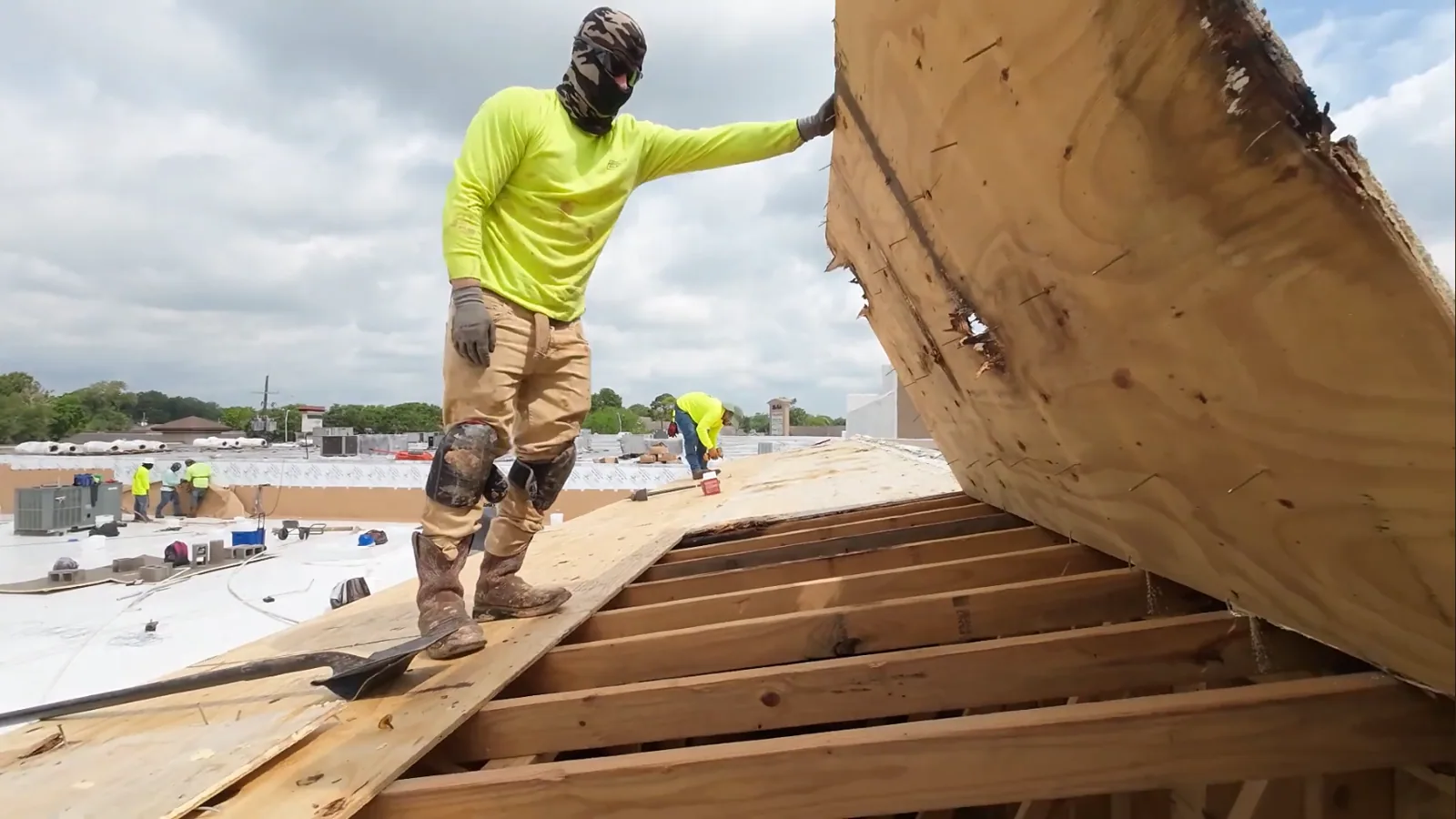
Kneel on a tired flat roof in East New York and press a heel into the field. If the surface gives like a wet sponge, nothing should go over it. If it feels firm, drains clear and the seams are merely old, a recover can put a new membrane on top and skip the tear-off. That choice saves weeks, keeps debris off the street and keeps tenants working below. It also fails badly when someone skips the moisture check. A recover is a bet that the roof underneath is dry, and we do not place that bet on a guess.
The moisture check comes first
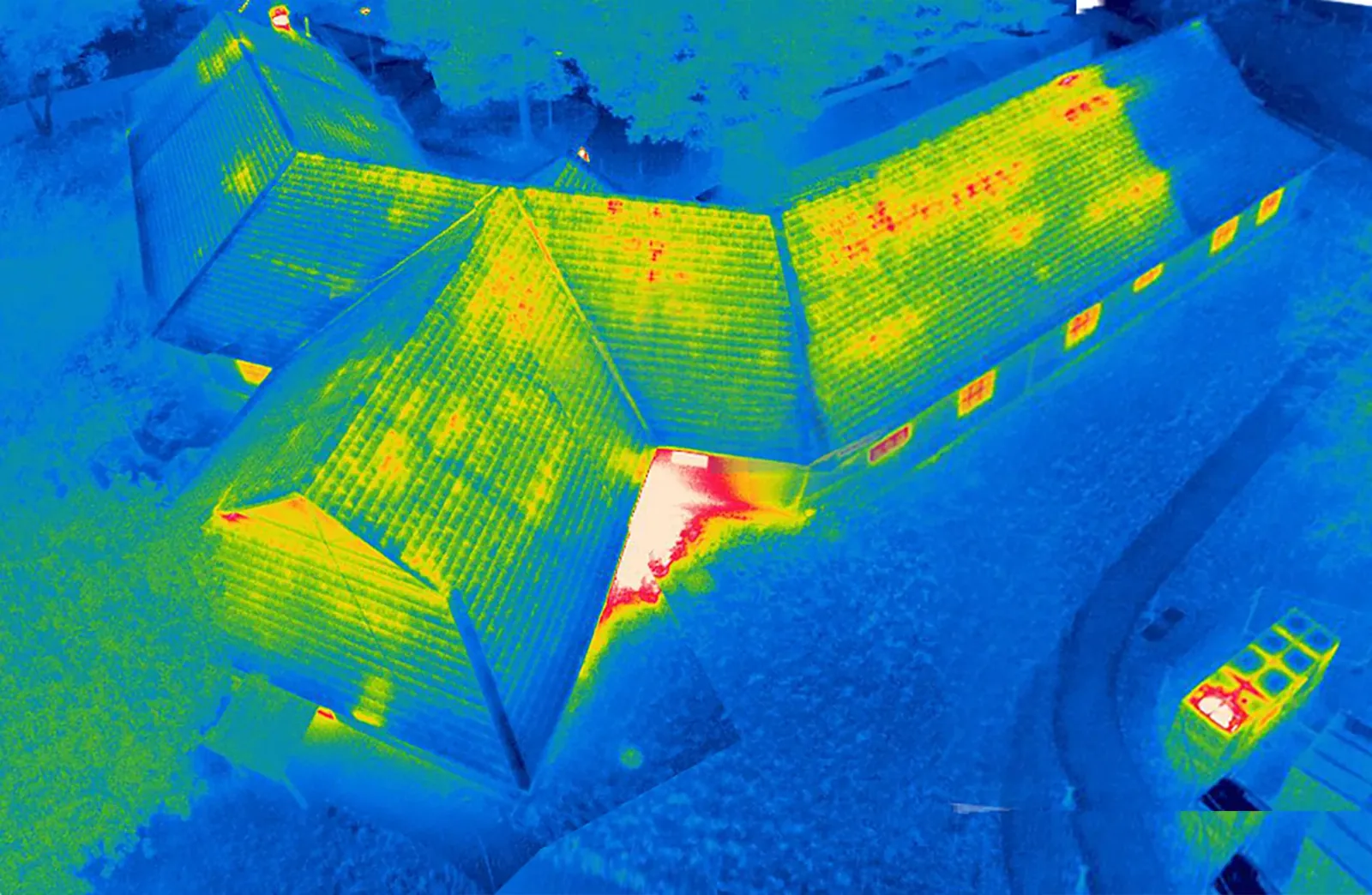
Before any recover is priced, we find out how much water the old roof is holding. An infrared scan on a clear evening shows which areas hold heat longer, and wet insulation holds heat longer than dry. We follow with core cuts at the suspect spots, so a person with a tape and a pencil can see each layer and whether it is damp. An infrared moisture survey is the usual first step for a recover decision.
The results usually sort the roof into three zones: dry and sound, damp but salvageable, and saturated. Saturated areas get cut out and replaced with new insulation before the recover goes on. If saturated zones cover most of the roof, the answer is a full tear-off, and we say so plainly.
Where a recover stops being allowed
Not every building can take a second roof. Most low-slope assemblies are limited in how many layers they can carry, and the existing deck has to handle the added dead load. A roof that already carries two layers usually cannot take a third without removal. The same goes for any roof showing deflection between joists or sagging toward a drain, where the weight would deepen the problem.
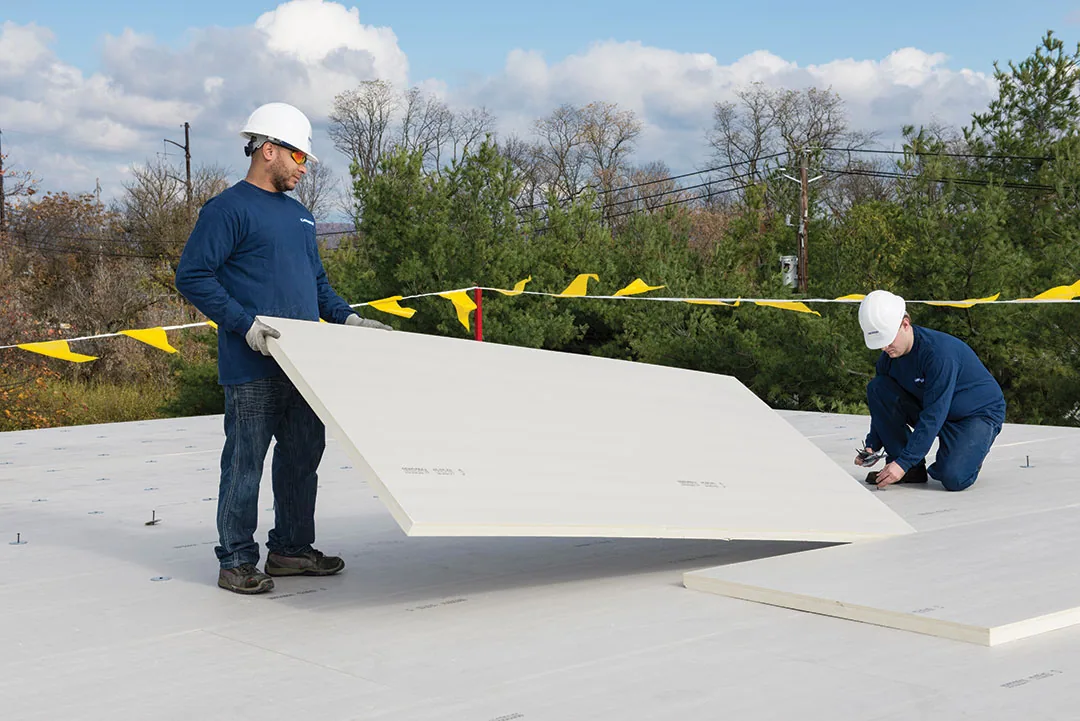
We also check what the new membrane would be fastened to. Gravel surfacing has to be dealt with, since loose stone can puncture a new single-ply. Where the old roof is smooth, a separation layer or a cover board goes down first, with a cover board over the insulation. Any fasteners that pass through the old layers must reach the deck without hitting a conduit or a hidden drain line.
What goes on top
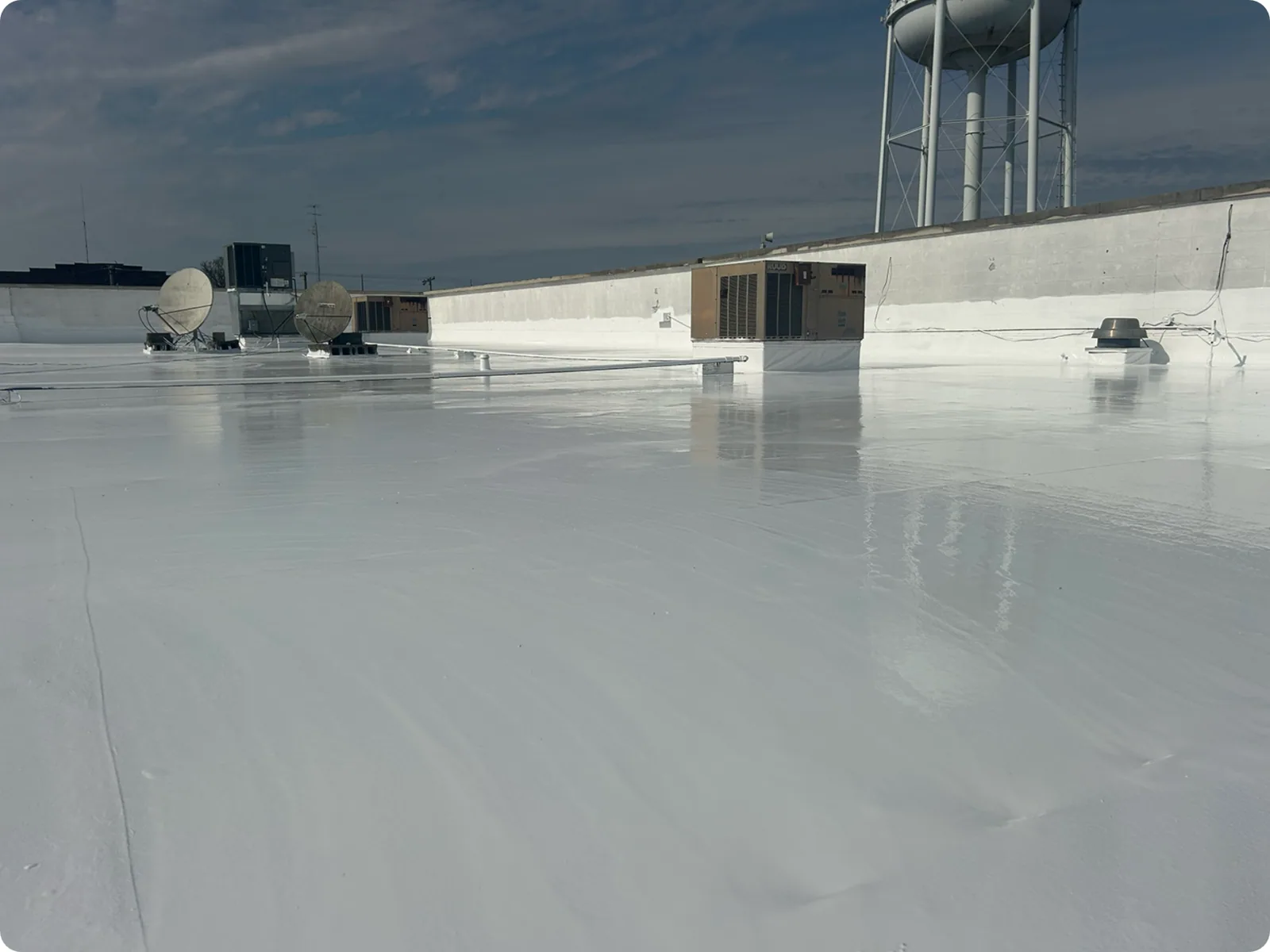
A white TPO or PVC sheet is the common recover choice, because it can be mechanically attached or adhered over a prepared surface and reflects summer heat. The July daily high in New York City averages near 85 degrees, and the heat island effect is strong. A reflective sheet runs cooler and eases the load on the rooftop units that cool the floor below.
For roofs with a lot of small penetrations, we sometimes recommend a coated system instead, with seams and flashing rebuilt by hand. The right answer depends on how many pipes, curbs and conduits stick up through the field, not on a brochure.
Edges, curbs and penetrations
The new membrane adds thickness, and thickness changes every detail. Base flashing that stood eight inches above the old surface may now stand six, which is too low to shed water in a hard rain. We raise curbs, extend wall flashing, and rebuild pipe boots so each one clears the new surface by the height the system calls for. Parapets get new termination bars and sealant, and any cracked coping is reset before the sheet runs up behind it.
Rooftop equipment needs the same attention. Condensing units, exhaust fans and gas lines often sit on old supports that were flashed years ago. We lift or reset the equipment where practical, so the membrane runs beneath it instead of being cut around it. Where equipment cannot be moved, we build a tall, fully sealed curb. Those hidden details are where recovers succeed or fail, long before the field sheet shows any wear.
Large retail and mixed-use roofs
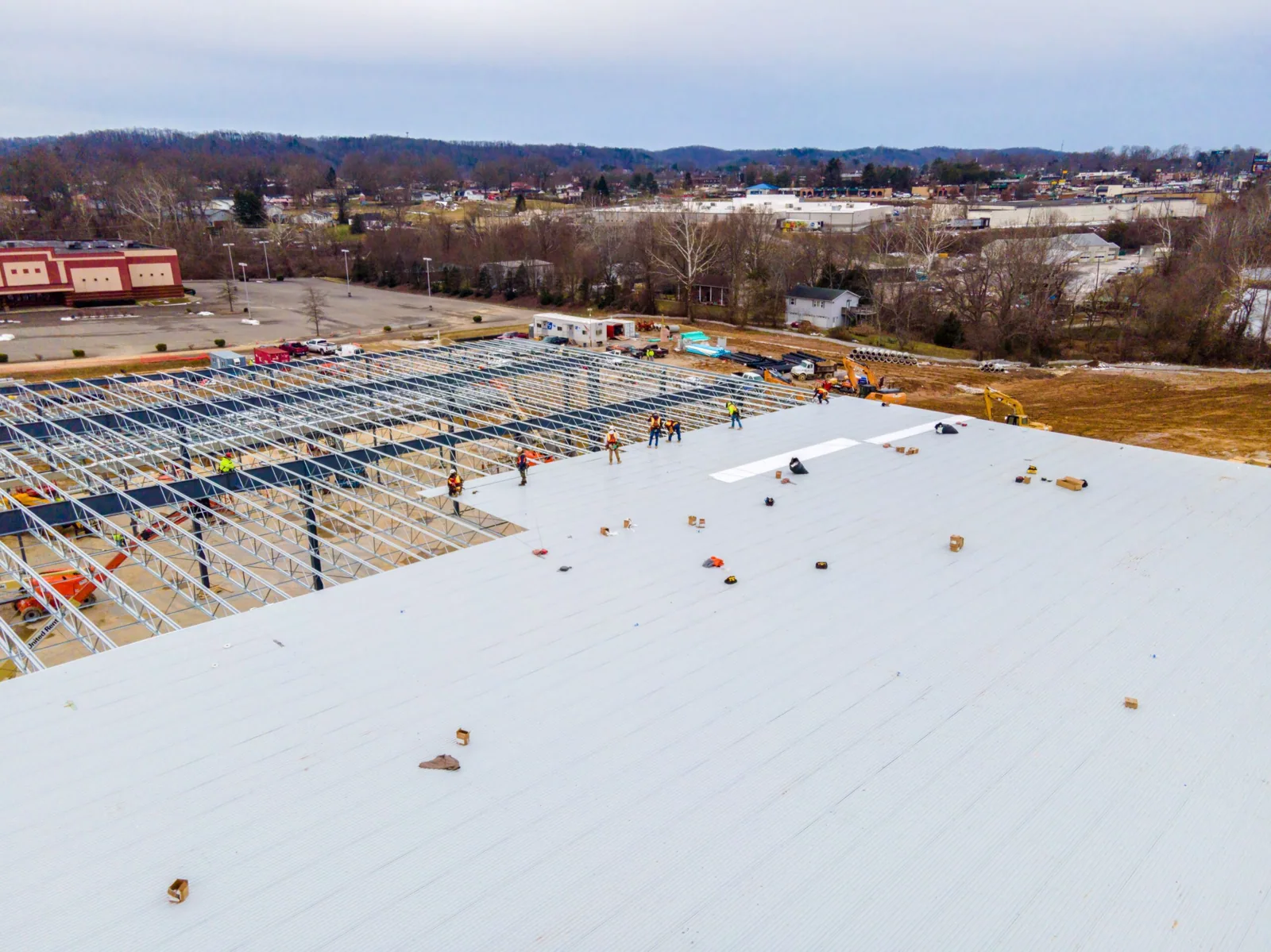
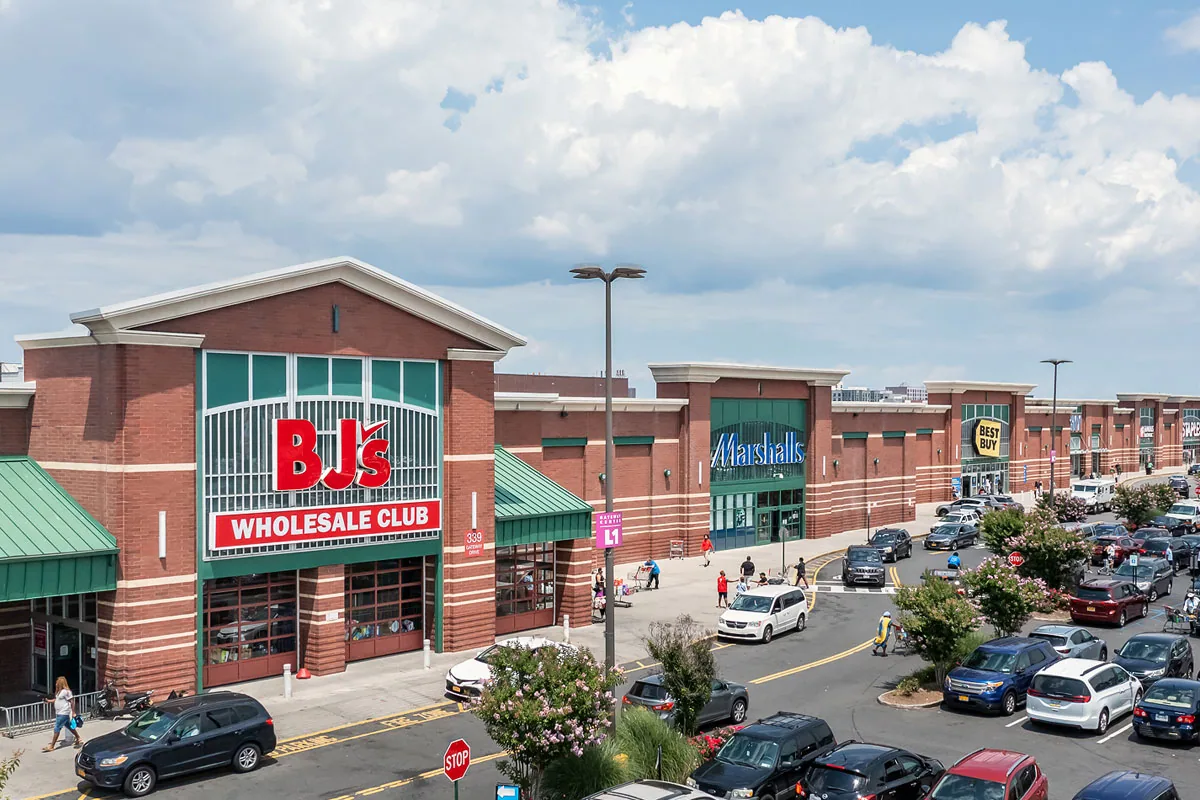
Brooklyn has a few very large flat roofs, and the shopping complexes show how a recover can pay off. Gateway Center in Spring Creek sits on a former landfill near Jamaica Bay, with phases opened in 2002 and 2014. Kings Plaza, Brooklyn's largest indoor shopping center, covers 23 acres at Avenue U and Flatbush Avenue in Mill Basin. For big box and mall roofs like these, a recover keeps stores open and avoids the dust, noise and truck traffic of a full tear-off.
The same logic applies to industrial parks. The East Brooklyn Industrial Park covers 44 blocks and was established in 1980, so an owner there may be weighing a recover against another round of repairs. A recover can make sense where repair after repair has stopped holding. In East New York, that question comes up whenever patch after patch has stopped holding.
Snow, cold and the schedule
About 30 inches of snow fall in New York City in a year, and the freeze-thaw swing that follows pries at every weak seam. Adhesives need warm substrates, and wet insulation will not accept a membrane at all. We aim to install recovers between spring and early fall, and we tell building owners that a late-season start can force an interim patch that costs more than it saves. If a leak cannot wait for warm weather, we stabilize it with a temporary commercial roof repair and schedule the recover for the next dry window.
Closeout and the next inspection
We finish a recover with a walk of every drain, edge and flashing, and we record the roof's layers so the next owner knows what sits under the surface. Because a recover hides the old roof, future leak tracing gets harder. A commercial roof inspection on a regular schedule catches problems before they spread under the new sheet.
Commercial Roofing Questions
How many layers can a flat roof carry before removal is required?
Layer count and deck capacity settle it, and the roof assembly rules in the 2022 NYC Construction Codes frame the review. We check the number of layers by cutting a core in several places. If the roof already has two, a third is generally not an option and we plan the tear-off.
Will a recover void the existing warranty?
It can, depending on the original manufacturer and its terms. We read the existing warranty paperwork before pricing, and we tell the owner which warranty ends and what the new membrane provides in its place. If keeping the old warranty matters more than the new membrane, a targeted repair may be the better route.
What happens to the old gravel surface?
Loose gravel is swept or vacuumed off, and the remaining surface is checked for blisters. A cover board or separation sheet goes over what remains so the new membrane is not punctured from below. Leaving gravel in place without a barrier invites punctures from below.
Is a recover quieter and cleaner than a tear-off for tenants?
In general yes, because there is far less debris and no open roof to protect. Fastening still produces noise, so we schedule it for hours when the space below is least sensitive. Clinics and offices get a different time window than warehouses.
Can drains be replaced during a recover?
They should be. Raising the roof surface can leave drain bowls sitting low, which creates ponding right where the water needs to leave. We reset or replace the drain bodies and strainers so the new surface still falls toward every outlet.
Does a recover change how the roof drains?
The added layers raise the surface, so a low spot near a drain can become a pond. We check slope with a level before and after the work, add tapered insulation where the fall is thin, and confirm that every scupper still sits at the right height for overflow.