PVC Roofing in Brooklyn, NY
Stand downwind of a restaurant exhaust fan on a Brooklyn, NY roof and look at the surface. A brown film runs out from the fan in a fan-shaped stain, and the sheet underneath has gone soft and tacky. That is grease, and it is eating the membrane. PVC is the single-ply sheet we reach for when a roof lives in that kind of air. It is welded at the seams with hot air, it resists fats, oils and many chemicals, and it carries its own fire resistance. The failure it avoids is the slow one: a membrane that looks fine from the parapet and turns to mush at the vent. Where the exposure includes solvents, a PVC-alloy KEE membrane is the next step up, and where there is none, TPO costs less.
What you see up there
We look for the fan-shaped stain, a soft or swollen patch, edges that have curled and a dull skin that lifts when you scrape it. Rubber and some other sheets take on grease and swell, then crack when they dry. The damage is usually worst within a few feet of the discharge and thins out with distance.
The pattern tells us how big the problem is. A single fan with a small stain gets a protective pad and a cleaning schedule. A roof with many vents and a stain across the field needs a membrane that can take it. We map every exhaust, vent and stack, note the wind that day and press on the surface around each. The map goes on the roof plan, and the soft areas go on the repair list.
Why this building
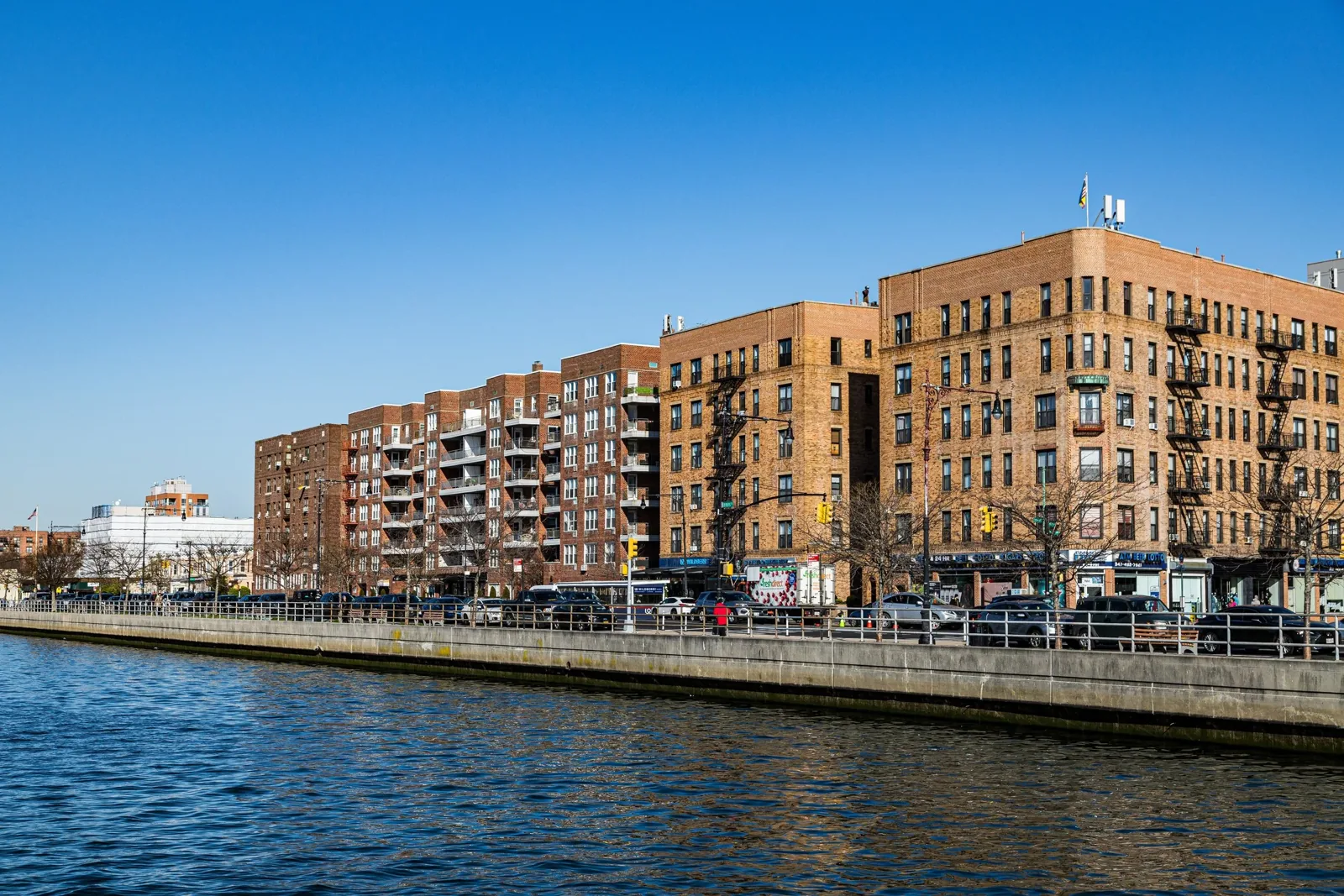
Working kitchens and markets put grease into the air above them. Emmons Avenue in Sheepshead Bay is a waterfront road with piers, tour boats and an active seafood market, and the Shore Parkway portion of the Belt Parkway opened in 1941. Borough Park's 13th Avenue runs about a mile as a commercial strip between 39th and 55th Streets, and Fifth and Seventh Avenues are Park Slope's primary commercial streets. A restaurant roof over any of them may sit close to exhaust, and a written commercial roof inspection shows how far the film has spread.
On any of them we check the distance to each vent, the direction of the wind and the age of the existing membrane. Salt air and damp near the water add to the work, so Sheepshead Bay roofs get a close look at metal edges and fasteners as well. PVC's welded seams and chemical resistance suit those conditions better than a glued sheet.
Seams and flashings
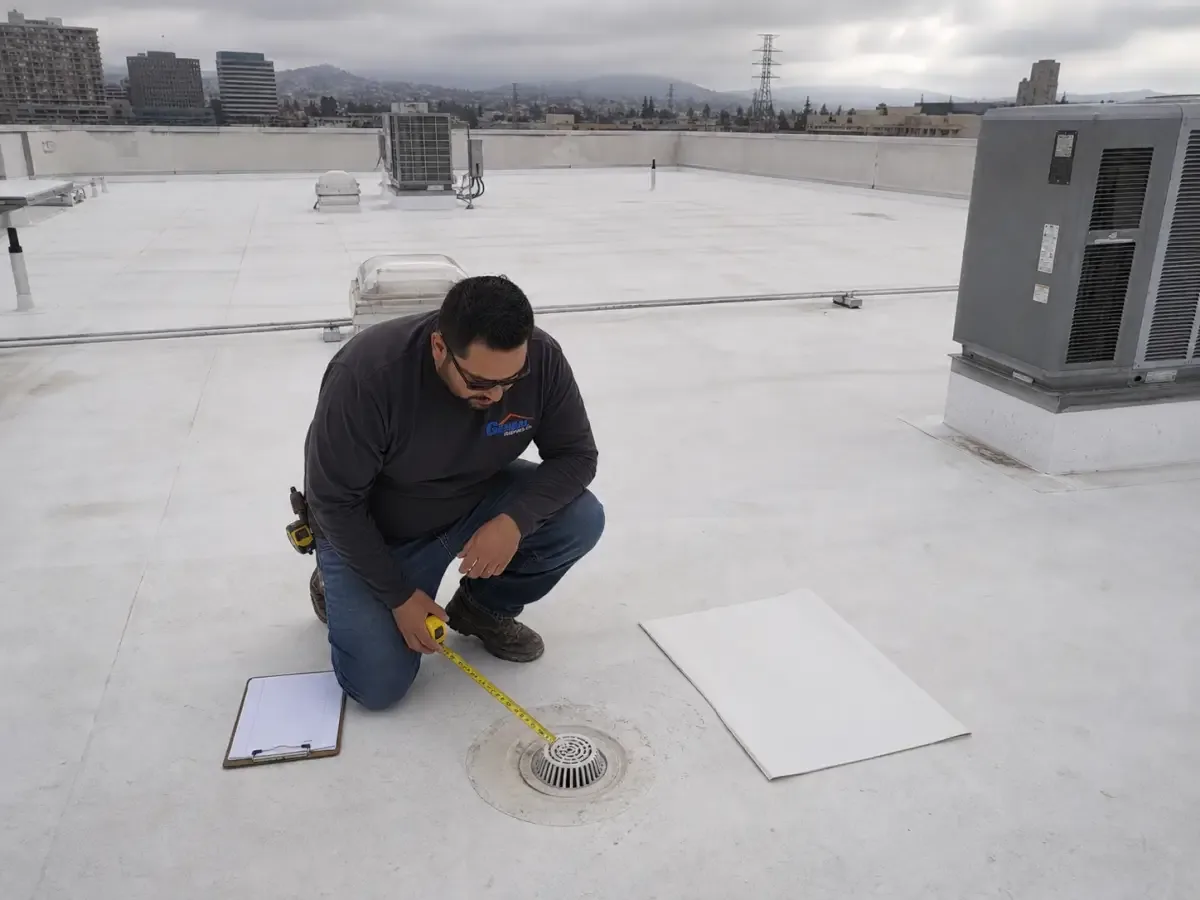
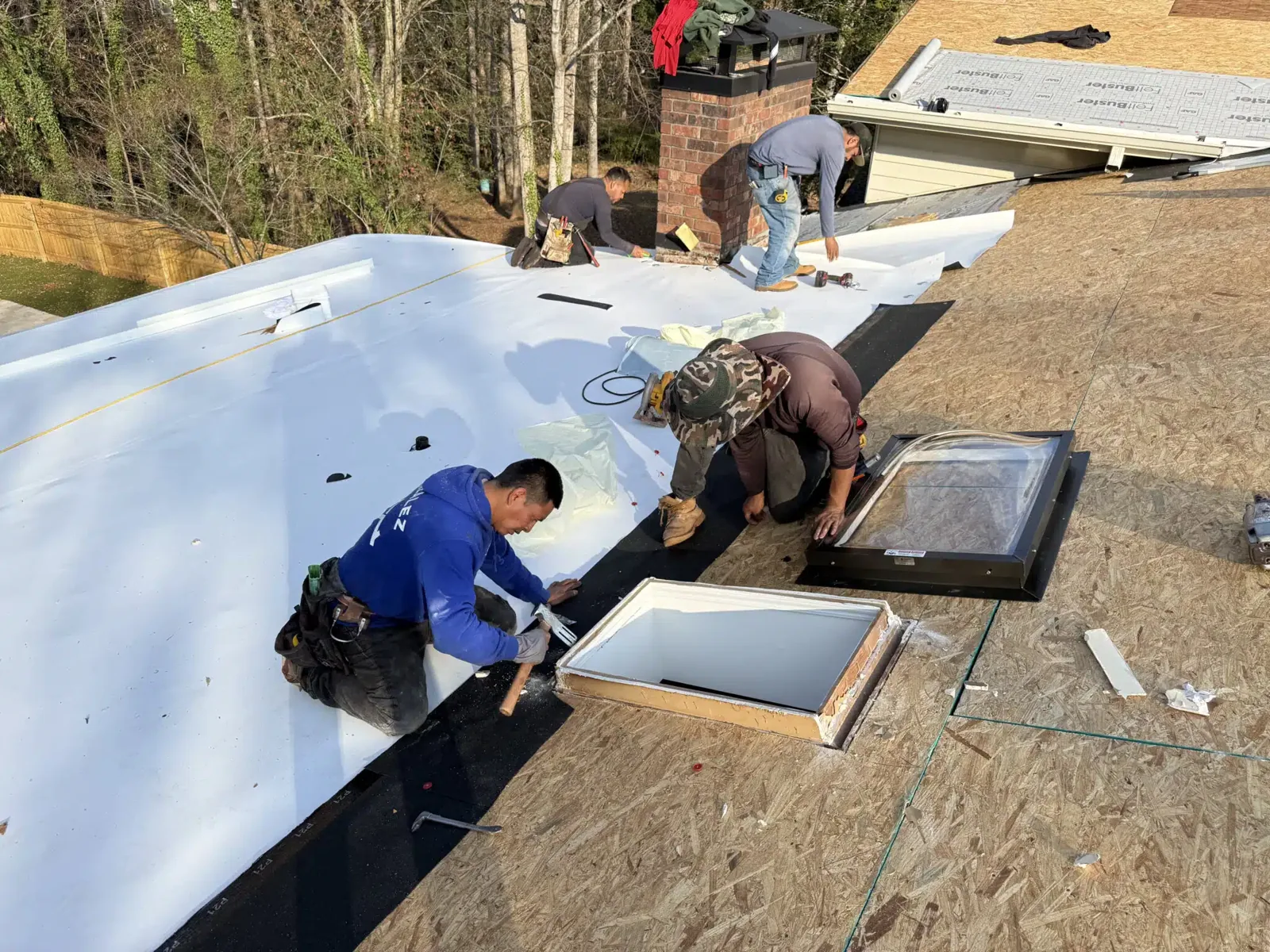
Hot-air welding fuses two sheets into one. The weld has to be clean, wide and even, with a bead of melted material along the edge. We probe every seam and cut test strips from a few. A weld that peels apart at the seam gets redone. Corners, pipe boots and curb flashings come preformed and are welded into the field sheet, so there are no hand-cut folds where leaks start.
Termination bars at the walls are fastened at close spacing and sealed. Counterflashing goes over the top, lapped so water sheds off. We photograph each one before it is covered. Seam failure repair on an old PVC roof means cleaning the weld area, welding a patch over the open seam and probing it after it cools. If the sheet itself has hardened, patching only moves the crack.
Heat, snow and storms
A white PVC roof reflects sun, which counts in a city where the heat island effect is strong and July highs average near 85 F. In winter it stays workable when installed in its temperature range. Snow averages near 30 inches a year, with 27.3 inches in a single day on January 23, 2016. We keep drains clear before the first storm and weld in the shoulder seasons when we can.
Storms test drainage. Ida's remnants on September 1, 2021 set off the city's first flash flood emergency. PVC can take wet weather, but a roof that holds a pond carries grease and grit across the surface. We check the sump of water at each drain and correct the slope. Coastal roofs deserve a close look at edges and fasteners after any storm, and Sandy's 14.06-foot surge at the Battery in October 2012 is the reminder.
Converting part of a roof
If the grease is local, we do not need to change the whole roof. We cut out the damaged membrane around the fan, remove wet insulation if there is any and weld in a PVC section tied into the existing sheet. The joint is detailed and tested. Mixing sheets at a joint can fail if they do not bond, so we check compatibility and record the products. For a larger area, a full commercial roof replacement with PVC may cost less than many patches. Roof edges and copings get new fasteners either way.
Closeout walk and upkeep
At the end the owner or super joins us on the roof, the welds are probed once more and a few corners are hosed. The punch list is cleared before we leave. The owner gets the exhaust map, product data, probe results and photographs. Then comes upkeep: grease films get washed off on a schedule, baskets get cleaned and the soft zones are rechecked each season. A pad under each discharge takes the worst of the spray and is cheaper to replace than the sheet. If a fan is added or moved, the map is updated, the pad is relocated and the nearest seams are probed again. Keep a photograph of the same patch of roof each visit, so a slow change in color or texture is easy to see.
Commercial Roofing Questions
How do we tell grease damage from normal aging?
Look at where it is worst. Grease damage fans out from the exhaust and fades with distance, and the sheet feels soft or tacky. Normal aging shows up evenly across the roof as chalking and shrinkage. We press the surface near the fan and in a clean area and compare. If the soft zone is local, we repair it. If it spreads across the field, the sheet may need replacing.
Is PVC worth the extra cost over TPO?
Where there is grease or chemical exposure, usually yes. The premium buys a sheet that does not swell and crack beside the fan. Where there is none, a TPO sheet may do the same job for less. We price both against the roof in front of us and show the difference. If the exhaust moves or changes later, tell us, because the answer can change.
Can PVC be laid over old asphalt?
Not directly. Some asphalt products and insulations react with PVC and make it brittle over time. A separation layer or cover board goes between them, or the old layer comes off. We check what lies under the roof with a core cut before choosing, and we write down the barrier we use so a later contractor knows.
How often should a grease-exposed roof be cleaned?
Often enough that the film does not build up. The right interval depends on the exhaust and the wind. We set it after the first season by comparing the surface with a clean patch. Cleaning uses low-pressure wash and a mild cleaner approved for the sheet. Clearing the drain baskets at the same visit keeps the wash water from pooling.