EPDM Roofing in Brooklyn, NY
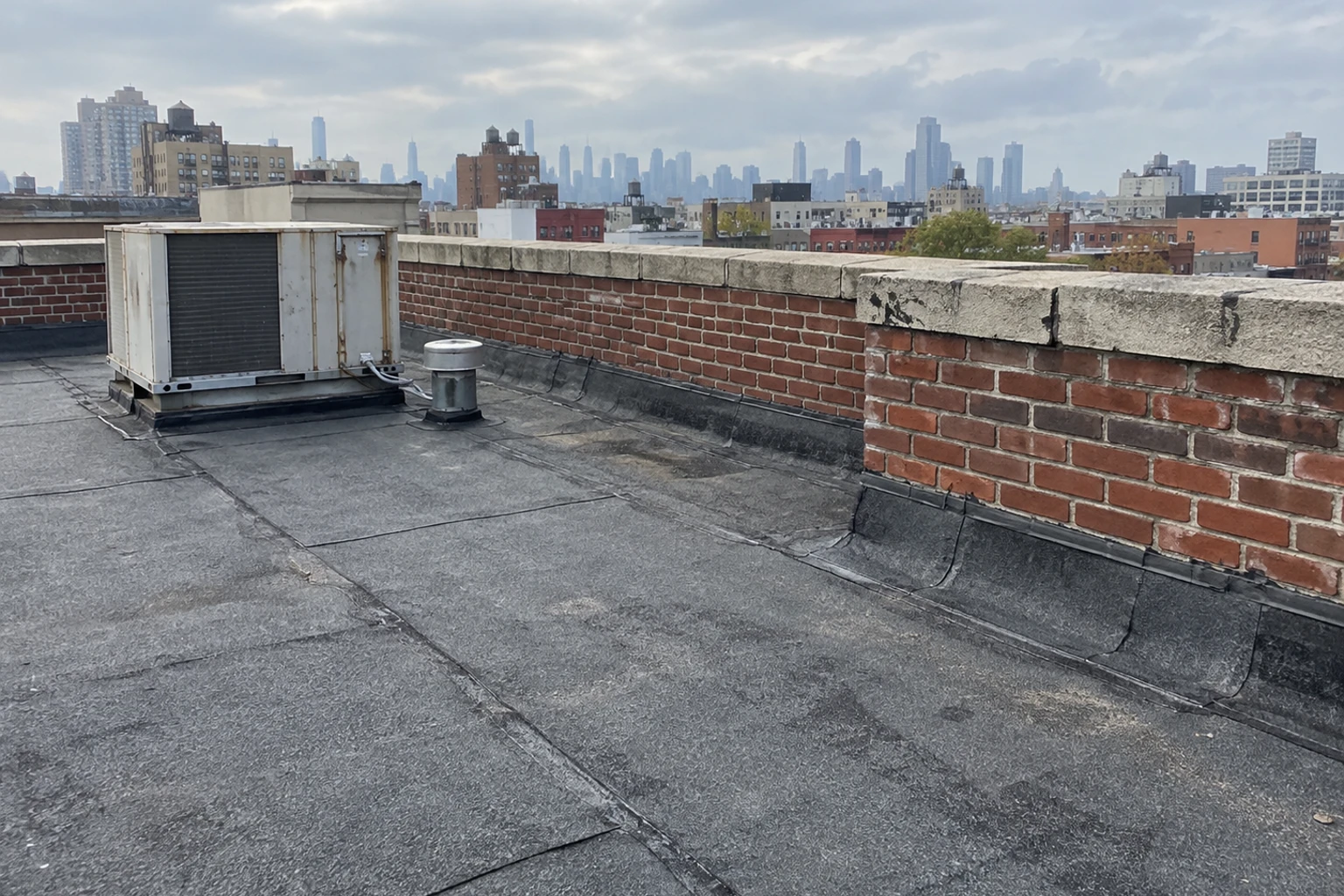
On an old EPDM roof, step to the parapet and look for the gap. The black rubber sheet has pulled an inch or two back from the wall, leaving the flashing hanging in the air. That is shrinkage, and it happens slowly over many summers. EPDM is a synthetic rubber sheet suited to flat roofs on small buildings in Brooklyn, NY, where a roofer needs something flexible that can be cut and patched by hand. It stays pliable in the cold and shrugs off foot traffic. Its weak spots are the edges and the seams, and that is where we start.
What you see up there
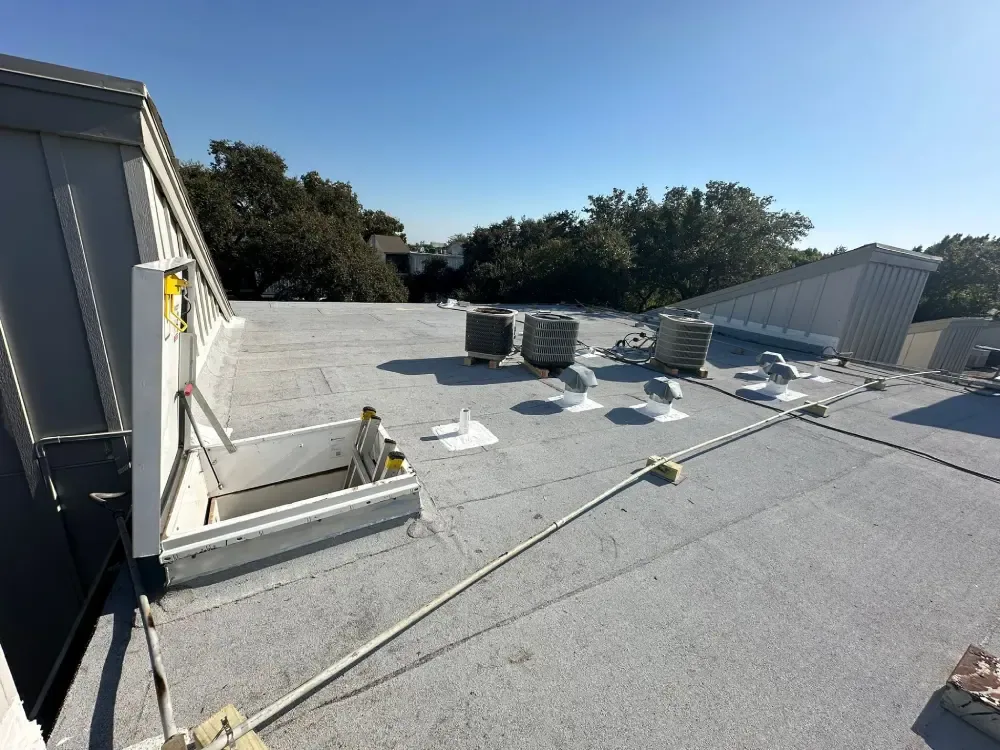
Look at the edges first. Gaps at the parapet, tape that is lifting at a seam, and patches that have curled at the corners all point to age. Then look at the field. Punctures from ladder feet and dropped tools show as small dark dots. A hard, dull surface that cracks when you bend a corner means the rubber has dried out.
Each sign has a different answer. A few punctures and a lifted seam are repair work. Shrinkage at every wall and a hard sheet mean the roof has run its course. We measure the gap at the walls, flex a corner, probe the seams and cut a core or two to check for wet insulation. The result goes on the roof plan, with a photograph of each defect.
Why this building
Much of Brooklyn's residential stock is brownstone and brick rowhouse. Bedford-Stuyvesant alone has roughly 8,800 buildings built before 1900, and the Park Slope Historic District covers 2,575 buildings. Many three- and four-story masonry buildings in Bed-Stuy have commercial ground floors. Roofs on buildings like those are often small and flat with a bulkhead or a skylight and a lot of parapet, and EPDM is easy to cut around all of it.
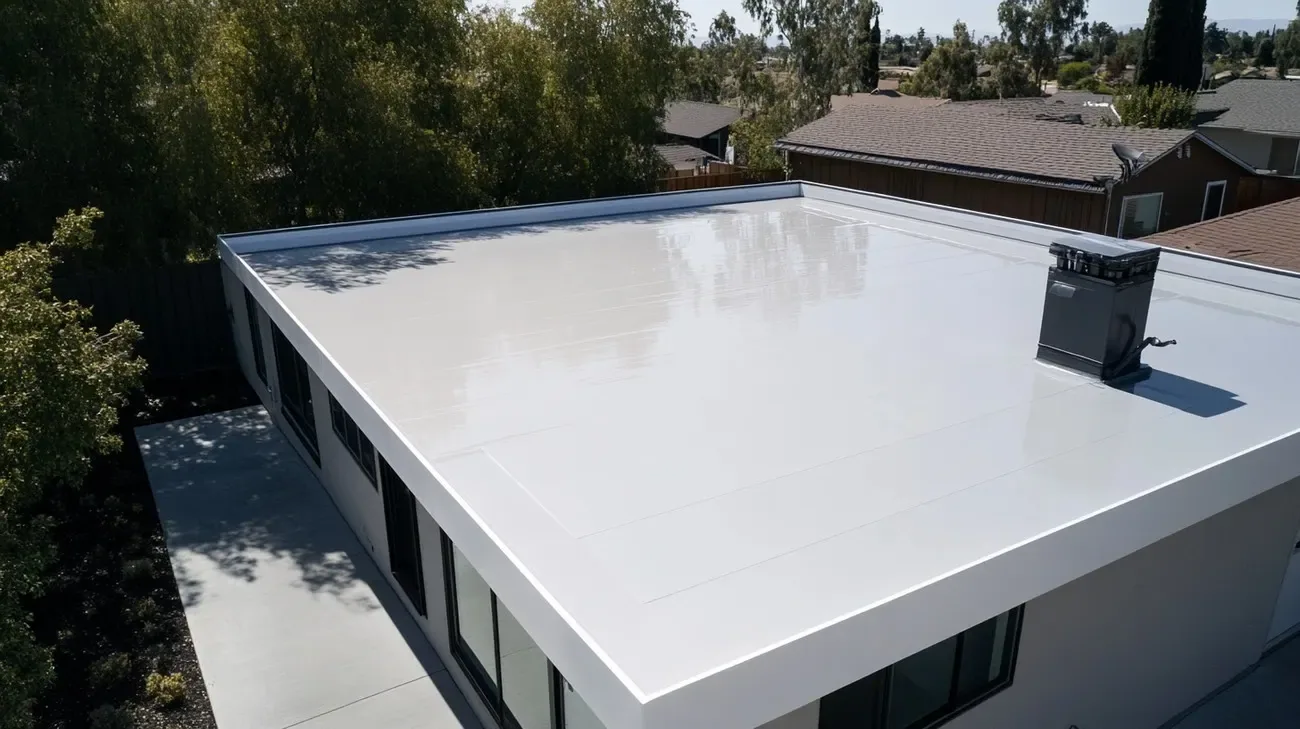
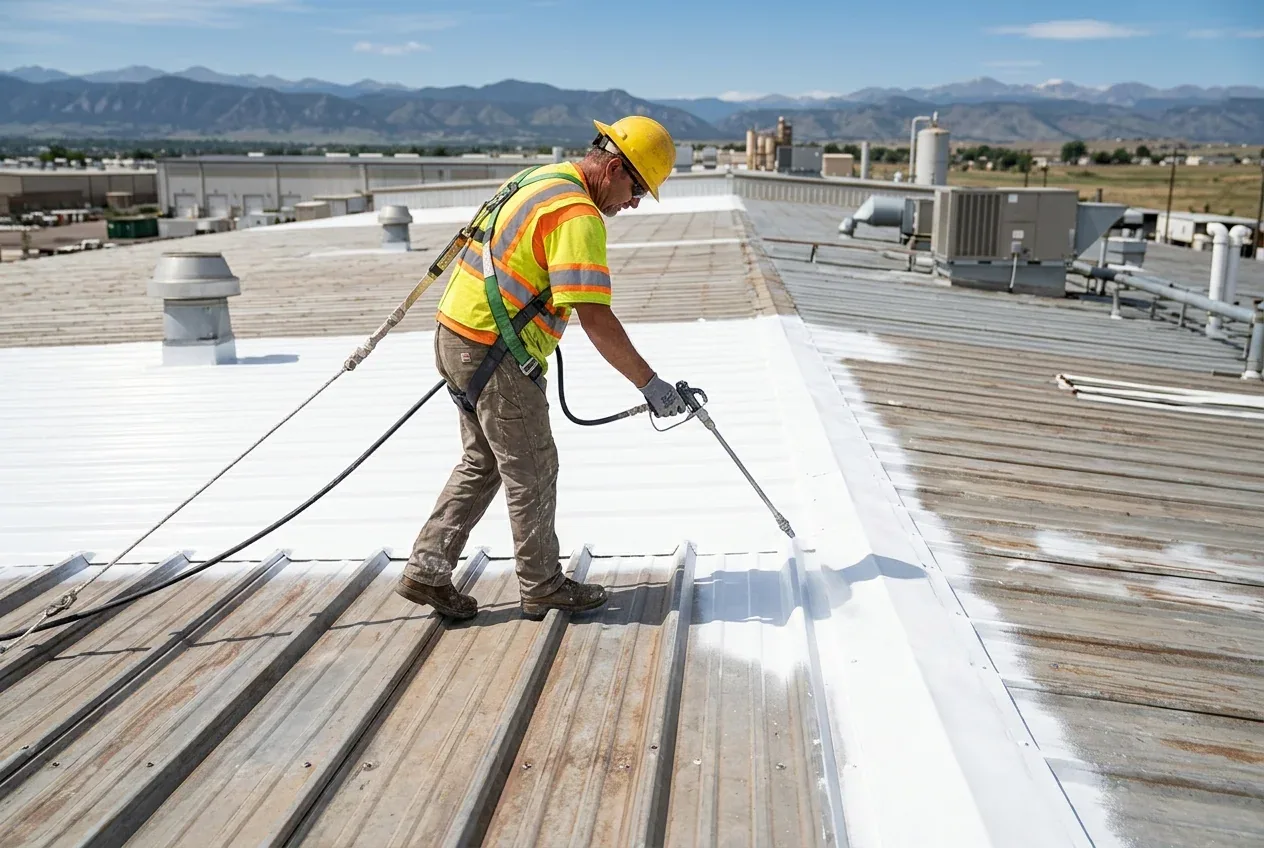
It is less suited to a roof that sees grease, where PVC resists better, or to a roof that needs to stay cool. Black EPDM soaks up heat. Where July afternoons run near 85 F and the heat island is strong, a white-surfaced sheet is worth a look. A white membrane such as TPO is the usual alternative, and a modified bitumen cap sheet is another. Tell us what the top floor feels like in August, and whether the owner plans to keep the building for a long time, because that changes which sheet earns its price.
Adhered, attached or ballasted
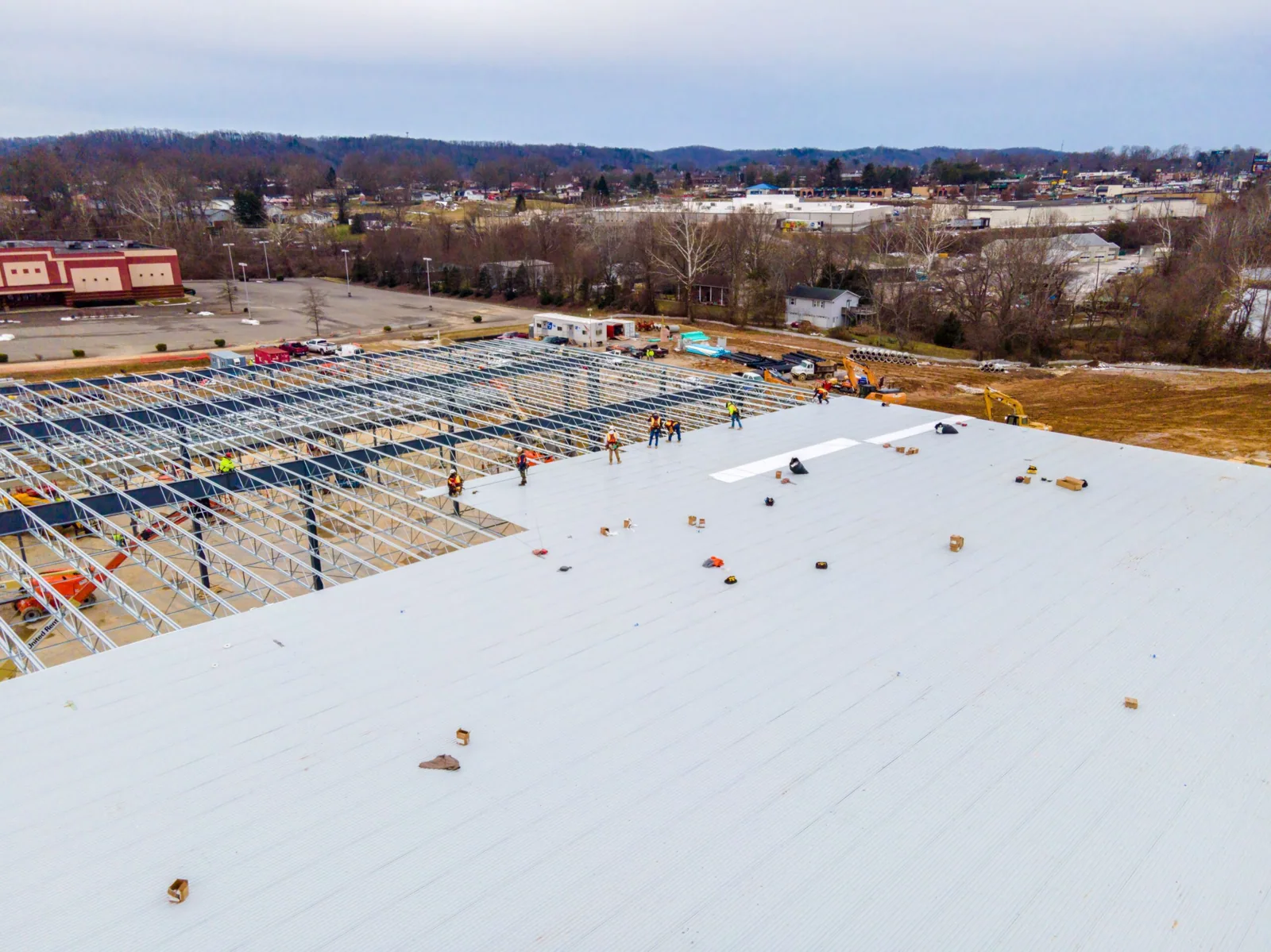
A fully adhered EPDM sheet is glued to the substrate and resists billowing in wind. A mechanically attached sheet is fastened in rows and installs faster. A ballasted sheet sits under stone, and its weight is the limit. Many old rowhouse roofs cannot carry it, so the engineer decides.
Wind governs the edges, and the EF2 tornado that peeled a nearby dealership roof in Bay Ridge in 2007 shows what a lifted edge can become. One storm does not set the design, but we do fasten the perimeter and corners more heavily than the field, and we set edge metal against wind uplift at the edge. On a small roof the perimeter is most of the roof. The roof file shows the pattern and the photographs before the sheet covers the fasteners.
Seams, tape and flashings
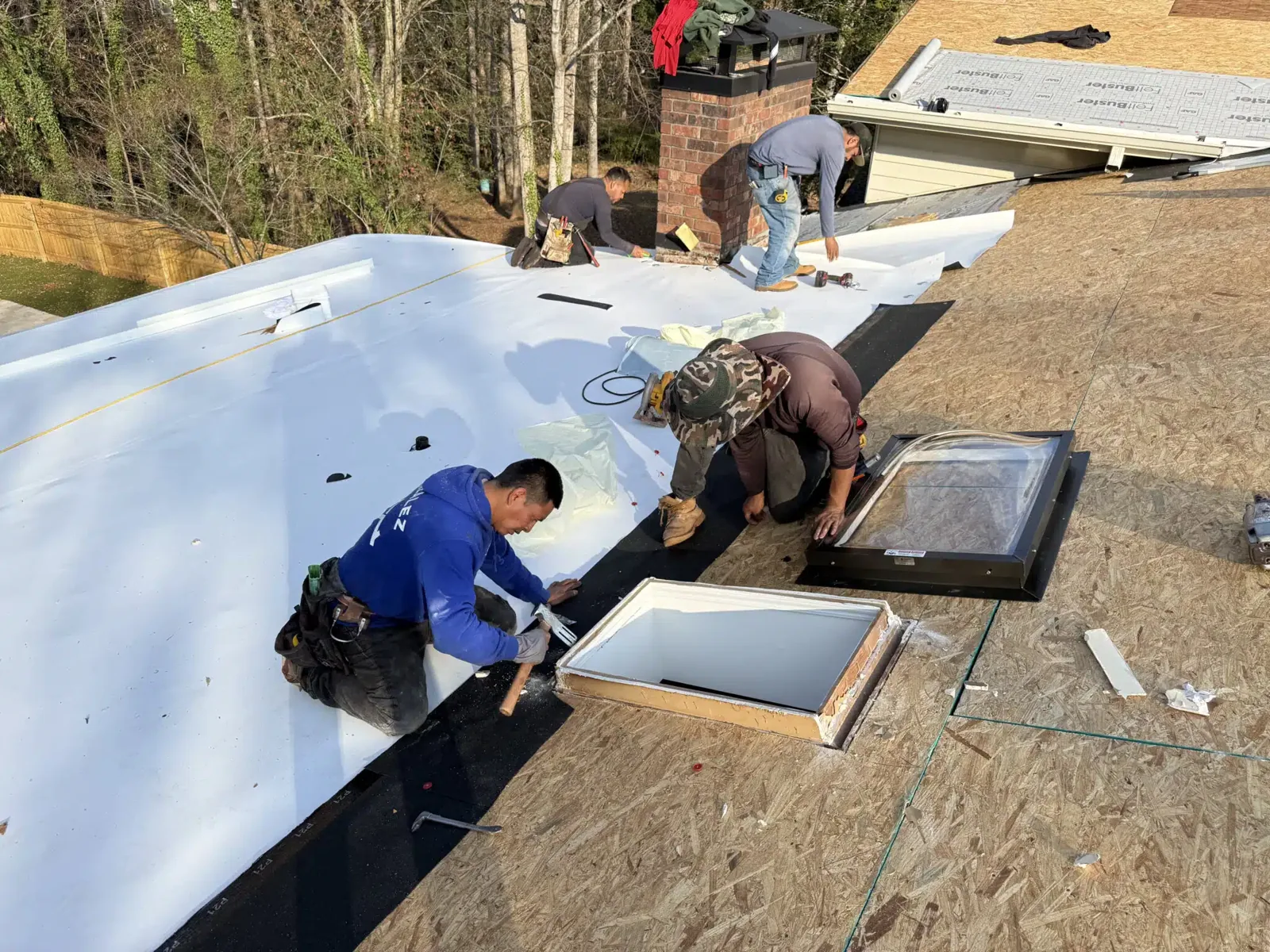
EPDM seams are made with splice tape or liquid adhesive. The surface has to be clean and dry, the primer has to be right and the joint has to be rolled hard. A seam made in the cold, on dust or over damp morning dew looks fine and peels months later. We check surface temperature and moisture before every seam.
We probe the seams and test a sample made under the same conditions. The weak points on an older roof are inside corners, the edges of old patches and places where one seam crosses another. A seam failure repair cleans off the old tape, primes the surface and lays a new strip with a wide overlap. Pitch pans around pipes and the flashing at the bulkhead door get rebuilt or replaced, because sealant alone does not last. If seams are failing across most of the roof, repair stops making sense.
Freeze-thaw and cloudbursts
EPDM stays flexible when it is cold, which is why it has worked on northern roofs for so long. Snow near 30 inches a year and the freeze-thaw swing behind it open every weak seam. A flexible sheet moves with the roof and puts less strain on the joints.
Rain exposes drainage. On September 1, 2021 Ida's remnants brought the first flash flood emergency the city had seen. A day after rain we check how much water still sits at each drain and measure its depth. A ponding water repair fixes the slope, because a sheet that sits in a pond ages faster. We clear the roof drain basket at every visit, and we add an overflow where a parapet traps water with only one drain.
Closeout walk
The owner or super joins the final walk, where seams are checked by hand and the corners are tested with water. The punch list gets cleared. The file holds the wall gap measurements, product data, seam tests, photographs and warranty terms. A commercial roof repair done later starts from that file. A neighbor sharing a party wall should hear about the work, and we photograph that wall before and after. On a rowhouse block the roofs run together, so a repair at the property line is agreed with both owners and logged with the date. Keep the file in the building's records so the next manager can find it.
Commercial Roofing Questions
Can a shrunken EPDM roof be saved?
Sometimes, when the shrinkage is limited and the flashing can be re-adhered or extended. A sheet that has pulled back at most walls and cracks when a corner is flexed has aged out, and replacement is the better value. We measure the gaps, flex-test the rubber and cut a core to check the insulation before saying which. Send a photo of the wall gap and the oldest patch, and we will tell you which side of the line you are on.
Is white EPDM worth the extra money?
On a top floor that bakes in summer, often yes. The white surface reflects sun and cuts the heat that reaches the ceiling. On a roof that sits in shade or over a storage floor, the difference is smaller. We show both prices, and we can measure surface temperature on a hot day so you see the gap on your own roof before deciding.
Can we patch ourselves with a tube of sealant?
A tube of sealant on a crack buys a few weeks. It sticks to the dirt, not the rubber, and it hides the real problem. For a small puncture, a clean patch of cured EPDM with primer and tape is the right repair. For anything bigger, call us. If a super must stop a drip tonight, a patch with tape is better than nothing, and we will redo it properly.
Does an EPDM roof need a cover board?
Frequently, particularly over old insulation or under steady foot traffic. A cover board gives the sheet a firm, flat base and protects the insulation. We check the substrate and recommend one when the old surface is soft or uneven. Cover board also helps if the owner plans solar later.