KEE Roofing in Brooklyn, NY
Cut a small coupon from a roof near a lab vent and bend it. If it snaps or shows hairline cracks along the fold, the sheet has lost the softeners that keep it flexible. On a Brooklyn, NY roof that sits downwind of chemical exhaust, hot condenser air or both, that is the failure that arrives before any leak. KEE stands for ketone ethylene ester, a plasticizer that stays in the sheet when ordinary softeners would drift out. A KEE membrane is a PVC-based sheet built for roofs that get abused by their own buildings. We find the roofs that need it by testing the old sheet, not by guessing.
What you see up there
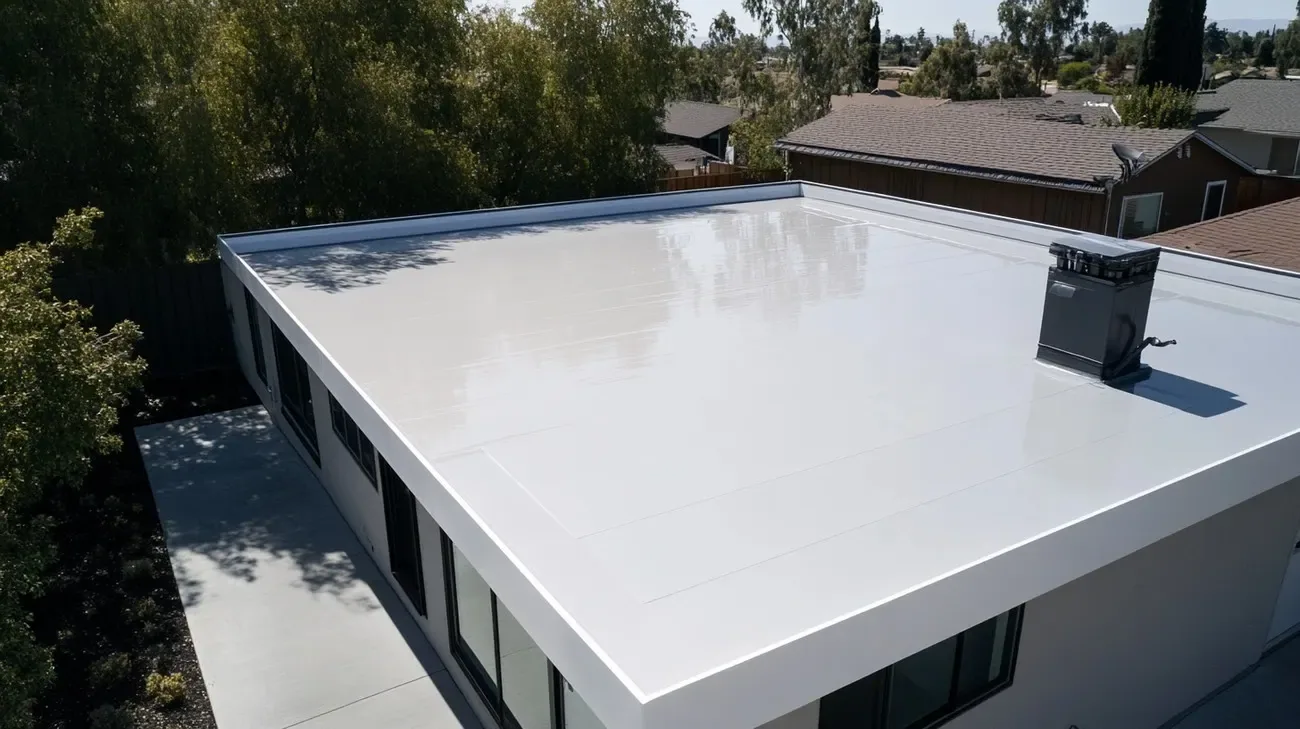
Walk to the exhaust stacks. Look for a sheet that has gone stiff and glossy near the discharge, with fine crazing or a chalky film. Look for edges that curl, seams that have opened where the sheet has shrunk and flashings that have pulled from the curb. Press with a thumb: a healthy sheet gives a little, and a dead one does not.
Then look farther out. If the stiffness fades with distance, the problem is local. If it runs across the roof, the exposure is broad or the sheet is simply old. We take samples where the owner allows and note the hardness at several distances from each vent. The zones go on the roof plan, with a photograph of each, and the plan decides how much of the roof needs an alloy. Hardness readings are repeated in the same spots each season, so a slow change shows up as a number and not as an impression. A zone that holds steady for two seasons can stay as it is.
What KEE does differently
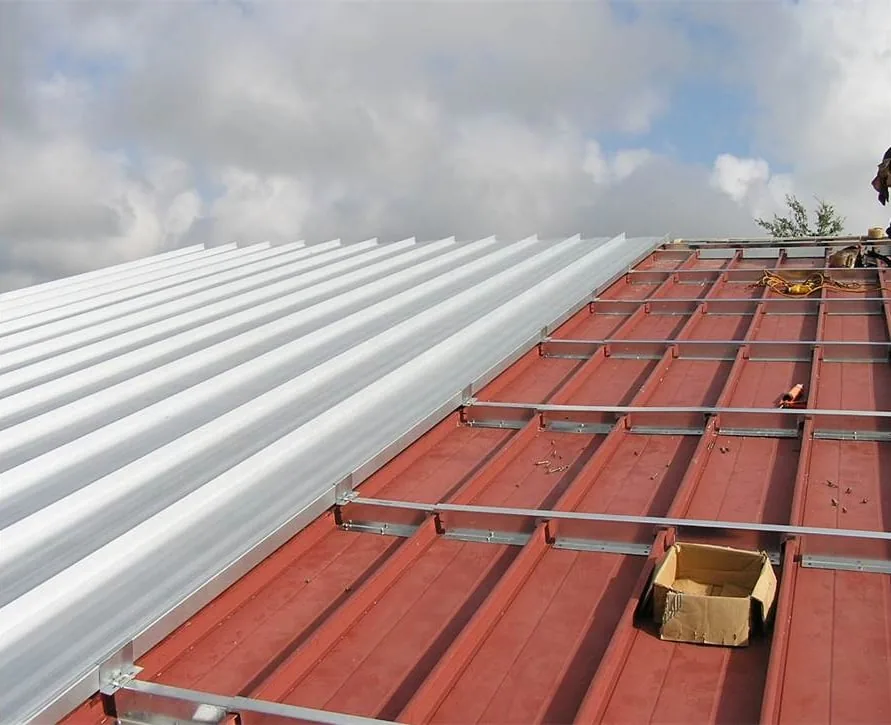
Standard PVC resists many fats and chemicals, but its softeners can migrate out under heat and exposure, and the sheet grows brittle. KEE keeps its flexibility longer in those conditions. It is welded with hot air like other thermoplastics, so the seams fuse into one sheet and the welds hold where a glued joint would soften.
The price is higher, and the product category is narrow, so we specify it where the exposure earns it. A roof with no unusual exposure does not need it, and we say so. A quiet office roof is better served by a cheaper white sheet such as TPO. Where the exposure is mild, a coating on a sound roof can be the better buy. The report prices each route.
Why this building
Hospitals, labs and industrial plants put a lot of discharge on their roofs. Maimonides Medical Center in Borough Park, with 679 beds and a level 2 trauma center, Brookdale University Hospital in Brownsville and Lutheran Medical Center on a former waterfront factory site in Sunset Park are institutions where rooftop exhaust is part of the building. The Brooklyn Navy Yard, now a city-run industrial and commercial complex, covers 225 acres.
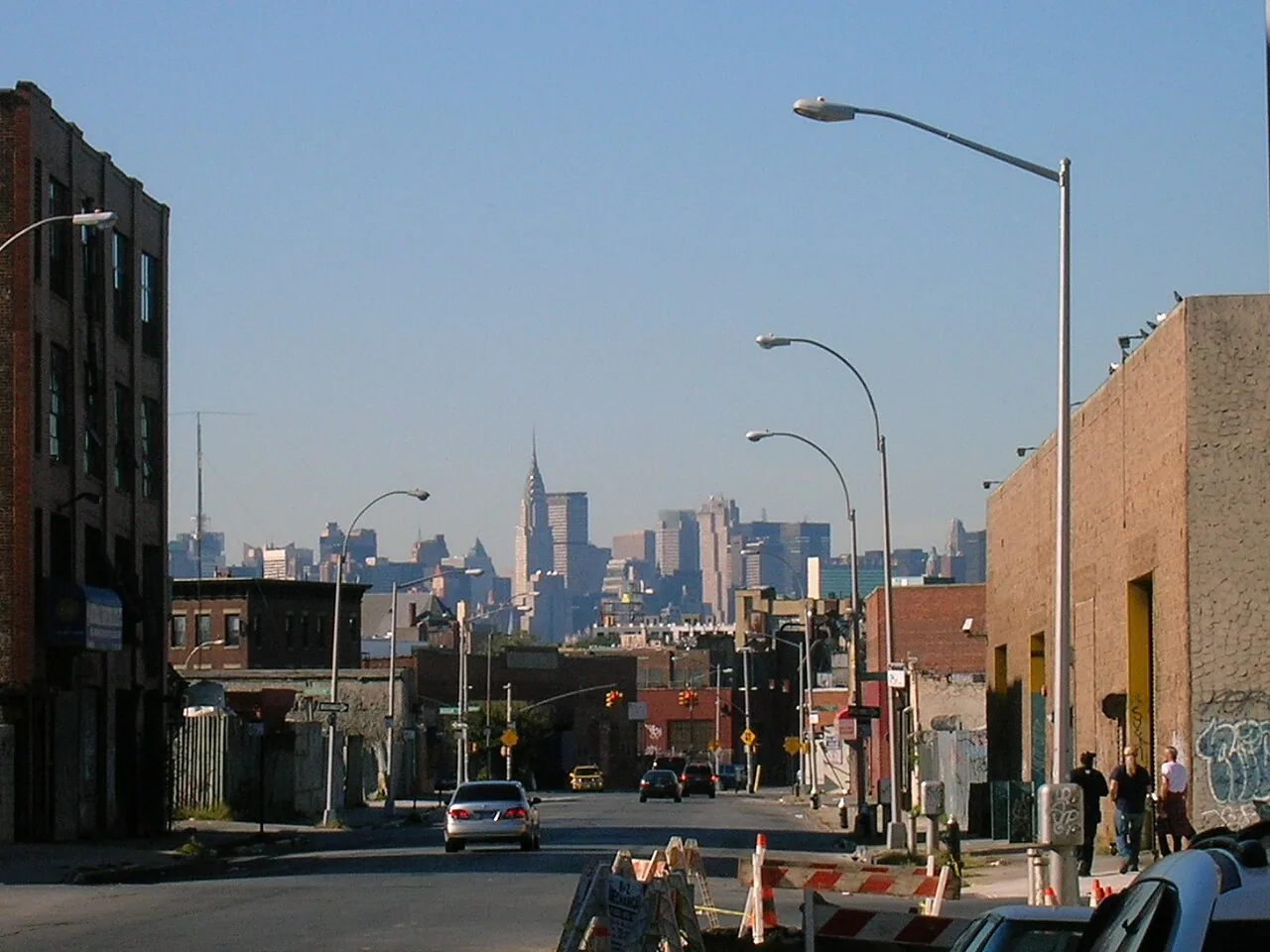
What a roof near that kind of use gets from us is this: a map of every vent and stack, a core from the roof deck, a flex test on the old sheet and a look at the drains. Hospitals have rules about dust, odor and notice, and a hospital roof job is planned with the facilities office. Factory roofs in East Williamsburg get the same questions about exhaust.
Details and seams
Details fail first on any thermoplastic roof, and near a vent they fail faster. We use preformed corners and boots wherever we can, weld every flashing and probe every seam. Termination bars at walls are fastened closely and sealed, and the counterflashing is lapped so water sheds off it.
A replaceable walk pad under an outlet that discharges onto the sheet takes the worst of it. Each detail is photographed before it is covered. Wind works hardest at the edge, so the perimeter gets the heaviest fastening; an EF2 tornado stripped a dealership roof in Bay Ridge in 2007. An old flashing failure found at tear-off gets rebuilt, not covered. The weld record goes in the file.
Heat, cold and storm water
The same flexibility that helps with chemicals helps in the cold. Snow near 30 inches a year and freeze-thaw cycles open any brittle seam. A white sheet reflects sun on a roof in a strong heat island, where July highs run near 85 F.
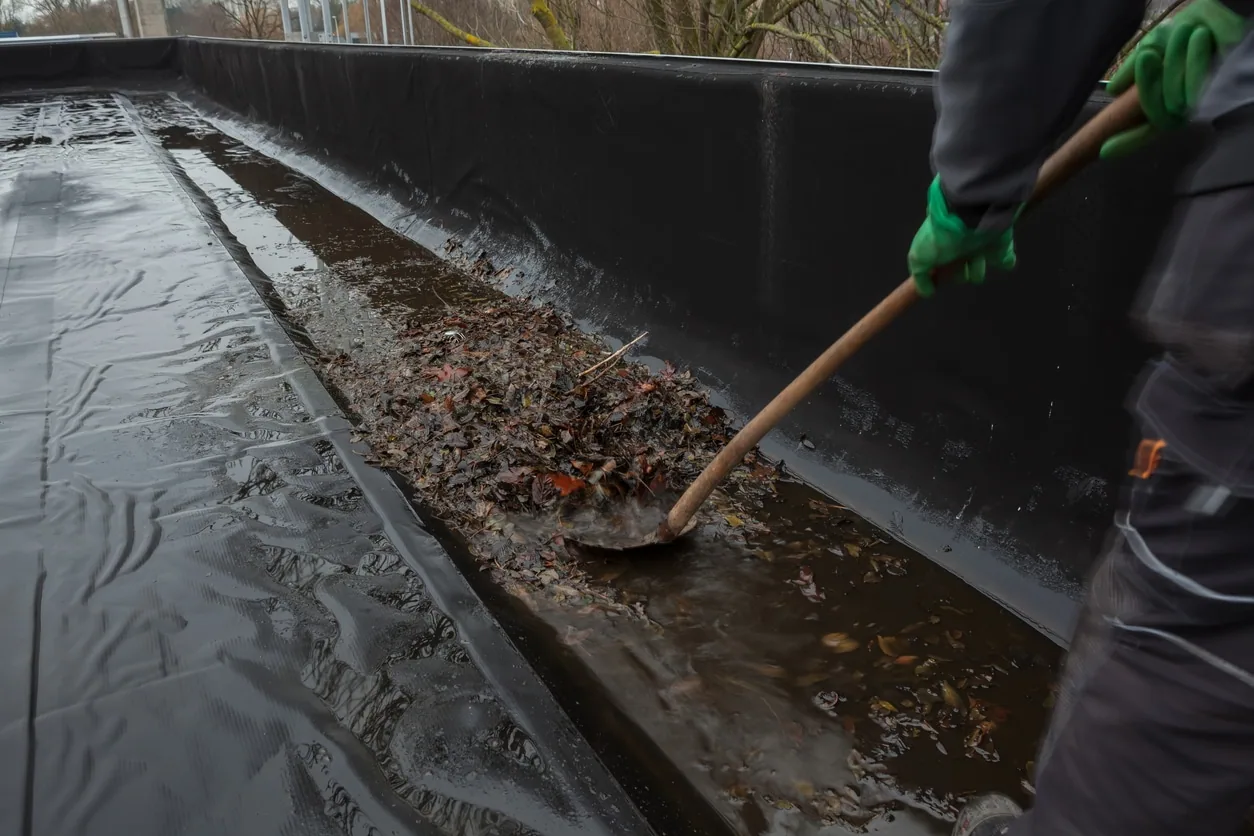
Storms test the drains. Ida's remnants on September 1, 2021 triggered the city's first flash flood emergency, and Sandy submerged the first floor of Coney Island Hospital in October 2012. A hospital roof that ponds around a vent can carry residue across the surface, and a leak in a hospital is more than a repair. We check the water sitting at each drain, correct the slope and test the overflow. A roof drain that works is part of the membrane, and one that does not will undo the best sheet. Clear baskets after leaf fall and after any heavy storm, and send photographs of any pond that lingers.
Closeout walk
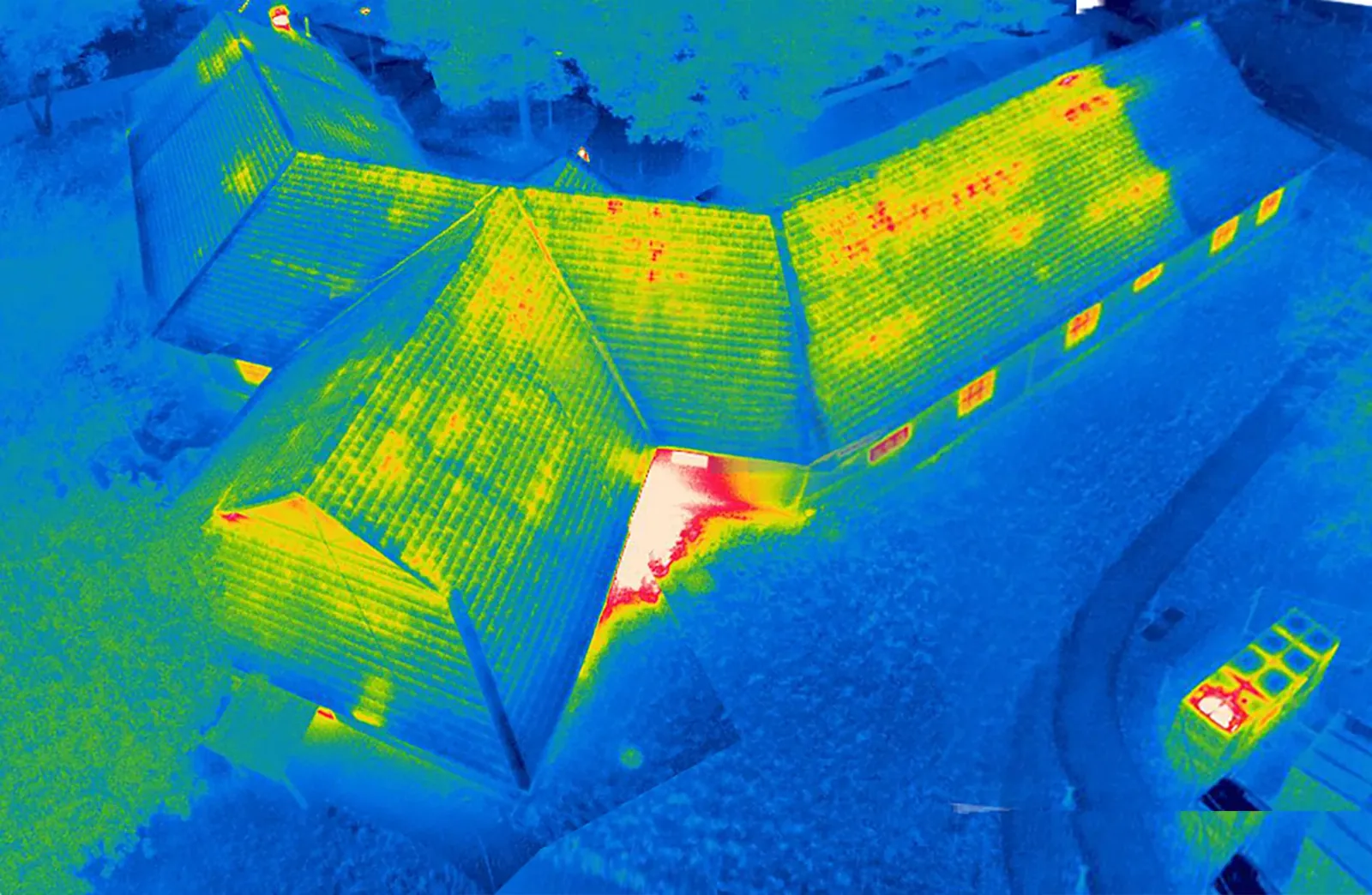
At closeout we walk the roof with the owner or facilities lead and probe the welds again. We test corners with water and check the ceilings below. The punch list gets cleared before we sign off. The file holds the exhaust map, the sample results, product data, weld records and photographs. A cleaning and inspection schedule goes in too, because residue left on the sheet can hold chemicals against it. An infrared moisture survey every few years shows whether the insulation under the new sheet is staying dry.
Commercial Roofing Questions
How do we know our sheet is losing its softeners?
The signs are stiffness, crazing, shrinkage at the edges and a dry, chalky surface. A flex test on a small sample and a hardness reading beside the vent, compared with a clean patch far from it, show the difference. We take the samples with the owner's permission, record where each came from and put the numbers in the report. If the numbers are close, we leave the sheet alone and re-test next season.
Do we need KEE across the whole roof or only near the exhaust?
Often only near the exhaust. We replace the damaged zone with an alloy sheet and tie it into the sound sheet with a tested joint. Mixing sheets works only when the two bond, so we check compatibility and write down the products. If the exposure spreads across the roof, or the old sheet is near the end of its life, the whole roof may be the cheaper path. We price both.
Will roof work near fume hoods or labs cause trouble?
Not if it is planned. We locate every intake and discharge on the first walk, ask the facilities office when the hoods are idle and schedule adhesives, welding and cutting for those hours. Low-odor products go on near intakes, and dampers get shut for sensitive steps when the building engineer agrees. A named contact on the building side can stop the work if a problem shows up.
What happens to the insulation under the old sheet?
We scan and core it. Dry insulation stays, and wet insulation comes out. A new chemically resistant sheet over a wet roof only seals the water in. We replace the wet parts with new board, then lay a cover board and the new sheet. The moisture map goes in the file, so a later survey can compare it with a fresh scan.