Commercial Roof Repair in Brooklyn, NY
A bucket under a drip is not a repair, and neither is a bead of mastic smeared over a crack. Real repair starts at the roof edge with a flashlight and a probe, tracing where the water enters and what has been done there before. Across Brooklyn the same few details fail again and again: seams that open as the sheet shrinks, parapet flashing pulled loose by the wall behind it, drain bowls that crack, and penetrations that were sealed once and never touched again. We repair the cause, record what we find, and tell you plainly when a repair has reached the end of its useful life.
Find the entry point first
Water on a ceiling tile rarely sits under the hole in the roof. It travels along the deck, down a column, or through a gap in the insulation before it shows itself. We start by walking the field and looking at every seam, every flashing and every curb, then compare what we see against the interior stain pattern. On a multi-story loft building in Bushwick or East Williamsburg, the leak can show two floors below the roof, so the walk covers the whole path, not just the corner where the tenant noticed it.
When the surface offers no answer, we use moisture meters or an infrared scan to see where the insulation is wet. The scan marks the actual wet zone on the roof, and the repair covers that zone. A small patch over a large problem simply moves the water.
The failures we see most
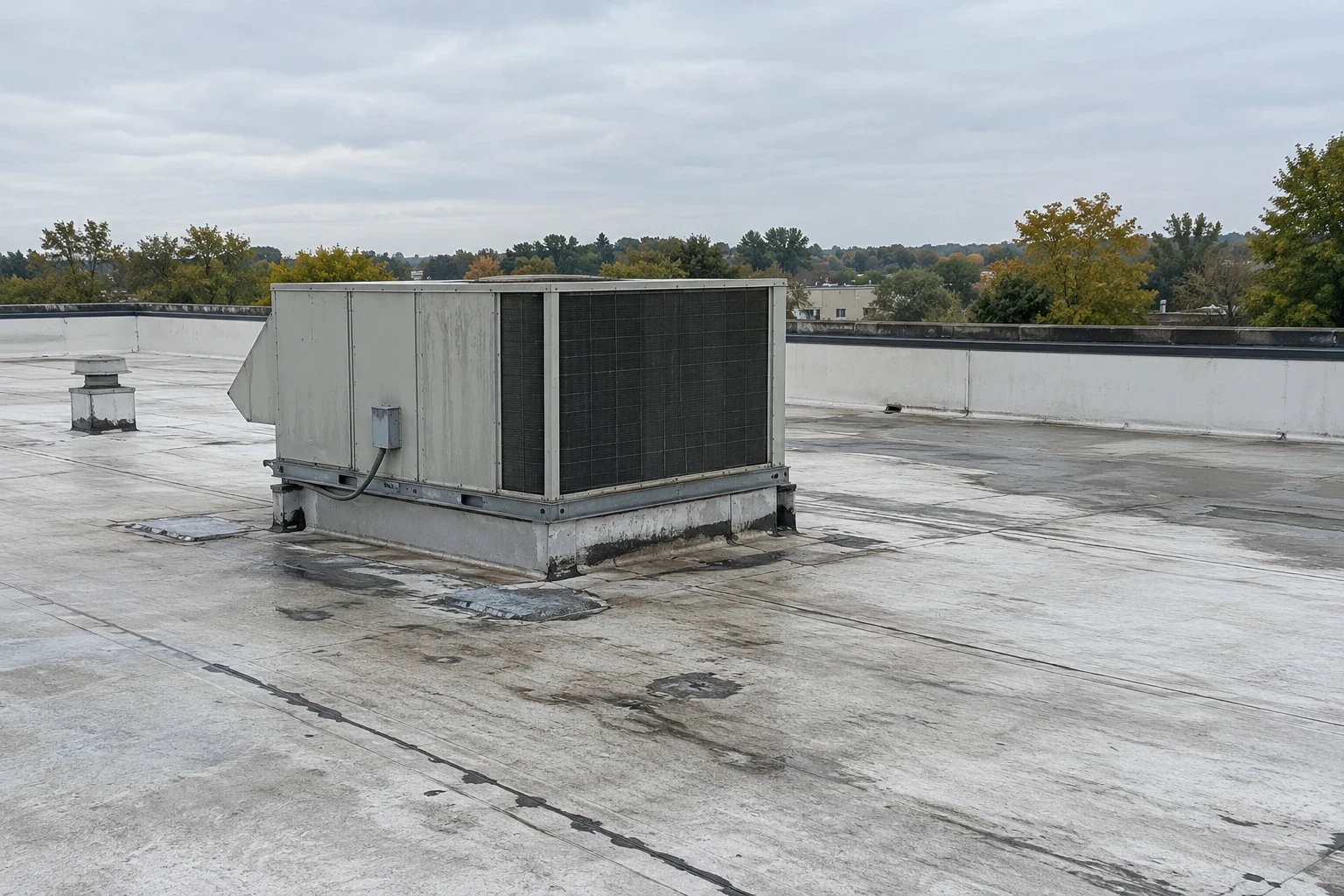
Seams open because membranes expand in July heat and contract in January cold, and the seam is where that movement concentrates. Flashing fails where it meets a wall, because the wall and roof move differently and the sealant between them gives up first. Punctures come from foot traffic and dropped tools. Ponding water breaks down surfaces that were never meant to stay wet.
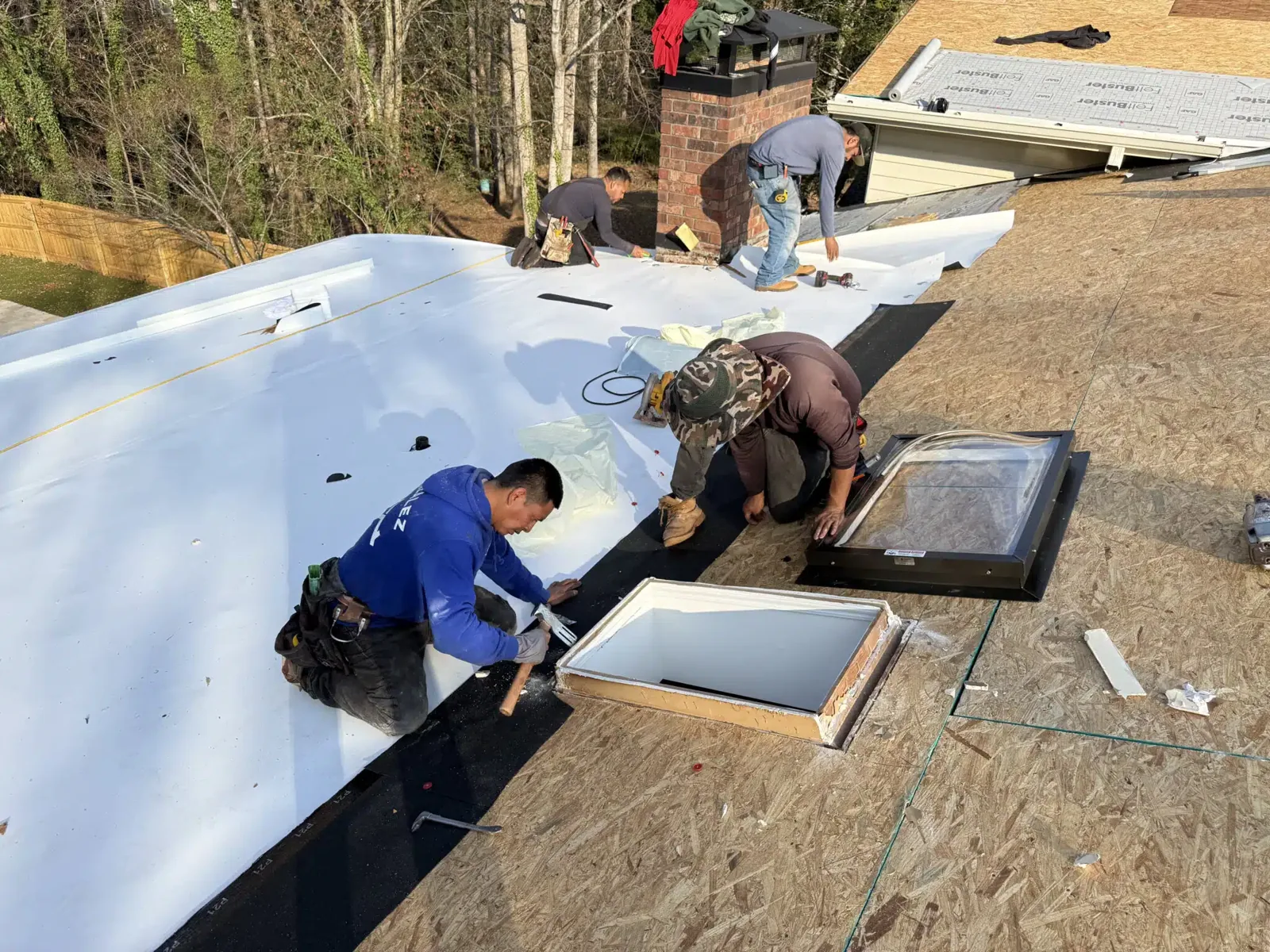
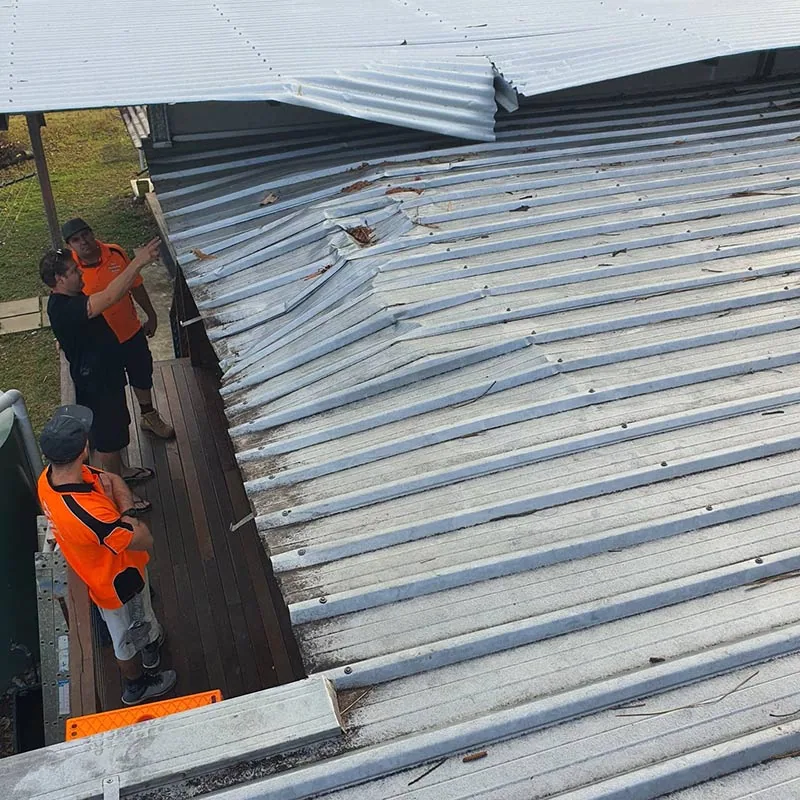
Each failure has its own repair. Open seams are cleaned and welded or re-adhered. Flashing is cut back to sound material and rebuilt with reinforced patches, not caulked over. Seam failure repair and flashing failure repair target the two places where flat roofs most often let water in.
Heat, cold and cloudbursts
New York City sees a July mean daily high near 85 degrees, a strong heat island effect, and about 30 inches of snow in an average year, with 27.3 inches falling in one day in January 2016. That range of temperature stresses every seam and sealant joint. A repair made in a cold snap may not bond as well as one made in mild weather, so we choose materials rated for the day's conditions and note any repair that needs revisiting in spring.
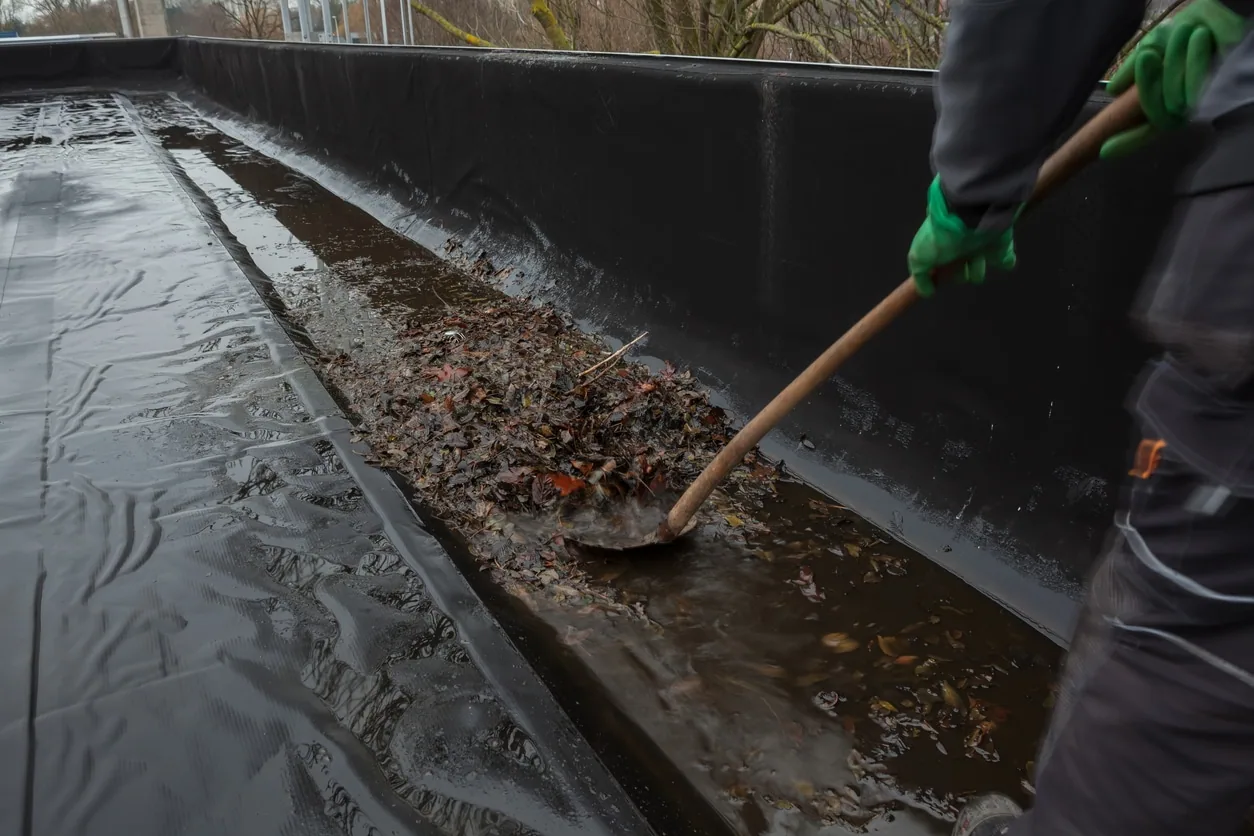
Heavy rain tests drains next. The remnants of Ida in September 2021 triggered the first flash flood emergency ever declared for the city, and a drain packed with debris cannot pass a cloudburst like that. Repairs on a flat roof always include clearing and checking the roof drains and scuppers, because a clogged drain makes every other repair fail faster.
Mill, warehouse and rowhouse roofs
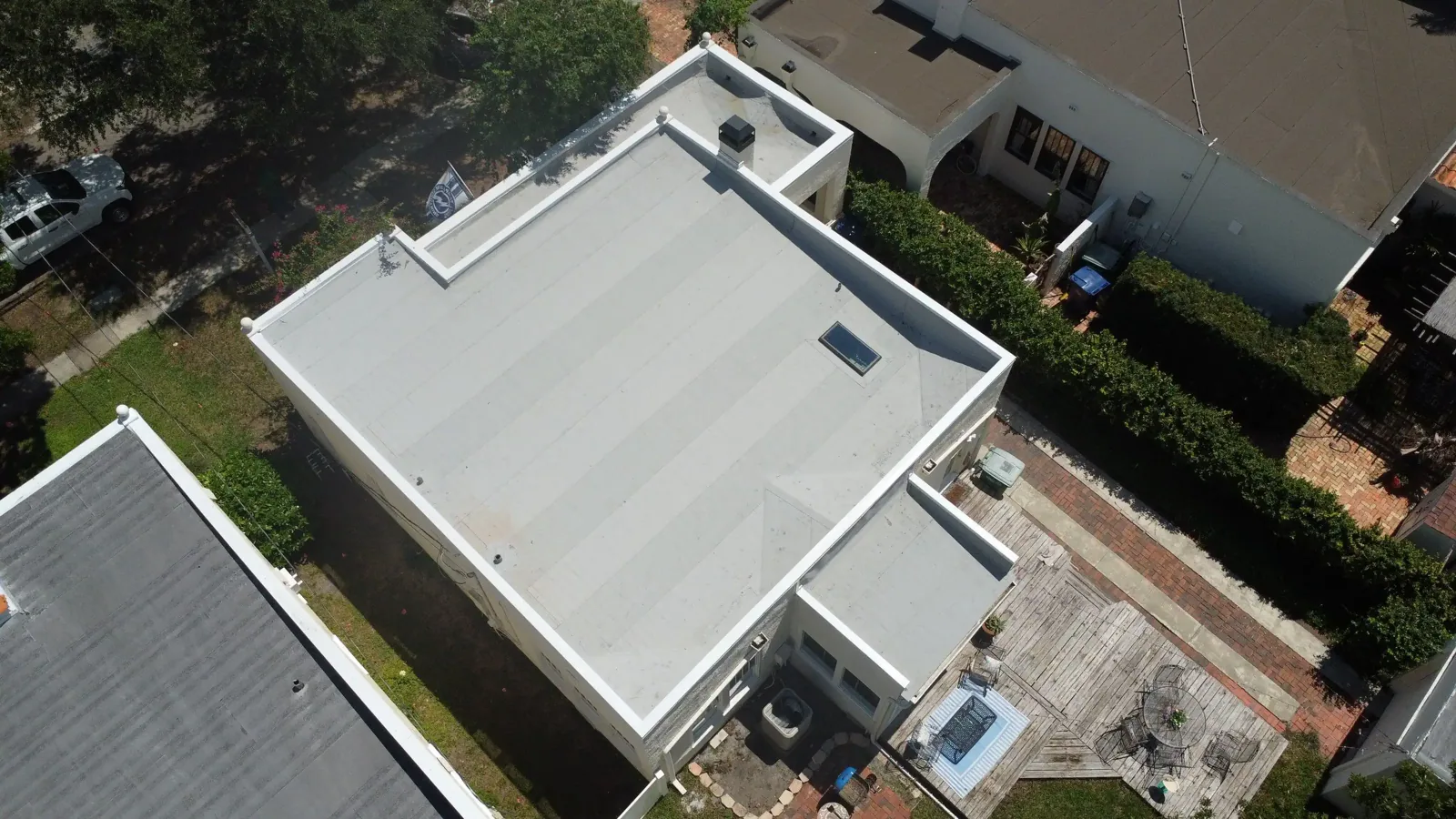
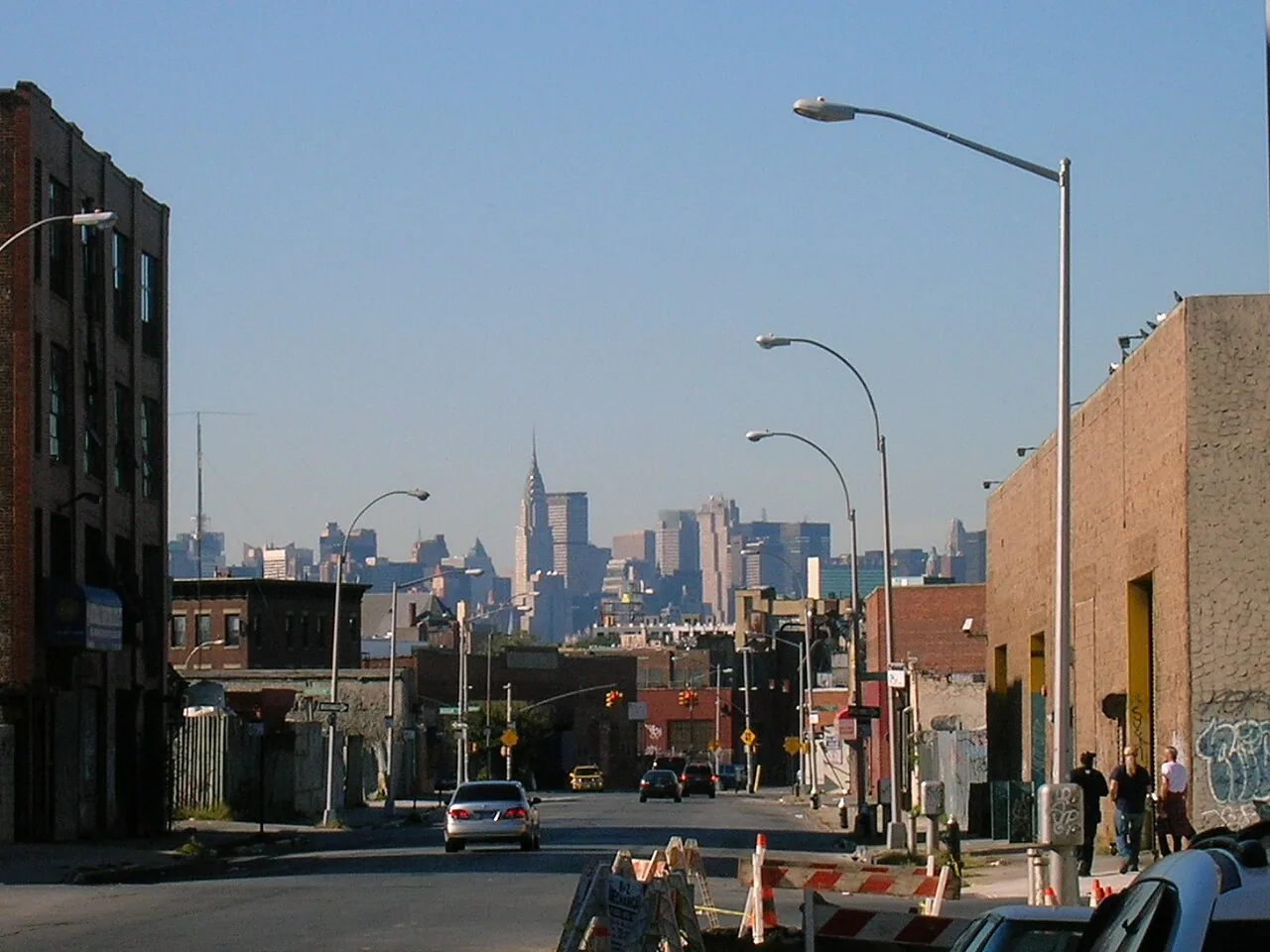
The East Williamsburg Industrial Park holds factories, warehouses and loft buildings between Flushing Avenue and Newtown Creek, and its roofs vary as much as the businesses beneath them. In Greenpoint, warehouses in the industrial area host film and television soundstages, where a drip into a set is a production delay, not just a stain. Repair on those buildings has to be fast, tidy and quiet. Repair in East Williamsburg follows that rule.
Elsewhere, a Park Slope or Bedford-Stuyvesant block of rowhouses with commercial ground floors has small roofs and tall parapets. Repairs there often center on the coping and the wall tie-in. The Park Slope Historic District alone covers 2,575 buildings, so owners should check whether landmark rules apply before changing a visible parapet.
Access, safety and tenants
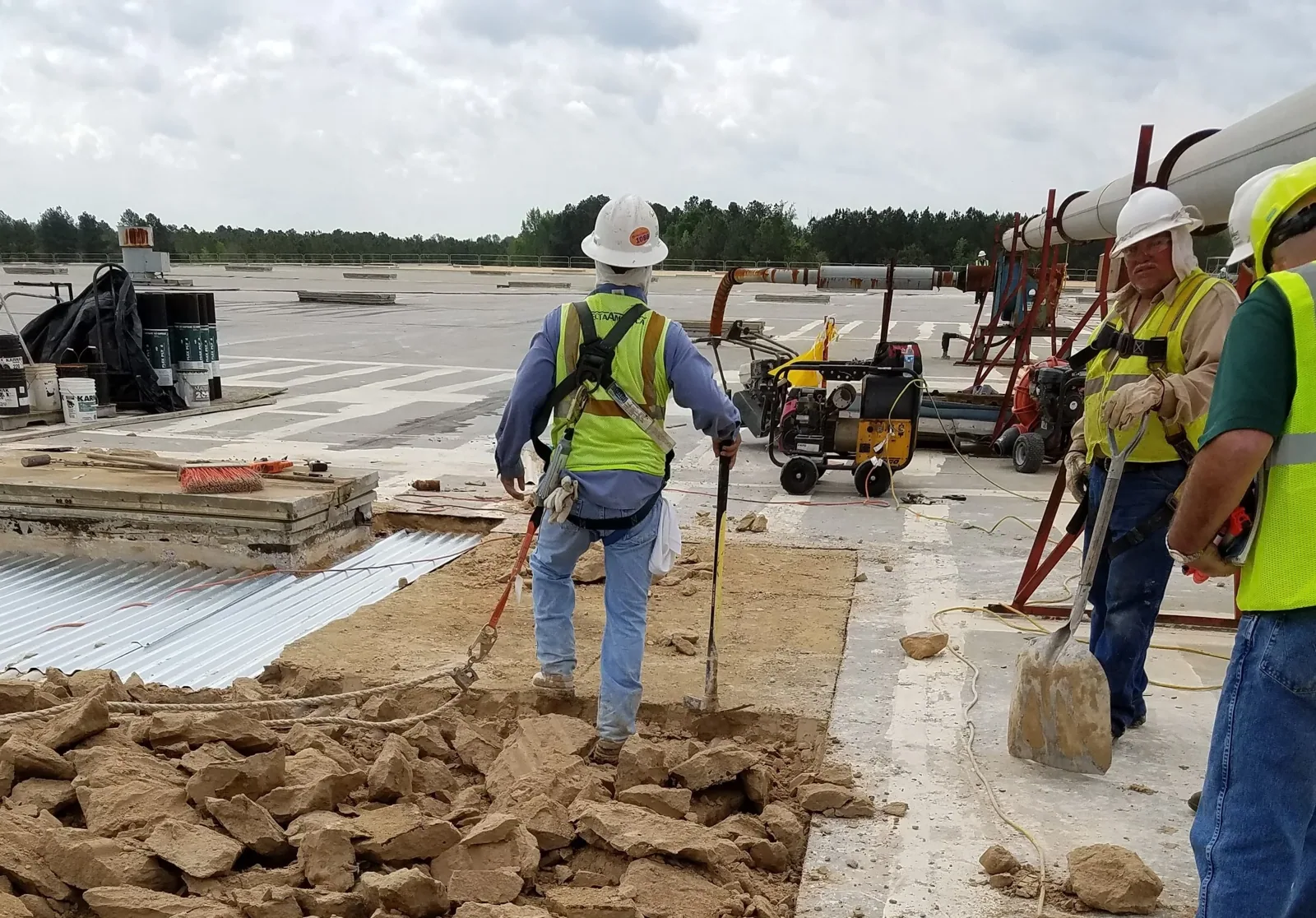
A repair visit is only as good as the access plan. Many Brooklyn roofs are reached through a bulkhead door, a ladder from a stairwell, or a hatch over a top-floor corridor, and each route needs a call ahead to the super or building manager. We bring protection for floors and stair landings, keep torches off the roof unless the setting allows them, and tie off wherever the parapet is lower than code height.
Interior work matters too. If a leak has soaked a ceiling, we tell the manager which tiles and insulation to pull so the space can dry, and we flag any electrical fixtures that sat in the water path. The roof repair and the interior cleanup need to happen in the right order, or the building ends up with a dry roof and a moldy ceiling.
What the repair file contains
Each repair gets a short record: where the entry point was, what failed, the material used, and a photo before and after. If an insurance claim or warranty is involved, that file becomes the proof. Owners with several buildings can keep the records together, which pairs naturally with a preventive maintenance program that catches small failures before they become tenant calls.
We also mark which repairs are temporary and which are permanent. A temporary patch holds until weather or access allows the permanent fix, and that distinction is written on the report so it does not get lost in the next management change.
When repair stops making sense
Repair has a ceiling. When wet insulation covers a large share of the field, when seams fail again within a season, or when the membrane is brittle enough to crack under a footstep, spending more on patches wastes budget. We say so, show the evidence, and compare the cost of continued repair against a full replacement over the same ten years.
Commercial Roofing Questions
How fast can a crew get to a leaking roof?
Active leaks get priority, and emergency calls run around the clock. For a planned repair, we usually schedule the walk within days and the work as soon as materials and weather agree. Where water is entering now, we stop it first and finish the permanent fix once the roof is dry enough to bond.
Can one repair fix several leaks at once?
Sometimes. Leaks that share a cause, such as a long failed parapet termination, can be fixed in one pass. Leaks with different causes need separate repairs, and we list each one so you can see what the money buys.
Why did a patch fail after only one winter?
Most early failures trace to a patch placed over a wet or dirty surface, or over a seam still moving. We clean, dry and check the substrate before any patch goes on, and in winter we use cold-weather materials or hold the permanent repair until the surface will accept it.
Do repairs affect the roof warranty?
Unapproved repairs can void some manufacturer warranties, so we read the terms first. Where a warranty is active, we use methods and materials the manufacturer allows and document them. If a warranty has expired, the repair choice is open.
What should I send to get a repair quote?
Photos of the leak inside and of the roof above it, the building's address area, the roof type if known, and the date of the last repair. That is enough for us to pick the right crew and bring the right materials to the first walk.
Who decides whether a leak is a roof problem or a plumbing problem?
We check both. A roof leak shows up during or soon after rain, while a rooftop unit's condensate line can leak on a dry day. We trace the stain, test the suspect line with water, and tell the manager which trade should take the next step.