Flashing Failure Repair in Brooklyn, NY
Where the roof meets the parapet wall, run a flat hand along the joint. On a failed flashing the sheet has pulled an inch away from the brick, the mastic has cracked into a gray lace and a dark line of water staining runs down the wall below. That joint is the oldest trouble spot on a Brooklyn, NY roof. The field of the membrane can be sound for years while the flashing along the walls fails. A flashing is a small piece of roof that does a very large job, and when it goes the water runs straight into the wall and the rooms beside it. Take a photo of the joint at the corner and midway along the wall.
We find, rebuild and test failed flashing on flat and low-slope roofs across the borough.
What a wall flashing is made of
A wall flashing has two parts. The base flashing turns up the wall from the roof. The counterflashing laps over its top and sheds water away from the wall. A termination bar, a bead of sealant and fasteners hold the top edge.
Each part fails its own way. Base flashing shrinks and pulls from the wall in cold and sun. Sealant dries and cracks. Counterflashing rusts at its fasteners or loosens in the mortar joint. A termination bar loses its bite when the brick behind it crumbles. On older roofs the base flashing is often tar and felt turned up the wall, and the top edge was just buttered with mastic. We check each part and rate it. Keep the photos with the roof plan.
Cornice returns need their own mention. At the corner of a rowhouse parapet, the cornice wraps around and the roof edge turns with it, and the flashing has to follow a curve and a step in one place. Water likes to hide there. We look at the return from above and from the street, and we check the brick under it with a hammer. A failed return is often the source of a stain that shows up two floors down at the front wall.
Brooklyn walls and why they matter
Brownstone and brick rowhouses make up much of the borough's housing, and Bedford-Stuyvesant alone counts roughly 8,800 buildings from before 1900. Buildings like those often have flat roofs ringed by brick parapets, bulkheads, chimneys and cornice returns at the corners. There is a lot of wall for a small roof.
The brick itself is old. A reglet or termination bar cannot always bite into mortar that has weathered. A new flashing set into a failing wall will fail again, so the wall may need repointing first. Mill and loft buildings in Sunset Park, Bushwick and East Williamsburg can add tall parapets and many penetrations. Ask the facade contractor for wall findings before the roofing scope is final.
What cloudbursts do to a weak joint
Ida's remnants brought a flash flood emergency to New York City on September 1, 2021. Rain at that rate leaves a roof that ponds against its walls asking the flashing to hold back standing water. Base flashing built for ordinary rain gives up fast.
The ceiling stain that follows often sits beside the wall, and the first suspect is the flashing. We trace it with a hose, working from the low point up, and with an infrared scan. If a pond is the cause, we correct the drainage too, through ponding water repair. Late-day thundershowers are frequent in summer, so a marginal joint is tested often. Record the date of every leak.
Penetrations count as walls in miniature. Each pipe, curb or pitch pan carries its own flashing, with the same rules of height, termination and counterflashing at a smaller scale. A roof with a dozen openings and four hundred feet of wall has a long list of joints to read, so the plan marks each one. We number them on the sketch and rate them one at a time.
Heat and cold pull on every joint
July highs near 85 F and a strong heat island bake a dark roof all summer, and winter brings snow near 30 inches a year with freeze-thaw cycles. The membrane moves a lot, and the brick wall moves a little. The flashing absorbs the difference, and the bond at the wall weakens a little each cycle. A joint that looks tight in August can open in the first hard freeze, so we inspect after winter. A gust can start the same failure when it lifts the sheet at the wall, as on a wind-damaged roof. We measure how far the membrane has pulled back from the wall in inches, because the same measure next year shows the rate of aging.
The rebuild in order
A proper repair strips the failed material and rebuilds in sequence. The wall is cleaned and, if needed, repointed. Primer goes on. New base flashing is adhered or fastened to the height the system requires. A termination bar secures the top. New counterflashing laps over it. Sealant finishes the joints but does not carry the load.
Corners get formed pieces, not folded sheet, because a fold is a future leak. Where the old flashing belongs to a roof that is otherwise sound, the fix is a targeted commercial roof repair. Where the sheet is also worn, the flashing is rebuilt as part of a larger scope. We test the finished detail with water before the crew leaves and photograph each layer before it is covered. Keep the photos in the closeout file.
Seams and flashings often fail together. A seam open near a wall is usually the first sign that the membrane has shrunk, and the shrink that opened the seam also pulled on the flashing. Fixing one and not the other leaves the roof half done. We probe every seam within a few feet of a wall during the flashing walk and report the two findings together, so the repair restores the whole joint and not one point on it.
Bulkhead doors, hatches and curbs
The bulkhead door and the hatch curb are the most used openings on the roof. Their flashings take foot traffic and ice, and the threshold needs a sill that sheds water. A curb flashing that is kicked every day fails faster than one on a wall.
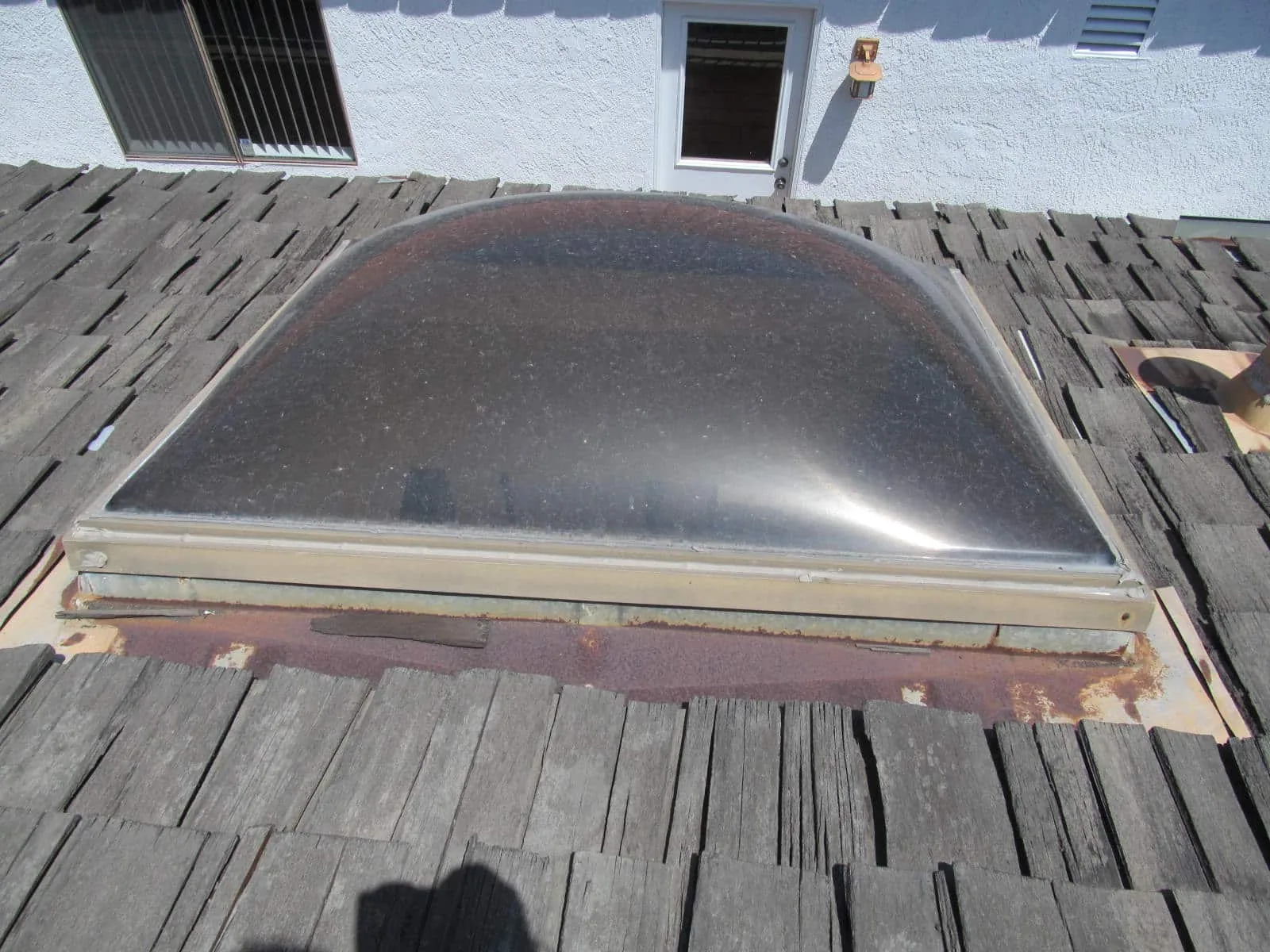
Flashing around skylights and penetrations deals with the field openings, and wall flashing deals with the edges. A roof with both types failing needs both fixed in the same visit. For buildings in Bushwick and other loft districts, the count of doors and curbs is high. Walk every threshold with a hose and mark the ones that pond.
Maintenance is cheaper than repair. A preventive roof maintenance visit presses on every sealant joint, checks every termination bar and reseals what has lost its give. Sealant ages in a few seasons; a bead resealed on time costs far less than the wet insulation a neglected one leads to. The visit report notes the condition of each wall, so the next walk starts from a record.
Commercial Roofing Questions
Patch or rebuild?
It turns on the wall behind the flashing and the extent of the failure. Patching suits a hairline crack in flashing that is otherwise sound, on a solid wall. Failed termination, rusted counterflashing or crumbling brick means a rebuild.
Will sealant alone stop a wall leak?
Sealant can slow a leak for a season. It is a finishing material and not a replacement for a mechanical termination and a counterflashing that sheds water.
How high should the base flashing go?
The system maker sets the minimum, and a pond or snow line may justify more. We check the height against the ponding depth we measured.
Can flashing be repaired in winter?
Some temporary repairs can. Permanent work with adhesives needs a dry surface and moderate temperatures, so we dry in and finish when the weather allows.
Who does the brick work behind the flashing?
A mason or facade contractor, and we coordinate the order so the flashing goes on after the wall is sound.