Skylight and Penetration Flashing in Brooklyn, NY
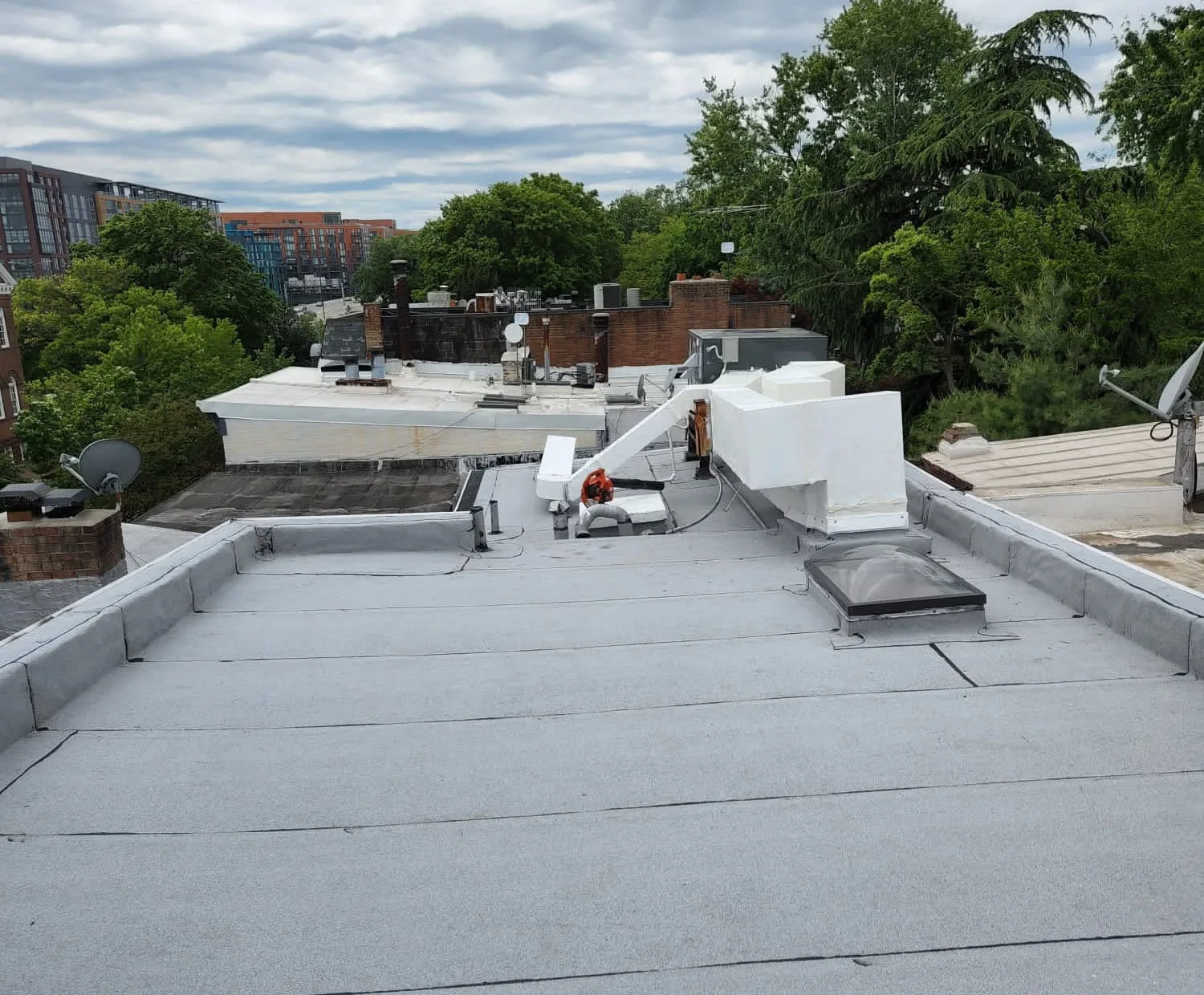
Crouch beside a pitch pan on an old Brooklyn, NY roof and look at the fill. If the black filler has shrunk away from the pipe, leaving a dark gap and a crust of dirt, water has a clear path into the building every time it rains. Pitch pans, hatch curbs, skylights, vent stacks and conduit are all holes in the roof, and every hole needs a flashing that keeps the water out for years. The field of the roof can be sound while the openings leak. Count the openings on your roof, mark them on a sketch and send it with your request.
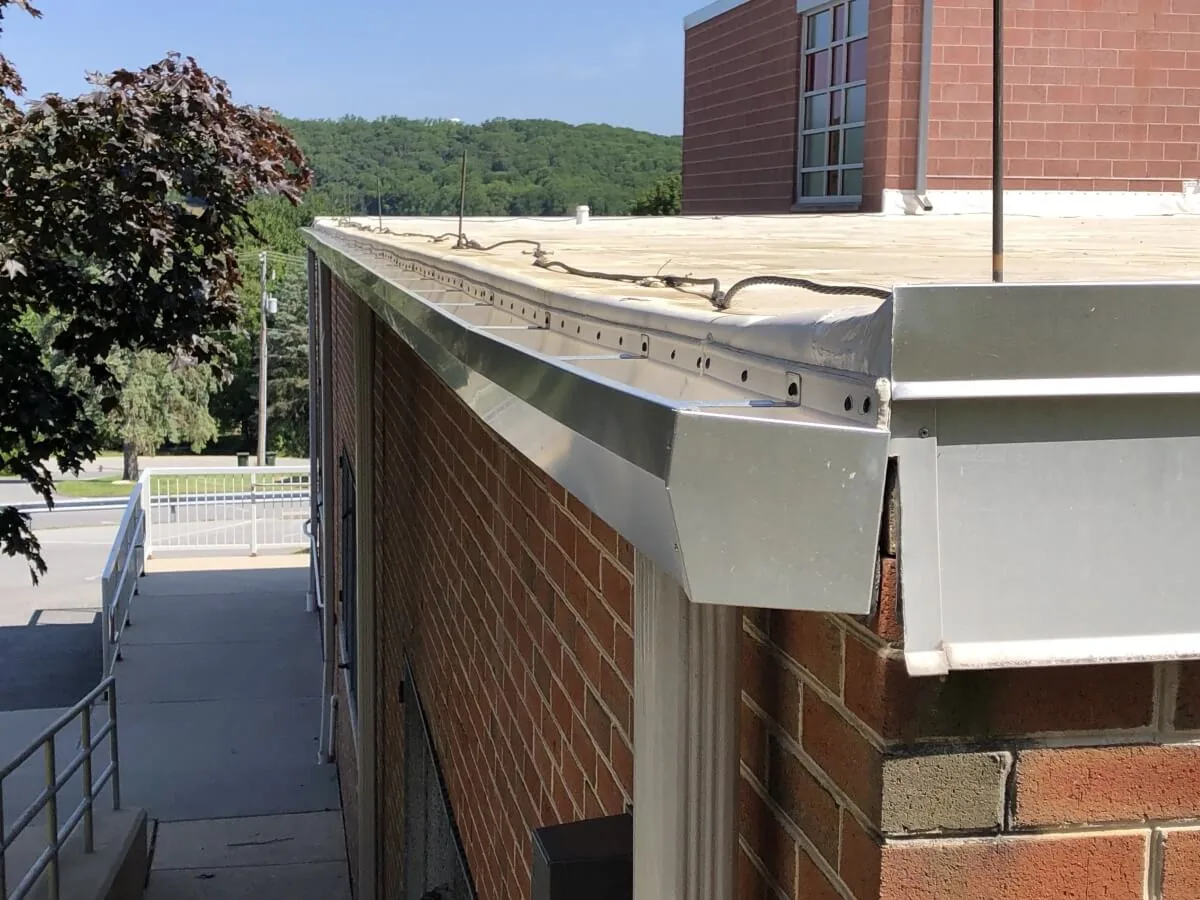
We repair and replace skylight curbs, hatch curbs, pipe flashings and rooftop penetrations on flat and low-slope roofs across the borough.
Count the holes first
We start by walking the field with a clipboard and a camera. Every opening gets a number, a photo and a note: what passes through it, what the flashing is made of, how it looks and who put it there. Loft roofs and mill roofs alike can hold dozens of them.
That count tells us where to look. Openings cluster around mechanical rooms, kitchens and old chimneys. Abandoned pipes and capped stubs are common, and each one is a free leak. We mark which openings are live, which are dead and which can be removed and patched. Taking out a dead penetration is the cheapest flashing repair there is. Send us a list of the tenants and what each added to the roof over the years.
Where flashings fail
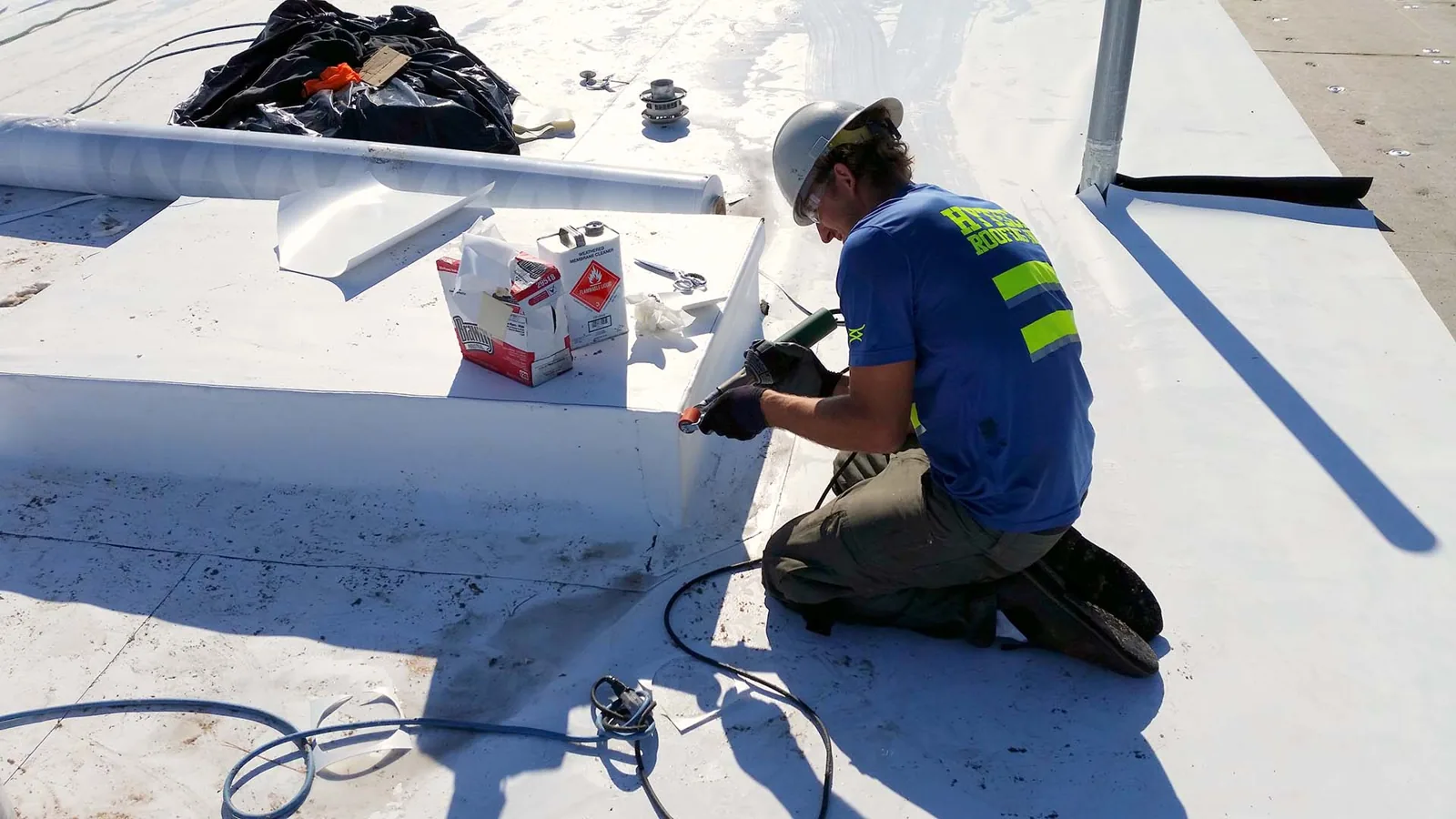
Mastic and sealant dry out and crack in the sun. Rubber boots split where ultraviolet light has aged them. Metal flanges rust at the corners. Pitch pans shrink as the filler cools and ages. The membrane pulls away from a curb in the winter cold and lets water run behind the base flashing.
A dark roof bakes every sealant joint all summer long, helped along by a strong heat island and July highs close to 85 F. Winter adds snow near 30 inches a year in New York City, and freeze-thaw cycles pull flashings apart at every corner. We look at the corners first. If one opening leaks, the neighbors usually follow within a season, so a commercial roof leak repair at one often becomes a sweep of the rest. Test each repaired opening with water before the crew leaves.
Sort the failures by cause before you pay for them. A cracked sealant bead is a maintenance item. A boot split by sun is a replacement item. A curb flashing that pulled away from the wall is a flashing failure with a deeper cause, usually a shrinking membrane or a loose wall. If the cause is not fixed, the new flashing opens up again in a season or two. We write the cause next to the fix in the report so the owner can see the difference.
Skylights on loft and factory roofs
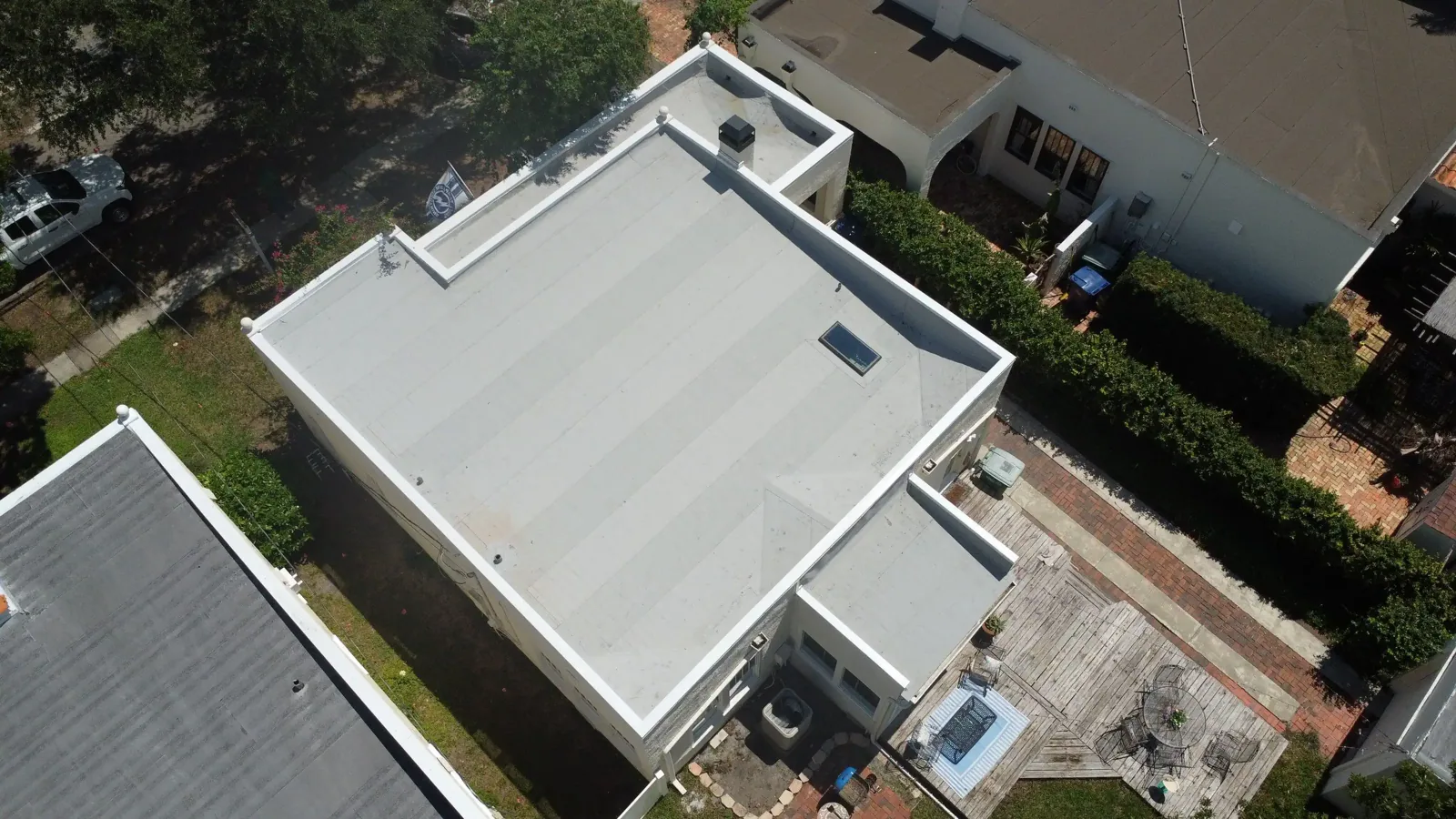
Dumbo's industrial district holds 95 contributing buildings, among them early reinforced-concrete factories, and a factory roof of that kind may carry skylights that light the floor below. A skylight has four weak points: the curb flashing, the glazing seal, the frame corners and the condensation gutter. The curb is the usual leak path, especially at the upslope corner where water collects.
The options are to re-flash a sound curb, replace a failed unit or remove the skylight and close the opening with an insulated panel. Re-flashing costs the least and fixes most leaks. Replacement makes sense when the glazing has crazed or the frame has rusted. Removal suits a skylight nobody needs. If the building sits in a historic district, a skylight seen from nearby roofs may need review before a change. Measure the curb height and send it with the photos.
Hatches, bulkhead doors and units
A hatch curb and a bulkhead door are the most traveled openings on the roof, and the ones that get banged and bent. The curb flashing at a bulkhead door takes foot traffic and ice. The threshold needs a proper sill and a tight seal, since water pooling at the door will find its way in.
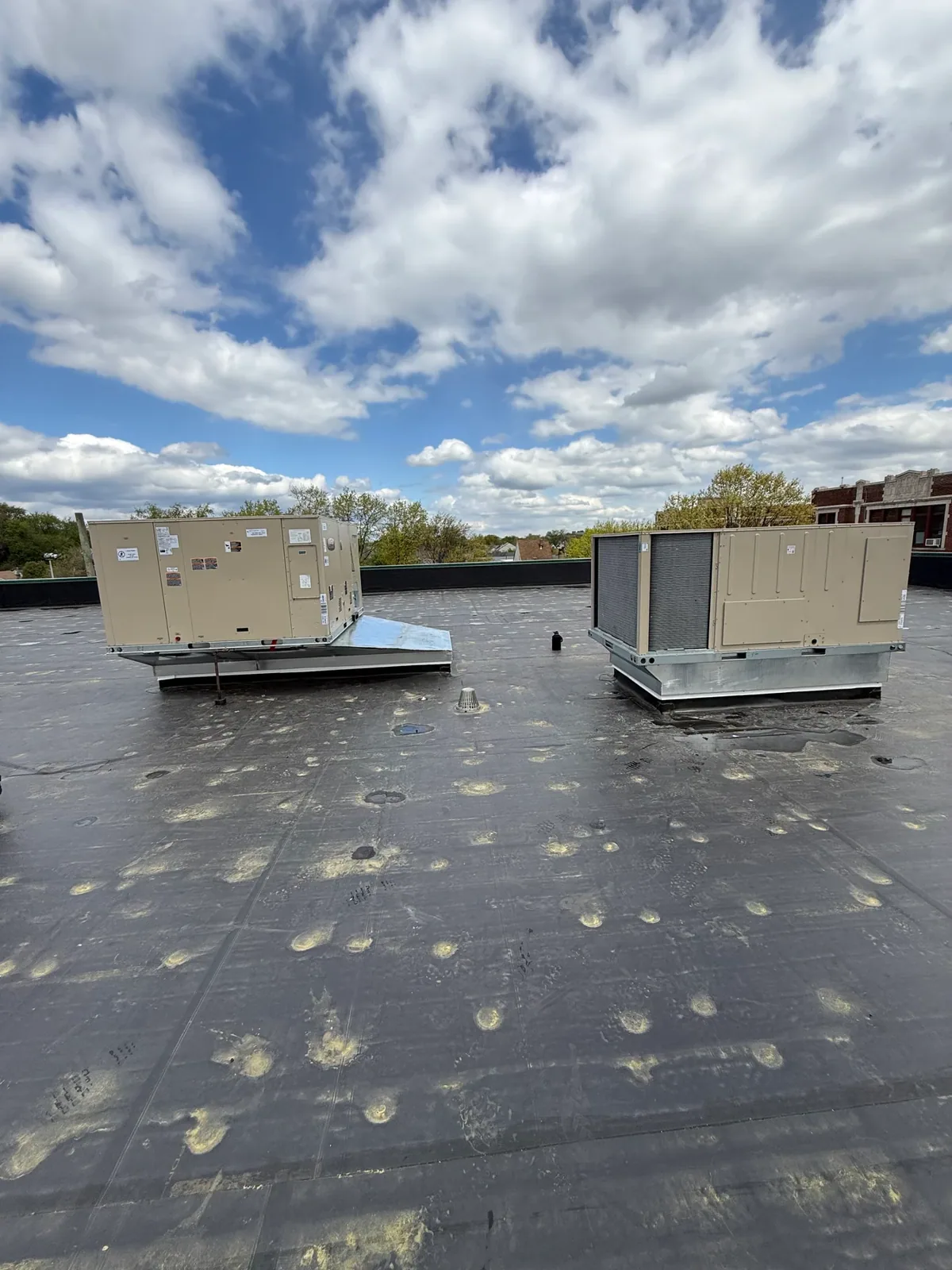
Rooftop units sit on curbs or rails, and each has a service path, condensate lines and electrical conduit. The structure under the unit is a curb and support question, and the flashing is where the unit meets the membrane. We coordinate with the mechanical contractor so nobody sets a unit on a bad curb. A walkway pad along the service path saves the membrane. Tell the HVAC crew to call before they cut or move anything.
What a cloudburst does to a low flashing
When Ida's remnants hit on September 1, 2021, the city declared its first flash flood emergency. Rain at that rate leaves a roof that ponds around its openings asking each flashing to hold back standing water, and standard flashing height is meant for ordinary rain, not a pond.
We compare each flashing height with the ponding depth we measured. If water collects around a curb or a pipe, we fix the drainage first, through ponding water repair, or we raise the flashing. A skylight in a low spot is the worst case. In Williamsburg, where former factories and warehouses have been converted to lofts and apartments, each conversion can add its own vents, units and openings. Photograph the water line around each curb after a storm.
The opening map and the closeout walk
When we finish, the owner gets a roof plan with every opening numbered, a photo of each flashing before it was covered and a note of the materials used. We walk the roof with the super and test the key openings with a hose from the low side up.
The map matters later. When a tenant adds a unit, the map shows where the old openings are. When a leak starts, the map says which flashing was renewed and when. A roof condition report carries the map forward. Update it whenever anyone cuts a new hole, and tell the building staff to call us before any roof penetration is made.
Commercial Roofing Questions
Can sealant alone stop a leaking pipe boot?
It can slow a leak for a season. A boot that has cracked, a collar gone loose or a flange lifted off the deck needs replacing. We use sealant as a finishing step on top of a sound flashing, and we do not count it as the repair.
Is it worth replacing a skylight or just re-flashing the curb?
If the glazing and frame are sound, re-flashing the curb fixes most leaks at the lowest cost. If the glazing has crazed, the frame has rusted or the seal has failed, flashing a dying unit repeats the leak. We look at the unit before we quote either.
How do you find which opening leaks?
An infrared scan after a sunny day shows a warm halo around a wet opening, and a moisture meter confirms it. A water test with a hose, working from the low side up, isolates the entry. The stain inside is rarely under the leak.
What about pipes and stubs nobody uses?
Dead penetrations should come out. We cut the pipe below the deck if the building allows, patch the opening and close the roof. It costs less than flashing the stub again, and it removes a future leak.
What should tenants do before they add equipment?
Call the owner and the roofer first. A new unit needs a curb, a flashing and a place on the plan. A cut made without notice is the most common way a good roof gets a new leak.