Roof Condition Reports in Brooklyn, NY
Kneel at a cornice return on a Bed-Stuy rowhouse roof and you can see in half a minute whether the report on your desk is worth anything. A real report has a photograph of that exact corner, a note on where the flashing lifts, and a line about what the lifted flashing does to the brick below. A weak one says the roof is in fair condition. We write the first kind. Every condition report we hand over in Brooklyn, NY is built from a walk of the whole roof, with each defect pinned to a plan and a picture.
Walking the field
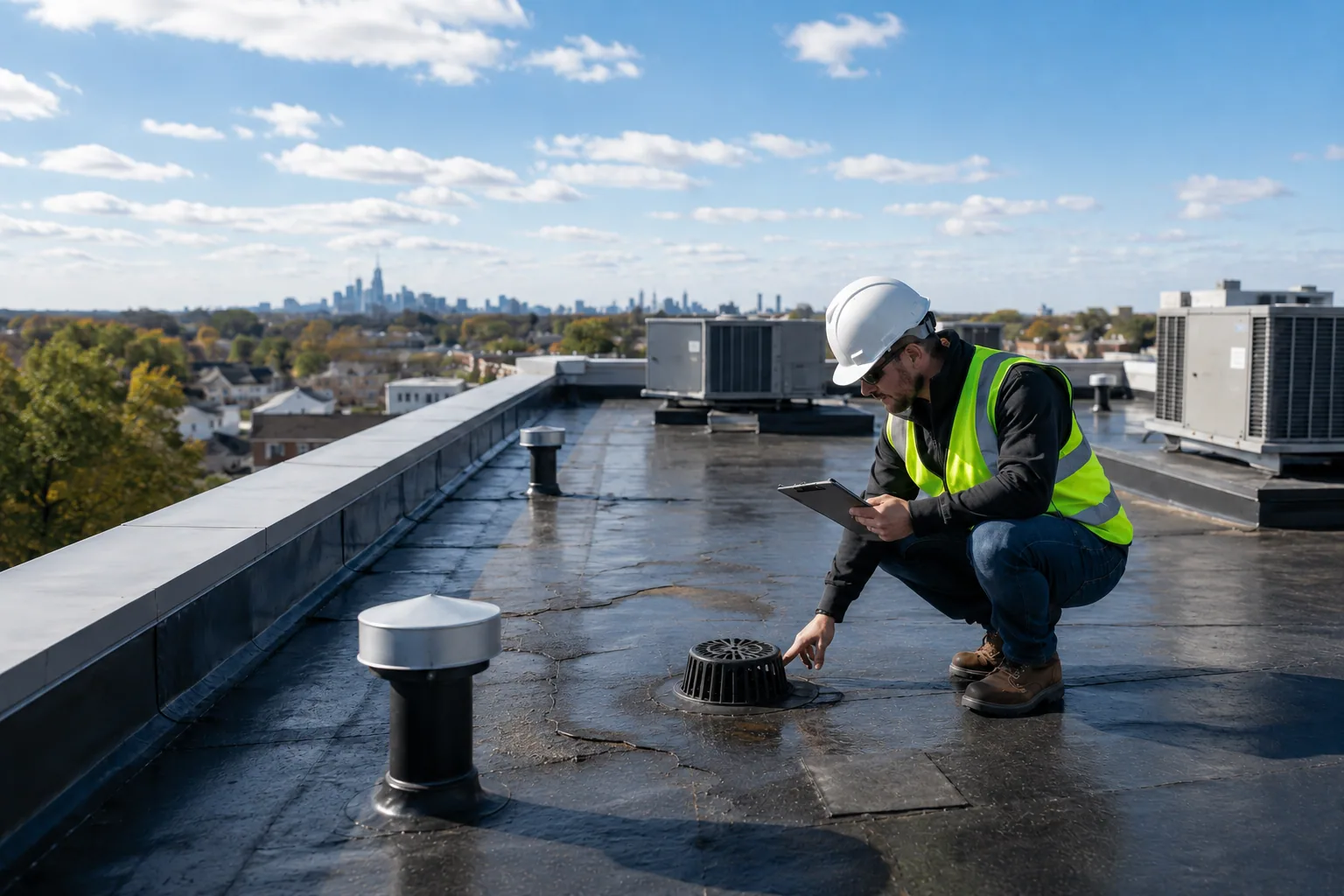
The report starts on foot. We cross the field in a pattern, press the membrane where it feels soft, probe seams with a blunt tool and look at every fastener line near the perimeter. Low spots get a depth measurement after rain, because ponding that clears in a few hours is a different finding from water that sits for two days. Each location is photographed with a marker on the plan so anyone reading the report can find the spot again.
On a tar-and-gravel roof we look for bare patches, blistering and splits along old tie-in lines. On single-ply we trace seams and look for punctures where service trades have walked. On metal we check laps, fasteners and sealant at the ridge and the endwalls.
Drains and edges
Water leaves a Brooklyn roof through drains, scuppers and gutters, and the report gives each its own entry. The roof drain basket is photographed from above, the sump of water at the drain is measured, and the pipe is checked for flow. Scuppers get the same treatment, with a note on whether the opening sits flush with the membrane or has been raised by repeated patches. Ida's remnants brought the city its first flash flood emergency in September 2021, and a drain that backs up in that kind of rain is the first place a report should look.
Edges follow. We photograph coping joints, edge metal, parapet flashing and the mortar behind them, because a wall that takes in water from a cracked coping joint shows up as interior staining months later, far from the source.
What is under the membrane
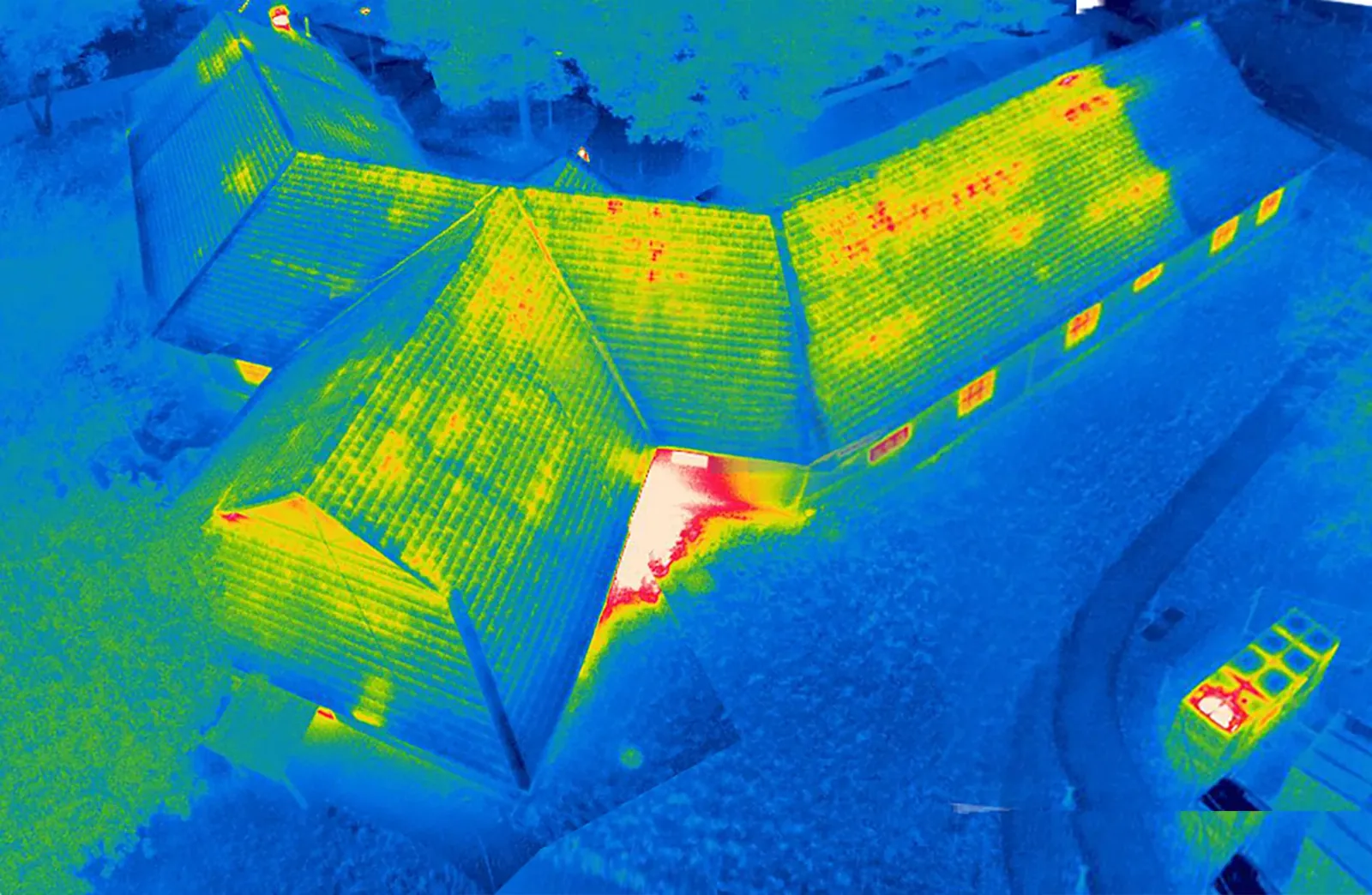
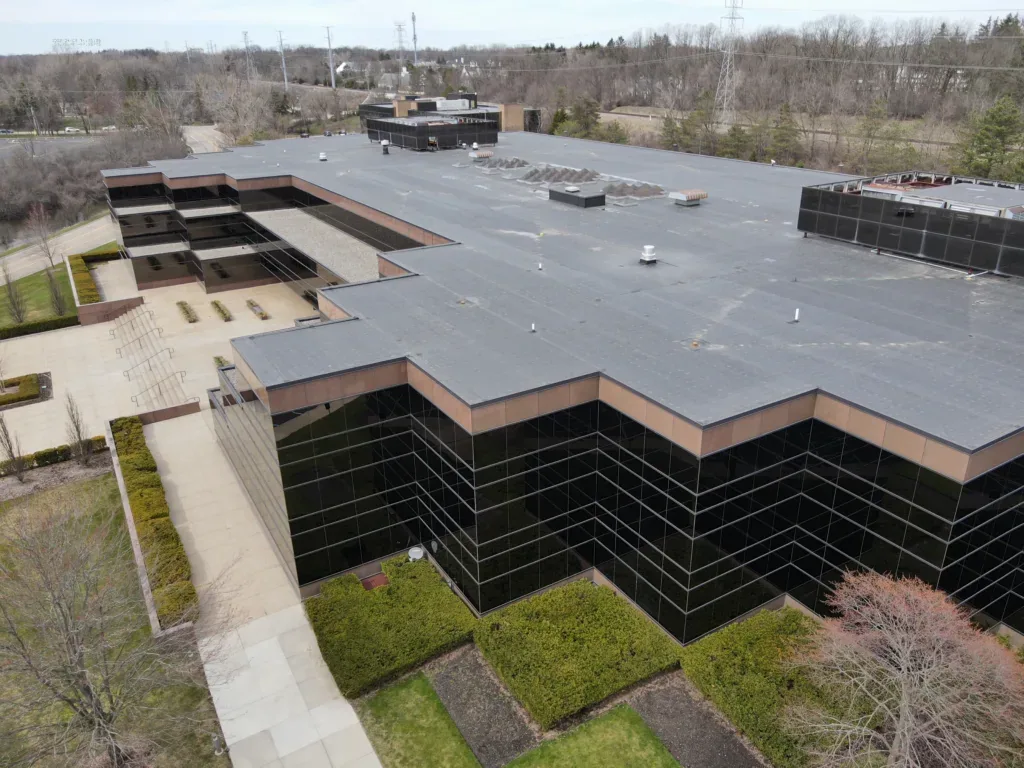
The surface cannot report what is wet underneath, so the report includes a moisture finding. Where the roof calls for it, we run an infrared moisture survey in the evening, when wet areas hold heat longer than dry ones, and confirm the readings with a few cut cores. The core log lists layers, thicknesses and insulation condition. Drone imagery supplements the walk on roofs that are hard to cross, and the drone inspection images go into the same file with the same location markers.
The moisture finding changes the recommendation more than anything else in the document. Owners who also manage a manufacturer warranty use the same finding to document conditions. Dry insulation under an aging membrane points to coating or recover. Wet insulation points to cutting out and replacing the affected board, or to a larger scope.
The fix in order
A list of defects without a ranking pushes the work back onto the reader. We order the list by risk to the building. Open flashings and blocked drains come first because they let water in during the next rain. Cracked sealant, small blisters and worn walkways come next, because they shorten the roof's life but do not leak today. Cosmetic items come last.
For each item the report states the repair, the area affected and the timing, and marks whether it is a patch that holds or a step toward replacement. If an item needs a closer look from a mason, an engineer or a mechanical contractor, the report says that too. Owners use the list as the work order, and lenders use it as the statement of deferred maintenance.
Why this building shapes the report
The same report format reads differently on different buildings. Roofs in the East Williamsburg Industrial Park, where factories, warehouses and lofts sit between Flushing Avenue and Newtown Creek, tend to carry multiple layers, large drainage areas and a lot of rooftop equipment. In Dumbo, the historic district includes early reinforced concrete factory buildings, so edge details and parapet conditions get extra attention. On the Gowanus side of Park Slope, the light industrial blocks near the canal bring their own drainage questions.
Coney Island sits near 7 feet above sea level, and Sandy flooded it in 2012, so a report on a roof there pays close attention to drains, mechanical equipment and anything that could trap windblown water.
What the owner does with it
The report is a working document, and owners put it to several uses. Property managers attach it to reserve studies and the capital plan, and the findings roll into a longer asset record for each building. Buyers and lenders ask for it during due diligence. Insurers want a dated baseline that shows what the roof looked like before a storm. Contractors bidding the work can price from it without guessing, which keeps proposals comparable.
Because the photographs are dated and located on a plan, the report also protects the owner if a dispute arises with a tenant or a prior contractor. It shows what was visible on the day, and it holds up better than anyone's memory.
When a manager hands the file to a new vendor or a new owner, the walk does not have to be repeated from scratch. The next visit compares against these photographs and reports only what has changed, which shortens every later inspection and makes slow deterioration easy to spot.
Commercial Roofing Questions
How long does a roof walk take on a multi-story loft building?
Usually a few hours for the roof itself, plus time for access and any moisture work. The report follows within a short period afterward, once the photographs are keyed to the plan and the core results come back. Larger buildings with several roof levels take longer, and a stair tower roof or a bulkhead roof counts as its own area. We tell the manager the schedule when the visit is booked.
Do you cut cores on every report?
Not on every roof. Cores make sense when the scan shows suspect areas, when the layers are unknown or when a replacement decision depends on insulation condition. On a younger roof with a clean scan, a few inspection cuts at drains and seams may be enough. We explain the choice up front, restore each cut with a matched patch the same day and mark its location in the report.
Can a report be written for a roof we cannot walk?
A roof that is unsafe to cross, such as one with a failed deck, gets a drone survey and a perimeter inspection from the parapet or from an adjacent roof. The report states clearly which areas were seen directly and which were seen from the air. Findings from imagery are labeled as such, and the next step is usually a safe-access repair before a full walk.
What does the report say about warranty status?
It records the visible evidence: the membrane type, any labels, prior repair work, and whether recent changes such as new rooftop equipment were flashed in a manner the manufacturer allows. The warranty contract itself is for the manufacturer and the owner to read. If you hold one, bring it to the walk and we will mark the conditions that matter most so you can raise them with the manufacturer's representative.