Roof Asset Management in Brooklyn, NY
Pull the folder on a Brooklyn, NY portfolio and the roof is usually the thinnest page in it. There is an install year if someone remembered to write it down, a leak invoice or two, and nothing about what is under the membrane. That gap is where surprises come from. Roof asset management fills it. Each roof gets a record built from a walk of the field, photographs of every drain and parapet, and a plain rating of what is left in it. The record turns a roof from a worry into a line the owner can plan around.
The same method serves an owner with one building and an owner with forty: look first, write second, budget last.
What you see up there
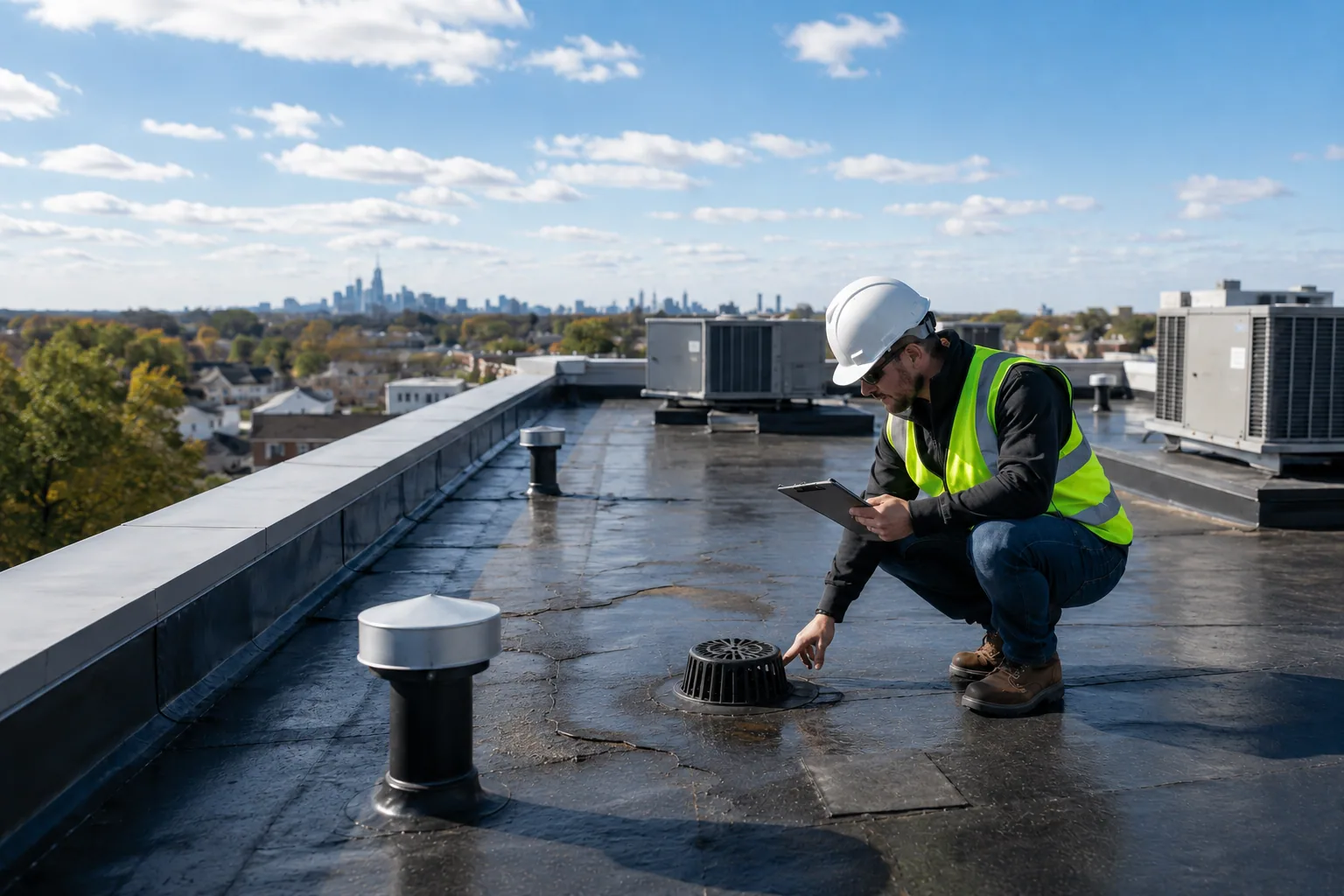
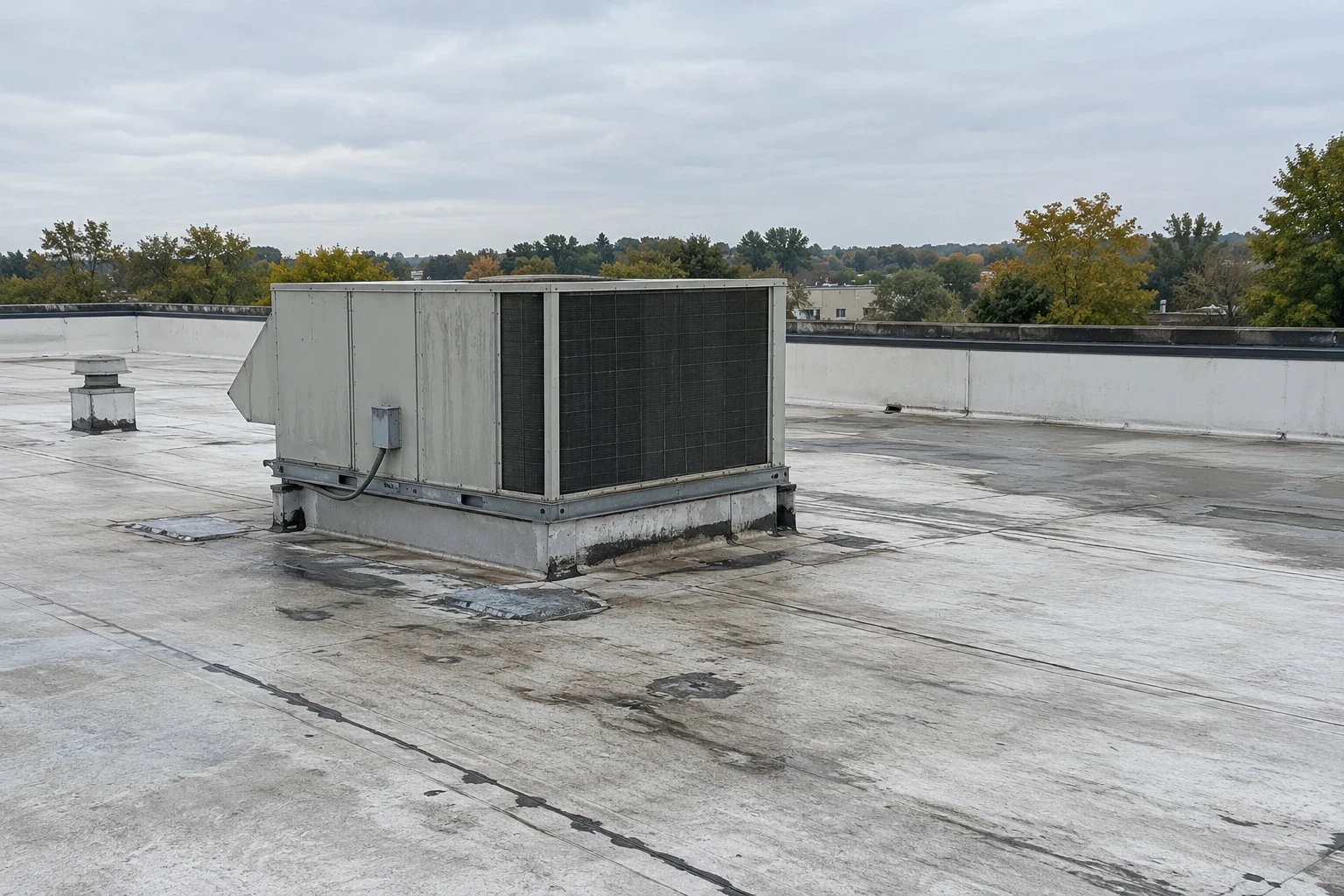
A roof record starts with what a super would notice in ten minutes. Where does the water stand a day after rain? Is the drain basket clear or packed with grit? Are the pitch pans filled or cracked open? Does the coping joint show daylight, and is the base flashing still bonded to the wall or pulling away in a curl? Each answer goes into the record with a photograph, a location on the roof plan and a date.
On an older tar-and-gravel build-up the surface tells its own story: bare spots where gravel has migrated, blisters that sound hollow underfoot. On a single-ply roof it is seams and punctures from trades who came up to service a unit. We write down what is there and nothing else.
Where it fails
Roofs here fail in a short list of places, and an asset record should follow that list. Drains come first. The flash flood emergency Ida's remnants set off in September 2021 was a first for the city, and a half-blocked strainer turns a cloudburst into a roof pond within minutes. Edges come second. Wind uplift at the edge lifts coping and peels perimeter membrane, and a 2007 EF2 tornado in Bay Ridge showed how fast a roof can go once an edge lets go.
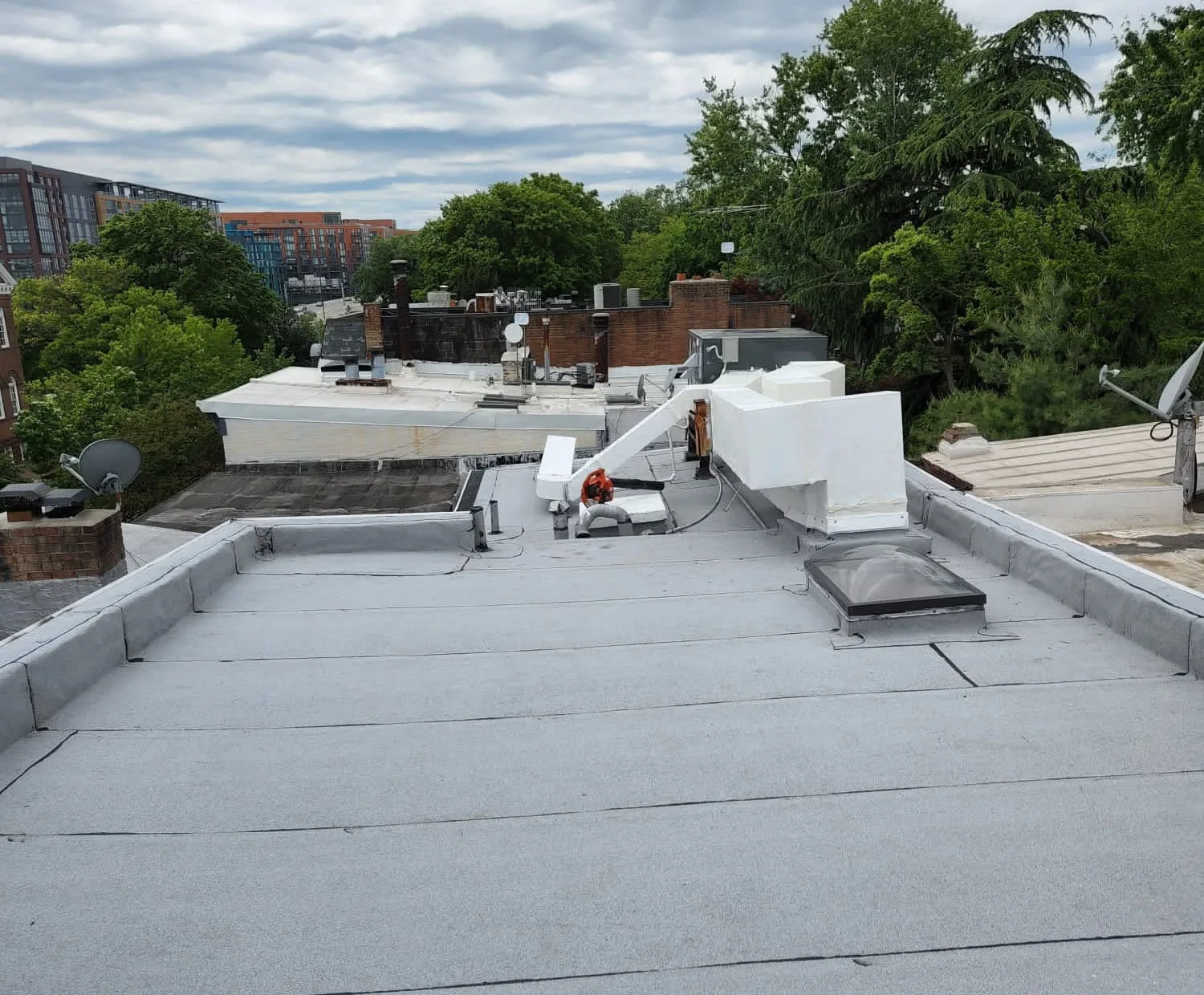
Penetrations come third: hatch curbs, vent stacks, conduit and the bulkhead door roof where the stair tower meets the field. Every one of these gets its own row in the record, with condition, last repair and the next date to look at it.
Why this building
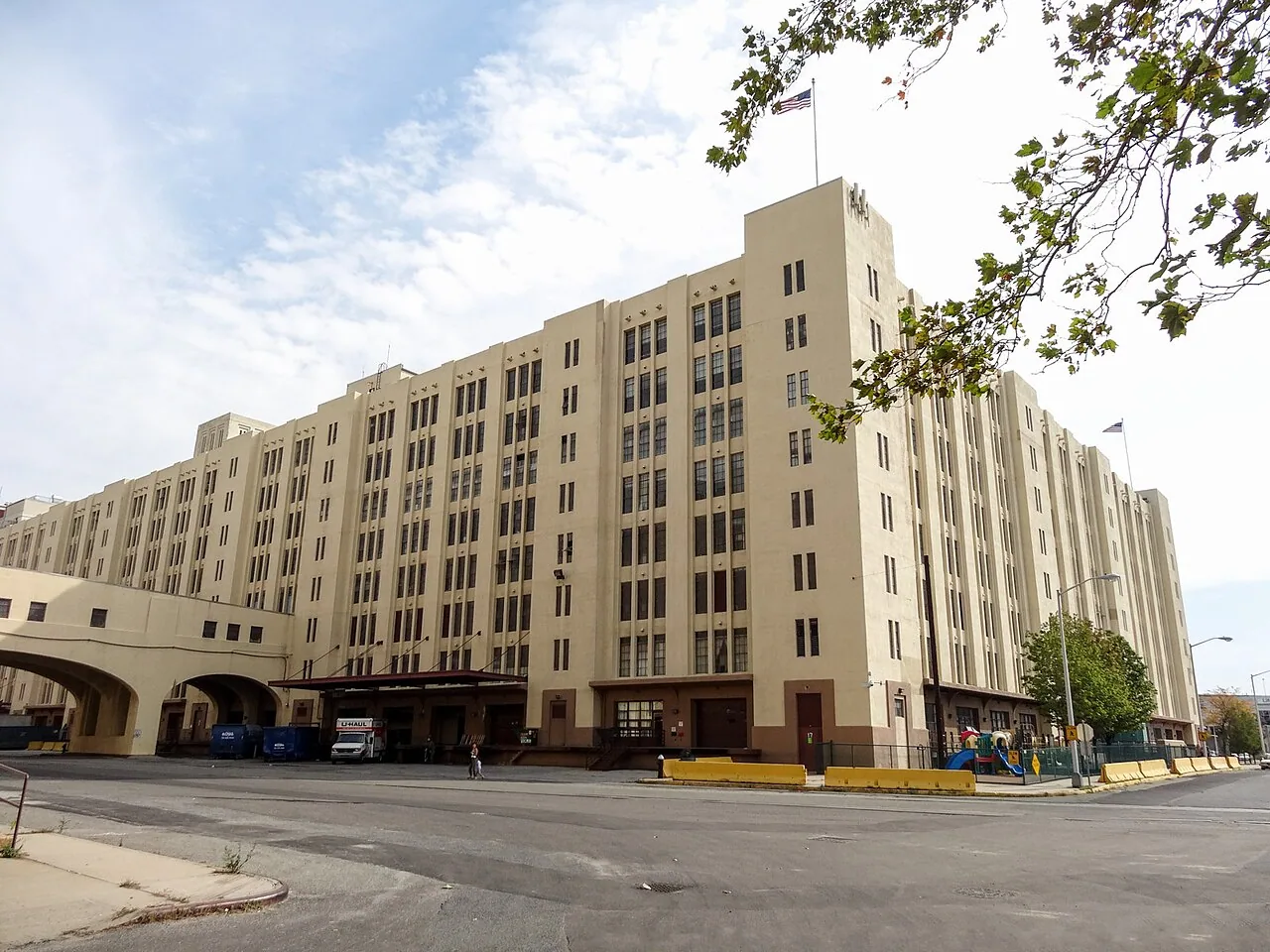
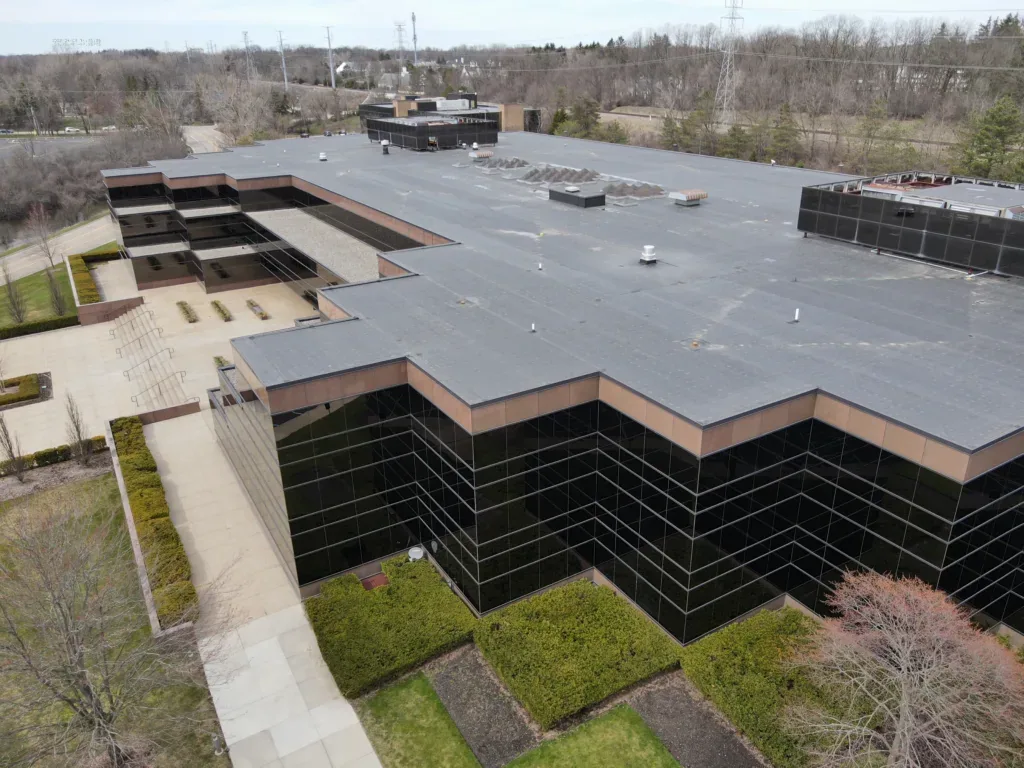
Brooklyn does not have one kind of roof, so the record cannot have one template. Bush Terminal in Sunset Park went up in phases over fifteen years, starting in 1911, while loft buildings, factories and warehouses crowd the East Williamsburg Industrial Park near Newtown Creek. Roofs on buildings that age have often been patched, overlaid and re-flashed more than once, and the layers hide each other.
Rowhouse blocks with commercial ground floors in Bedford-Stuyvesant, where roughly 8,800 buildings predate 1900, are the opposite case: small roofs, shared party walls, and a tie-in to the old roof at every neighbor line. A single register can hold both, but each building gets rated against its own construction. A loft-building roof with a deep parapet ages differently from a low-parapet rowhouse roof, and the schedule has to say so.
The rating in order
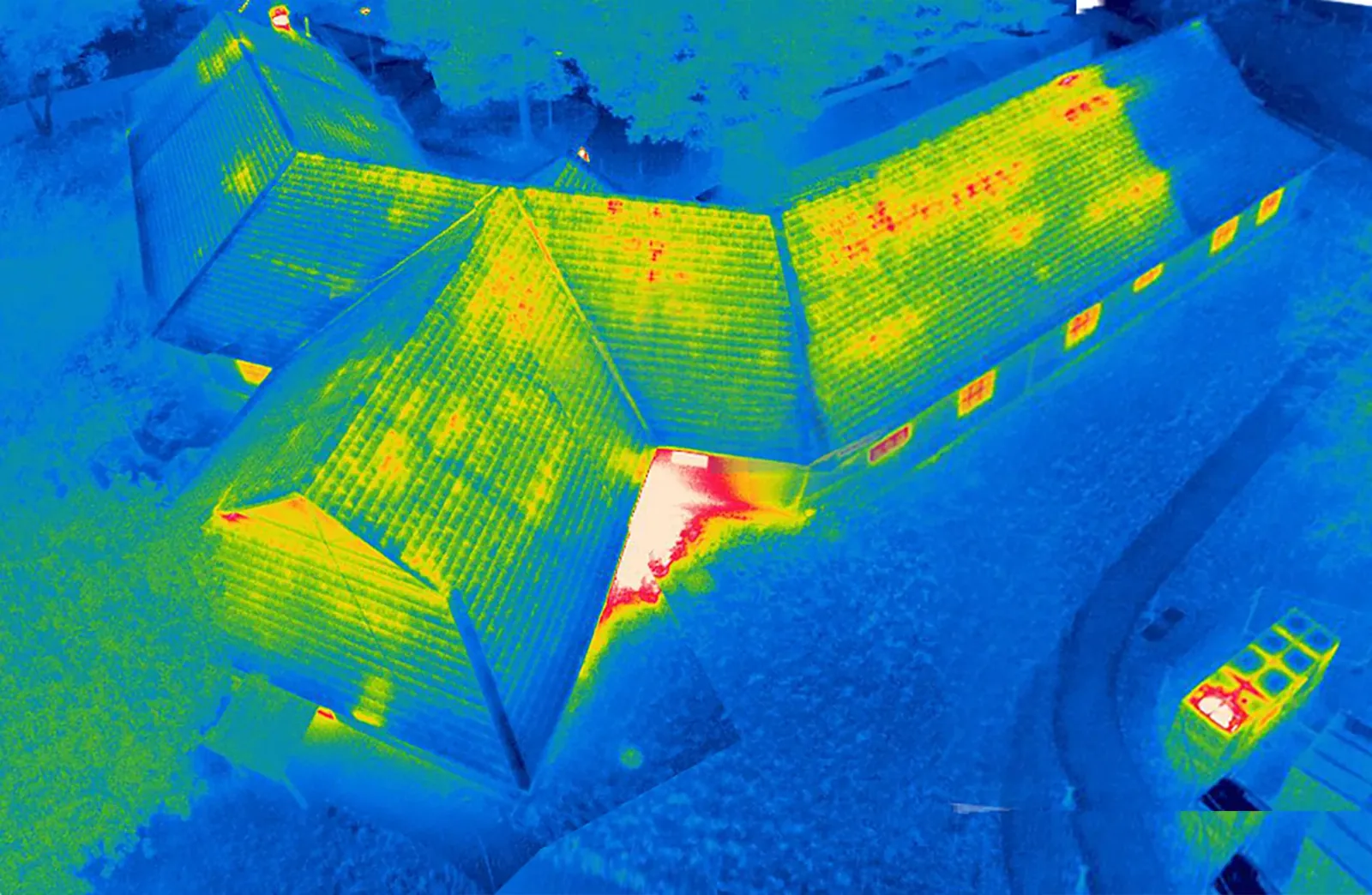
We rate every roof on the same short scale so a manager can sort a portfolio at a glance. The scale looks at four things: the field of the membrane, the flashings and edges, the drains and drainage path, and the moisture state of the insulation underneath. Moisture is the item most registers lack. An infrared moisture survey run at dusk shows which parts of the field are holding water, and core samples confirm what the scan suggests.
From those four readings we assign one of three outcomes: keep and maintain, repair and re-rate in a year, or plan replacement. That last word never appears on a roof without a reason attached. If the insulation is wet across a wide area, the record says so with the scan image. If the membrane is simply old but dry, the record says that too, and the roof stays in service. Each rating rests on a written condition report with photographs.
Access and neighbors
Assets that cannot be reached do not get inspected, so the record also holds the access facts. Which stair tower leads to the roof, who holds the key, whether a hatch or a fixed ladder is the only way up, whether the building next door shares the parapet. In industrial blocks like those in Sunset Park and East Williamsburg, truck traffic can complicate a street-side setup, and we log the safe staging side for every address.
The same entry records tenant constraints, such as quiet hours in a medical suite or a rooftop unit that cannot go offline in summer. A manager who inherits the building gets the history in one place.
Closeout walk
A register only helps if it stays current, so every repair and replacement closes with a walk and a photographed punch list. The walk confirms that the drain is clear, the edge metal is fastened, the sealant at the coping joint is tooled, and the old defects flagged in the record are either fixed or carried forward with a new date. We update the roof rating the same week.
Once a year, or after a major storm, we walk the field again and compare the new photographs against the old ones, drain against drain. Changes show up fast that way: a new low spot, a seam that has opened, a sealant bead that has dried and split. The owner sees a short list of what changed and what to do about it. Capital planning then moves those items into next year's budget, and a preventive maintenance program clears the small ones before the next rating date.
Commercial Roofing Questions
What goes into the record for a roof we only recently bought?
Start with the closing documents, any prior leak invoices and the building plans if they exist. Then we walk the roof and photograph the drains, parapets, curbs and every flashing. If moisture is a concern, a scan and a few core samples tell us what the insulation holds. The result is a baseline rating, a repair list in order of risk and a replacement window you can put into a hold-period budget. Missing history is fine; the roof itself supplies most of what the record needs.
How do you rate a roof that looks fine from the hatch?
We do not rate from the hatch. A membrane can look clean and still hold wet insulation, and a coping joint can look closed from ten feet away and still be open at the back. We walk the field, probe the soft spots, check the edge and measure standing water depth at the drains. Looking fine and being sound are different findings, and the record keeps them separate so you do not budget against the wrong one.
Can one register cover buildings with different roof systems?
Yes, and it should. A portfolio might hold a tar-and-gravel roof on a loft building, a modified bitumen roof on a warehouse and a TPO roof on a newer retail pad. Each system ages differently and fails in different places, so each gets its own rating criteria inside one shared format. You sort by risk and by cost, not by material, and the manager gets a single view without losing the detail that matters on any one roof.
How soon after a storm should the record be updated?
Within days. After a heavy rain or a coastal event we check drains first, then edges, then penetrations, and photograph each against the last visit. Sandy put large parts of Red Hook under water, and debris and standing water leave marks quickly. A same-week update shows which roofs held, which opened a seam and which need a closer look before the next storm arrives. Insurance documentation is far easier with a recent baseline.