Emergency Roof Repair in Brooklyn, NY
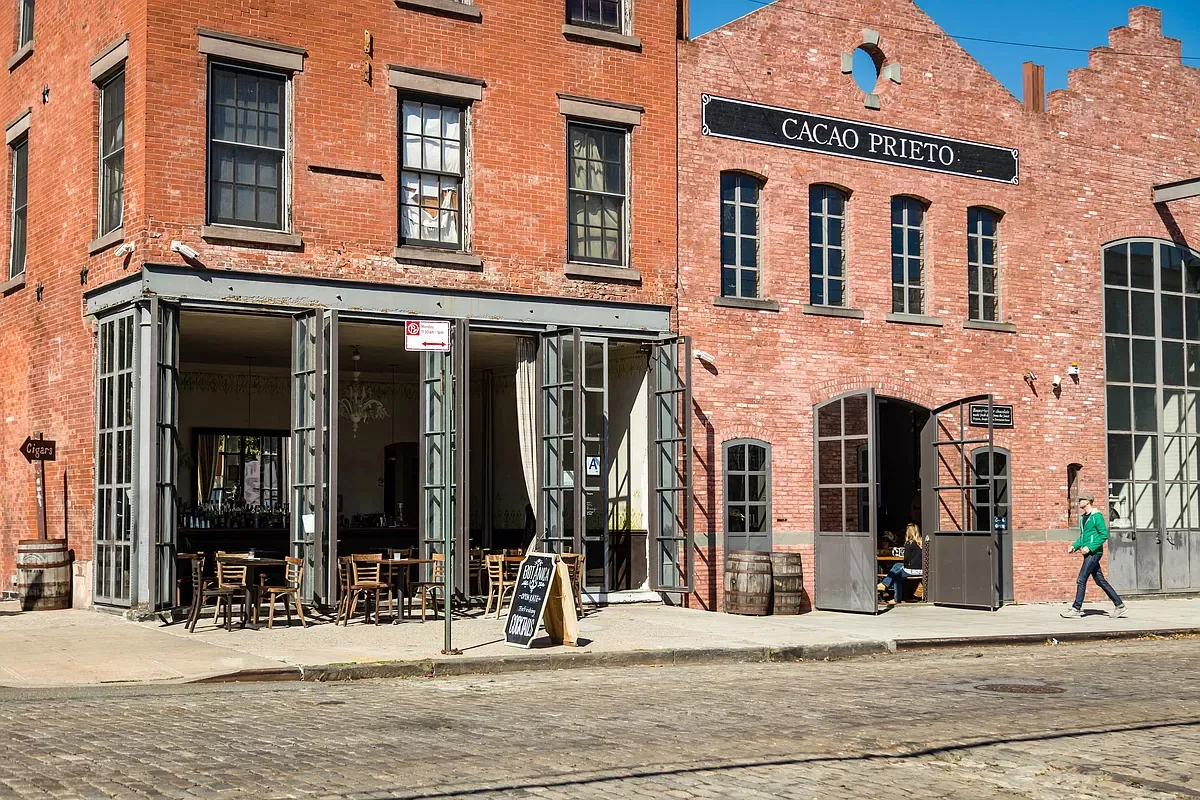
A call at two in the morning usually begins with a super standing in a wet stairwell and a roof nobody can see. What happens in the next hour decides whether the damage stays on the top floor or spreads through four. We answer around the clock, holidays included, and our first goal is simple: get eyes on the roof, find the opening, and close it. Brooklyn, NY brings its own mix of emergencies, from coastal wind and cloudburst flooding to fire damage in older mill buildings, and the first questions on the phone sort out which one the crew is driving toward.
The first hour on site
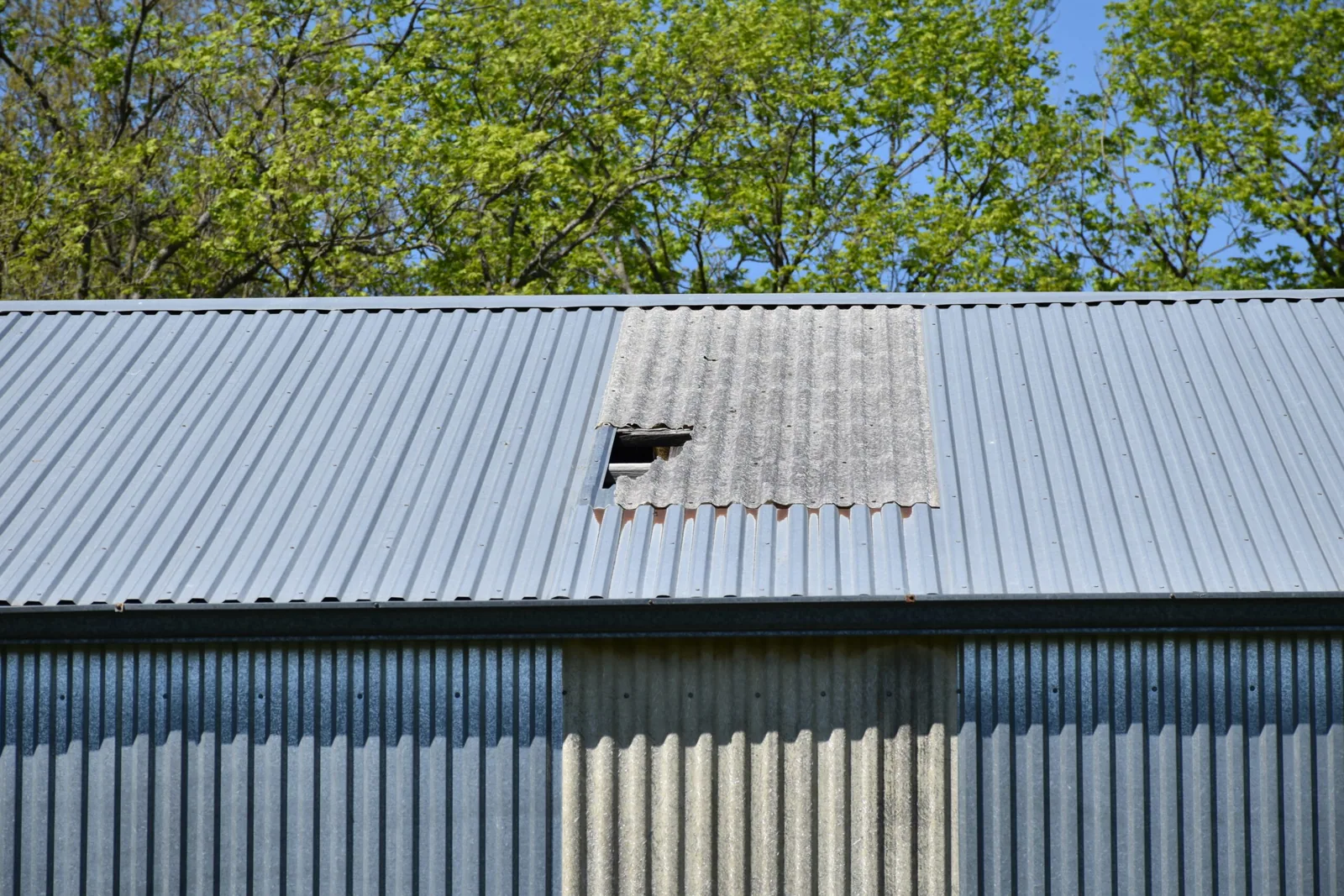
When we arrive, the first job is safety. We confirm the roof will hold a crew, check for hanging debris, downed wires and open decking, and talk with the manager about which parts of the building are wet. Then we walk the roof with a light and look for the opening: a torn seam, a lifted edge, a failed curb or a cracked drain bowl.
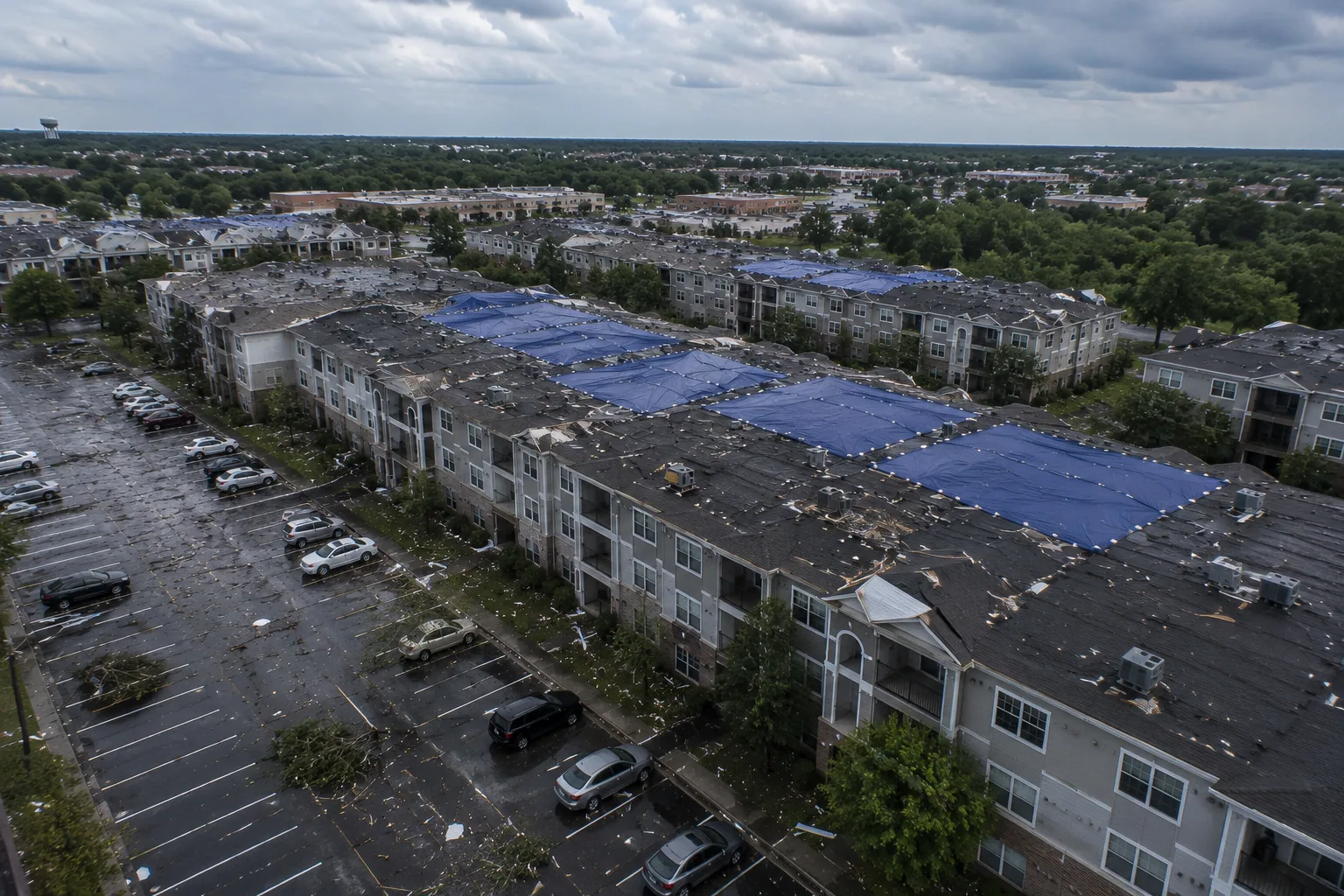
Once we find the opening, we dry it in. That might be a tarp secured to the deck and parapet, a sheet of temporary membrane, a patch of reinforced mastic or a hand-formed metal cover over a penetration. The method depends on the damage, the weather and what the surface will accept. Whatever we use, it is installed to come off cleanly when the permanent repair begins.
What goes up the stairs
An emergency kit is mostly practical. Heavy poly sheeting and tarps with grommets, lumber for battens, fastener plates, reinforced mastic, rolls of self-adhering membrane, sandbags to weight edges, and a wet-vac to clear standing water from low spots. We also bring a moisture meter, a camera and a flashlight, because the roof is usually dark and wet when we arrive.
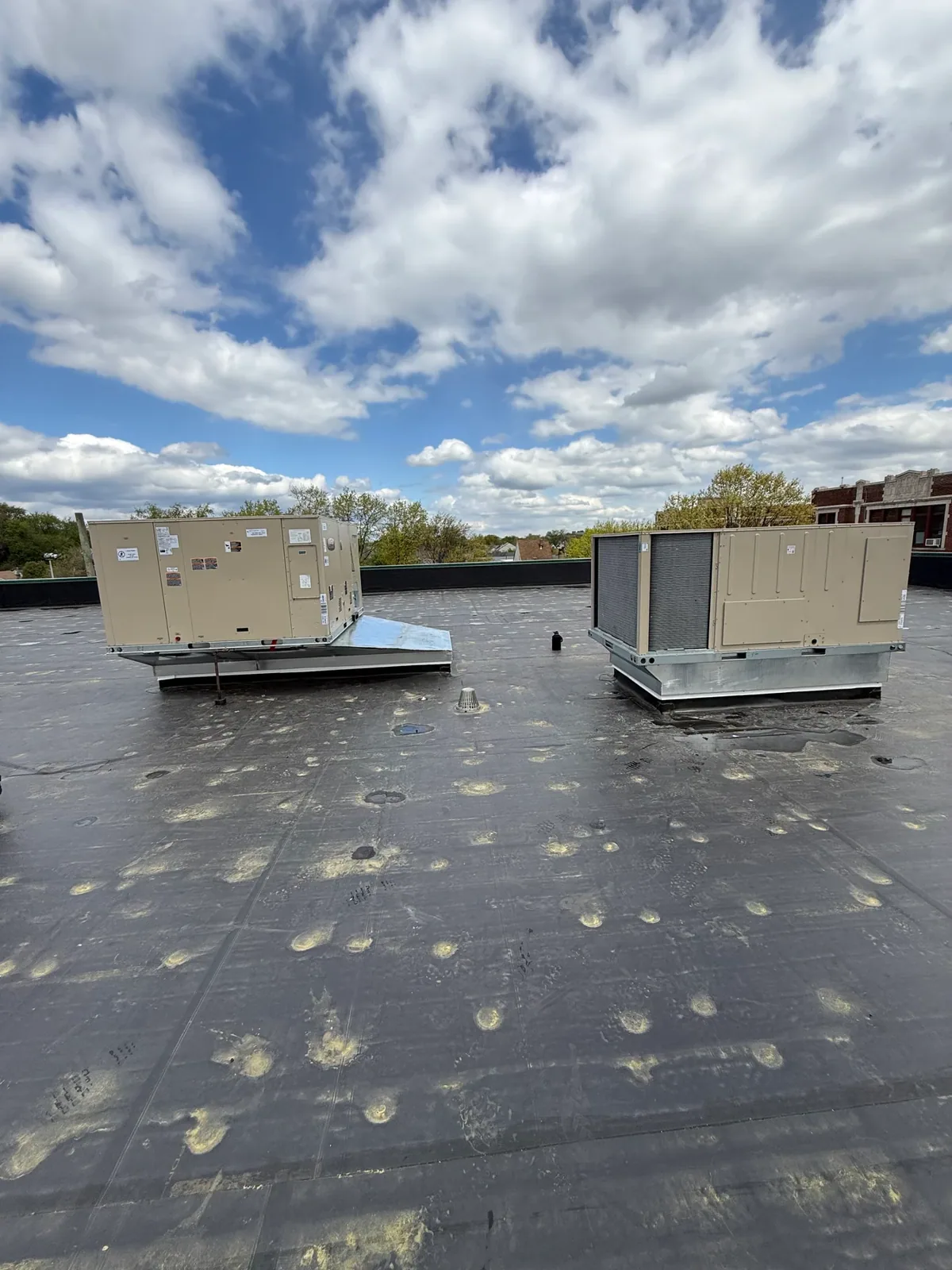
Equipment can be part of the emergency too. A rooftop unit knocked off its curb, a flue cap blown loose or a skylight cracked open each leaves a hole that needs a specific cover. We carry sheet metal and sealant so a penetration can be closed and sealed that night, not left open until a supplier opens.
Wind finds the edges
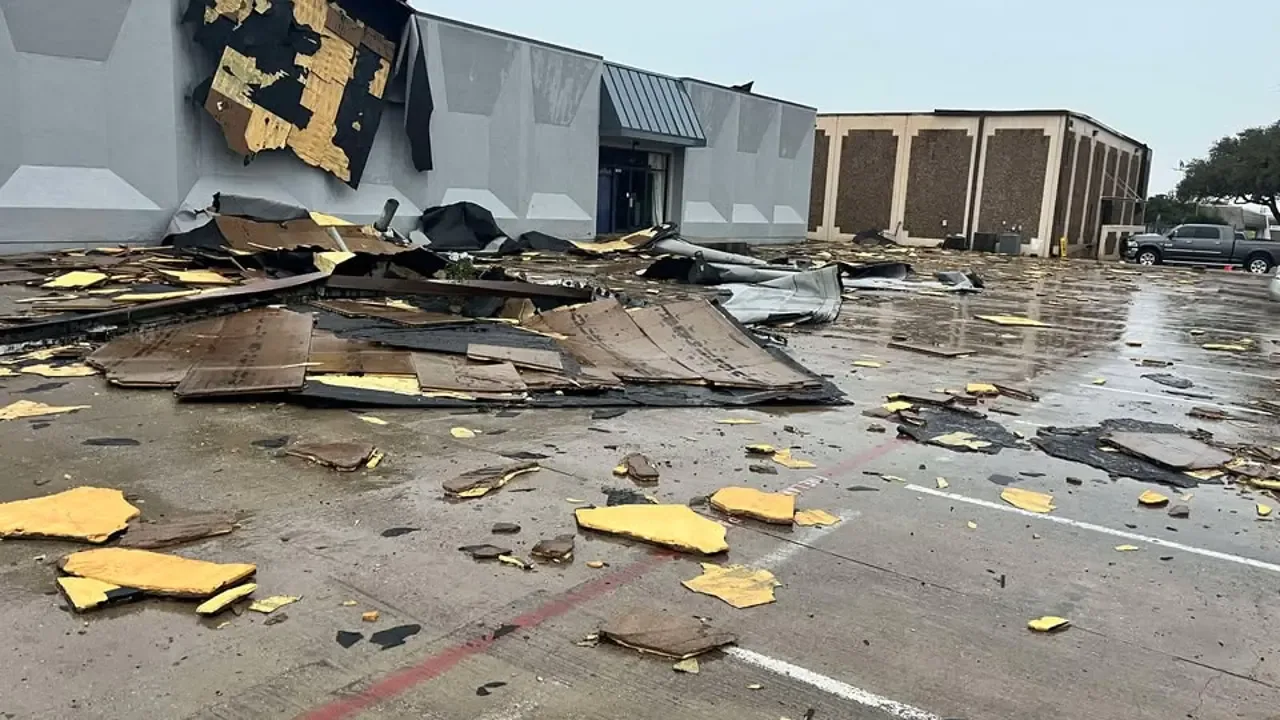
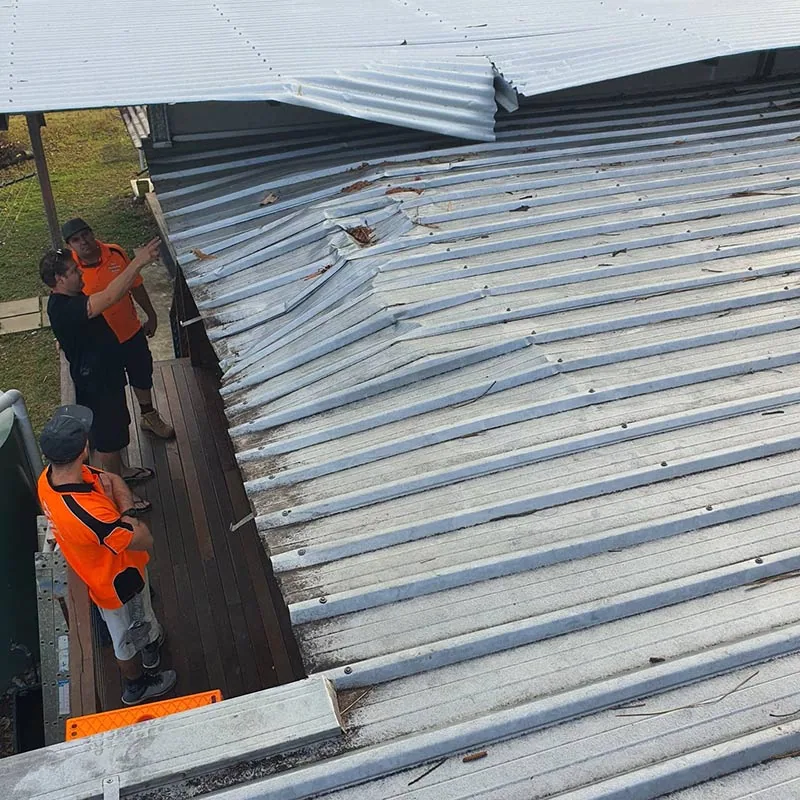
In 2007, an EF2 tornado with winds between 111 and 135 mph struck Bay Ridge and peeled the roof off a nearby auto dealership. Storms like that are rare, but ordinary nor'easters and thunderstorm gusts do the same thing in a smaller way: lift an edge, peel a seam, and let rain in behind. After a wind event we start at the perimeter and the corners, where uplift pressure is highest, and then work toward the center.
The same attention applies to coping, edge metal and gravel stop. If any of those is loose, it can travel onto the street, so we secure or remove it before anything else. A full edge inspection follows the dry-in, as it does on any wind-damaged roof.
Surge, cloudbursts and drains
Hurricane Sandy's surge reached 14.06 feet above average low tide at the Battery in October 2012, and in Brooklyn flooding reached 4.5 feet at its worst, with large parts of Red Hook underwater. Coney Island Hospital's first floor was submerged. A roof does not flood the way a street does, but a storm of that scale still leaves torn edges, loose material and clogged drains behind. After a hurricane the order is the same as any emergency: dry-in first, assessment second.
Cloudbursts hurt a roof differently. Ida's remnants brought New York City its first flash flood emergency on September 1, 2021. A roof drain that cannot keep up lets water pile against parapets and push under flashing. We clear drains, strainers and scuppers at the start of every emergency call, because a blocked drain can turn a minor opening into a flood.
Fire and impact damage
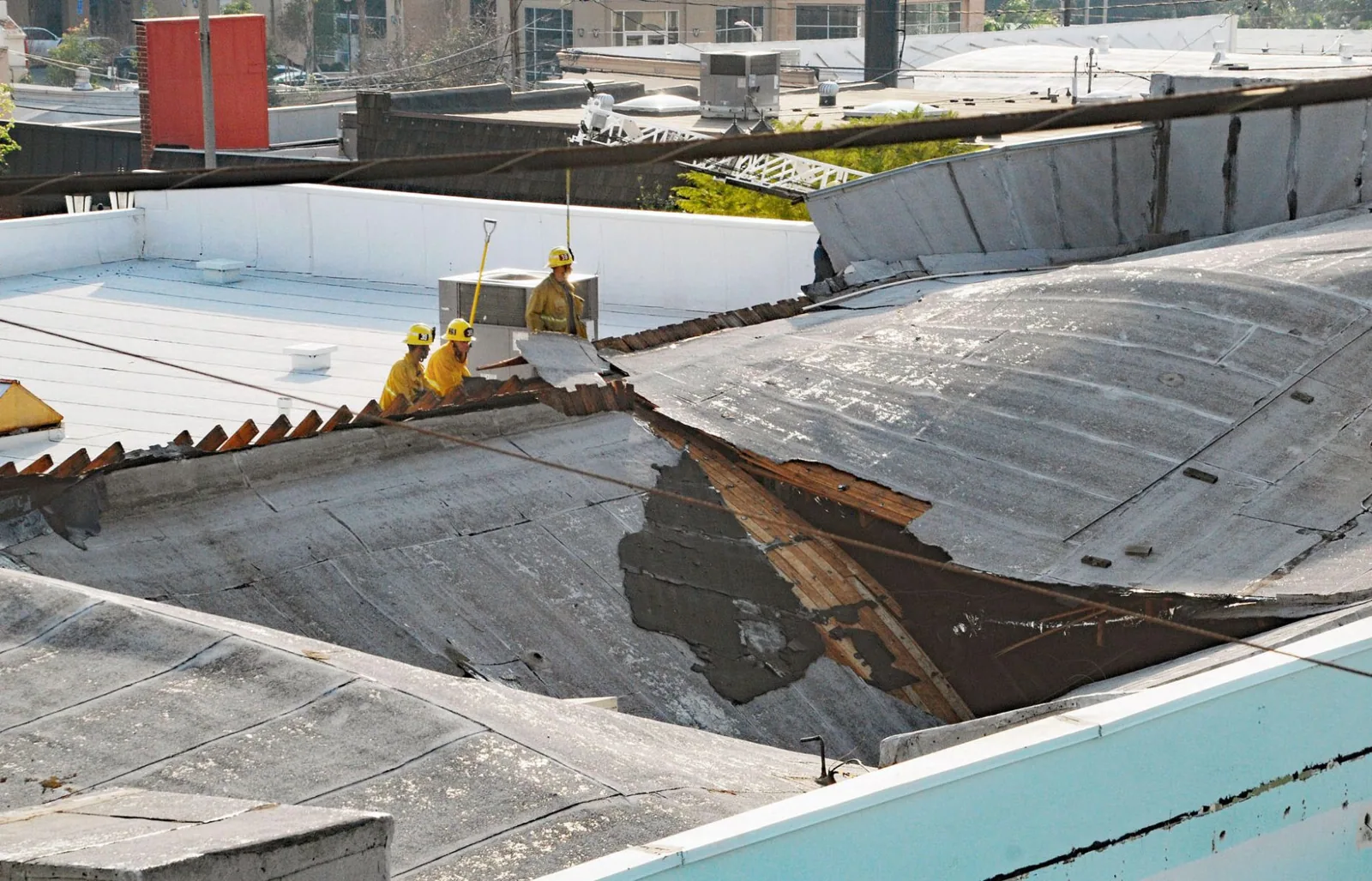
Fire damage is a different job. The surface may look intact while the insulation underneath is charred or the deck is weakened. We work with the fire marshal's release, check the deck for structural damage, and limit foot traffic to areas cleared by an engineer. Temporary protection comes first on a fire-damaged roof, so the building is secured while the larger repair is planned.
Impact damage from fallen branches, equipment failures and construction accidents is handled similarly. We seal the breach, document the damage and give the manager what is needed for an adjuster: photos, a written description and a temporary scope.
Access in a dense borough
Getting to the roof is part of the emergency. During Sandy in October 2012 the Brooklyn-Battery Tunnel closed as East River subway tunnels flooded, and a crew that depends on one crossing can lose hours. We plan routes that do not depend on a single crossing, and we load the truck so one trip up the stairs covers the dry-in.
Building access matters too. We ask the manager for the bulkhead key, the roof hatch code and the name of the contact on site. For waterfront buildings in Red Hook, we confirm gate access and parking before dispatch so the crew does not lose time at the curb.
After the dry-in
Once the building is dry, we send a report with photos of the damage, the temporary repair and our recommendation. That report supports your insurance claim, and it sets the scope for a permanent storm damage repair. We schedule the permanent work when the weather and materials allow, and we keep the temporary measure in place until then. The photographs of the tarp, the fasteners and the sealed opening stay in the file, so the permanent crew knows exactly what to lift first and what lies beneath it.
Commercial Roofing Questions
What should the building contact have ready when calling at night?
The street area, the roof access route, a mobile number for the person on site and a description of where water is entering. Photos from the interior help. Leave the full details for our arrival; the call only needs to get a crew moving.
Will the tarp damage my roof?
A properly installed tarp should not. We secure it to the deck or parapet with methods that avoid cutting the existing membrane where possible, and we remove it carefully when the permanent repair begins. A badly secured tarp can flap in wind and damage the roof, so we weight and fasten the edges.
Do you work in the rain?
We work to keep water out in the rain, but most permanent repairs wait for dry conditions. Emergency work during storms is limited to dry-in, drain clearing and securing loose materials. Once the surface is dry, we return for the lasting fix.
What does the emergency visit cost?
Cost depends on crew size, time of day, materials and the amount of roof needing protection. We explain the charges before work starts where conditions allow, and we separate the temporary dry-in from the permanent repair so you can see each item.
Can you coordinate with my insurance adjuster?
We document everything an adjuster will ask for: dated photos, the cause of damage, the temporary measures taken and a repair scope. We can meet the adjuster on the roof if the carrier wants a walk-through.
Who pays attention to loose roof debris falling toward the street?
We do, before anything else. Loose coping, gravel and edge metal can drop onto sidewalks, so we secure or remove it first and set up a protected zone below if the street cannot be closed. Anything we take off is bagged and recorded.