Wind Damage Roof Repair in Brooklyn, NY
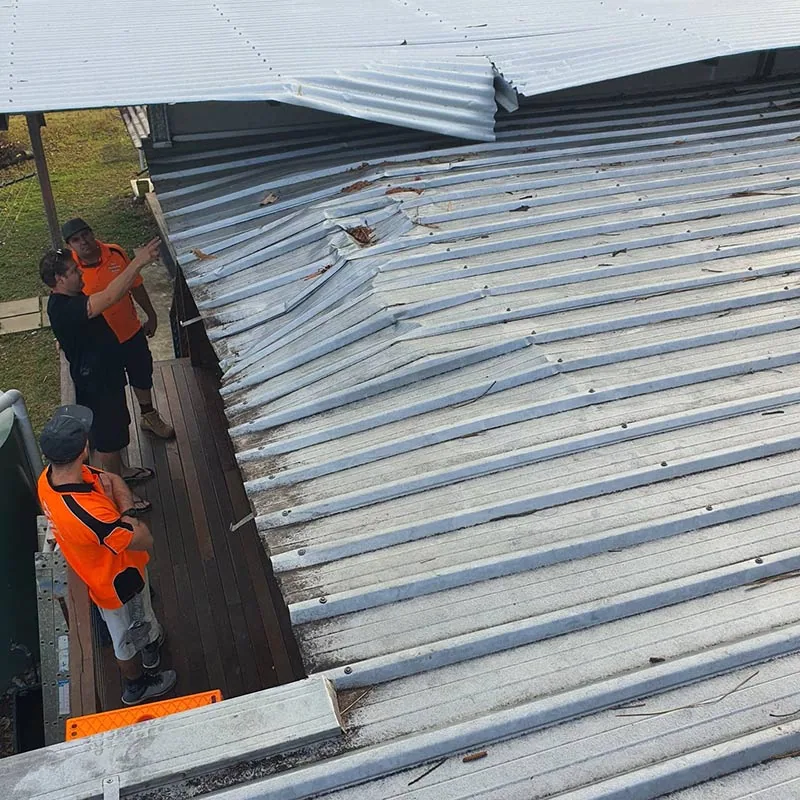
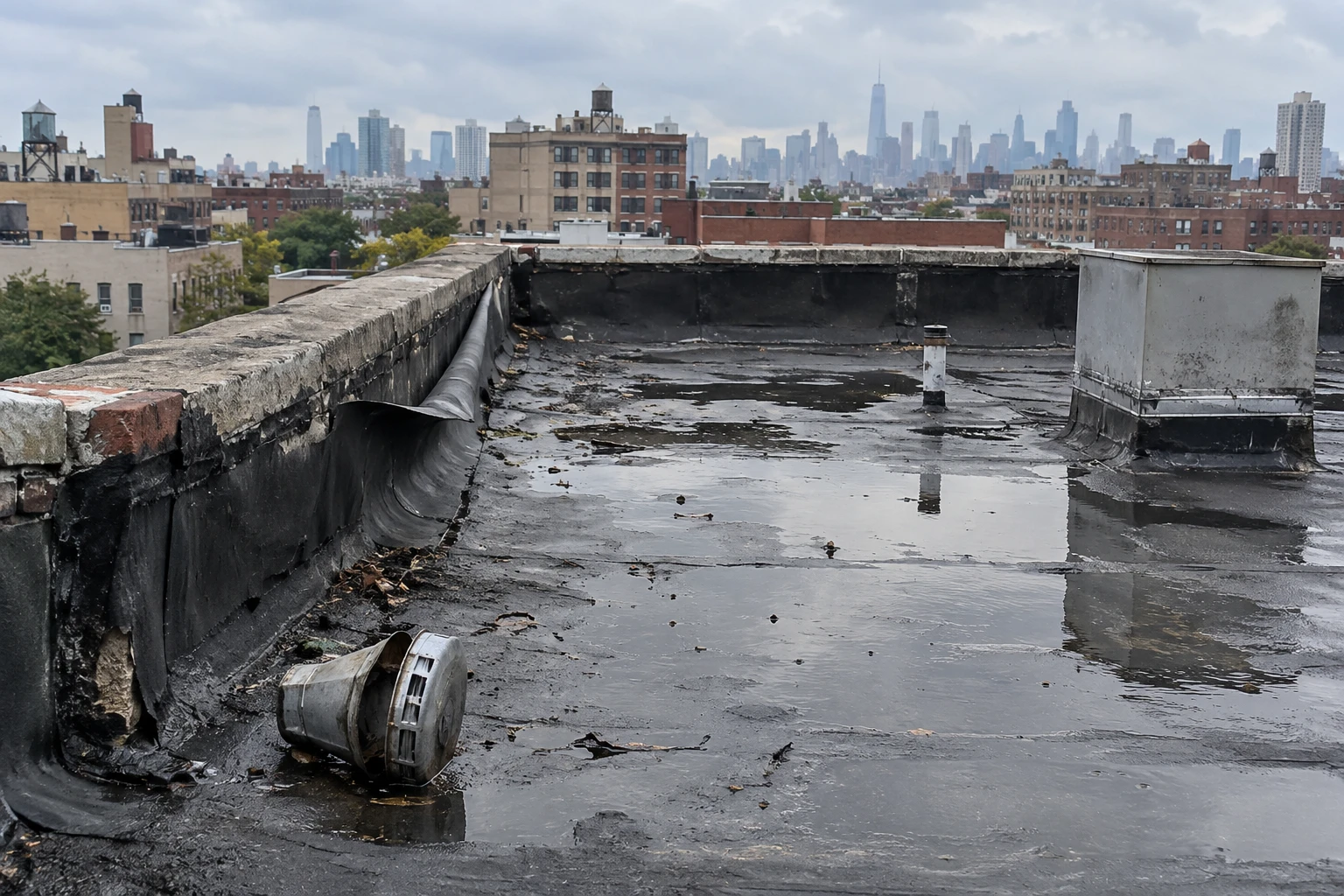
Climb out onto a Brooklyn, NY flat roof the morning after a windy night and walk to the corner nearest the weather. If a strip of edge metal stands a hand's width off the parapet, or the membrane near the corner has wrinkled and pulled toward the edge, the wind has already done its first job. It does not stop there. The next gust gets under the loosened piece and lifts it further. Wind damage on a flat roof starts at the edge and spreads inward, and it starts small. Take photos of the corners from the hatch before touching anything.
Our crews find, secure and repair wind damage on flat and low-slope roofs, and the emergency line answers overnight.
What the Bay Ridge tornado showed
When an EF2 tornado crossed Bay Ridge in 2007, eleven houses were vacated and a nearby Nissan dealership lost its roof. It is the borough's reminder of what a roof can lose. A dealership roof is flat, with a long edge and not much holding it down.
Most Brooklyn wind events are far smaller. A strong gust off the harbor, a line of thunderstorms in July or a hard autumn blow is enough to lift a loose cap. The lesson from the tornado holds for all of them: the roof comes apart from the edge. Check the edge first and the field second. Banging or humming at the roof edge after a blow is worth a call.
Open ground makes it worse. The Coney Island peninsula is about 7 feet above sea level at its highest, with water around it, and a roof there takes wind with nothing to slow it. A warehouse with no tall neighbors, as can happen at the edge of the East Brooklyn Industrial Park, faces the same exposure. A roof with no tall neighbors needs stronger edge attachment than a roof tucked behind a taller building, and the survey says which one you have.
Where wind gets in
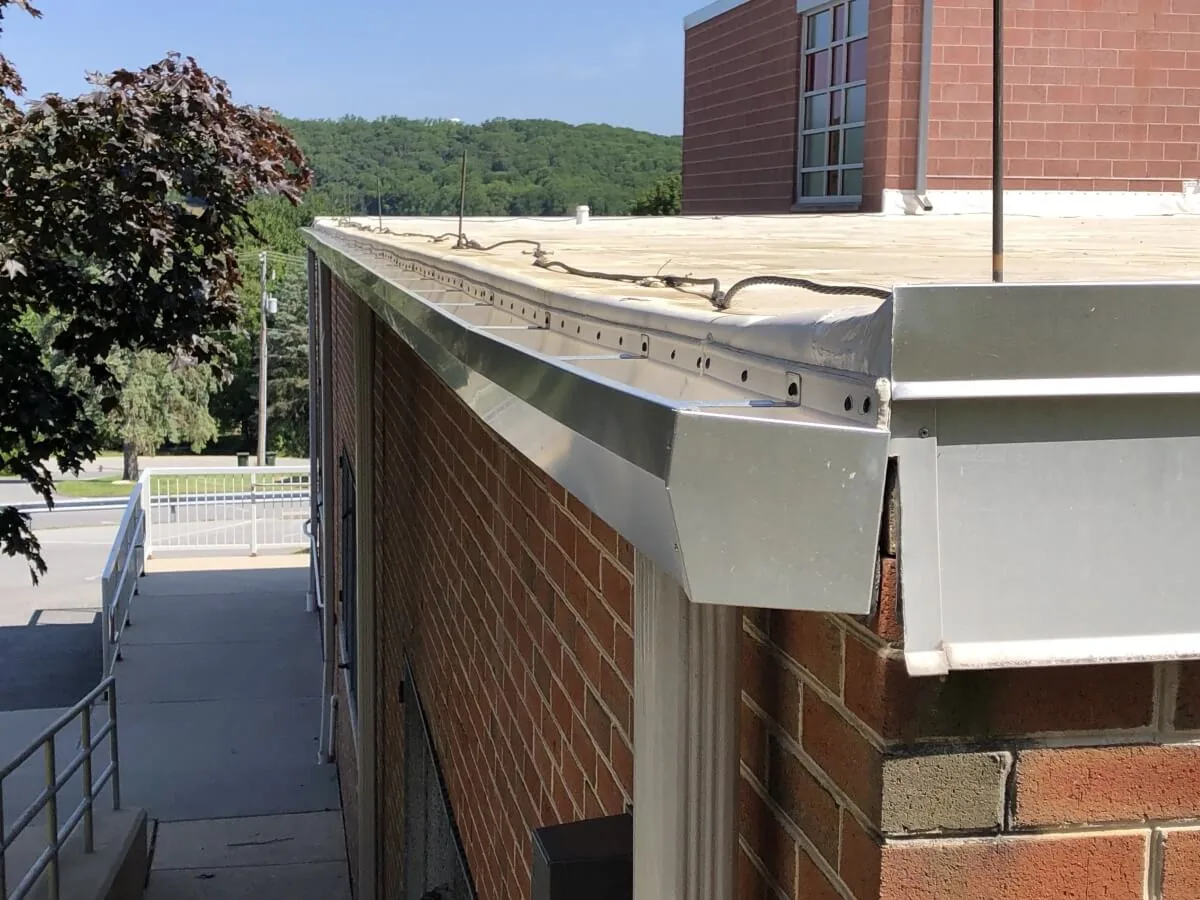
Air flowing over a parapet creates suction, strongest at corners and along the windward side. That suction pulls on the edge metal, the coping, the flashing and the first rows of fasteners. A cap that has lost its clips lifts. A flashing that was glued with old mastic peels. A corner with too few fasteners opens first.
We walk the whole perimeter. We look at how the metal is attached, whether the fasteners have backed out, whether the sealant has cracked and whether the lap faces the wind. Damage that runs along one side points to the gust direction. On a rowhouse block, the cornice returns at the corners are a favorite spot for trouble. Resetting and reinforcing the edge metal, coping and gutters fixes what moved. Photograph each damaged piece with a pencil beside it for scale.
The membrane in the field
Wind can also lift the sheet itself. An adhered membrane can peel from the substrate in a patch that grows outward from the edge. A mechanically attached sheet may flutter, wearing the sheet at each fastener plate until it tears. A ballasted roof can lose stone and shift pavers. A tar-and-gravel roof can lose gravel to a strong gust, leaving bare felts exposed to the sun.
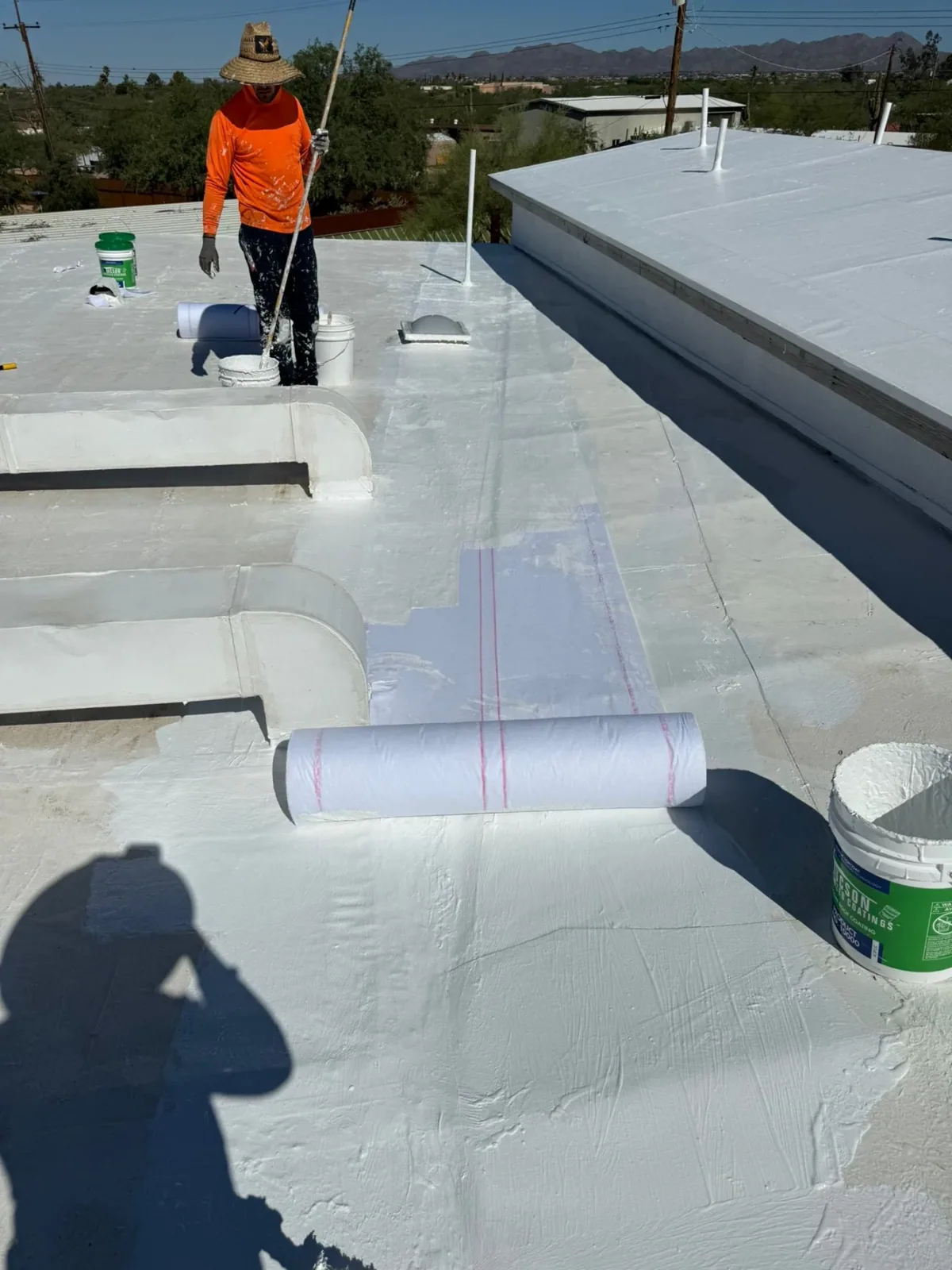
We probe the field for soft spots and loose areas, and we look for wrinkles that point toward the corner. A scan after rain shows where water got in. Where a gust opened a seam, the seam failure repair re-welds or re-adheres it and checks the nearby lap. Mark the lifted area with chalk and send a photo.
Flutter leaves a particular trace. A mechanically attached sheet that flaps in the wind wears at the fastener plates, and over time the plates cut the sheet. The signs are a ring of worn membrane around each plate, a plate that has backed out and a faint wave in the sheet running toward the corner. A roof that has fluttered for years needs a new attachment pattern or a new sheet, and patching the tears only buys a season. We count the worn plates and record the pattern.
Loose gear becomes a missile
Anything on the roof that is not tied down can move. Equipment covers, signs, satellite dishes, ladders, drums and cut-off scrap can all take flight, and they strike the membrane when they land. A sheet of plywood can cut a roof like a blade.
Walk the roof and clear it of loose gear before a forecast storm. Tie down what must stay. Once the storm has passed, impact marks are probed and the insulation beneath each is metered, since a hole the size of a coin can sit over a wet patch much larger. Each one is handled as a membrane puncture repair. Take a photo of anything found on the roof that does not belong there.
The repair in order
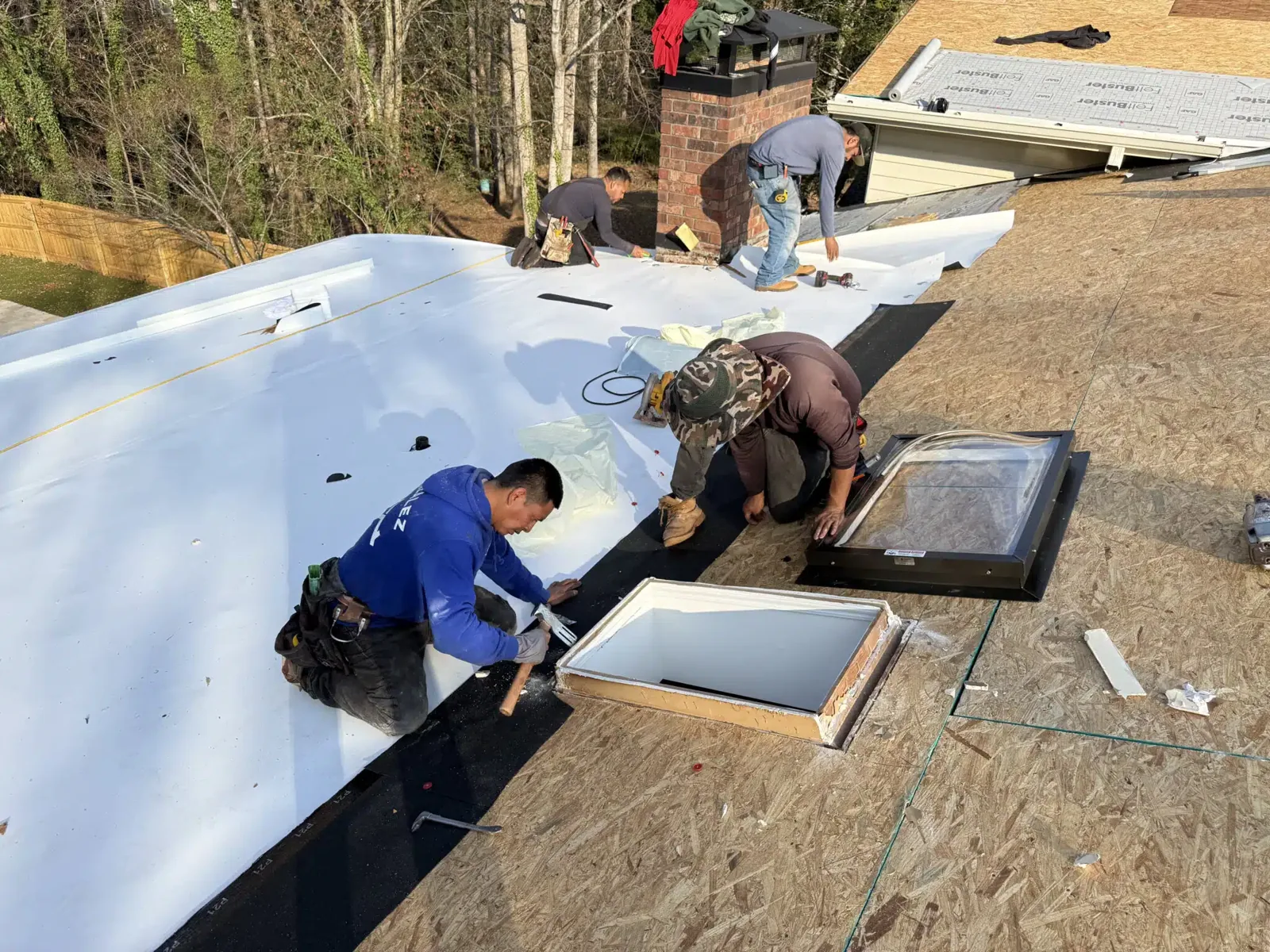
First comes safety: no one walks near a damaged edge without fall protection. Second comes securing: loose metal is fastened or removed, and a temporary patch dries in any opening. Third comes the survey of the whole roof, with a scan if rain got in. Fourth comes the permanent repair: edge metal reset or replaced, torn flashing rebuilt, lifted membrane refastened, punctures patched and wet insulation replaced.
A tighter fastener pattern at corners and along the edge is common after a wind event, because the original spacing was part of the failure. Where the damage is wide, the survey compares the repair with a commercial roof replacement and prices both. Ask for the fastener pattern in writing, with a drawing of the corners.
Winter wind does a different job. Snow drifts against parapets and bulkheads in the lee of a gust, and brings extra load to the same areas. Snow near 30 inches a year means ice can load an edge that wind has already loosened, so the post-wind check includes a look at the drains and the drifts: a roof with a lifted edge and a blocked drain has two problems that feed each other.
Records for the insurer
A wind claim rests on the record. The file shows the weather for the date, the roof's condition before the storm if known, photos of each damaged piece with a location, and the direction of the damage. It separates fresh damage from old wear. Roof insurance claim assistance builds that file.
For buildings in Bay Ridge, where the tornado struck, the file notes the history. Timing helps: notify the carrier in writing, dry in promptly and keep damaged material until the adjuster has seen it. Keep the dated survey with the claim.
Commercial Roofing Questions
Is it wind damage or old wear?
Clean tears, bright fastener holes and a one-directional pattern mark fresh wind damage; dirt in the crack, rust and wear spread across the whole roof mark age. Each finding is marked as one or the other, because the insurer makes the same split.
Can we wait if nothing leaks?
Waiting is a mistake because the next gust gets under lifted metal and the membrane, and one storm can stretch a small lift into a long strip. Secure it first, then check the nearest fasteners and seams.
Is a tarp enough after a gust?
As a temporary measure, yes, if it is fastened to the deck and not to loose metal. Check it after each wind and schedule the permanent repair soon.
Do wind repairs need a permit?
Minor repairs may not, though larger ones do; the filing representative is consulted before work starts and the scope is written to match the filing.
What can the super do before the crew arrives?
Stay off the roof, photograph what you can from the hatch, note the storm time and wind direction, and send the photos with the address area.