Edge Metal, Coping and Gutters in Brooklyn, NY
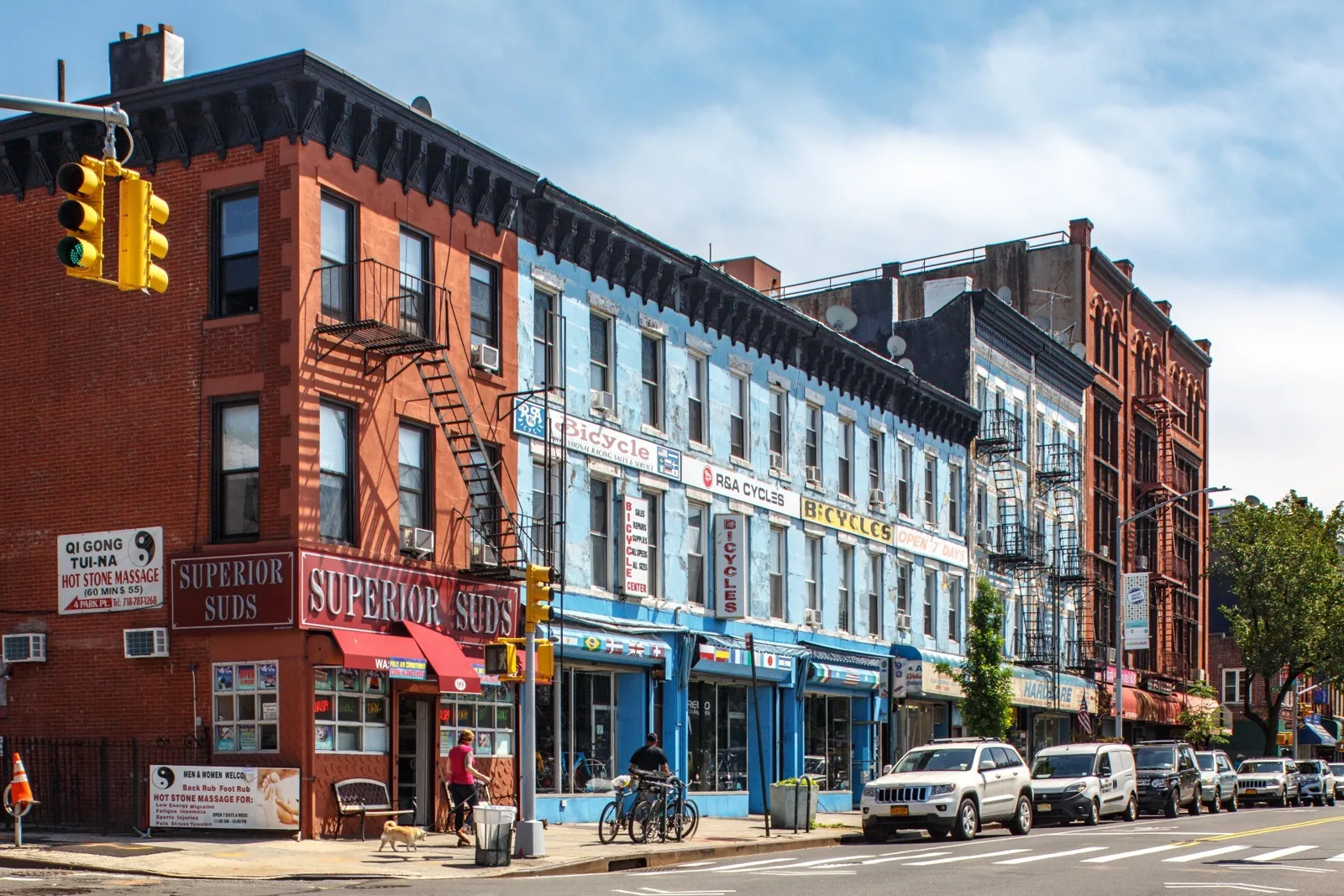
Stand on the sidewalk across from a Brooklyn, NY brick building and look up at the parapet. A white streak running down the face below a coping joint is efflorescence, salt that water carried out of the brick. It means the cap above has been leaking into the wall for a long time. The roof field may be perfectly dry. Edge metal, coping and gutters are the first line against weather, and they fail quietly because nobody looks at them from the street. Photograph the streaks and the joint above them, and send both with your request.
We repair and replace coping, edge metal, gutters and downspouts on flat and low-slope roofs across the borough.
What the edge tells you
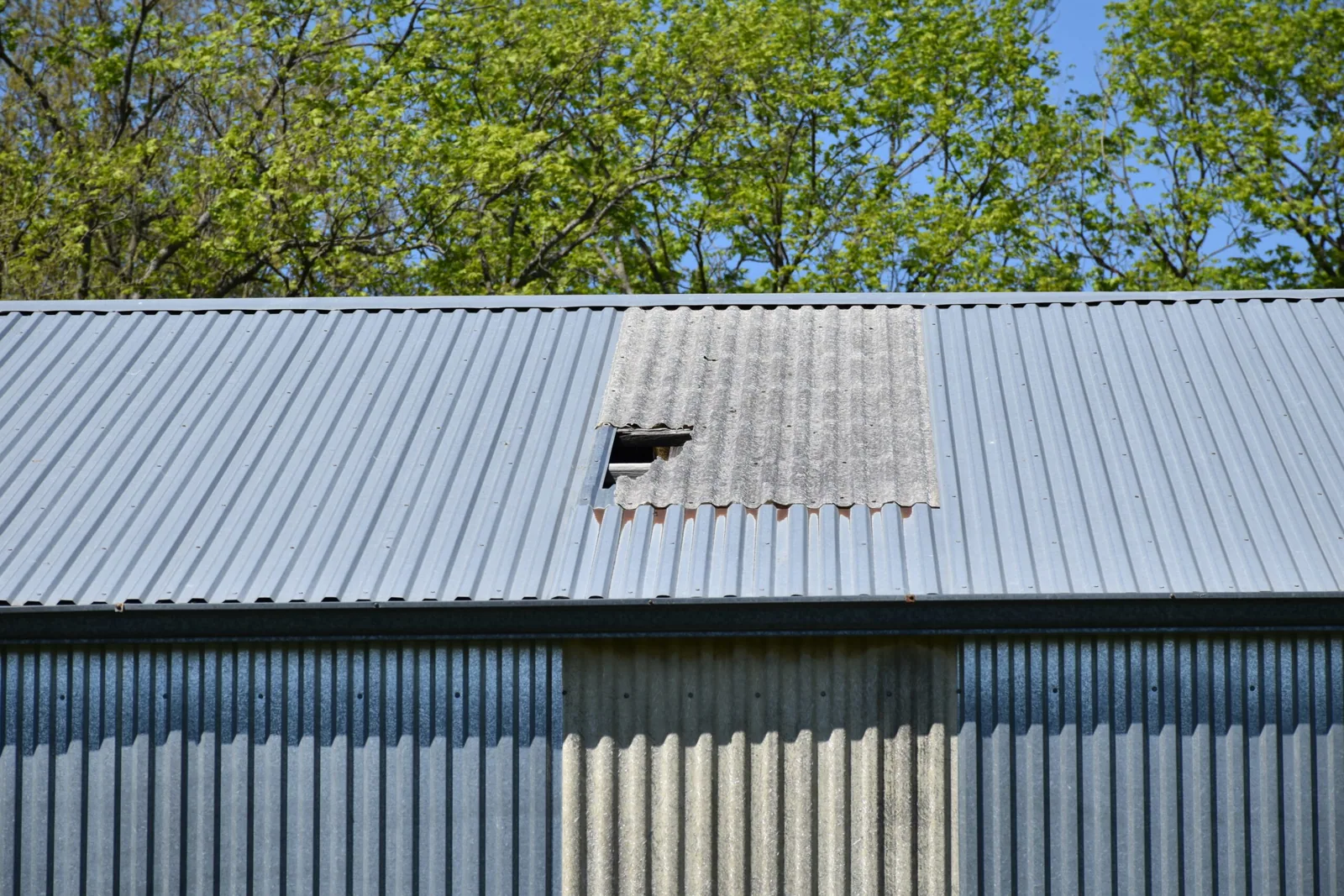
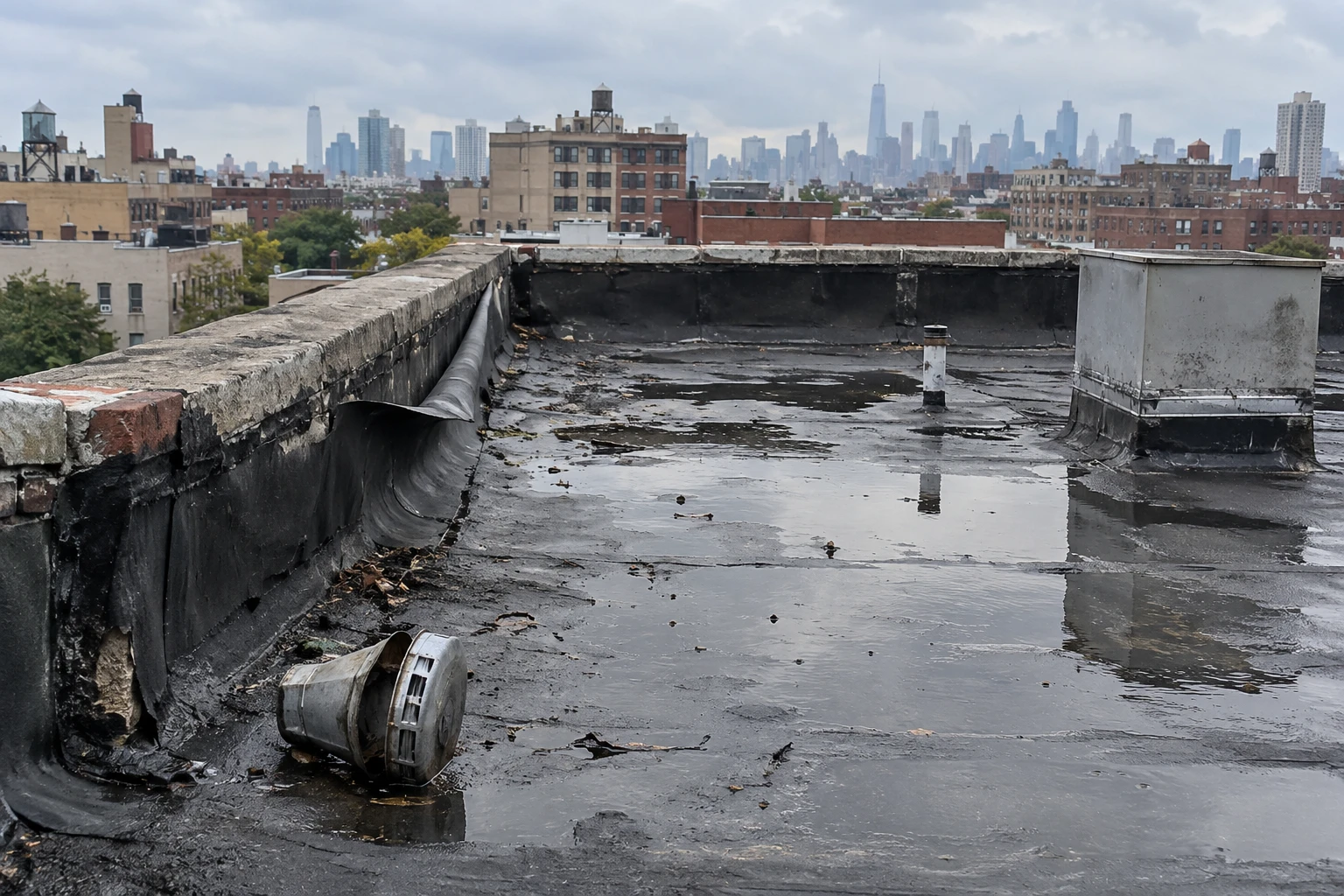
Walk the perimeter slowly. Look at every coping joint, every lap in the edge metal and every fastener head. Gaps wider than a pencil lead let water in. Rust at a fastener means moisture has been working there. A cap that sits crooked has lost its clips. A run of metal bowed outward shows where the wind got under it.
Then look behind the cap. Mortar that crumbles under a thumb, brick that has loosened and a wall that sounds hollow when tapped mean the problem has moved from the metal into the masonry. A new cap on a bad wall will fail again. We mark the metal findings and the wall findings on the same plan so the repair covers both. Take a photo of each joint with a pencil beside it for scale.
Roof edges on multi-story brick buildings carry another risk: falling pieces. A loose cap stone or a hanging length of metal can drop to the sidewalk, and a building owner carries that liability. Where we find a piece that could fall, we secure it the same day and fence the area below until the permanent work. The survey lists such items first, ahead of anything that only leaks.
Wind uplift at the edge
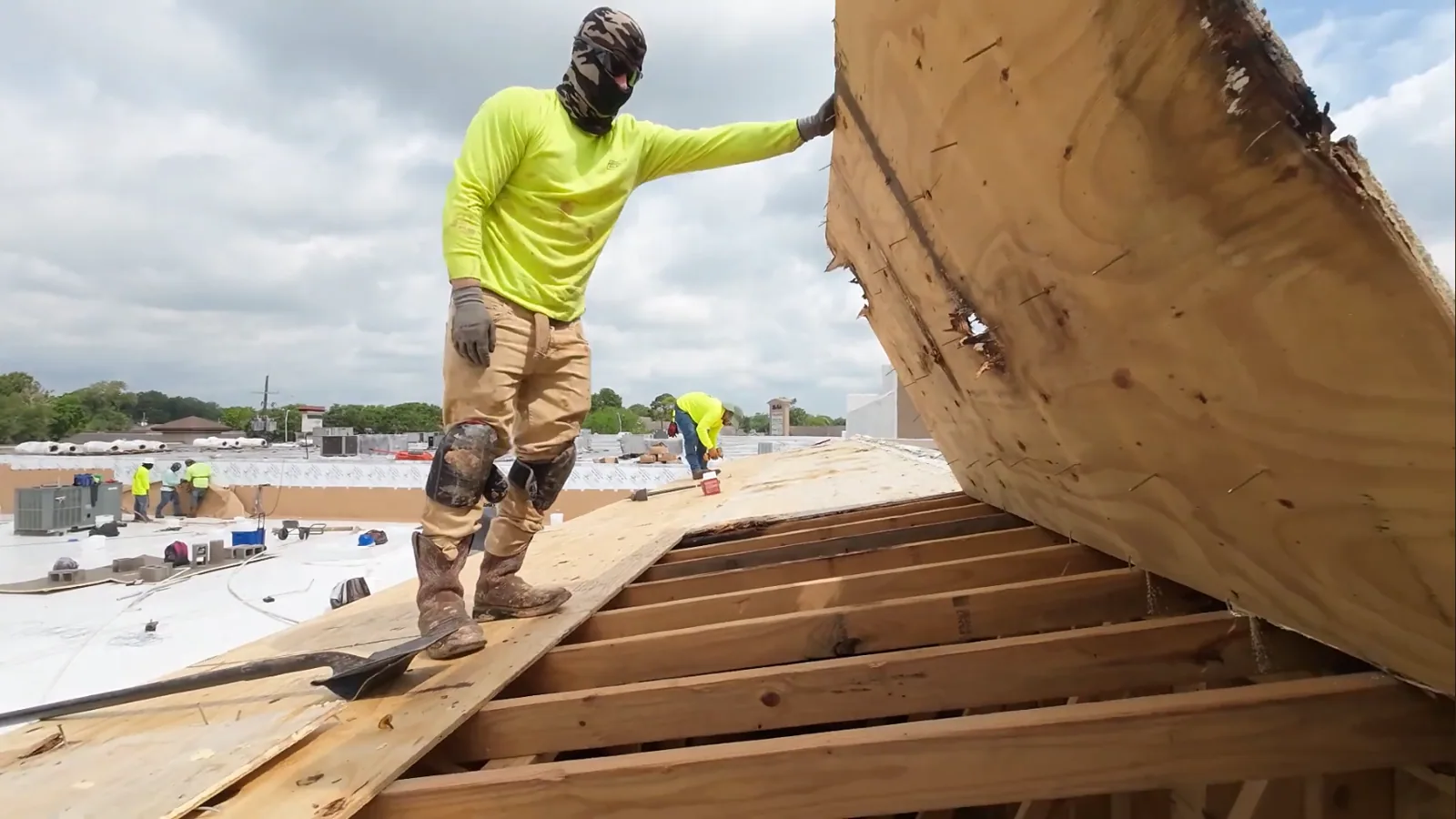
When an EF2 tornado crossed Bay Ridge in 2007, it peeled the roof off a nearby Nissan dealership. Few storms match that, but every flat roof in the borough feels wind uplift at its edge. Air flowing over a parapet creates suction, strongest at the corners, and it pulls on whatever holds the metal down.
The fix is attachment that matches the exposure. A continuous cleat holds a cap along its full length and resists uplift better than spaced screws. Corners get extra fasteners and heavier metal. After a storm, we check the windward side first. A wind damage roof repair resets what moved and adds fastening where the pattern was too thin. Ask the super to report any banging or humming at the roof edge after a windy night.
Metal, stone and brick caps
Brooklyn parapets wear several kinds of cap. Sheet metal is light and quick to install but needs good attachment and sealed seams. Stone and precast caps are heavy and long-lived but need sound mortar and tight joints. Brick-on-edge caps on older buildings need regular repointing. A brownstone-era rowhouse block often has a cornice with returns at the corners, where water likes to hide.
For metal we choose gauge, seam type and finish by exposure. Galvanized steel, aluminum and stainless all have a place, and the choice follows the budget and the setting. The roof membrane ties into the edge in different ways, with a termination bar, a reglet or a flashing, and the detail on a modified bitumen roof differs from a single-ply one. We draw the edge in section before ordering metal. Check the lead time on custom-bent pieces.
Joints matter as much as the metal. Expansion joints in a long cap run let the metal move with heat and cold, and a run without them buckles or tears at its fasteners. We space the joints to the metal and the exposure, seal them with a backer and sealant that stay flexible, and cover each with a splice plate. A dark cap in direct sun moves a good deal between dawn and afternoon, since July highs run near 85 F and the heat island effect is strong.
Gutters and downspouts
Many Brooklyn flat roofs drain inward to baskets, but pitched sections, canopies and some older buildings still have gutters and conductors. A gutter that sags holds water and pulls away from the wall. A downspout with a loose strap or a crushed elbow spills at the wrong place, often onto a neighbor's roof or a sidewalk.
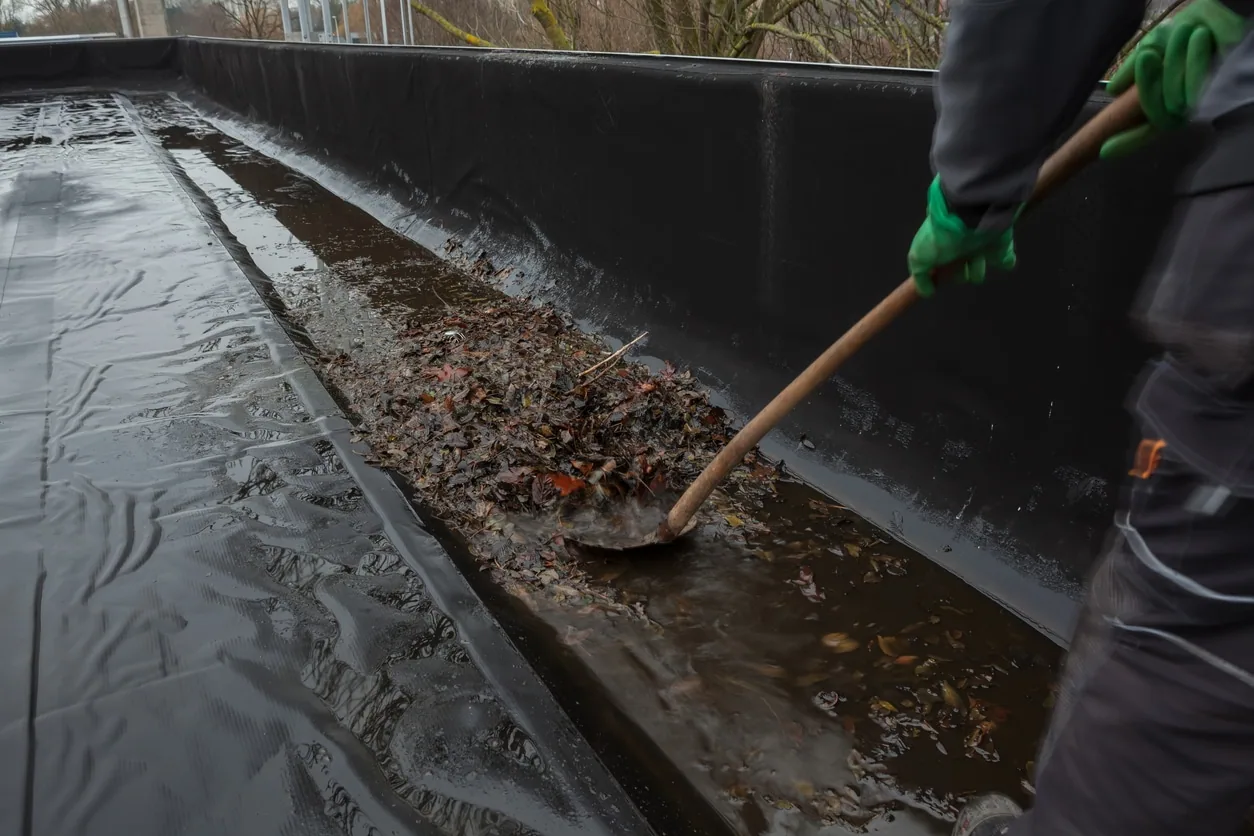
We check pitch, outlets, hangers and the discharge point. Gutters need to fall toward the outlet, and the outlet needs a clear path to the leader. Winter is the ice test: with snow near 30 inches a year in New York City, a gutter packed with ice can bend or tear loose. Where a gutter is past saving, we replace it with a sized, properly hung one. On the inward side, roof drains and scuppers do the same work. Clear gutters before leaf fall ends.
Historic districts and visible edges
Dumbo's historic district, designated in 2007, protects 95 contributing buildings, among them the earliest large reinforced-concrete factories in America. The Park Slope Historic District covers 2,575 buildings. In districts like these, a cornice, a cap or a gutter seen from the street may need review before it is changed.
We document the existing piece with photos and measurements, match the profile and the finish, and confirm the approval path before ordering. Often a repair in kind moves faster than a change. For owners in Dumbo and Park Slope, the review runs alongside the roofing schedule. File the approval letters with the roof plan.
Lead time is the hidden cost in these districts. A custom cap with a period profile takes weeks to bend, and the review can run alongside it, but the order cannot be placed until the approval arrives. We hold the old piece as a template, schedule the install for a window when the sidewalk protection is already up and start the paperwork in winter so spring work is not delayed.
Sidewalks, sheds and the walk at the end
Work at the edge of a tall building means protection below. A sidewalk shed or pedestrian barricade goes up first, and permits for work at height come with it. Those steps set a minimum duration, so we schedule them early. Debris is lowered by chute or hoist, never dropped.
When the work ends we walk every joint with the owner or the super. Seams are sealed, caps are tight and the gutters are pitched. We photograph the finished edge and file the pictures with the roof plan. A commercial roof repair or a replacement often starts at the edge, so the record helps the next scope.
Commercial Roofing Questions
Should we reseal the coping or replace it?
Reseal when the cleats are sound, the metal is straight and the joints have simply opened. Replace when the metal is bowed, the fasteners have rusted or the wall under the cap has crumbled. Resealing a failed cap only delays the larger repair and lets water keep working in the brick.
The brick below the parapet is stained. Is the roof leaking?
Not necessarily the roof field. Staining usually points to the cap or the flashing above, where water enters the wall. We trace it from the stain upward, and the repair may involve the metal, the mortar or both.
Can edge metal be replaced without opening the membrane?
Usually not entirely, since the membrane ties into the metal. The crew lifts the termination, sets the new edge and reseals it, so only a narrow strip of membrane is open, and it is closed the same day.
Who handles the sidewalk shed and permits?
We coordinate them with the building, the shed contractor and the city. Tell us early if a shed already stands, since the crew can use its platform for the lower edge.
What should we keep after the work?
Keep photos of each joint before and after, the metal specification and any landmark approvals. They help the next survey and any claim.