Commercial Roofing in Dumbo, Brooklyn, NY
Dumbo's roofs sit on concrete. Historic designation came in 2007 for the DUMBO Industrial District, whose 95 contributing buildings include the earliest large reinforced-concrete factories in the country. A roof there is a membrane over a poured deck, with a brick parapet around the edge and a lot of history in the layers between. We repair and replace commercial roofs in the district, and the first step is always to learn what the concrete and masonry have been through.
What a concrete deck changes
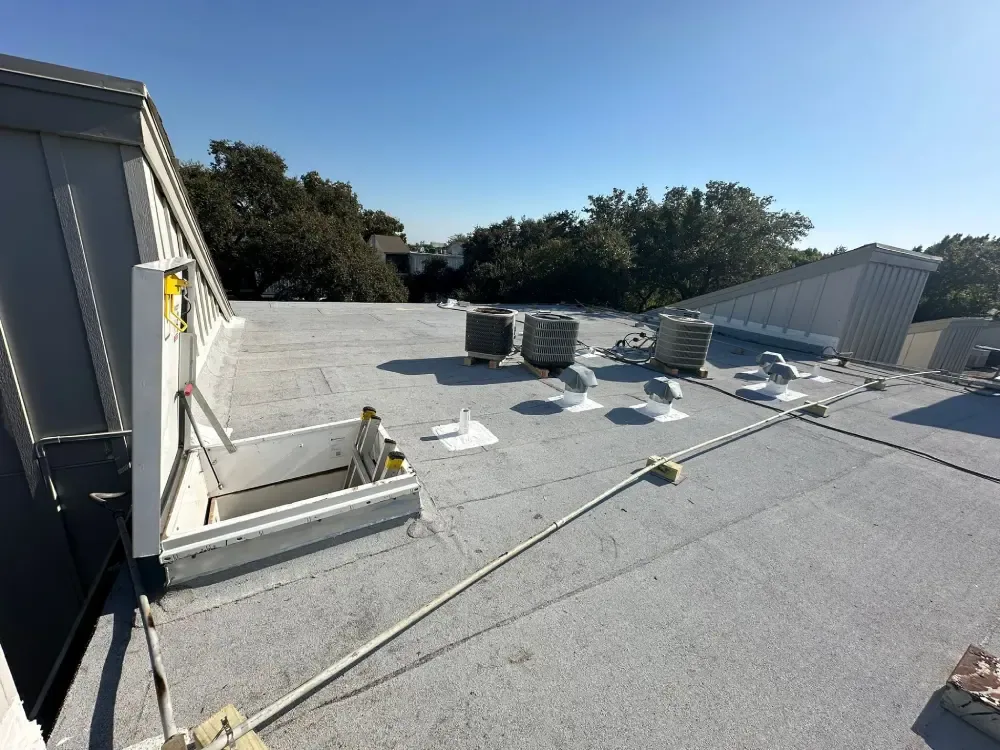
A concrete deck is dense and holds water differently from steel. Moisture can sit in the slab and in the insulation above it, and a vapor path that works on a steel deck may not on concrete. When we remove old roofing, we check the slab for spalling and rusted reinforcement, and we leave the deck dry before the new insulation goes down.
Fastening is different too. A mechanically attached membrane needs fasteners suited to concrete, while an adhered or ballasted system may be the easier fit. We choose after probing the deck and reading the layers, and we test the substrate before committing to a method. A modified bitumen roof or a fully adhered single-ply are both common on concrete decks.
The slab also tells us about the building's past water. Efflorescence on the underside, dark staining at construction joints and rust blooms at the reinforcement mean water has been moving through the deck for a long time. We photograph these signs from inside when the tenant allows, and we match them to what we see on the roof so the repair goes after the source and not just the symptom.
Historic fabric and what it requires
In a historic district, the visible roof edge, parapet and cornice may be subject to review. Replacement flashing and coping have to match what the review accepts, and some work needs approvals before it starts. We plan for that time and keep the old details in mind, repairing rather than replacing when the original is sound.
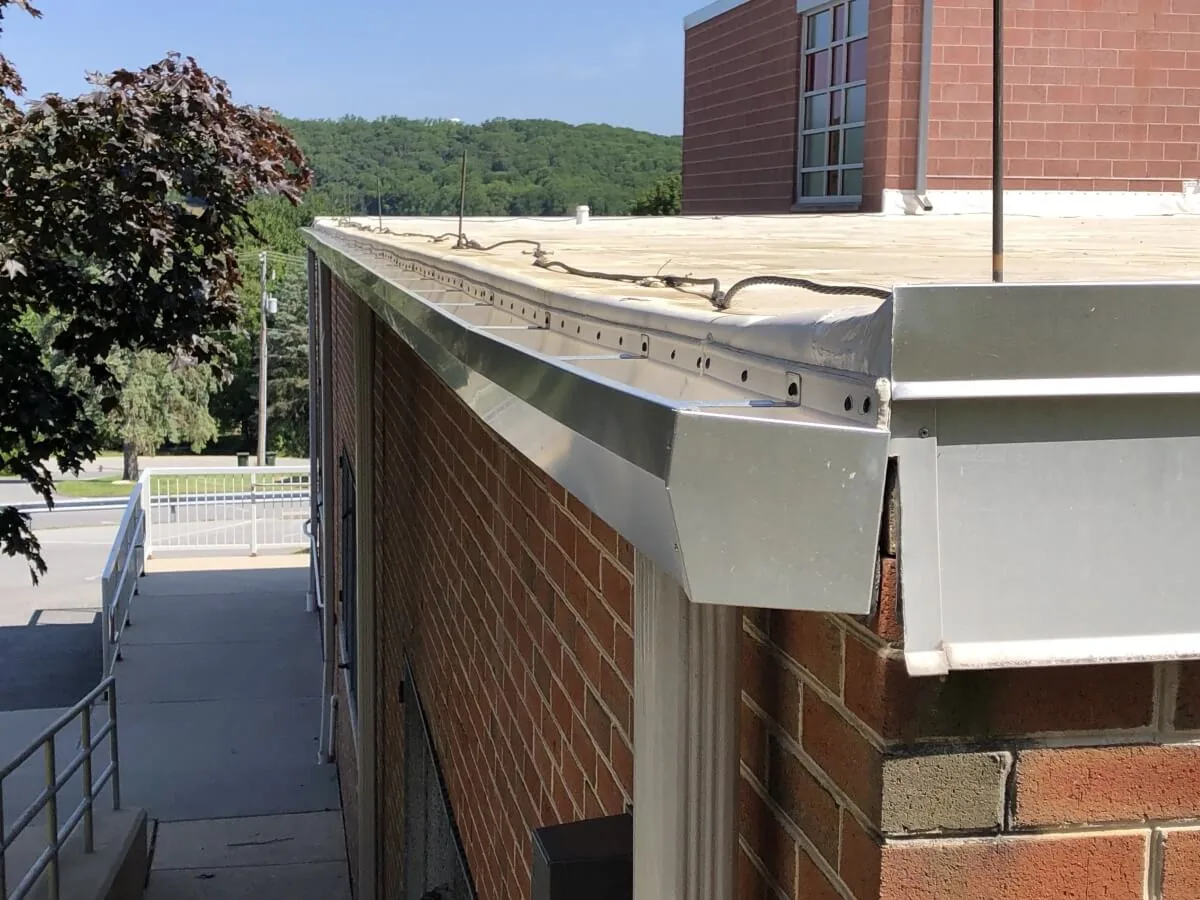
Brick parapets in the district are tall and exposed. Mortar erodes, coping joints open and the through-wall flashing may be gone. Repointing, resetting coping and adding a hidden counterflashing preserves the look and stops the leak. Edge metal and coping are matched to the historic fabric in profile and finish.
Windows, skylights and monitors are part of the historic roofline. A glazed monitor or a skylight on an old factory often has a wood or steel curb that has rotted or rusted. We repair the curb, replace failed glazing seals and flash the opening into the membrane so the original profile stays intact. If a skylight is no longer needed and approvals allow, we can cover it over with a framed, insulated deck, which removes a long-term leak path.
Offices, retail and creative tenants
Dumbo has roughly 500 tech and creative firms within a 10-block radius, with more than 10,000 employees. A Civil War-era coffee warehouse, Empire Stores, took on retail and office tenants in a 2017 renovation. That mix puts office tenants, retail shops and event spaces under old roofs.
Roof leaks cost these tenants more than a stained tile. Creative studios hold equipment, and a retail shop may stock inventory. We treat the space under the roof as the real client: which tenants are most sensitive, when they work and what they cannot afford to lose. An office building roof over a creative tenant gets a flood test and a dated photo record.
Retail and events add foot traffic to terraces and roof decks. Pavers and furniture hide the membrane, so we mark removable sections at drains, flood-test repaired areas and note what lies under the finish. A tenant who hosts events on a roof should have a plan that shows where the drains are before the next party starts.
Belgian block and the hoist
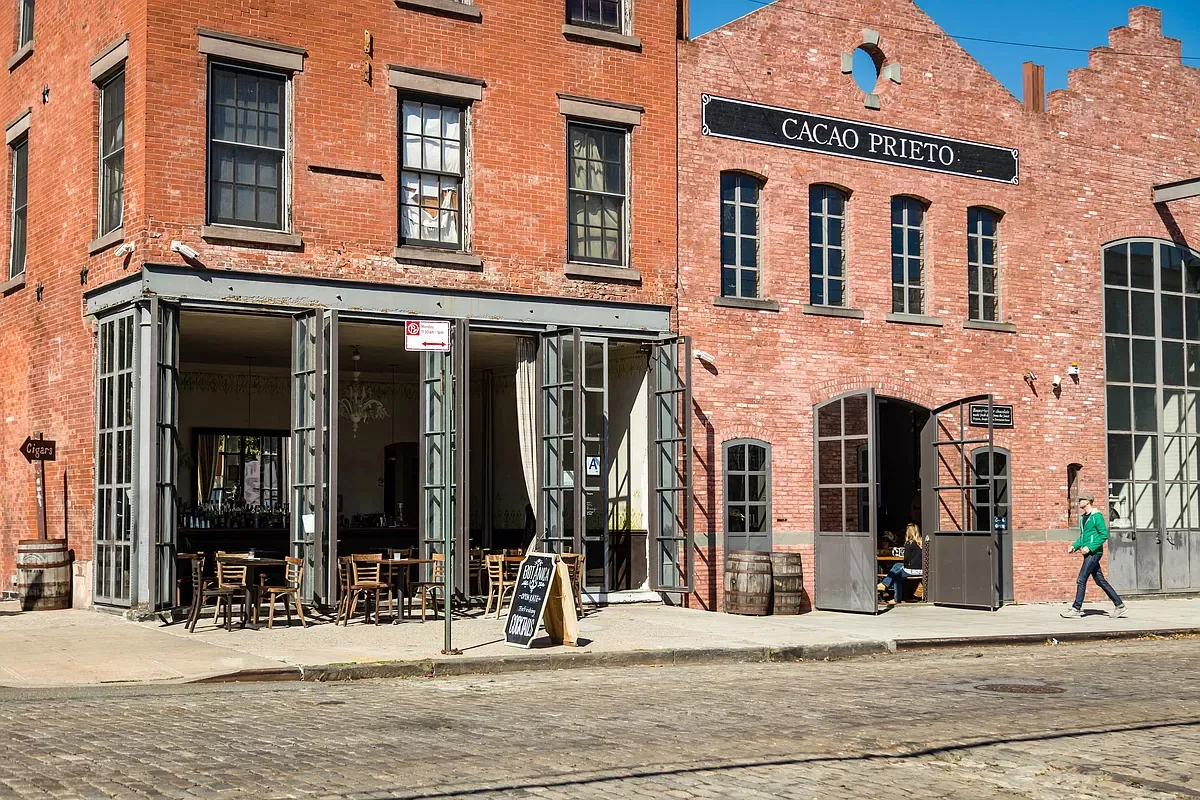
A $108 million rehabilitation of the Belgian block streets in Dumbo and Vinegar Hill was completed in 2025. The streets are handsome and tight. Cobbles limit where a truck can stand, and pedestrians fill the sidewalks on weekends. A hoist or crane needs a permit, and deliveries are timed to avoid foot traffic.
We plan the job around the street. Small loads go up by hand where we must, larger ones by hoist at quiet hours. A flag person watches the sidewalk, and fencing protects the staging area. Weekend visitors do not know a roof job is happening, which is the point.
Weather windows are narrow near the water. We watch the forecast, keep tarps and dry-in material on the roof and stop early when the wind rises, since sheets and rolls can catch a gust on an exposed edge.
Waterfront weather
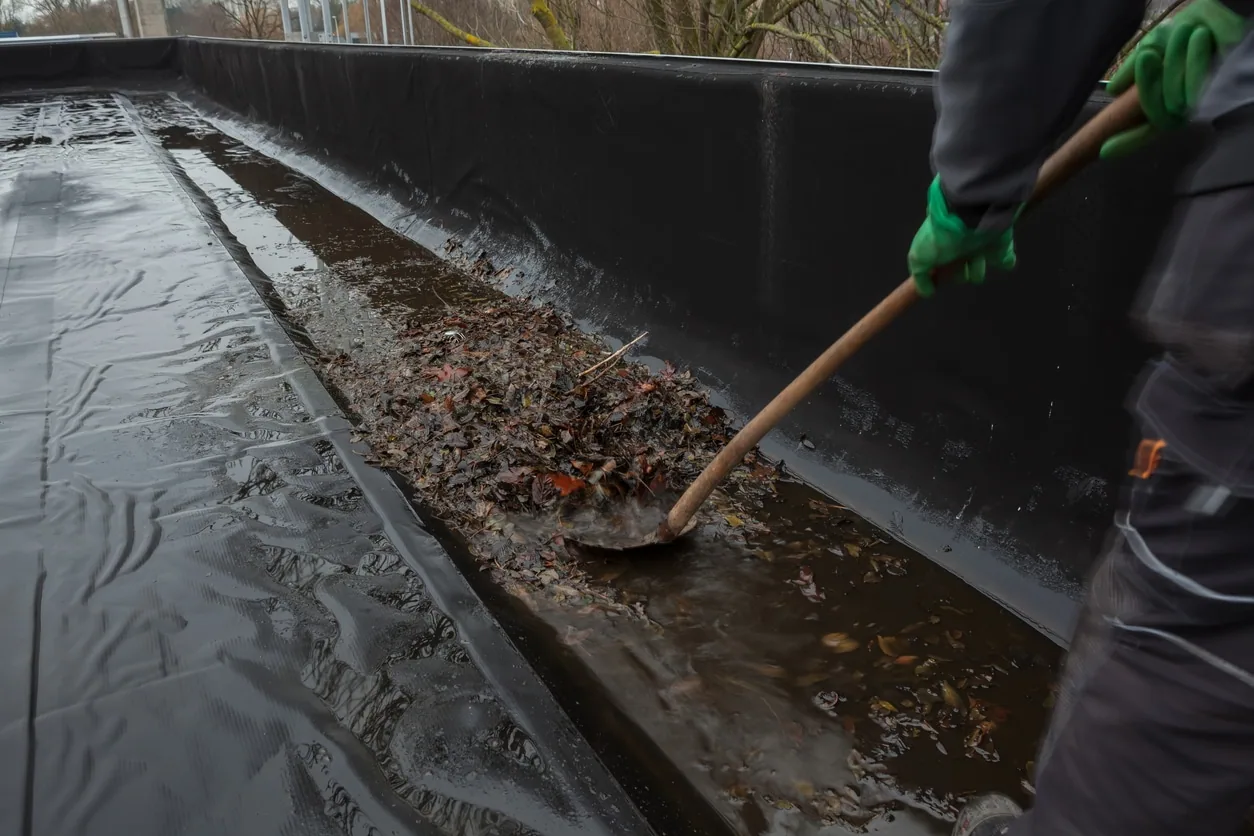
Dumbo sits at the water, and roofs there meet wind and driving rain. In 2007 an EF2 tornado took the roof off a Nissan dealership in Bay Ridge, a sign of how a weak edge can fail in Brooklyn, so coping, edge metal and the first rows of membrane get checked for lift. Ida's remnants in September 2021 produced a flash flood emergency, a first for the city. For a roof, the response is drainage: clean baskets, tested leaders and overflow scuppers where the parapet allows. Drains are part of every Dumbo walk.
Choosing repair, recover or replace
The choice follows the moisture and the approvals. A moisture scan and core samples show how much insulation is wet. If the roof is dry, a recover may be possible. If it is wet, replacement is the answer, and the historic review adds time. Costs follow layers removed, access, the lift and the season. Cold weather limits adhesives, so replacement runs between spring and early fall.
Owners with buildings in Downtown Brooklyn or Fort Greene as well can keep all of the roof records in one format, which helps with lenders, insurers and buyers.
Documentation matters in a district with this much oversight. We keep the approvals, the photographs of existing conditions and the as-built details together, so a future owner, a lender or a review board can see what was done and why. A short maintenance visit each year, focused on drains, coping joints and curbs, keeps a restored historic roof from drifting back into trouble.
Commercial Roofing Questions
Do I need approval to replace a roof in the historic district?
Visible changes, such as coping, parapet details or rooftop additions, may need review. A flat roof field behind a parapet usually has fewer constraints. We ask the owner's team to confirm early and build the schedule around the answer.
How is a roof on a concrete deck different?
The deck is dense and can hold moisture. We check for spalling and rusted rebar, dry the slab and choose a fastening method that suits concrete. A vapor path that works on steel may need changes. Core samples and a moisture scan show how much water the slab and insulation are holding.
Can a creative studio stay open during roof work?
Usually yes, with planning. The roof opens in sections, each closed before the day ends, with loud steps arranged around studio quiet hours.
Can parapets in the district be repaired without replacing them?
Often. Repointing, resetting coping and adding counterflashing can stop a leak without rebuilding the wall. We check the masonry first. Matching mortar, coping profile and flashing metal to the building is part of the work.
What gets a Dumbo walk started?
The roof age, the address area, photos of the worst drain and parapet, any history of landmark review and a note on tenants with sensitive uses.