Commercial Roofing in Fort Greene, Brooklyn, NY
Fort Greene's commercial roofs cluster on its edges. The Brooklyn Navy Yard sits on the northern border along Flushing Avenue, the BQE passes along the northern edge and the LIRR Atlantic Terminal station sits inside it. Inside those edges are institutions, apartment buildings and mixed-use blocks, each with a flat roof behind a brick parapet. Our crews repair, recover and replace commercial roofs here, beginning the first walk with the parapet, the drains and the roof access.
The industrial edge and the transit side
The Brooklyn Navy Yard, a city-run industrial and commercial complex on 225 acres, housed 83 tenants in 1987. The neighborhood boundary along Flushing Avenue puts industrial roofs beside residential ones. A manufacturing roof next to an apartment block has the same sun and snow but very different equipment and traffic.
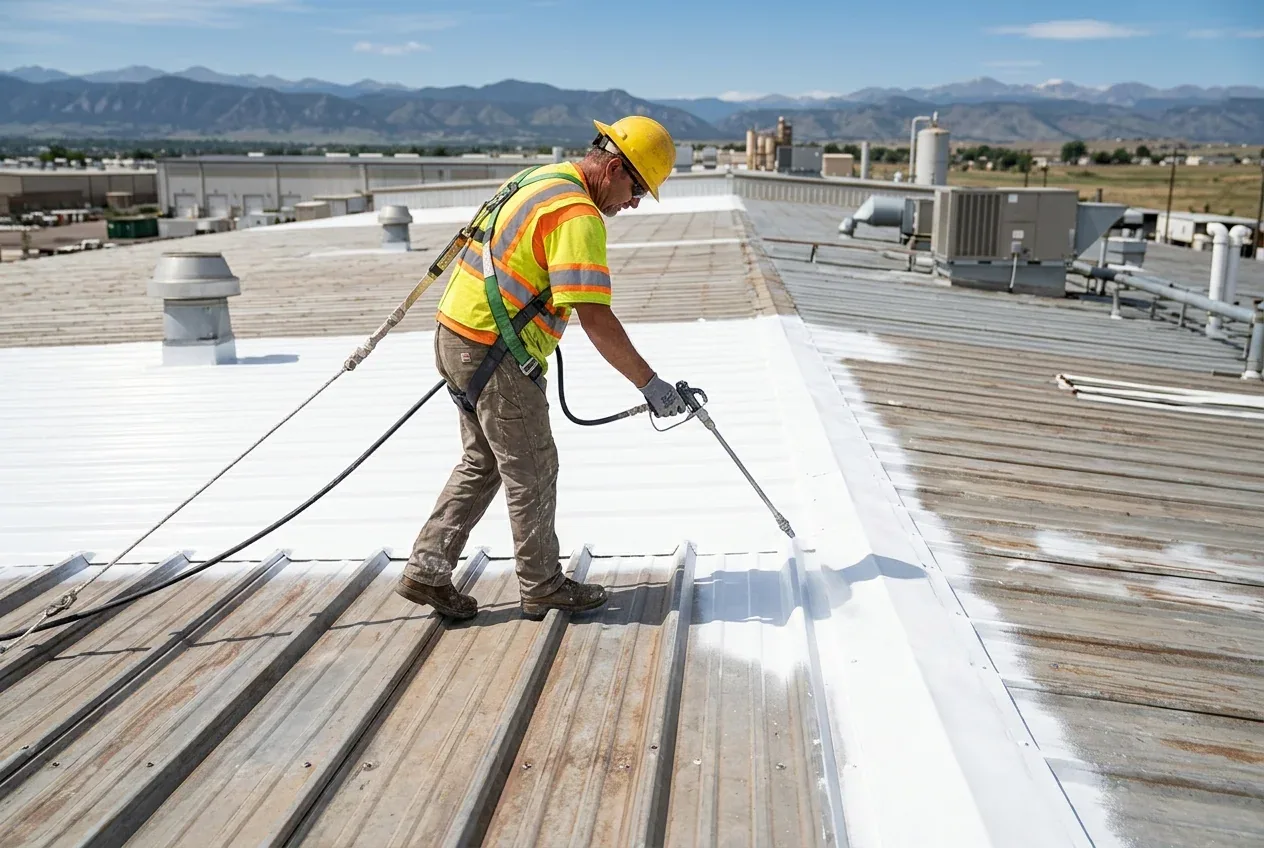
Roofs at an industrial edge carry process exhaust, rooftop units and heavy foot traffic. We match the membrane to the use, add walkway pads and check the flashing at every discharge. A manufacturing plant roof next to residents also needs an odor and noise plan, which we set before the first day.
The LIRR Atlantic Terminal station is in the neighborhood, and the BQE passes along its northern edge. Transit and highways bring noise, vibration and soot. Roofs near them collect dirt that holds water against seams, and equipment on those roofs vibrates, which loosens flashings over time.
We check seams for dirt-trapped water, add washing to the maintenance plan and look at curb flashings for movement. A white membrane such as TPO reflects summer heat and shows dirt that can be cleaned off. With July highs near 85 degrees and a strong heat island, reflectivity is worth having.
Vibration is slower than weather but just as steady. A rooftop unit near a transit line or highway shakes its curb, and a flashing that was snug when it was installed can work loose. We re-tighten, re-seal and add flexible boots where the movement is greatest.
Institutions and public buildings
BAM, Long Island University and Brooklyn Technical High School are major institutions in Fort Greene. Institutional roofs share a pattern: several buildings built at different times, a facilities staff with limited time and a calendar that limits when work can happen. Tear-off belongs in the summer and winter breaks, while term time suits inspection and repair.
We plan for the calendar. A school roof or a cultural venue gets a schedule that finishes before the next event or term, with a contingency for weather. Public buyers also need a clear scope and a photo record, which we prepare in the format a procurement office expects.
What we check on a first walk
On a brick building in Fort Greene, we start at the parapet and read the coping. Open joints, hairline cracks in the mortar and stains down the inside face of the wall tell us where water is entering. We probe the base flashing and check the through-wall flashing at its lap, then move to the bulkhead door, where a rotted sill is a common source of a top-floor stain.
Next are the drains. We clear the baskets, check the domes and pour water into the bowl, watching how it leaves. Then we cross the field, pressing the membrane at seams and curbs and marking blisters and soft spots. At the end of the walk we hand the owner a marked plan: wet areas, weak details and equipment, with a line for each item that says patch or fix.
Brick apartment buildings
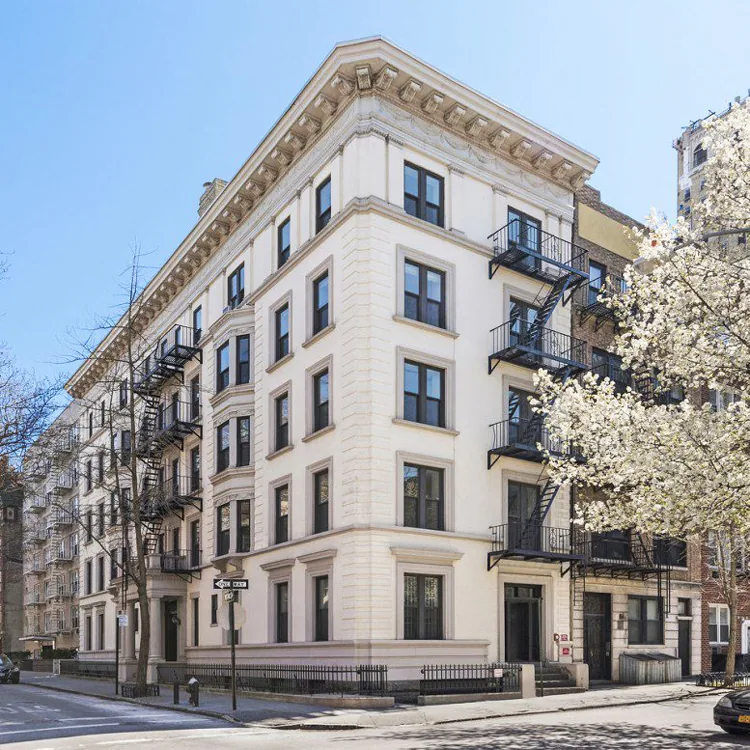
The Fort Greene Houses date to 1941 through 1944 and consist of 35 brick NYCHA buildings, six to fifteen stories tall. A set of similar brick buildings shows how a roofer thinks about a portfolio: the same details fail in the same ways, so one set of repairs can be written once and applied across many roofs. Parapet coping, bulkhead flashing and drain domes are the repeat items.
Owners with several similar buildings benefit from a multi-site roof program, where roofs are ranked by condition and the worst are handled first. Residents get notices before work starts, and the roof door stays locked every night. For private apartment buildings the process is the same, scaled to the building.
Cloudbursts and snow
A roof with one drain is easy to overwhelm in rain like Ida's in 2021. We clean baskets, test leaders and add overflow scuppers. Weak seams open under roughly 30 inches of snow a year and a freeze-thaw swing. Drifts form against parapets and bulkheads and melt toward the drain.
A ponding repair that restores the slope matters more than a patch. We also check heat trace on exposed leaders and clear scuppers before the first hard freeze.
Access, neighbors and tenants
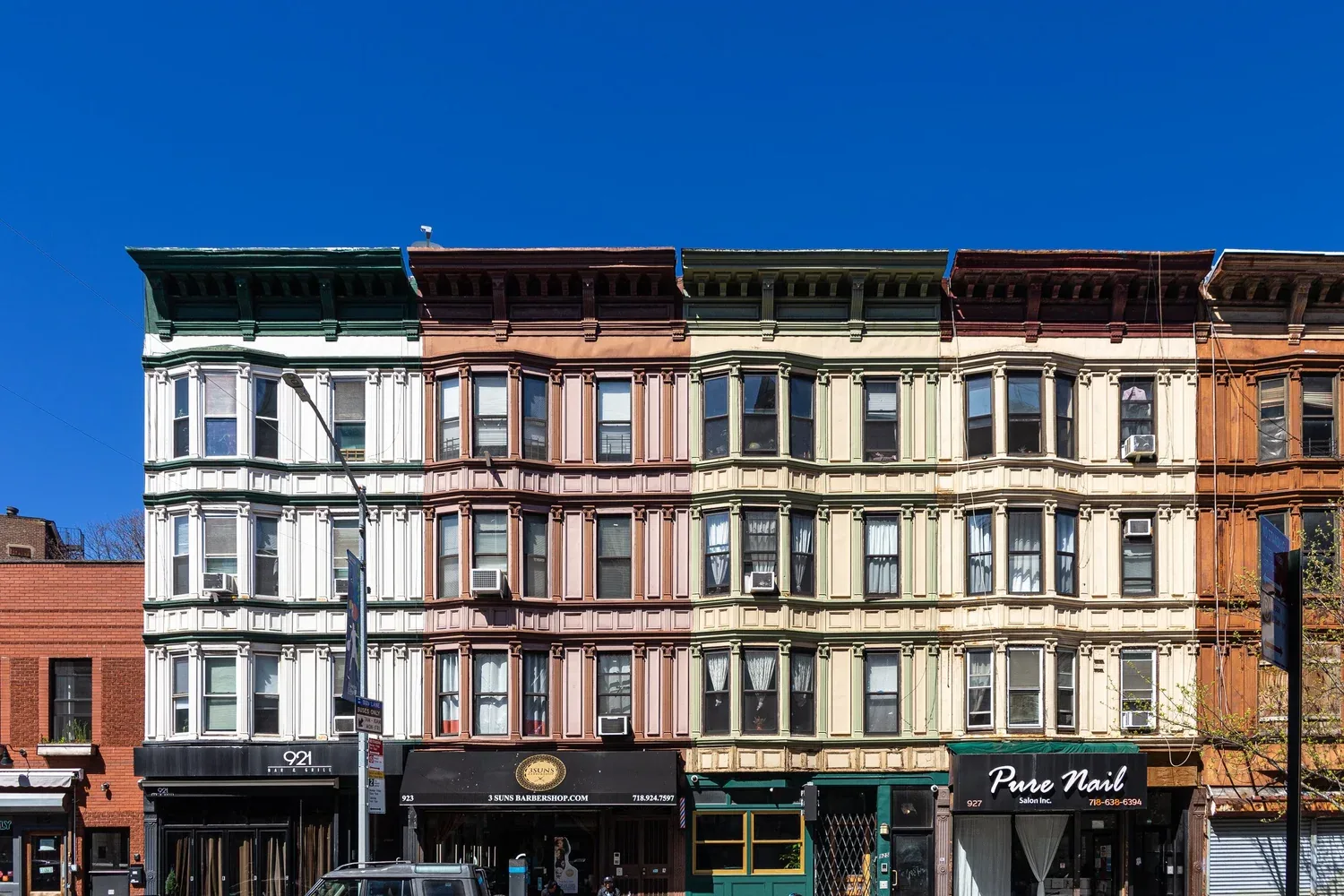
Fort Greene blocks are a mix of rowhouses, apartment buildings and institutions, and many roofs are reached by a single stair or a ladder. We plan the route for materials before the job is priced. Small rolls and bundles go up by hand where the stair allows, and a hoist handles the rest. Sidewalk protection and a flag person keep pedestrians clear.
Neighbors matter because roofs sit close together. Debris, noise and odors drift, so we keep loud steps in daytime hours, bag waste and clean the street daily. Tenants below the work get a notice, a named contact and a plan for the day. The same approach underlies occupied building reroofing on any block.
Repair, recover or replace
A moisture scan and core samples decide the path. If wet insulation is local, repair. A dry roof can take a recover and skip the tear-off. If wet areas are widespread, replace. Costs follow layers, access, equipment and the season, and winter work is limited to repairs and dry-in.
Neighboring areas share the same decisions. Clinton Hill and Downtown Brooklyn blend institutions with apartment buildings much as Fort Greene does, so an owner of property in more than one can compare the roofs in a single report.
One more habit: a dated photograph of every flashing before and after the work goes into the file, so the next walk can compare against it.
Commercial Roofing Questions
How should a facilities team plan roof work around a performance season?
Start with the calendar. Tear-off fits breaks, repairs fit the season and the last day of work should land before the next event. We build the schedule with the facilities office and keep a weather contingency. A pre-event walk confirms that drains are clear and the roof is dry before a big week.
How do you handle many similar brick buildings?
We write one set of details and apply it across the group, with building-specific notes for equipment and condition. The roofs are ranked, and the worst ones go first. Photos taken at the same spots each year make changes obvious.
What if industrial roofs next door send fumes onto mine?
We check the discharge points and the membrane, and we choose a surface that tolerates what comes off the roof next door. A neighbor's exhaust may call for a different sheet.
Will residents be disturbed by a reroof?
Some noise is unavoidable in tear-off. We post notices, set daytime hours and keep a contact for questions. Quieter systems reduce disruption.
What starts a Fort Greene roof program?
A roof age, an address area, a drain photo, a parapet photo, the calendar of busy periods and a list of similar buildings.