Commercial Roofing in Clinton Hill, Brooklyn, NY
A cornice tells you how old the trouble is. On a Clinton Hill building with a stone or brick cornice, look at where the gutter or flat roof meets the overhang. Dark streaks down the wall under it, a green stain at a joint or a missing piece of pointing say the water has been leaving by the wrong path for years. The roof itself may look fine from above, because the failure is in the thin line of flashing and mortar at its edge.
Commercial roofing in Clinton Hill, Brooklyn, NY is shaped by three kinds of buildings: institutional ones with a long architectural record, converted factory lofts with old industrial roofs, and the commercial blocks along the Flushing Avenue edge near the Navy Yard. Each calls for a different hand. Our first walk goes to the details that the building's age puts at risk, then to the field of the roof.
Landmarked institutional roofs
Pratt Institute, founded in 1887, has many landmarked buildings. Landmark status limits what can change on the outside, which for a roofer means the visible parts: cornices, parapets, chimneys, skylights and the lines of the roof against the sky. Work that cannot be seen from the street is easier to schedule than work that can. When we write a scope for an older institutional building, we separate the two lists, so an owner can start the hidden work while any approval for the visible items proceeds.
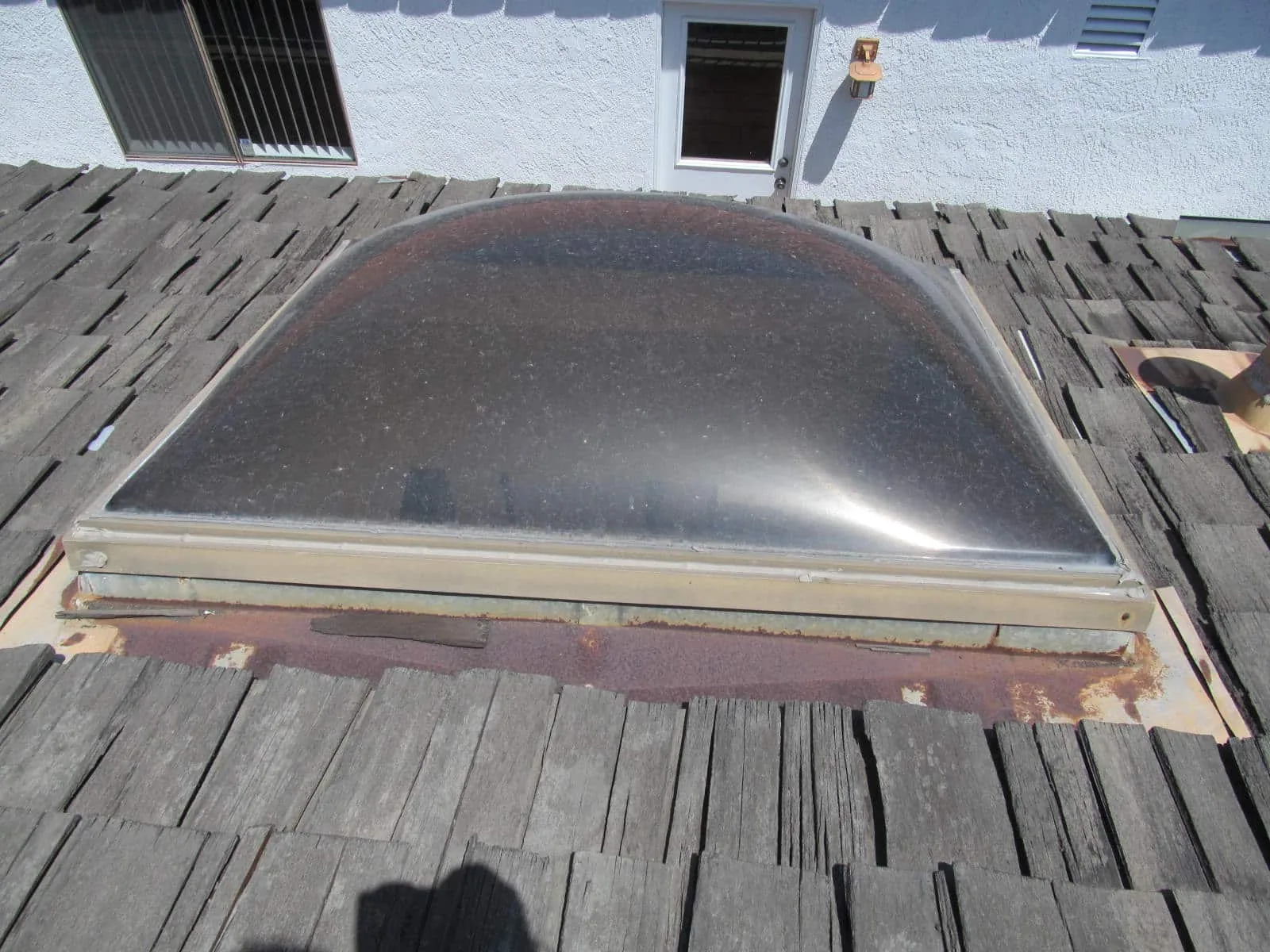
Older institutional buildings often combine several roof types under one skyline: a flat section over a wing, a steep section over a hall, and skylights over a stair. The seams between them are the weak points. A skylight and penetration flashing repair is a common first step, since an old curb with failed flashing can let water in each time it rains. We document each junction with photographs, so a facilities office has a plan for a college roof that will take years to finish.
Factory lofts and their old roofs
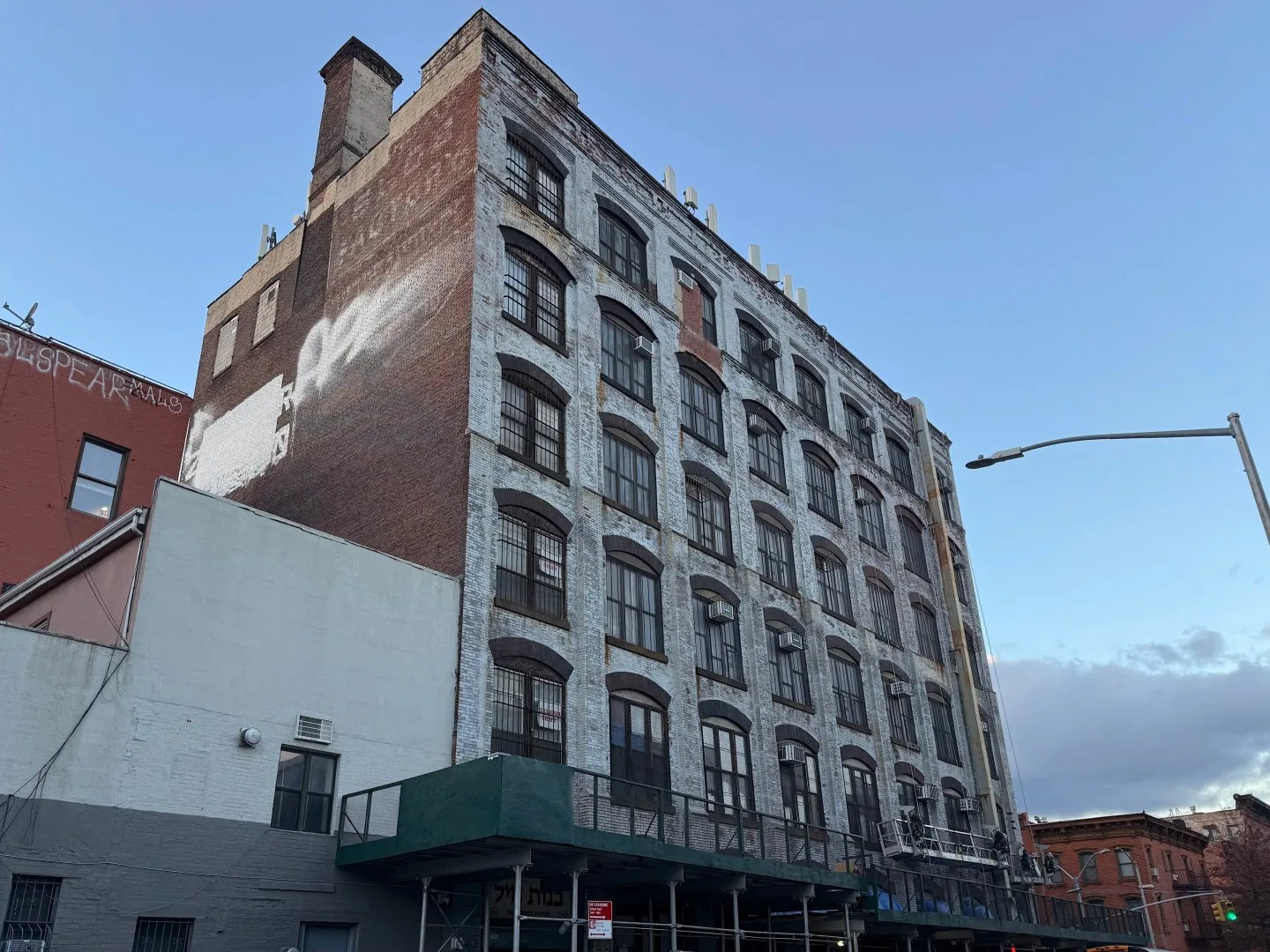
A former chocolate factory in Clinton Hill was converted to lofts in 2002. A conversion like that leaves a loft-building roof of an industrial type over a residential interior. Coring settles the roof's age and makeup. What we expect on a loft building is a flat roof with a parapet on all sides, a few large drains and possibly a few additions from the conversion: new vents, a mechanical platform, a stair bulkhead.
The difference between an industrial roof and a residential one is the consequence of a leak. Water that once fell on a factory floor now falls on a bedroom ceiling. A condominium board owning such a building wants documentation for every action, and we deliver a roof condition report with dated photographs and a ranked scope. Penetrations added in the conversion are checked first.
Flushing Avenue and the Navy Yard side
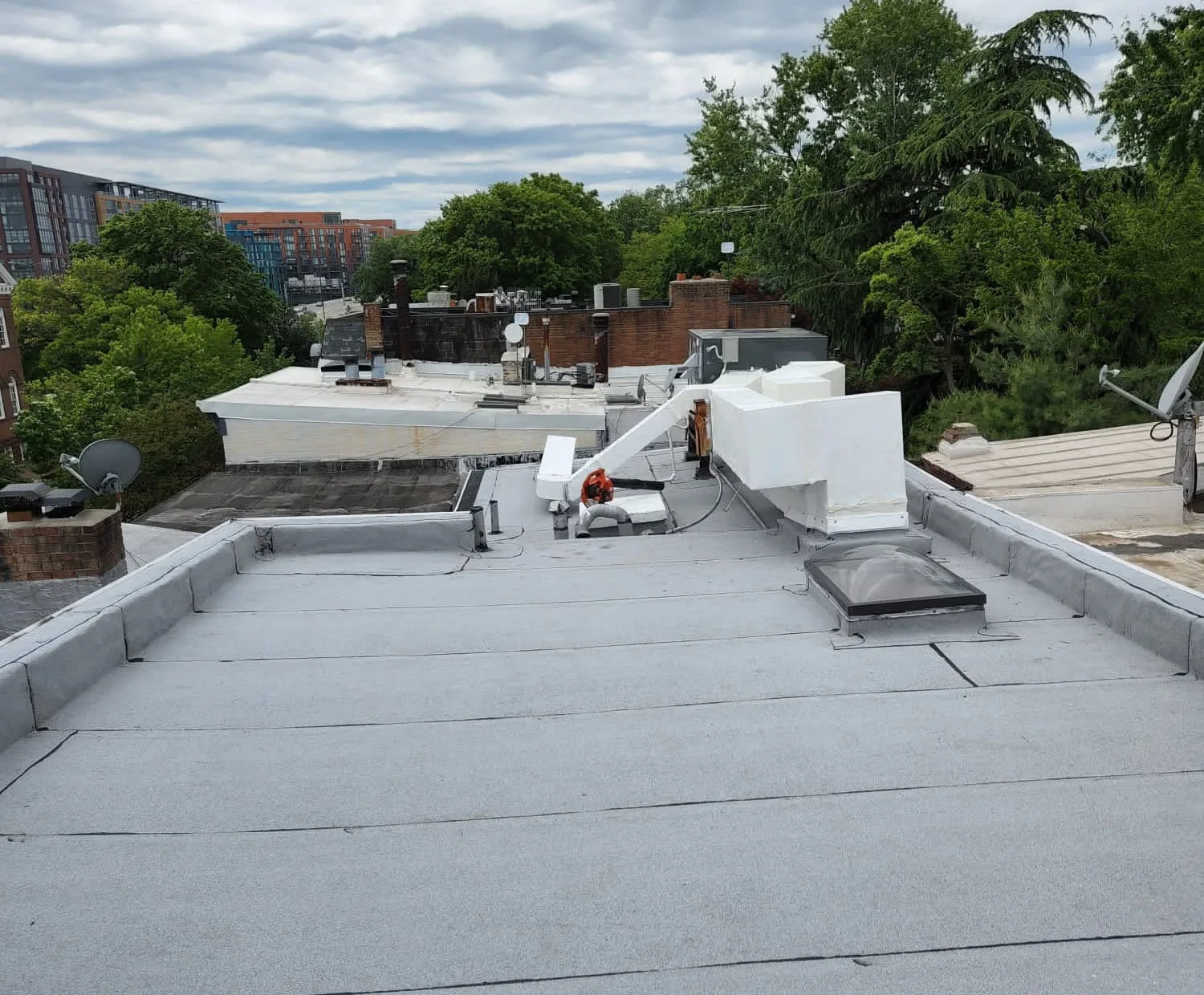
Flushing Avenue forms the northern edge of Clinton Hill, near the Brooklyn Navy Yard. The Brooklyn Navy Yard, a city-run industrial and commercial complex, spreads across 225 acres. On a commercial or light-industrial roof the usual questions are loading, access and equipment. A flex industrial roof sees service crews, vent fans and often a stack of stored material, and it benefits from walk pads, guarded drains and a surface that can handle foot traffic. We install protection at hatches and equipment paths where crews will walk.
Heavy traffic on a roof is cheap to prevent and expensive to repair. A single dropped tool or dragged ladder can cut a single-ply membrane, and a puncture in a traffic lane stays hidden until the next rain. We mark the travel lanes on the roof in a contrasting color, set the pads on a clean substrate, and give the owner a short written rule for crews who work there, covering where to walk, where to set ladders and who to call if something is cut.
Two historic districts, one rule
Two historic districts in Clinton Hill were listed on the National Register in 1985 and 1986. A listing of that kind recognizes the buildings and the streets, and many owners ask whether it affects their roof. For work that is invisible from the ground, such as a membrane replacement behind a parapet, it usually does not. For anything visible, such as coping, a visible slope or a replaced skylight, owners should check with the right authority before ordering materials. We help by preparing photographs and a written description of each visible item, which shortens the conversation.
Freeze, thaw and cloudburst
Snow near 30 inches a year and the freeze-thaw cycle of a Brooklyn winter pry at every joint in a cornice, coping and base flashing. Water gets into open mortar, freezes, expands and widens the gap. In summer, late-day thundershowers and a strong urban heat island swing the same roof from baking to soaked in an hour. Ida's remnants on September 1, 2021 brought the city its first flash flood emergency, the kind of rain that tests every drain. We confirm that each roof has an overflow route and that drain baskets are clear before the wet season. Where the damage is already done, a flashing failure repair is the first fix.
The fix in order
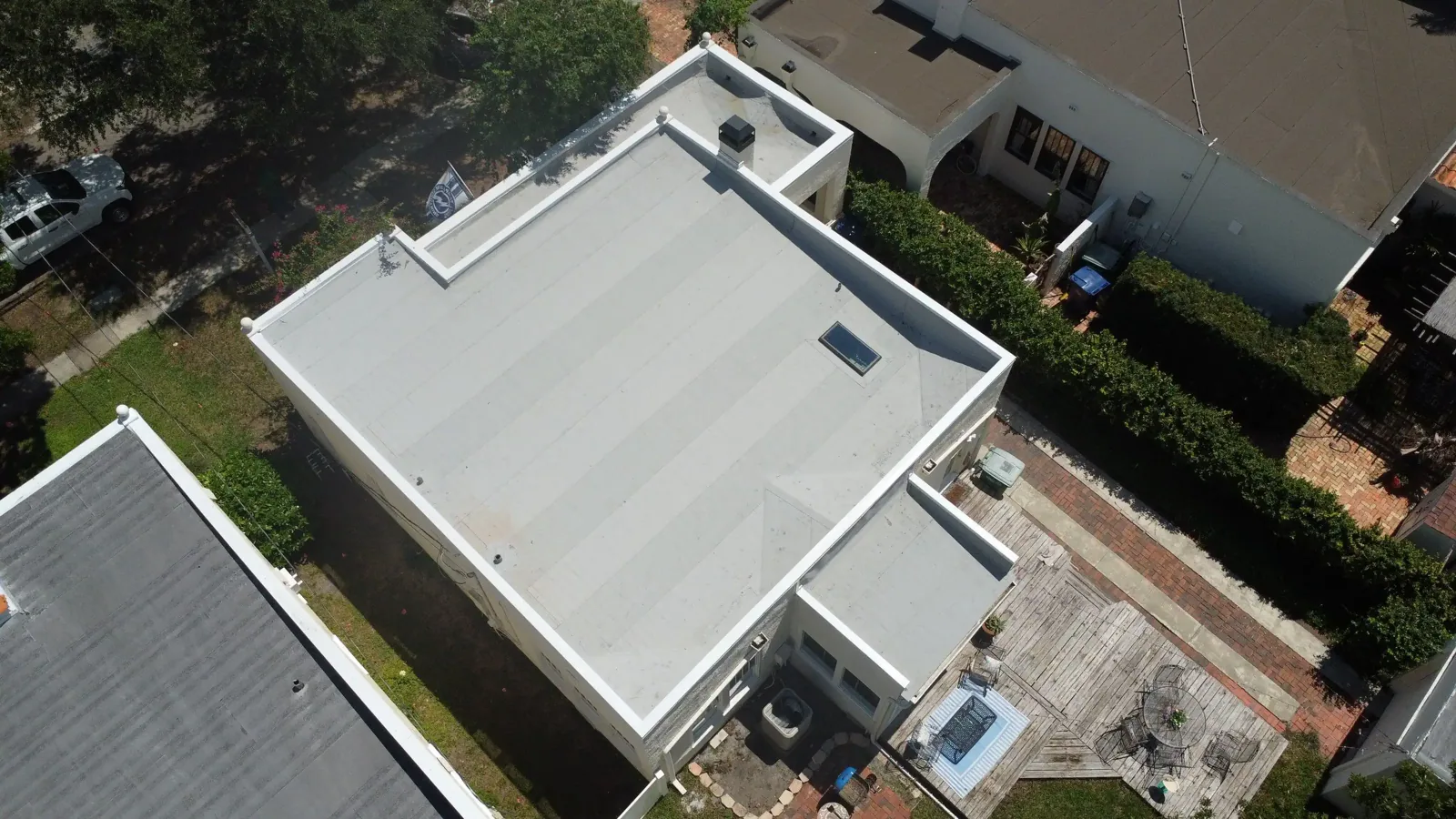
Clear the drains. Walk the field and mark soft spots. Probe the cornice returns, the coping joints and every base flashing. Scan for wet insulation if the building is large. Then give the owner a scope in sections: repair now, restore, replace. Price follows access, the length of parapet, the amount of masonry work and whether approvals are needed. Owners in Fort Greene and Bedford-Stuyvesant work through the same steps.
Phasing matters on institutional and loft buildings. A roof over occupied rooms is opened one section at a time, closed in watertight each day and checked at dusk, so a surprise storm finds the deck closed. We agree the phasing, the daily closeout and the weather call with the manager before the first panel comes off.
Commercial Roofing Questions
Do landmark rules apply to a flat roof that nobody can see from the street?
Usually the review focuses on what is visible from the street, such as cornices, parapets and chimneys. A flat membrane behind a tall parapet is a different matter. Because rules differ by building, we separate the visible and hidden work in the scope and let the owner confirm the approvals first.
How do we handle skylights on an older institutional building?
We look at the curb, the glazing seal, the flashing at each side and the drain path below. A failed curb flashing is a repair. A failed unit or frame is a replacement, and it may require approval if it can be seen. Either way, we photograph every joint before we touch it.
Why do converted lofts leak at the new penetrations?
Each new vent, pipe and platform pierces a roof that was not made for it. The flashing may be sound at the start, but movement and weather open it. We check every conversion penetration first and replace cracked boots with a flashing that can be inspected from above.
Can a roof near the Navy Yard take foot traffic from equipment crews?
Yes if it is protected. Walk pads along the travel paths, guarded drains and hatch landings keep the membrane intact. Without them, a membrane takes scuffs and punctures that become leaks.
What should I send before a walk in Clinton Hill?
The roof age if you know it, the address area, and photographs of the worst drain, the cornice or parapet and any stain on the wall below. They show whether to bring access gear for the edge.