Roofing for Property Management Companies in Brooklyn, NY
A manager with thirty Brooklyn, NY buildings gets thirty kinds of roof call. One super says the hatch leaks. Another says a tenant heard dripping over the stairwell. A third sends a photo of a bucket. The calls come in through the same phone and cost very different amounts. What a manager needs from a roofer is a way to sort them: which roof is failing, which is only noisy and which one will fail next winter. That sorting starts with a walk on each roof and a short, plain note. Send the building list with addresses and roof ages, and we will plan the walks.
Our crews walk, repair and maintain roofs for managers who report to owners, lenders and tenants.
One walk per roof, one note per walk
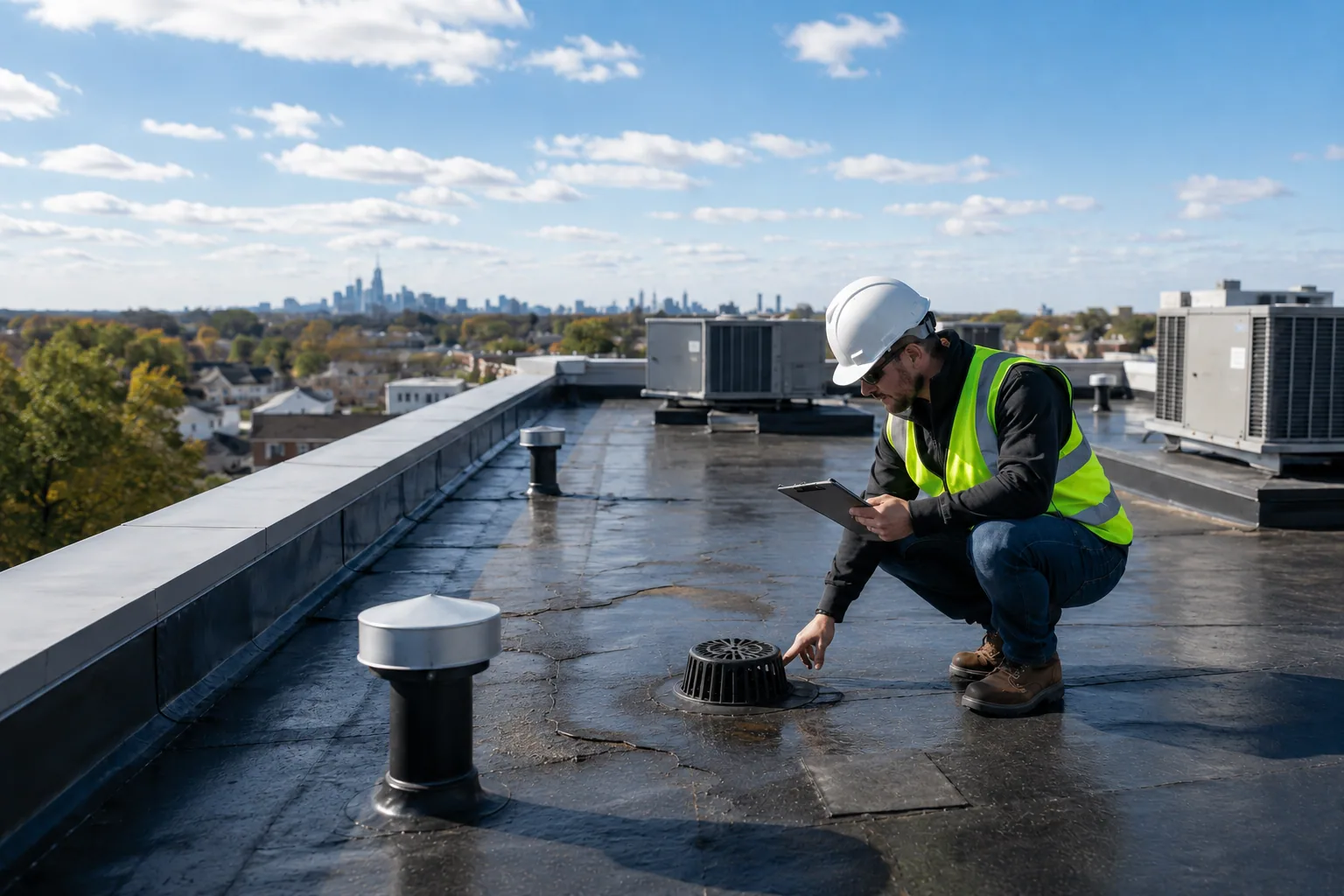
We walk every roof the same way. Drains first, then the walls, then the field, then the equipment. Each roof gets a short note: what we saw, what it means and what to do about it. The note ends with a rating of good, fair or poor, and a line saying when we would look again.
That gives a manager a list that can be sorted. Roofs rated poor with tenants underneath go to the top. Roofs rated fair get a date. Roofs rated good get a visit in the maintenance calendar and nothing else. Photographs go with every note, so the owner can see what the manager is describing. Keep the notes in one folder per building, and update the folder after every visit.
Brooklyn stock, building by building
Brownstone and brick rowhouse make up much of the housing a manager meets. In Bedford-Stuyvesant alone, roughly 8,800 buildings predate 1900, and the Park Slope Historic District holds 2,575. Many carry a store on the ground floor, and the roof above is a flat deck with a hatch, a parapet and a shared party wall.
Managers who run lofts and mill buildings in Sunset Park, Bushwick and East Williamsburg deal with larger decks, rooftop units and long parapets. The mix means a single portfolio can hold a tar-and-gravel build-up from decades ago next to a new single-ply roof. We note the system on every roof, since the repair depends on it. A manager who knows which roofs are which can budget with less guessing. Send the construction year for each building if you have it.
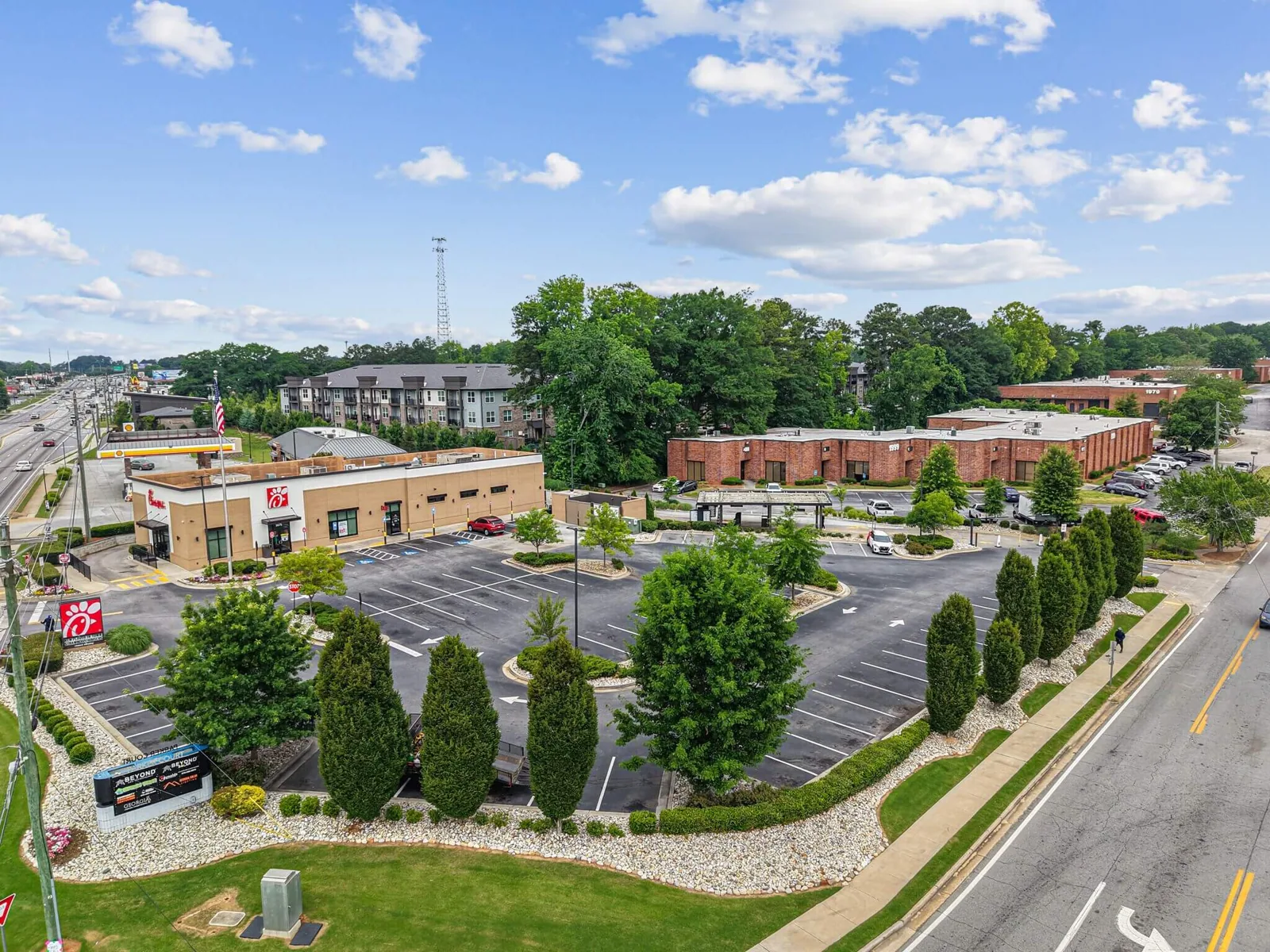
Owners vary as much as buildings. Some managers answer to a single family. Others report to real estate investors and REITs that hold a spread of properties, and they need a report that rolls up. A few manage space let to chains, where the retail and restaurant chains on the ground floor add their own exhaust and signage to the roof. We shape the note to the reader, with the same findings and a different cover page.
Tenants, noise and notice
Tenants judge a roofer by the notice they got. We give written notice with dates, hours and a contact. We keep noisy work to the hours the manager picks. We protect the hatch landing and the stairwell, and we sweep the grounds each day.
On mixed-use blocks the store tenant matters as much as the apartments above. A restaurant needs its kitchen exhaust protected. A clinic needs quiet and clean air. A small shop wants to know whether the entrance is blocked. We ask the manager for these constraints before the first visit and write them into the plan. For larger jobs, occupied building reroofing stages the work in sections, closed each day. Ask for the notice template so every building gets the same wording.
After a storm, the same order
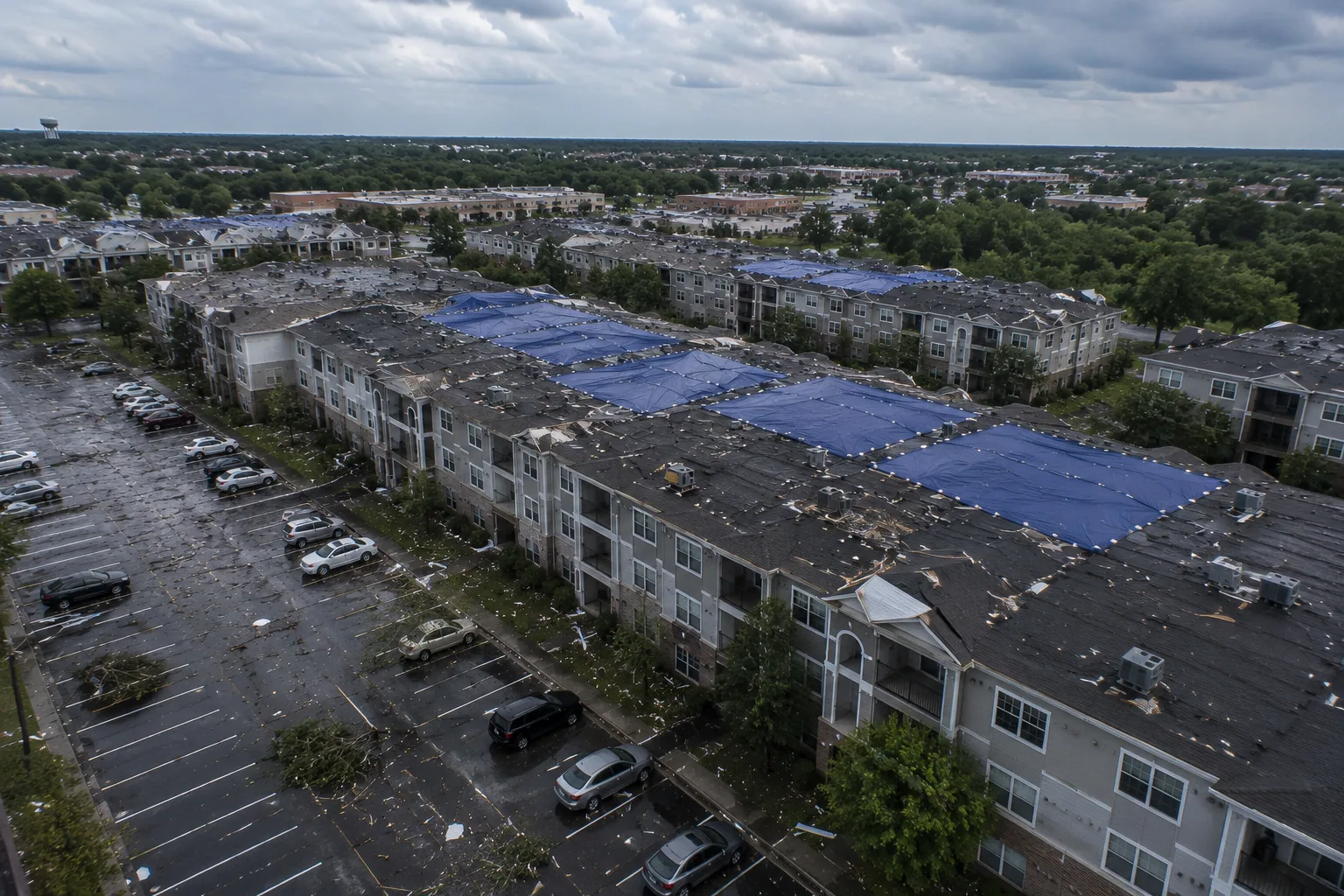
Ida's remnants on September 1, 2021 forced the first flash flood emergency the city had issued. After an event like that, a manager has dozens of calls and one question: which roofs took water. We take the buildings in an order set by tenants and by condition rating, and we scan the poor roofs first.
In October 2012 Sandy flooded parts of Brooklyn to 4.5 feet and left much of Red Hook under water. Managers in flood-prone blocks keep a short storm kit plan: who clears the drains, who calls us and who talks to the insurer. The crews for storm damage roof repair work from the same list. Share the storm kit plan with the supers.
Preparation helps more than speed. Before the fall, we suggest a quick drain round on every roof: baskets cleared, leaders flushed, loose items tied down. After the first hard freeze, a second round checks for ice in the leaders. These rounds take the super an hour per building and prevent most of the calls that fill a manager's phone in a storm. We provide a one-page checklist with photos of what a good drain looks like, so the round is the same in every building.
Turning notes into a budget
The notes roll up into a budget. Each roof has a rating, a repair list and a rough cost driver: access, area, number of openings, amount of wet insulation. The manager can show the owner which roofs need money this year and which can wait.
A multi-year plan helps with lenders and with sales. Roof capital planning turns the notes into a schedule by year. For managers with many buildings, a multi-site roof program sets one calendar and one report format. A manager with buildings in Crown Heights and elsewhere can compare them on one scale. Update the plan each year, even when nothing has changed.
Warranties and records feed the budget too. A new roof comes with paperwork, and a maintenance log keeps that paperwork alive. Many makers expect evidence of upkeep before they honor a claim, and a manager who can hand over a dated log has an easier conversation. We follow the maker's instructions for repairs and note each one. The closing photos from every job go in the same folder, so the building's history is in one place when a lender or buyer asks for it.
The roof file that travels
Managers change, and buildings sell. The roof file should survive both. It holds the walk notes, the photos, the repair history, the warranty papers and the last moisture scan. Put the file where a new manager can find it on the first day.
We keep a copy of every note and every photo, and we can reproduce the file on request. After a repair, we update it with the closing photos and the materials used. A roof with a good file sells for more and insures for less, because a buyer or a carrier can see what has been done. Ask us for the file format before the first walk, so your system and ours match.
Commercial Roofing Questions
Which roofs should a manager look at first?
Start with roofs that have a history of leaks, roofs over sensitive tenants and roofs older than about twenty years. A short walk on each tells you which of the rest can wait. We rate every roof so the sorting does not depend on memory.
Can one contract cover buildings with different roof types?
Yes. The walk and the report follow the same format, whatever the roof is made of. Pricing is set per building, and the schedule rolls up for the owner.
Who handles the violation that mentions the roof?
We give you the survey and the repair scope that answers it. Your filing representative handles the paperwork. Include the notice with the first request, so the scope answers it directly.
How fast do you respond to a tenant complaint?
Active leaks get priority, and the emergency line runs all night. We stop the water first and plan the permanent repair after. Send photos of the stain and of the roof above it.
What do you need before a portfolio walk?
The building list with address areas and roof ages, any recent reports, open violations and the key contacts.