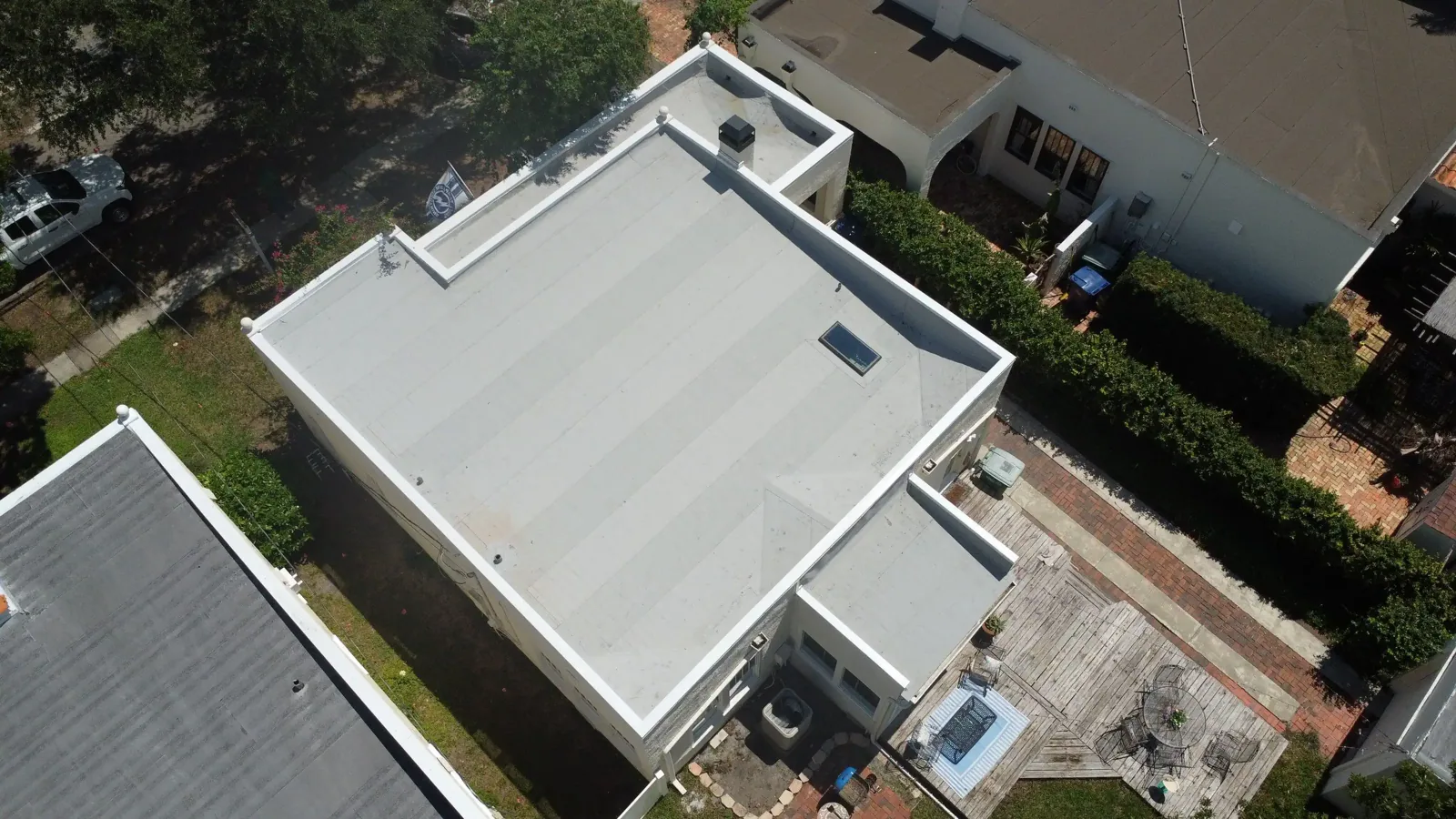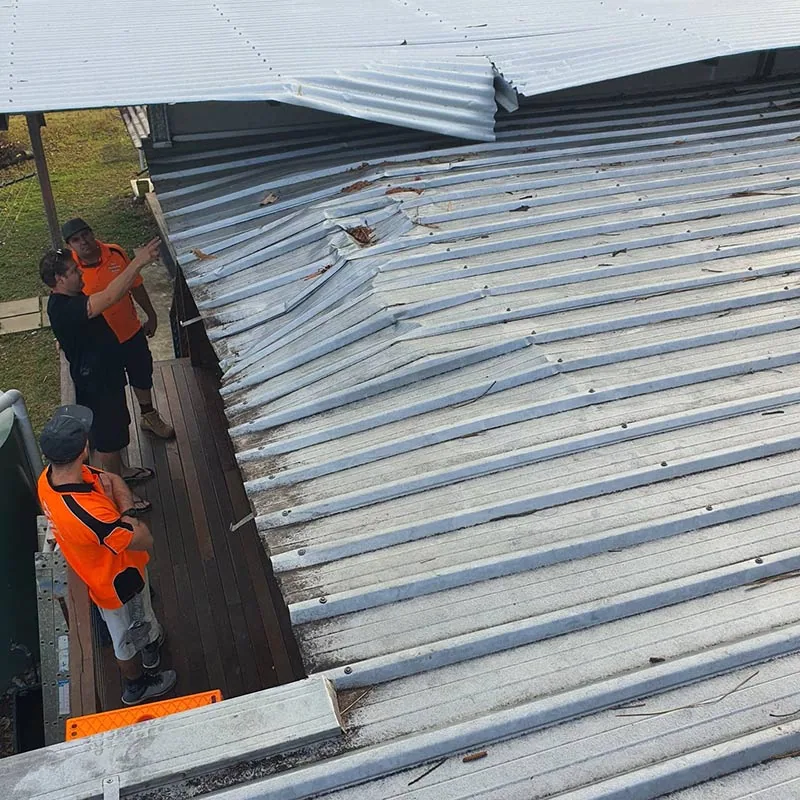
Occupied Building Reroofing in Brooklyn, NY
Look down the open bulkhead stairs of a three-story building with a shop on the ground floor and you can hear the shop on the ground floor and the family on the top. A reroof there is never just a roof job. A crew will be over somebody's kitchen, over somebody's register and over a stairwell the whole building uses. In Brooklyn, NY many buildings that need a new roof are full of people. The failure we plan for is not a leak under the old roof. It is a leak under the new one, in the half hour a section is open and a late-day thundershower rolls in.
What the super sees first
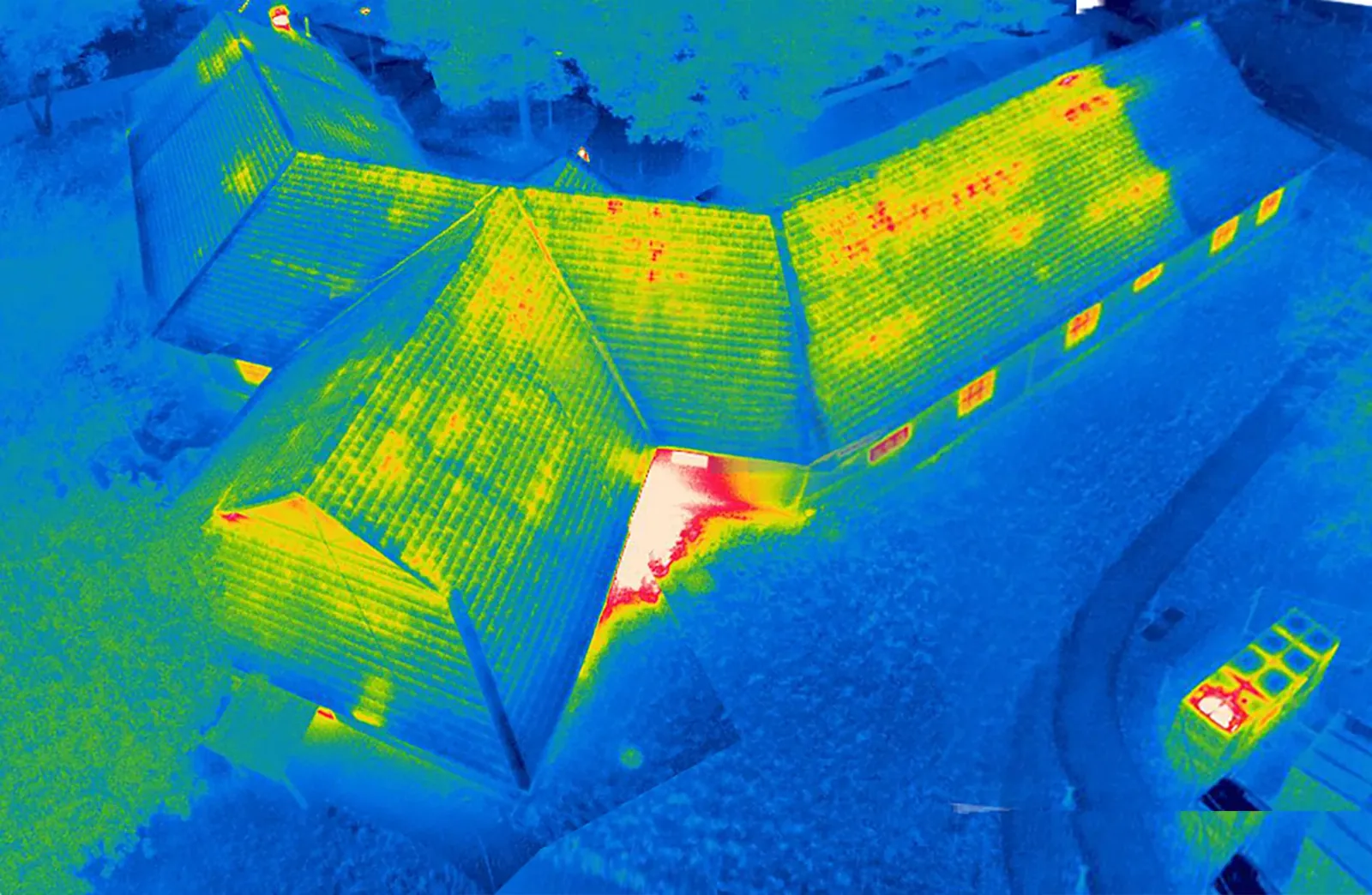
The super knows the building better than any drawing. He knows which top-floor ceiling stains after every hard rain, which tenant works nights and which stair door sticks. We start with him. We walk the roof together, run an infrared moisture survey and then go down and look at the ceilings the roof protects.
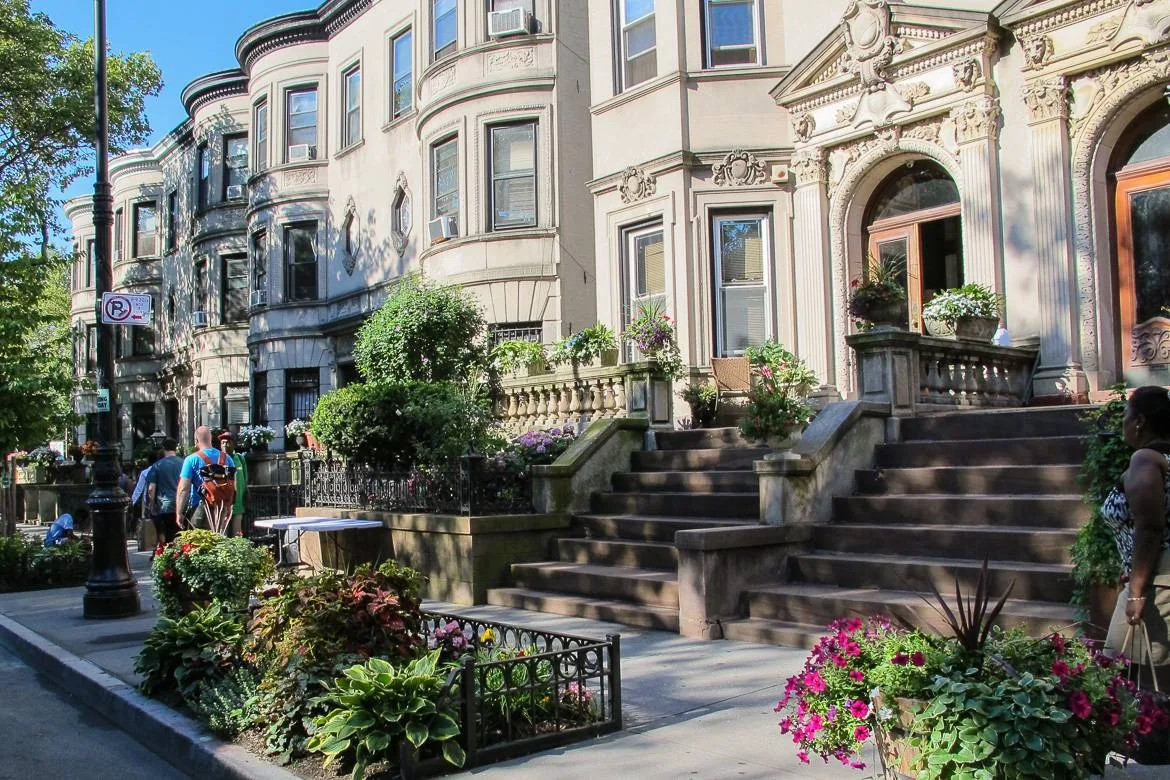
That tells us how fast a section can be opened and closed, what must be covered inside and which hours are quiet. In Bedford-Stuyvesant, many three- and four-story masonry buildings have commercial ground floors, so the roof job sits over a shop, apartments or both. A restaurant below needs a different plan than a dentist's office, and a dentist's office needs a different plan than a family asleep after a night shift.
Opening the roof in strips
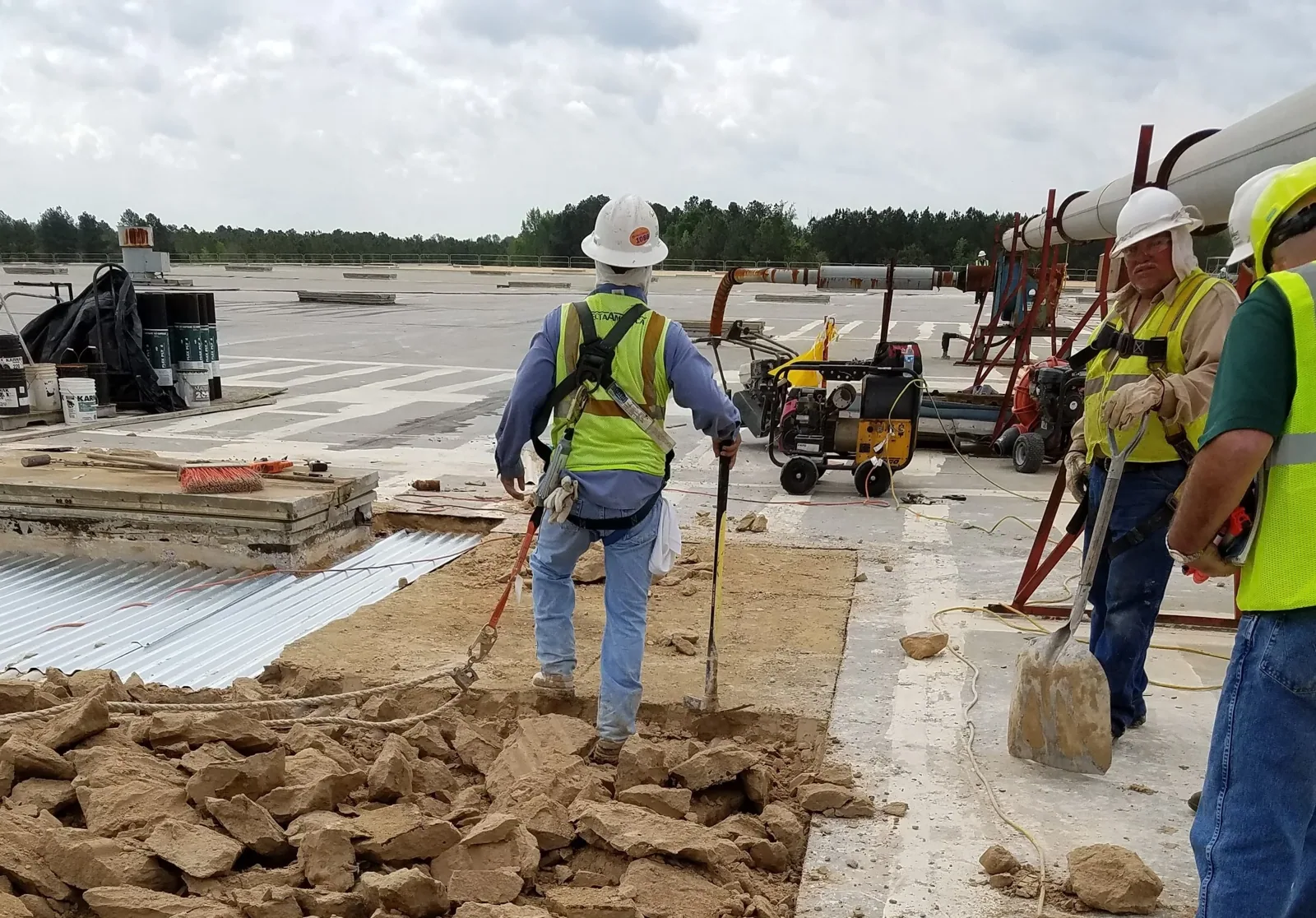
A flat roof comes off in strips, not all at once. Each strip is small enough to tear off, build back and seal before the crew leaves. The strip is bounded by a drain, a wall or a seam, so water has somewhere to go. The tie-in to the old roof is built before the next strip opens, and the drain basket in the work area is covered.
The forecast sets the day. Late-day thundershowers are common in a New York City summer, so the crew starts early and stops opening new areas by midafternoon. If the sky turns, the open strip gets its temporary seal and the crew walks the edges. We keep a log of every strip: when it opened, when it closed, what the weather was and how the tie-in was made. The log goes into the file for the replacement.
Noise, dust and smell
Tear-off is loud, and a thin deck carries the sound straight to the top floor. We agree the loud hours with the tenants before we start, and we tell them the days. Cutting and removal go in the middle of the day, when most people are out. Debris goes down a chute or by hoist, away from air intakes, windows that open onto the roof and the door to the shop.
Smell is a quieter problem. Adhesives and hot work can drift into an intake. We locate the intakes on the first walk, choose low-odor products where we can and ask the building engineer to shut a damper for the sensitive steps. Hospitals add rules of their own. Maimonides Medical Center in Borough Park has 679 beds and a level 2 trauma center, and Brookdale University Hospital sits in Brownsville. Work near patient floors follows the hospital's own dust and notice protocols, and a hospital roof job is scheduled with the facilities office.
Access and neighbors
Most Brooklyn roofs are reached through a bulkhead or a hatch. Materials go up the stair or by a hoist set on the sidewalk, and everything coming down leaves the same way. A stair that tenants use is a shared space. We sweep it every evening, close doors behind us and post a name and number.
The next building matters. In a rowhouse block, a party wall and a lot line are all that separates two roofs. We tell the neighbors the dates, keep debris and hot material away from their side and photograph the shared wall before work starts. In Bedford-Stuyvesant and Downtown Brooklyn, where buildings sit tight, the neighbor's cooperation decides how smoothly a hoist day goes.
Drains, edges and the new roof
The new roof has to drain better than the old one. We look at the sump of water at the drain on the old roof and ask why it was there. If the deck has sagged, we add tapered insulation. If the drain is too small, we replace it. On September 1, 2021, Ida's remnants brought the city its first flash flood emergency, and a new roof that ponds will fail first the next time.
Edges get attention too. Parapet flashing is rebuilt, coping joints are reset and the edge metal is fastened for wind uplift at the edge. Snow near 30 inches a year and a freeze-thaw swing open any weak seam, so the new details have to hold through a winter. A flashing failure found at tear-off is rebuilt and not covered.
Closeout walk
When the last strip closes, we walk the whole field with the owner or the super. We check every tie-in, every flashing and every drain. A hose test on a few corners and a look at the ceilings below come next. Anything that fails goes on the punch list. The owner keeps the strip log, the photographs and the product data in the roof file. If water ever shows up under the new roof, that file tells us which strip, which day and which tie-in to open first.
Commercial Roofing Questions
Do tenants have to move out for a reroof?
Almost never. We open the roof in strips, protect the ceilings below and keep the stair clear. Tenants get notice of the loud days and the hours. Someone with a medical need, a night-shift schedule or sensitive equipment should tell us early, because we can move the noisiest work to another day and add protection over that unit. Send the list of top-floor tenants with the address area, and we plan from there.
What happens if it rains while a strip is open?
The strip gets its temporary seal first, then the crew stops opening new areas. We keep dry-in material on the roof and a person watching the sky. Brooklyn's summer thundershowers come late in the day, so the plan puts the open strip early in the day and closes it before the afternoon. If water gets through despite the seal, we protect the room below and open the log to see what we missed.
Can we reroof a building with a shop on the ground floor without closing the shop?
Usually, with care. The shop's door and the sidewalk below the hoist need protection, and deliveries must be scheduled around the lift. Debris leaves in covered containers, not through the shop's entrance. We talk to the shop owner about the hours that matter most and keep the loud tear-off away from them. If the shop sells food or holds sensitive stock, tell us what must stay covered.
How do we know the new roof will drain?
We test it. After the strips close, we run water at the drains and watch how fast it clears. We look for ponding after the first rain and walk the roof again. A hard rain teaches more than a hose does, so we come back after the first heavy rain and photograph the low spots. If any water stays, we fix the slope before the warranty period gets old.