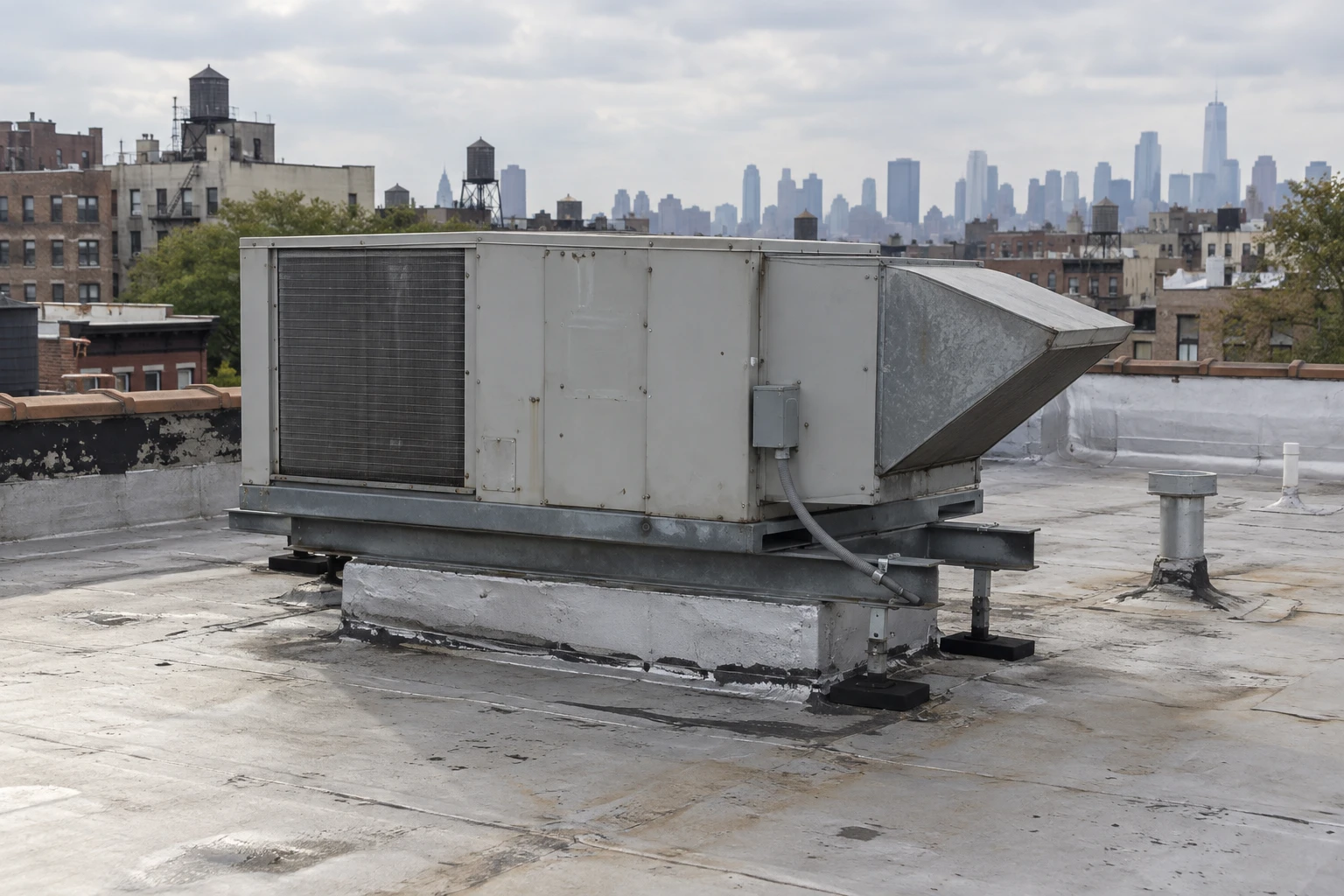
Commercial Roof Leak Repair in Brooklyn, NY
Open the roof hatch on a rainy morning and the first thing to look at is not the ceiling stain but the drain, the wall and the nearest curb. A leak that shows up in a stairwell on the third floor might begin forty feet away on the roof, where a seam opened under a rooftop unit. In Brooklyn, NY the path is often long: water runs along a deck, drops into a masonry cavity, and finally appears at a light fixture. Stopping that leak means following the path back to its start, fixing that one failed detail, and checking everything around it for the same weakness.
How we trace the water
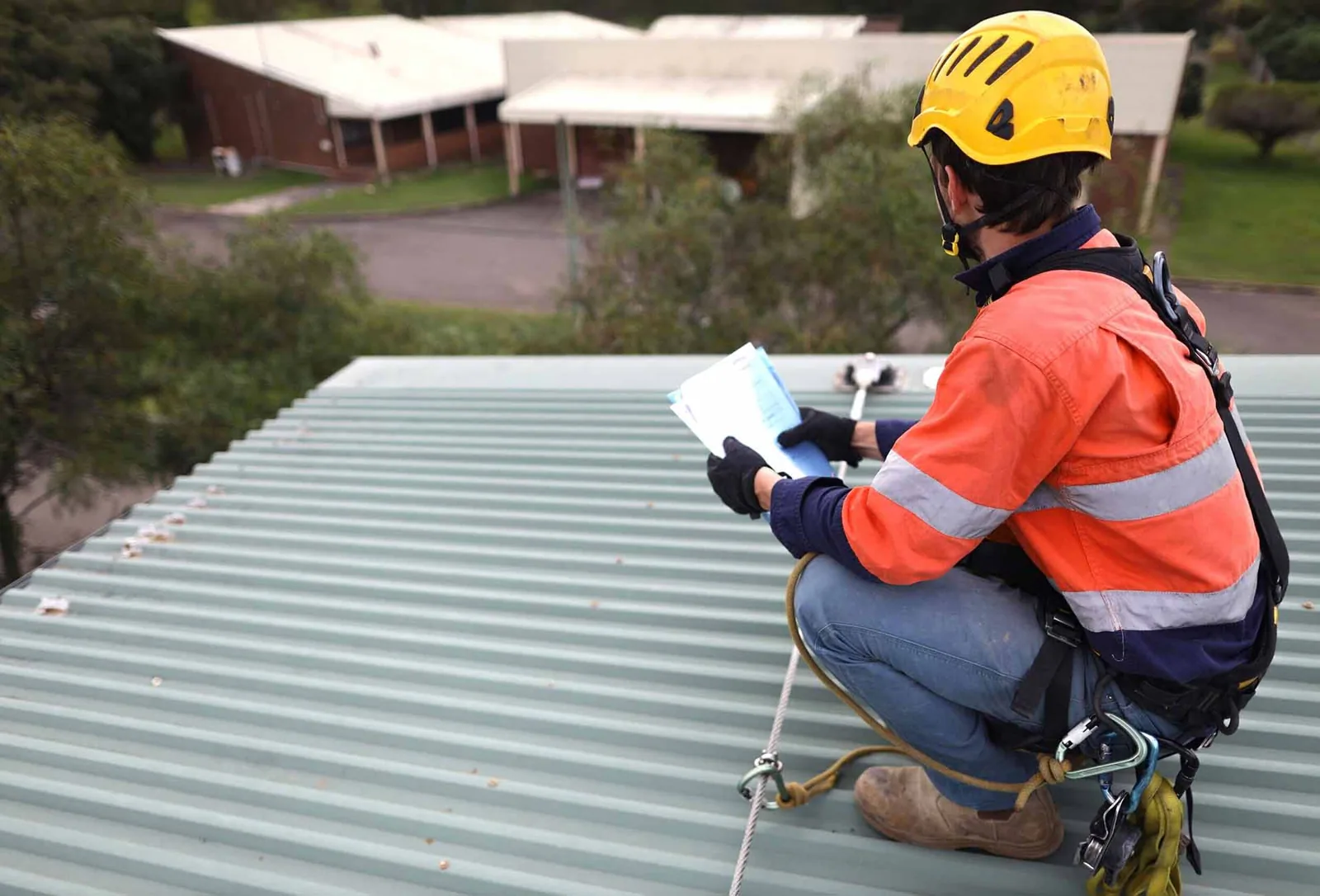
We begin inside. The manager shows us the stain, the date it first appeared, and whether it grows after rain or stays steady. Then we go up. We look at the nearest drain, the nearest wall, the nearest roof penetration and any equipment curb, and we mark every seam and flashing within about thirty feet of the stain.
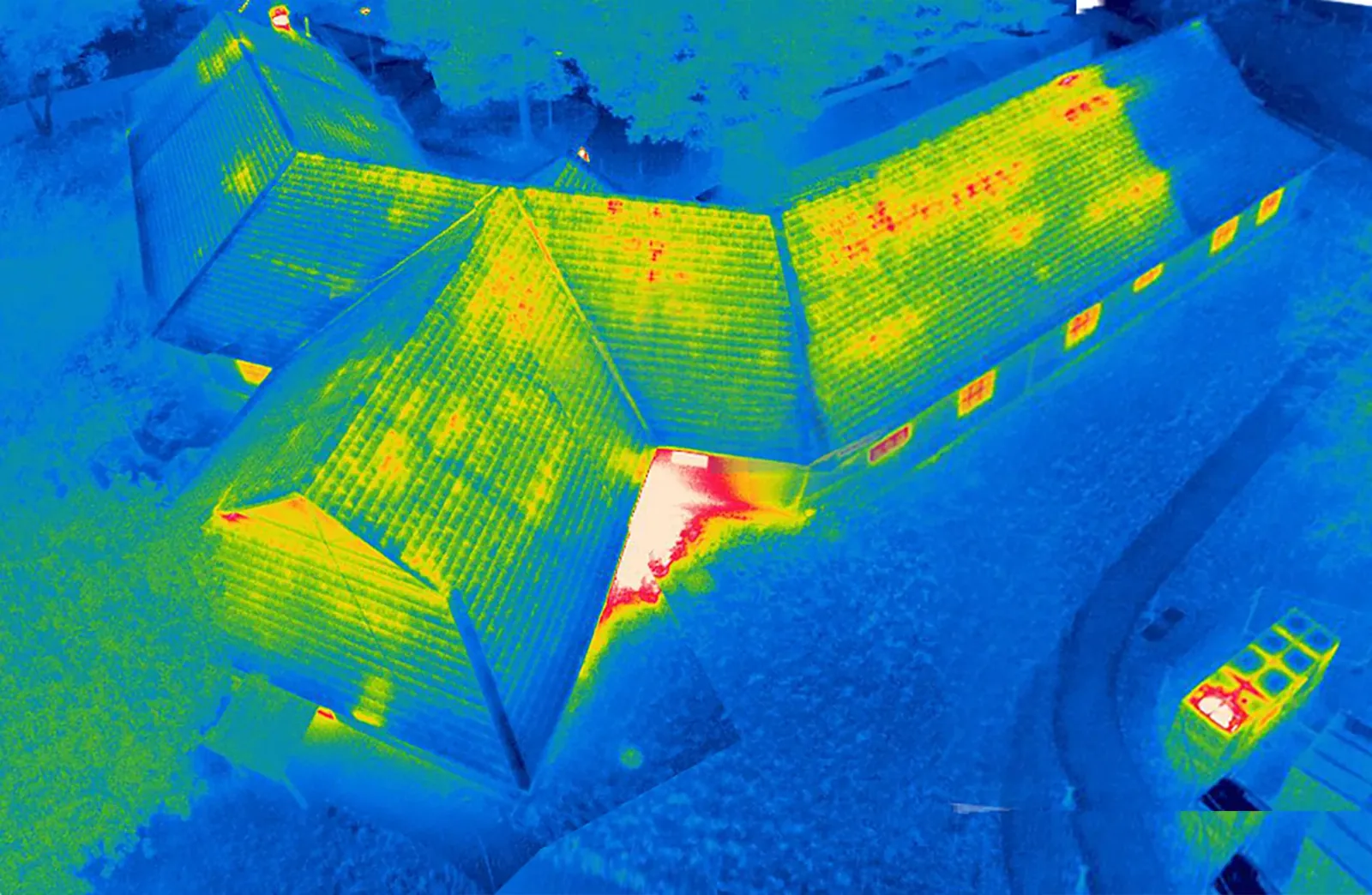
If the cause is not obvious, a hose test isolates each suspect area. One crew member runs water on a single section while another watches the interior for a drip. It is slow work, and it is the only way to separate three possible entry points from one. Where the roof is too complicated for a hose test, an infrared moisture survey shows which sections of insulation are wet.
Where Brooklyn leaks start
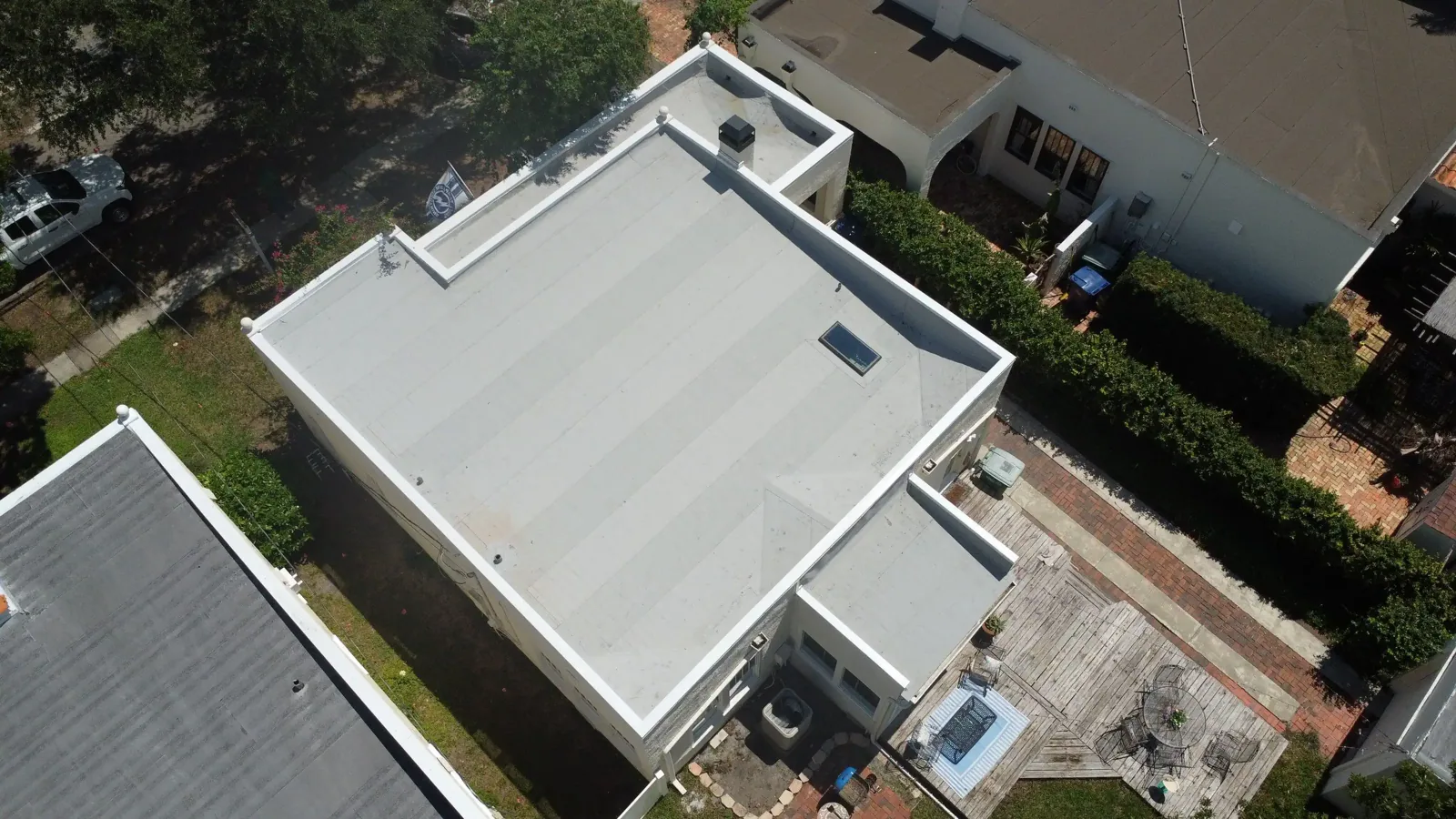
On parapet-heavy buildings, the usual suspect is wall flashing. The brick moves, the sealant dries and cracks, and water follows the crack down. On roofs with many rooftop units, penetrations and curbs around them take the next share of the blame. On older built-up roofs, blisters and alligatoring let moisture in across a wide area, and a single stain may be the visible end of a much larger wet zone.
Drains cause leaks too. A cracked bowl or a loose clamping ring lets water slip under the membrane right at the lowest point of the roof. Once the water path is known, failed flashing and a punctured membrane are the two details most often waiting at the end of it.
Storm leaks versus slow leaks
A few leaks announce themselves only in a storm. Ida's remnants on September 1, 2021 flooded streets and shut down much of the subway, and that is the kind of rain that finds every clogged strainer on a flat roof. A roof that leaks only in extreme rain is usually telling you the drainage is too small or too dirty, not that the membrane is shot.
Slow leaks are a different problem. A seam that opens by a hair each freeze-thaw cycle may drip only during sustained rain, then dry out for weeks. New York City averages roughly 30 inches of snow a year, and every melt cycle pushes water into small gaps. A slow leak found in autumn is much cheaper to fix than one found after a February thaw has soaked the insulation.
Stopping the leak today
Our first goal is to keep water out of the building. That may mean a temporary membrane patch, a sealed flashing repair or a tarp over a failed section until conditions allow a permanent repair. We install the temporary fix so it will not damage the roof when it is removed, and we mark it on the report so it is not forgotten. If a storm is the cause and the damage is widespread, our emergency roof repair crew handles dry-in around the clock.
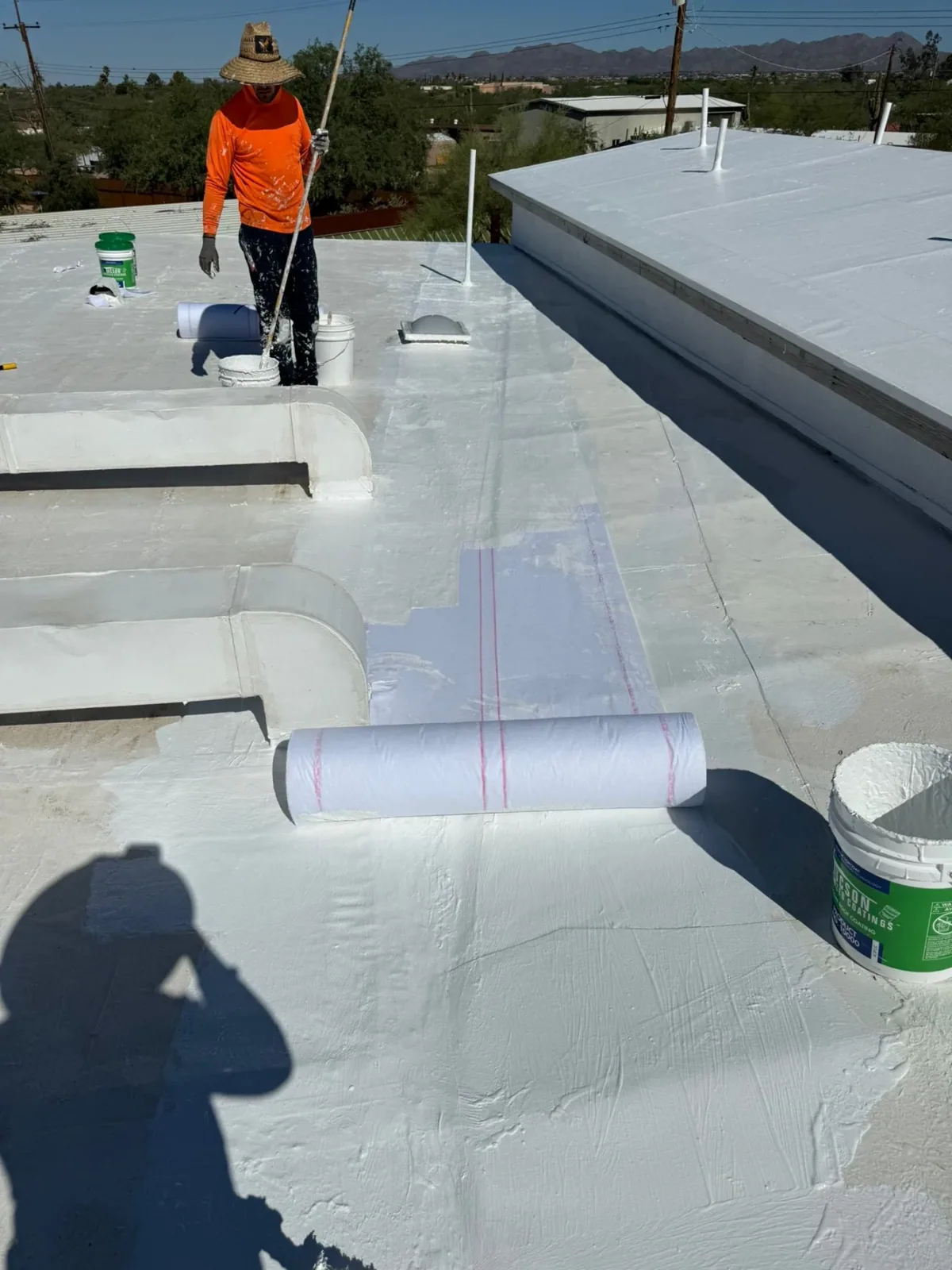
Permanent repairs follow when the surface is dry enough to bond. We cut out wet insulation, replace it with matching thickness, and weld or adhere a new membrane section over it. The goal is to leave the roof in better shape than before the leak, not to cover one problem with another.
Protecting what is below
While we work on the roof, the interior still needs protection. We ask the manager to move inventory, covers and electronics out of the water path, and we help identify which ceiling tiles hold water. A bulged tile can release a gallon at once, so pulling it deliberately into a bucket is safer than letting it fall.
Electrical safety comes before everything else. If water has reached a fixture or panel, the manager should shut the circuit off and call an electrician before anyone stands under it. We note the location in our report so the roof repair, the interior cleanup and any electrical work happen in a sensible order.
Once the roof is sealed, we return to check the interior after the next rain. A dry ceiling after a storm is the real test, and we would rather confirm it than assume it.
Leaks by building type
Red Hook was heavily damaged by Hurricane Sandy in 2012, so owners of waterfront and warehouse roofs there have to think about wind and water together. In Gowanus, light industrial buildings sit near a canal whose neighborhood was rezoned in November 2021 to allow about 8,500 new apartments, and any conversion of an older industrial building adds penetrations and rooftop equipment that each need a sound flashing. On a converted Gowanus building, each added unit and vent needs its own flashing check.
On an apartment building with many roof hatches and bulkheads, every penetration is a candidate. Where there is also a mix of tenants below, finding the leak fast matters because every unit has a different owner or operator.
Records that help later
We keep a photo of the stain, a photo of the entry point, and notes on the repair. If the leak leads to an insurance claim, the file shows when it started and what caused it. If a claim follows, the same file feeds roof insurance claim assistance.
Commercial Roofing Questions
Why does the leak appear far from the actual hole?
Water follows the path of least resistance. On a flat roof it can travel along insulation joints, deck flutes or the underside of the membrane before it finds a way down. A masonry wall can carry it sideways before it appears. We trace backward from the stain until we reach the first failed detail.
Can a leak be fixed while it is raining?
Only temporarily. Most adhesives and welds need a dry surface, so rain-day work is limited to tarping, sealing and drainage clearing. We make the building watertight in the moment and return for the permanent fix once the surface is dry.
Is wet insulation always replaced?
Not always. Insulation that is only damp on the surface can dry in place, but saturated board holds water and loses insulating value. We probe suspect areas and replace insulation where the probe comes out wet or crumbling.
How do I prove when the leak started for a claim?
Keep the first photo of the stain with its date, any work order or tenant complaint, and our repair record. Together they show a timeline that an adjuster can follow, and they separate sudden damage from long-term wear.
What if the leak keeps coming back after repair?
A recurring leak means the first repair missed the real entry point or the roof has more than one. We return, retest the area, and expand the search. If several repairs have failed, we tell you that the roof may be at the end of its repairable life.
Should the ceiling be opened up before the roofer arrives?
Open the stained tile or panel only if the manager can do it safely and place a container below. That lets water drain instead of pooling above the ceiling and spreading. Leave the rest for the walk, because the pattern of damp tiles helps us map the path back to the roof.