Membrane Puncture Repair in Brooklyn, NY
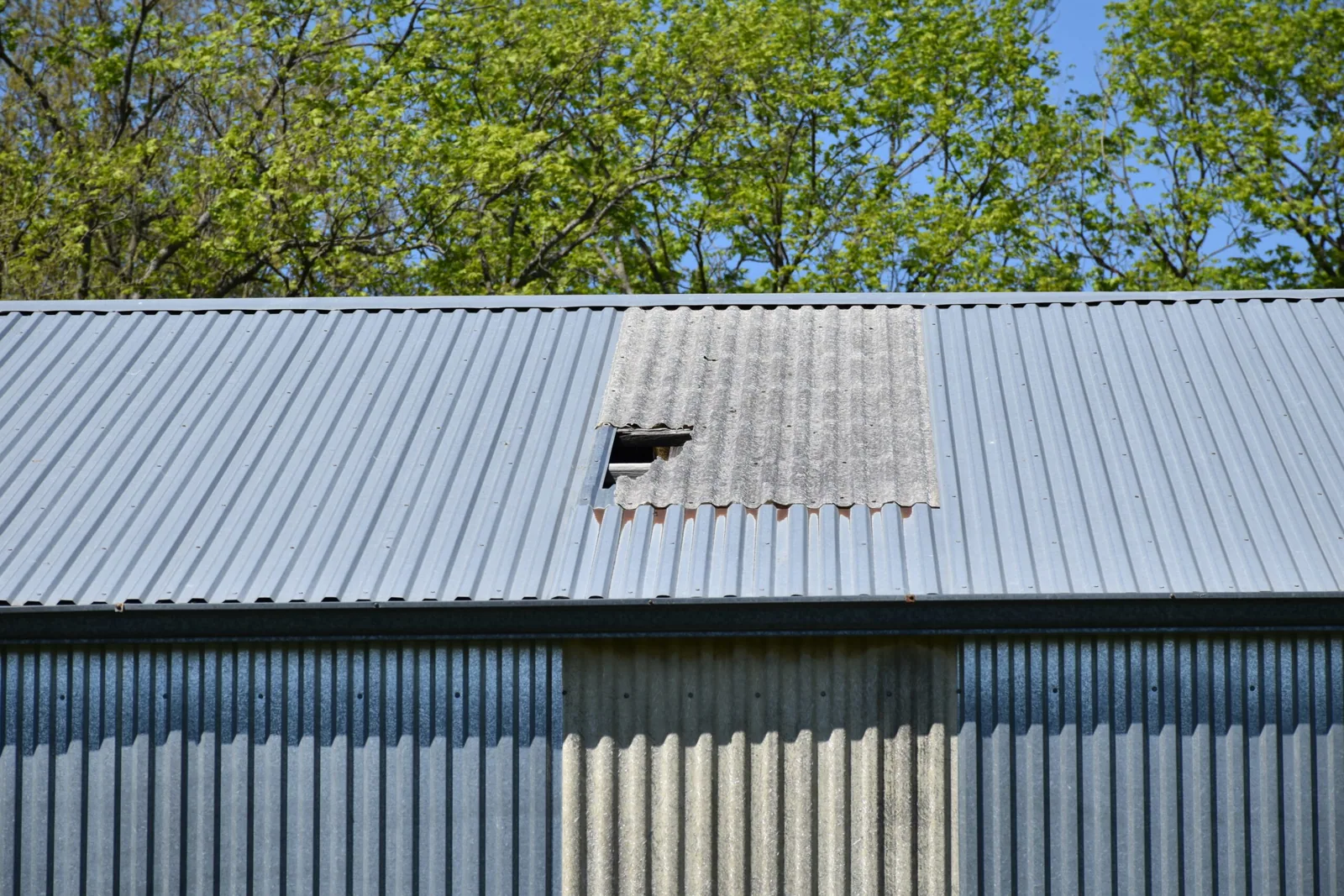
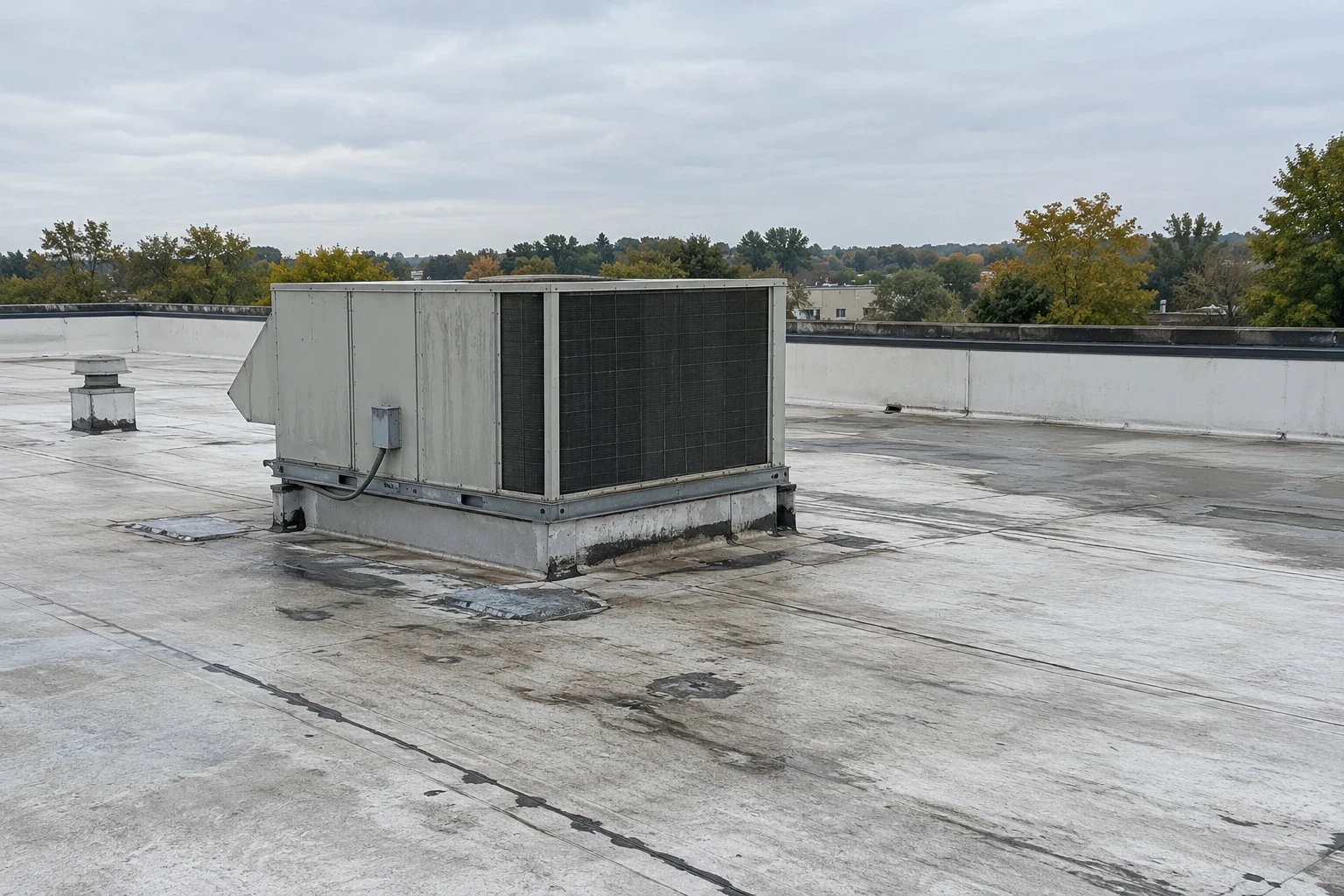
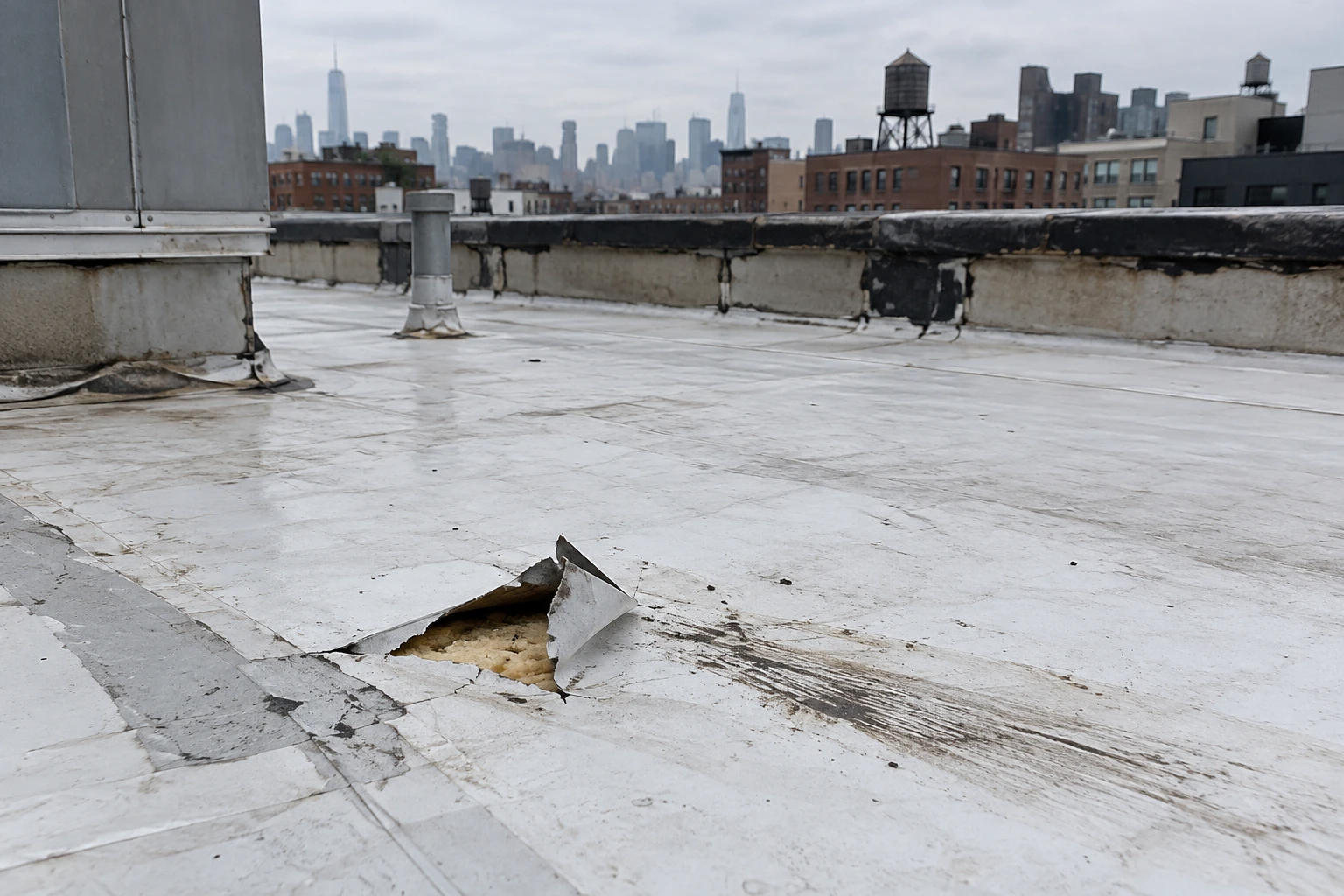
Beside a rooftop unit on a Brooklyn, NY loft building, a hole the size of a quarter sits in the membrane. The edge is clean, the way a cut edge is. Around it is a dark ring where the insulation underneath has taken on water, and the ring is far bigger than the hole. Someone dropped a tool, or dragged a cart, or stepped wrong. Punctures are the most avoidable roof damage there is, and they follow the paths people take to the equipment. Mark each hole with chalk and photograph it before anyone covers it with tape or tar.
We find, repair and prevent punctures and foot-traffic damage on flat roofs across the borough.
Where punctures come from
A Brooklyn roof is a work platform. HVAC techs service rooftop units. Sign crews bolt frames. Cable installers run lines. Window cleaners hang rigs. Water-tank inspectors climb. Each leaves traces: a dropped screwdriver, a ladder foot, a pallet corner, a dragged hose, a utility knife.
Wind adds more. Lesser gusts still toss branches, loose metal and cut-off scrap onto roofs; the 2007 Bay Ridge EF2 tornado, which took a nearby dealership's roof, is the far end of that range. Next to a construction site, falling material adds to the list. We record the spot of every puncture, since the pattern points to the cause: holes beside equipment mean service traffic, holes along an edge mean flying debris. Ask the super which trades were up there lately.
A puncture during a storm shows up as part of wind damage, and debris holes are found with the edge damage. Once a storm has passed, every impact mark is probed and metered before it is covered, since a roof that survived the wind may still hold a dozen holes. Holes near the walls may sit beside a flashing failure, and the two are fixed together.
The hole is the small part
Once a puncture reaches the insulation, every rain lets water in. Summer thundershowers often arrive late in the day, and Ida's remnants gave the city a flash flood emergency on September 1, 2021, so a hole that passed a few drops in a light shower may let a lot more through now.
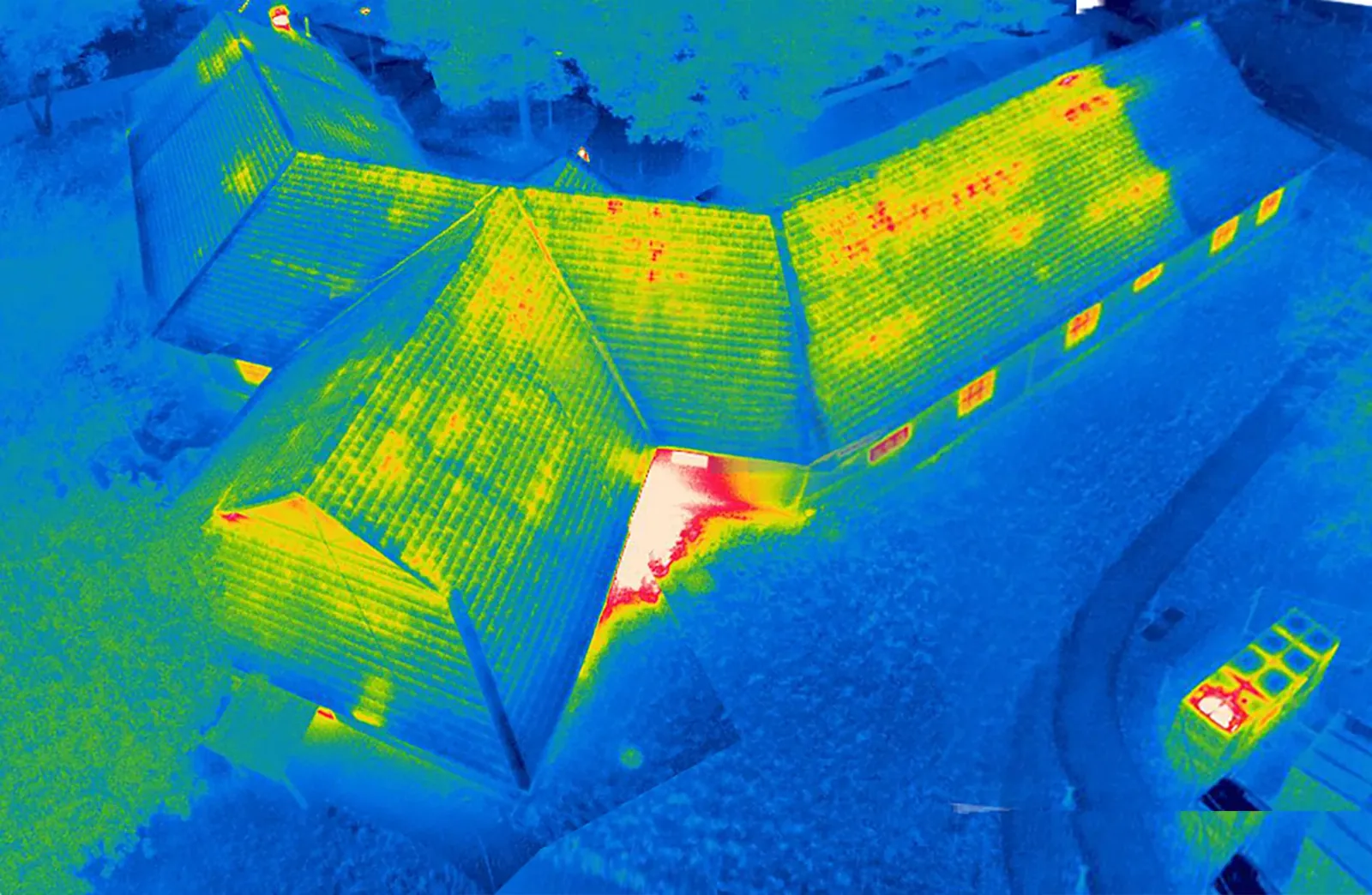
Patching the sheet without checking underneath seals the water in. We scan the area with an infrared camera, confirm with a moisture meter and cut a core if the reading is high. Wet insulation comes out before the patch goes on, and the new piece ties into the old. An infrared moisture survey maps the extent. Write the size of the wet area beside the size of the hole.
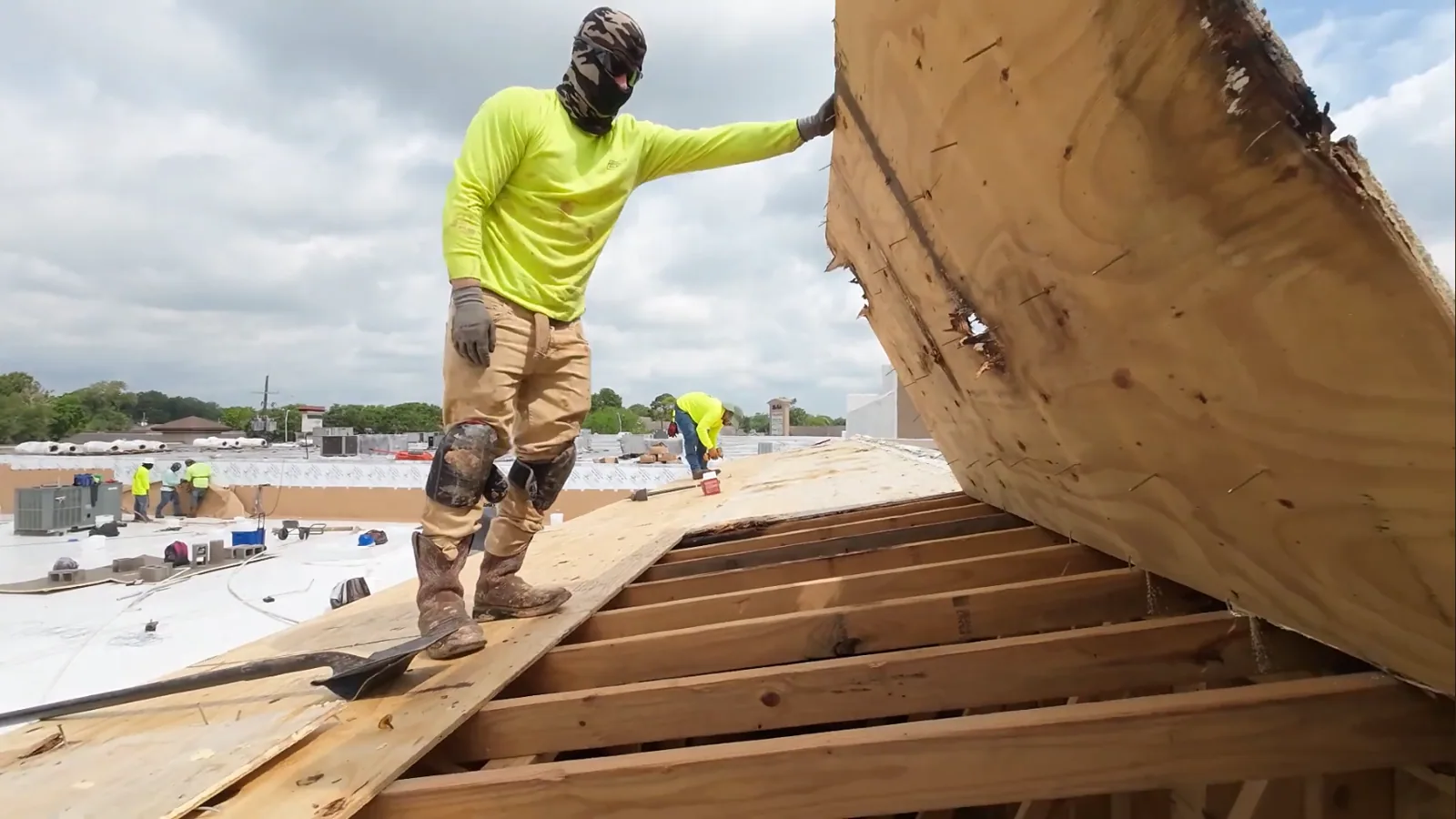
The wet area drives the cost more than the hole does. A one-inch hole over a two-foot wet patch means cutting out two feet of insulation, drying the deck and rebuilding the layers in order. The patch is the cheap part. That is why an early repair costs far less than a late one, and why we say to fix every puncture as soon as it is found, even if the hole looks harmless and the ceiling below is dry.
Patching each kind of roof
A thermoplastic sheet is cleaned and patched with a welded piece that extends several inches past the damage, with rounded corners so they do not peel. An EPDM sheet takes a cured or uncured patch in adhesive or tape. Modified bitumen takes a heat-welded or cold-glued patch. A tar-and-gravel roof takes layers of felt and bitumen with a flood coat over them.
Wherever possible the patch matches the roof, since a different material may not bond. Every weld is probed and every patch is photographed. If the sheet is aged or brittle, a patch may not hold, and the survey weighs a commercial roof repair against a larger restoration. Weather matters: adhesives and welds need dry conditions. Log the patch type and the date.
Material choice affects how well a roof resists punctures in the first place. A thicker sheet, a reinforced sheet or a cover board under the membrane gives more resistance to point loads, and these options are priced on a new roof or a replacement. A roof with heavy service traffic may justify them. We discuss the options in terms of how often feet and tools will cross the roof, not in the abstract, and the owner picks the level of protection the building needs.
Pads, paths and rules
The cheapest roof repair is the puncture that never happens. A walkway pad laid from the roof door to each unit gives crews a marked path and protects the sheet. Heavy-duty pads are welded or glued to the membrane and replaced as they wear. A mat under the work area keeps ladders and tool bags off the sheet.
A sign-in sheet at the roof door, with the name and the job, helps the super find the source of damage. A brief word with visiting trades, plus a plan of the protected routes, cuts dropped-tool damage. A preventive roof maintenance visit checks pads and routes. For buildings in Bushwick and other loft districts, route planning is part of the plan. Post the roof plan beside the door.
Gravel, stone and hot sun
Tar-and-gravel roofs have their own habits. Gravel scatters under foot and exposes felts to sun. Bare felt scuffs and softens underfoot in July, when highs near 85 F and a strong heat island leave a dark surface hot enough to mark.
On a ballasted roof, a displaced stone can land on the sheet and become a point load. We rake gravel back over exposed areas, patch scuffed felts and add pads on regular paths. Where traffic is heavy, a cover board under a new membrane gives more resistance to point loads, and the roof is priced with that option. Tell us how often service staff walk the roof.
Who pays when a trade damages the roof
The contract between owner and trade answers it, and the lease may add terms. A trade that punctures the sheet is usually responsible if the damage links to its visit. That link depends on a record: a dated photo before the work and another after, or the sign-in sheet.
We document damage when we find it: location, size, cause if known and the moisture reading beneath. If the damage ties to a trade, the owner can send the file with a request for repair. If not, the maintenance budget carries it. Where an insurer is involved, the file supports the claim. Send photos on the day the damage is found.
Where a visit caused the damage, a short note to the trade with the photos often settles the repair quickly. Keep the note factual: date found, location and moisture reading, with no guessing about fault. When the evidence is clear the trade usually arranges the repair, and the roofer completes it to the system's standard so the warranty stays whole.
Commercial Roofing Questions
Patch or replace a section?
The moisture reading and the sheet's condition decide. One dry puncture on a sound sheet takes a patch. Wet insulation, several punctures in one area or a brittle sheet calls for removing and replacing a section.
Will a puncture leak into the building at once?
It can when the deck is exposed or the insulation thin, though water more often spreads through the insulation first and shows inside later, away from the hole.
Are walkway pads worth it?
On routes with regular traffic, yes. A pad costs less than one puncture repair with a wet insulation section.
What should the staff do when they find a hole?
Photograph it, mark it, keep people off the area and call. A temporary patch of tape or sealant is fine for a short time, but it should be replaced.
Can a coating cover small punctures?
A coating can seal pinholes. A puncture that reaches the insulation needs a proper repair first, since coating over wet insulation hides the problem.