
Roof Damage Repair
Commercial roof damage repair in Brooklyn, NY: wind, ponding, flashing, seams, punctures, fire, hurricane, snow and heat damage traced to cause and fixed.
Open the hatch on a Brooklyn, NY roof after a hard blow and the damage is usually small and in a line: a coping stone out of true, metal curled at a corner, a strip of membrane pulled up along the parapet. The line points back to the direction of the gust and forward to the next one. Reading the marks in order, edge first, then drains, then seams, is how a cause gets found. Water in the building is only the symptom, and the roof edge, the drain and the seam hold the answer.
Explore Roof Damage Repair
Wind, surge and cloudburst
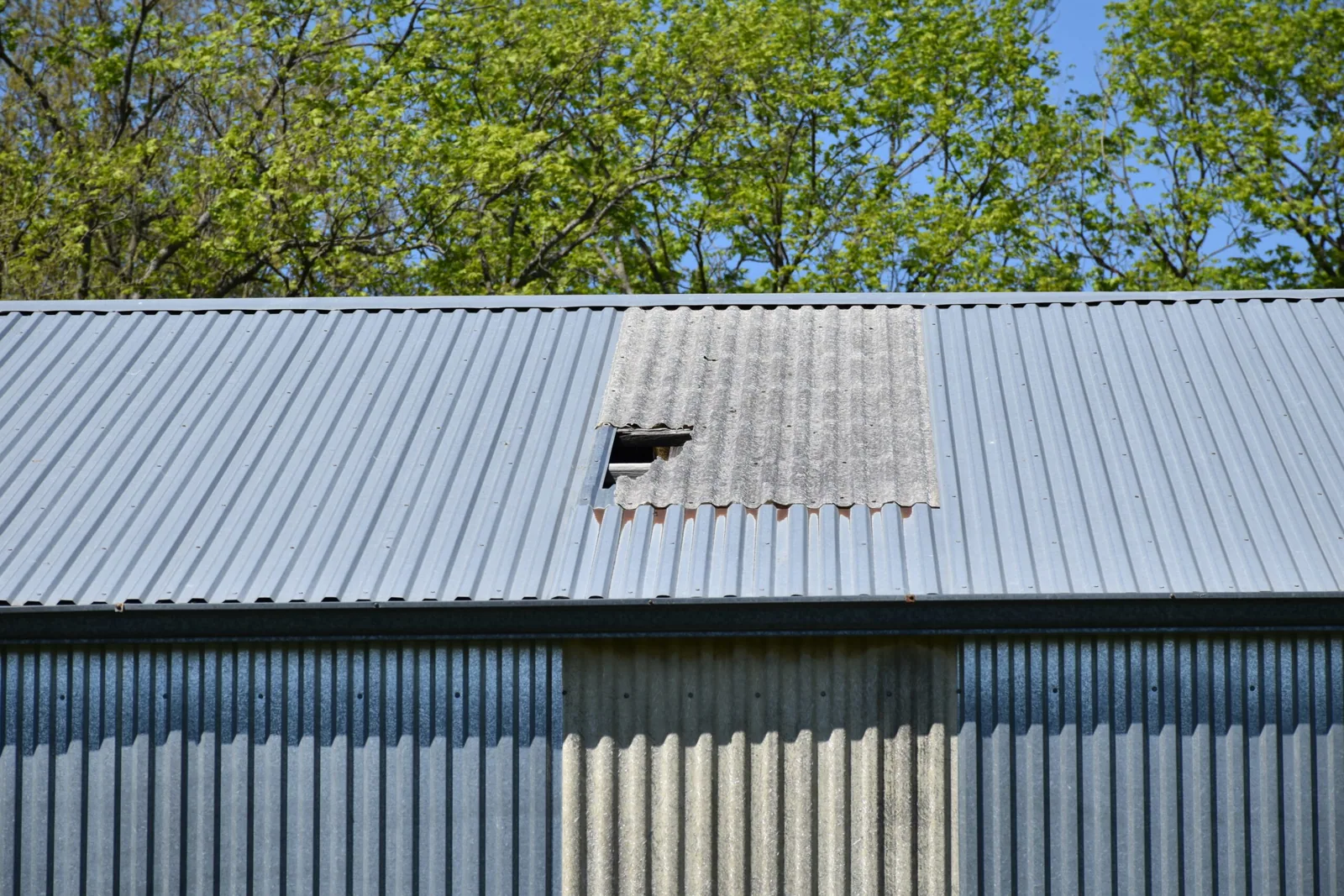
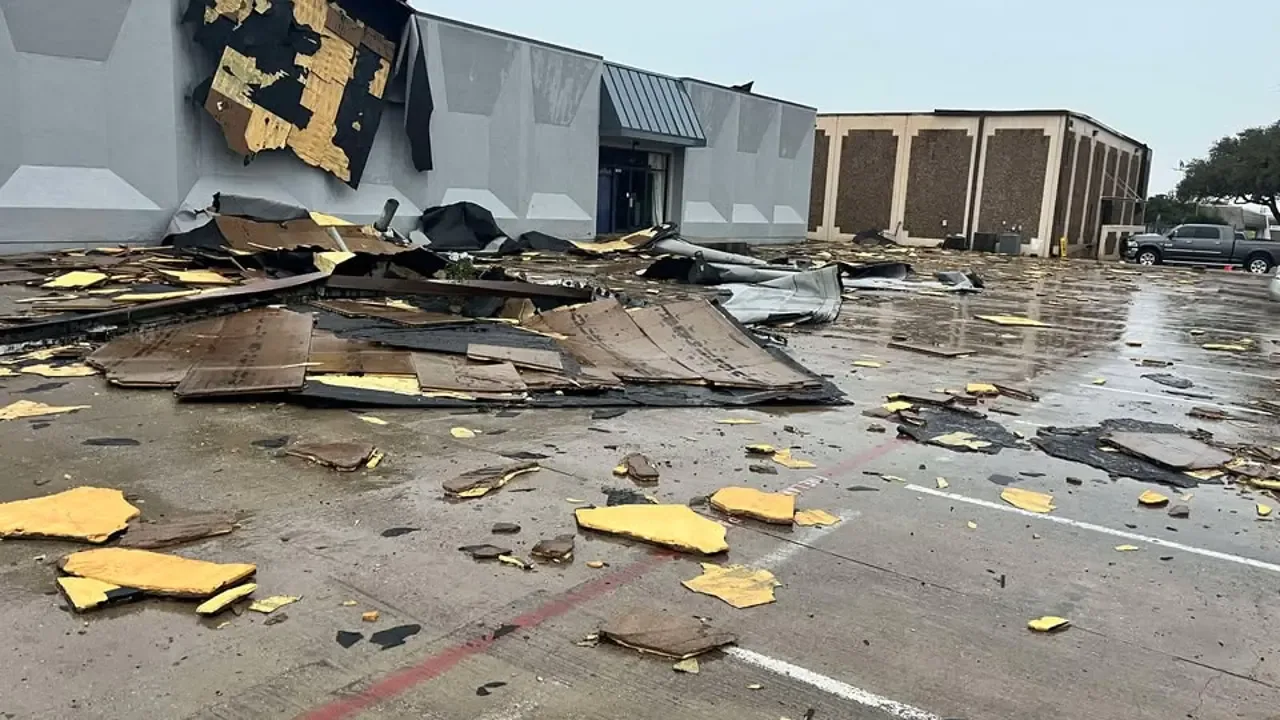
In 2007 an EF2 tornado crossing Bay Ridge stripped a dealership roof, and wind damage roof repair begins from that lesson: roofs come apart at the edge. Red Hook spent part of 2012 under Sandy's water, and hurricane damage combines wind, rain and salt in a single loss. Ponding water repair starts from the mark a drain leaves when it falls behind in a cloudburst, as drains did when Ida's remnants hit in 2021.
Seams, flashing and punctures
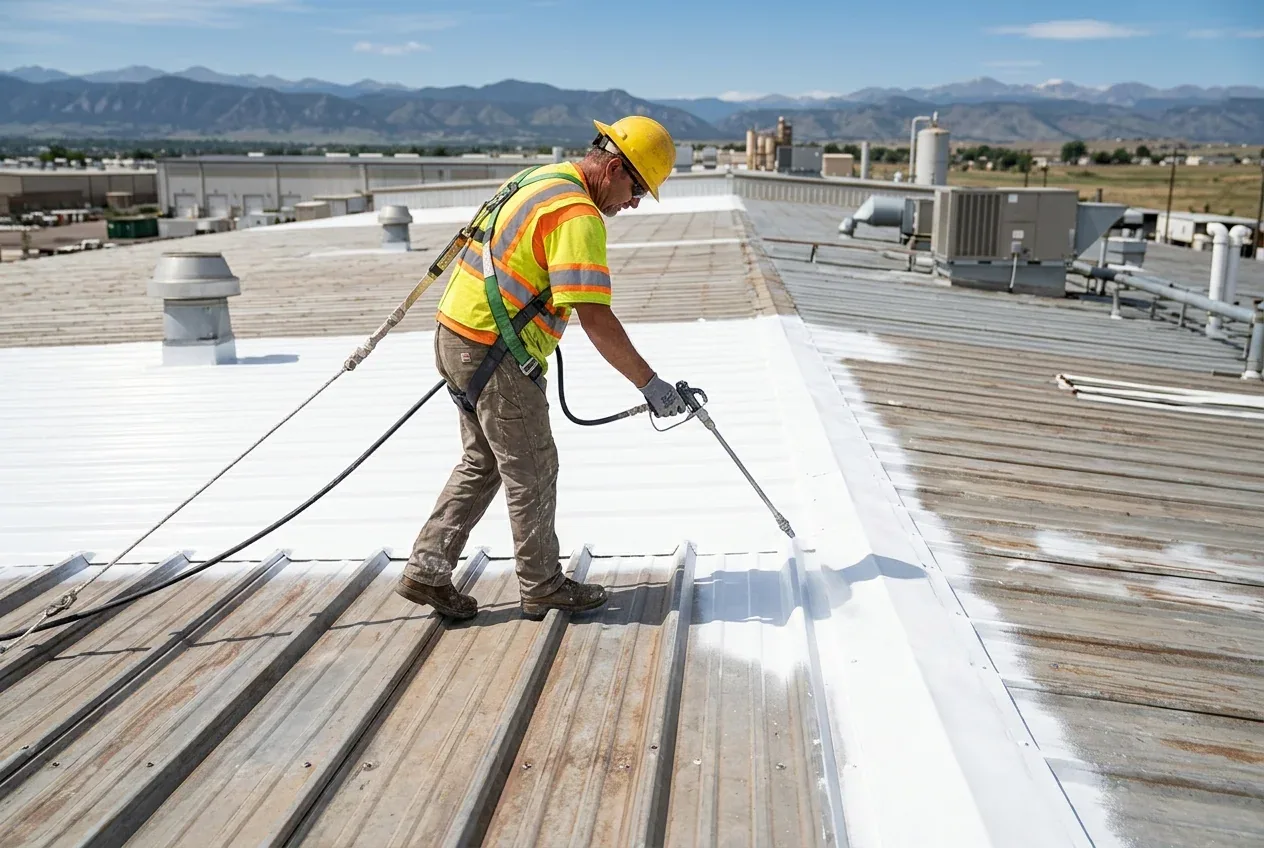
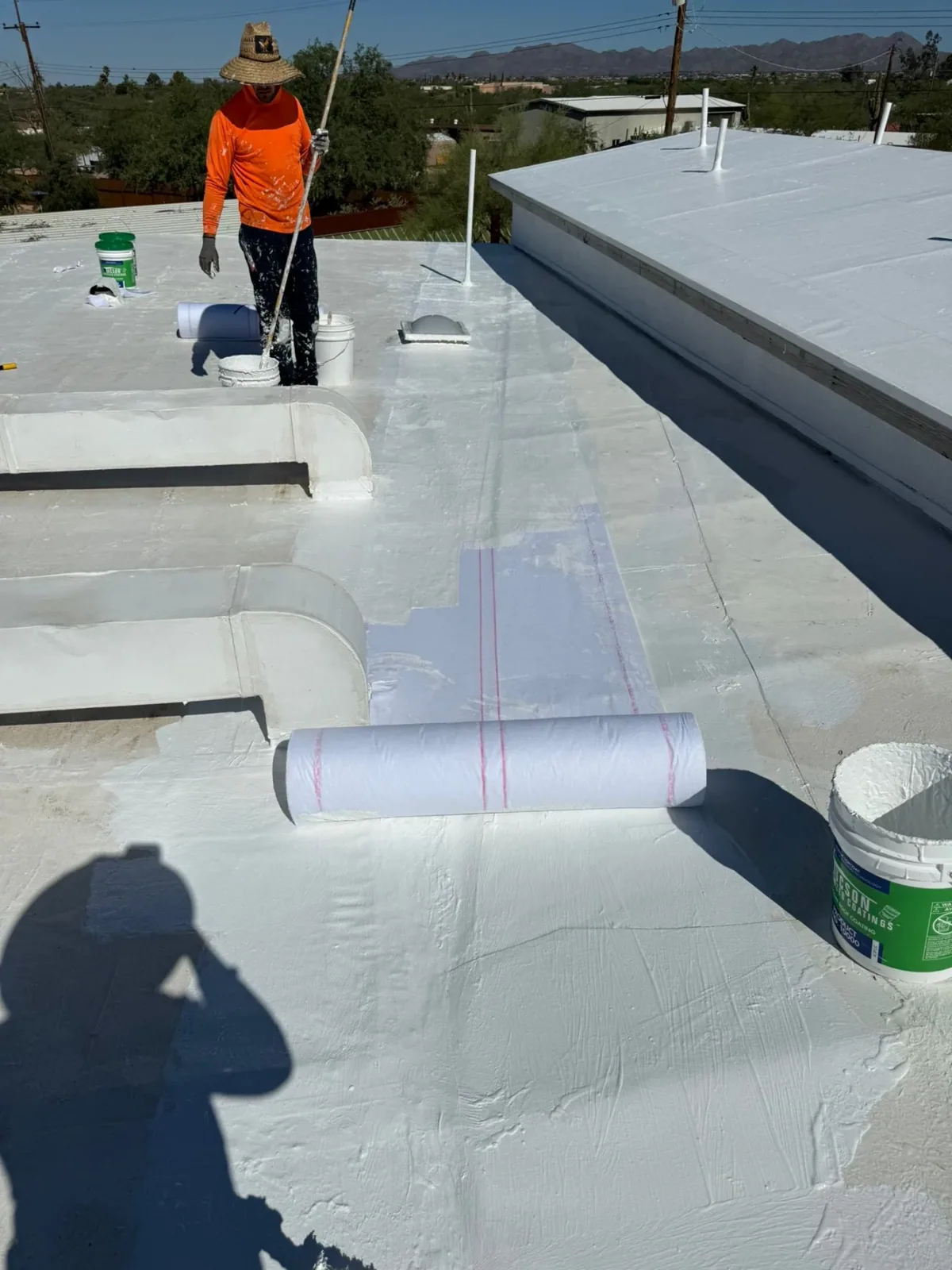
Flashing at a parapet, a curb or a pipe fails more often than the open field of the roof, so flashing failure repair is usually the first bill. Seams open from movement, age and standing water, and seam failure repair follows the weld or tape back to its cause. Punctures come from foot traffic, dropped tools and service visits, and a membrane puncture repair includes a look at the insulation under the hole. Each is repaired by cutting back to sound material and rebuilding the detail, never by a bead of sealant on top. Drains are cleared first so water can leave, flashings and seams are rebuilt next, and the field is addressed last. A patch laid over a wet or dirty surface fails within a season, so every repair starts dry and clean and ends with a photograph.
Snow, ice and heat
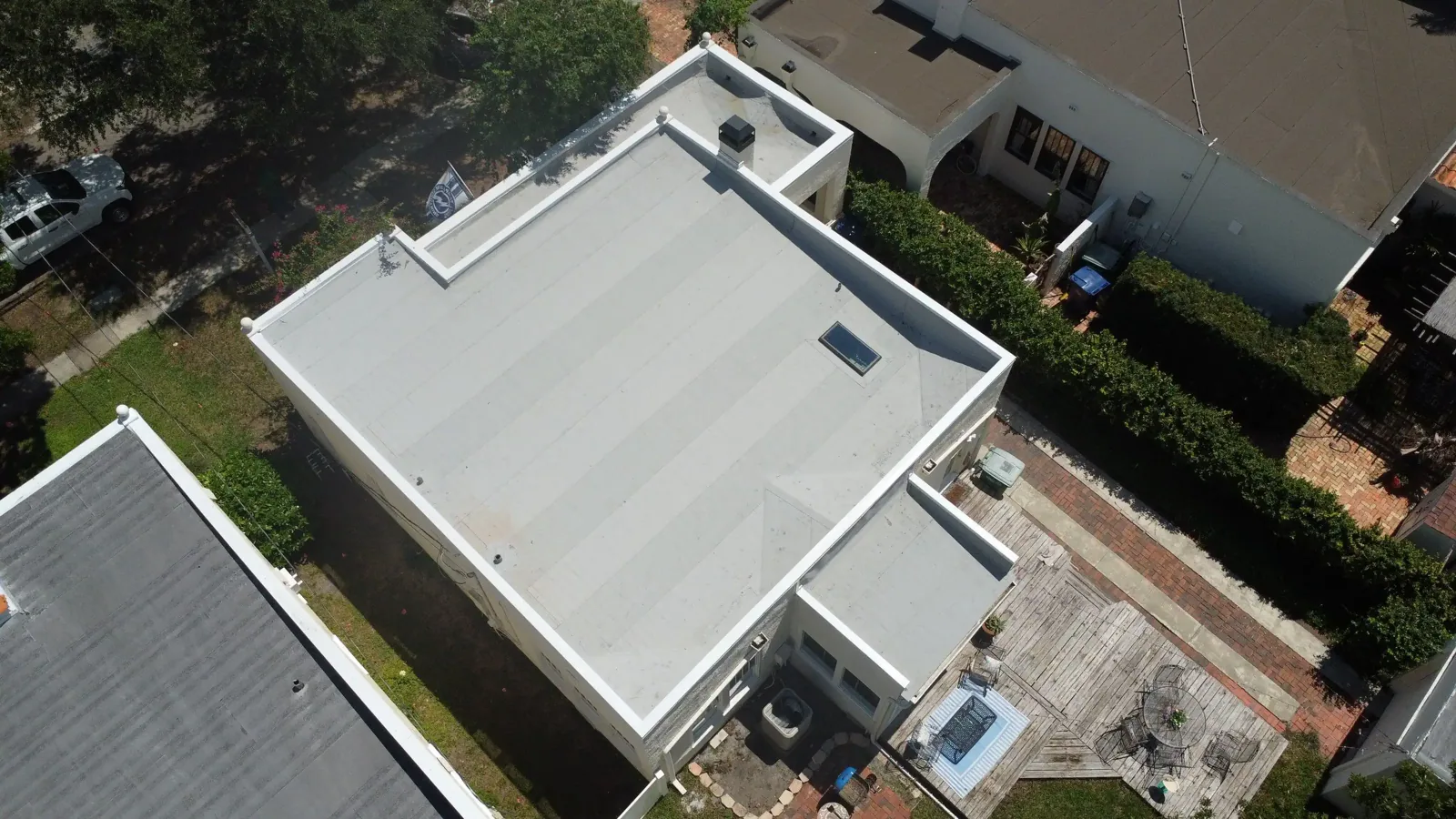
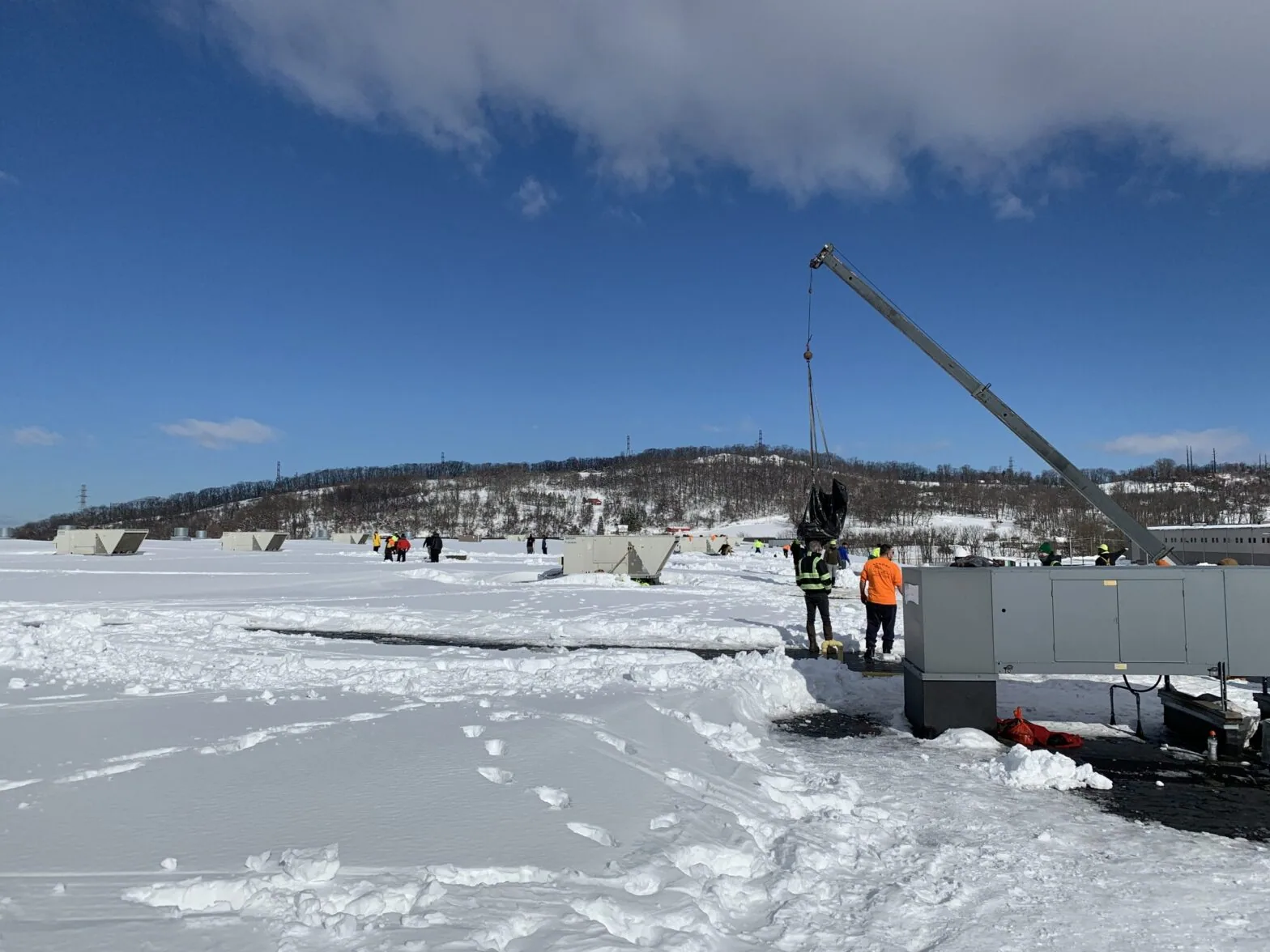
Snow near 30 inches a year and the freeze-thaw swing wear down each weak seam, with the damage appearing at drains and scuppers, which is where snow and ice damage repair concentrates. Summer does its own harm. Membrane dries and stiffens when July highs near 85 F meet a strong heat island, the root of heat and UV damage repair.
After a fire
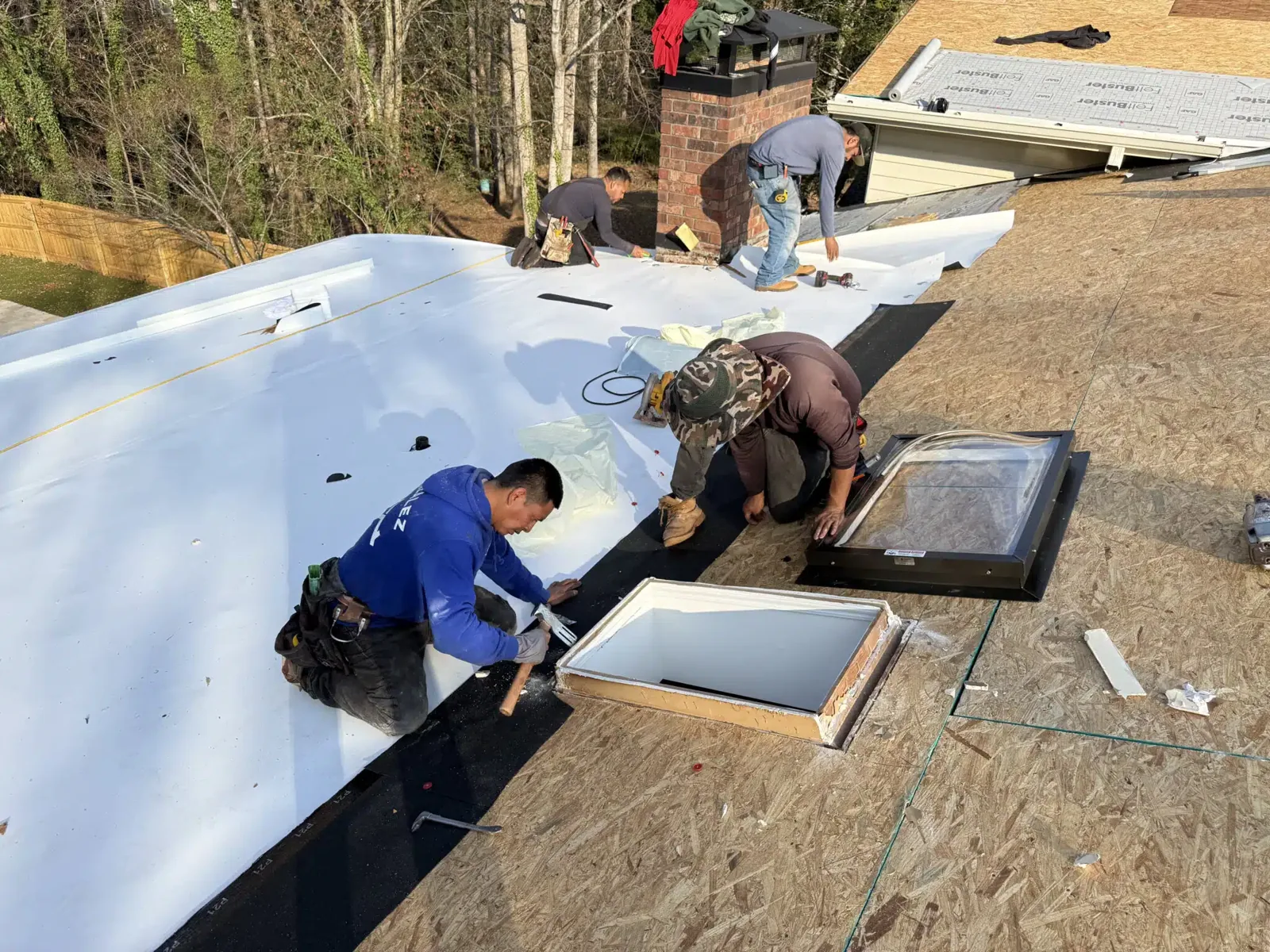
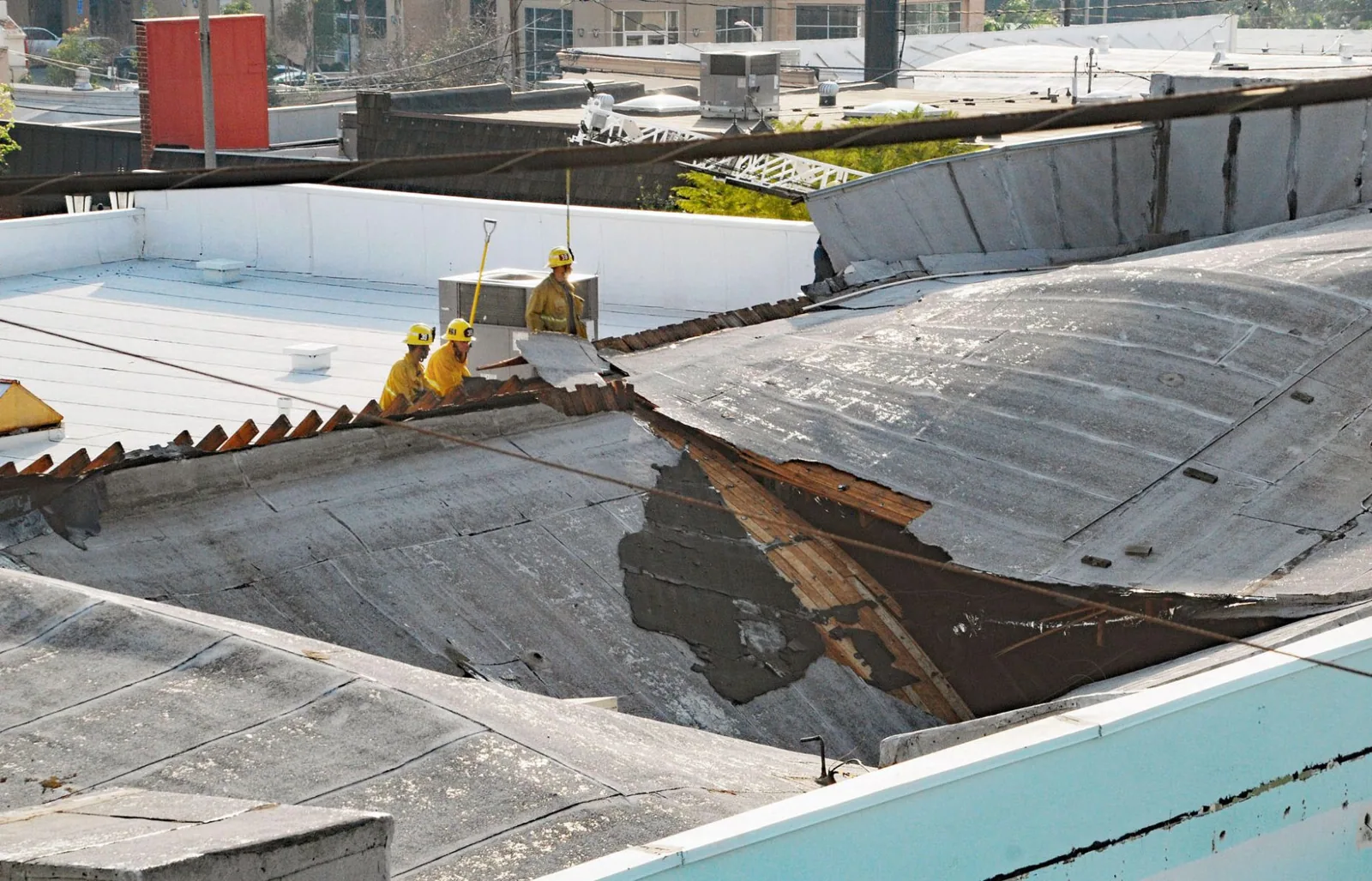
Fire reaches further than the burn. Heat softens membrane and insulation, smoke leaves residue and the water used to fight the flames soaks the layers. After a fire the roof is documented, made safe and weathertight, and a scope is written that the insurer and the owner can both read.
Commercial Roofing Questions
How is the start of a leak found?
The search runs uphill from the stain: count the floors, measure from the nearest riser, clear the drains and probe the seams and flashings. A hose test on the suspect detail, with someone watching the ceiling below, settles it.
When does a repair do the job?
Repair holds up when the sheet is still bonded, the board below is dry and the trouble is confined to one area. A moisture scan and cores say whether that is true before a price is set.
What comes first after a storm?
Pictures of the roof and the rooms below come first. Then everyone stays clear of wet ceilings and the crew is called, and the building is dried in before the permanent repair is written.
Could last year's storm explain a stain today?
It could. Insulation can stay wet beneath a membrane for years, so the cause of a new stain may be a loss from long ago, and a moisture survey locates it.