Snow and Ice Roof Damage Repair in Brooklyn, NY
The day after a big snow, look at the roof from the hatch before anyone steps out. The field may be a smooth white sheet, but the drifts tell the real story. A bank three feet deep against the bulkhead. A ridge piled along the parapet. A dip over the stairwell where the snow slid off. On a Brooklyn, NY flat roof, snow does not sit evenly, and the weight collects where the roof steps up. Then comes the thaw, and the meltwater looks for a drain that may be frozen. Take a photo of the drifts from the doorway and note the date.
Our crews assess and repair snow load and ice damage on flat roofs.
Where snow weighs the most
New York City snow averages near 30 inches a year, and the single-day high was 27.3 inches on January 23, 2016. Fresh snow is light. Wet or refrozen snow can weigh many times more. Wind pushes it across a flat roof and drops it against anything that rises: parapets, bulkheads, penthouses, rooftop units.
The deck was built for a stated snow load, and a drift can exceed it in one spot. A sagging ceiling, a deflected deck, a door that sticks and cracks at the walls are all signs of overload. If you see any of them, empty the area and call an engineer before anyone goes up. Steel shovels cut a sheet, so clearing uses plastic tools and leaves a layer of snow as protection. Measure the depth of the biggest drift and write it down.
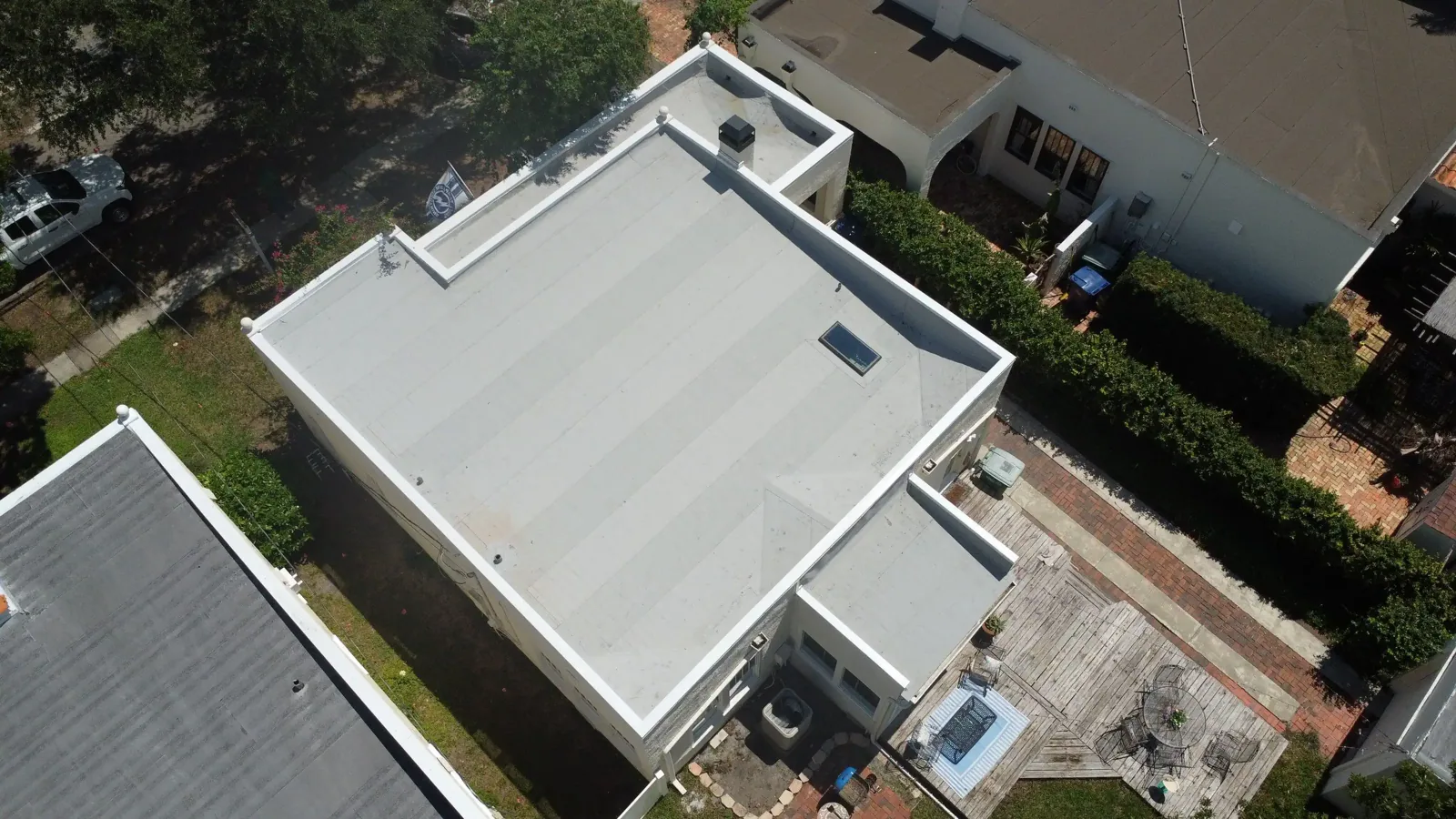
Where the snow came from matters. On a setback or a stepped roof, snow from the upper level blows or slides onto the lower one and adds to the drift. A mill building in Sunset Park may have several roof heights joined by walls, and each step is a catch basin for snow. A rowhouse block has a low party-wall step between neighbors. We map the steps and mark each as a drift risk, so the post-storm check goes to them first and the clearing plan can follow the same order.
Frozen drains and cracked leaders
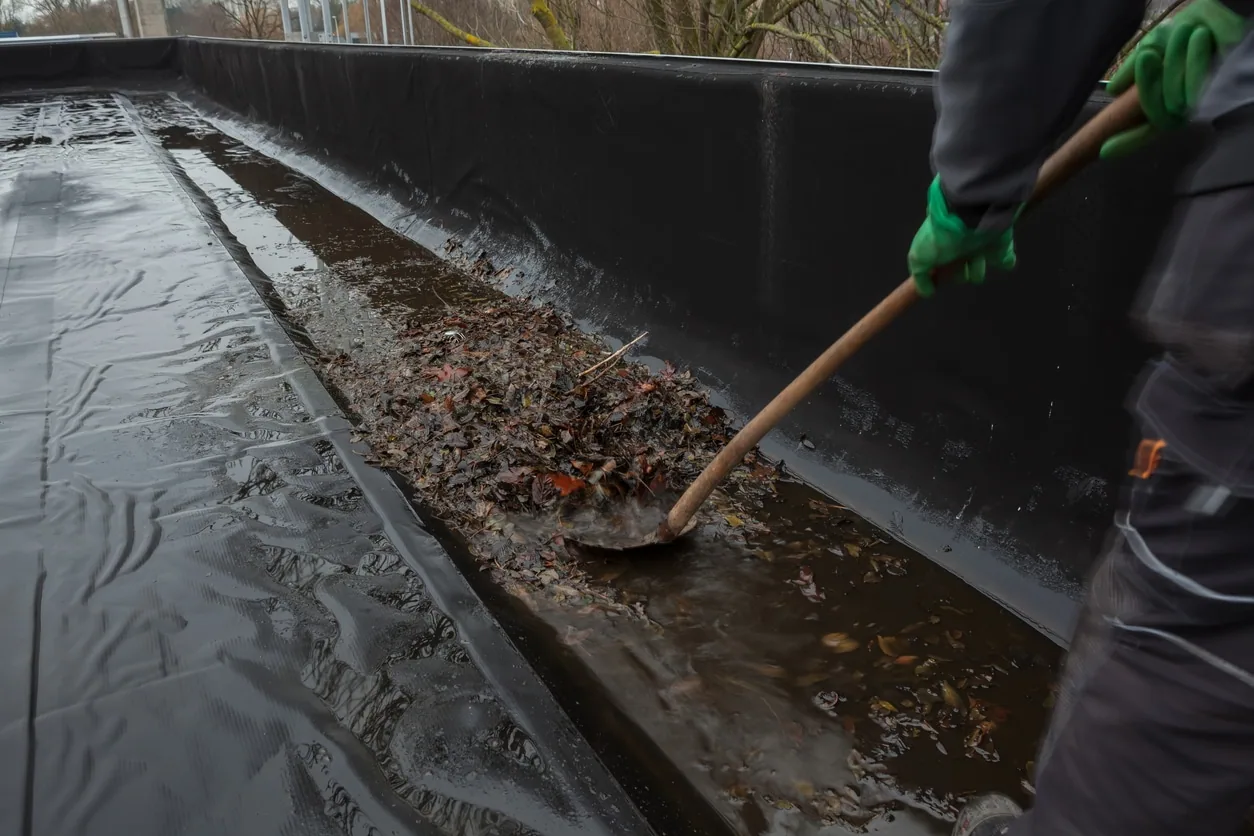
Melting snow makes a steady flow of water that must reach a drain. When the basket is buried in ice, the water backs up against the parapet and finds any gap in the flashing. Ice forms in the bowl and in the leader below, and the expansion can crack a fitting. Weeks later the crack announces itself as a stain two floors down.
Ice also grips the sheet. Ice on a pond lifts seams and flashings, and after the thaw the lifted lap may not settle. Ice chipped with tools cuts the membrane, so channels are melted toward the drain or the crew waits for the thaw. A leader that runs inside a wall is checked with a camera if a stain suggests a crack. Work at the outlets, from thawing bowls to adding overflow scuppers, is roof drains and scuppers work. Photograph ice on the roof before it is cleared.
Insulation takes the quiet damage. Meltwater that gets in through a cracked seam soaks the insulation, and a later freeze expands the water and breaks the board's structure. Wet insulation under a thawed roof looks no different from above, so the infrared scan after the thaw is how we find it. Cores check the reading before the wet section is cut out and replaced. A repair limited to the visible split would leave the soaked board to fail the next winter.
What hard cold does to the sheet
A membrane stiffens in the cold. Thermoplastic and rubber sheets lose flexibility, and a sheet under tension at a wall or a curb can split. Sealants harden and crack. Contraction pulls on every fastener and every lap.
After a hard freeze the pattern is new splits at corners and walls, open laps and fasteners that have pulled up. Old brick buildings, like the rowhouse blocks of Bedford-Stuyvesant where roughly 8,800 buildings predate 1900, have many walls and bulkheads, and each is a stress point. We inspect those details first. Flashing failure repair rebuilds walls where cold has pulled the flashing, and seam failure repair re-welds opened laps. Walk the roof after the first deep freeze.
Temperature swings matter as much as the low. A day that rises above freezing and falls again at night melts snow into the seams and refreezes it in place, and the cycle repeats. The same sheet that stiffens in January bakes in July, when highs run near 85 F, and every swing works on the laps.
Edges, gutters and falling ice
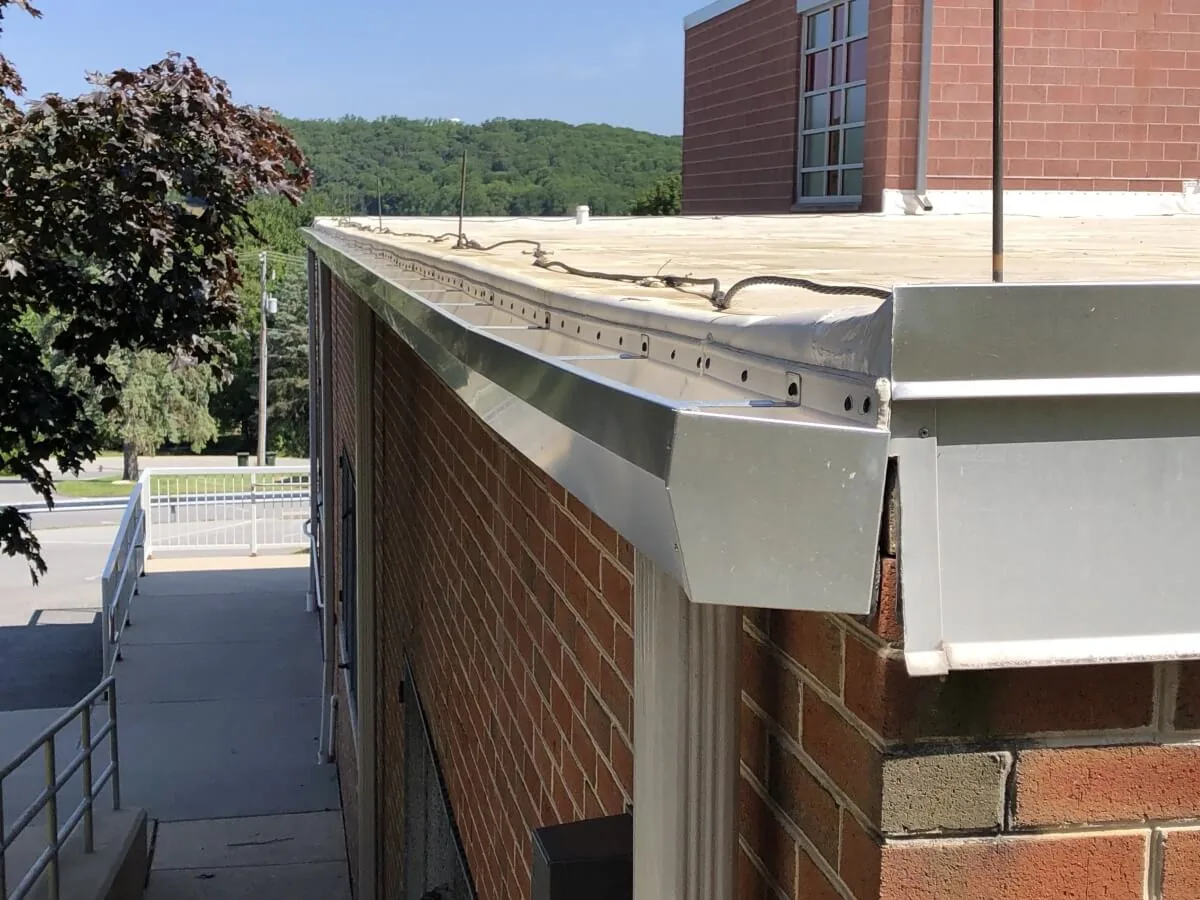
Ice builds along the edge of a building and hangs from the eave, and a falling piece can hurt someone on the sidewalk. The edge metal that carries the weight can bend or pull loose. Where a building has gutters or a canopy, a gutter packed with ice may tear off its hangers.
We check for sagging gutters, bowed metal and damaged hangers, and we recommend clearing ice from the edge with warm-water methods or hand tools from a safe position, never by prying at the metal. A sidewalk shed or a barricade protects walkers until the edge is clear. Edge metal, coping and gutters get the repairs they need, from rehung hangers to new cleats. Post a warning where ice may fall.
The repair in order
Drains first: clear the baskets, thaw the bowls and test the leaders. Then seams, flashing and curbs: re-weld opened laps, reseat flashings and reseal joints. Then the insulation: an infrared scan after the thaw finds wet boards, and cores confirm them. Wet sections are cut out and replaced.
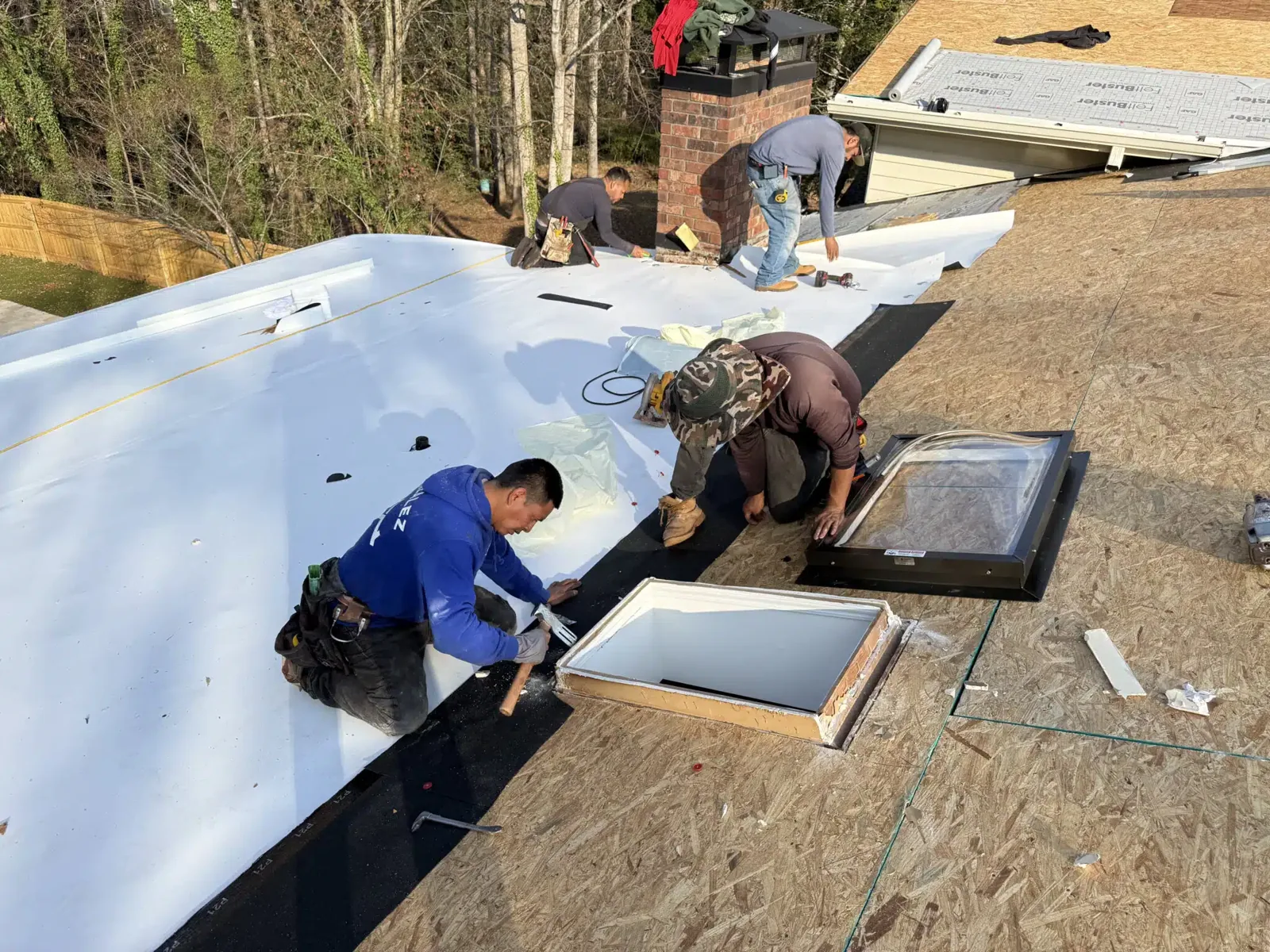
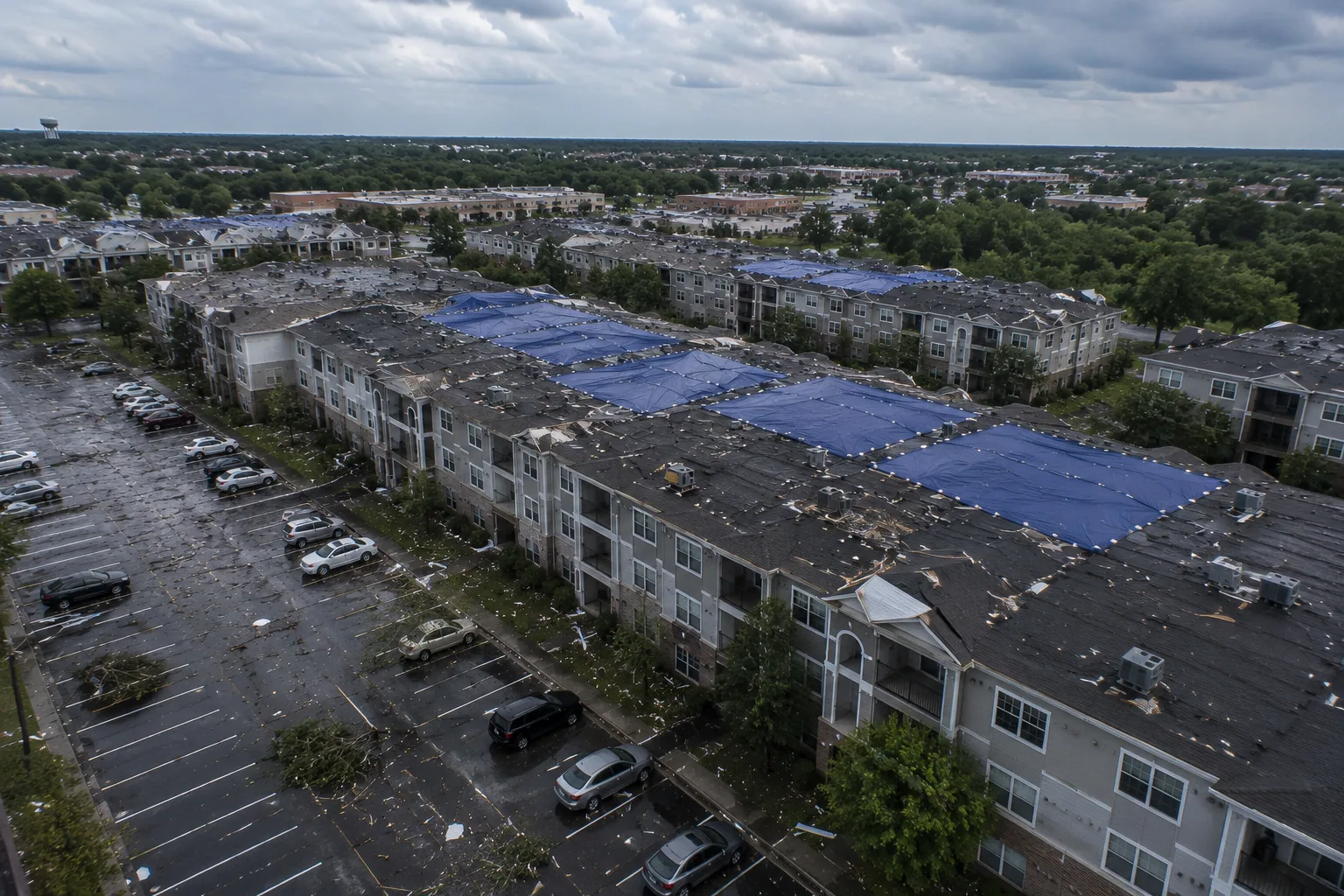
Temporary protection holds the roof until the weather allows permanent work, since many materials need dry, moderate conditions. On a storm-damaged roof the crew dries in before it repairs. If the damage is widespread, the survey sets repair against a commercial roof replacement and prices both. Log every temporary measure with a date so none is forgotten.
Getting ready for the next winter
Autumn preparation is mostly drains and details. Clear leaves from baskets and scuppers, check the sealant at walls, secure loose edge metal and note where drifts formed last year. Know the roof's design snow load. Heat tracing on exposed leaders helps where it exists, and it gets tested before the cold.
A spring visit finds what winter did. A preventive roof maintenance visit before the first freeze and another after the thaw record the changes. Owners in Park Slope and other districts of older rowhouse roofs benefit most from the autumn visit. Add the drift readings to the log.
The log pays off after a storm that brings a claim. Dated drift readings, the date of the thaw, photos of the ice and the pre-storm condition rating show an adjuster what the snow did and what was already there. A roof with no record leaves the carrier to guess.
Commercial Roofing Questions
How much snow is too much for a flat roof?
The building's design snow load sets the limit, and the structural drawings or an engineer can state it. Wet snow and drifts can top it in one spot, which is why signs of stress, such as a sagging ceiling, count for more than depth.
Should the super shovel the roof?
Not with steel tools, and not without fall protection. Leave a layer of snow and use plastic tools. If the load worries you, call us and an engineer before anyone goes up.
Why does a leak show up weeks after a storm?
A cracked drain fitting, a flashing pulled by ice or a seam opened by frost can leak well after the snow is gone. The stain shows when the next rain finds the damage.
Can repairs be made in freezing weather?
Some temporary ones can. Permanent work with adhesives and welds needs suitable temperatures, so we dry in and finish in the first good window.
What records help after a snow event?
Photos of the drifts, the date of the thaw, drift depth readings and the condition of the drains. They support the repair scope and any claim.