Roof Drains and Scuppers in Brooklyn, NY
Kneel at a scupper on a Brooklyn, NY loft roof two days after a rain. If there is a stain line on the wall below the opening and a rim of grit at the sill, the scupper is set too high or the roof behind it is holding water. A drain that works leaves a dry roof within a day. A drain that does not leaves a pond, and ponds are where membranes die early. The cure is rarely exotic. Someone clears the basket, someone checks the leader and someone builds a small slope where the deck has dropped. Photograph the pond with a tape measure beside it and send it with your request.
Our crews clear, repair, replace and add drains and scuppers, and we correct the slope that feeds them.
What you see at the drain
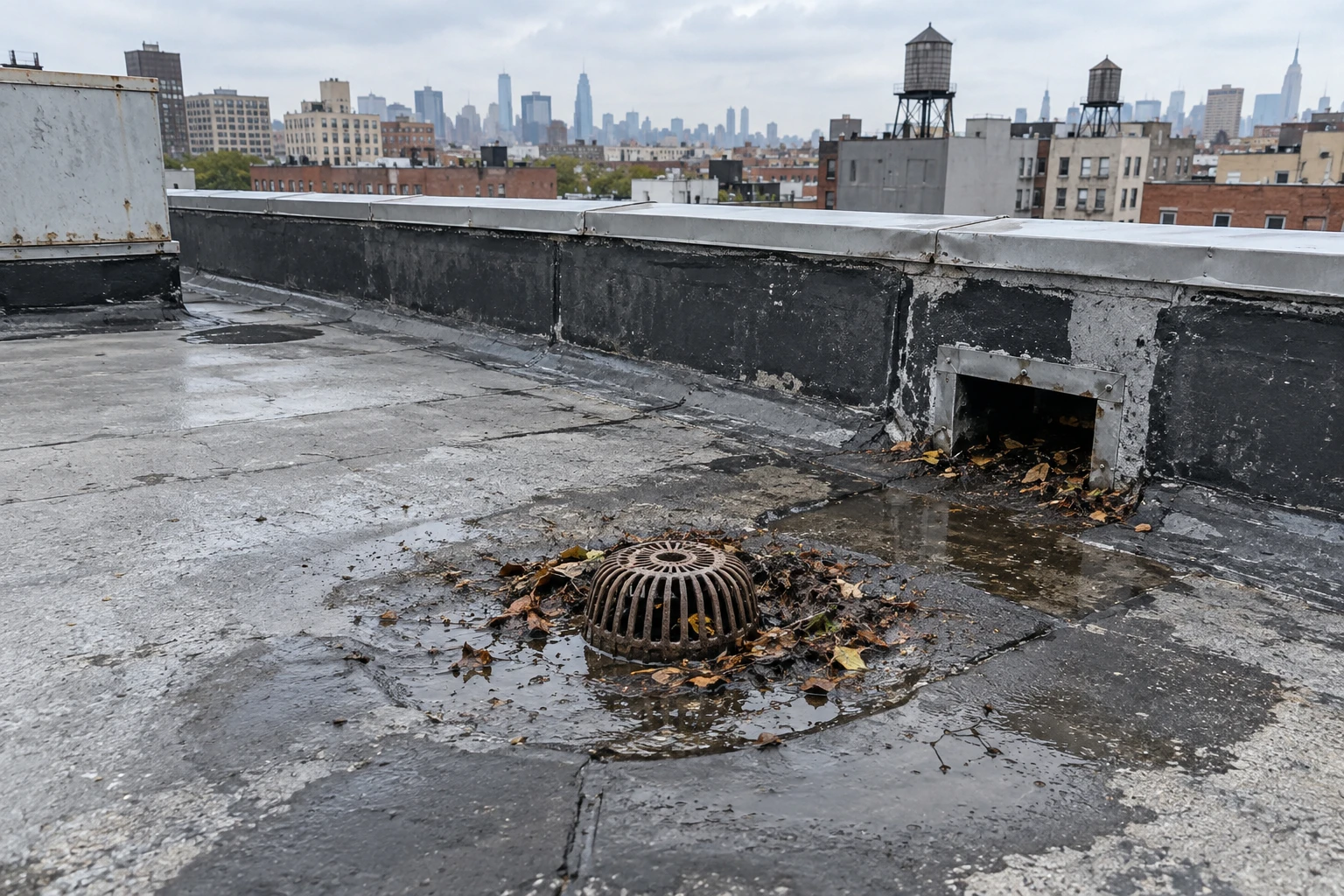
A good drain basket sits flush with the roof, with clean strainer holes and a tight clamping ring. A bad one is packed with leaf litter and grit, sits proud of the surface or has a cracked bowl. The membrane around it may be stained, wrinkled or lifted. A ring of dark, damp insulation under the surface shows when the drain has leaked at the flange.
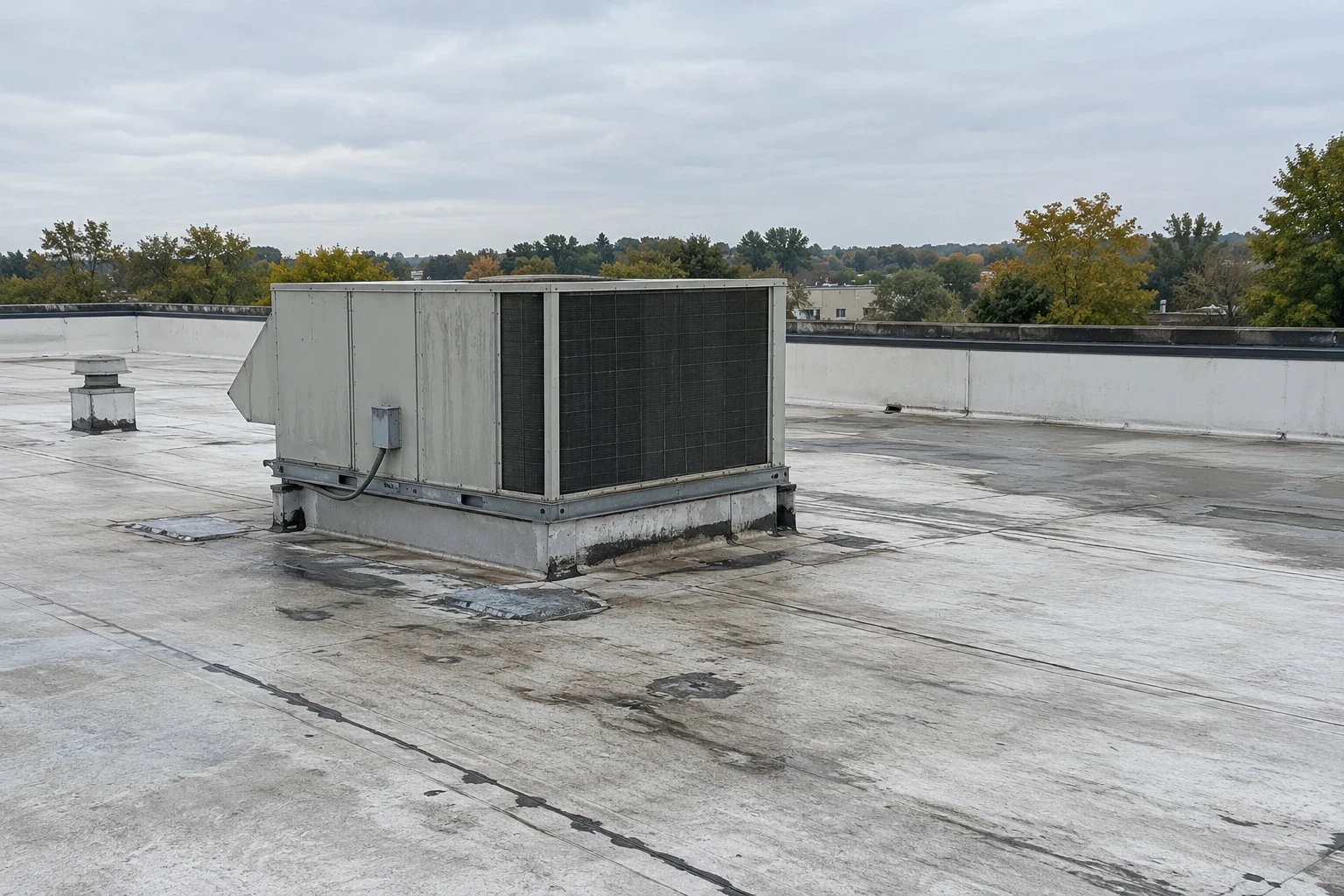
The sump of water at the drain tells the next part of the story. If water stands there a day or more after rain, either the drain is slow or the deck has sagged around it. A small sump is normal. A sump the size of a doormat is not. We measure the depth at the drain and at the middle of the field, then compare the two. Record both numbers, with the date and the last rainfall.
Walk the edges of the pond too. Algae, a pale scum line and a ring of dirt mark how high the water reached, and a membrane that has lain under water often shows tiny blisters and softened seams. Those marks help us date the problem and decide whether the roof still qualifies for a roof coating restoration once the water is gone. A roof that has ponded for years may already hold wet insulation under the pond, so we scan that area before any repair.
Why cloudbursts expose small drains
Late-day thundershowers are frequent in a New York City summer, and Ida's remnants on September 1, 2021 showed what a downpour can do when it arrives all at once. Every drain is sized for a design rainfall, and a storm that outruns it pushes water against the parapet and into every flashing.
Old buildings often have fewer drains than a roof needs, or drains that were sized for lighter rain. A large mill-building roof can have a single drain for a wide area. A loft roof in Bushwick may have two drains and a deck that has settled between them. We check the count, the size and the location, and we recommend an added drain or an overflow scupper where the roof is short. A ponding water repair starts with this count.
The leader below the drain
A clear basket means little if the leader below it is blocked. We flush each leader with water and time how fast it clears. A slow leader may have a belly in the pipe, a collapsed section, scale or roots. We run a camera down it when the flush tells us to. Many leaders run inside walls, and a crack there shows as a stain on a floor far from the roof.
Fixing a leader often needs the building engineer or a plumber, and the roofer coordinates. Ice is another threat. With New York City snow near 30 inches a year, ice in a leader can split a fitting. We check leaders before the first freeze and after a hard one. A preventive roof maintenance visit includes the flush. Tell us which leaders run inside the building and where the access panels are.
When the deck is the problem
If the drain is clear and the pond stays, the deck has dropped. Wood decks sag between joists. Steel decks deflect under heavy equipment. Old tar-and-gravel build-ups gain layers over the years, and the extra weight pulls the low spot lower. Patching the same spot again and again makes it worse.
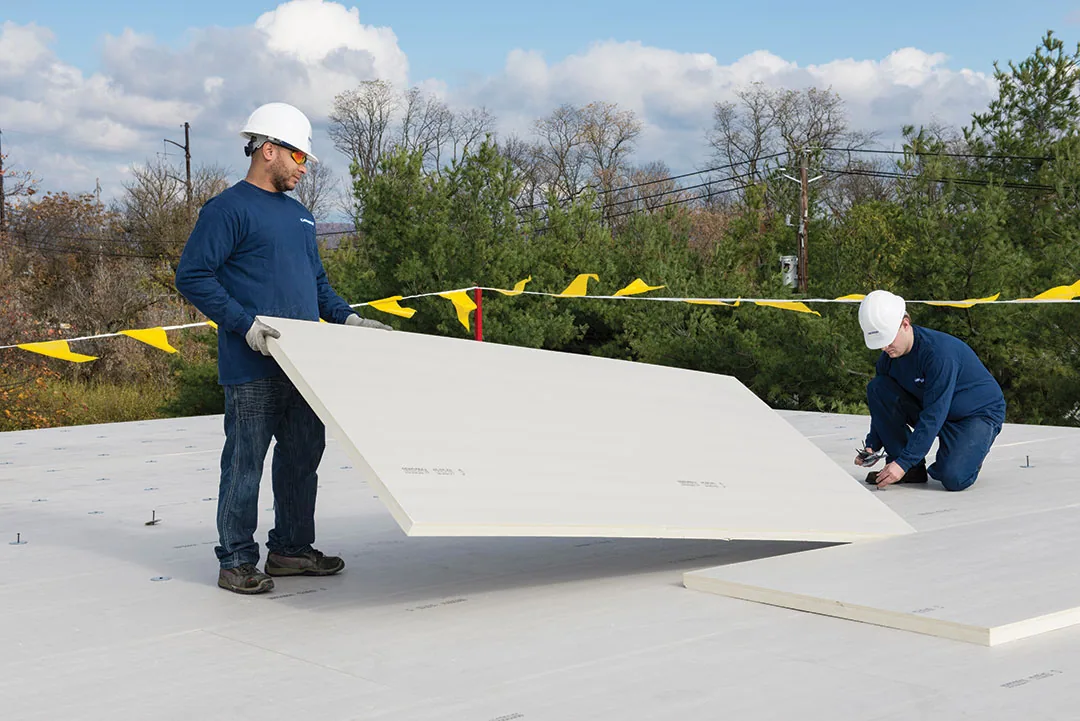
The fix is to build slope. A cricket, a small raised ridge, sends water around a curb or a bulkhead toward a drain. Tapered insulation, cut to a layout drawing, gives the water a fall of roughly a quarter inch per foot toward the outlet. Sometimes the drain itself is lowered. Each fix adds height at doors and flashings, so we check thresholds first. Tapered boards and the cover board above them are laid out together. Measure the finished slope with a level.
Scuppers and the wall they pass through
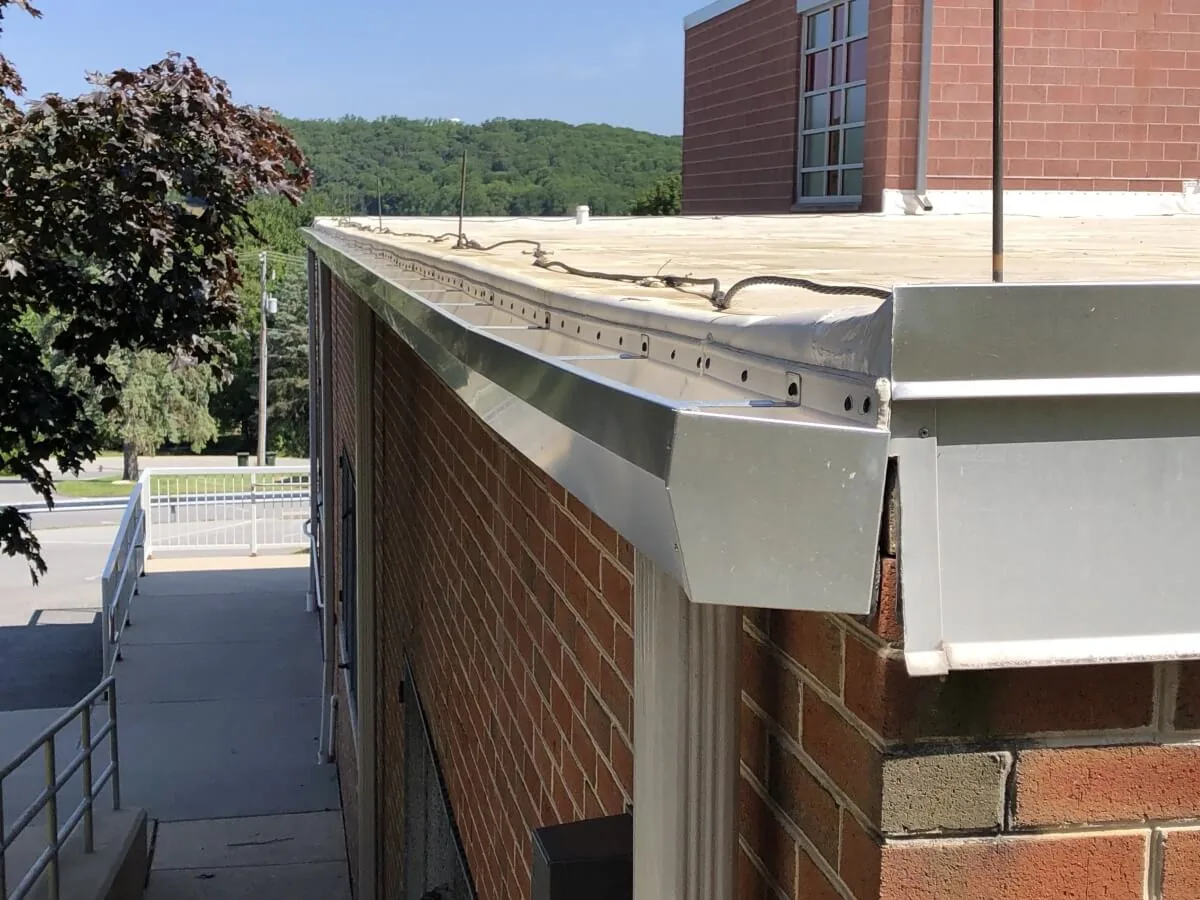
A scupper is an opening in the parapet that lets water off the roof. Set at the right height, it keeps a roof dry. Set too high, it leaves a permanent pond behind it. Set too low, it can drain the insulation. Overflow scuppers sit a little higher than the drains and take over when a drain clogs, so they warn you before a roof floods.
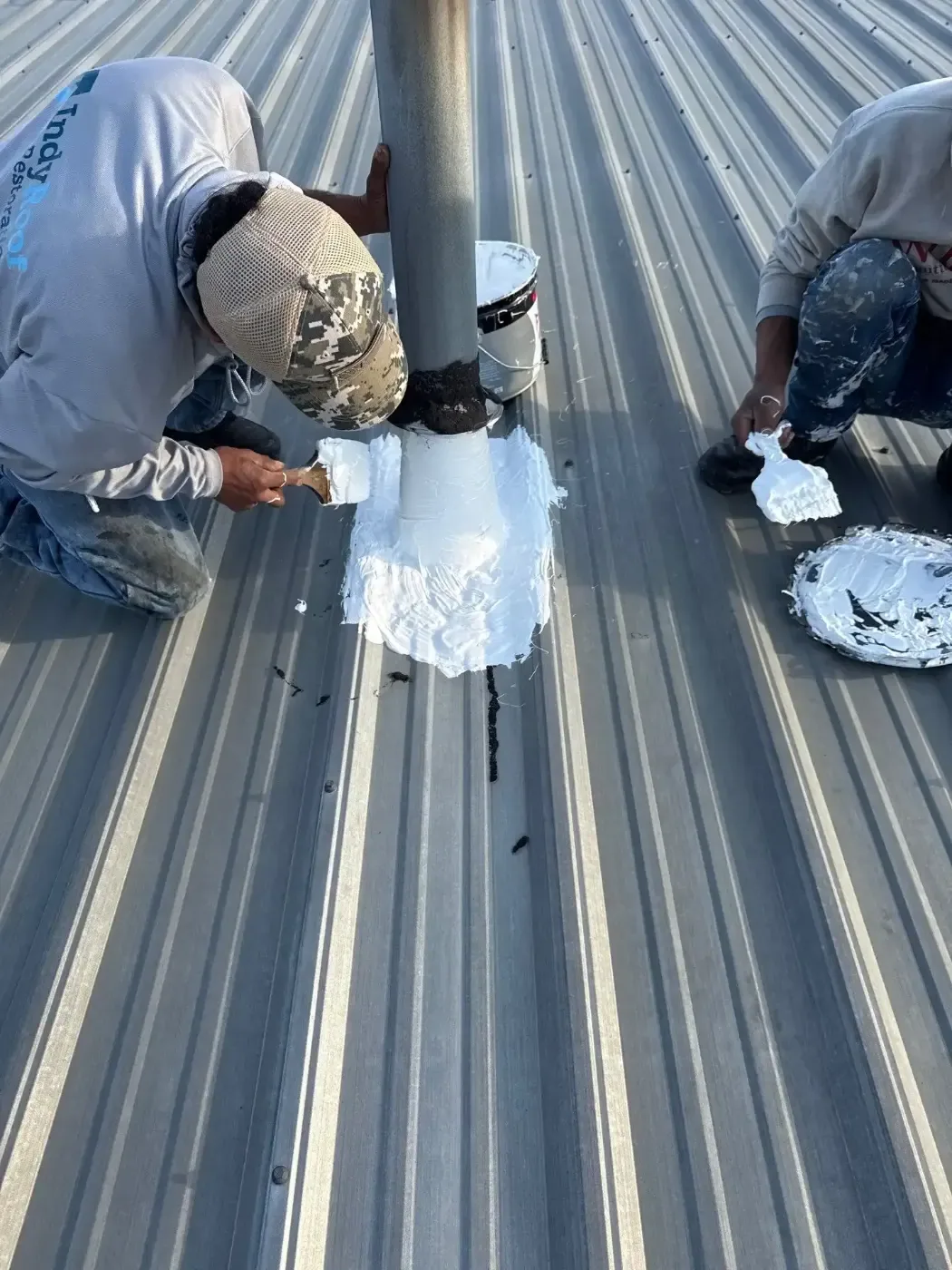
The wall around a scupper is a weak point. The membrane must turn into the opening, the metal liner must lap correctly and the coping above must shed water away from the cut. We rebuild the detail in order and test it with water. The coping and edge metal above the opening and the scupper itself are the same job at the wall. For a rowhouse block, we also check where the water lands, since a scupper that spills on a neighbor's roof starts an argument.
Closeout walk
After the work, we wait for the next rain, or pour a measured volume of water, and watch. The pond should clear in a day. We measure the sump again and compare it with the first reading. The numbers go in the file.
We also walk the owner or the super through the changes: which basket was replaced, which cricket was added, where the overflow sits. For a building in Gowanus, near the canal, we note the discharge point and whether it sits in a spot that floods. Keep the walk notes with the roof plan.
Commercial Roofing Questions
How long can water stand before it is a problem?
Water still standing two days after rain counts as ponding, and it gets measured and traced. Shallow dampness that dries in a day is normal on a flat roof. A pond that returns after every rain, or one deeper than half an inch at its center, goes on the punch list with a cause and a fix.
Will adding another drain solve ponding?
Sometimes. A drain added at the low spot works when a leader is close by or can be reached. If not, a cricket or tapered insulation can move the water to an existing drain at lower cost than new piping. We price both when both are possible.
The stain is nowhere near the drain. Could the drain still be the cause?
Yes. Water travels along the deck and through the insulation before it shows inside. A leaking drain flange, a cracked bowl or a seam that sits under a pond can send water several feet. A moisture scan traces it.
Can a blocked leader damage the building?
It can. Water has to go somewhere, and a blocked leader may back up into the roof or leak inside a wall. A camera run finds the break, and the building engineer or plumber repairs it while we handle the roof side.
What can the super do between visits?
Clear the baskets by hand after leaf fall and after any big storm, and photograph any pond. Do not climb to the roof in ice, and call us if a drain looks frozen.