Ponding Water Roof Repair in Brooklyn, NY
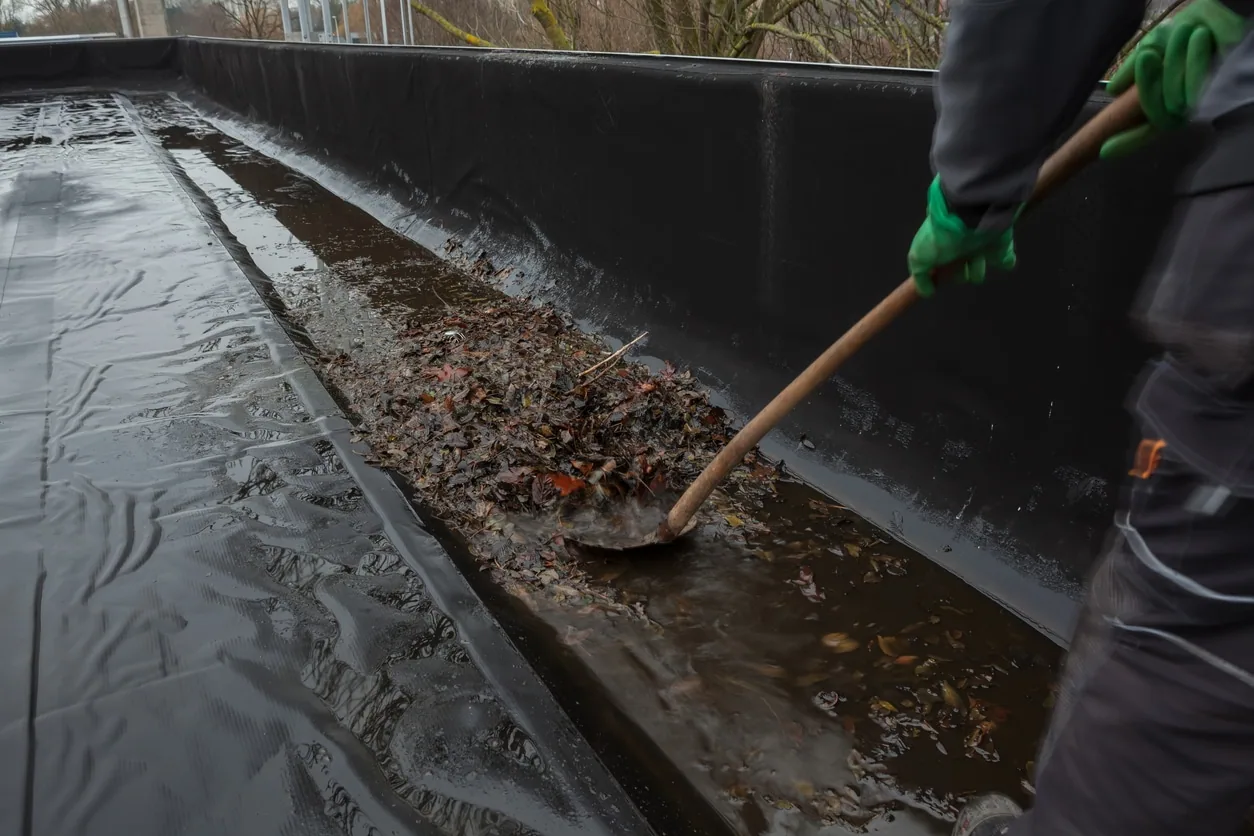
Two days after a storm, a pond is still sitting at the back of a Brooklyn, NY roof. Its edge is marked by a pale ring of dried scum, and its middle is the color of tea. Leaves float in it. Stand at the edge and look at the drain: it may be clear and dry while the pond sits ten feet away. That tells you the drain is not the problem. The deck has dropped, and the water has nowhere to go. A pond is not just a puddle. It is weight on a deck, water against a membrane and a standing invitation to every weak lap. Photograph it with a tape measure in the frame and send it with your request.
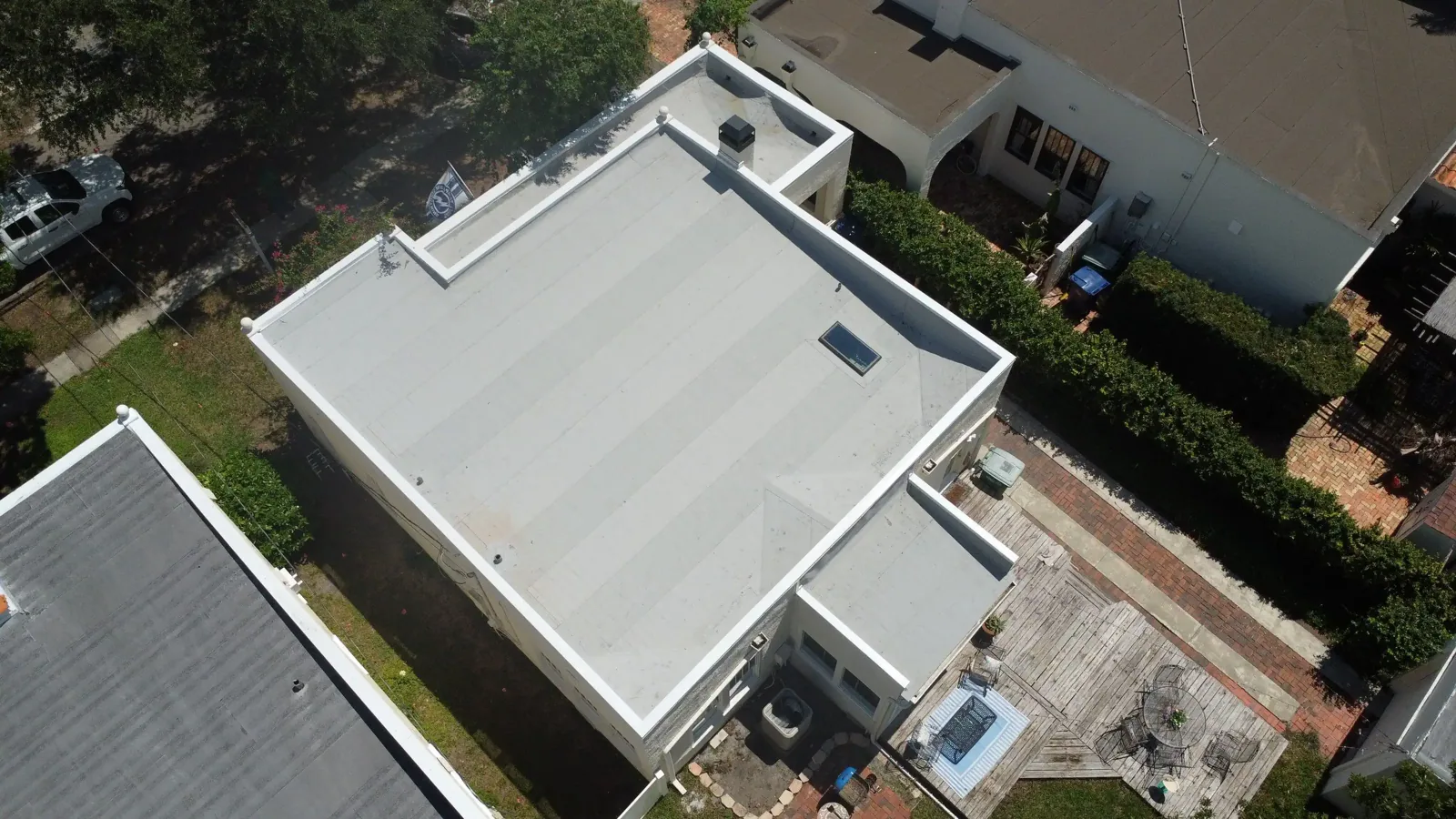
We measure, trace and fix ponding on flat roofs across the borough.
Measure before you guess
We measure the depth at the deepest point, the area of the pond and how long it lasts after rain. We check the nearest drain, the leader and the basket. We level the roof with a long straightedge or a laser to see where the high and low spots are.
One inch of water over a square foot weighs about five pounds, so a pond ten feet wide and an inch deep adds real load to the deck. In our practice water that stays two days after rain is ponding, and a pond deeper than about half an inch at its center goes on the punch list. We record the numbers with the date and the last rainfall. Take a second photo after the next heavy rain to see if it changes.
What a pond does to a roof
Water that stays on a membrane works on it. Standing water can leach some sheets, grow algae that hold moisture against the surface and concentrate ultraviolet light at the waterline. Seams under a pond sit under constant load, and a marginal seam lets water through that a dry roof would shed.
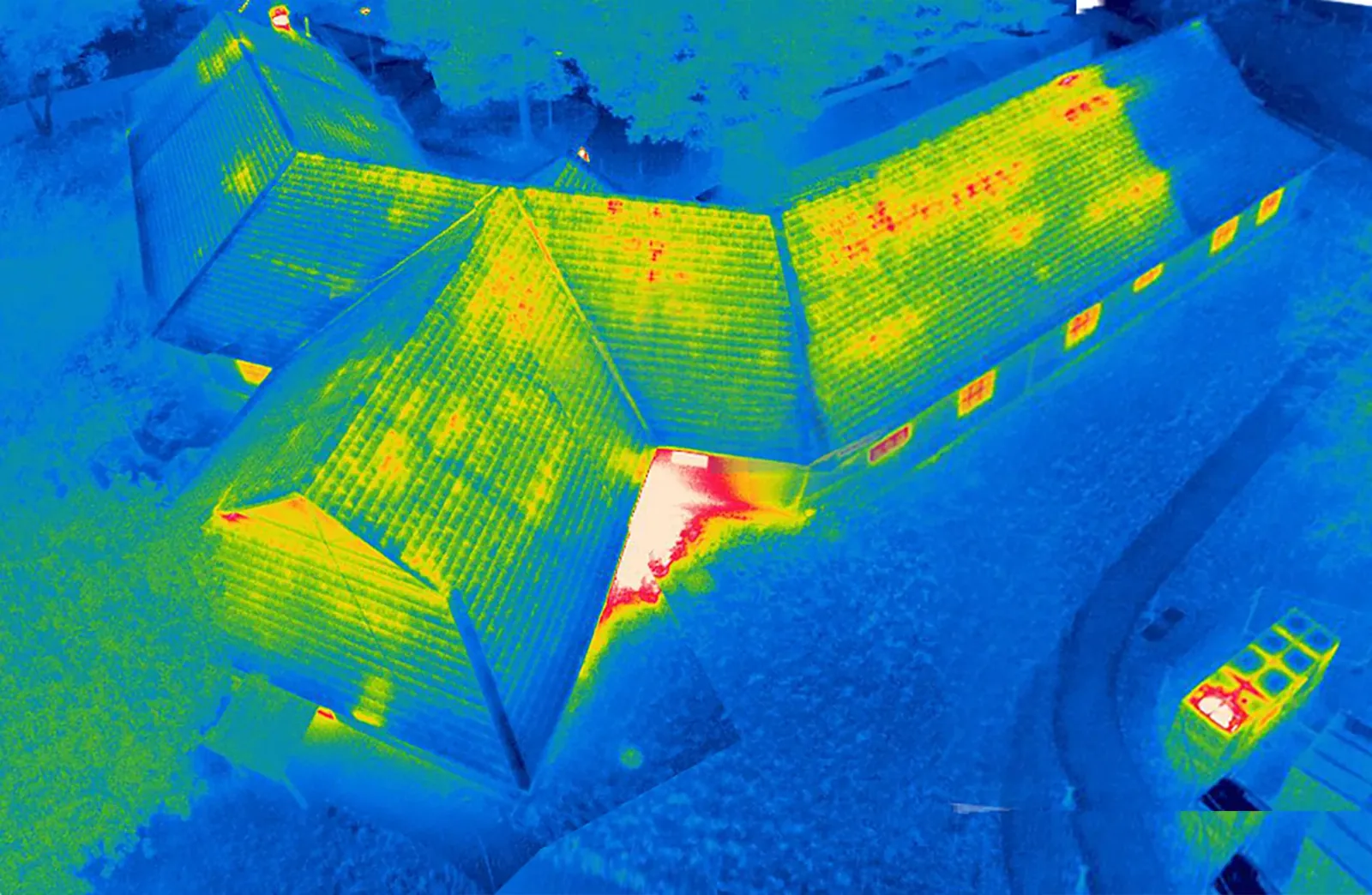
Below the sheet, wet insulation loses its value and adds weight. On a tar-and-gravel roof, a pond can soften the bitumen and let the felts slide. On a steel deck, water that gets through rusts the underside. The damage spreads from the pond outward, and the stain inside the building often sits far from the pond because water travels along the deck. An infrared moisture survey maps the wet area. Mark the pond edges on the roof plan.
Seams and flashings under a pond often fail together. A pond against a wall loads the base flashing with standing water it was never meant to hold, and the failure shows up as a flashing failure at the wall. A pond over a lap loads the seam, and the repair is a seam failure repair. Fixing either without removing the pond sets the clock back to zero, so we correct the water first and the joint second.
Why Brooklyn roofs pond
Four causes recur. A blocked or small drain holds water. A sagging deck or settled insulation makes a low spot. A drain set higher than the surface around it leaves a permanent pool. And a tar-and-gravel build-up that has gained layers over time hides the original fall. Older mill and loft roofs in Sunset Park and East Williamsburg can show all four. Rowhouse roofs can sag between old joists, and a big flat roof with one drain pushes every inch of rain toward the same bowl. Late-day thundershowers are frequent in summer, and a downpour like Ida's on September 1, 2021 tests every low spot. We separate the causes, because the fix differs. Ask the super when the pond first appeared.
Equipment and traffic create ponds of their own. A curb under a rooftop unit can dam water on its uphill side, and a walkway pad laid across a drainage path does the same. We follow the flow of water from the high points to the drains and mark where something blocks it. Moving a pad, adding a small saddle behind a curb or cutting a relief channel in the pad often fixes the pond at low cost and needs no new membrane.
The fixes, from cheap to costly
Clearing a basket costs almost nothing. Replacing a cracked drain bowl costs a bit more. Adding a drain or an overflow scupper costs more again and needs a leader to connect to. Building slope costs the most: a cricket behind a curb, a saddle between drains or tapered insulation across the low area.
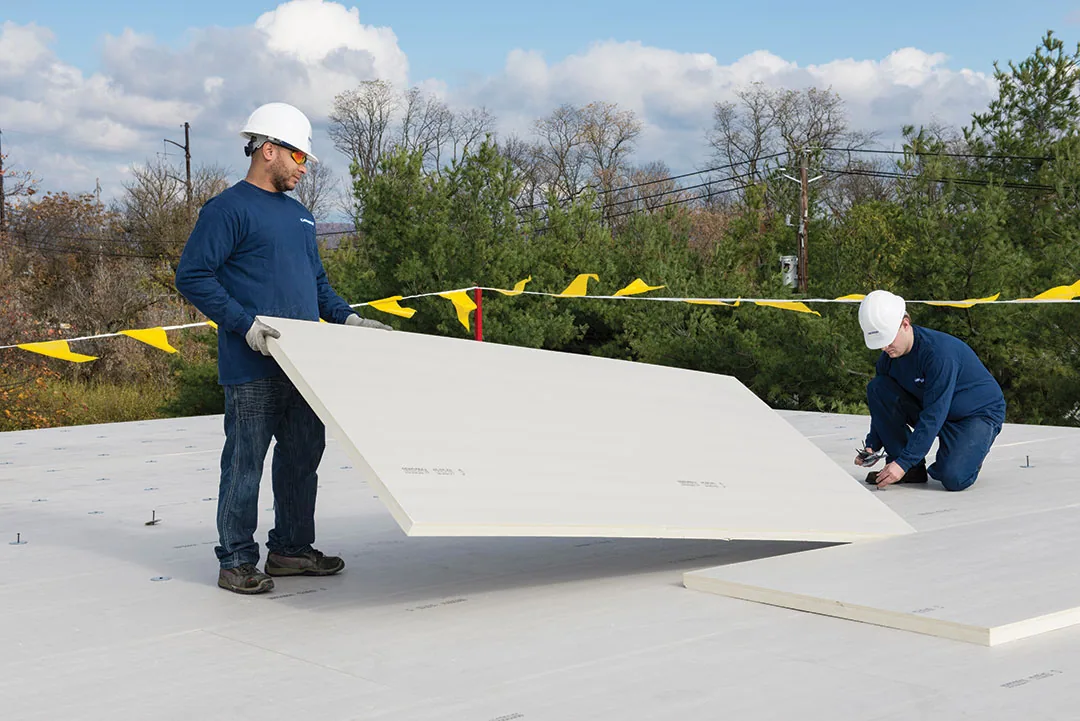
Tapered work builds a fall of about a quarter inch per foot toward the outlet and is laid out together with the cover board. Larger drains and scuppers deal with the outlets. Every fix raises the surface at doors and flashings, so thresholds are checked first. Where a full replacement is planned, the new design includes a tapered plan for the whole roof. Measure the finished slope with a level.
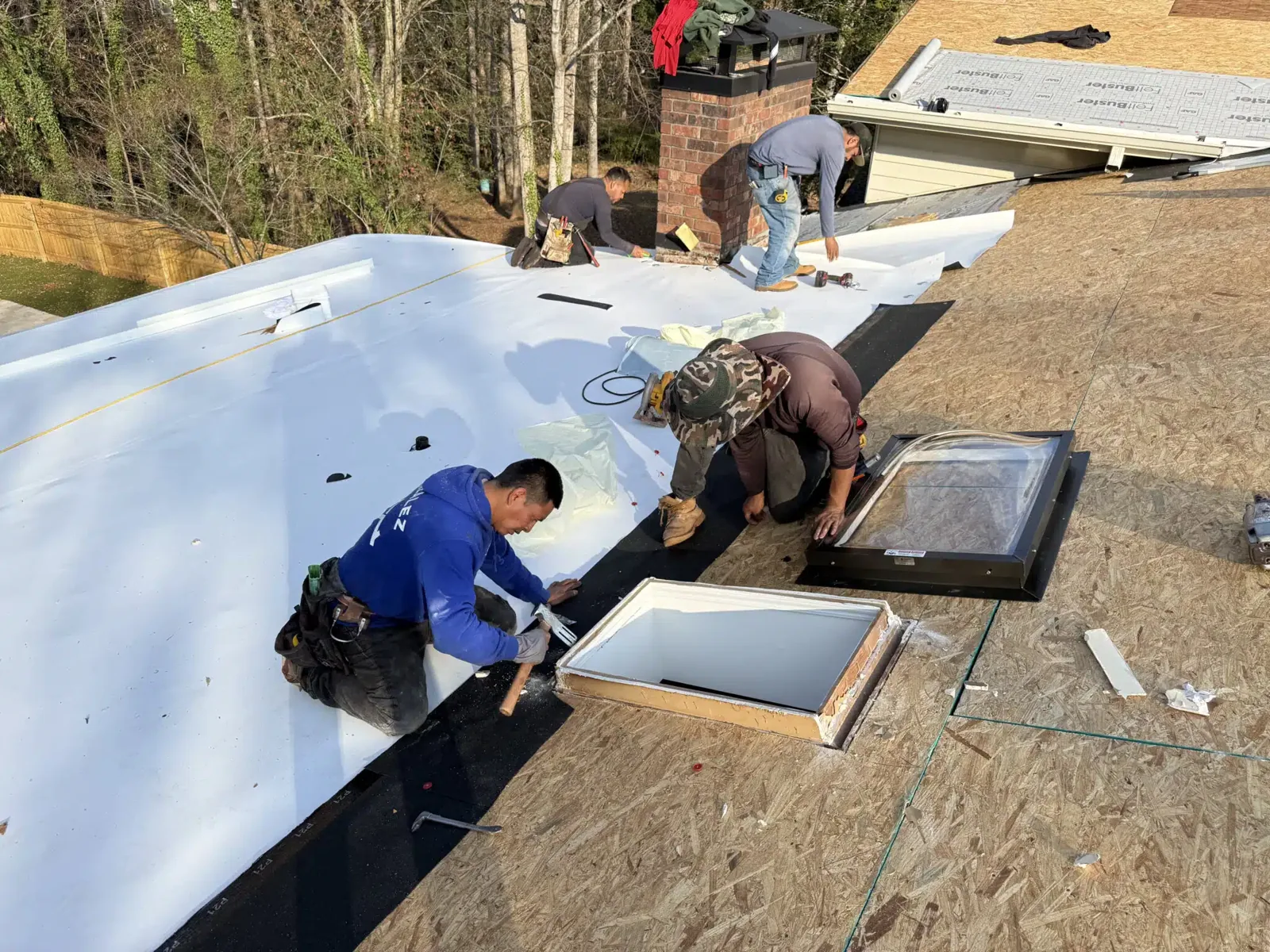
Sequence matters on an occupied building. Building up a low spot happens over the insulation, in sections that are each closed before the end of the day. The height added at the pond rises toward the edges, so we check parapet and door heights beforehand and raise flashings where the build-up requires it.
Ice makes it worse
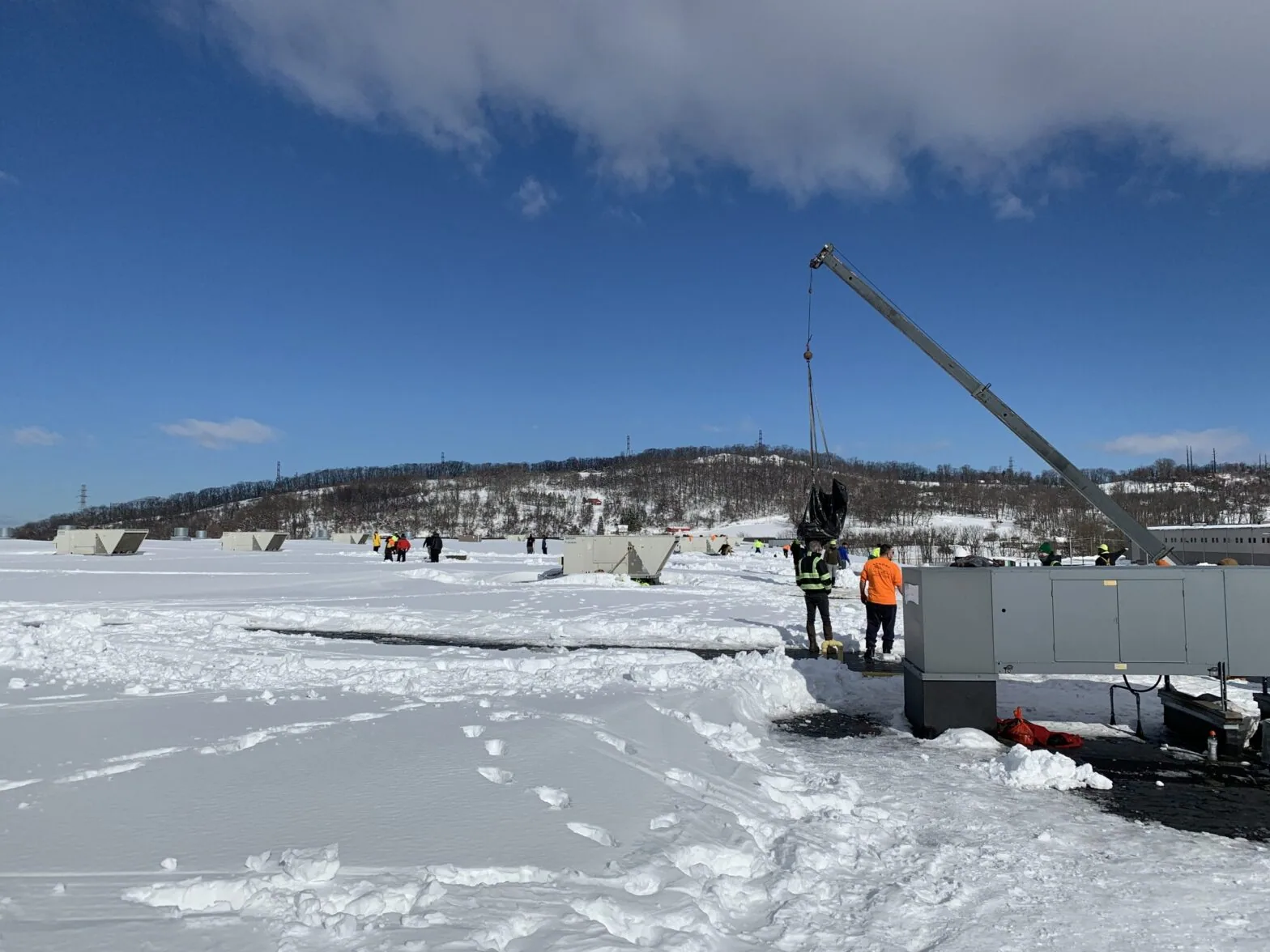
About 30 inches of snow a year, 27.3 of them on a single January day in 2016, feeds the ice problem. A pond that freezes expands, lifts seams and flashings and bonds ice to the sheet. When it thaws, the lifted section may not settle back, and the water finds the gap.
Chipping ice with tools cuts the membrane, so we melt channels to the drain or wait for the thaw. Before winter we clear drains and note which ponds are likely to freeze. For damage already done, the snow and ice roof damage repair work lifts and reseals opened seams. Photograph any ice formation before it is cleared.
A thaw after a hard freeze is the time to look. Meltwater runs to the drains and any that are frozen back it up across the roof. We go up after the first thaw of the season and check each drain and each pond.
Warranty, lease and the roof file
Many makers limit warranty coverage on ponded areas, so an owner who ignores a pond may lose coverage on that section. When a leak follows a pond a tenant may push back, and the lease settles who pays. We record each pond's depth, area and cause and attach it to the roof's rating.
For owners in Sunset Park and other older districts, the record helps rank which roof to fix first. Once a correction is in, the next rain or a measured pour of water shows whether the pond is gone, and the depth is measured again. If a pond remains, we reopen the cause instead of assuming the repair held. Share the record with the property manager and the lender.
Commercial Roofing Questions
How long before standing water counts as a problem?
Water that stays more than two days after rain counts as ponding. Dampness that dries within a day is normal on a flat roof, but a pond that returns after every rain, or sits deeper than half an inch at its center, needs a cause and a fix.
Will a coating fix a pond?
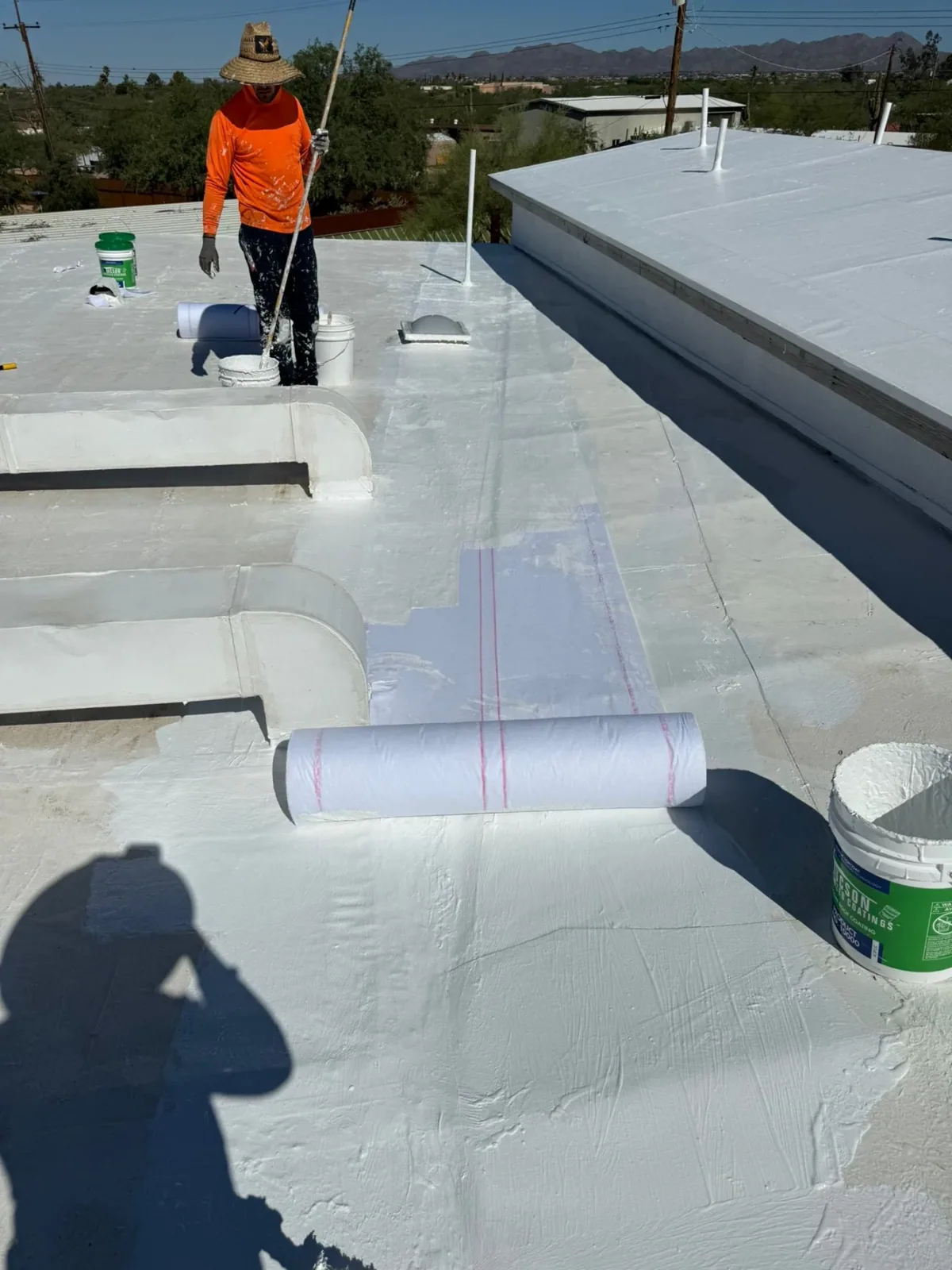
A coating can tolerate water better than some sheets, but it does not remove the water or the weight. The fall or the drain should be fixed too, or the coating wears at the waterline.
Can the deck carry the weight of a deep pond?
That depends on the structure. A structural engineer should answer for a deep or wide pond. We report depth and area and the engineer checks the deck.
Does ponding void a warranty?
Many warranties limit or exclude ponded areas. Read the terms. We record ponding so the owner knows where coverage may be affected.
What can the super do between rain and repair?
Clear the drains safely, photograph the pond with a tape measure and stay off wet areas that may hide soft insulation. Schedule the walk while the pond is still there.