Heat and UV Roof Damage Repair in Brooklyn, NY
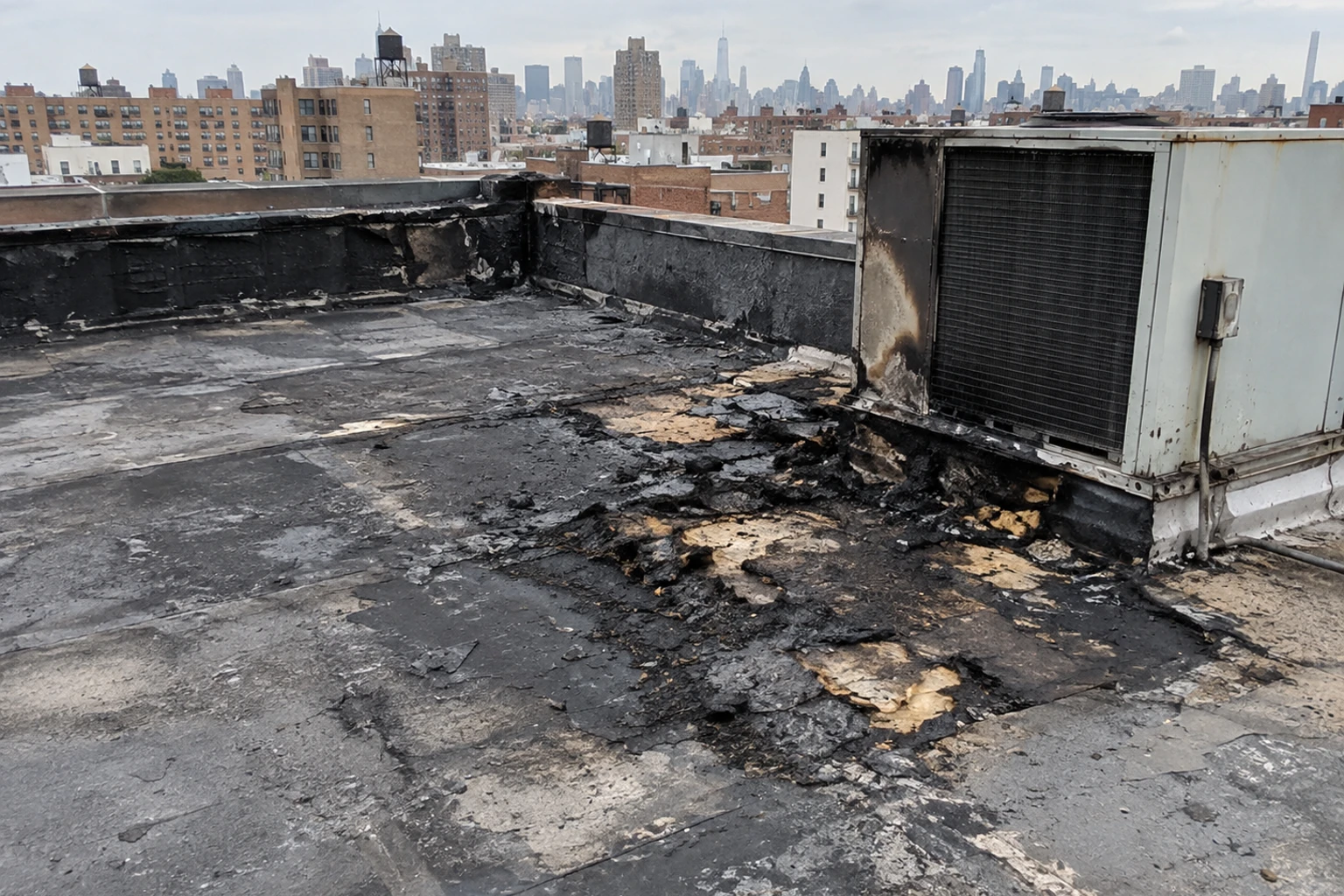
On a hot afternoon, lay a hand flat on a dark Brooklyn, NY roof and you will not keep it there. The surface can run far hotter than the air, and it does that every sunny day from May to September. Run a thumb across the membrane and look at it: if a gray powder comes off, the surface is chalking. If fine cracks web across it like dry mud, it is crazing. If the sheet has pulled back from the wall and left a gap, it has shrunk. Those are the signs of heat and sun damage, and they come on slowly. Take photos in low, slanting light, when crazing shows best.
Tar-and-gravel roofs wear a different way. Gravel scatters or washes into the drains, bare felts bake in the sun and the bitumen beneath them goes brittle. Walk on bare felt in July heat and the surface scuffs and softens. A roof that has lost its gravel in patches needs it raked back or a surface coat before the felts are gone.
We assess and repair heat and ultraviolet damage and extend roof life with reflective systems across the borough.
What sun and heat do to a roof
Ultraviolet light breaks down the top layer of a roof. Thermoplastic sheets lose plasticizer and stiffen. Rubber sheets chalk and craze. Bitumen roofs lose granules or gravel, and the asphalt beneath oxidizes and cracks. Coatings thin out. Heat speeds all of it, softening adhesives and sealants and drying out the sheet.
The daily cycle wears too. July highs in New York City average near 85 F, late-day thundershowers cool the surface fast, and the heat island is strong. The roof heats in the afternoon, a storm quenches it, the night cools it again, and the sheet moves at every lap, wall and opening. Over the years, edges curl, flashings shrink and sealant lets go. We rate the stage of aging on every walk, from light chalking to deep cracks.
Sun damage or something else
Heat and sun damage spreads across the whole sun-facing surface and is worst on the south and west sides. Chalking, crazing, exposed reinforcement, curled lap edges, bare patches where gravel or granules have worn off and cracked sealant all point to exposure.
Other things look similar. A crack along a line may be a seam failure from movement. A split at a wall may be a flashing problem. A stain may come from ponded water. The walk looks at the pattern: even wear across a sun-facing surface suggests exposure, and local damage suggests another cause. A roof with an aged surface over sound layers can usually be restored, while an aged surface over wet insulation cannot. A moisture scan tells which you have. Take a photo of each face of the roof.
Testing adds numbers to the judgment. A small sample cut from the sheet can be checked for remaining thickness, flexibility and the state of the reinforcing scrim, and a press of the thumb shows how far the surface has stiffened. Where a maker's system is in place, we compare the result with the product's expected behavior. These checks take little time, and they turn an opinion about aging into a measurement the owner can put in the file.
Repair, restore or replace
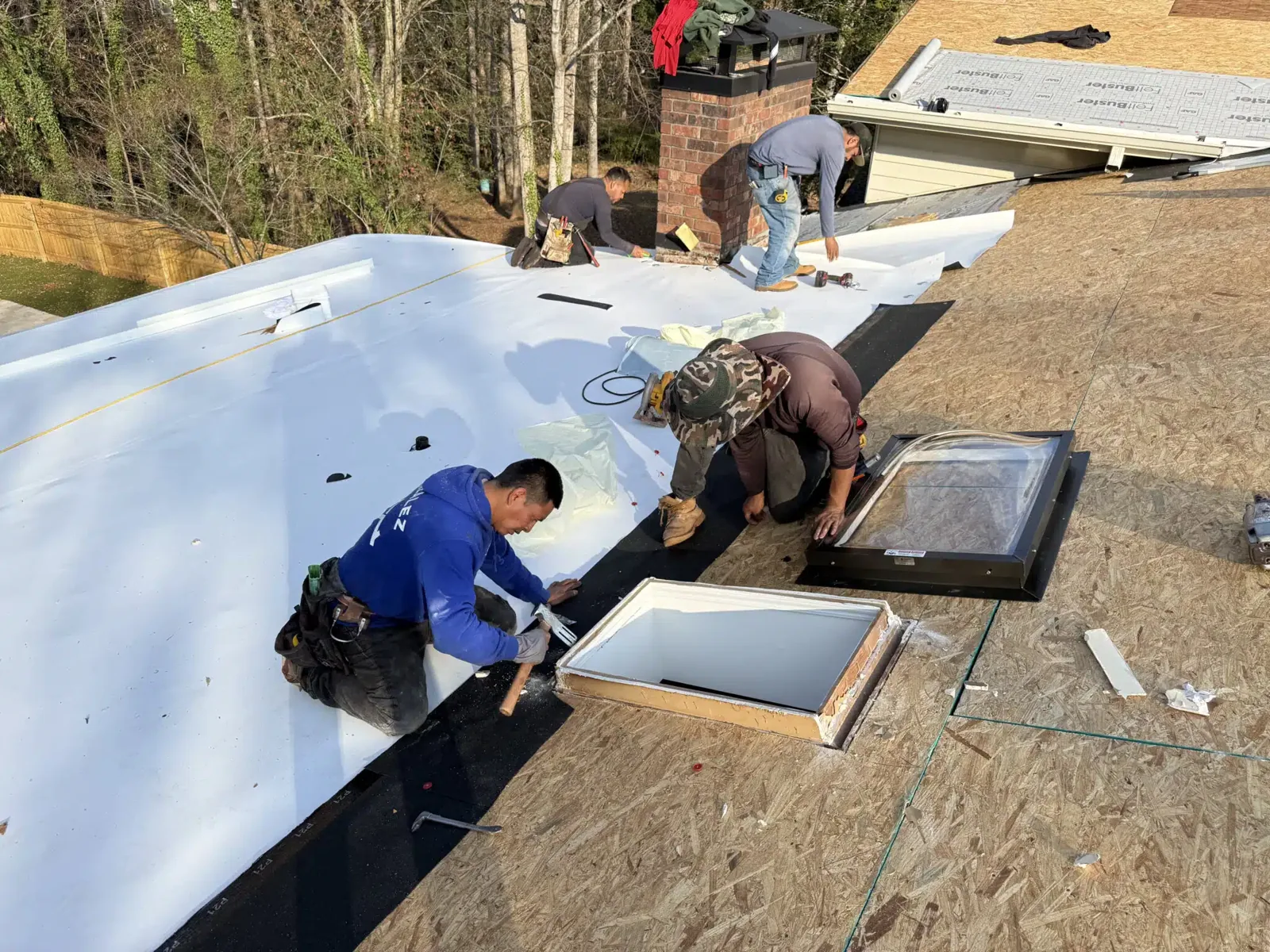
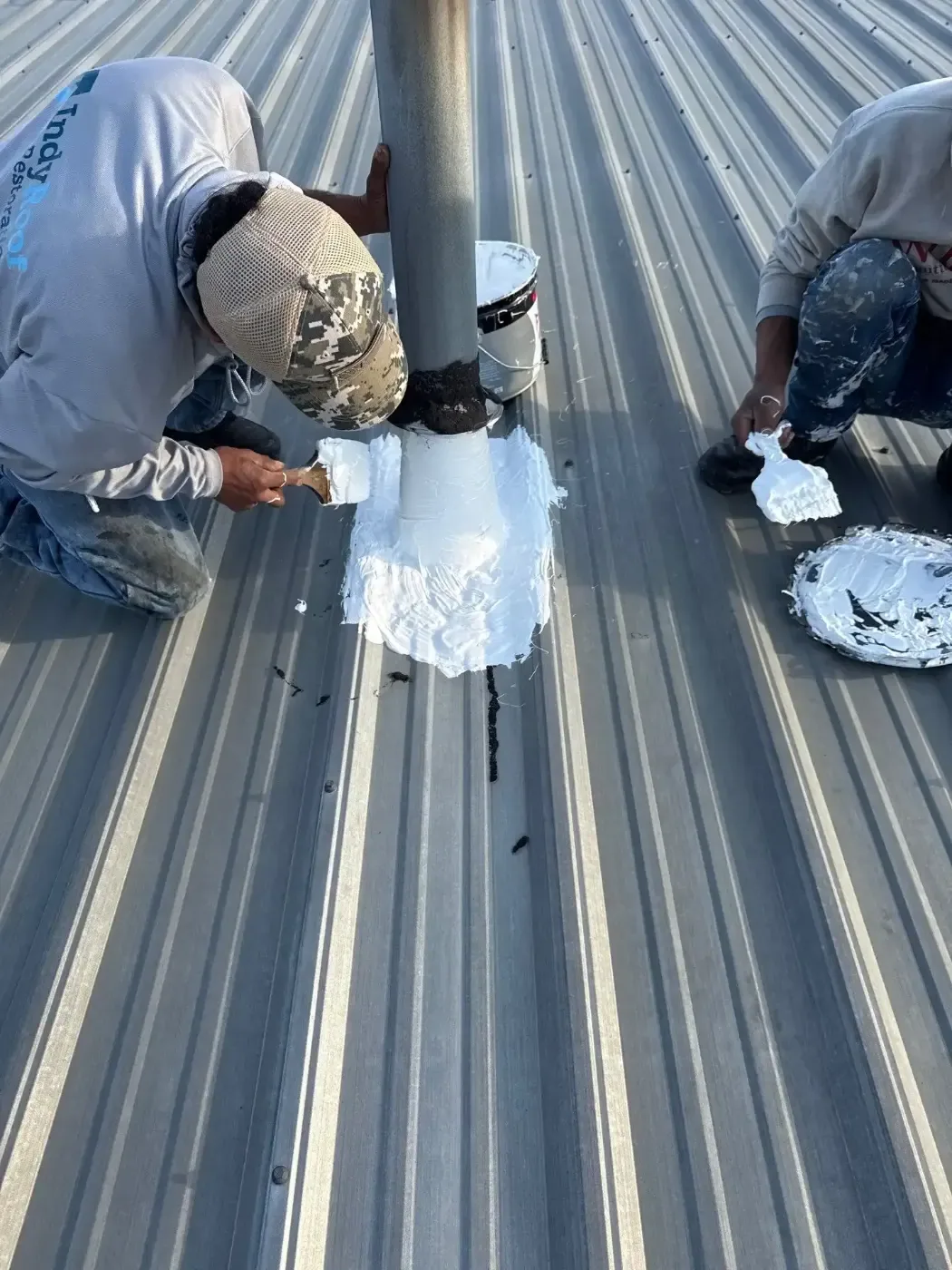
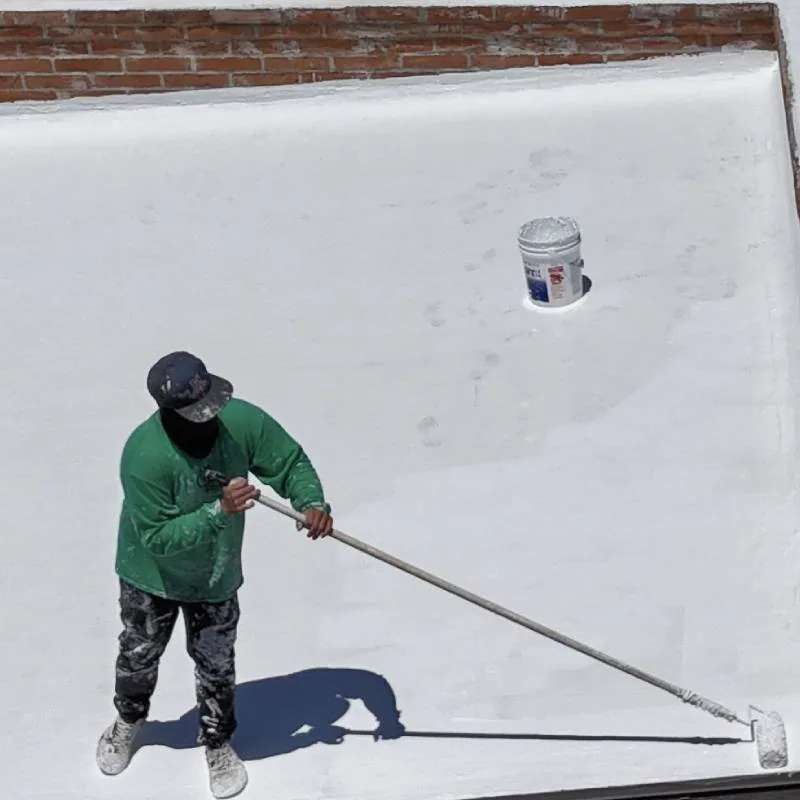
There are three paths. Repair and watch: seal the cracks, rebuild failed flashing and track the rate of change. Restore: clean the roof, make repairs and apply a reflective coating, which is the roof coating restoration route. Replace: when the sheet is brittle throughout or the insulation is wet.
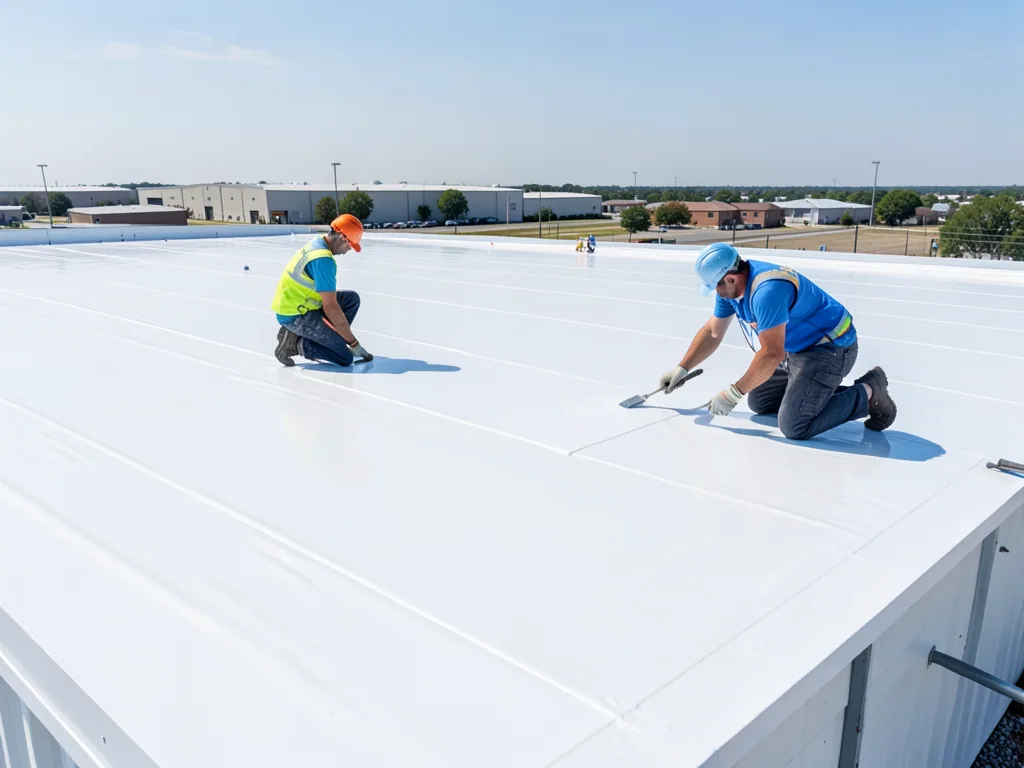
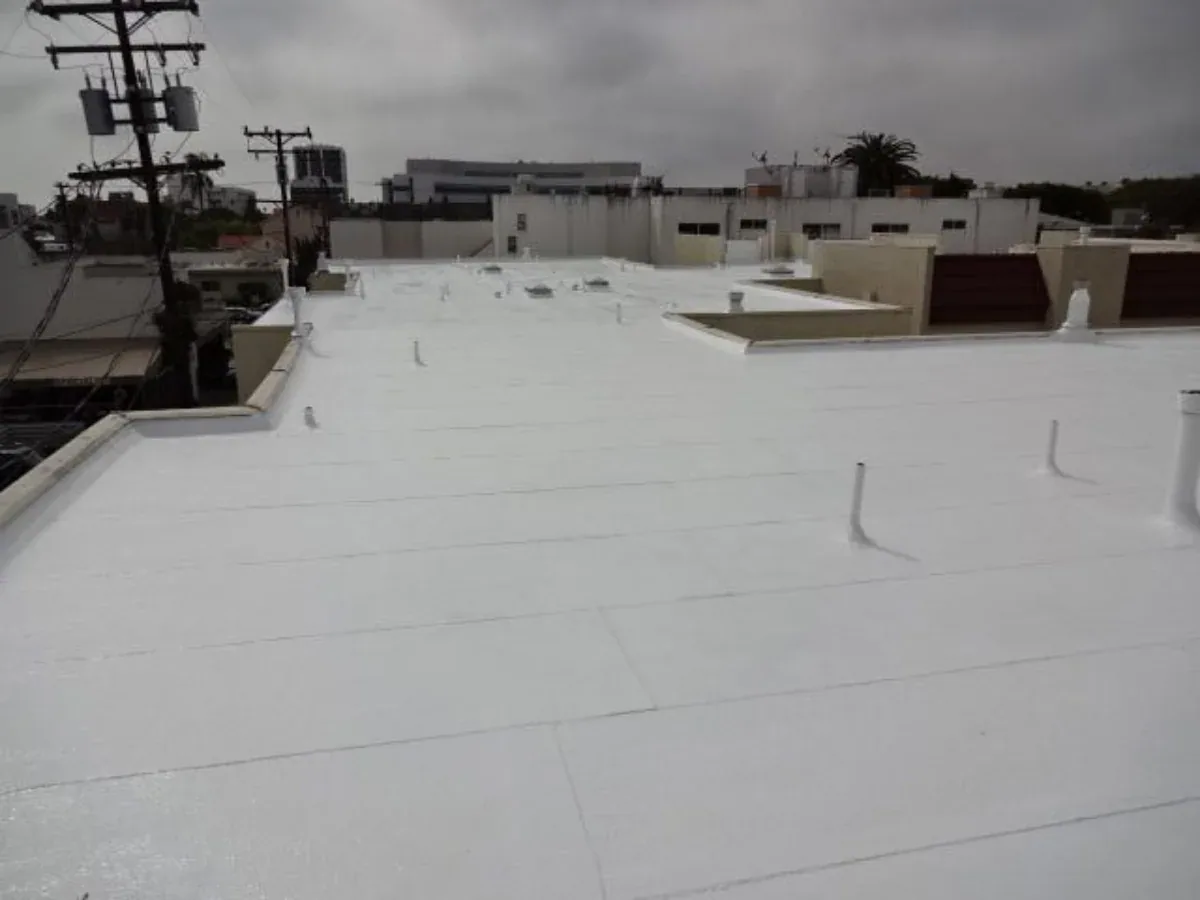
A reflective coating lowers surface temperature, slows more aging and adds a new weathering layer. Acrylic roof coatings suit roofs that drain well, and silicone roof coatings suit roofs that hold some water. Neither works on a wet roof. A cool roof installation may be considered when the roof is replaced. Choose with the moisture map, the core log and the sheet's remaining life in front of you.
Which buildings feel it most
A top-floor tenant under a dark roof feels the heat first, and the cooling bill shows it. Mill and loft buildings, such as those in Sunset Park, Bushwick and East Williamsburg, can pair dark roofs with rooftop units that add exhaust heat. Industrial buildings like Brooklyn Army Terminal, between 58th and 65th Streets in Sunset Park, may have little shade on the roof. Rowhouse blocks have small roofs that sit in full sun. The areas near exhaust fans age fastest, and we flag them for protection or coating first. Where a building is in a historic district, such as the DUMBO Industrial District with its 95 contributing buildings, a color change on a roof seen from nearby may need review. Check the coating color against the approvals file before ordering.
Heat also hits the people and equipment below. Rooftop units run harder in the afternoon, and a machine room under a hot roof may need more cooling. A reflective surface cuts that load, though the effect varies with the building and the dirt on the roof. Savings vary by building, so we record complaints of top-floor heat, the unit run times if the engineer supplies them and the roof color, so the owner can judge the result after a season.
Shrinkage and the walls
Once a sheet loses plasticizer it contracts, and the contraction pulls on every attachment. It tugs flashing off walls, draws laps open and puts tension on fasteners. The signs are a sheet that no longer lies flat at the base of a wall, a gap at a corner and a bridge of membrane across an inside angle.
We measure the pull-back from the wall in inches and record it. The same measure a year later shows how fast the sheet is aging, and whether a flashing failure repair will hold. A small sample cut from the sheet can also be checked for flexibility and thickness, which turns an opinion about aging into a number. Keep the numbers with the roof plan.
Budget follows the findings. Surface restoration costs less than replacement and delays it, which pushes capital spending later. A replacement falls under the 2022 NYC Construction Codes, including the energy and roof assembly chapters, so it carries added requirements that a restoration may not. The survey states which path applies, and the cost drivers for each.
Keeping a restored roof working
Coatings gather dirt, and dirt dulls reflectivity, so an annual cleaning and a walk keep the surface working. Cracks at laps are sealed before they open. Drains are cleared so water does not stand on the film. A preventive roof maintenance visit includes these checks and records the surface against the baseline, which shows when the next recoat is due.
The survey's condition rating feeds the capital plan, with the coating's expected life stated alongside its limits. For owners in Sunset Park and elsewhere, a rated roof lets the manager schedule coatings in order of need. Look at the coated roof again after the first summer.
Commercial Roofing Questions
Can an aged roof be coated?
It can if the insulation is dry, the sheet is attached and not brittle through its thickness and the surface accepts adhesion. A moisture scan, cores and a small adhesion test supply the answers.
Does a white roof really run cooler?
A reflective surface runs cooler than a dark one in the same sun, which slows aging. The effect varies with the coating and with dirt, which dulls reflectivity over time.
Why does the south side wear faster?
It gets the most sun over the year, and west-facing surfaces take the hot afternoon load. The walk records wear by orientation.
Can heat damage be repaired in one spot?
Yes, when it is local, such as around exhaust vents. Widespread aging calls for restoring or replacing the whole surface.
What should the super look at inside during a heat wave?
Top-floor heat, ceiling stains and softening at roof edges. Report them with dates so the walk can compare them with the roof findings.