Silicone Roof Coatings in Brooklyn, NY
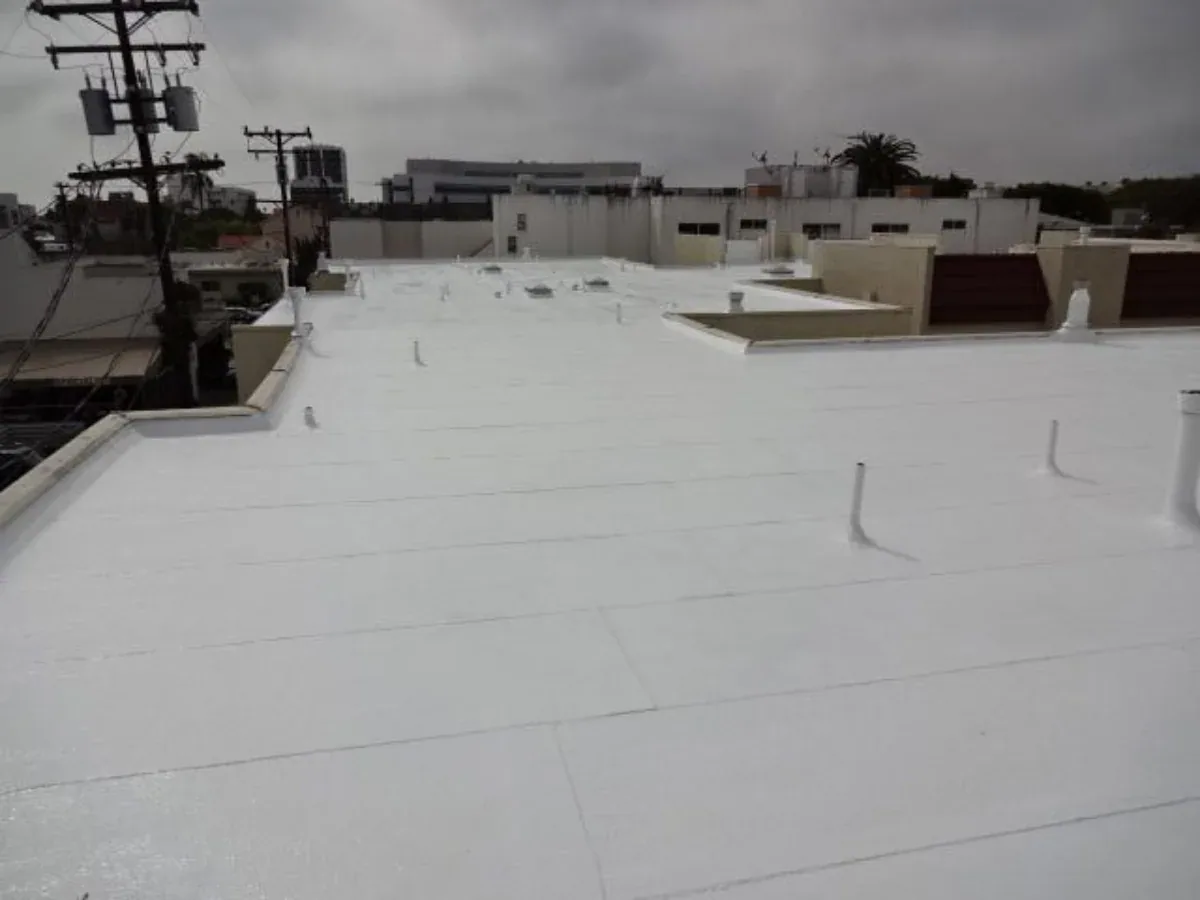
Go up on a flat roof the morning after a rain and find the pond. A sump of water at the drain, a shallow lake behind a curb, a stripe of green where it sits. On a flat roof in Brooklyn, NY, ponds like those are common, and they shorten the life of whatever covers them. Silicone is the coating that takes them best. It is a liquid that cures into a rubbery, waterproof film, sheds water well, resists sun and sticks to many old roof surfaces. It will not fix a roof that is wet inside, and it will not fix a pond. It protects a sound roof from the weather and from itself.
What you see up there
The roofs that suit silicone look worn and not wrecked. The surface is chalky, cracked in small patterns and faded. Seams are tight or fixable. The ponds are shallow and drain within a few days. The insulation underneath is dry, which a moisture scan and a few cores confirm.
The roofs that do not suit it show other signs: blisters with water inside, soft spots underfoot, splits that open when you step and wet insulation over a wide area. We test adhesion on a patch before ordering anything. Score a grid in a small coated square, press tape on it and pull. If the squares stay, the coating can bond. If they lift, the surface needs a primer or a different system. The results go on the roof plan with a photograph. A grid test on the oldest part of the roof and another near the drains tells us more than a single square, because chalking and ponding change the surface differently from one corner of the building to the next.
Why this building
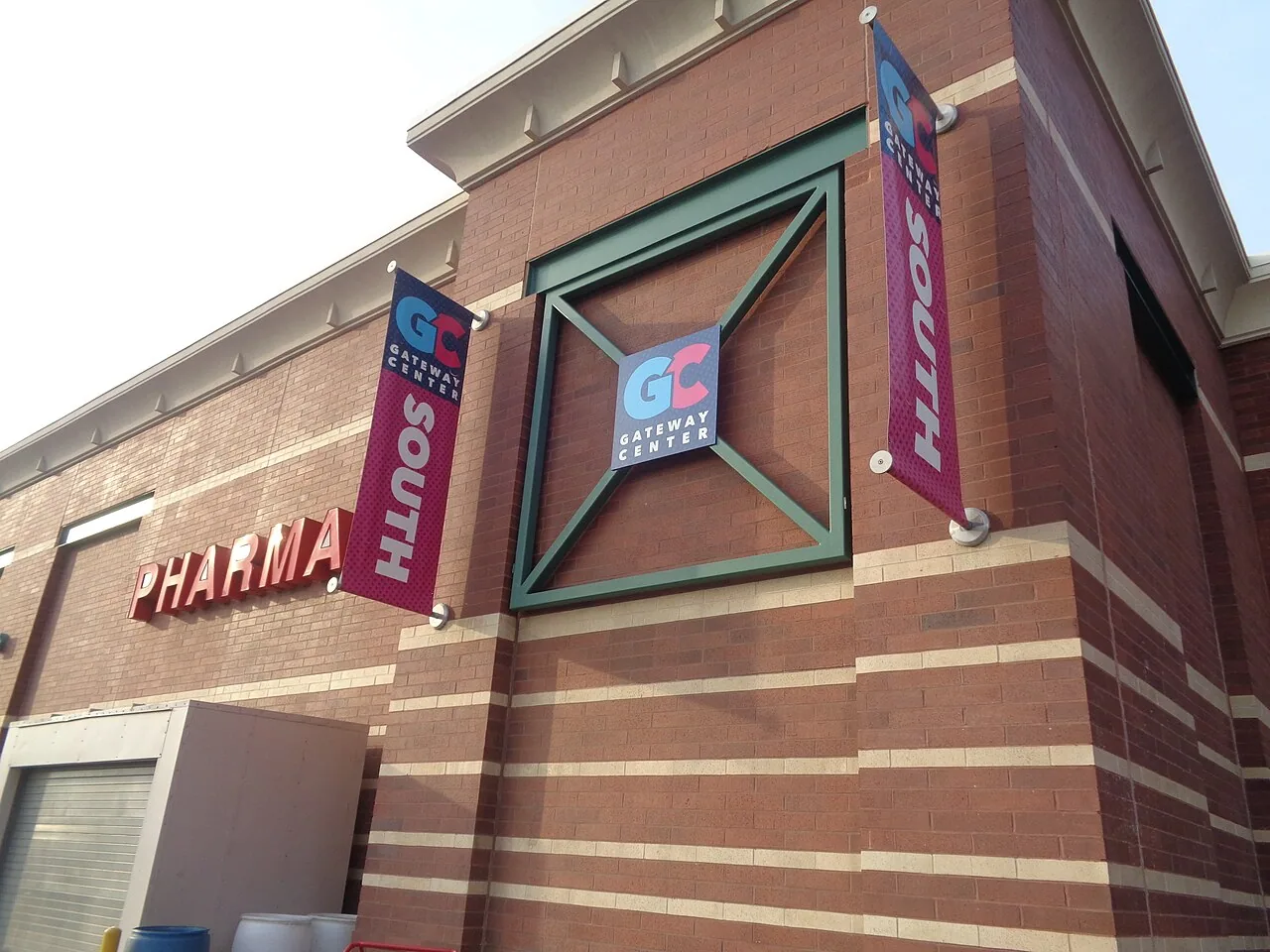
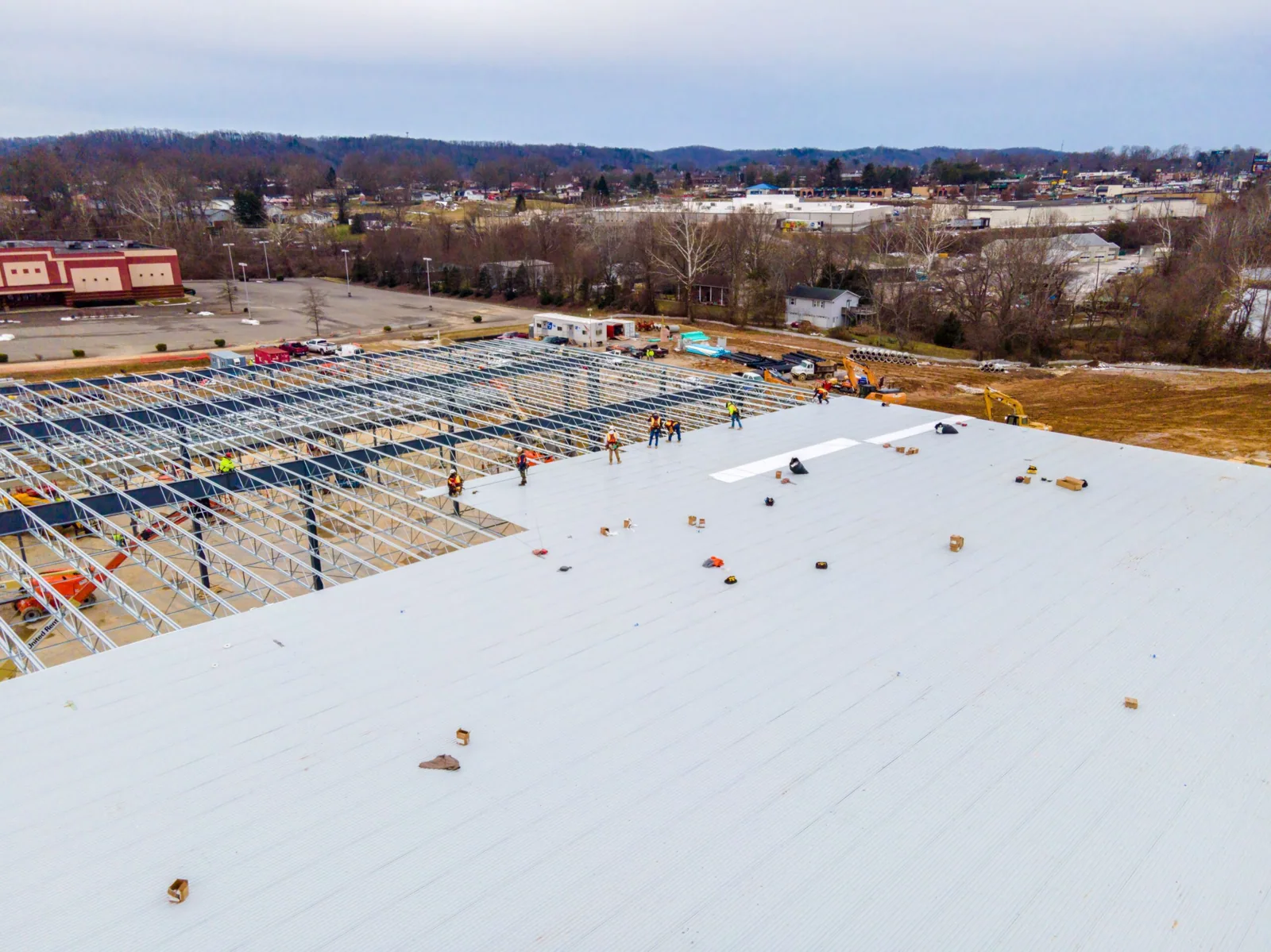
Retail and industrial properties are where silicone gets asked about. Kings Plaza is the borough's largest indoor shopping center, on a 23-acre plot in Mill Basin. Gateway Center in Spring Creek sits beside Jamaica Bay, and Canarsie Plaza on Avenue D has about 278,000 square feet of retail. Properties like these raise the questions that decide a silicone job: how many drains, how many curbs and how many old repairs. A coating can unify a surface that has been patched many times and seal the small gaps. The price per square foot sits well below a tear-off, and a shopping center roof can stay open to customers while the work goes on.
Why ponding matters to a coating
Silicone tolerates standing water better than most coatings. Acrylics can soften and lose bond when they sit wet for days. That is the main reason to choose silicone for a roof that ponds. It is not a reason to ignore the pond. Water adds weight, grows algae, collects grit and freezes in winter.
We measure the depth of each pond a day after rain and mark it. A shallow, brief pond is acceptable. A deep one that stays is a slope problem, and we fix it with tapered insulation, a new drain or a cricket before we coat. Ida's remnants on September 1, 2021 are a reminder that a pond needs somewhere to go. A ponding water repair comes first, and the coating comes after.
Prep, the part that takes the time
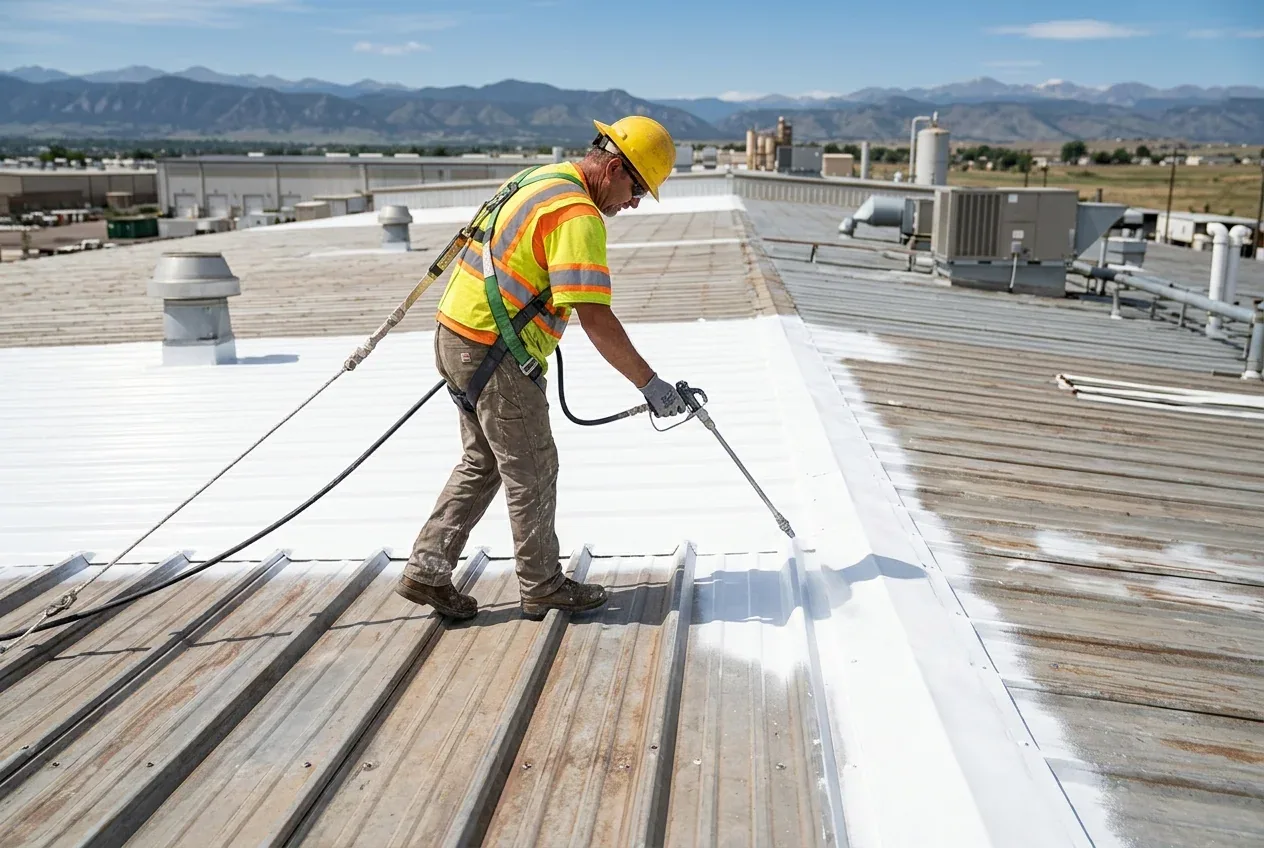
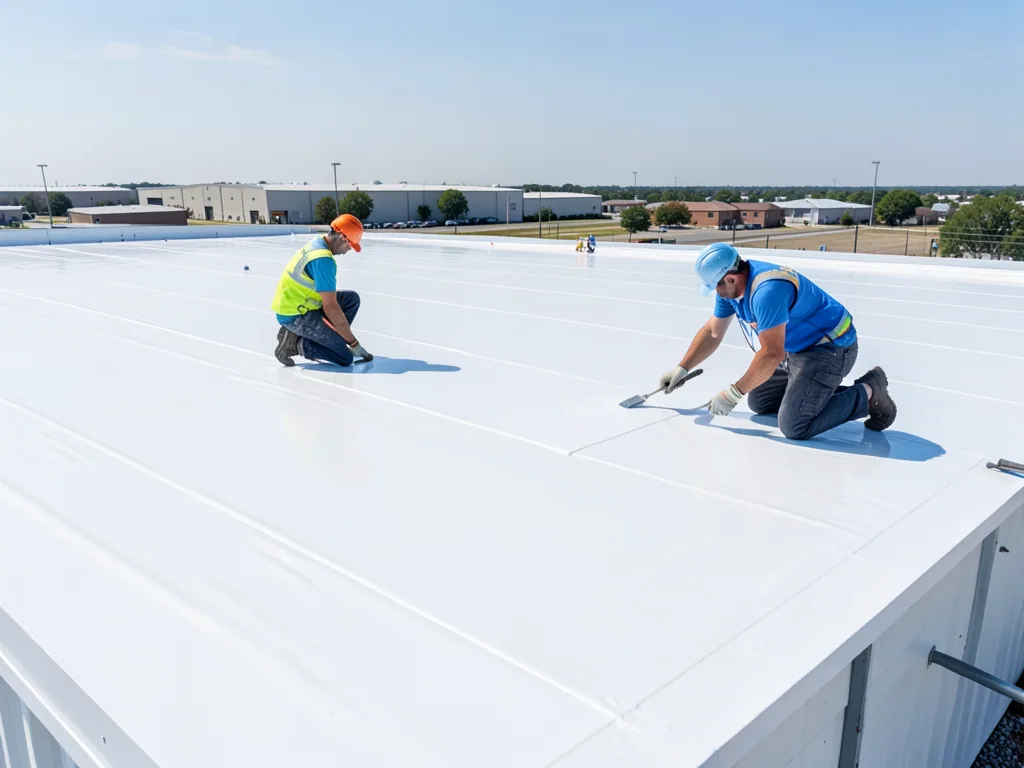
A coating is only as good as the surface under it. The roof is power-washed to take off dirt and chalk, and then it has to dry. Open seams are repaired and reinforced with fabric and mastic. Failed flashings are rebuilt. Penetrations are sealed with reinforced collars. Rust on metal is treated. Wet insulation is cut out and replaced.
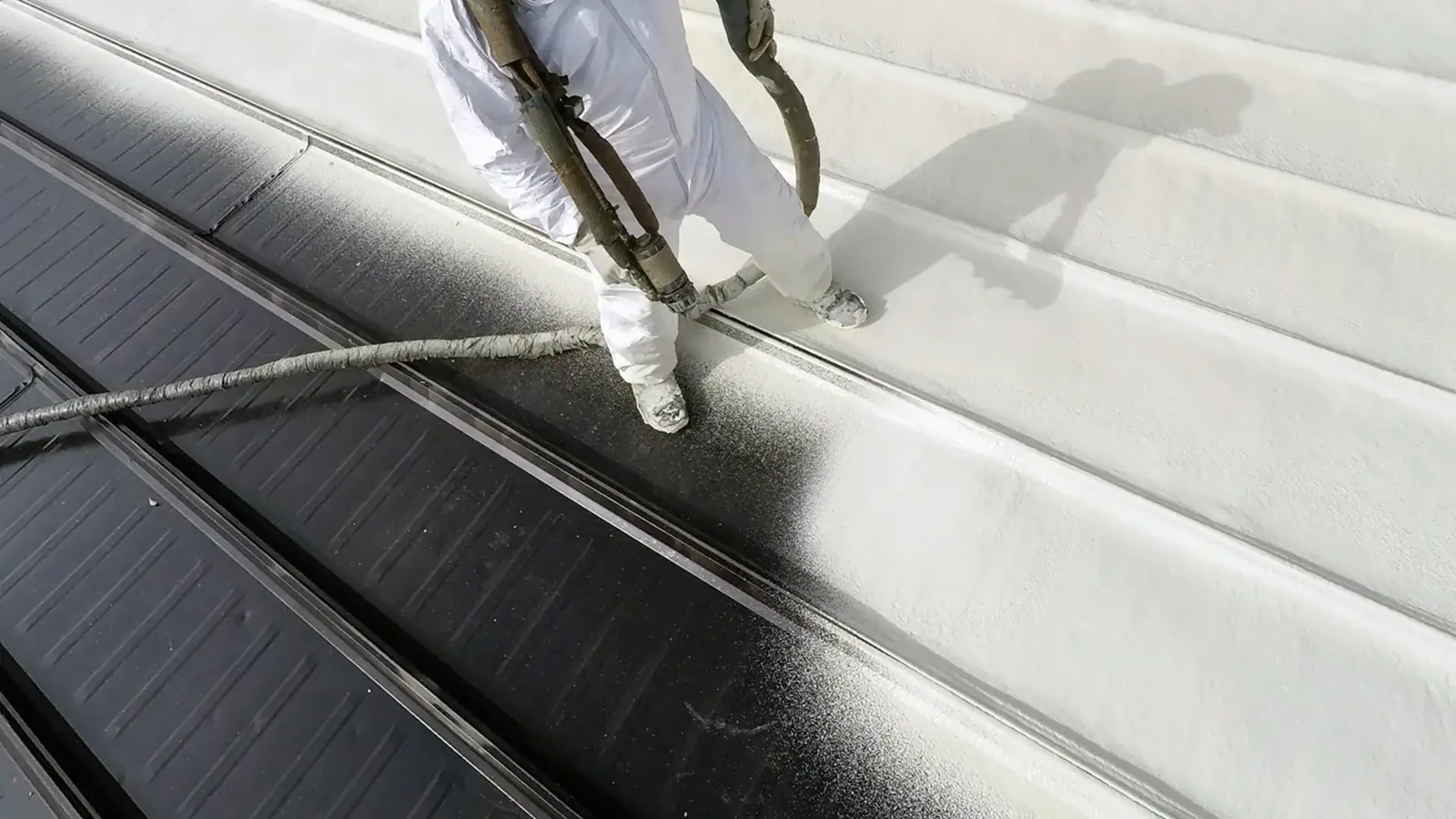
Each prepared area is photographed before it is coated, since the prep will not show afterward. The coating goes on in measured passes with a wet-film gauge, and we record the batch numbers. We work in the dry part of the day. Late-day thundershowers are frequent in summer, so the crew starts early and stops before the sky builds. Edges and parapet flashings go first, with a second pass to full thickness, and the field follows. On a large roof we coat in bays bounded by walls or seams, so every bay gets its own thickness reading, and a thin bay is recoated the same day instead of discovered next spring.
Dirt, heat and upkeep
Silicone picks up dirt. The surface stays slightly tacky and holds soot and pollen, which darkens it over a few seasons. A wash with low pressure restores some of the white. Where July highs run near 85 F under a strong heat island, the reflective surface earns its keep, and washing keeps it earning. The same logic drives cool roof installation with other materials.
Silicone is also hard to coat over with anything but more silicone, so the choice is a commitment. We write that in the file. Foot traffic scuffs the film along service routes, so walk pads go in. Snow near 30 inches a year does not trouble it, since the film stays flexible through the freeze-thaw swing. Check it each spring for lifted edges, scuffs and punctures, and patch them with the same product. Keep a small kit of the coating and a roll of reinforcing fabric in the building, labeled with the batch number, so a super can close a pinhole the day it shows up.
Closeout walk
The owner or super joins the final walk, which covers thickness, edges and drains, with a few spots hosed and the ceilings below checked. Nothing stays on the punch list when the crew goes. The file holds the adhesion test, the moisture map, the prep photographs, the batch numbers, the thickness readings and the warranty terms. If the numbers point to acrylic or to spray foam for a given roof, the report says so. The recoat date goes in the file, so the next coat is planned.
Commercial Roofing Questions
Can silicone go over our old coating?
Over silicone, yes, after cleaning. Over acrylic or another coating, it depends on adhesion, which the test patch shows. Some combinations need a primer, and some fail. We scrape, test and report before we price it. If it does not bond, we strip the old coat or choose another system, and we tell you what that costs.
How long before the roof can be walked on?
Foot traffic is usually fine the next day, after the surface has skinned over. A full cure takes longer, and temperature and humidity set the pace. Equipment and heavy loads stay off until the cure time is met, and walk pads go down on service routes first. A rain shower soon after application can damage a fresh coat, so we watch the sky.
Will silicone make the roof slippery?
It can be slick when wet. Walkway areas get a coat with granules, or walk pads. The survey marks the service routes, and we draw them on the roof plan. Staff should still take care on a wet coated roof, and the super should keep the pads clear of leaves.
Does a coating hide existing leaks?
It seals small gaps, but it does not cure a wet roof. We trace leaks and repair them before coating, so the film goes over sound substrate. Moisture trapped under a coating blisters it. If a leak recurs after coating, we open the spot, find the source and patch with the same silicone. Keep the photographs of the first leak for comparison.