Commercial Roofing in Mill Basin, Brooklyn, NY
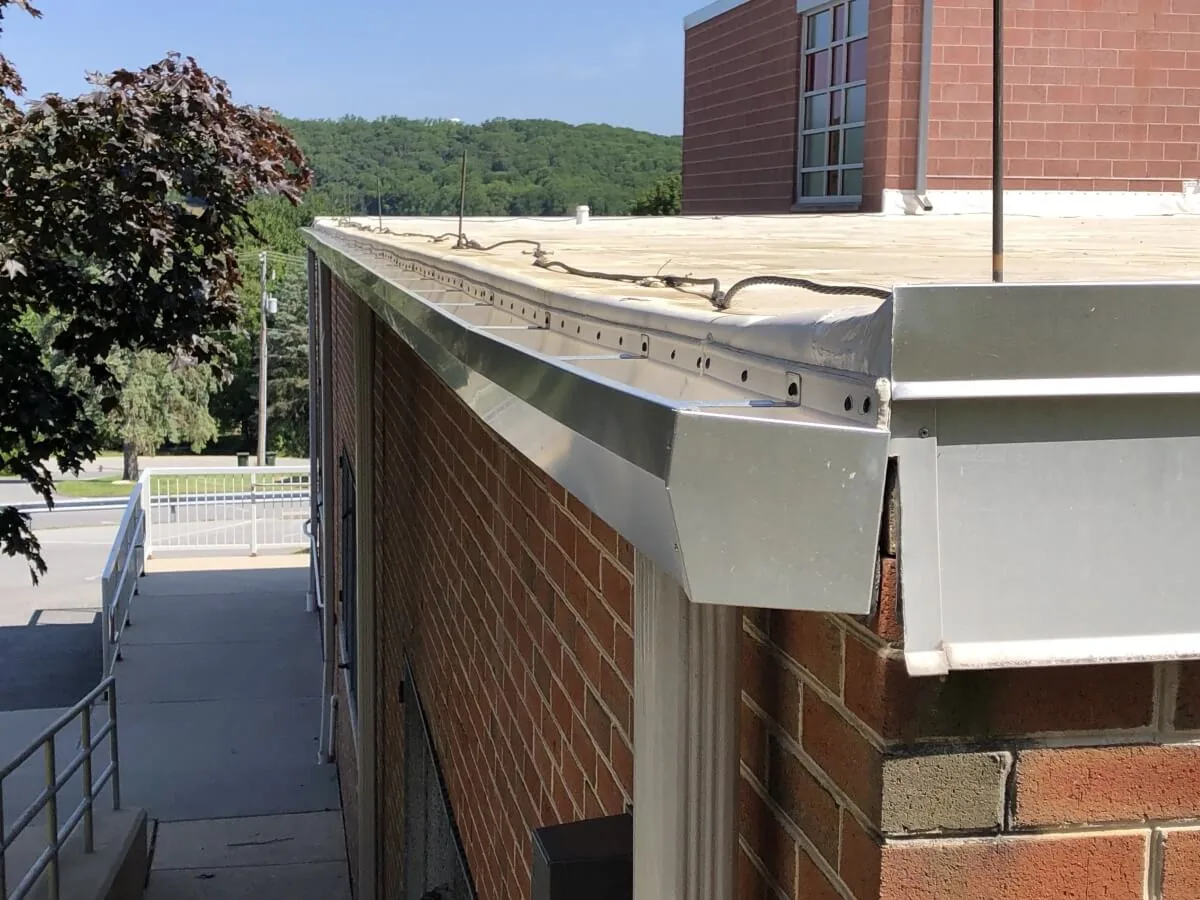
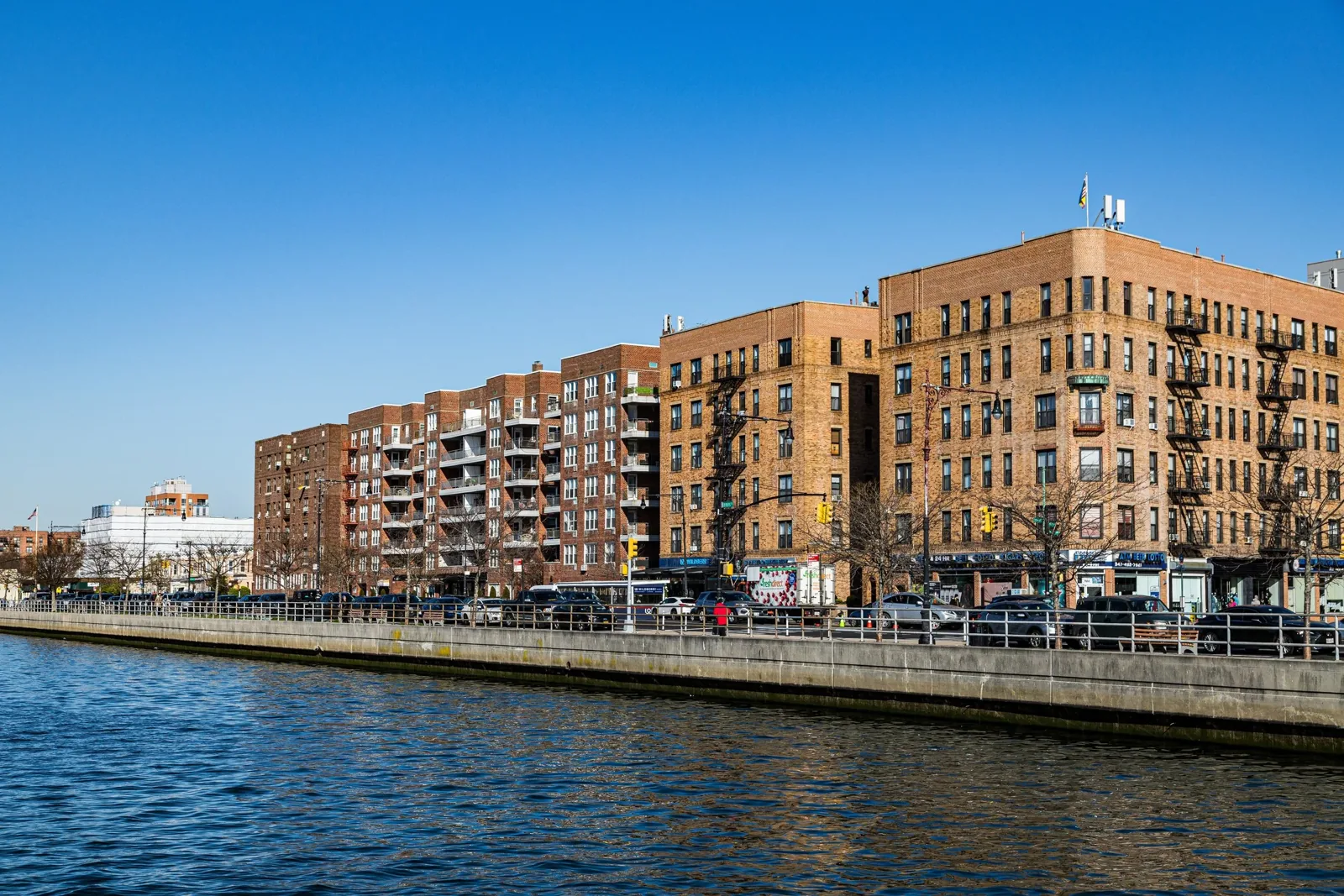
The ground under Mill Basin was marsh before it was filled, and the sky above it is wide open. A roof on that kind of site gets wind from the water side with nothing to slow it, and a roofer reading a building here starts at the edge: the coping run, the fascia, the corner flashing. Heavy industry is the zoning between Avenue U and the Mill Basin waterway, and the commercial activity along Strickland Avenue and Avenue U adds shops and offices to the mix. The roofs there tend to be flat and exposed.
The field gets walked, the soft spots get marked and each flashing gets a photograph before a scope goes on paper.
The heavy-industry strip
Heavy industry tends to mean big buildings with heavy rooftop equipment: exhaust, makeup air, process ventilation, sometimes tanks or stacks. The roof is a working surface as well as a lid. What a given building carries is for the scan and the cores to say. A moisture scan and a few cores tell us the layers, and a walk tells us what sits on top.
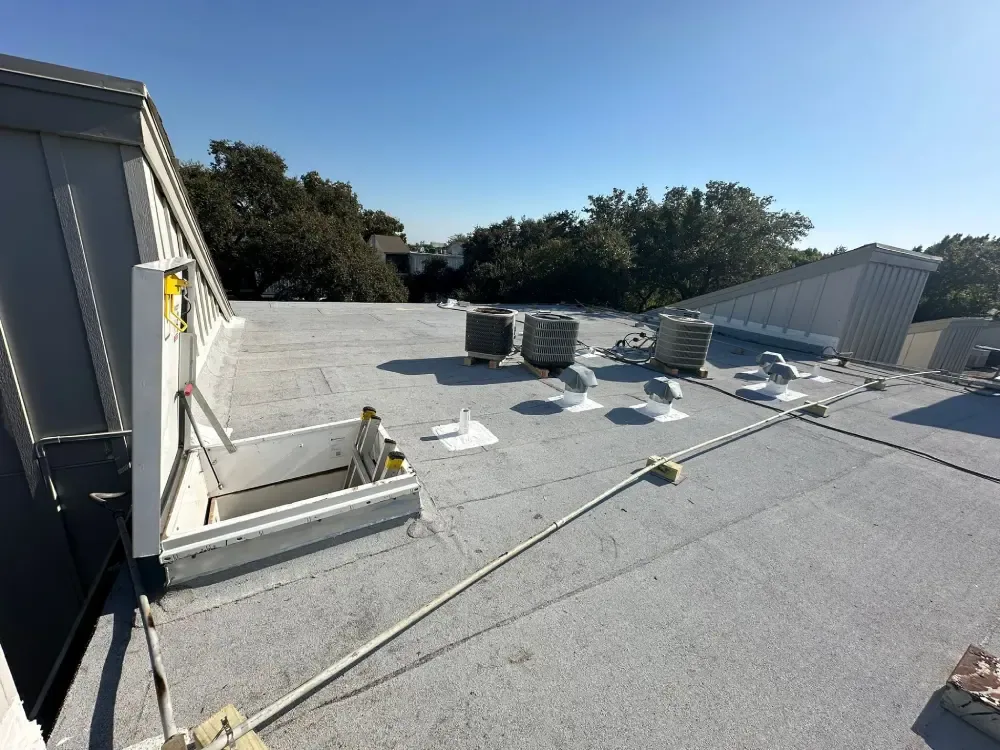
Equipment is the first thing to count. Every unit sits on a curb or a frame, and every frame is a set of penetrations. A frame that has shifted tears the flashing beneath it. We check the height of each base flashing, the condition of each cap and the drainage on the uphill side of the curb, then number them on the roof plan. A manufacturing plant roof and a warehouse roof in the same zone share many of the same failure points.
Process exhaust brings a quieter problem. Hot, damp or chemical-laden air leaving a roof fan can attack the membrane around it, and a grease or solvent film softens some materials and shortens their life. We note what each unit discharges and check the surface around it for softening, staining or blisters. Where the membrane is affected, a chemical-resistant sheet or a protective pad under the discharge is worth pricing.
Wind and water at the shore
Mill Basin faces its waterway, and the Belt Parkway crosses the district on its way to Canarsie Pier. Open ground near water means wind comes straight at the roof edge, and salt air wears metal faster than inland air does. Fasteners rust, trim pits, sealants harden. A coping joint that holds in a sheltered block can open here in two winters.
We check perimeter attachment on every walk: edge metal, cleat, fasteners, corner flashing. Resetting edge metal is typically the cheapest way to protect the most roof.
Because the district was largely filled marsh, drainage is also a concern at ground level, and a roof that dumps water to a stressed system compounds it. We trace each roof leader to its discharge point where access allows and flag any that spill onto pavement or a neighbor's roof.
Roads, docks and access
The Mill Basin Bridge was rebuilt between 2015 and 2019, and the road network around it shapes how trucks reach a roofing site. Material deliveries for a large roof are heavy and need a staging area. We plan the route, the staging spot and the hoist or crane location before work starts, because a delivery that cannot reach the building stalls the whole crew.
Loading docks matter the same way. A dock canopy ties into the main wall and takes water from two roofs, and the wet pavement below it is a safety item. We probe the canopy flashing and note any gap. Work around docks is scheduled so trucks keep moving.
Lead time is the other access issue. Permits for staging, sidewalk protection and crane picks take weeks, and the schedule counts them before a start date is promised. A crew that arrives without them stands idle, and the owner pays for it.
Shops along Strickland and Avenue U
Kings Plaza, Brooklyn's largest indoor shopping center, sits at Avenue U and Flatbush Avenue on a 23-acre plot. The smaller commercial buildings along Strickland Avenue and Avenue U sit near it. Roofs of that kind tend to have storefront parapets, a few rooftop units and drains that serve a modest catchment.
The checks are simple and specific: coping joints, counterflashing, curb sealant, the drain. A leak into a shop is cheap to fix when found at the parapet and expensive when found at the ceiling. Neighbors in Flatlands and Sheepshead Bay deal with the same kind of building.
Signs and lighting add penetrations to retail roofs, and a sign frame with a leaking base can drip for weeks before the ceiling stain is traced to it.
Cloudburst, snow and heat
On September 1, 2021 the remnants of Ida set off the city's first flash flood emergency, and a drain sized for ordinary storms is the first detail rain like that exposes. On a wide flat roof the water climbs the parapet before it finds an outlet. Winter brings snow of roughly 30 inches a year, and a single January day in 2016 dropped 27.3 of them, while July adds a strong heat island and highs close to 85 F. A dark surface bakes sealants and softens bitumen; where the layers below are dry and sound, a reflective membrane takes that heat down. A modified bitumen roof is a common multi-ply choice for a heavy-traffic industrial roof.
The seasonal routine is simple: drains and leaders before the wet season, edges and flashings before winter, sealants before summer heat. Each check is dated and photographed, which also supports an insurance claim if a storm does damage.
Between seasons we walk the roof once more and note which edges, seams and curbs changed, so the rating stays current.
The fix in order
The order starts at the drains, with the soft spots marked. A scan and cores then sort the roof into repair, recover or replacement. Fix the edge before storm season. A dry core and a sound deck allow a recover. Replace where the scan shows water throughout.
Winter work is mostly repair and dry-in. Weather decides what membranes and adhesives can do, so rain days and wind days are built into the schedule; sheets and panels cannot be handled safely in strong gusts. The closing walk produces a short punch list of touch-ups, a missing fastener or an open lap.
Commercial Roofing Questions
Why do coping joints open faster near the water?
Wind, salt air and the freeze-thaw swing all work on the joint. Sealant hardens, fasteners rust and the metal moves. We probe the joints on every walk and reseal or replace the weak stretches before storm season.
How do we plan roof access for a heavy-industry building?
We plan the delivery route, the staging area, the hoist or crane position and the dock schedule before the first day. Trucks keep moving, and the crew has a clear path to the roof.
Can equipment be moved during a reroof?
Often, with the operator's agreement. Rooftop units are lifted, the curb is rebuilt or raised and the unit is set back, sometimes in one shift. We coordinate with the mechanical contractor so there is no long shutdown.
What is the cheapest repair that protects the most roof?
Edge metal and drain work. A tight edge keeps wind from starting a tear, and a clear drain keeps water from sitting on the membrane. Both take little time when found early.
What starts the first visit?
Photos of the worst drain and of the edge metal on the wind side, with the address area and the roof age, are enough to book it.