Commercial Roofing in Flatlands, Brooklyn, NY
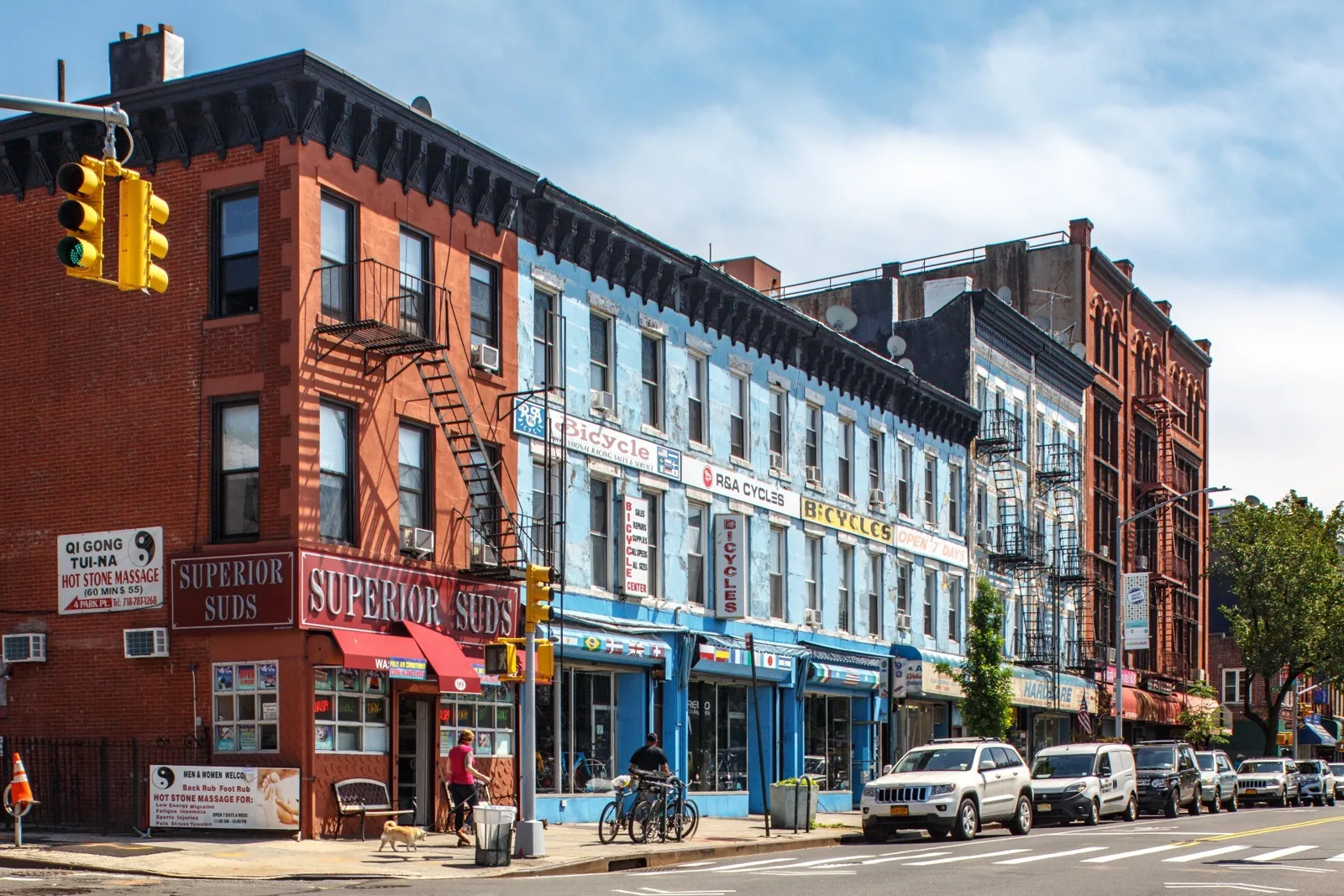
Behind a row of storefronts on a shopping street runs a back lane, and from it the parapet tells the story. A rear wall with a dark water streak below the coping tells the whole story in one glance: the joint is open, the flashing has pulled and the roof behind it has been shedding water into the brick for a winter or two. Flatlands is a district of shopping streets. Ralph Avenue, Utica Avenue, Flatbush Avenue and Avenue N carry the main retail, and the roofs behind those frontages are where the work is.
No scope is written until the field has been walked end to end, with soft spots flagged and every flashing photographed.
Roofs behind the shopping streets
A shopping street often means a run of attached buildings with shared walls, flat or low-slope roofs and a parapet along the front and the back. A walk shows how a given building is built. What we look for is the same on all of them: the coping joints, the counterflashing at the party walls, the drain and the scupper, the rooftop units that a tenant added.
Shared walls are the special trouble. Where one roof ends at the wall of the next, the flashing has to climb and cover the joint, and often it belongs to neither owner. Water at that line runs sideways into a neighbor's ceiling. A commercial roof inspection of the tie-ins, with a report that assigns each repair to an area, lets neighbors settle costs on evidence.
Rooftop units come next. A tenant who adds a condenser or an exhaust fan leaves a curb and a sealant line, and the next tenant adds another. Over the years a roof collects them. We number each one on the plan, check the height of the base flashing and the condition of the cap, and note which are abandoned and can be removed and capped.
Big retail and what it teaches
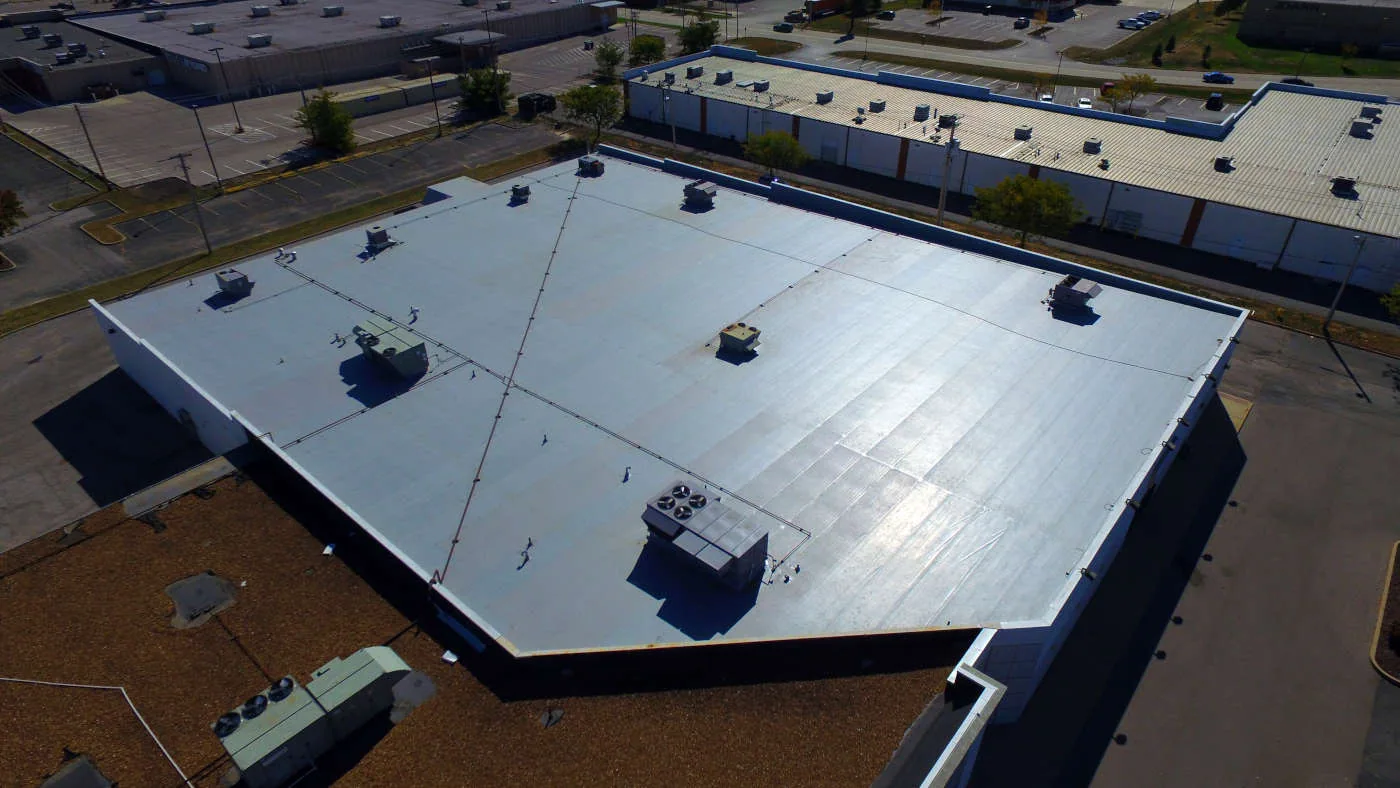
Kings Plaza sits at the border of Flatlands, Marine Park and Mill Basin, and a large indoor retail complex like that shows what big flat roofs need: a drainage plan, a dense set of rooftop units, a clear overflow path and a schedule that keeps stores trading. Smaller retail in the district borrows the same checks at a smaller scale.
Every rooftop unit gets mapped, every curb and flashing inspected and every water path followed off the roof. A drain that serves a large catchment is the single most important detail. Basket, bowl, leader and overflow get checked in that order. For owners of larger retail space, the shopping center roof approach scales down to a single building.
Large retail roofs also carry signage, lighting and sometimes solar. Each is bolted through or ballasted onto the membrane, and the flashing at the post or the frame is where leaks start. We locate every one and reseal the ones that have lost their bond.
Rail lines on the edges
The freight-only Bay Ridge Branch forms the northern boundary of Flatlands and Avenue U the southern. Buildings that sit close to a rail line may have loading docks, canopies and yard-facing walls with drainage that gets less attention. Dock canopies tie into the main wall and take water from two roofs.
We probe the canopy flashing and mark any gap. A dock canopy is a small roof with a big job, and a leak there makes wet pavement at the dock, which is a safety item. Neighbors in Mill Basin and Canarsie deal with the same edge-of-district buildings.
Yard-facing walls on rail-edge buildings take blown debris and dust, which pack the scuppers faster than leaves do. Two clearings a year cost little against a soaked ceiling, and on a shared rail-edge block it is worth asking the neighboring owner when the last one was done, since a packed outlet next door can send water across the line, and a photograph of each outlet before and after goes into the file.
Kings Highway and the older core
Kings Highway is cited as the historical center of the area, and older commercial buildings along a historic spine tend to have older roofs. Age shows in the layers. A tar-and-gravel build-up with a recover and a coating on top holds weight and trapped moisture. Cores reveal the layers on the deck and whether the lower ones are dry.
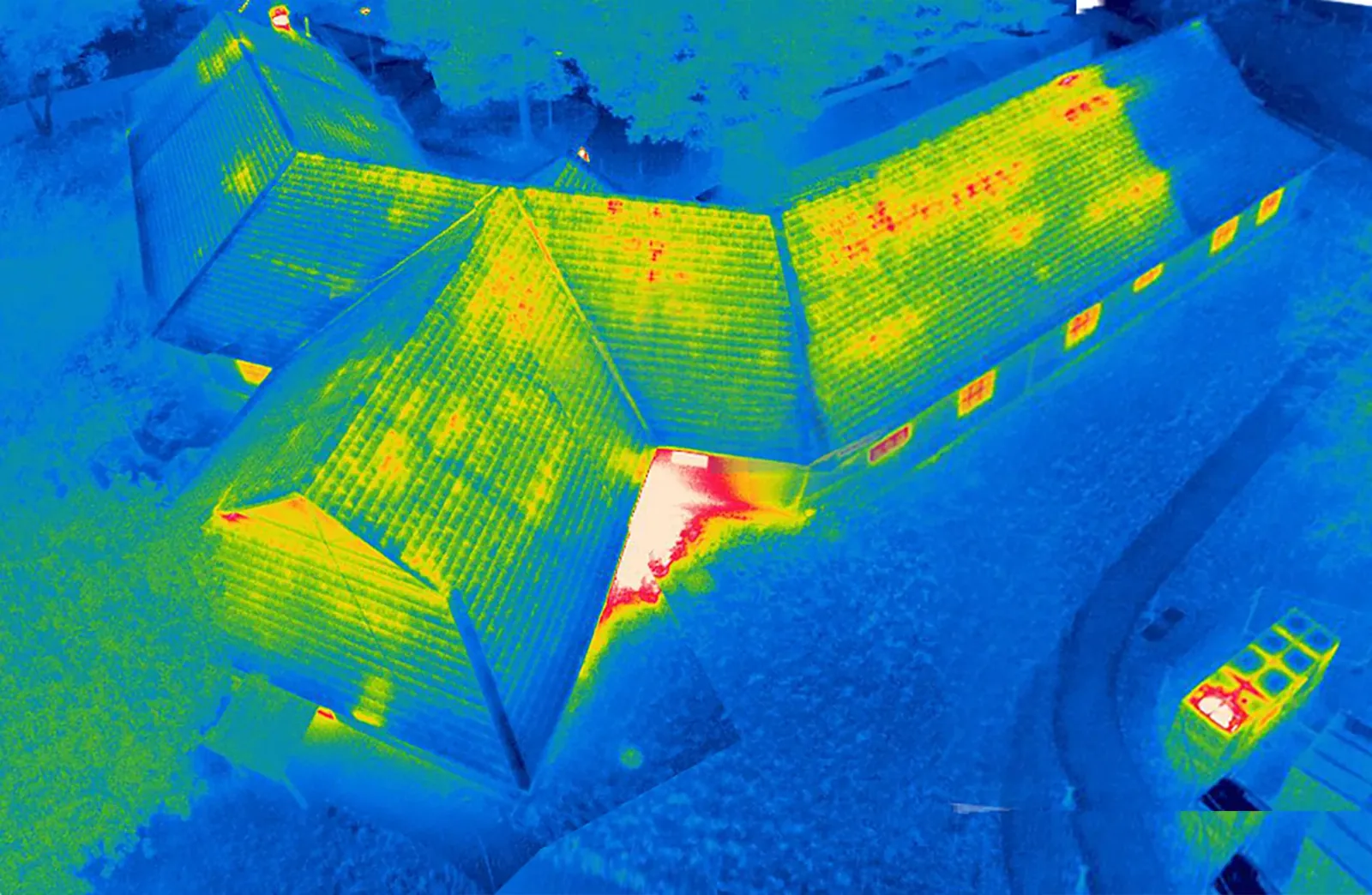
That count decides whether another recover is allowed at all. If the insulation is dry and the deck is sound, a coating or a recover may add years. If it is wet, it comes out. Our infrared moisture surveys mark the wet areas before any core is cut.
Parapet and cornice details are another sign of age. A masonry cornice with a cracked joint feeds water into the wall below, and repointing the joint comes before any new flashing goes over it.
Cloudburst, snow and heat
Ida's remnants arrived on September 1, 2021 with the city's first flash flood emergency. A drain that copes with a normal rain can overflow in a cloudburst, and the water climbs the parapet flashing. A winter of roughly 30 inches of snow, with its freeze-thaw swing, pries open weak seams and coping joints. July highs near 85 F, helped along by the heat island, bake the sealants and soften the tar on a dark roof over a shop. We check drains, seams and coping before each season and photograph the result.
Perimeter fastening gets a close look on every walk.
The fix in order
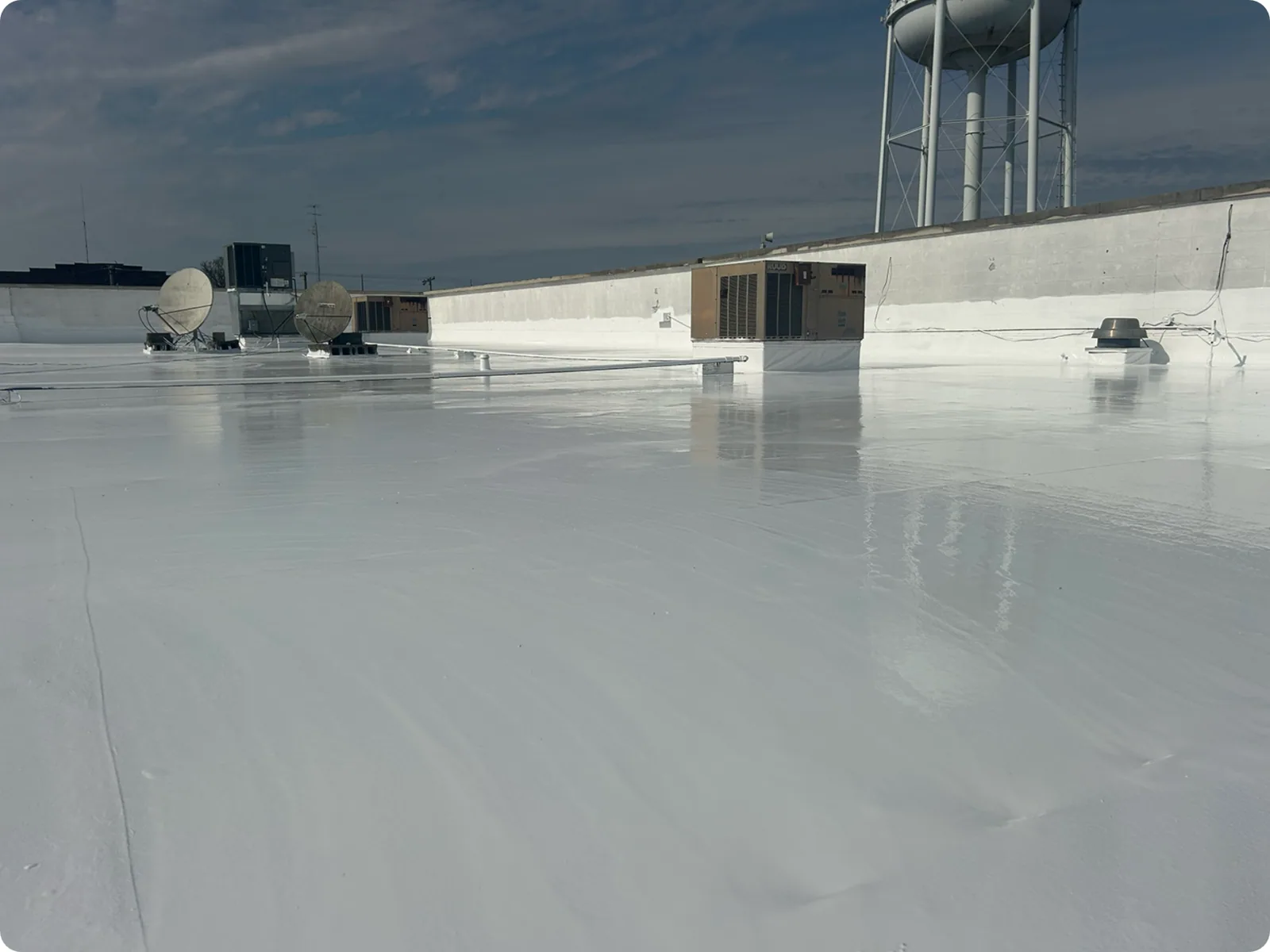
Active leaks are dried in first, a scan and cores follow, and the roof is then sorted into repair, recover or replacement. Coping and flashing get repaired first, since they are the cheapest leaks to fix. Where the roof is dry under a worn surface, a roof recover may work, and wet roofs come off. Winter work is mostly repair and dry-in.
Weather sets the calendar. Drains get cleared before the first freeze, since ice in a bowl can crack the clamping ring. Whatever remains after the last walk goes on a short list: sealant touch-ups, a cap fastener, an open lap.
Tenants on a shopping street want to know three things: when the crew arrives, where the loud work happens and when the roof is dry again. The written schedule answers all three before the first day.
Commercial Roofing Questions
Who pays when a shared parapet wall leaks into the next building?
The answer comes from the survey's evidence. The water is traced, the entry point marked on a numbered plan and the roof area it belongs to stated. With that record, the two owners can split cost without a dispute.
Does the shop have to close for a roof repair?
Yes. Stores keep trading because the roof is worked in zones, dried in every shift, with the loud stages early or after hours. Interior protection goes up under the open area.
How many layers can an older commercial roof carry?
The deck and the code set the limit. A core log shows what is already on the roof, and the structure is checked before another layer is added. A saturated or heavy assembly points to tear-off.
What is the most common leak on a storefront roof?
A cracked coping joint or a pulled counterflashing at the parapet, and then the curb around a rooftop unit. Both are cheap to fix early and costly after the wall has soaked.
What do you need before the first walk?
An address area, a roof age, one photo of the wettest drain and one of the wall that stays wet.