Spray Polyurethane Foam Roofing in Brooklyn, NY
Count the pipes on a crowded flat roof in Red Hook. Vents, conduit, a hatch curb, two air units, a satellite mount and a rail for a window rig are not unusual. Every one is a flashing, and every flashing is a seam. Spray polyurethane foam, SPF, answers that roof differently. Two liquids are sprayed onto the roof and expand into a rigid foam that flows around every pipe and curb and hardens into one continuous layer. A coating goes on top. For the crowded flat roofs of Brooklyn, NY, it can mean far fewer joints to leak. It also asks for a clean, dry roof and calm air.
What you see up there
The roofs that suit foam are the ones where cut-and-patch has run out of room. Look for repairs layered on repairs around curbs, mastic smeared at every pipe, pitch pans cracked and shrunken and low spots that hold water around the equipment. A sheet roof with that many details leaks wherever the next patch fails.
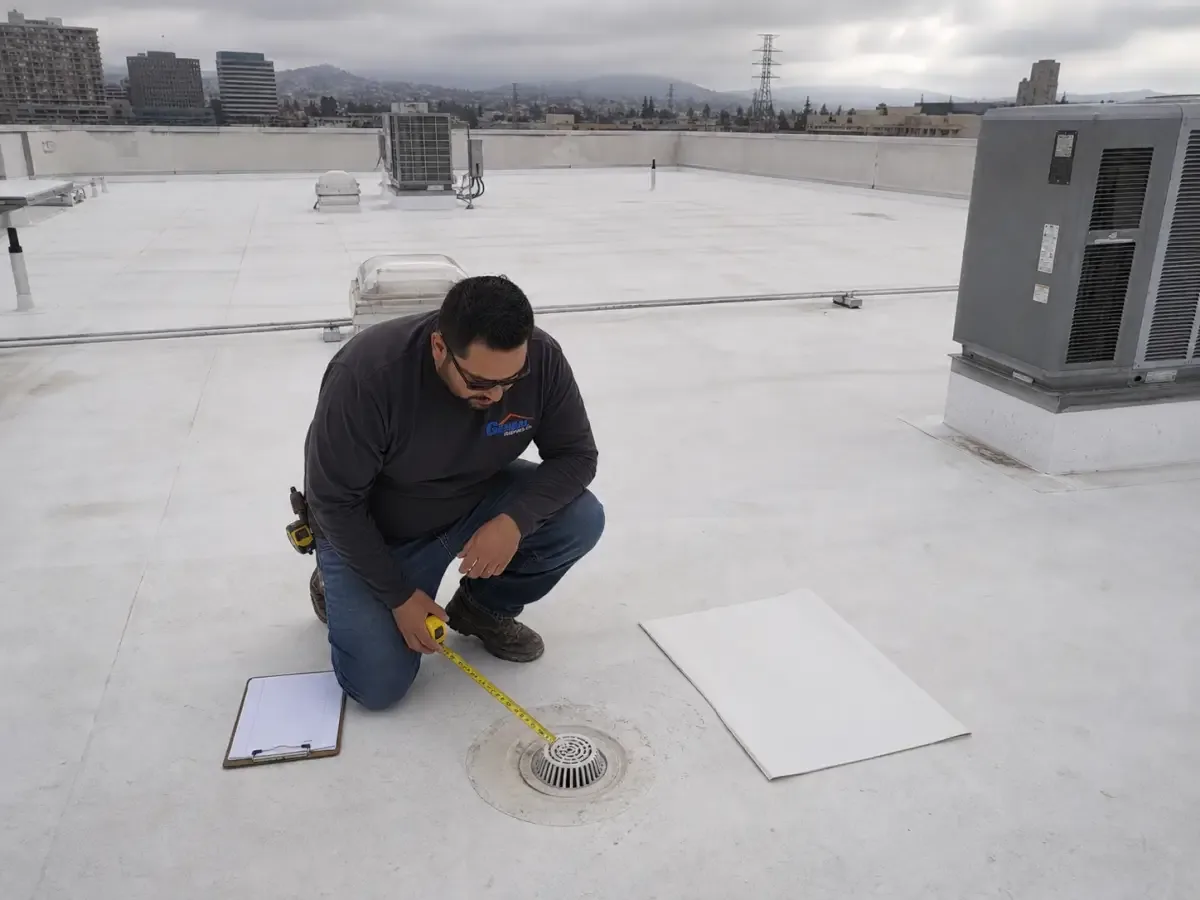
We map the penetrations, probe the old surface and cut cores. A foam roof needs a dry, firm base, so wet insulation comes out first. A clean, dry old built-up or modified bitumen surface can stay. A gravel surface is swept or removed and primed. The survey also finds the low spots, because foam can be sprayed thicker in a low spot to build slope toward the drain. The plan marks every pipe and curb we will spray around.
How a foam roof goes down
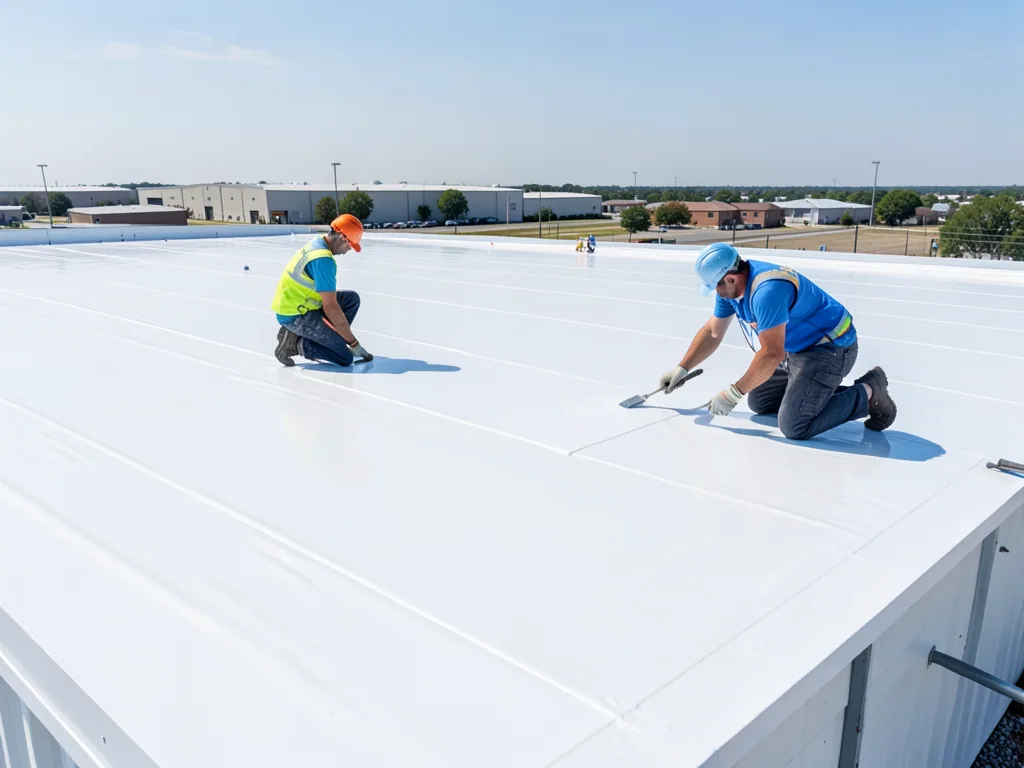
The roof is cleaned, repaired and primed where the maker requires it. Foam is sprayed in lifts of about an inch to reach the target thickness, and the thickness is checked with a gauge at a grid of points. The surface is trimmed to an even texture and coated within a short window, because sunlight breaks down raw foam fast. The coating, silicone or acrylic or a polyurethane topcoat, is what protects the foam from sun and water.
Foam is two products in one roof, and the owner maintains both. A silicone coating sheds standing water well, and an acrylic coating wants a roof that drains. The topcoat is renewed on a schedule. Granules go into the coat on walking routes. A puncture in the coating exposes foam and gets patched promptly, because raw foam left in the sun for even a few weeks starts to break down and then holds water like a sponge.
Why this building
Waterfront roofs take wind and wet. Red Hook was heavily damaged by Hurricane Sandy, with flooding up to 4.5 feet in Brooklyn and large parts of the neighborhood underwater. The Red Hook Container Terminal is the only maritime facility in Brooklyn that handles container ships, and IKEA's 346,000-square-foot store opened in 2008 near the Gowanus Expressway. Coney Island's peninsula tops out near 7 feet above sea level.
A roof near the water gets a closer look at wind, salt and drains. Closed-cell foam resists soaking up water, and a continuous surface leaves no seam for wind-driven rain to find. Built-in slope helps a roof that ponds. On a roof in Red Hook or along the Coney Island shore, we ask what the roof does in a storm, and the answer shapes the plan. A built-up roof base under the foam is checked for blisters first, because trapped moisture there can lift the spray.
Overspray, wind and neighbors
The spray mist drifts. On a roof with windows, parked cars and people below, overspray is a real risk, so spraying stops above a set wind speed and screens go up around the work area. Spraying stops at wind speeds far below those of the EF2 tornado that crossed Bay Ridge in 2007, and we watch the forecast the day before. Temperature and humidity affect the cure, so we spray inside the maker's range and log the readings.
Neighbors and tenants get notice. Air intakes near the roof are shut or covered during spraying and the short cure, and tenants are told which days to expect odor. In an occupied building the work runs in the same strips used on any occupied building, with extra care around intakes, windows that open to the roof and the bulkhead door. A person on the ground watches the street.
Drains, snow and heat
Foam lets us build slope into the roof, but the drains still have to work. A day after rain, check the sump at each drain. A downpour like the one on September 1, 2021, when Ida's remnants drove a flash flood emergency, exposes every roof that holds water, and slope is the fix. We cut the foam back around the drain bowl and protect the strainer from coating.
Snow near 30 inches a year and the freeze-thaw swing test the coating. With July highs near 85 F, a reflective topcoat earns its keep. Foot traffic and dropped tools are the main enemies, and a walk pad on every service route costs far less than a patched coating. Walk pads go along service routes, and the coat gets checked every spring and fall.
Closeout walk
The final walk with the owner or super covers the thickness readings, the penetrations and the drains, with a few spots hosed. Every punch list item is closed out before demobilizing. The file holds the substrate findings, the thickness grid, product batches, weather log, coating thickness and warranty terms. A roof coating restoration later follows the recoat date written into the file. Foam roofs reward owners who look at them twice a year, with the same camera angles each time. Keep a spare gallon of the topcoat color in the building for small repairs, and note its batch number in the file so the patch matches the roof.
Commercial Roofing Questions
Can foam go over our existing roof?
Often, if the old roof is dry, firmly attached and clean. We scan for moisture and cut cores, remove wet insulation and test a small sprayed patch for adhesion. Gravel gets swept or removed. A surface contaminated with oil may need cleaning or a different system. You keep the building working during the job, because there is no tear-off on a roof that qualifies.
What happens if it rains while we are spraying?
Spraying stops, and the finished work is covered. Foam will not bond to a wet surface, so a section that gets wet is dried and checked before work resumes. We plan each day's area so that the foam and the coating are both done before the forecast turns. Summer thundershowers often hit late in the afternoon, so spraying starts at dawn and stops early.
Does foam work on a roof with a lot of pipes?
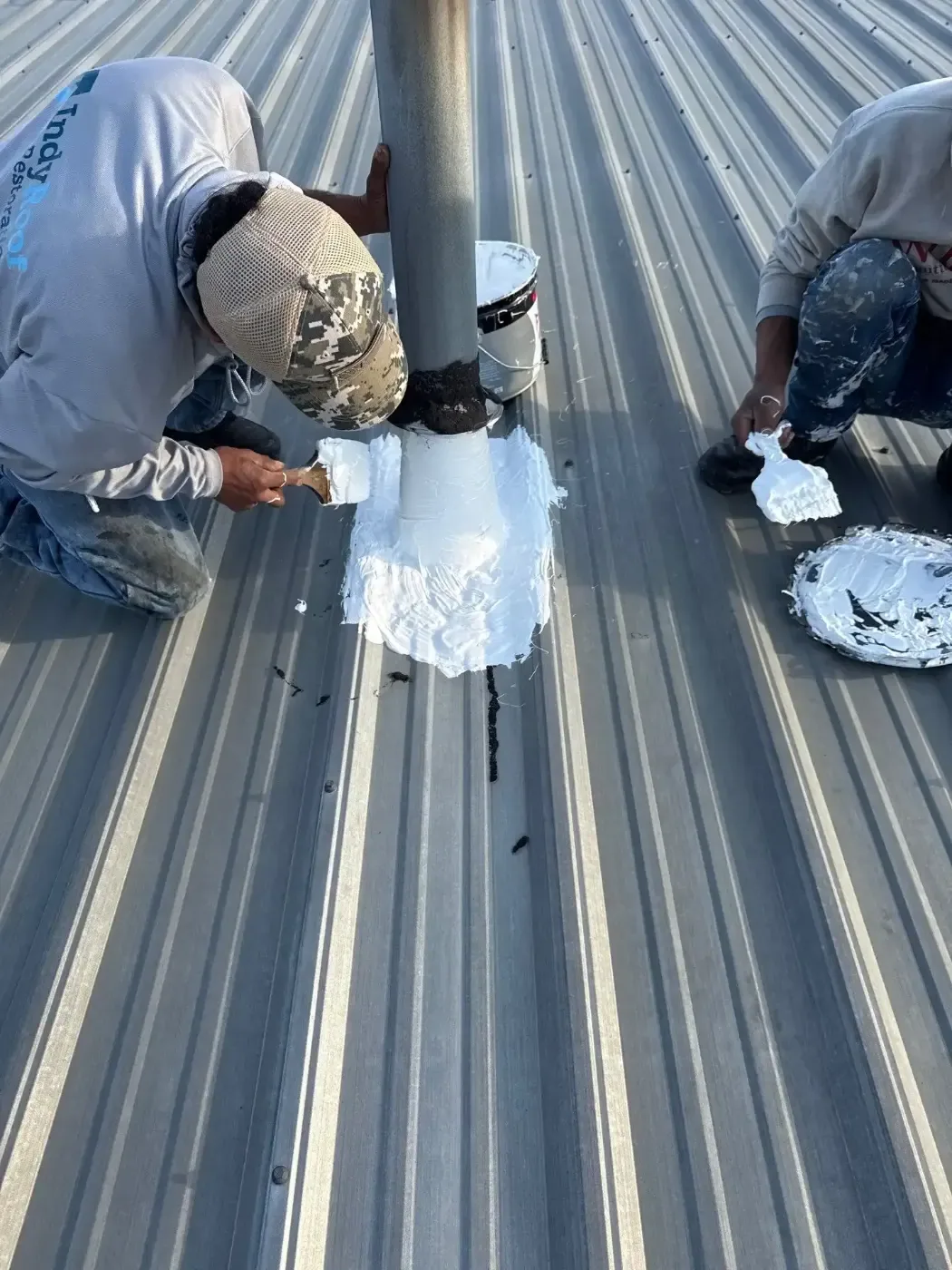
That is its best case. The foam flows around penetrations and forms the flashing as part of the spray. Each pipe is cleaned and primed first, and the coating is carried up and over the top. There are no cut corners to leak. We still check each penetration by hand at the end.
How thick should the foam be?
It follows the insulation value the code requires, the slope we need to build and the maker's range. We gauge thickness at a grid of points and record the readings. An even layer matters more than the thickest number. The code covers energy efficiency in Chapter 13 and roof assemblies in Chapter 15, and we check both before pricing.