Fire Damage Roof Repair in Brooklyn, NY
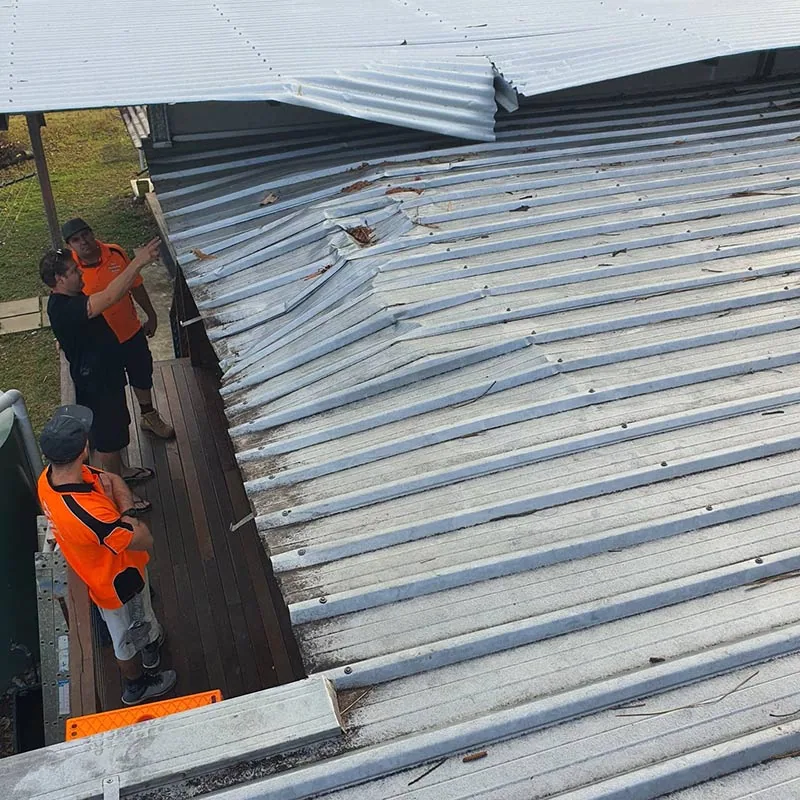
The morning after a fire in a Brooklyn, NY loft building, the roof reports in from the top down. A square cut by the fire crew to let the heat out. A ring of blistered membrane around it. Black scorch marks where flame came out of a window. A smell of burnt tar that carries to the street. None of that shows how far the heat traveled below the surface, and that distance decides whether the roof can be saved. A deck that has lost strength can carry a membrane that still looks whole. Nobody should step onto the roof until the fire department has released the building and an engineer has cleared the deck. After that, the recovery begins with a dry-in.
Clearance before boots
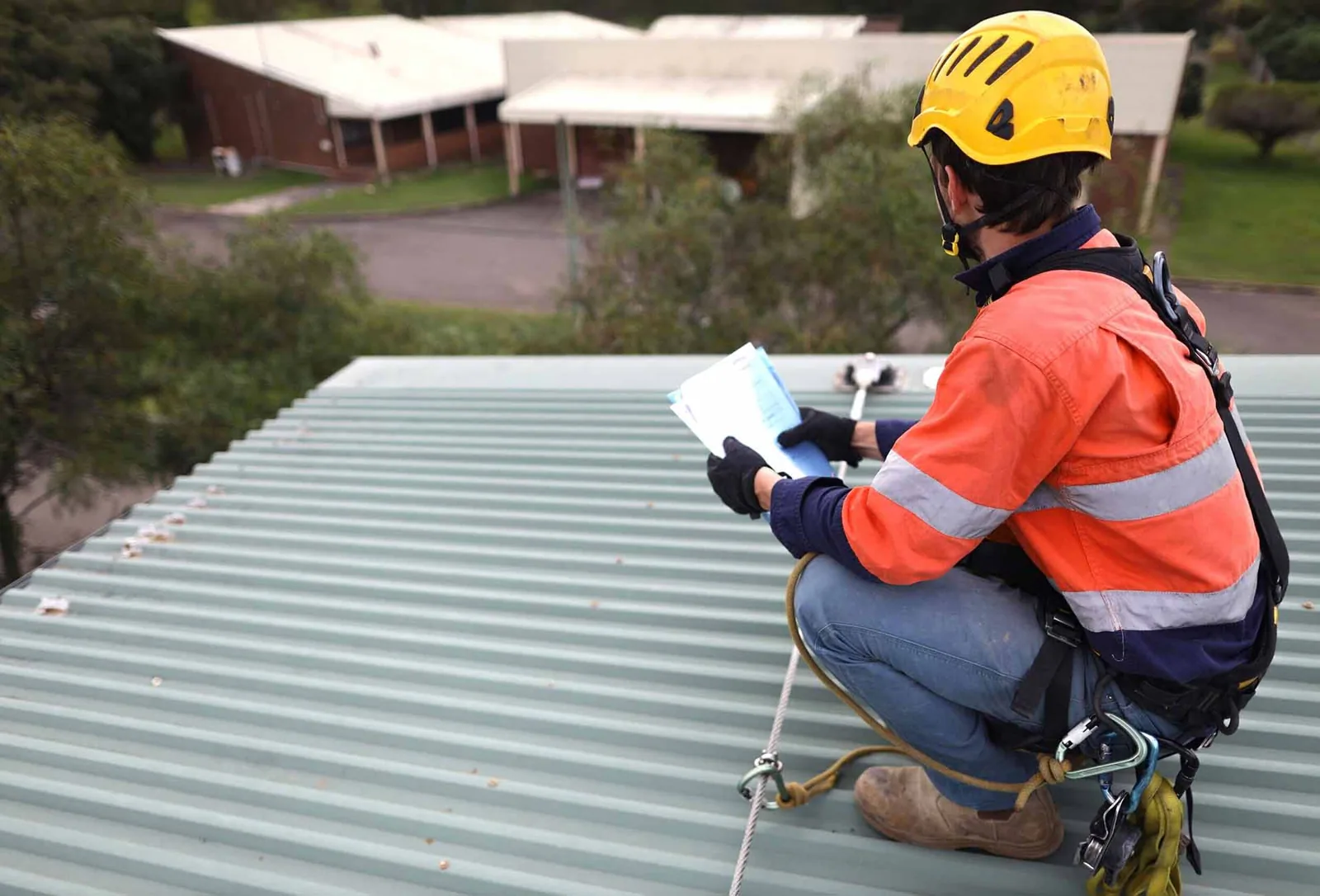
The order is fixed. The fire department releases the building. A structural engineer checks the deck and its supports. The owner notifies the insurer. Only then does a surveyor go up. Heat weakens steel decks and joists, chars wood, cracks concrete and spalls brick parapets, and a deck that has been through a fire can give way under one person's weight. With the roof closed to foot traffic, a drone flight can record the surface and photographs from inside show the underside.
Once cleared, the walk checks for sag, open penetrations, hot spots and bare insulation. As soon as the engineer approves, temporary protection goes on, because rain after a fire drives water into a building that has lost its defenses. Photograph the roof from the street before anything is moved.
Attached buildings add a second concern. Fire and water cross party walls, and a roof that looks untouched next door may carry soot or heat from the loss. With permission, the survey walks the adjoining roofs. Where a party-wall parapet was damaged, both owners have to agree the repair, since the wall belongs to both. That agreement goes into the plan early, so a dispute over one flashing does not hold up two roofs.
Layer by layer
The membrane shows the most and explains the least. A thermoplastic sheet shrinks and curls toward the heat. Bitumen blisters and runs. EPDM chars. Insulation answers differently: foam boards shrink, melt or burn, and boards soaked by hoses lose their value. The deck may be steel, wood or concrete, and each reacts to heat in its own way.
Smoke leaves a separate record. It soaks into insulation, corrodes metal and leaves an odor that moves through the building. The deck is tested where heat reached it, and an infrared scan and cores look for wet insulation, which is almost certain after a fire. The damaged section is cut out and replaced, and the new work is tied into the sound roof around it. Keep the fire department report in the roof file.
Hose water and the next rain
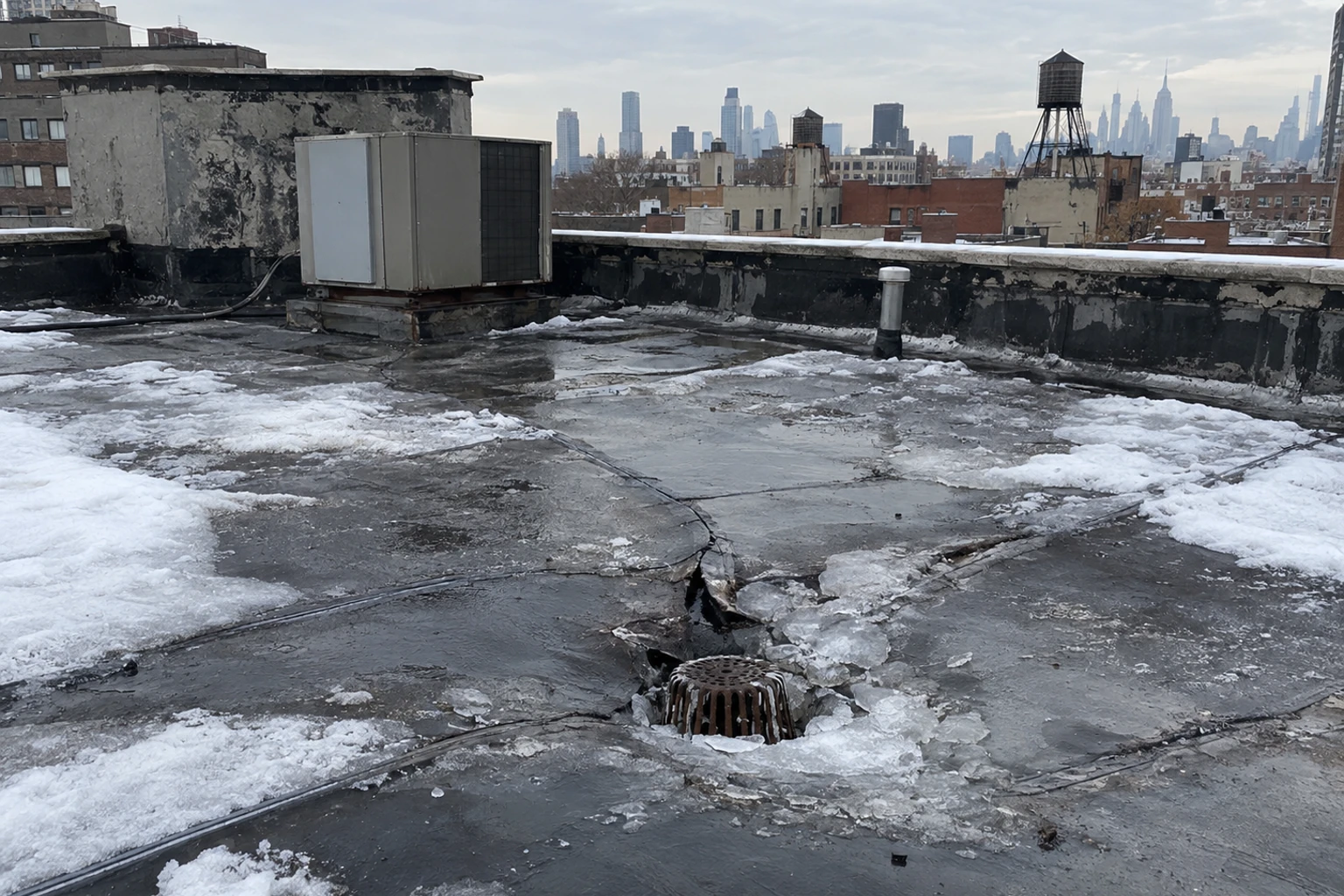
Water used to put out a fire runs through the structure and soaks the insulation within hours. Then comes the weather. Precipitation runs near 49.5 inches a year across New York City, summer thundershowers often arrive late in the day, and Ida's remnants prompted the first flash flood emergency the city ever issued on September 1, 2021. A burned roof left open cannot take any of it.
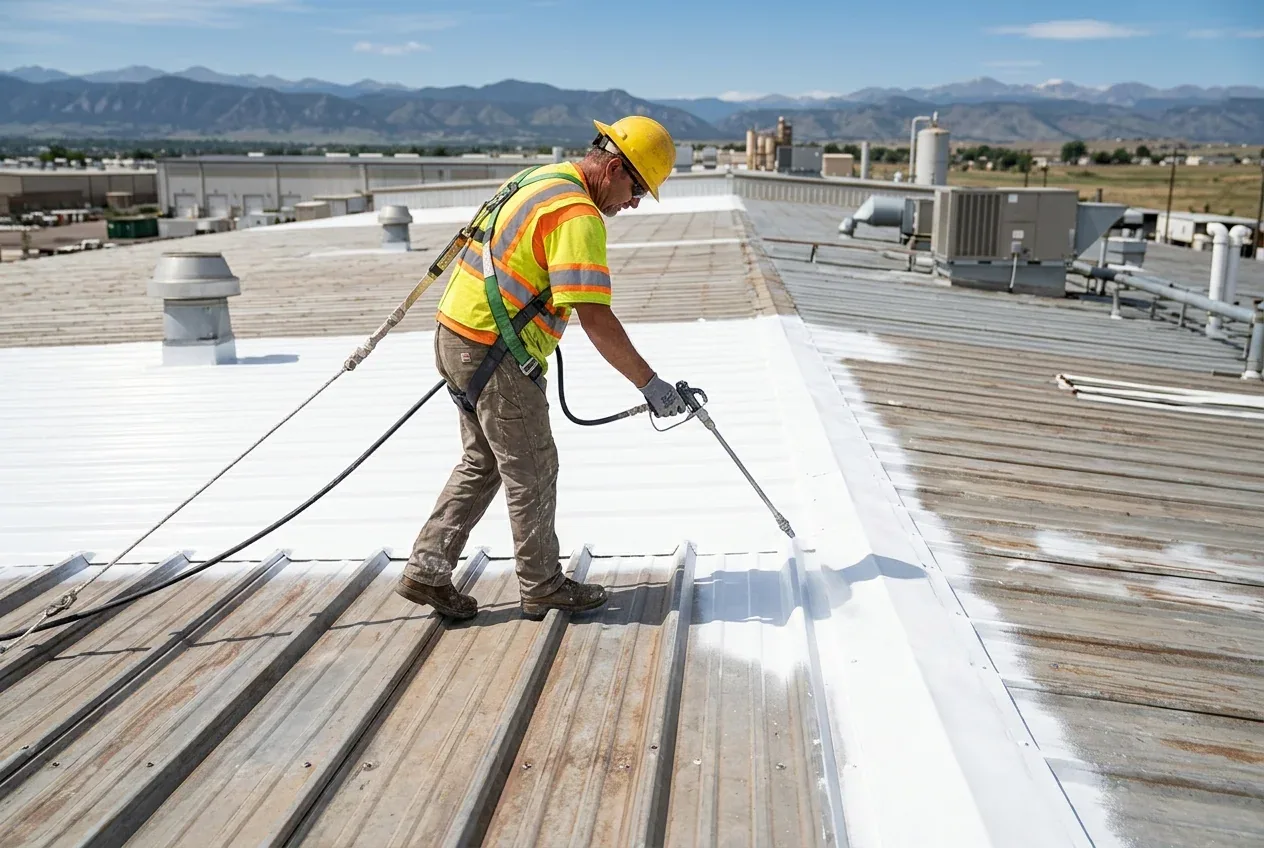
The first task is dry-in, the same step as in emergency roof repair: a temporary membrane or tarp fastened to sound deck, with the drains cleared. The second is measuring moisture in the insulation and the deck. Wet material left in place breeds mold and rusts metal, so it comes out, the deck dries and the layers go back in order. An owner who waits risks a second loss, and a ponding water repair may follow a roof that sat open. Note the date of the dry-in.
Speed matters for another reason. A roof open for a week collects a week of weather, and a mild rain on a burned deck can hurt the insulation as much as the fire did. A vent cut or burned section can usually be closed the same day access is cleared. The tarp is ballasted with weights and fastened to sound deck, never nailed through the membrane in a way that makes new holes.
Vents, cuts and hose scars
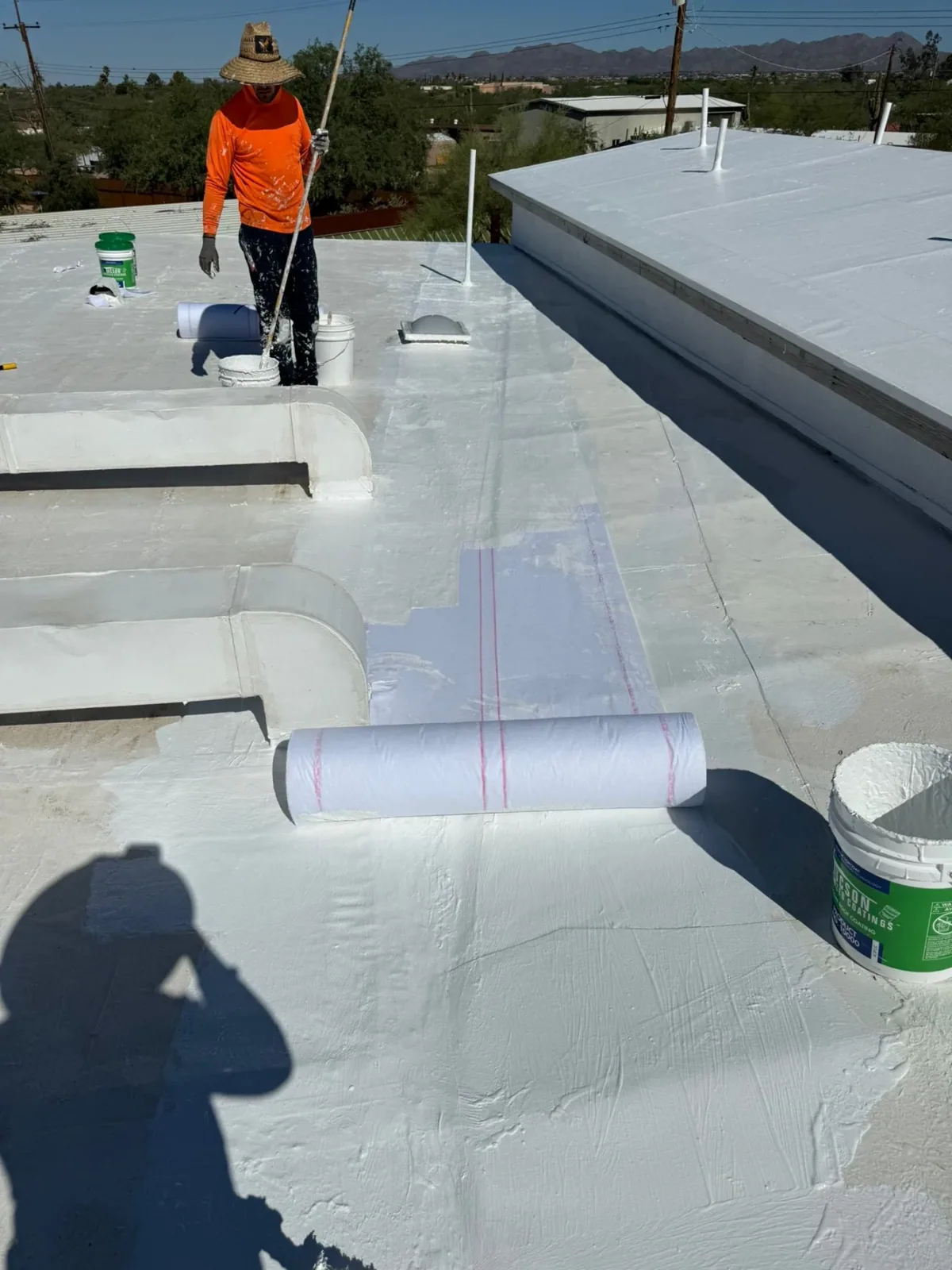
Firefighters cut holes to release heat and smoke, and they drag hose and tools across the roof. Those cuts and scrapes belong to the loss, but they are a different kind of damage from the burn around them. Each opening, cut and gouge is mapped. Smaller tears from tools and debris get the same treatment as a membrane puncture repair, one at a time, with a moisture check under each.
The survey lists them as their own group, so the claim stays clear about what the fire did and what the response did. Keep any photos the fire department took of the roof.
Rebuilding in order
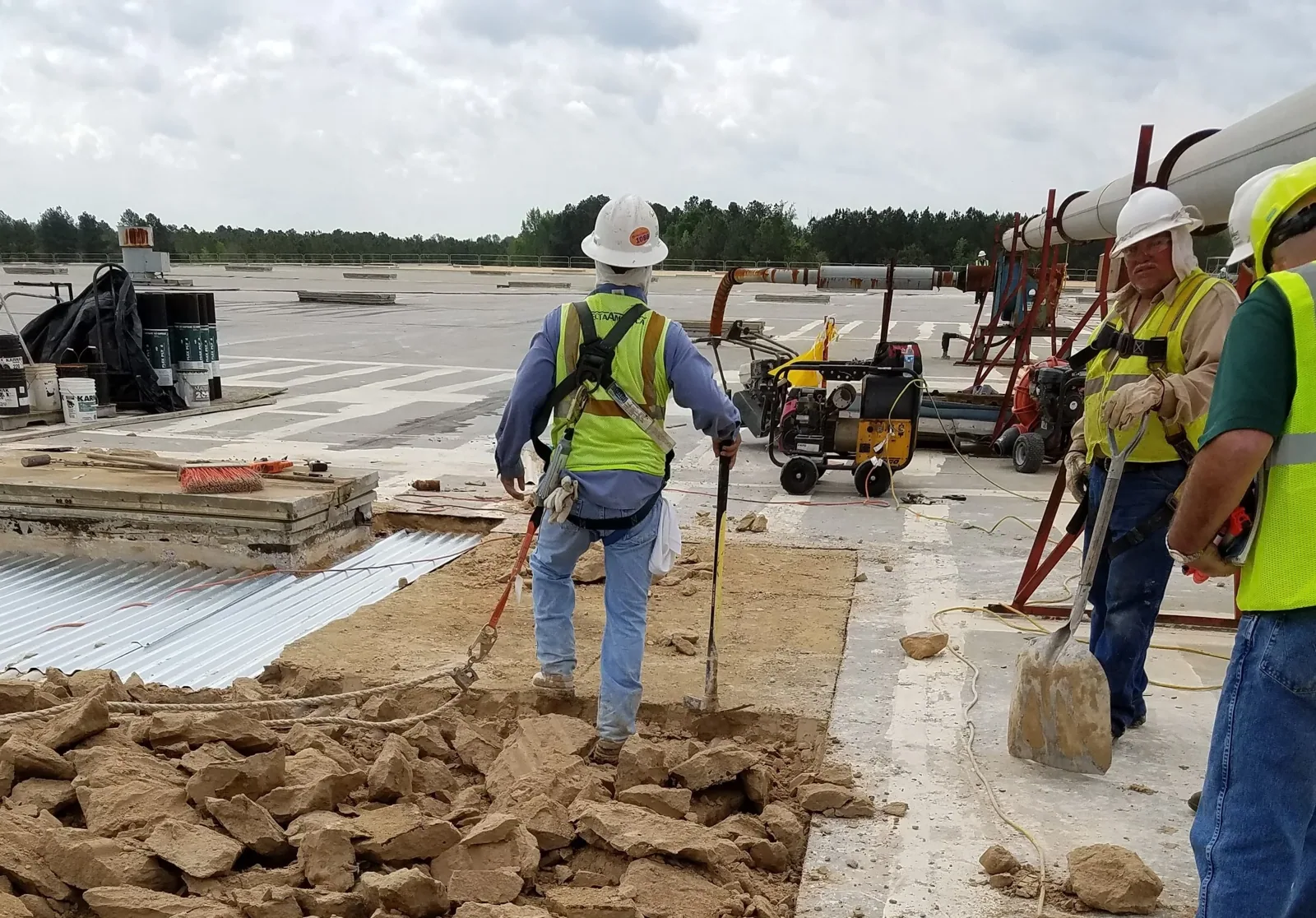
The permanent repair removes damaged material back to sound substrate, repairs or replaces the deck as the engineer directs, lays new insulation and membrane, and rebuilds flashings, curbs and edges. Where fire reached equipment, supports and openings are replaced as well. The scope may be a section or the whole roof. New assemblies fall under the 2022 NYC Construction Codes, including Chapter 15 on roof assemblies and rooftop structures. A fire-rated assembly may be required, and the designer will say so. A large loss can point toward a commercial roof replacement.
Equipment must be released by its own trade before roofing resumes, and a curb that was heated may have lost strength even if it looks sound. Mill and loft buildings raise their own questions. Heavy timber and old brick respond to fire differently from modern steel, and a mill roof deck of thick planks can char on the surface and keep its strength below. The engineer decides what is sound. A parapet that was heated can crack and loosen, and flashing laid on a loose wall does not last, so the wall is made safe before the new flashing goes on.
Papers the carrier asks for
The carrier asks for the extent of the loss, the cause of each damaged area, the cost to restore and the order of work. The survey answers with photos and measurements, a moisture map, a list of damaged and undamaged areas and a scope by line item, with emergency work kept apart from permanent work. That is the package roof insurance claim assistance turns into the form an adjuster reads.
In loft districts such as Williamsburg, where former factories and warehouses were converted to lofts and apartments, older roofs may carry layers of earlier work that complicate an estimate. Smoke needs its own line: contaminated insulation can persist after the visible damage is repaired, and the carrier needs test results before it approves removal. Save every receipt for temporary work.
Commercial Roofing Questions
When does a burned roof get replaced instead of repaired?
The deck and the reach of the heat and water decide it. Local damage on a sound deck means one section is cut out and rebuilt. Heat across large areas, or a deck the engineer will not clear, points toward full replacement.
Will the roof show me if smoke got into the insulation?
Sometimes, as soot or corroded metal. More often the damage hides in the insulation, and only cores and an odor check bring it out.
How long can a fire-damaged roof stay uncovered?
Only as long as the engineer's clearance takes. Policies expect prompt protection, and rain on an open roof is added to the loss.
Does fire repair need filed drawings?
Usually it needs a permit, and structural work can need drawings on file. The scope is written with your expediter and the engineer so it matches the filing.
What should I keep for the insurer?
The fire department report, the engineer's letters, the survey, photos, receipts and the scope of work. The same set supports the claim and any later sale.