School Roofing in Brooklyn, NY
The best time to read a school roof is a week after the last bell, when the building is quiet and the stains in the top-floor classrooms have all been marked by the custodian. Stand at the parapet and the pattern is usually plain. A cracked coping joint above the stair tower, a drain basket packed with leaves from the schoolyard tree, a seam open above the gym. Schools run on a calendar, and a roof that fails in October costs more than one found in July. Our walk starts with the custodian's list of ceilings that have stained.
The summer window
A school reroof has only the summer to finish, and that window has to hold procurement, approvals and delivery. We plan backward from the first day of classes: the tear-off in the earliest weeks, the new insulation and membrane in the middle, and flashing, testing and cleanup before the last week. If materials arrive late, the schedule slips into September, which nobody wants.
Because of that, we recommend scoping a school roof in winter or spring, and ordering early. A spring inspection that identifies the worst areas gives the district time to budget, bid and schedule. A roof found leaking in November can be patched for the winter and replaced in the next summer window.
Gyms, cafeterias and the long span
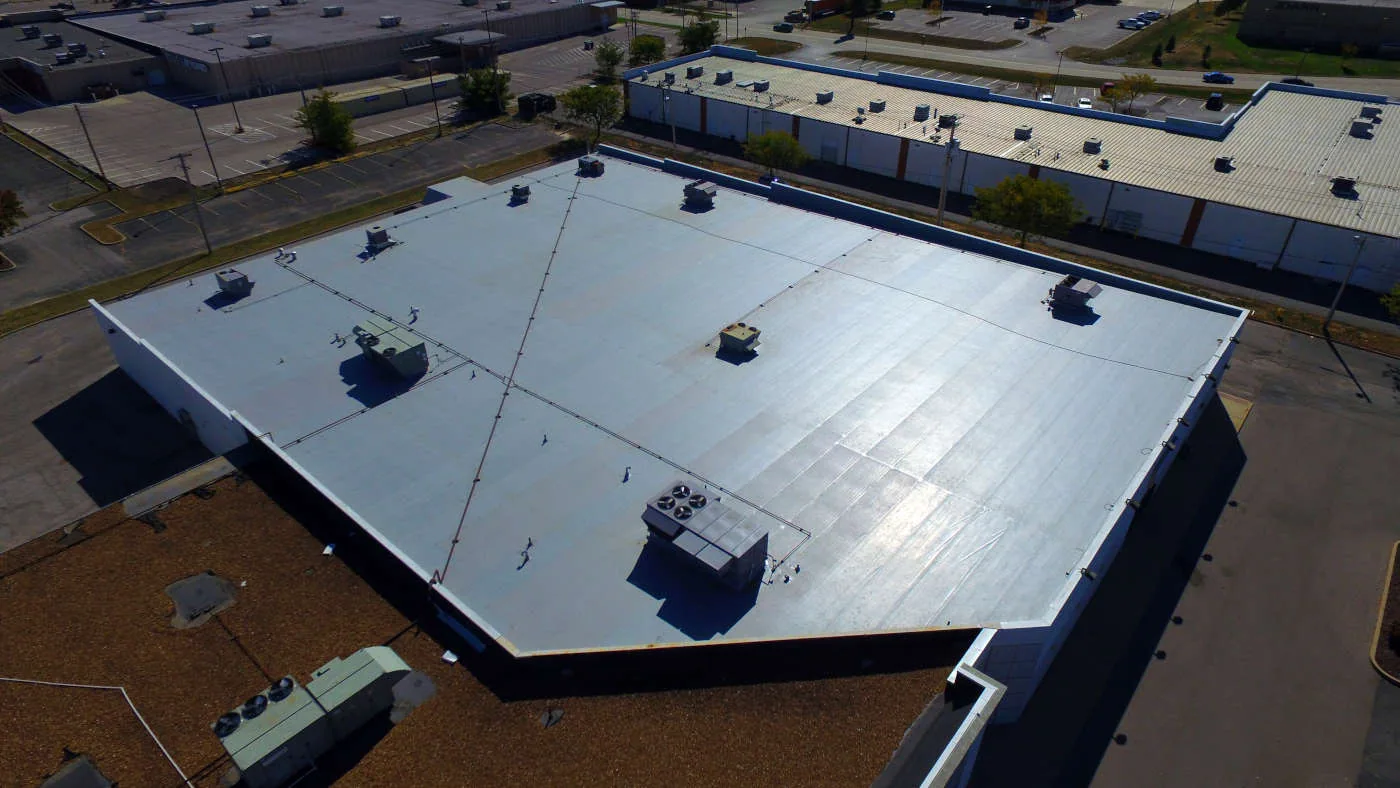
School roofs have a few special areas. The gym and auditorium sit under a high, long-span roof, and a leak there drips onto a basketball floor or a stage. The cafeteria and kitchen carry exhaust fans and grease vents that stain and corrode the membrane. The boiler room sends warm air through its stack. Each of these needs its own detailing, and we treat them as separate zones rather than as one roof.
Newer additions, such as a classroom wing added to an older building, create a tie-in at the wall. We inspect that joint carefully, since a seam between old and new is a regular source of ceiling stains. Where the older building has a tar-and-gravel build-up, the transition to a new single-ply needs a proper flashing detail.
A school with a science wing has the same problem as a college building, and the college and university roof often adds laboratories with heavy exhaust. We map lab fume vents before work starts and keep new roofing material away from their discharge.
Gym roofs deserve one more note. Moisture in a gym roof does not only leak. It condenses on the underside of the deck, rusts the steel and sheds flakes onto the court. We look for rust streaks along the flutes, a sure sign that moisture has been in the assembly for some time, and we take cores at those places.
Older masonry and Brooklyn blocks
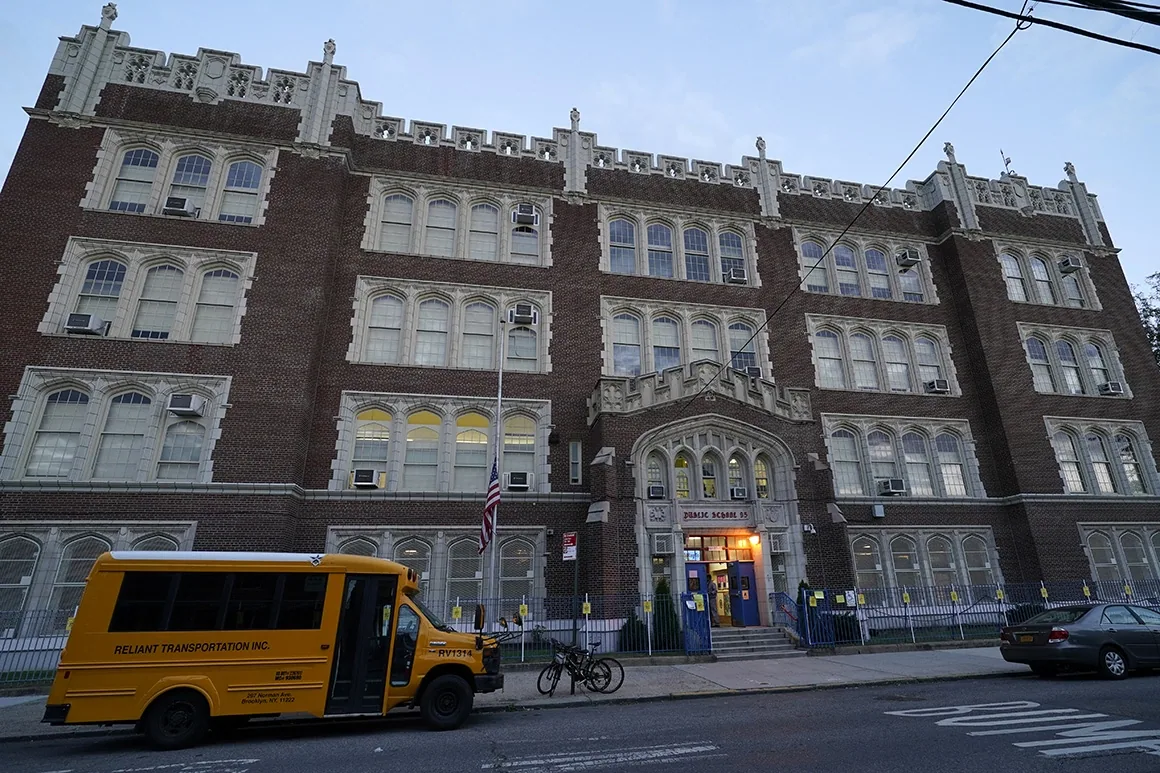
Older school buildings are often masonry with a tall parapet and a flat roof behind it. Bed-Stuy has roughly 8,800 buildings built before 1900, and many of its three- and four-story masonry buildings have commercial ground floors. Schools in or near those neighborhoods share the same wall and coping questions as the buildings around them.
Brooklyn Technical High School is among the major institutions in Fort Greene, and brick is the common material around it, including the 35 Fort Greene Houses buildings of six to fifteen stories. On brick, the roof edge is a wall question first. On a Fort Greene job the work starts at the wall and moves inward.
Drains, snow and cloudbursts
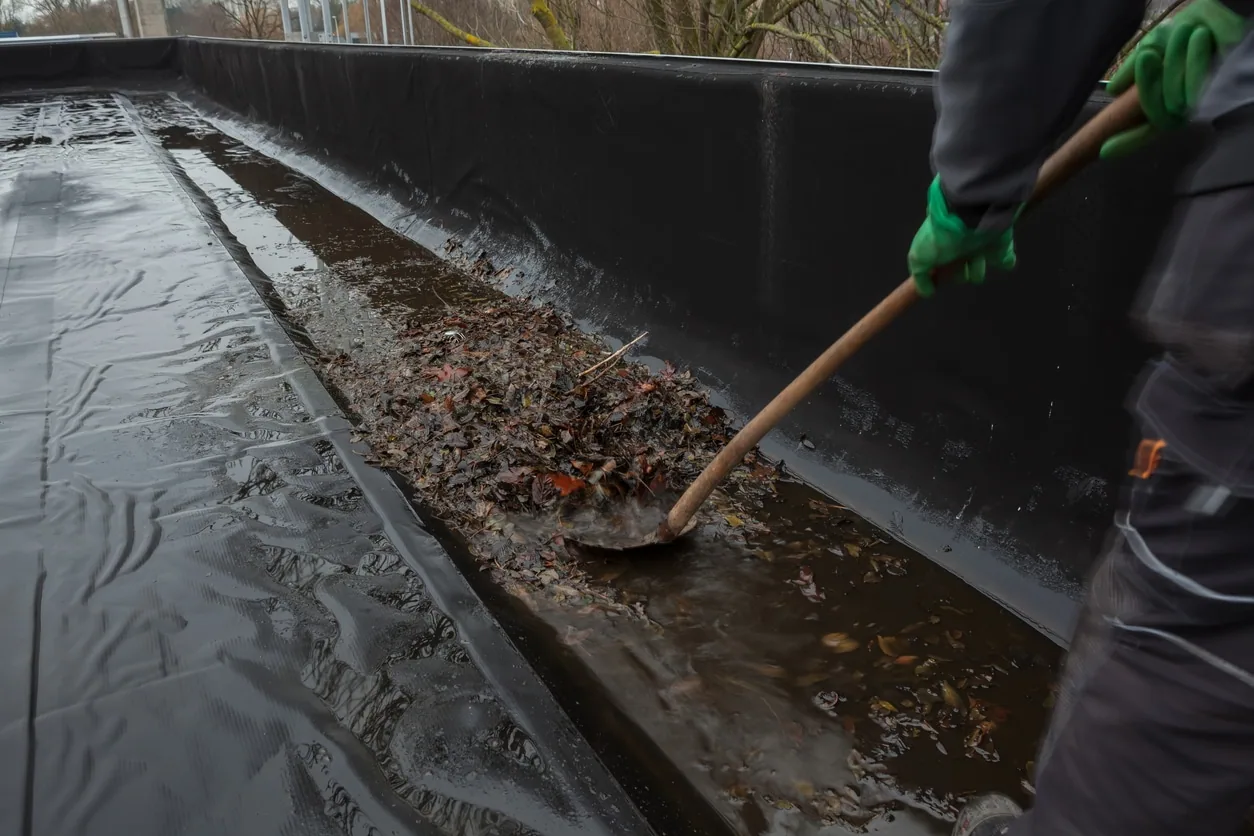
Snow melts unevenly after a year of about 30 inches, 27.3 of them on one January day in 2016, so the drains that cope in April may freeze solid in January. We clear baskets before winter and add heat trace where a leader runs through an unheated space.
Ida's remnants on September 1, 2021 led to a flash flood emergency for New York City, and a school roof with a single weak drain can pond in rain like that, and ponding over the gym endangers the floor. A review of drains and scuppers adds an overflow route, and a tapered insulation layer can bring standing water to the drain.
Safety around students
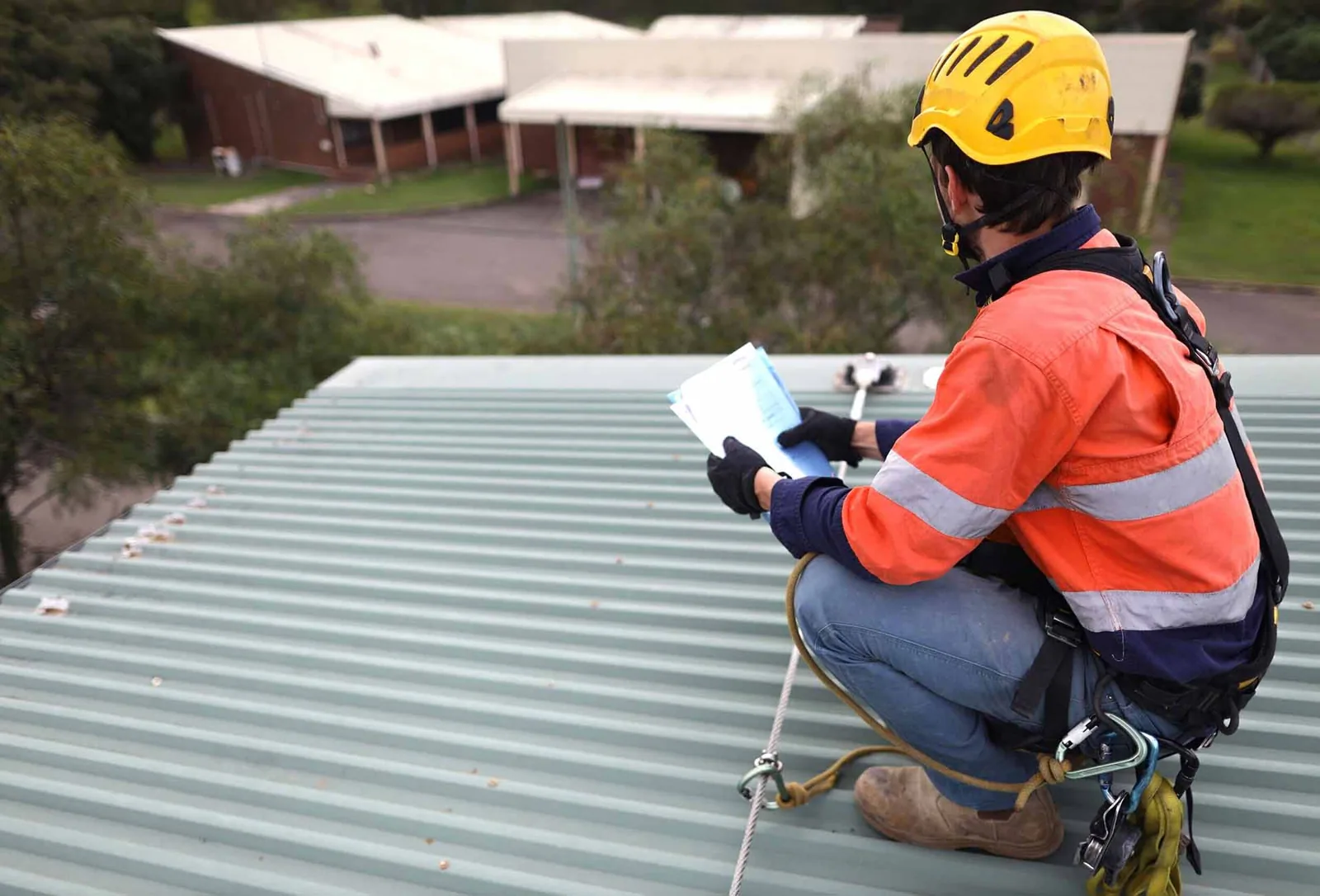
Even in summer, a school can have summer programs, custodians and staff on site. We separate the work area with fencing, mark delivery routes, keep the hoist away from entrances and escort anyone who needs to cross. Visitors check in at the office, and nobody climbs to the roof without a sign-in.
During the school year, any emergency repair is done with extra care: barriers, quiet equipment and a flag person at the door. A leak over a classroom is dried in the same day, with the permanent fix moved to the next break, using the same approach as a same-day emergency repair.
Approvals and the file
Public schools and private schools buy differently. Public buyers expect specifications, bids and a paper trail, and private schools often work through a board. Whichever route applies, we help prepare a clear scope, a photo record and a schedule that a purchasing office can use. A school district managing many roofs benefits from a ranking of buildings by condition so the worst ones go first.
The facilities office leaves with a drawing of the drains and penetrations, the membrane type and age, and a photograph of every flashing. A long-range roof plan uses that file to plan the next decade of work.
Neighborhood houses of worship and community centers sometimes share a block, a wall or a yard with a school. A church roof next door can send water across a shared parapet, so we note the neighbor and agree on who flashes the joint.
Commercial Roofing Questions
How long does a school roof replacement take?
A typical school roof can be replaced in a summer if materials are ordered early and approvals are done by spring. The work moves in sections, with each section dried in daily. Large buildings or complex roofs may be phased across two summers. Gym and auditorium roofs, with their long spans and tall walls, usually take the longest to detail, so they go first in the schedule.
What should the custodian record when a ceiling stains?
Note the date, the room, the weather and the size of the stain, and take a photo. If the stain grows after a rain, that points to the roof. If it grows without rain, a pipe or condensation may be the source. We start with those notes. A short log kept through the school year turns a roof inspection into a targeted one.
Can a coating extend the life of a school roof?
Sometimes. If the existing roof is dry and sound, a reflective coating can add years and cut summer heat. We test before we recommend it, since a coating over wet insulation traps moisture. Where the roof fails the test, a recover or replacement is the better spend.
Do school roofs need special wind or snow design?
The structure and the code set the design loads, and the roof assembly chapter of the NYC Building Code governs the membrane and fastening we select. A parapet that traps drifting snow gets extra drainage.
What do you need to see before writing a school roof scope?
Send the building address area, the roof age, a list of known leaks and photos of the worst drain and parapet. Tell us the dates the building is empty so we can plan the window.