Commercial Roofing in Bay Ridge, Brooklyn, NY
On the day in 2007 when an EF2 tornado crossed Bay Ridge, a nearby Nissan dealership lost its roof and eleven houses were vacated; winds ran 111 to 135 mph. Any roofer working here keeps that day in mind. It is the clearest example in the borough of what an unsecured roof can do, and it points to the first thing we read on any Bay Ridge building: the edge. The coping run, the edge metal, the corner flashing and the way the membrane is held down along the perimeter decide how a roof behaves when the wind arrives.
The first walk is slow on purpose and runs from the edge inward, since wind, water and movement all meet there; soft spots are marked, flashings photographed and the field left for the moisture scan before a scope follows.
The edge decides it
Wind lifts a roof from the perimeter and the corners. If the metal is loose, the sealant is split or the fasteners are too few, a gust gets under the membrane and peels it back like a sheet. The tornado is the extreme case; an ordinary northeaster tests the same details.
The fix is attachment. That means extra fasteners along the perimeter, a continuous cleat under the edge metal, sealed joints and a membrane held down to suit the exposure. We pull on the metal, check the cleat, probe the sealant and photograph every stretch, then write the weak sections into the scope. A wind damage repair after a storm starts from those photographs, which is why they are taken beforehand.
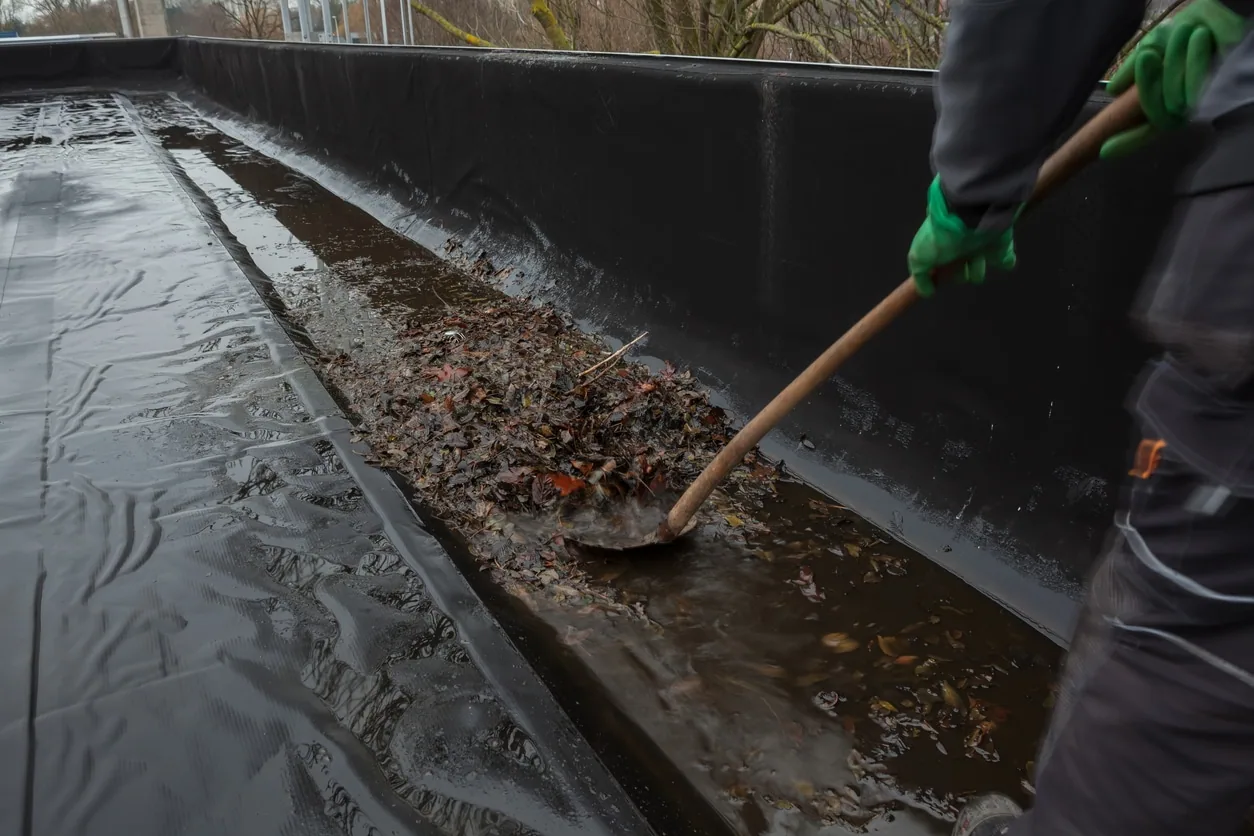
Gutters and scuppers at the edge carry water too. A clogged outlet turns an edge detail into a pond, and ice in a clogged bowl can crack the clamping ring. We clear the outlets, test the flow and check that the overflow path is open before the first freeze.
Shore Road and the harbor
Along Shore Road, which faces New York Harbor and the Narrows, six-story apartment complexes rank among the neighborhood's tallest buildings. A tall roof on an open site takes the full wind, salt in the air and driven rain off the water. Parapet height, coping attachment and the condition of the counterflashing are the details that matter.
On a six-story roof we also check the mechanical penthouse, the bulkhead and the access hatch, since each is a wall that meets the roof on all sides. Height raises the stakes for access too. Hoisting, edge protection and wind limits for installation go into the schedule. A multifamily roof of this height benefits from an annual walk of the edges and a post-storm check.
Salt air also wears metal faster than inland air does. Fasteners rust, edge trim pits and sealants harden, so we look for corrosion at laps and fasteners on harbor-facing roofs and specify parts that suit the exposure.
Third and Fifth Avenue storefronts
Third and Fifth Avenues are the main commercial strips, and the buildings along them put shops under apartments or offices with a flat roof on top. A walk and a scan show how a given building went up. The checks are the same on each: coping joints, counterflashing at party walls, the drain and the rooftop units that tenants have added.
Shared walls are the special trouble. At the point where one roof meets the next building's wall, the flashing must climb and cover the joint, and often neither owner claims it. Water at the junction can run sideways into the next ceiling. A commercial roof inspection marks the tie-ins, and the report states which area each repair belongs to.
Rooftop signs and awning supports on the avenue side add penetrations. A leaking sign or awning frame can drip for a season before anyone ties it to a ceiling stain, so each one is located on the plan and resealed as needed.
Insurance reads the same file. A dated rating and photographs show what the roof looked like on the day of the survey, which matters if a storm claim follows.
Fort Hamilton in the southwest corner
Fort Hamilton, an active Army base, sits in the southwest corner of the neighborhood. Work on a military installation follows the base's access rules: badging, escorts, scheduled deliveries and mission-driven work hours. Federal property is commonly roofed to the Unified Facilities Criteria for roofing. We plan those steps into the schedule so a roofing day is not lost at the gate.
Owners of private buildings near the base can use the same habits: written scope, dated photographs, a numbered plan and a punch list at the end. Neighbors in Bensonhurst and Sunset Park share some of the same building types and can be rated on the same scale.
Historic buildings on a post, such as Colonels' Row, bring their own roof questions. Whatever the material, repairs have to match the original, and flashing at chimneys, valleys and parapets is where older roofs tend to fail. Each gets a hand probe and an entry on the plan.
Cloudburst, snow and heat
New York City issued its first flash flood emergency when Ida's remnants arrived on September 1, 2021. In a cloudburst a drain that is fine in ordinary rain can overflow, and water presses on the parapet flashing. Snow near 30 inches in a normal winter and the freeze-thaw cycle work on every weak seam. Heat rounds out the year, with July highs near 85 F and a strong heat island. Drains, seams and edges are checked ahead of every season. Roof drains and scuppers come first, since a clear outlet is the cheapest storm protection a roof gets.
Heat completes the cycle. Hot summers open seams, and blisters, open laps and softened sealant show first on the sun-facing slopes.
The fix in order
Active leaks are dried in first; the scan and cores then decide among repair, recover and replacement. Fix the edge first when storm season is near. Dry insulation under a worn surface can take a recover, and wet insulation comes out. Price follows access, height and the number of penetrations. Winter work is mostly repair and dry-in.
We close with a punch list of touch-ups and open laps, and the final photographs are dated and filed. One open lap fixed on the day beats the same lap found by the next storm.
Commercial Roofing Questions
What does a tornado-year lesson mean for an ordinary roof repair?
It means the edge gets priority. We check fasteners, cleat, sealant and corner flashing before the field of the roof, and we repair the weakest stretch first. A tight edge keeps a gust from getting under the membrane.
How is a tall apartment roof reached for repair?
By hoist, crane or a safe stair route, with edge protection set up first. Wind limits and permits go into the schedule. Height affects price because access and fall protection take time.
Can a storefront stay open during roof work?
Yes. We zone the work, dry in at the end of every shift, run the loud stages off hours and keep the door clear. Interior protection goes up under the open area.
Who pays when a shared wall leaks into the next building?
The survey answers it with evidence. The water is traced, its entry is marked on a numbered plan and the report names the roof area it belongs to.
What do you want to see before a Bay Ridge walk?
Photographs of the worst drain and of the harbor-side edge metal, plus the roof age and the address area, tell us how to plan the walk.