Grocery Store Roofing in Brooklyn, NY
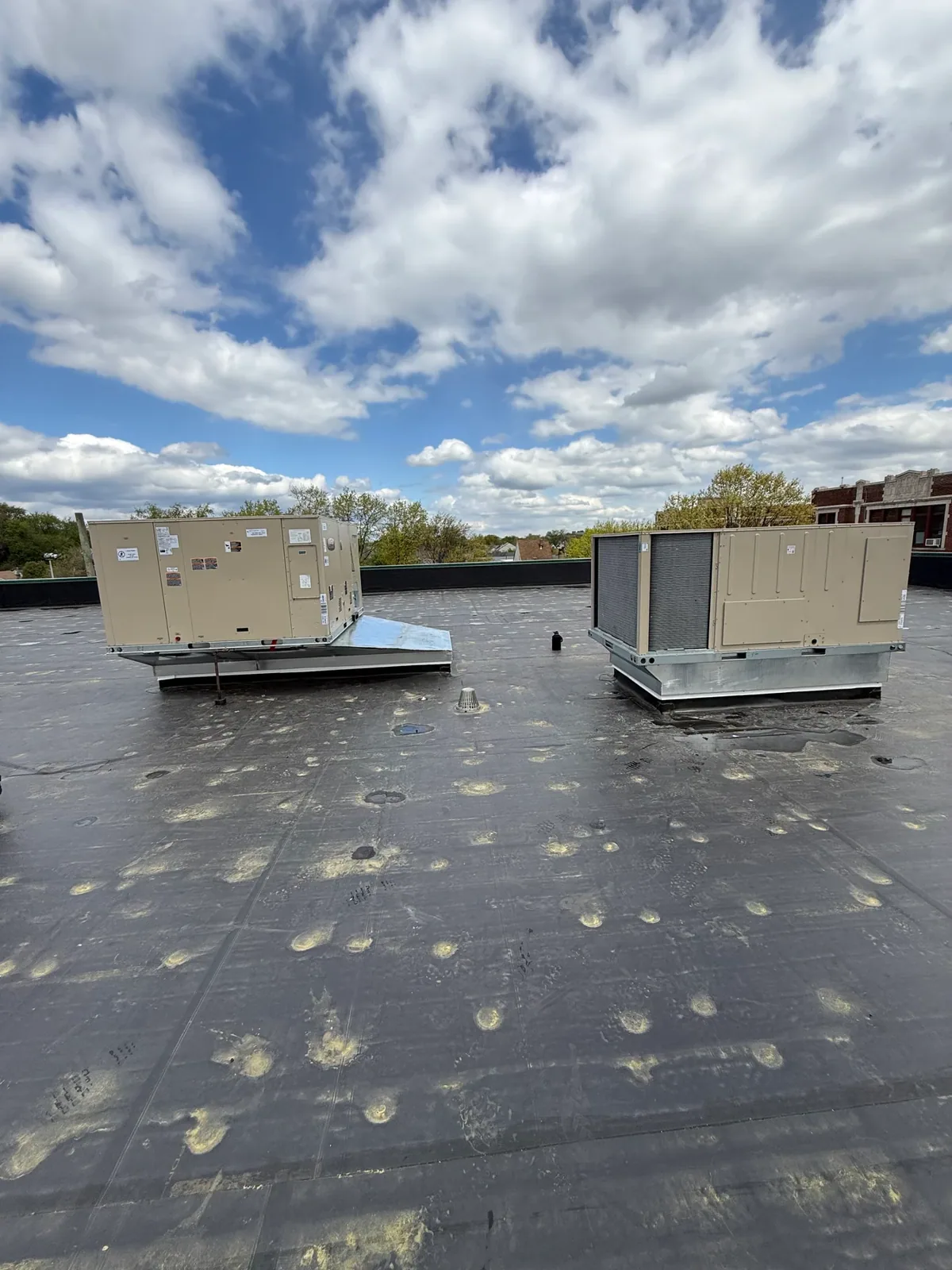
Look at the roof over a grocery store and you are looking at its refrigeration. The condensers sit in a row, the copper lines run to the penetrations and the membrane around them is dark where warm water has dripped all summer. That is the first thing a super notices. The second is the walk-in cooler below, because a roof leak that reaches a produce case or a dairy aisle is not a maintenance headache but a loss of product, an inspection and a cleanup. A grocery roof has to stay dry over food, and everything we do begins there.
The condenser deck
Refrigeration condensers reject heat to the outdoors, and they run all year. They sit on rails or a platform, and the lines that feed them pass through the roof in clusters. Each penetration is a place where movement, vibration and temperature swings work on the flashing. A cluster of lines cut through a single curb is a common failure, and the repair is usually to rebuild it with individual boots and a sealed pitch pan.
Condensate and wash water add to the load. Coil cleaning sprays soapy water onto the roof, and some units drip steadily in humid weather. We check where the water goes, add walkway pads along the service path and redirect runoff to a drain. Raised equipment supports keep the units dry and accessible.
Ice is the winter problem. Drain lines from a cooler or a defrost cycle can freeze at the roof edge, and a sheet of ice at a scupper backs water onto the field. We check heat trace on exposed lines, clear scuppers before the first hard freeze and look at the membrane under any steady drip for early wear.
Over the food
Not every part of a grocery roof is equal. The sales floor, the deli, the bakery, the produce coolers and the receiving dock each have different risk. We map the roof to the floor plan and rank the sections by what happens if water arrives. A drip over a dry-goods aisle is an inconvenience. A drip over an open produce case may mean discarding the case.
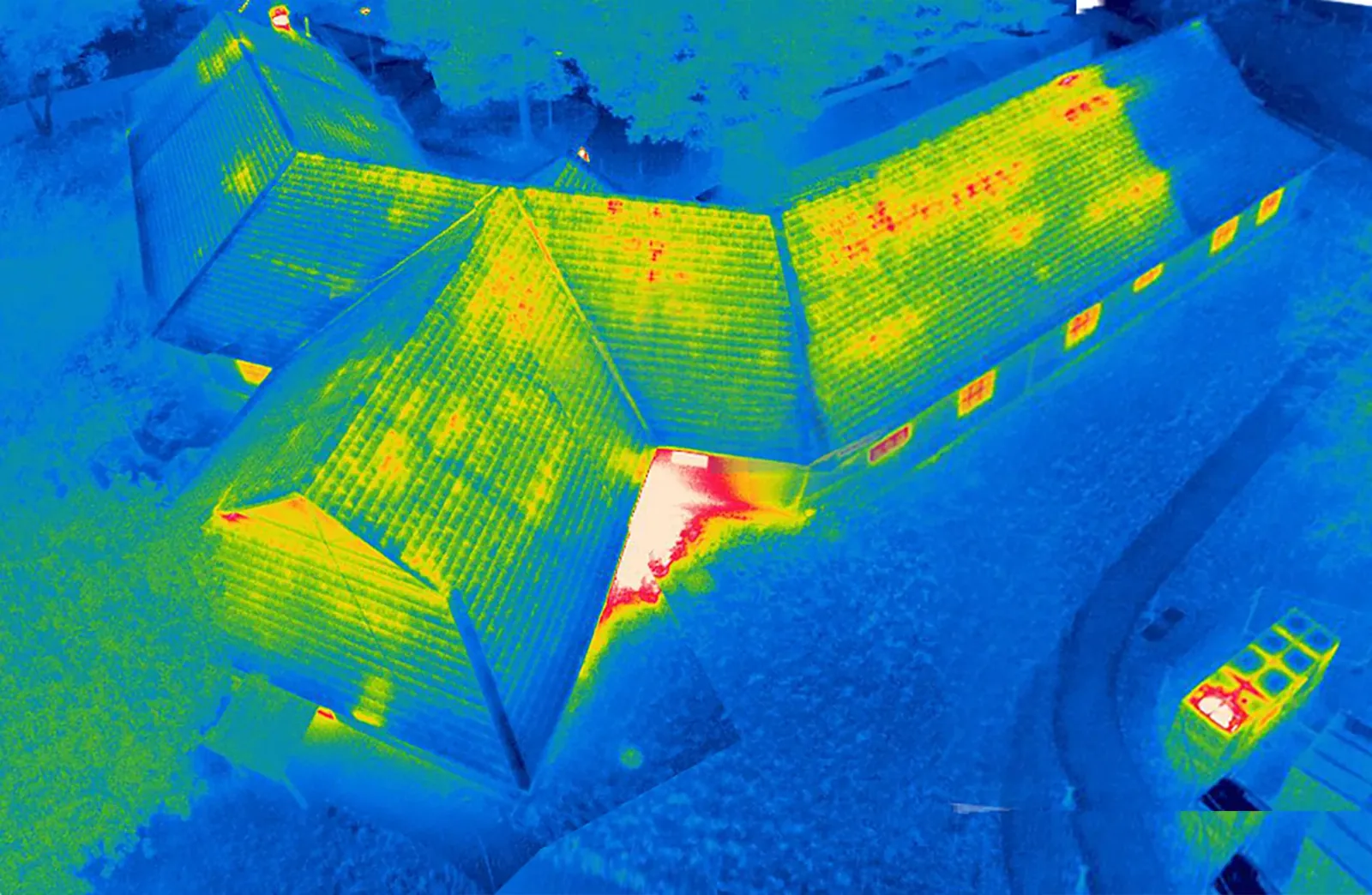
Sections over refrigerated space need extra care for another reason. Cold interior air can draw vapor up into the roof layers, and a wet insulation layer above a cooler loses its value fast. A moisture scan helps, and an infrared scan done in the right conditions shows which areas of the roof have wet insulation. A cold storage roof shows the same pattern in a larger form.
Along the shopping streets
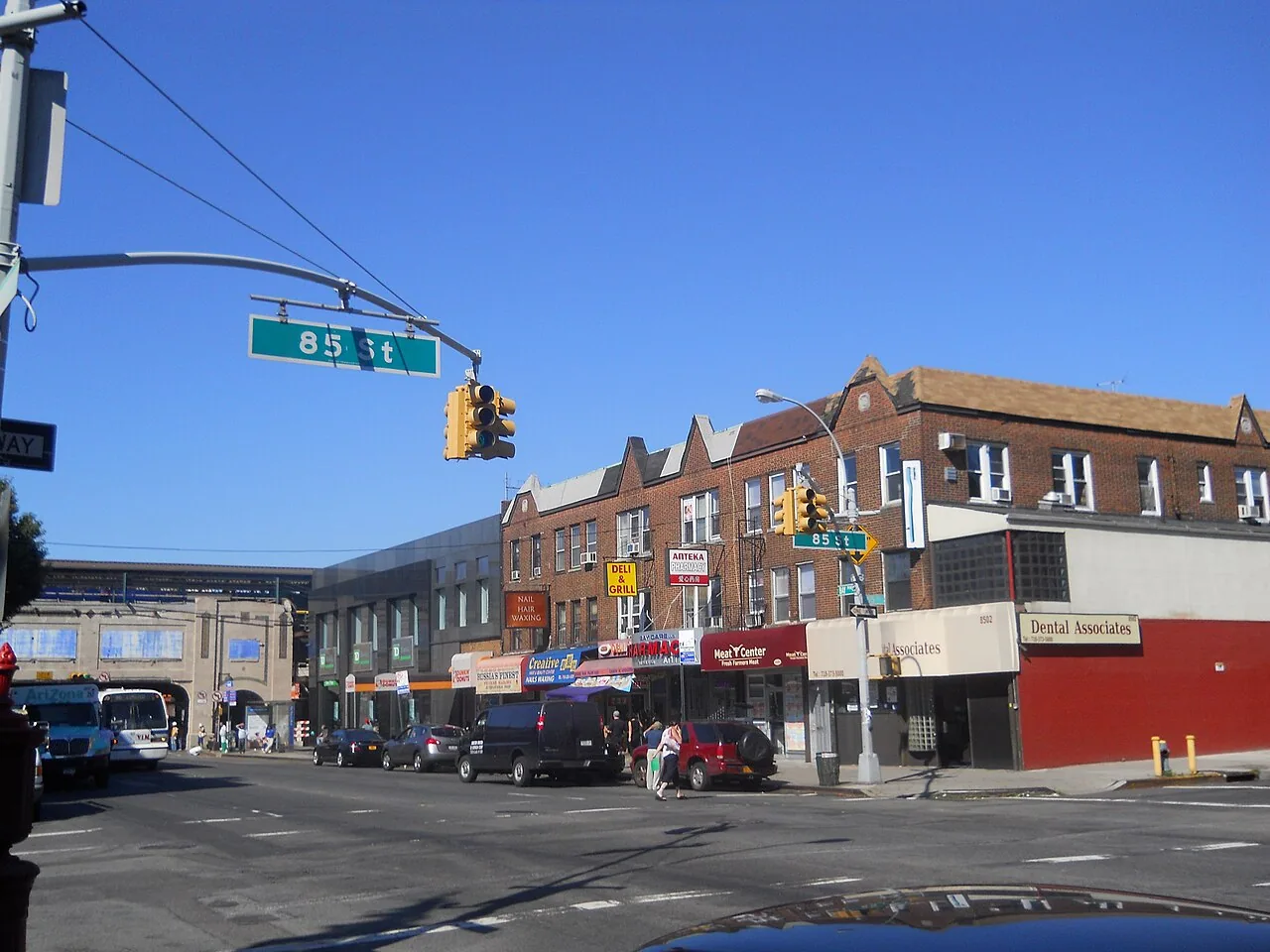
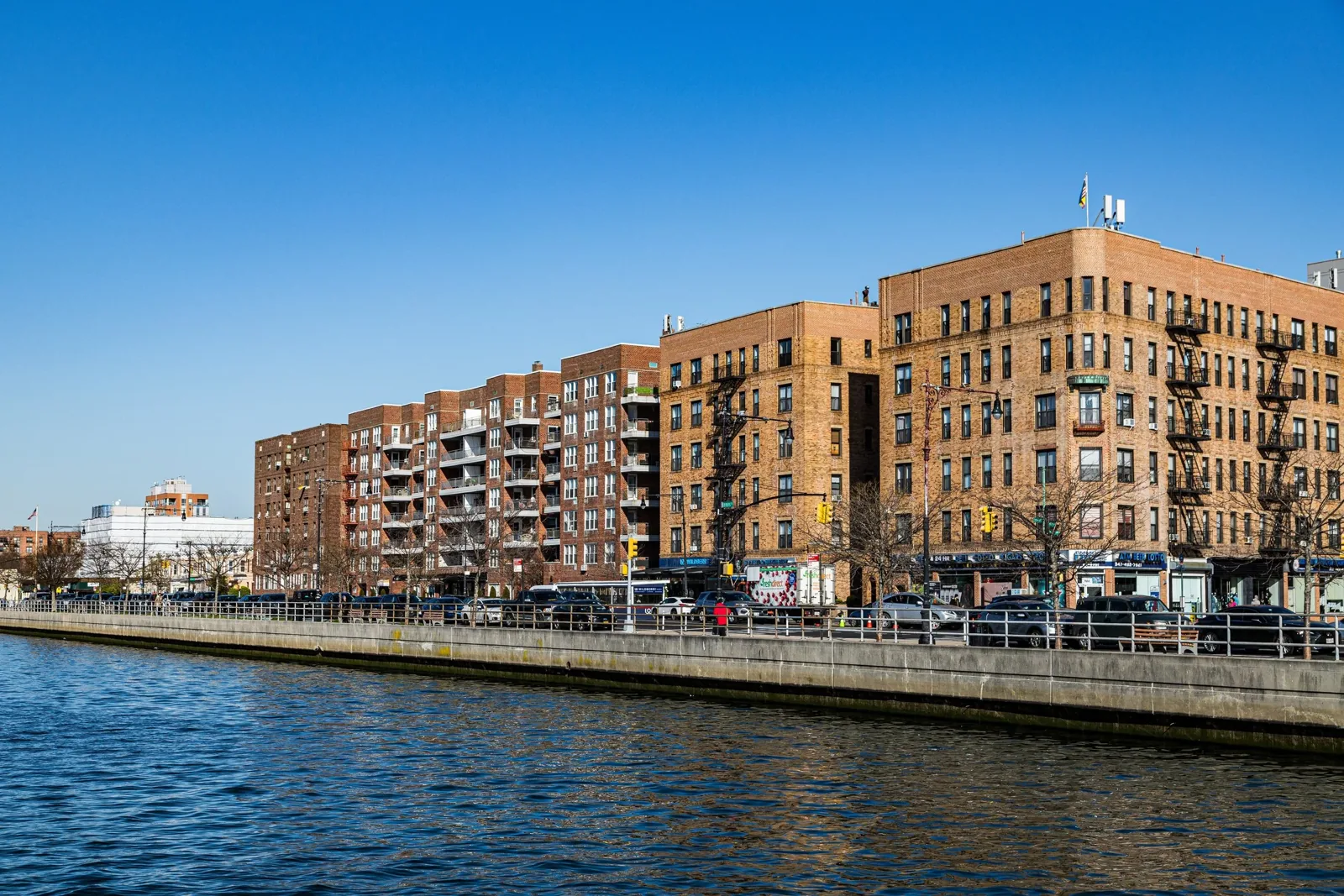
Neighborhood groceries sit on busy commercial strips. 86th Street in Bensonhurst runs under the overhead West End Line, 13th Avenue in Borough Park is a roughly one-mile commercial strip, and Brighton Beach Avenue runs under the overhead B and Q lines. Emmons Avenue in Sheepshead Bay has piers, tour boats and an active seafood market. Blocks like these tend to have attached buildings, narrow back lanes and little room to stage a crane. That shapes how we work. Materials are carried or lifted in small loads, deliveries are timed around the store's own receiving, and we use a street permit or a rear lane when one is available. Where a store sits on a block like that in Bensonhurst or Sheepshead Bay, the lane behind it may be the only workable access.
Shared walls bring shared water. A grocery on a row of attached storefronts often sits against a neighbor's parapet, and a failed coping joint there can feed water into the store's back room. We trace the wall in both directions and, when the neighbor's side is the cause, give the owner a photographic record to take to the adjoining owner.
Heat, cold and cloudbursts
With July highs near 85 degrees under a strong heat island, a dark roof over a store with large cooling and refrigeration loads works against the equipment. A white membrane or a reflective coating reduces the roof surface temperature and the load on the rooftop units. Snowfall averages about 30 inches a year, and snow drifts against condensers and parapets, blocking drains until it melts.
A store cleaning up after street flooding, such as the flash flood emergency Ida's remnants set off on September 1, 2021, needs a roof that adds nothing to the cleanup. We check drains and leaders before storm season, test overflow routes and keep a dry-in kit ready for a call-in.
Reroofing without closing the store
A grocery store is open long hours and has deliveries all day. We plan the roof work as a series of small sections, each closed before the shift ends. Work over receiving docks and back rooms goes first, the sales floor goes at off hours and the sections over coolers are done with the cold chain in mind. Staff are told what is happening each morning.
Odor and dust are the concerns. Cold-applied adhesives, welded seams and mechanical attachment keep the air clean around the fresh-food departments, and we shut or filter any intake close to the work. A reroof around an occupied store demands this kind of care for the sake of the customers and for the food.
Inspection, records and chains
Grocery operators with several stores often have different roofs, from older masonry buildings with built-up roofs to newer single-ply installs. A multi-site roof program keeps them in view, with a ranked list and a regular inspection. For a single store, a roof condition report lists each unit, curb and drain with photographs.
If the building also houses a restaurant next door, the two roofs share more than a wall: grease, heat and exhaust. We note that on the plan and treat the boundary with care.
One more habit helps: a photo of the roof each season, taken from the same spots. Over a few years the set shows how a seam, a patch or a curb is aging, and it gives the manager a way to compare the roof against a baseline instead of memory.
Commercial Roofing Questions
What happens if a leak reaches an open produce case?
Staff handle the product, and we stop the water. We place a temporary dry-in over the source, trace the cause and photograph the damage for the file. The permanent repair goes in during an off-hours window. A written note of the time, the department and the weather goes into the roof file.
Do condensers have to be moved to replace the roof?
Sometimes. If the units sit on rails that can be raised, we can work under and around them. If they sit directly on the roof, they may need to be lifted by a refrigeration contractor. We coordinate with that contractor so downtime is short.
Which membrane works best with constant condensate and wash water?
A welded single-ply membrane, such as PVC or TPO, handles water well when the seams are properly welded. Walkway pads protect the sheet along service routes. The choice depends on exhaust chemistry and the roof's condition.
How can a store prevent leaks around refrigeration lines?
Keep the lines in individual, well-flashed penetrations rather than one oversized cut, and ask refrigeration contractors to tell us before they drill. A short visit after any rooftop work catches a bad seal before it leaks. Refrigeration crews should also leave a sketch of any new line they add.
What do you need from a grocery manager to start?
Send the address area, the roof age, the location of past leaks and photos of the condenser deck and the worst drain. Tell us the delivery hours and the cooler locations so we can plan around them.