Standing Seam Metal Roofing in Brooklyn, NY
Look at the ridge of a metal roof from the street and then at the eave. If the line of the ridge cap wanders or a panel has lifted a half inch at the eave trim, something underneath has moved. A standing seam roof is built to move. Its panels lock together at raised seams and ride on hidden clips fastened to the deck, so the sheet can expand and shrink without opening a hole. On a Brooklyn, NY roof, the seams are rarely the problem. The trouble starts where the roof ends: at the ridge, the eave, the wall and the pipe.
What you see up there
Walk the roof along the seams and look at four things. Open or dented seam caps. Rust streaks at the panel ends and the trim. Sealant that has cracked at pipe flashings. And loose or missing trim fasteners at the rake and the eave.
Look at the finish too. Chalking and fading say the coating is aging. A bright scratch that exposes bare metal starts to rust at the edges. Then go inside and look at the underside of the deck. Brown stains and rust at the fastener lines say water has been getting in at a trim or a penetration for a long time. A seam failure repair starts with a clean look at the lock, but the clue to the cause is usually at the end of the panel.
Why this building
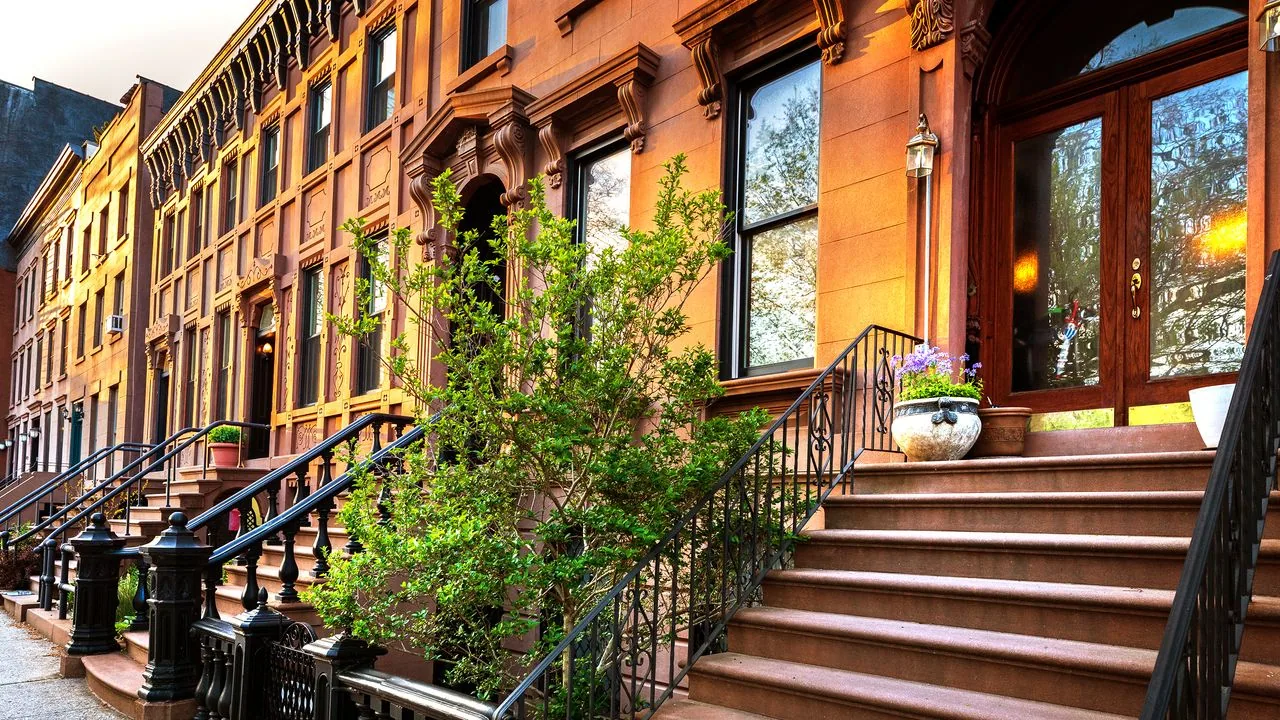
Metal roofs turn up on old and distinctive buildings. The Park Slope Historic District covers 2,575 buildings across about 40 blocks, and the Carroll Gardens Historic District, designated in 1973, is known for brownstones with large front gardens. Several former churches have been converted to condominiums. A pitched metal roof on a church or a corner building is visible from the street, so the finish, profile and trim matter to the neighbors and to any preservation review.
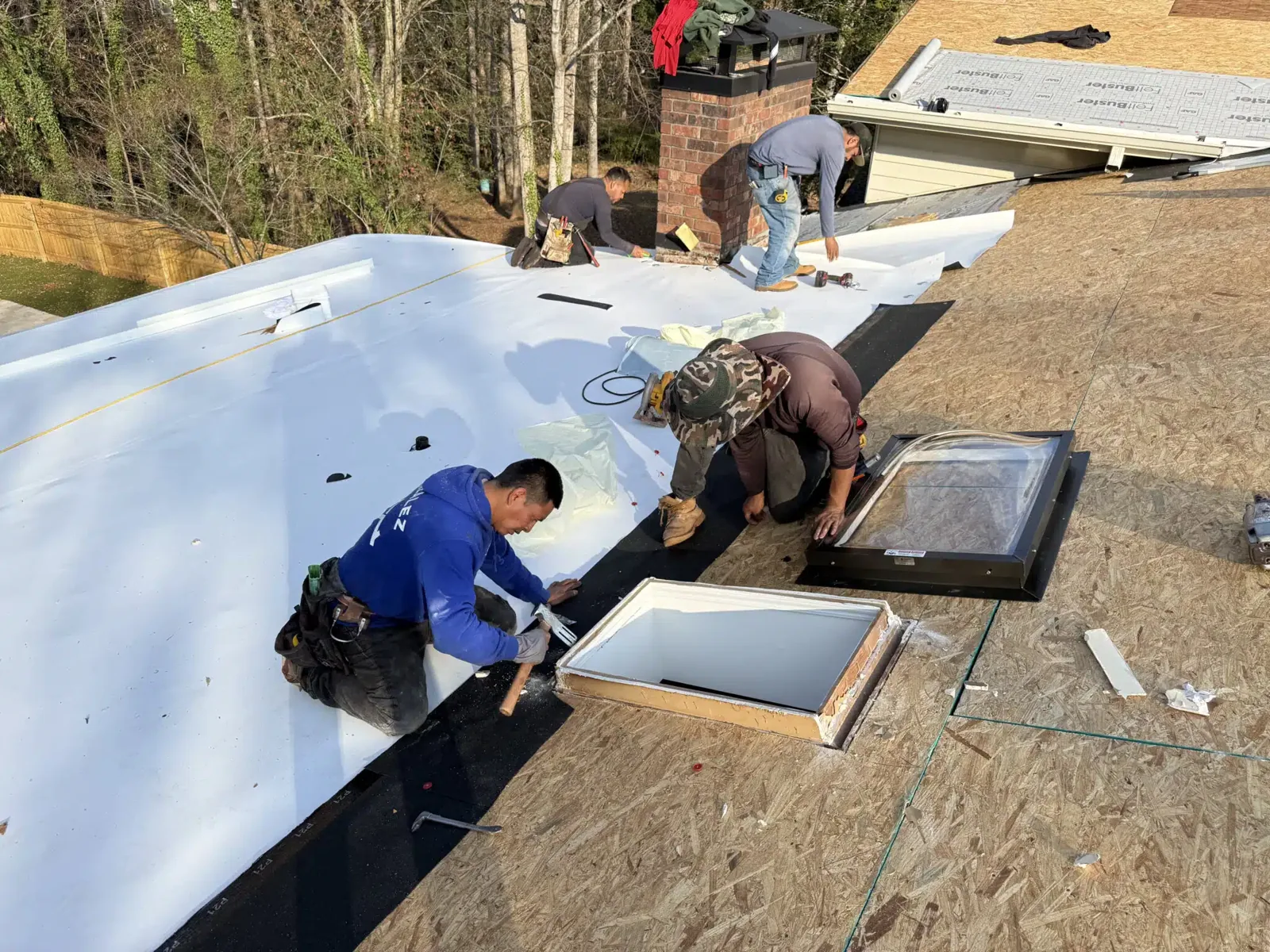
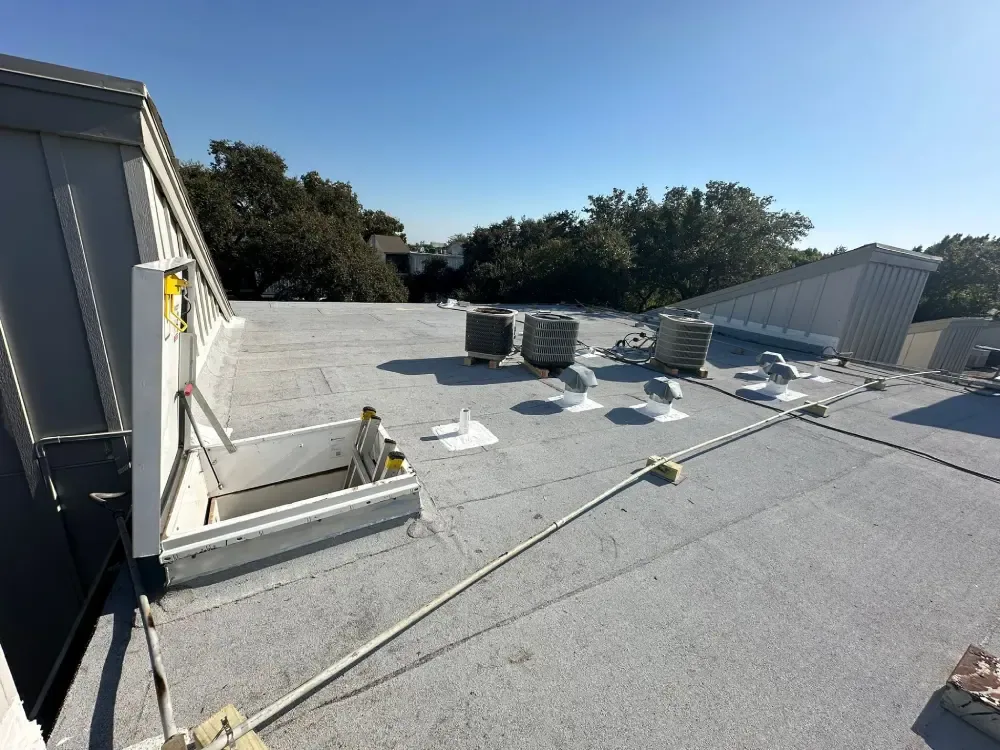
Behind a pitched metal section, the flat sections are usually a modified bitumen or TPO job. On any of them we check the clips, the seams, the trim and the wall. A pitched section over a stair tower or a rear addition is often reached only through the building, so the access route is settled before the order for panels is placed, along with where the old material will be lowered. Where a building sits in a district, we check its status first and keep the approval with the file.
Wind, salt and snow
Wind lifts a metal roof from the edges first. An EF2 tornado came through Bay Ridge in 2007, and the roof of a nearby Nissan dealership went with it. Nobody builds a plan on a tornado, but the event shows what a bad edge can cost. Clip spacing and panel gauge go tighter at eaves, rakes and corners, and the trim is fastened for wind uplift at the edge. We check those fasteners after every big blow.
The waterfront adds salt. The Coney Island peninsula rises only about 7 feet above sea level, and Emmons Avenue in Sheepshead Bay is a waterfront road with piers. Salt air eats weak finishes and bare fasteners, so near the water we look harder at scratches, cut edges and stainless versus plain screws. Snow is the other load, near 30 inches in a typical New York City year. Snow can slide off a pitched panel in a sheet, so a roof above a sidewalk gets snow guards.
Ridge, eave, wall and pipe
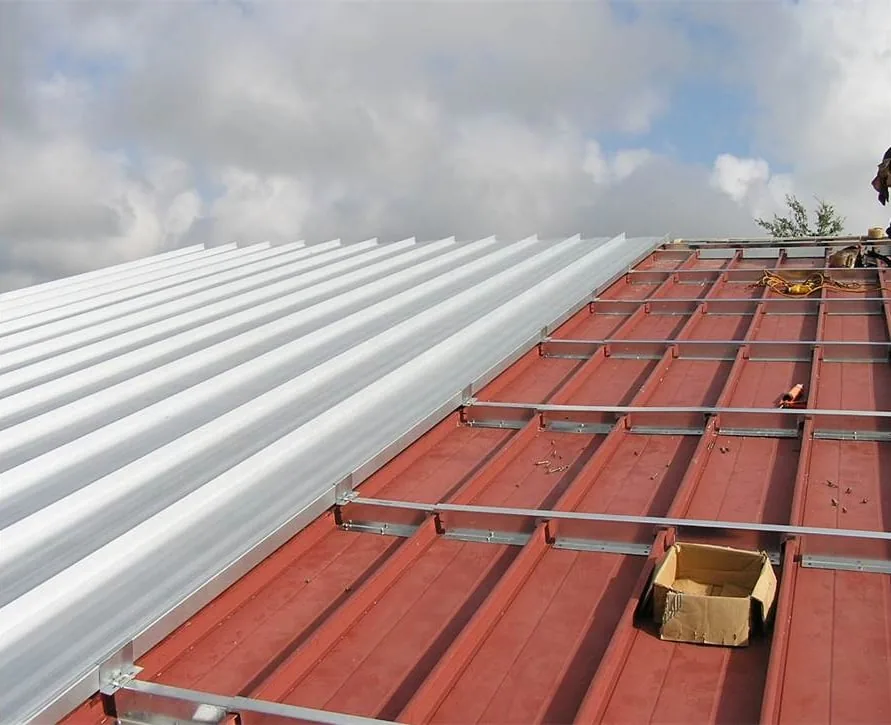
The ends of a standing seam roof are hand work. Ridge caps, eave trim, rake trim, wall flashings and pipe boots are cut and formed on the roof. Each one needs a clip pattern and a sealant bead that will move. If a panel is pinned at a wall flashing while the rest of the sheet slides, the metal tears at the pin.
That is the classic failure. We look for a trim piece fastened through the panel, a wall flashing screwed down hard and a pipe boot that grips the sheet. The fix is to free the sheet and fasten the trim through slots. A metal roof retrofit over an old exposed-fastener roof is different work, but the same attention to the ends applies. We photograph every end before it is covered and keep the pictures in the file.
Gutters, drains and storm water
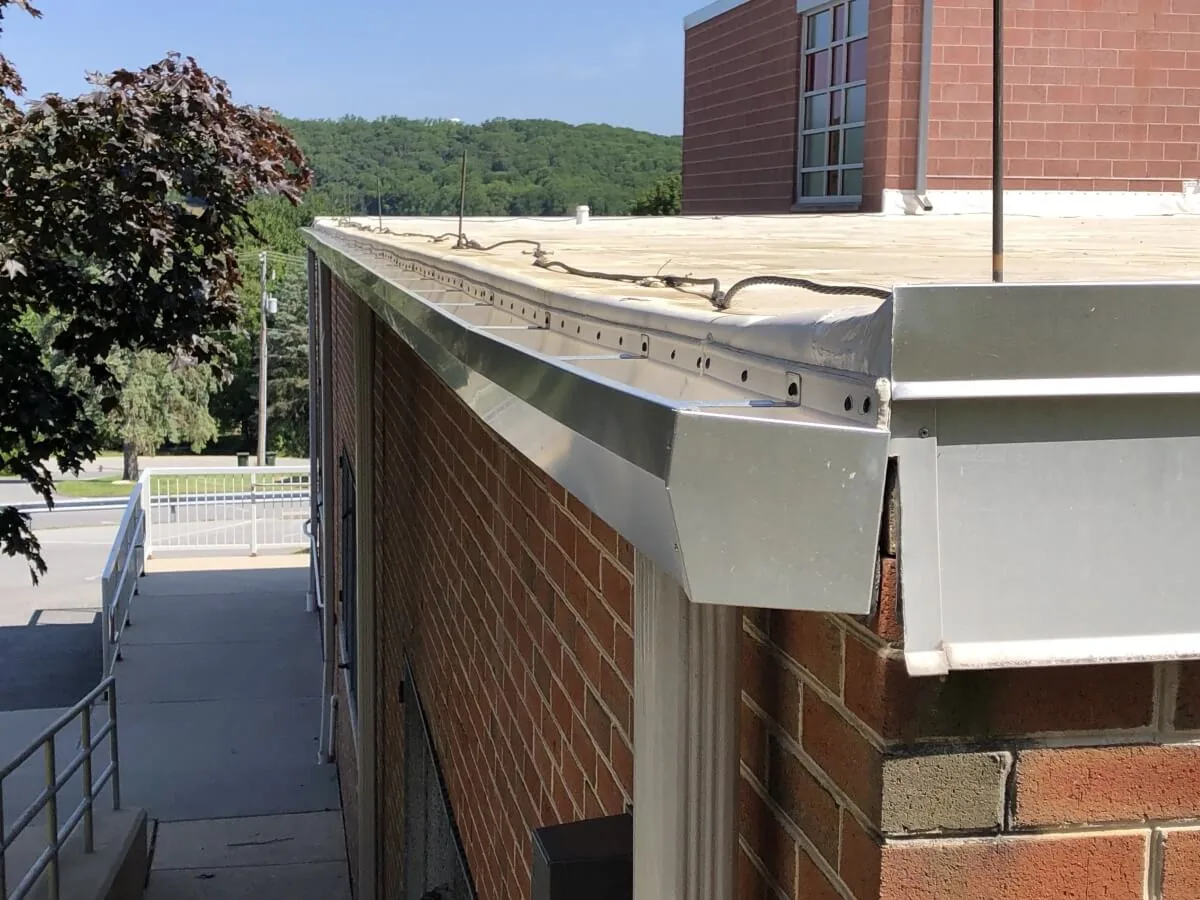
A metal roof sheds water fast, and the gutter has to take it. Look at the gutter on a Brooklyn roof after a hard rain. If the outer edge is wet and the wall below is stained, the gutter overflowed. Rain on the scale of Ida's remnants on September 1, 2021 fills an undersized gutter in minutes.
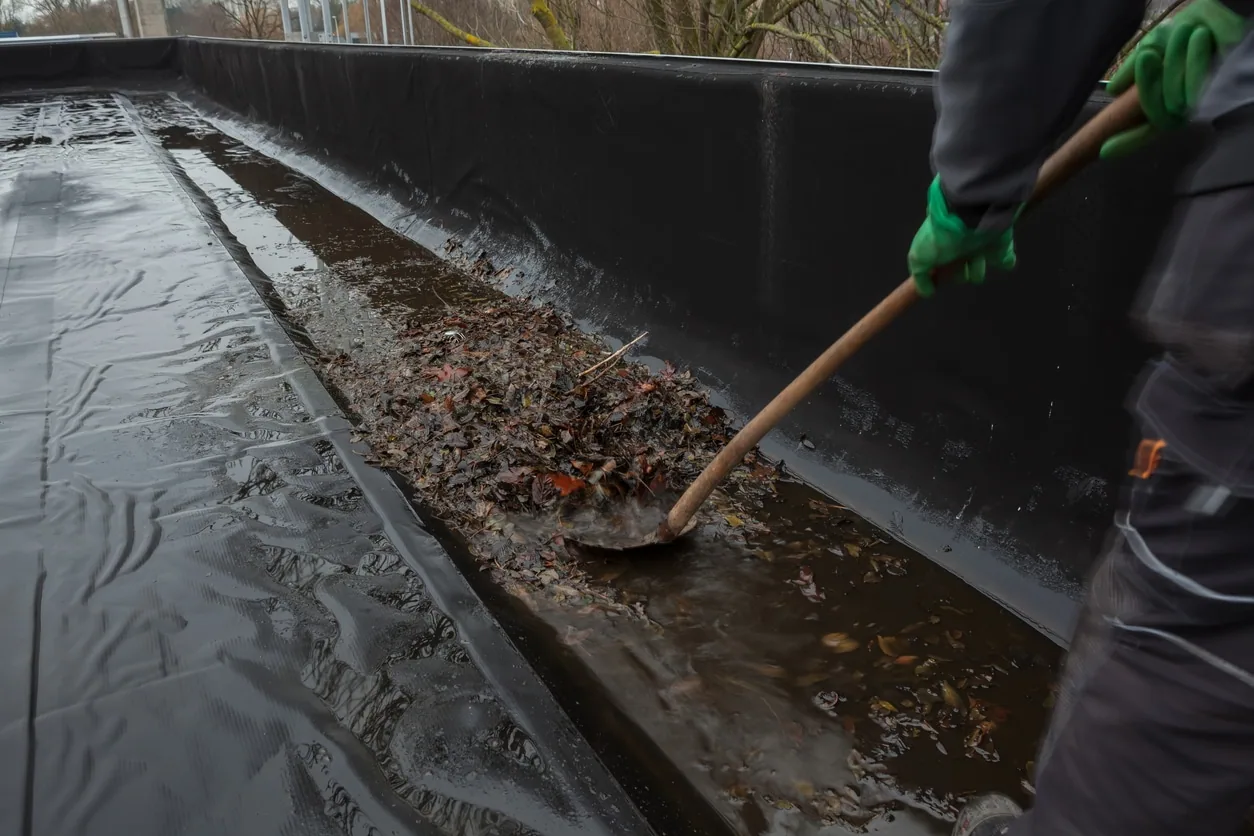
We size gutters and downspouts to the roof area, set the slope toward the outlet and clear the debris. Where a metal roof drains onto a flat roof below, that lower roof's roof drain and the tie-in to the old roof take the water, and we check both. A sump of water at the drain on the flat roof tells us a downspout is dumping on it. Winter freeze-thaw packs ice into valleys, so heat cable and clear valleys help.
Closeout walk and upkeep
The owner or super joins the final walk, where seam caps are checked, a few ends are hosed and the ceilings below get a look. The crew closes every punch list item before it leaves the roof. The file holds the clip layout, finish data, photographs and warranty terms. Upkeep is light: clear the gutters twice a year, touch up scratches, tighten trim and check sealant at the pipes. A short preventive maintenance visit each spring and fall keeps small items small. In a district, the file also holds the approvals and the samples of the approved finish.
Commercial Roofing Questions
Why does our metal roof make popping noises on sunny days?
Panels slide on their clips as they expand, and a clip that binds or a trim piece that pins the panel makes noise as it lets go. A tick now and then is normal. Loud, frequent popping, or noise paired with stains inside, points to something restrained. We look at the ends and the trim first, and we free anything that grips the sheet.
Can a standing seam roof go over our old flat roof?
Sometimes, where the slope, framing and insulation can take it. A framing system creates a slope over the old roof, and the new panels ride on that. The old roof must be dry, and the structure must carry the added weight with snow on top. A scan, a few cores and the engineer settle both. We put the price beside a new membrane so you can compare.
Do we need snow guards?
If the roof is pitched and sits above a sidewalk, entrance or neighbor's yard, yes. Snow slides off smooth metal in one sheet and can hurt someone. On a low-slope metal roof behind a parapet, snow stays put. We look at the slope and the drop zone and recommend guards where they matter. With snow near 30 inches a year, this is more than a theory.
How do we handle scratches in the finish?
Small scratches get cleaned and touched up with a compatible coating before rust starts. Larger damage may need a panel replaced. Near salt water, we are quicker to touch up, because bare edges rust faster there. We photograph each repair and keep the record, since the finish warranty often asks for it.