Metal Roof Retrofit in Brooklyn, NY
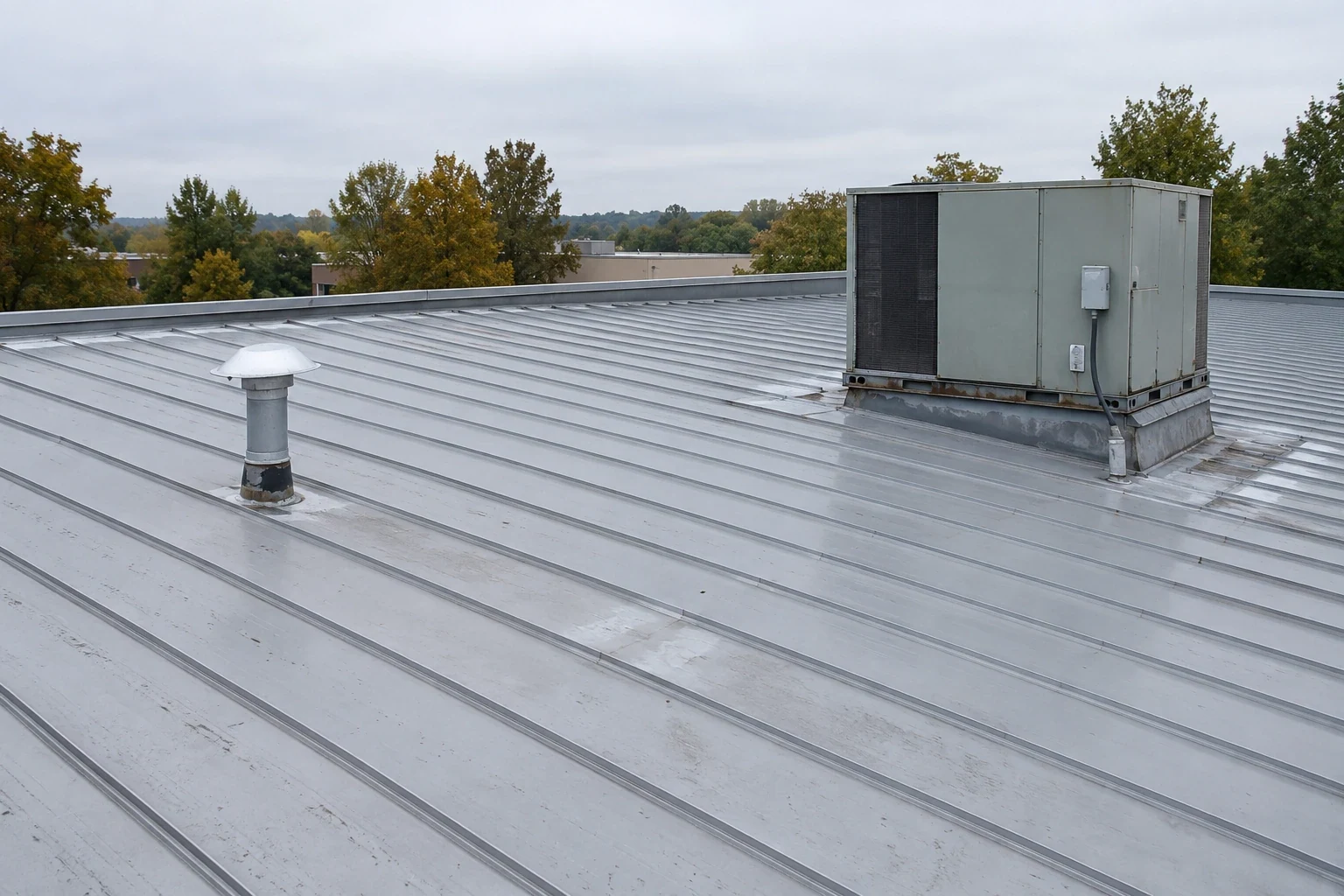
Walk a ribbed metal roof on an industrial building in East New York with a cordless driver and a handful of screws. Try each old screw as you go. The ones that spin without biting are the leaks. Behind a rubber washer gone to dust is a hole that has widened every winter. An exposed-fastener metal roof is held down by screws driven through the face of the panels, and the screws are the weak point. Retrofit means giving such a roof new life without taking it off: new fasteners, sealed laps, a coating or a new panel system over the old. On a Brooklyn, NY roof, the first job is finding out which of those the metal can still take.
What you see up there
Look at the screws, the laps and the surface. Washers cracked or missing. Screw heads backed out and tilted. Laps open along the ribs, with a dark stain below them. Rust blooming at the screw holes and along the cut edges. And a chalky, faded paint.
Look at the panels from underneath, if you can. Brown streaks and pitting along the fastener lines say water has been getting through for years. Press on the panels near the eave. Soft, thin or flaking metal is past saving. Sound metal with bad fasteners is a different case. We pull-test a sample of screws, count the loose ones by area and record the results on the roof plan with a photograph of each rusty spot.
Why this building
Exposed-fastener metal roofs are common on sheds, depots and plants, the kind of buildings that fill industrial parks. The East Brooklyn Industrial Park in East New York runs 44 blocks and was established in 1980, and the area between Avenue U and the Mill Basin waterway is zoned for heavy industry. On a service building we look at how the panels were fastened, how the laps were sealed and whether the purlins underneath still hold. A leak over stock or equipment costs more than the roof, which is why the pull-test walk is worth doing in either area.
Restoration, step by step
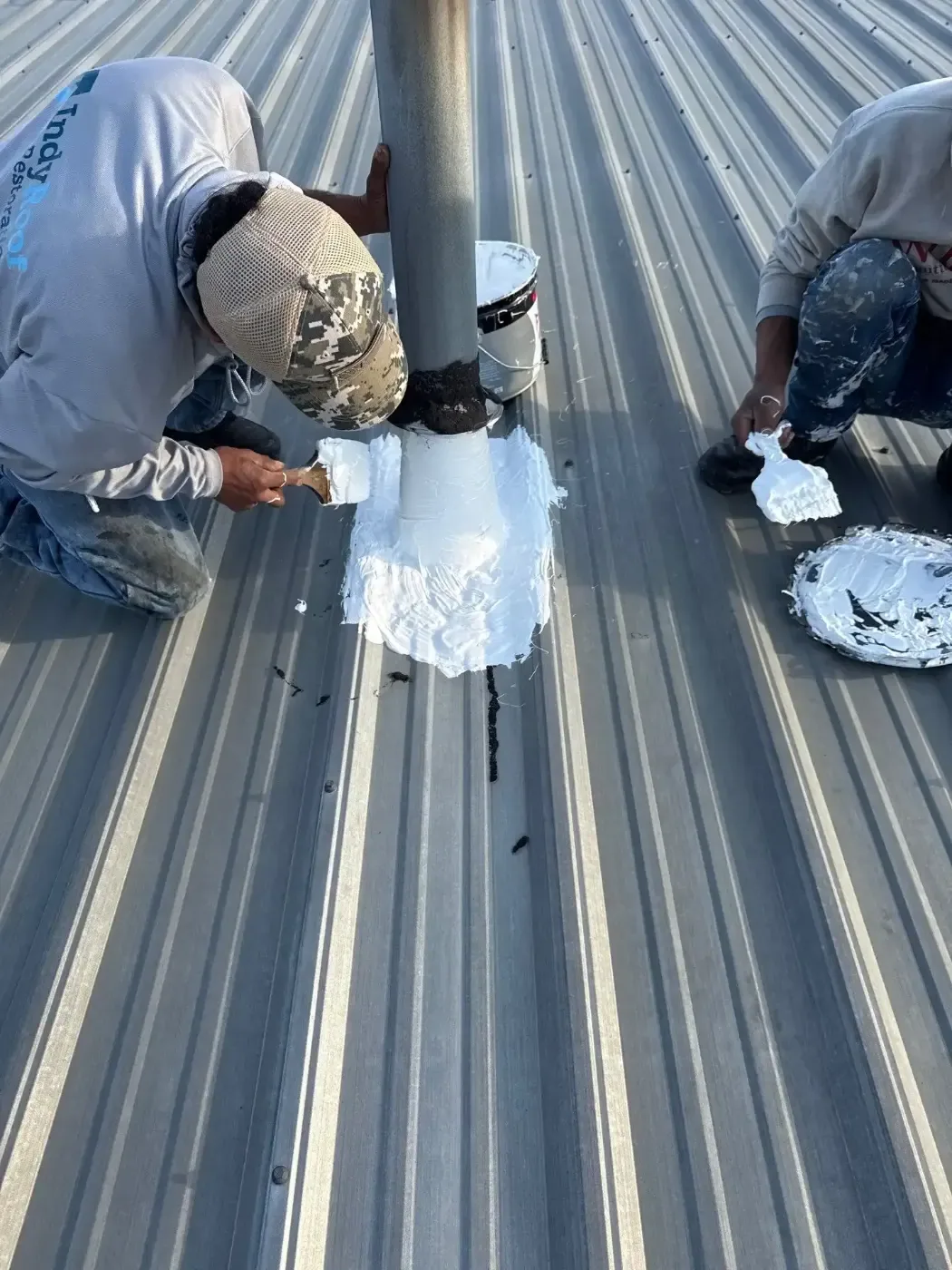
Restoration comes first when the metal is sound. We wash and treat the rust, then pull every failed screw and drive a larger one with a new washer into fresh metal or a stitch screw into the purlin. Laps get butyl tape or sealant, ridge caps get reset and penetrations get new boots. Then the whole surface gets a coating.
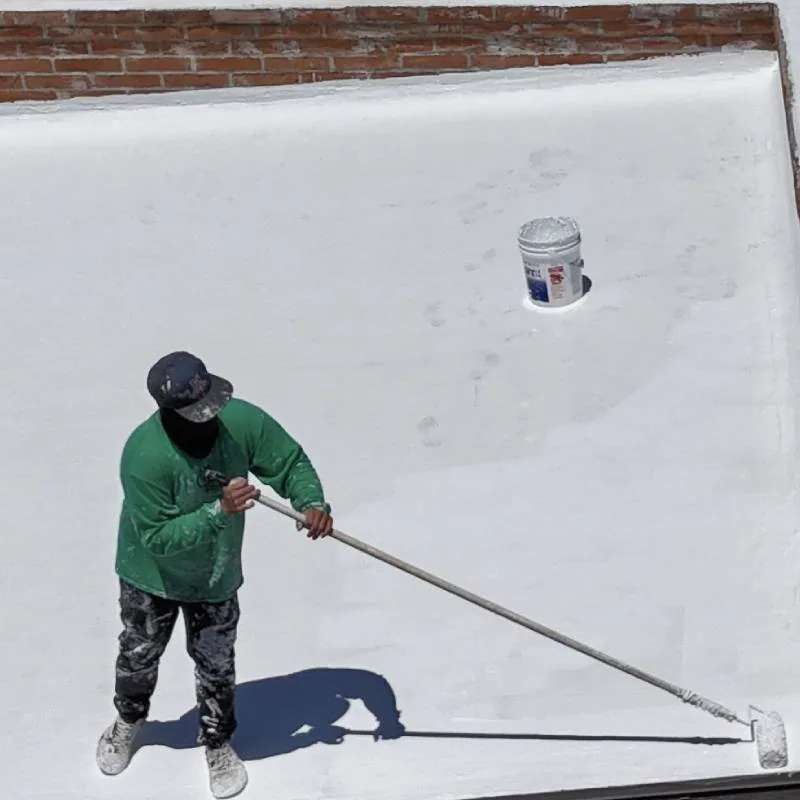
A silicone coating sheds standing water and reflects sun. Acrylic is lighter and cheaper on a roof that drains. We test adhesion on a small patch before we order. Done this way, restoration costs much less than replacement and gives the owner a defined stretch of service. A coating will not hold over active rust-through or panels that flex and crack, and the pull tests show which case applies.
When we go over the old metal
When the metal is too far gone to coat but the frame is sound, a retrofit system goes over it. Sub-purlins set a new plane, and new panels, often a standing seam metal system with hidden clips, ride on it. It keeps the building working and adds room for insulation. It also adds weight, so the building's engineer checks the frame with snow on top. Snow near 30 inches a year adds to the load. Wind governs the edges, and a roof can be lost at an eave, as the 2007 EF2 tornado in Bay Ridge showed. Panels and trim at the perimeter get tighter clip spacing, and the trim is fastened for wind uplift at the edge. Skylights, vents and curbs on the old roof are rebuilt at the new plane, not patched. Access for panels and a crane is planned early, and the neighbors are told the dates. A manufacturing plant roof may need the work done in sections around the production schedule, with a dry-in at the end of each shift and a named contact who can stop the crane if the line needs it.
Condensation, gutters and storms
Not every drip is a leak. A cold metal panel over a warm, damp room sweats on its underside, and the drip looks like a hole in the roof. The timing gives it away. A leak follows rain. Condensation follows cold nights and wet air. The fix is insulation and an air seal at the deck line, not more sealant. We check both before we write a scope.
Gutters and downspouts carry the storm. In a downpour like the one Ida's remnants brought on September 1, 2021, an undersized gutter on a long roof run overflows into the wall. We size gutters to the roof area and clear them. Canarsie sits on Jamaica Bay, and basements of many homes flooded during Sandy, so a metal roof near the bay is checked for wind and salt after storms. A leak that comes back after repair is often a flashing failure at a wall, so the wall flashing is reopened and checked rather than resealed from the outside. Where a gutter or valley is the real source, the stain on the ceiling can sit a long way from it, and the water test runs from the low side up.
Closeout walk
The final walk with the owner or super checks the screws, laps and trim by hand, with a few laps hosed and the ceilings below inspected. The punch list gets cleared before we leave. The file holds the pull-test results, the rust map, product data with batch numbers, coating thickness and warranty terms. A roof coating restoration gets a recoat date written into the file, so the next coat is planned and not discovered by a leak.
Commercial Roofing Questions
Can we just replace the screws and call it done?
If the panels are sound, new screws with new washers cure a large share of leaks, and that is a legitimate repair. If the holes have enlarged or the metal is corroded, new screws will not hold, and coating or an over-roof is the next step. We pull-test a sample to see which case you have. Send a photo of the worst screws and the laps, and we will tell you what to expect.
How long does a coating on metal last?
It depends on the product, the thickness, the exposure and the prep. We give an estimate after the survey and set a recoat interval. A coating that is walked every year and touched up where it scuffs lasts longer than one nobody looks at. Rust treatment under the coating matters more than the coating itself, so we do not skip it.
Will a retrofit change the height of the building?
A framed retrofit raises the roof plane a few inches, and the panel profile may look different. We show a section drawing so you can see the height change at the parapet and the eaves. If the building sits in a district, a review may apply. We check the status early.
What if the steel framing under the roof is rusted?
Structural repair comes first. The building's engineer looks at the purlins and connections that can be reached and specifies the fixes. A new roof on a weak frame fails early. We include that look in the survey and price the repairs as their own line.