GAF Commercial Roofing Systems in Brooklyn, NY
Lift a loose length of coping on a Brooklyn, NY parapet and look at what is tucked beneath it. If the edge of the roof system is curled, dry and open at the back, the wall below has been taking water for a while, whatever brand is on the label. GAF is a large roofing manufacturer. Its commercial range covers thermoplastic membranes, bituminous systems and liquid-applied coating products. When we work on a GAF roof, the job is to read the system on the building, find where it is failing and repair it in the manner that system calls for.
Reading what is on the roof
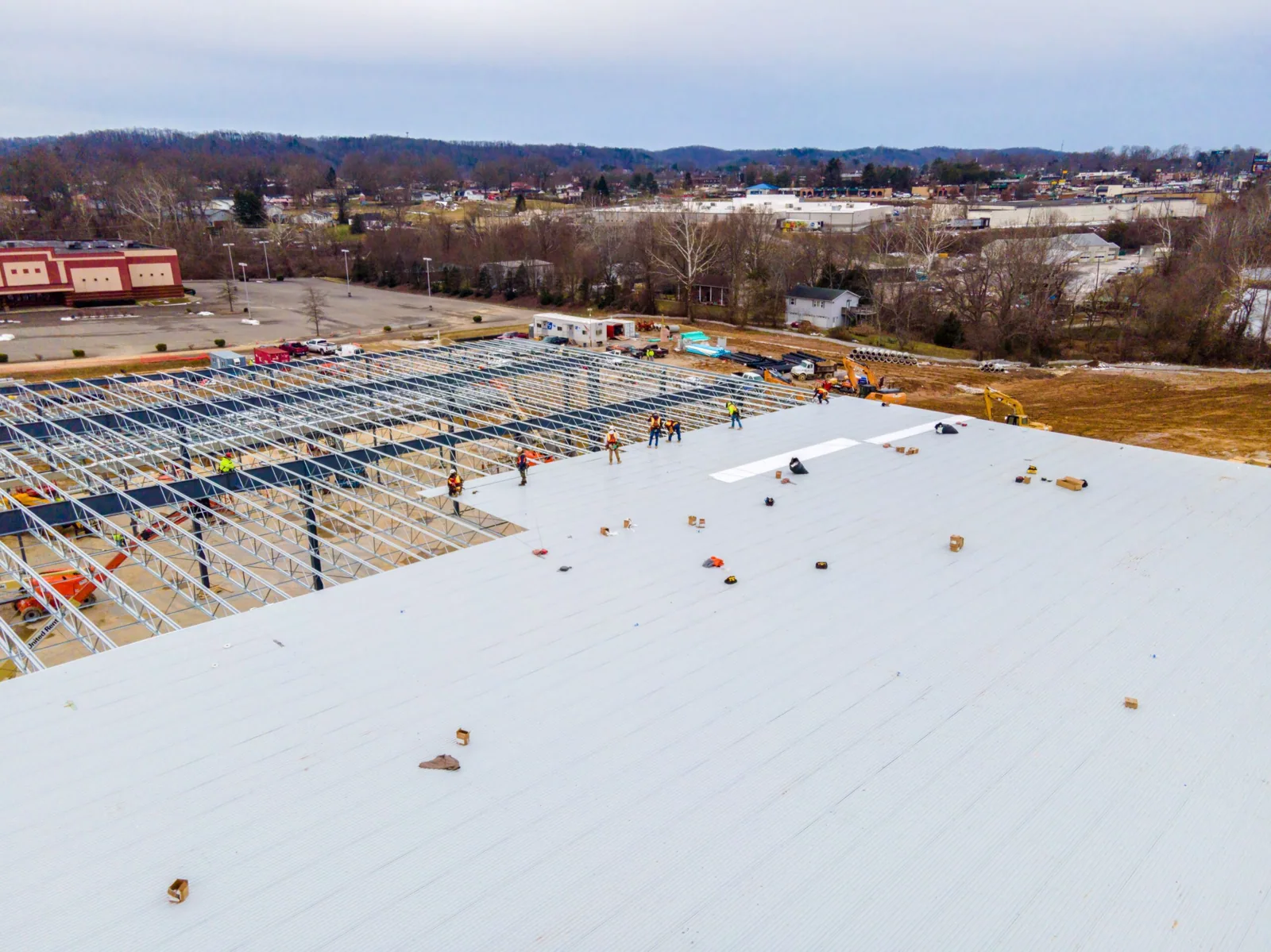
The first task is to find out which system we are standing on. A label, a purchase record or a core sample will tell us whether the roof is a single-ply membrane, a bituminous build-up or a coated older roof. That answer decides everything after it: which welding tool, which adhesive, which flashing material and which seam procedure will be compatible. Guessing wrong creates a repair that fails at the edge within a season.
Many Brooklyn roofs have been recovered or patched over the years, and the visible surface may not be the original system. We cut a small core, count the layers, check insulation condition and record the result. If the surface is a thermoplastic sheet, we look at heat-welded seams. If it is a bituminous assembly, we look at laps, granule loss and blistering.
Where these roofs fail first
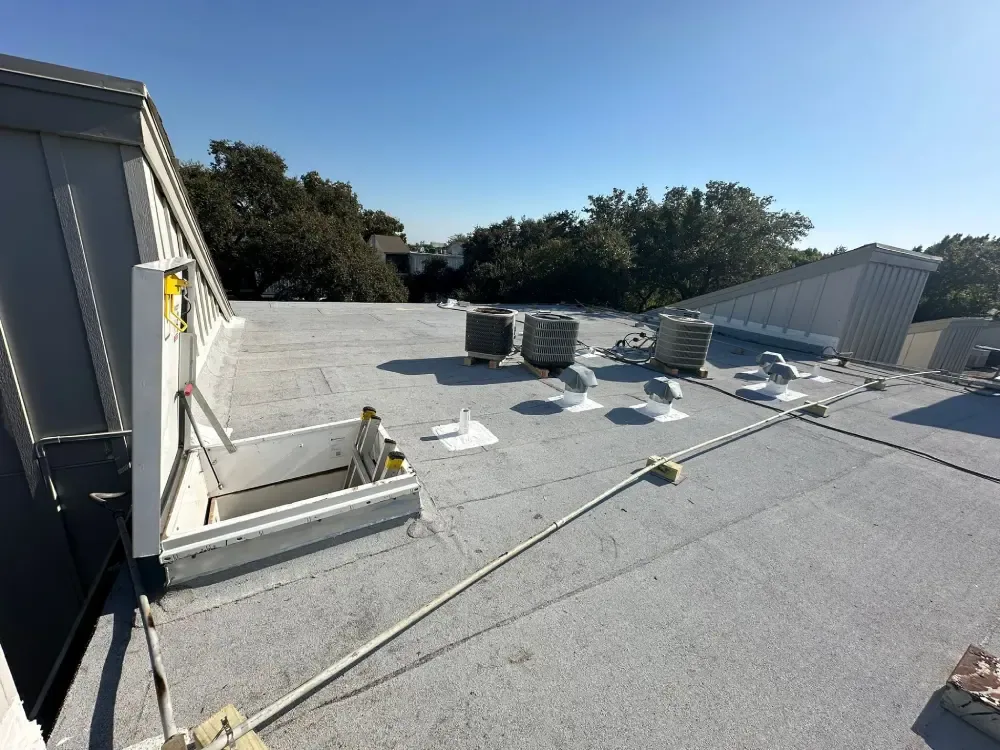
Across systems, the failures start in the same places. Flashings at walls and curbs separate when the substrate moves. Seams open where foot traffic has worn the surface. Drains clog and water ponds around the sump. Edge metal loosens under wind. The TPO roof and the modified bitumen roof each show their own pattern, but the root causes are shared: movement, water that stays too long and details that were never made quite right.
Roofs that held standing water after the Ida downpour of September 2021 deserve a close look at the field seams near the drains.
The fix in order
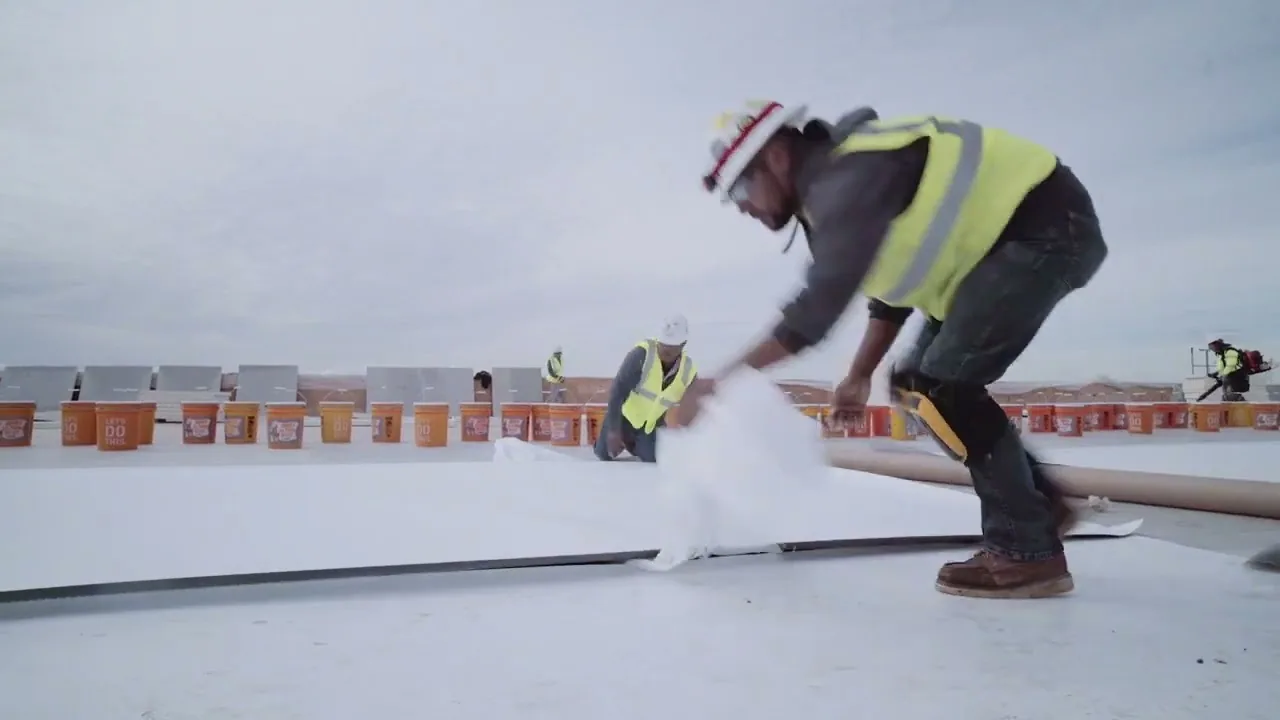
Repair starts with drying. We cut out wet insulation, replace it with matching board, and install the new membrane or sheet so that it laps over the old in the direction of flow. Thermoplastic patches are welded with the correct temperature and speed and probed after cooling. Bituminous repairs are torch-free where the building calls for it, using cold adhesive or heat-welded laps depending on the substrate and fire safety limits.
Flashings get the most attention. At a curb, a pitch pan or a parapet, we remove failed material back to sound substrate, prime where the system requires it, and install a new flashing with the correct termination bar and sealant at the top edge. Every repair is photographed before and after. A patch that cannot be traced and inspected later does not earn its place in the file.
Edges and wind
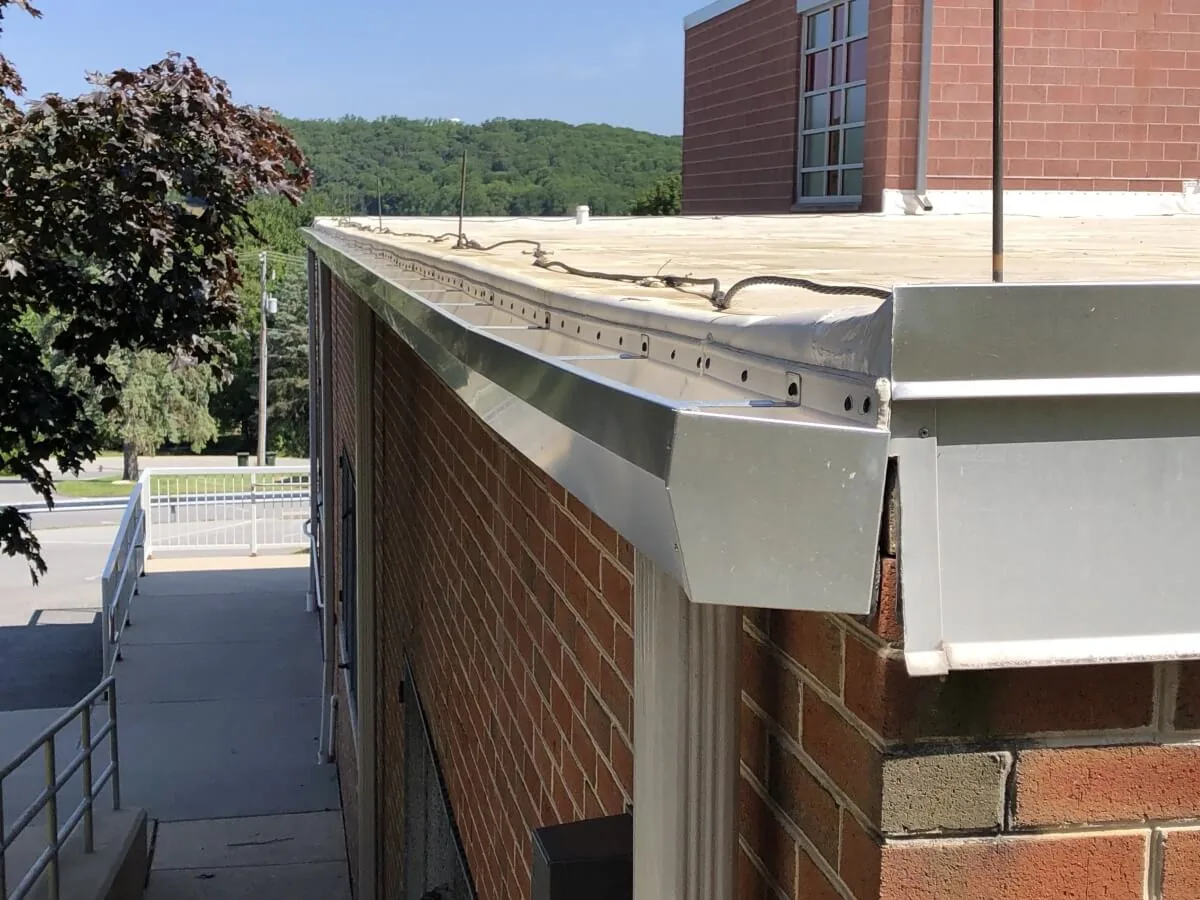
Wind pulls hardest at corners and perimeters, as the 2007 EF2 tornado in Bay Ridge, which tore a dealership roof from its building, made plain. Few Brooklyn storms come close to that, but the lesson applies to every edge. We check the edge metal and coping for fastening, laps and sealant, and we confirm that the membrane is secured at the perimeter with the method the system calls for. A loose edge strip is the first sign that uplift is working on the field behind it, and it is cheap to fix before a storm and expensive after.
Why this building matters
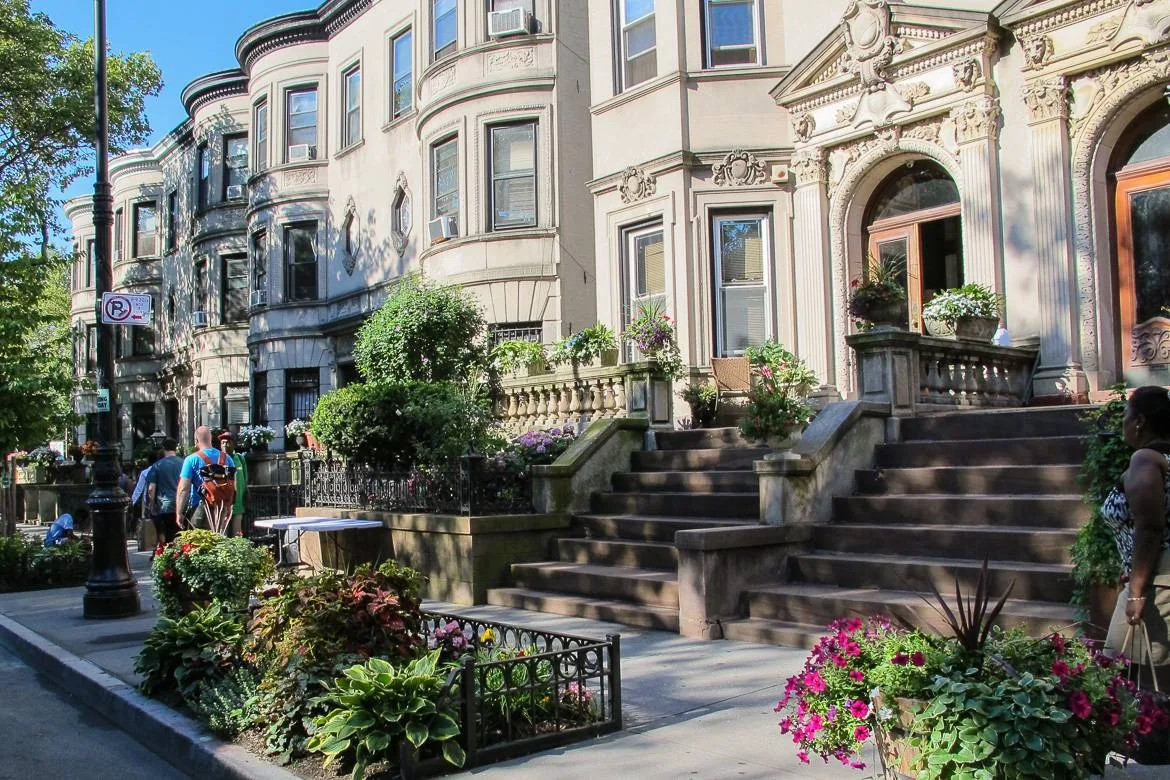
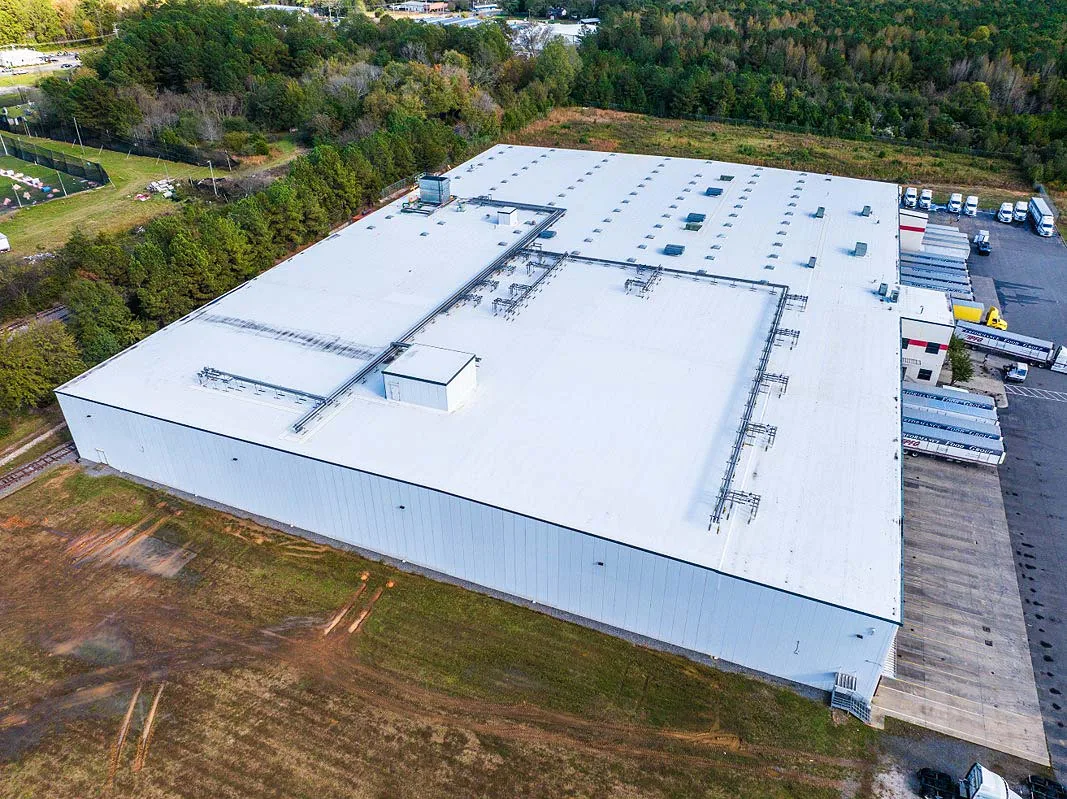
The same system behaves differently on different Brooklyn buildings. A warehouse roof in an open industrial park such as Flatlands, which covers 93 acres in Canarsie, may have little to break the wind, so the perimeter needs a secure edge. Where a loft building in Sunset Park carries tall parapets, water tends to hold against the base flashing after a storm. Rowhouse blocks in Bedford-Stuyvesant, with roughly 8,800 buildings predating 1900, have small roofs and many tie-ins to neighboring roofs, so a repair there is mostly a flashing job.
Where two systems meet at a party wall or a roof level change, we make the transition with compatible materials and a mechanical termination, rather than relying on adhesive alone.
Access and neighbors
Work on an occupied building has constraints. Hot work needs fire watch and permits, adhesives and solvents need ventilation planning, and noisy tear-off needs a schedule that tenants can accept. Staging space is limited in much of the borough, so we plan the hoist, the dumpster and the materials landing before the first day. For buildings along the Gowanus Expressway or near the Red Hook container terminal, truck access can set the work window.
Neighbors matter too. A shared parapet or a party wall means tying into someone else's roof, and we coordinate those tie-ins with the adjacent owner in advance so no gap is left open overnight.
Closeout walk and comparison with other makers
When the work ends, we walk the roof with the owner or manager, check drains for flow, probe the new seams and photograph every flashing. The punch list is closed in the same visit where possible. For owners weighing a replacement, we compare GAF systems against alternatives like Carlisle and Johns Manville on the criteria that matter: system type, attachment, wind rating needs, insulation, access and the budget that fits the building. We recommend by the roof, not by the label.
Commercial Roofing Questions
Can you repair a GAF roof if no one knows who installed it?
Yes. We identify the system from the label, the core and the surface, and we repair it with compatible materials. The installer's name matters for warranty questions, not for the physical repair. If a warranty may still be active, bring the document and we will check what the terms require before any work begins, so the repair does not create a coverage problem.
What happens when two different systems meet on the same roof?
We treat the transition as its own detail. A thermoplastic sheet and a bituminous membrane cannot be heat-welded to each other, so the junction gets a termination bar, a compatible flashing and a sealed edge. We place the transition at a curb or a wall where possible, so water has no path across the seam. That is a common situation on Brooklyn roofs recovered in phases.
Does a coating make sense over an older GAF roof?
Sometimes. A coating can extend the life of a roof with dry insulation and a sound membrane, and it adds reflectivity against the summer heat island. If the insulation is wet or the seams are open, a coating hides the problem without solving it. We scan for moisture and test adhesion before recommending a coating, and we say plainly when replacement is the better value.
What do you do about a GAF roof that ponds after rain?
Depth and duration of the pond come first, then the drain basket and pipe, then any deck sag near the sump. If a blocked drain is the cause, cleaning solves it. On a deck that has sagged, tapered insulation or a crickets-and-sump detail leads water to the drain. We document the area before and after so the improvement is visible.
Which GAF roofs are good candidates for recover instead of tear-off?
Roofs with a single layer, dry insulation and a sound deck. We confirm with a scan and cores, add a cover board where the system calls for one, and install the new membrane over the old. Roofs with wet insulation, multiple layers or a deck that flexes underfoot go to tear-off, because a recover would bury the problem and reduce the new roof's life.