Sika Sarnafil Roof Systems in Brooklyn, NY
Crouch low at dusk on a flat roof and sight along a welded seam with the light behind you. A good weld shows a clean, even edge with a thin bead of melted material along the lap. A bad one shows a gap, a pucker or a dark thread of dirt where the two sheets never fused. Sika Sarnafil makes thermoplastic roofing membranes whose seams are joined with hot air, along with the accessories, flashings and fasteners that complete the system. On Brooklyn, NY roofs under that name, the welds are the first thing we probe, because a sound weld is what the whole roof depends on.
How the welds fail
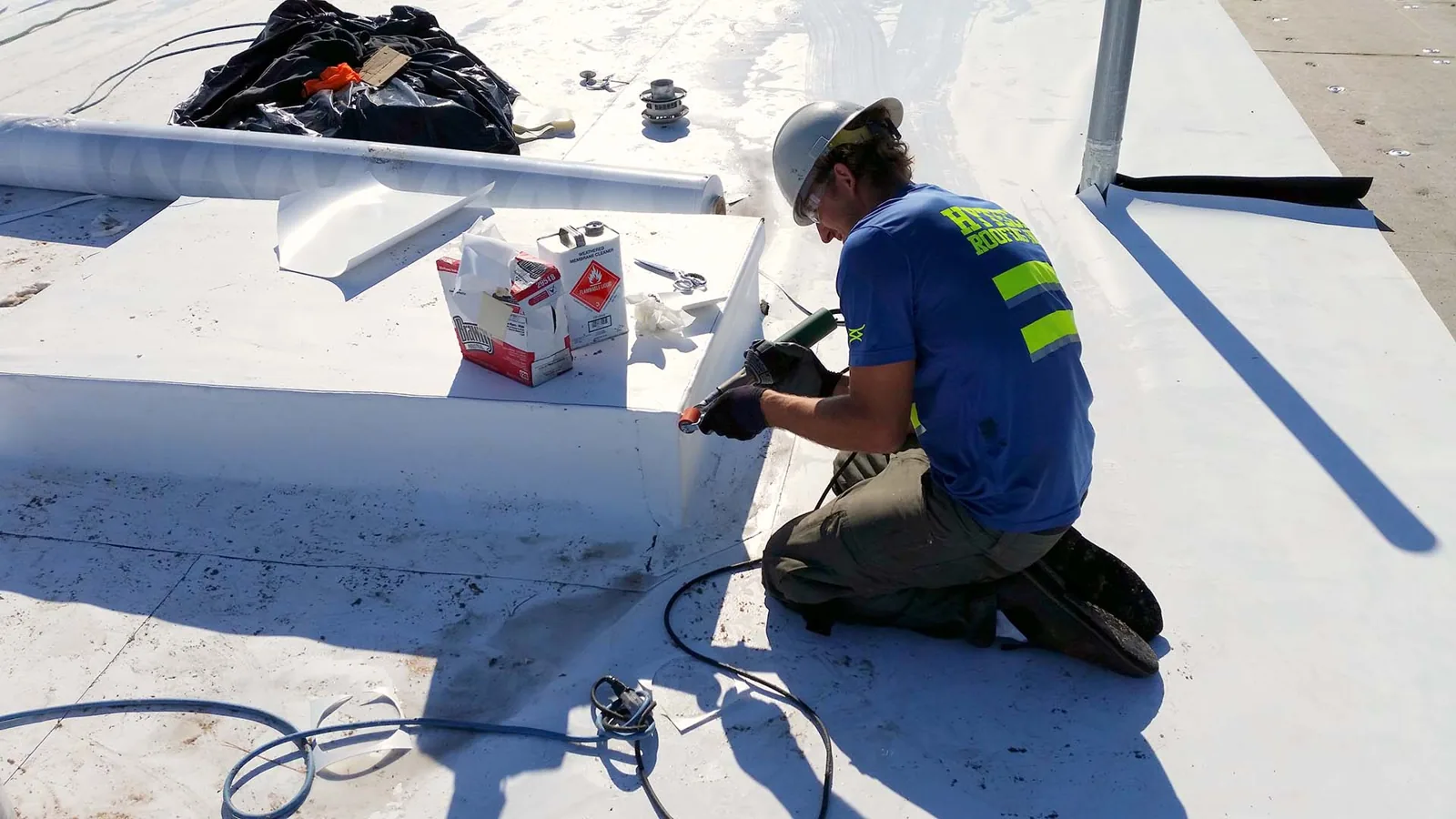
A hot-air weld melts the surfaces of two overlapping sheets so they fuse into one piece. When it goes wrong, the cause is usually temperature, speed or dirt. Too cold and the sheets only stick. Too fast and the weld skips. Dirt on the lap leaves a gap that looks sealed from above. After years of foot traffic and weather, a poor weld opens and lets water into the insulation.
We test welds with a blunt probe, running it along the edge of the seam and pressing at the T-joints. Open spots are cleaned, re-welded and probed again. Where the sheet has aged and stiffened, we weld a cap strip over the seam so the new bond lands on fresh material.
Chemicals, grease and exhaust
Thermoplastic sheets resist a good many chemicals that harm other membranes, which is why they appear on roofs that carry exhaust. In Greenpoint, Newtown Creek forms the northern boundary, and the neighborhood's industrial heritage includes a large 1950 oil spill. Industrial buildings in a district like that commonly carry exhaust stacks and process vents that can drop residue onto a roof, and restaurant buildings add grease from kitchen exhaust.
We clean the membrane before any repair, because adhesive and weld both fail over residue. Where exhaust discharges onto the sheet, we recommend a splash pad or an extended stack so the discharge does not sit on the seam.
Why this building
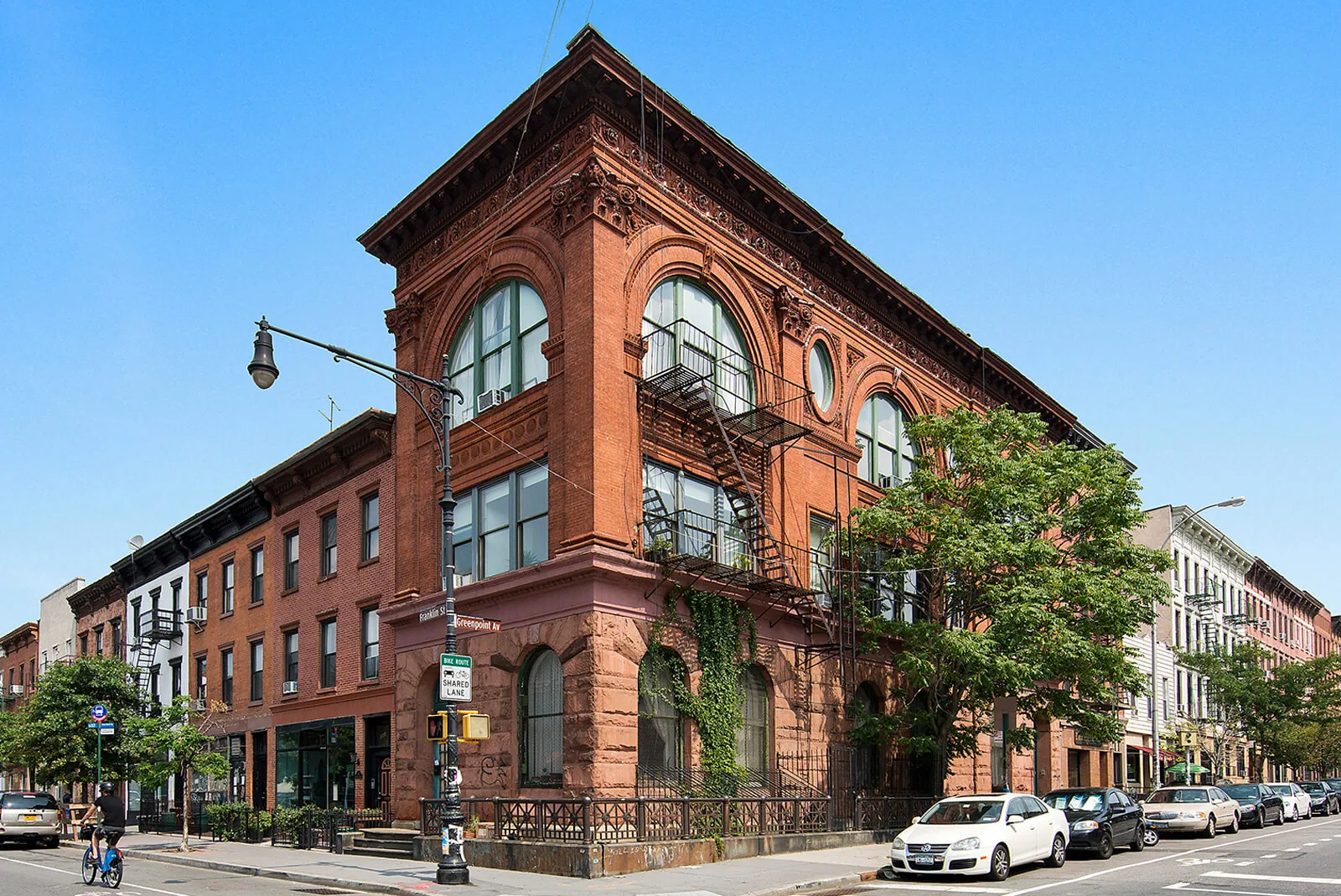
Ninety-five contributing buildings, early reinforced-concrete factories among them, make up Dumbo's historic district, and Empire Stores, a Civil War-era coffee warehouse, took on retail and office tenants in 2017. Roofs on historic buildings like these have to meet district rules as well as performance goals, so edge details and visible parapets are planned with care. Healthcare campuses, such as Maimonides Medical Center in Borough Park with 679 beds, depend on dry ceilings above critical rooms, so a roof with documented, probed seams and a clear drainage record is the standard to aim for.
Rowhouse blocks with shops below, common in Bedford-Stuyvesant, have small roofs with many wall terminations. A welded sheet and pre-formed corner pieces suit that kind of detail-heavy work, and the roofs are quick to inspect once a baseline is on file.
Drains and ponding
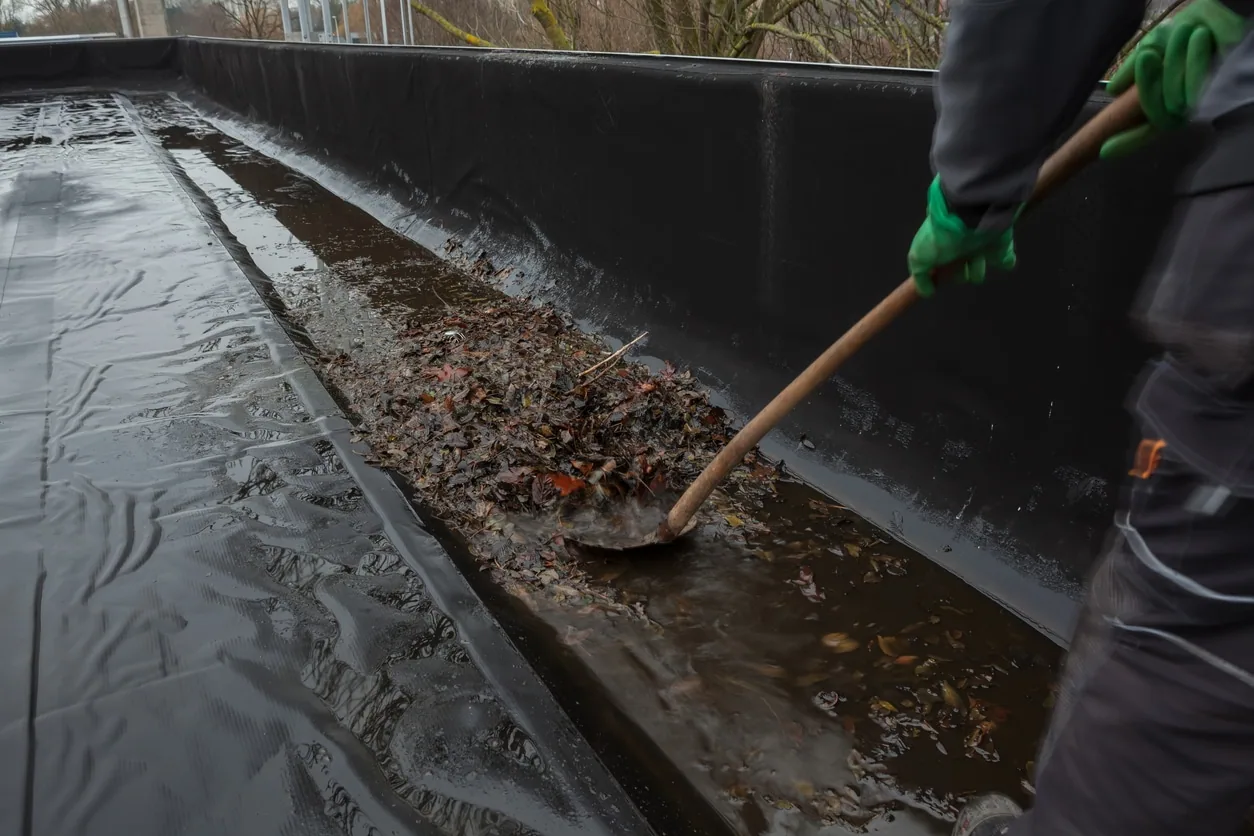
Water that stands on the roof for a day or more ages any membrane, and it also collects dirt, algae and debris that hide seams. We measure the depth at each low spot after rain, check that the drain is clear and look for sag in the deck. If the drain is blocked, cleaning solves it. Over a sagging deck the options are tapered insulation that leads water to the drain, or an extra drain at the low point.
Flash flooding makes this more urgent. Ida's remnants in 2021 set off the first flash flood emergency in the city's history, and a roof with weak drainage handles that kind of rain poorly. A well-sloped roof with clear drains is the best defense, and the drain and scupper work is where we start.
After a storm, a quick check of each drain and the nearest seams catches trouble early. A leak repair that starts at the weld nearest the stain is faster and cheaper than one that waits for the ceiling tiles to drop. The same logic applies to the quarterly walk many managers schedule on a welded roof: ten minutes at each drain and each wall corner, with the camera, produces a dated record that shortens every later visit and shows the maker, if it is ever asked, that the roof was watched.
The fix in order
Repairs begin by cleaning and drying. We cut out wet insulation, replace it, and weld a new section of sheet over the opening with generous laps. Corners and penetrations get pre-formed pieces where the system makes them, because a pre-formed piece is more reliable than one cut on the roof. Flashings are fastened at the top with a bar and sealed. Where hot work is restricted, as it is in some occupied buildings, we use the adhesives and cold methods the system allows.
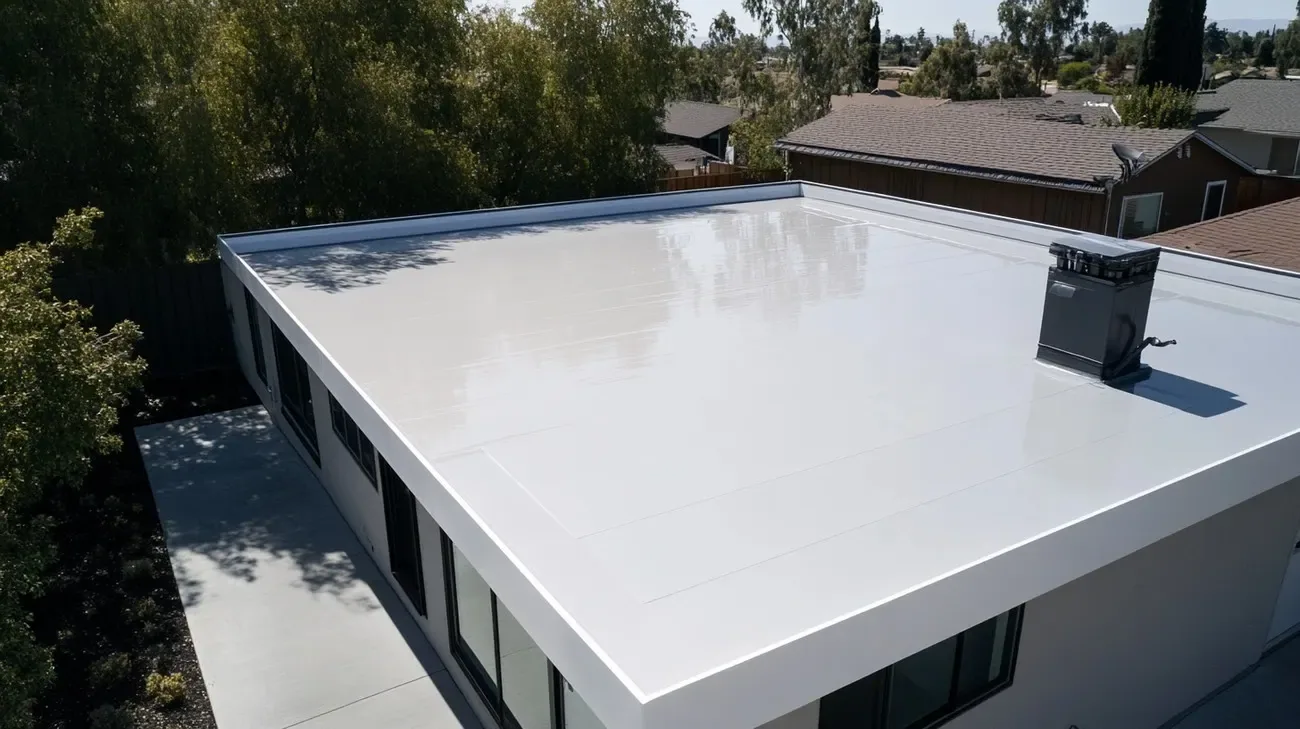
On a roof that has reached the end of its life, replacement follows the PVC roof procedure with new insulation, a cover board and a fully welded sheet.
Closeout walk
The closeout is a walk with the manager. We probe every seam we touched, check the drains for flow, photograph the flashings and mark off the punch list. We also record the weld temperatures and settings used, so a later repair can be matched. For owners who are comparing this maker against Versico or Duro-Last, we compare the systems on seam construction, flashing methods, cost drivers and the building's needs.
Commercial Roofing Questions
How do you check a welded seam without cutting it open?
We probe it. A blunt tool run along the edge of the seam finds gaps, and pressing at the T-joints finds weak spots. A visual check from above is not enough, because a weld can look closed and still be unfused. We mark every open spot with a pen, repair it and probe it again. Done once a year, this catches most seam failures before water gets in.
Does a thermoplastic roof need cleaning?
Occasionally. Dirt builds up in low spots and around exhaust, and a dirty surface runs hotter and hides defects. We clean with a mild detergent and a soft brush, and we avoid harsh solvents that can damage the sheet. Cleaning also lets us inspect the surface properly. On a roof with heavy grease, more frequent cleaning is part of the maintenance routine.
Does a leaking hatch or skylight curb mean a new roof?
Usually not. Curb leaks come from the corner flashings, the top sealant or the counterflashing, and we can rebuild those without touching the field of the sheet. If the curb has moved or the insulation around it is wet, the repair widens, but it still stays local. We confirm with a hose test before and after.
What should an owner expect when a roof is replaced on an occupied floor?
Noise at the start, from tear-off and hoisting, then quieter work as the new layers go on. We schedule the loudest tasks early in the day or outside tenant peaks, protect the interior below the work area and control odors from adhesives. Tenants receive notice before work begins, and we keep access routes and dock space clear throughout.
How does a cold winter affect welding and repairs?
Cold changes the work. Sheets stiffen, adhesives cure slowly and moisture or ice on the surface blocks a good weld. We repair in the temperature range the materials allow, and in winter we limit repairs to temporary measures that stop active leaks. The permanent fix waits for a dry, mild day. Brooklyn's roughly 30 inches of snow a year means a spring walk of every seam is worthwhile.