Versico Roofing Systems in Brooklyn, NY
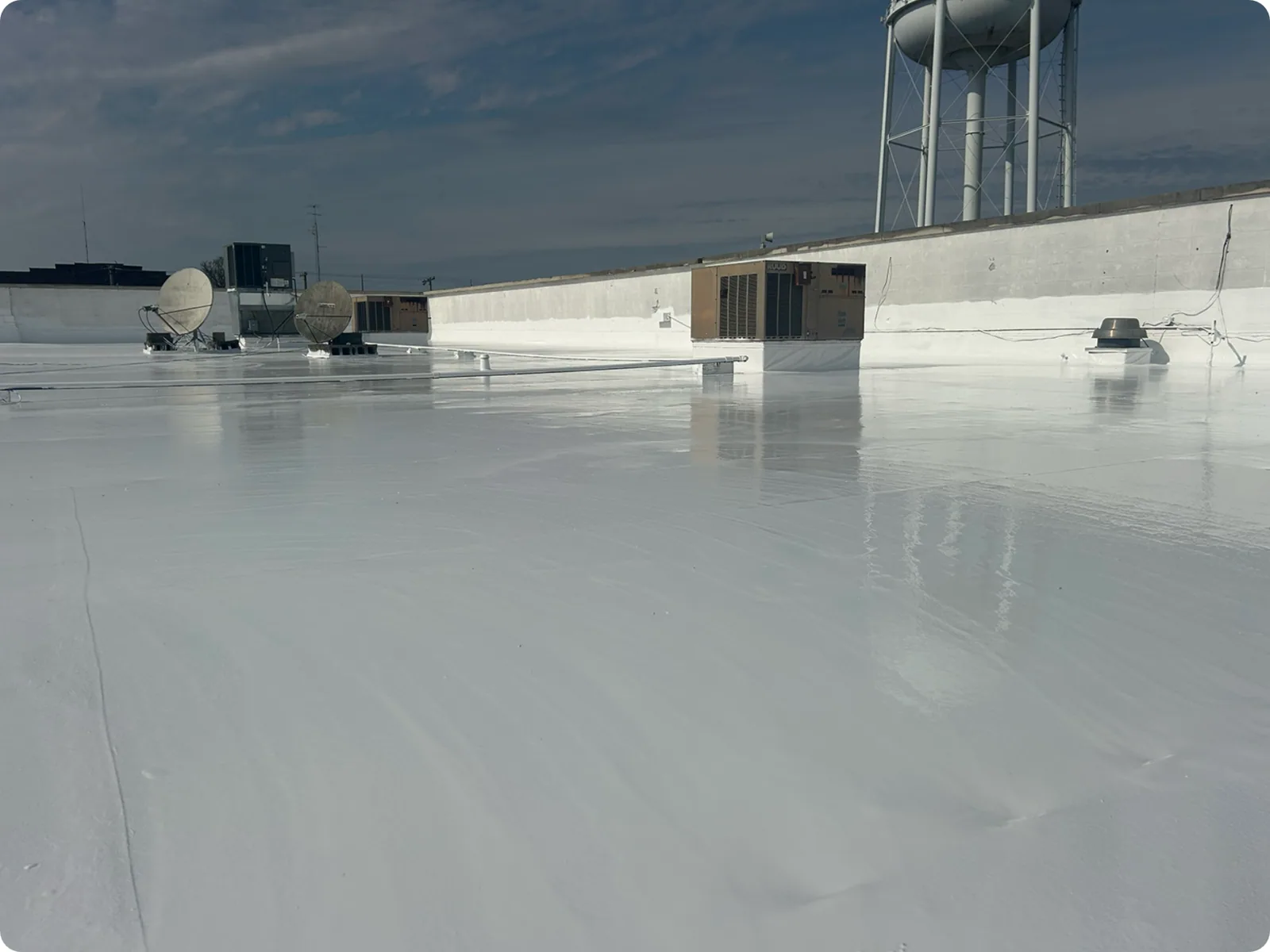
The hatch curb tells you the truth about a single-ply roof. If the flashing around it has pulled away at one corner, the sealant at the top has dried to powder and a brown line runs down the inside face, then the rest of the roof has probably been neglected the same way. Versico makes single-ply membranes in EPDM, TPO and PVC, plus insulation and accessories. On Brooklyn, NY roofs under that name, we start with the penetrations and curbs, because they fail before the field of the sheet does.
Pitch pans, pipes and curbs
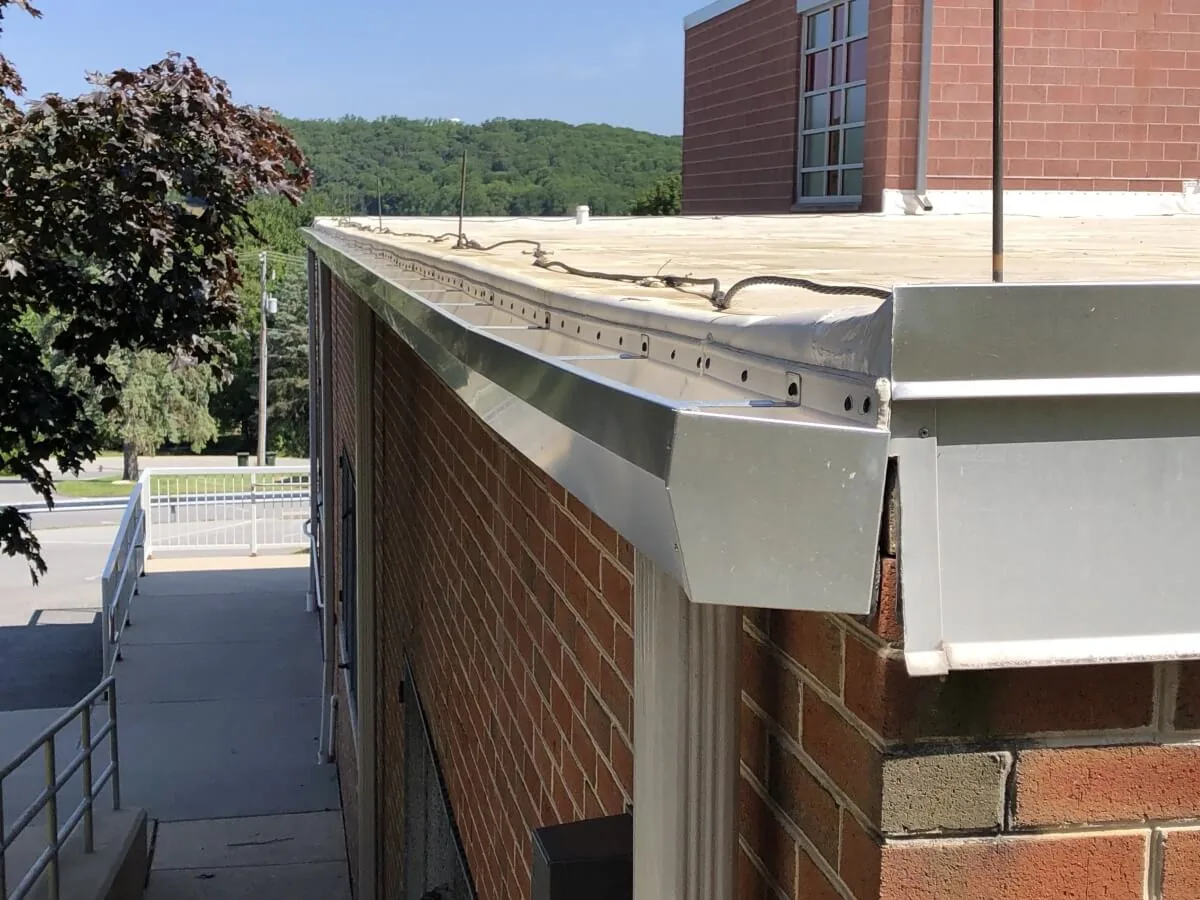
Every penetration is a hole in the roof that has to be sealed for as long as the roof lasts. Pitch pans, the open metal boxes filled with sealant around pipes and conduit, are the oldest fix and the one that cracks fastest. When the filler shrinks, water goes straight in. Pre-formed boots and flashing collars last longer and are what we install when a pan fails. For hatch and equipment curbs, we rebuild the flashing in one piece with a termination bar and sealant at the top.
Brooklyn rooftops collect penetrations over time: a new exhaust fan, a conduit run for a tenant, a satellite dish mount. Each addition is a possible leak, and we count and photograph them on the first visit.
How the sheet is attached
Attachment sets how the roof behaves in wind and what repair is possible. A fully adhered sheet is bonded to the substrate. A mechanically attached sheet is fastened through plates along the seams. A ballasted sheet is held down by stone. On an adhered roof, a lost bond shows up as a bubble that moves under foot. On a mechanically attached roof, loose fasteners show up as a ripple along the seam line. On a ballasted roof, a wind-scoured corner shows bare membrane where the stone has blown away.
Each pattern calls for a different repair. A bubble is cut out and re-bonded. A loose line of fasteners is re-secured with new plates. A scoured corner is re-ballasted with heavier stone or converted to a fastened edge.
Buildings with long roofs
Flat commercial roofs in East New York include those in the East Brooklyn Industrial Park, 44 blocks established in 1980 around Atlantic Avenue and Sutter Avenue. Gateway Center in Spring Creek, a shopping complex on a former landfill by Jamaica Bay, opened its phases in 2002 and 2014. Retail roofs of that type often carry many rooftop units, and each unit adds curb flashings to inspect.
We map every unit and curb on the roof plan, record the flashing condition and rate each one. Over a season, the map shows which curbs leak, which were repaired and which are still open.
Perimeter and wind
A roof lifts from the edge first, so the perimeter takes the strongest attachment. Brooklyn's coastal storm history includes Sandy's 2012 surge, which put large parts of Red Hook underwater, and a 2007 EF2 tornado that peeled a dealership roof in Bay Ridge. Few storms are that severe, but every roof sees gusts and uplift. We check the edge metal and coping for fastening, and we check that the membrane is secured at the edge with the right pattern of plates or adhesive.
After a storm, we walk the perimeter first. A strip of edge metal that has shifted a half inch is an early warning that uplift is working on the field.
The fix in order
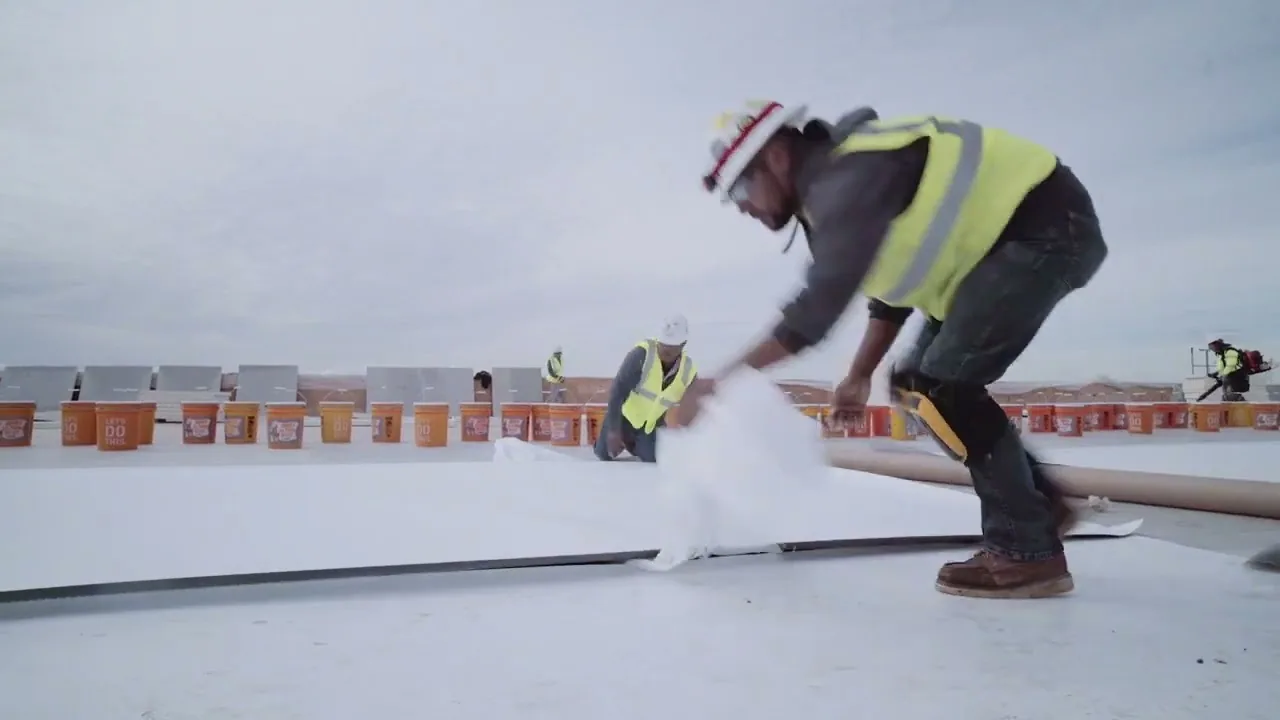
We repair in the order that stops water first. Clear the drains, then mend open flashings, then close seams, then address ponding and wear. Wet insulation is cut out and replaced before the new sheet goes over it. Seams are cleaned, primed where the system requires and joined with tape, adhesive or heat as the material calls for. Details are photographed before and after.
When the roof is at the end of its life, we discuss a TPO replacement, an EPDM replacement or a recover, depending on the insulation, the layers and the owner's budget. The aim is the cheapest option that gives a sound roof for the period the owner plans to hold the building.
Tenants and access
Single-ply work often happens over people who are still working. Adhesive odors, hot-air welding and the noise of hoisting all have to be planned around the space below. For an occupied building we agree on work hours, protect the intakes of rooftop units from fumes and keep the stair tower clear. Staging on a narrow Brooklyn street takes advance notice, so the hoist, the dumpster and the delivery window are booked before the first day. Tenants receive a short notice, and the super gets a contact for the crew lead.
Closeout walk
We end each job with a walk. The manager sees the curb flashings, the drains running and the probed seams, and gets the photographs and the punch list. If a manufacturer warranty applies, we update the warranty file the same week. Where Carlisle SynTec or Soprema is also on the table, we sketch each system for that building and let the roof, not the label, settle it.
Commercial Roofing Questions
Why do pitch pans fail so often?
The sealant inside shrinks and cracks as it ages, and the pan itself holds no slope, so water sits in the gap. Sun, cold and movement of the pipe all work at the filler. A pre-formed boot or a sealed collar removes the open pan from the picture. We replace failed pans with a boot where the pipe size allows and re-seal the rest on a schedule.
Is a bubble in an adhered sheet worth worrying about?
Sometimes, if it is small and dry. A bubble that sounds hollow but holds no water may be trapped air. A bubble that is soft, wet or growing means moisture has gotten under the sheet. We cut it open, check the insulation, dry or replace it and re-bond the sheet. Leaving a wet bubble lets the insulation degrade, so we test before deciding.
What is the difference between a repair and a section replacement?
A repair fixes a defect: a seam, a flashing, a puncture. A section replacement removes a larger area of sheet and sometimes insulation, and installs new material that ties into the old. We recommend a section replacement when the damage is wide, when the insulation is wet or when repeated repairs in the same area have failed. The cost is higher, but it removes the leak pattern.
How do you protect a rooftop unit's curb during a re-roof?
We coordinate with the mechanical trade. Units are shut down and supported if they must be lifted, and the curb is flashed to the new height before the unit is set back. We insist on a roofer present when a unit moves, because disconnected ducts and open penetrations during rain cause damage. A sealed curb is part of the closeout walk.
What if the roof already carries two or three layers?
We cut cores to count the layers and check the insulation. Multiple layers add weight and trap moisture, and limits apply to how many layers a roof can carry. If the roof is at its limit or the layers are wet, the right answer is a tear-off. If one layer is sound and dry, a recover may still work, and we explain the choice with the core results.