Soprema Roofing Systems in Brooklyn, NY
Where a roof meets a neighbor's parapet, the tie-in to the old roof is the weakest line on the building, and it is also the line where open flame is least welcome. Soprema's commercial range runs from modified bitumen membranes to liquid-applied waterproofing and flashing resins, with single-ply sheets and insulation alongside. On a tight Brooklyn, NY block, that mix matters, because the right system at a party wall might be a torch-free bituminous sheet or a liquid flashing brushed on around the pipes and corners. We choose by the building and what the work will touch.
Modified bitumen basics
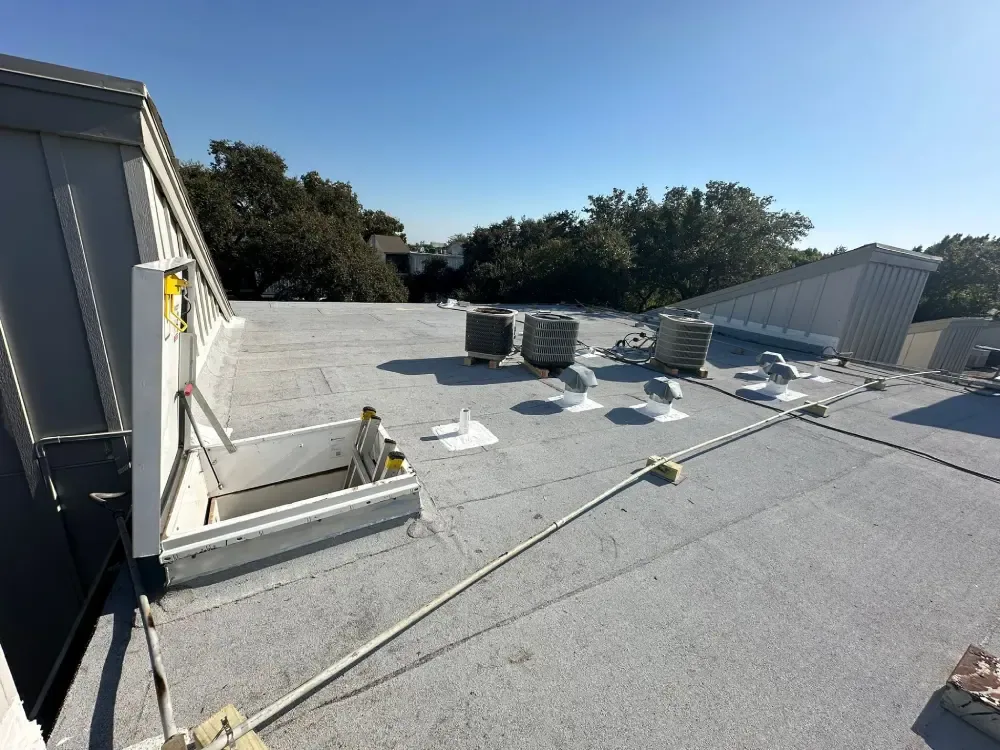
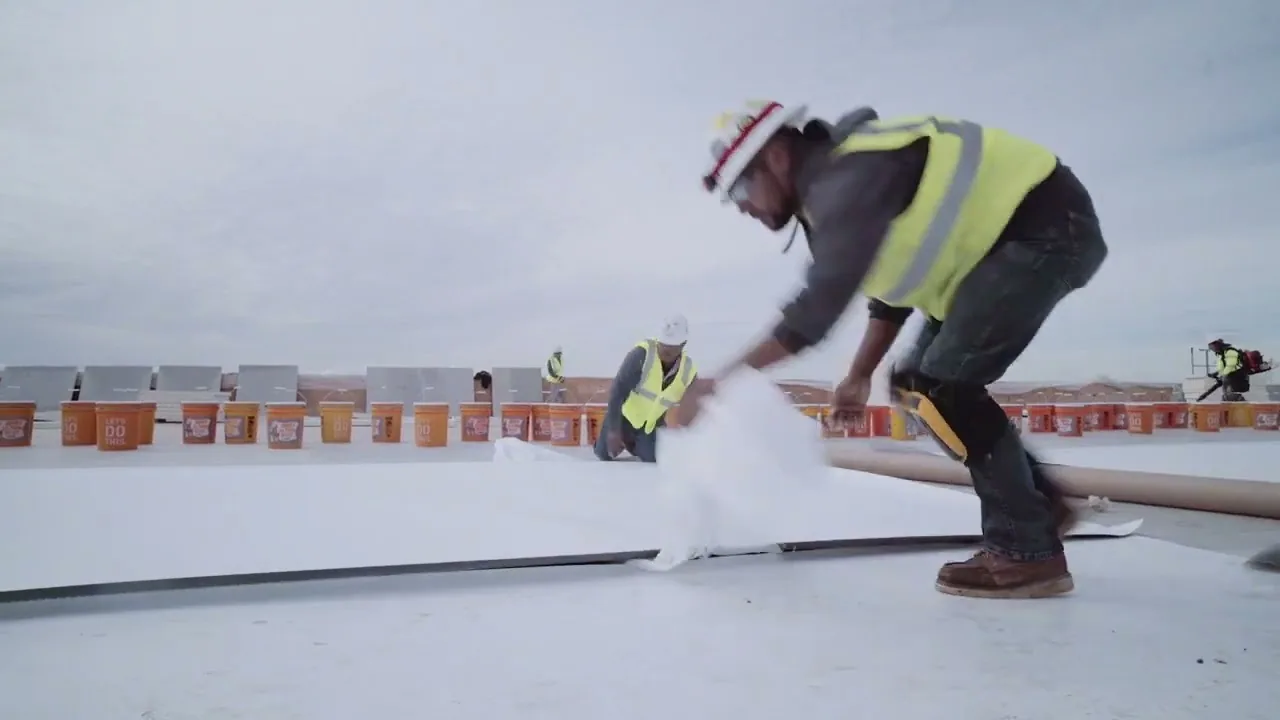
A modified bitumen roof is built from layers of asphalt-based sheet reinforced with polyester or fiberglass and modified with polymers for flexibility. The sheets are joined by heat, by hot asphalt, by cold adhesive or by self-adhering backing, depending on the product and the site. Multiple plies and a granulated or coated top surface give the roof weight and wear resistance, and the system has a long record on low-slope roofs.
Its weak points are laps, flashings and the surface. Laps open when heat or movement defeats the bond. Flashings crack where the sheet turns up a wall. The surface granules erode, exposing the asphalt to sun and speeding its aging. We check for all three.
Wet insulation under the plies is the finding that changes the scope. Once the felts or sheets have been wet for a season, the board below them loses strength, and the repair has to reach down to it. We scan before we cut, so the opening matches the damage.
Liquid-applied flashing
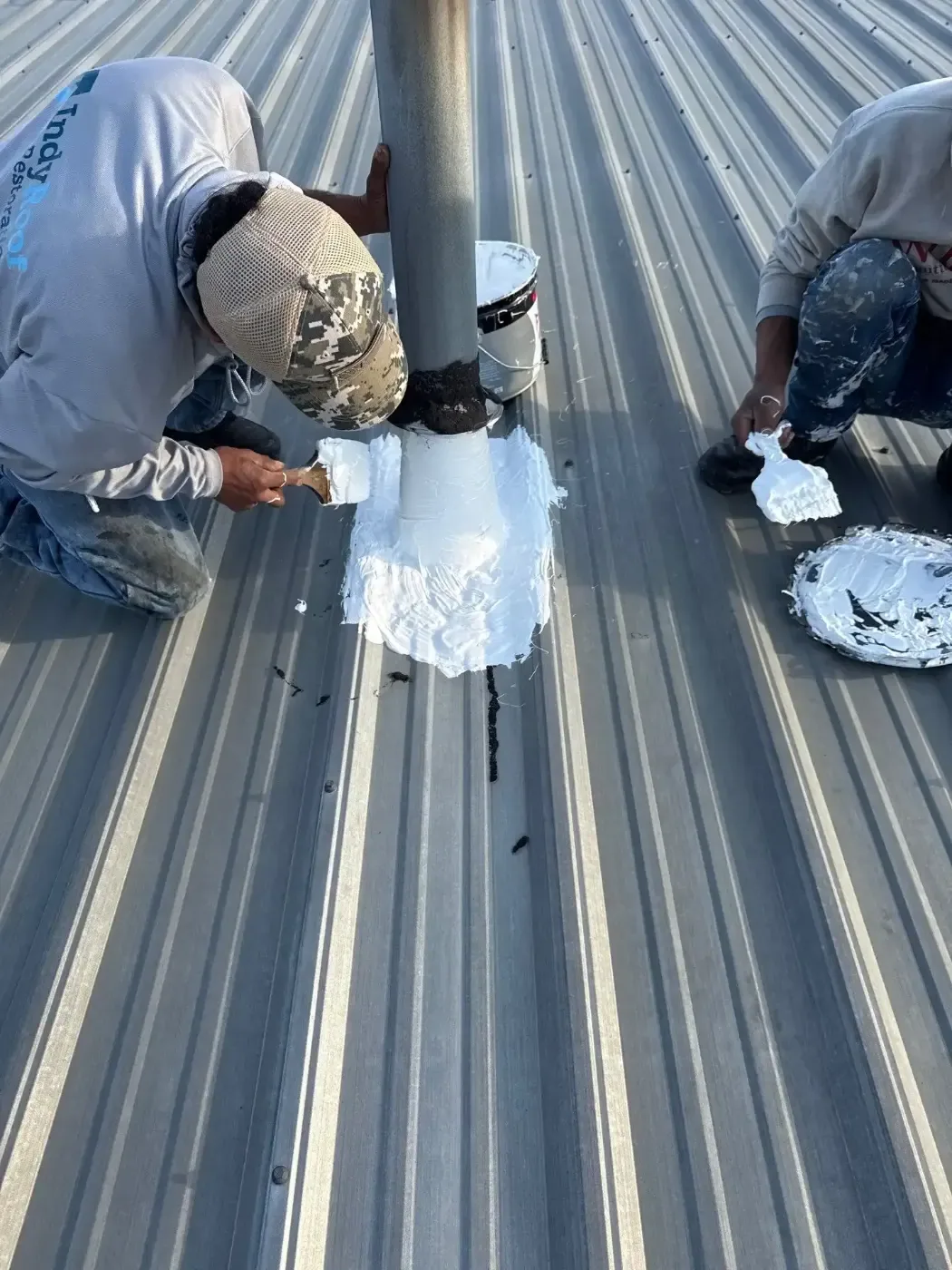
A liquid-applied resin is brushed or rolled onto a prepared surface and cures into a continuous layer with no laps, often with a reinforcing fabric. It excels at awkward geometry: pipe clusters, curb corners, drain bowls and the junctions of different materials. Because it needs no open flame, it suits occupied buildings and tight rowhouse blocks where fire safety is a concern.
The work depends on preparation. The substrate must be clean, dry and compatible, and the resin must be mixed and applied within its working time. We test small areas for adhesion before committing to a full detail, and we record the product, the thickness and the cure conditions for the file.
Why this building
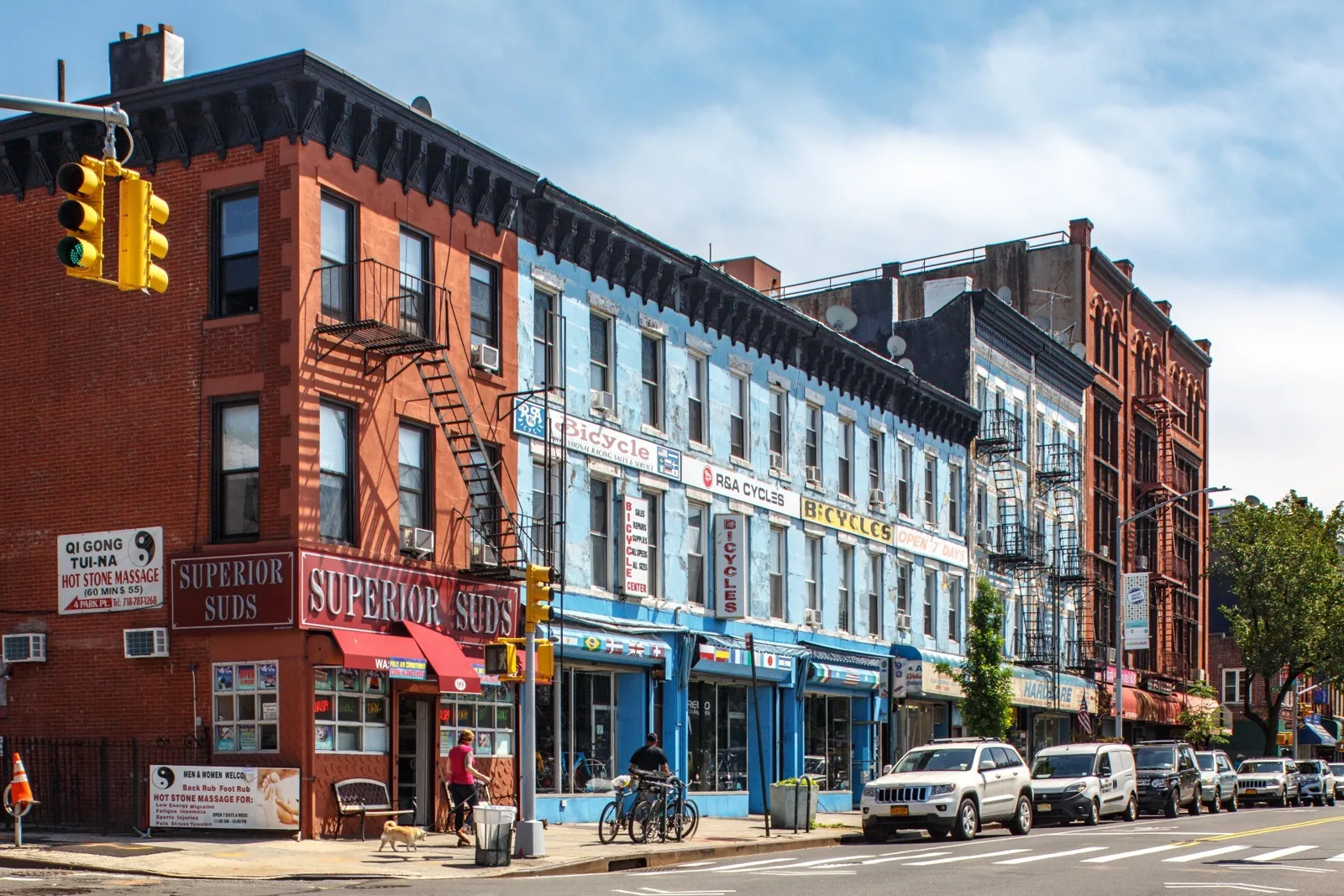
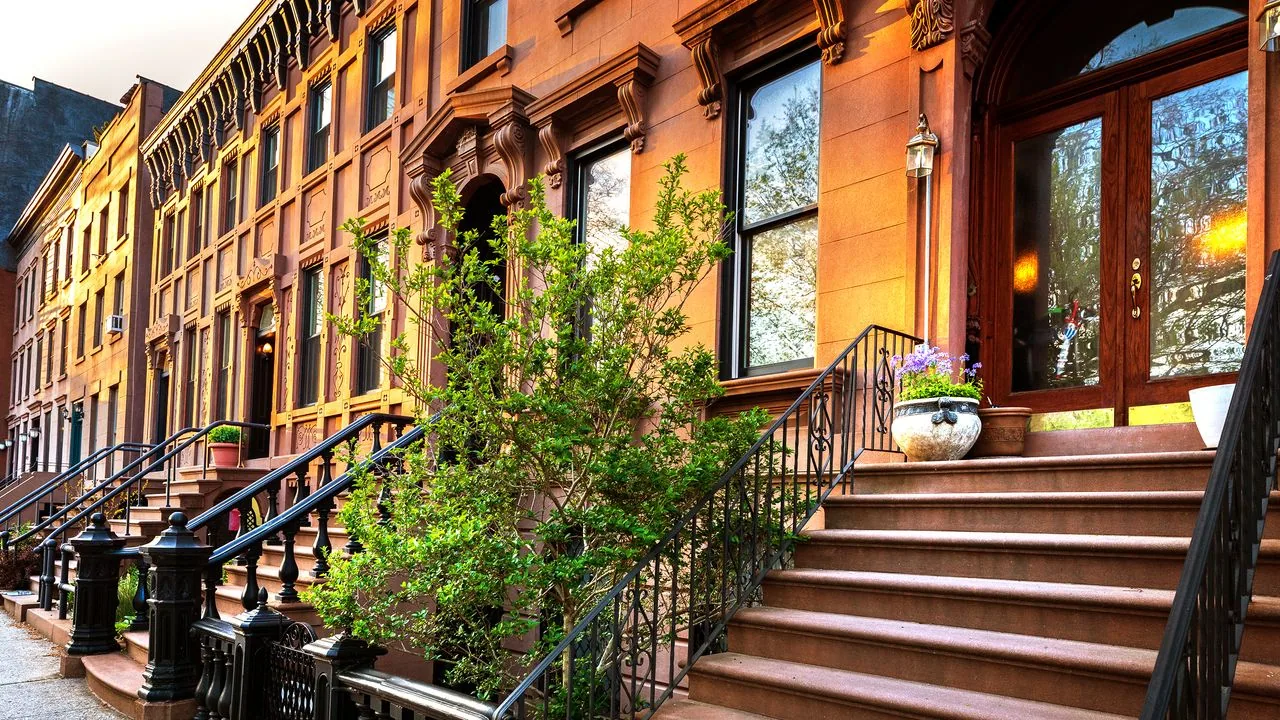
Park Slope's historic district takes in 2,575 buildings over roughly 40 blocks, and in Carroll Gardens a district designated in 1973 protects brownstones with large front gardens. In neighborhoods like Park Slope and Carroll Gardens, the storefronts along Fifth and Seventh Avenues sit beside rowhouse blocks, and neighboring roofs share walls and parapets. A tie-in at a party wall is a joint between two owners' roofs, so the method has to be careful and the coordination early.
Fort Greene's NYCHA towers, 35 brick buildings of six to fifteen stories built between 1941 and 1944, show the opposite case: tall brick buildings where hoisting, wind and access set the pace.
Hot work and fire safety
Open-flame roofing is regulated for good reason. Heat on a flat roof can ignite wood blocking, insulation or trapped debris, and a smoldering fire may not show until hours after the crew leaves. Where we use heat, we hold the required permits, post a fire watch, keep extinguishers on the roof and stay on site after the last pass. In many buildings we avoid the flame entirely and choose self-adhered sheets, cold adhesive or liquid-applied resin instead.
That decision is made early, with the building owner and the insurer, and it is written into the scope. A modified bitumen roof installed without flame performs the same as one installed with it, provided the laps are made properly.
Rain, snow and heat
Bituminous roofs take weather as a daily load. Summer highs near 85 degrees and a strong heat island soften the surface and speed granule loss. Thundershowers dump water faster than clogged drains can pass it, and Ida's remnants brought the city its first flash flood emergency in 2021, a test every drain faces. Winter adds snow and freeze-thaw, which crack aged sheet at the flashings. A coating can restore reflectivity on a sound surface, and a roof coating restoration is considered when the plies are dry and the laps are tight.
We schedule the annual walk for spring, after the thaw, so that winter damage is repaired before the first summer storm.
The fix in order
We repair in order of risk. First clear the drains and open the blocked paths for water. Then flashings: cut back failed material, prime the substrate, set the new flashing with a termination at the top and seal it. Then laps and seams, which are cleaned, re-adhered and rolled. Then the surface, where bare spots are patched or a coating is applied. Wet insulation comes out before any new membrane goes down.
When the roof is beyond repair, we talk through replacement with the owner, including the number of layers, the deck, the insulation and the code requirements for the new assembly.
Closeout walk
At the end of the work we walk the roof with the manager, check drains for flow, probe the laps and photograph each flashing. We note the products used and their locations in the roof file, because a later repair has to match them. Johns Manville and GAF make comparable systems, and we compare them with this one on installation method and on what the building will tolerate while the work goes on.
Commercial Roofing Questions
Is there a way to install modified bitumen without a flame?
Yes, through self-adhered sheets with a factory adhesive backing, cold-applied systems using brushed or sprayed adhesive, and some laps joined with hot air. Each method has conditions for temperature, surface and sequence. We choose based on the building, the substrate and the fire rules. A torch-free installation takes careful preparation, but the finished roof performs like a heat-applied one.
How do you tie a new roof into an old one at a party wall?
We expose the old flashing, check the wall for sound masonry and set a new flashing that rises above the expected water level. A termination bar fastens the top edge and sealant closes it. At the base, the new membrane laps over or under the old as water flow requires. We agree the work with the neighbor in advance so the joint is not left open overnight.
What does a liquid flashing cost compared with a pre-formed boot?
It depends on the geometry. On a simple pipe, a pre-formed boot is quick and inexpensive. On a cluster of pipes, a corner or an odd-shaped curb, liquid resin is faster and more reliable because it conforms to the shape. We price each detail by the work involved and name the labor and material drivers so the owner can compare options. Either way, the detail is photographed before it is covered, so the next repair crew can see exactly how the corner was built and what product sits under the finished surface.
Does bitumen perform in a Brooklyn winter?
It does, when it is installed in suitable conditions and maintained. Cold stiffens the sheet and slows adhesive cure, so installation waits for workable temperatures. After installation, the roof tolerates snow and freeze-thaw well, and annual inspection of laps and flashings catches cracks early. With snow near 30 inches a year, the thaw is when we look hardest.
What if a rowhouse block has a shared roof drain?
Shared drains need coordination. We trace the line, clear it, and check the leader for sound joints. If the drain serves several owners, we notify each before work begins and agree on how repairs are documented and divided. A blocked shared drain can flood one roof while the others stay dry, so we check it at every visit.