Solar-Ready Roofing in Brooklyn, NY
Before a solar installer marks a single rack on a flat roof, someone should kneel at the drain and press on the membrane. Soft spots under the thumb mean wet insulation. Wet insulation under a row of panels is a repair nobody can reach without taking the array apart. A panel array can sit on a Brooklyn, NY roof for decades, and the roof under it has to be good for as long. A written roof inspection comes before any layout. We treat solar-ready roofing as a roof job first. The panels come second, and the roof has to be ready for them.
What you see up there
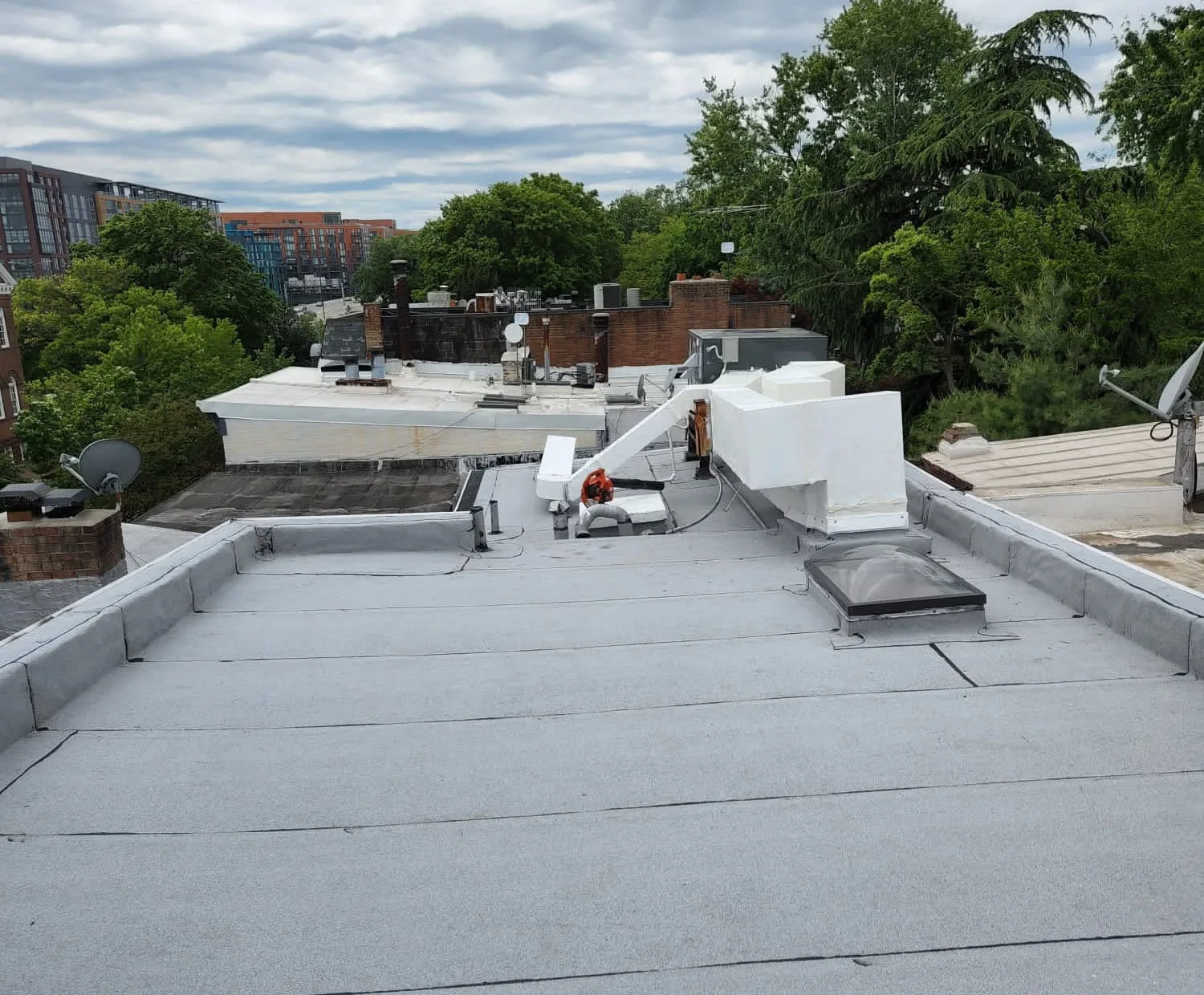
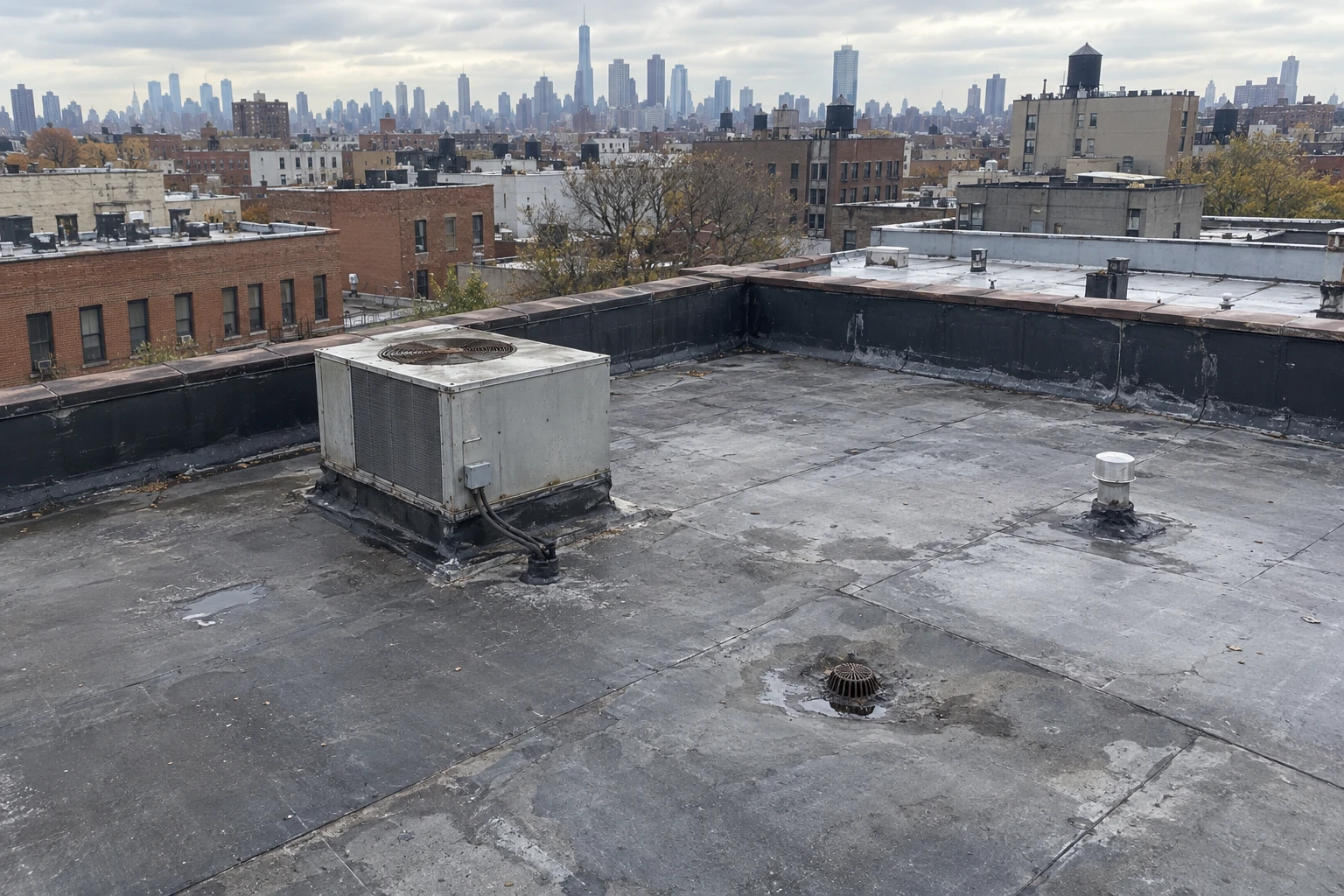
Walk the field and look for four things. Ponding that stays for a day after rain. Seams that have lifted. Flashing that has shrunk away from curbs and parapets. And patches layered over patches, which mean the roof has been leaking in the same place for years.
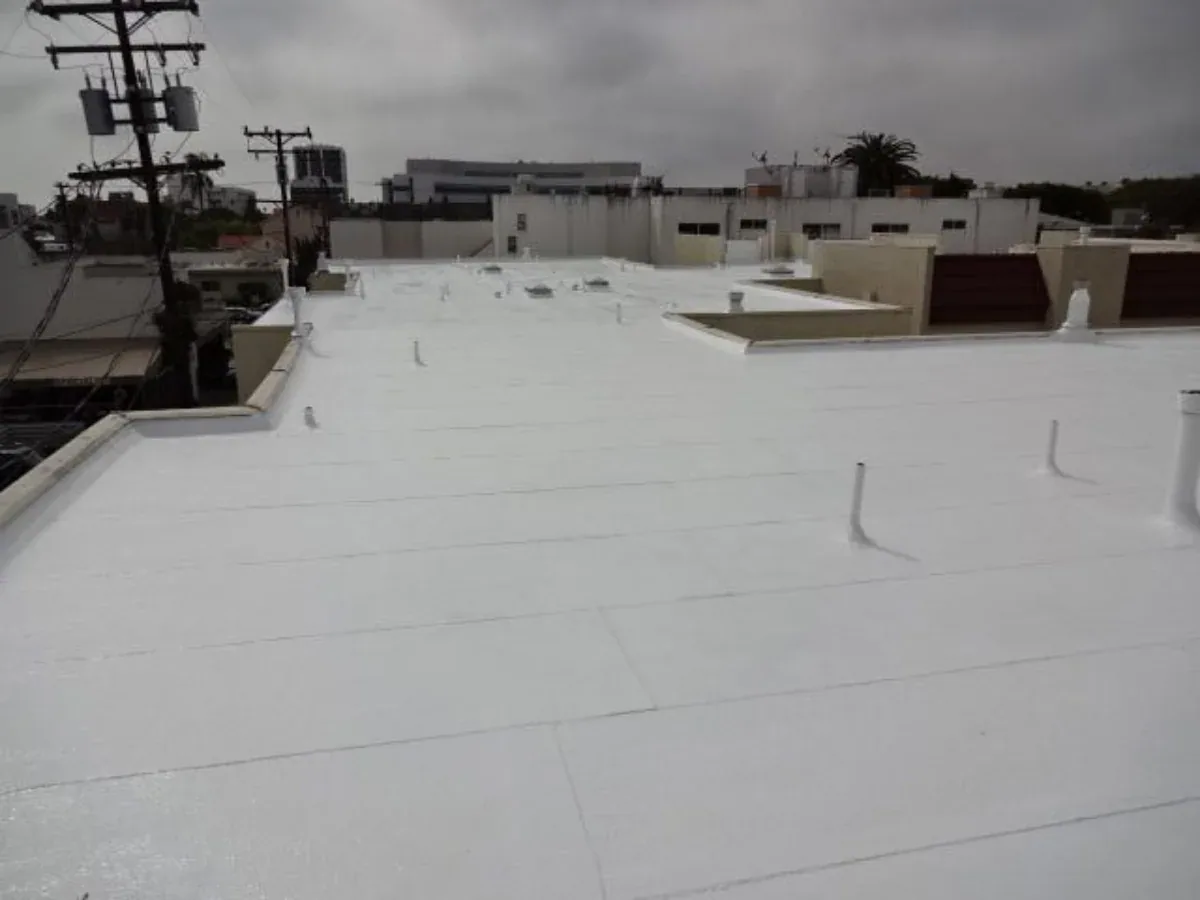
Roofs with those signs are poor hosts for panels. Racking holds shade over the membrane, traps water behind its feet and makes every repair harder. A roof with a few good years left should be repaired, coated or replaced before the array goes up, or the panels should be planned to come off and go back on when the roof is redone. A white surface from a cool roof installation under the array also cuts the heat the panels sit in, which helps both the roof and the panels. Either way, the decision gets written down before the contract is signed, with the dates, the roof's condition rating and who pays for lifting and resetting panels if the roof work comes first.
Weight, wind and snow
Every panel adds weight, and the racking changes the way snow and wind load the roof. A typical year in New York City brings snow near 30 inches, and a single day in January 2016 delivered 27.3. Snow drifts against a row of tilted panels and piles at the low edge. Wind catches an array like a sail, and the 2007 EF2 tornado in Bay Ridge, which took the roof off a nearby dealership, is the extreme case.
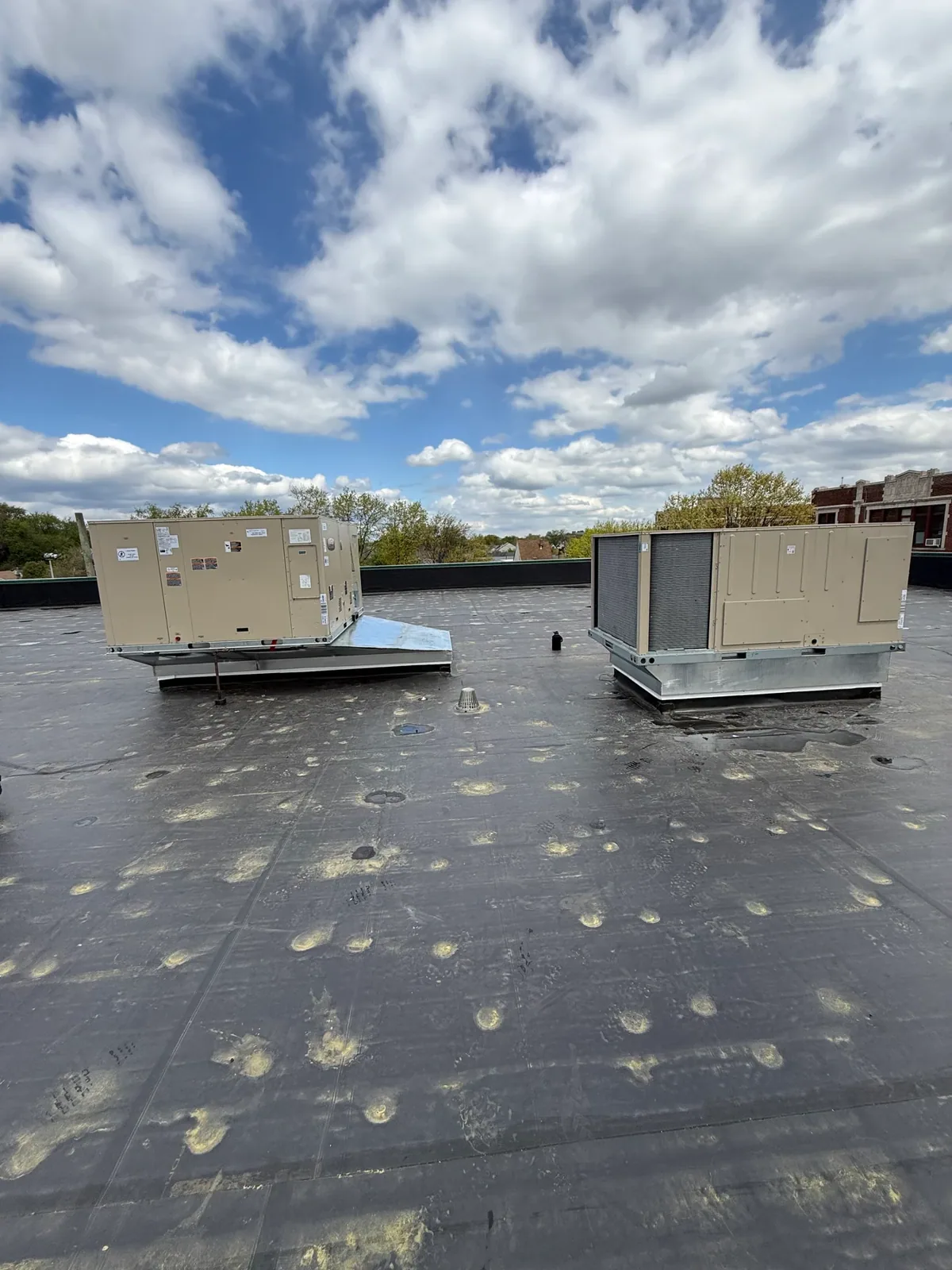
The structural engineer sets the loads and the attachment. Our job is to say what the roof can carry in terms of condition, and to detail the attachments so they do not leak. Ballasted racking sits on the membrane and needs protection pads and firm insulation. Attached racking goes through the roof, so each foot needs a flashed base. We mark every foot on the roof plan.
Why these buildings
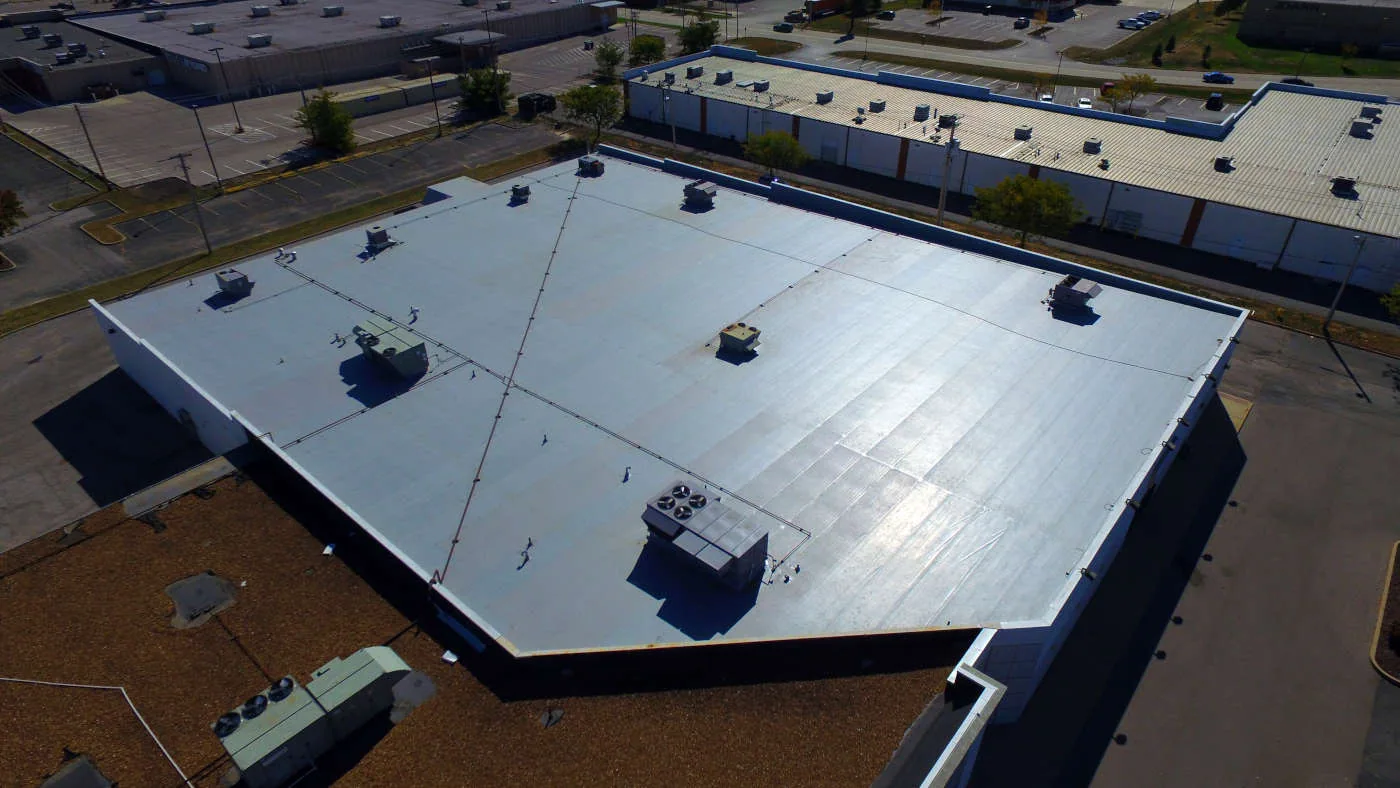
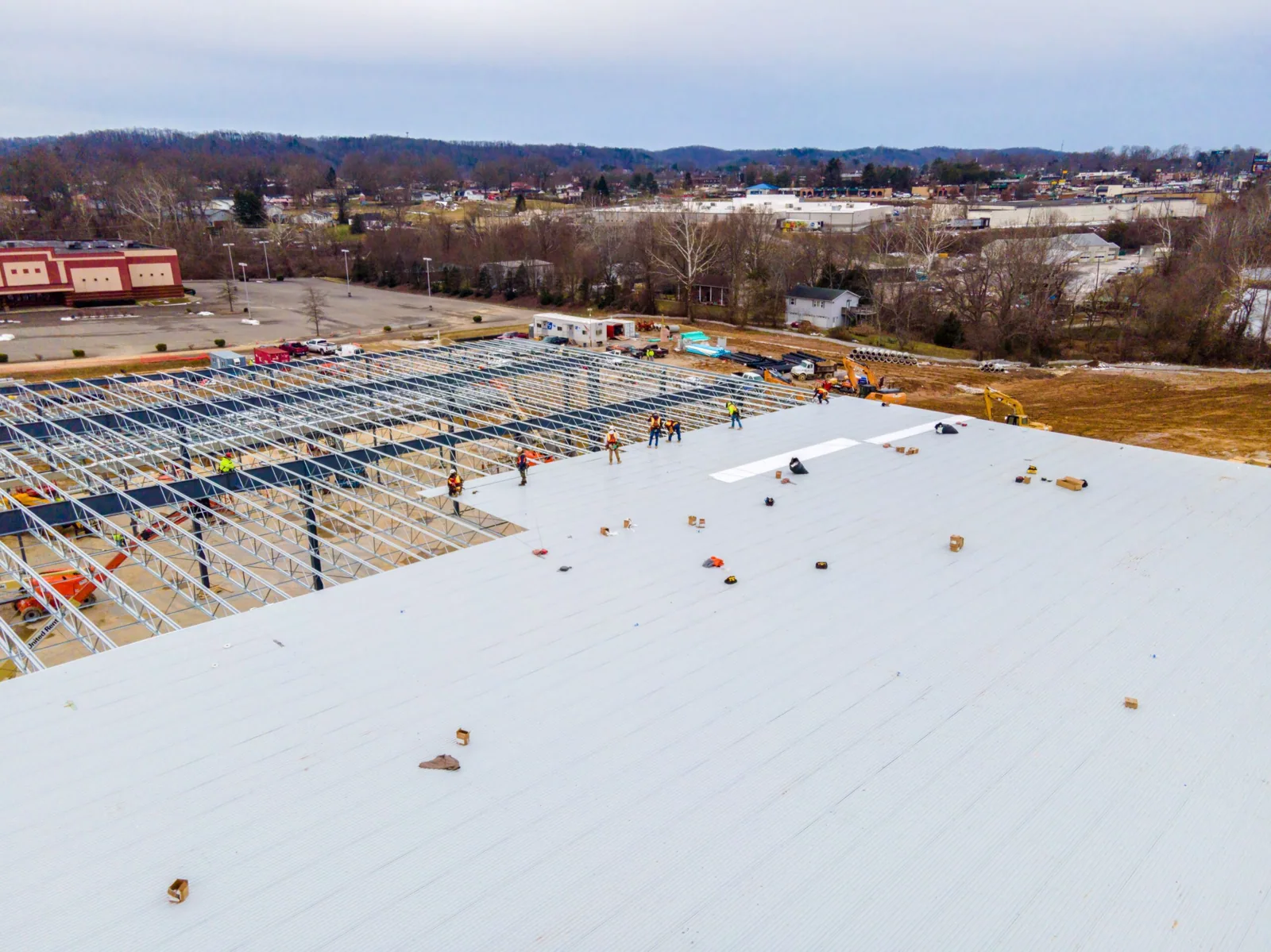
Solar interest tends to follow large commercial and industrial properties. Gateway Center is a big shopping complex in Spring Creek, built on a former landfill beside Jamaica Bay, and Kings Plaza in Mill Basin is Brooklyn's largest indoor shopping center. Flatlands Industrial Park covers 93 acres and opened in 1969 as the city's first publicly sponsored industrial complex, and the East Brooklyn Industrial Park is a 44-block park established in 1980. Properties of that scale raise the same roof questions as a small loft: drainage first, then the equipment curbs and supports, then the age and moisture of the membrane. A roof that will host panels for decades is judged differently from one due for replacement in a few years, because the cost of lifting and resetting an array belongs in the roofing budget. The walk across an industrial roof in East New York is the same as on a loft, only longer.
Getting the roof ready, in order
First comes the moisture scan and the cores. Wet insulation comes out. Then drainage: we clear the drains, test the flow and correct any low spots, because racking feet in a pond are a bad combination. Then the membrane: seams repaired, flashings rebuilt and the surface cleaned or coated.
Then we plan the layout with the installer. Walkways keep open lines to every drain and every piece of equipment. Clear strips along parapets leave room for the edge details and for anyone who needs to reach them. TPO over a firm cover board is a common host for an array, since welded seams handle movement well. We write the layout on the roof plan with each foot, each walkway and each drain marked.
Working around an array already on the roof
Panels hide the surface, and finding a leak under them is slow. We start inside, with the ceiling stains, then go up and trace the pattern to the nearest curb, drain or foot. Sometimes a section of the array has to come off. The array's electrician handles that step, and the roof repair is planned around the dates.
The roof stays open while the panels are off, so we work in small sections and close each one before the weather turns. The flash flood emergency of September 1, 2021, when Ida's remnants hit, is a reminder that cloudbursts do not wait for a punch list. Afterward the panels go back, the feet are re-flashed and the connection is tested.
Closeout walk and records
At closeout we walk the field with the owner and the installer, check every flashed foot, run water over a few and note anything that needs a second look. The punch list gets cleared. We also ask the installer for the service routes so technicians who visit the array later walk on pads, not bare membrane, and so nobody has to cross a seam to reach an inverter. The owner keeps the roof plan with the array layout, the moisture map, the product data and the warranty terms. Roof warranties often have conditions about attachments, so we keep the approvals together. A roof condition report after the array goes in sets the baseline for the next inspection.
Commercial Roofing Questions
Should we replace the roof before putting solar on it?
If the roof has fewer years left than the array will be in service, replace it first or plan to lift and reset the array later. A scan and a few cores tell us how much life remains. A dry, sound roof with many years left can take the array as it is. Get the answer in writing before the solar contract, because the roof is the part you cannot easily fix once the panels are down.
Does ballast hurt the roof?
It can if the insulation is soft or the membrane has no protection under the feet. Ballast adds a steady load, and old insulation compresses under it. We use protection pads, check the insulation strength and have the engineer confirm the structure. Where the load is too much, attached racking with flashed feet is the alternative, and each penetration is sealed and logged.
How do we get at a leak under the panels?
By working from the inside out. Start with the ceiling stain, then probe the roof above it with a moisture meter. A hose test in stages can pin down the source. If the leak is under a row, we coordinate with the array's electrician to lift the panels in that row. We keep the opening as small as we can and close it the same day.
Will solar change what the roof warranty covers?
Possibly. Some warranties require approval of the racking and a roofer's inspection after installation. Read yours before you sign with the installer, send us the terms, and we will detail the attachments to match. We keep photographs of every foot before it is covered, since those are the records a warranty claim asks for.