Government Building Roofing in Brooklyn, NY
Walk the roof of a municipal building and the first thing you find is paper. Past repairs layered on top of each other, a patch with no date, a drain that nobody owns. The roof fails for the usual reasons, a cracked coping joint, a sump at the drain, a seam opened by a January freeze. The harder problem is that the agency cannot spend a dollar on it until someone writes down what is wrong, what it will cost and why the choice is defensible. A public roof needs a scope that survives review as well as rain.
The findings are written so a facilities office can carry them straight into a budget meeting, with the soft spots marked and each flashing photographed.
Reading a public roof
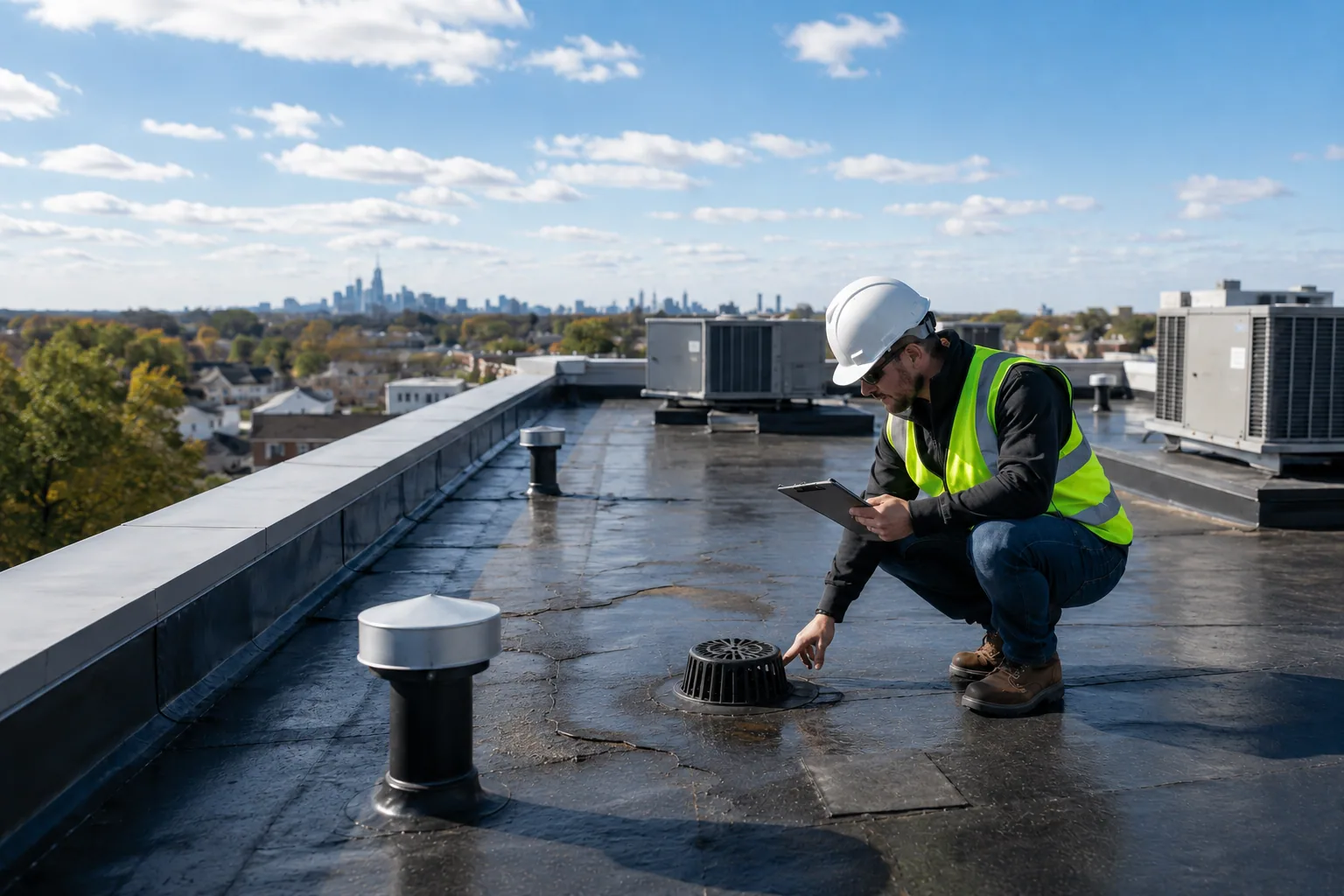
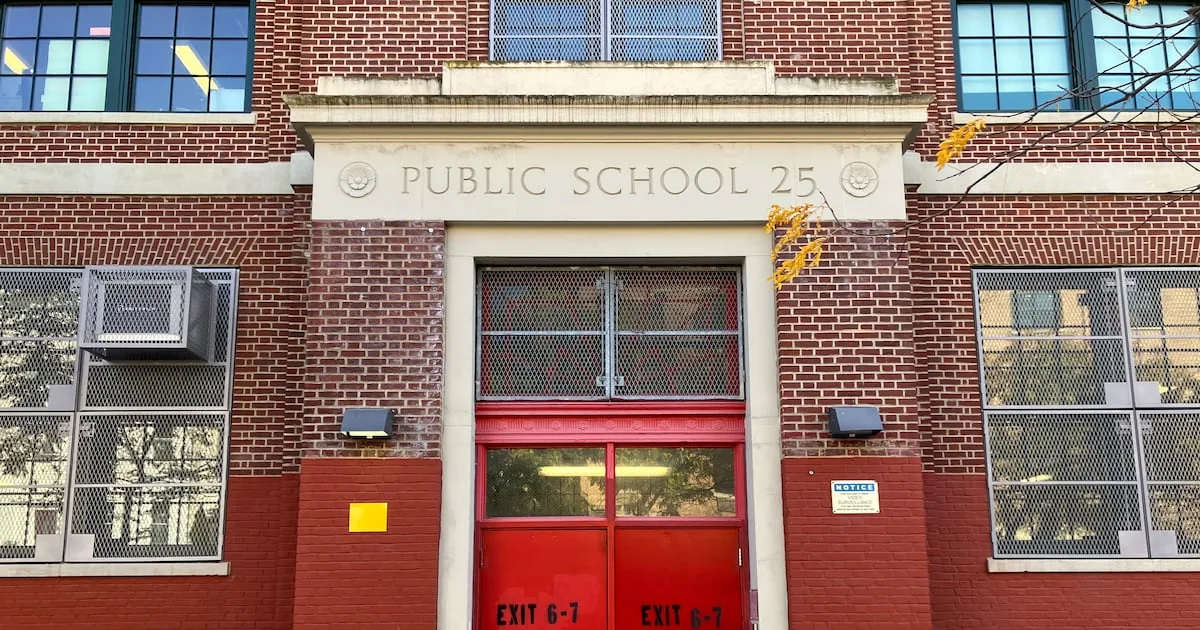
Public buildings range from courthouses and borough offices to depots, schools and clinics. Downtown Brooklyn's institutions include the Kings County courthouse and Borough Hall. In Sunset Park, Brooklyn Army Terminal passed to city ownership in 1981 and was renovated for manufacturing, and the 225-acre Brooklyn Navy Yard is a city-run industrial and commercial complex. Roof types differ by building: a courthouse may sit behind a parapet while a depot may have a long-span industrial deck. We read each building from the edge inward, mark drains, curbs and penetrations, and rate the roof before anyone prices a repair.
Age matters less than layers. A building that has stood for decades may carry a tar-and-gravel build-up with a recover on top and a coating over that, and each layer adds weight and a place for water to hide. The core cut tells the agency how many layers there are and whether the lowest ones are dry, which decides whether another recover is allowed at all.
Failures that repeat
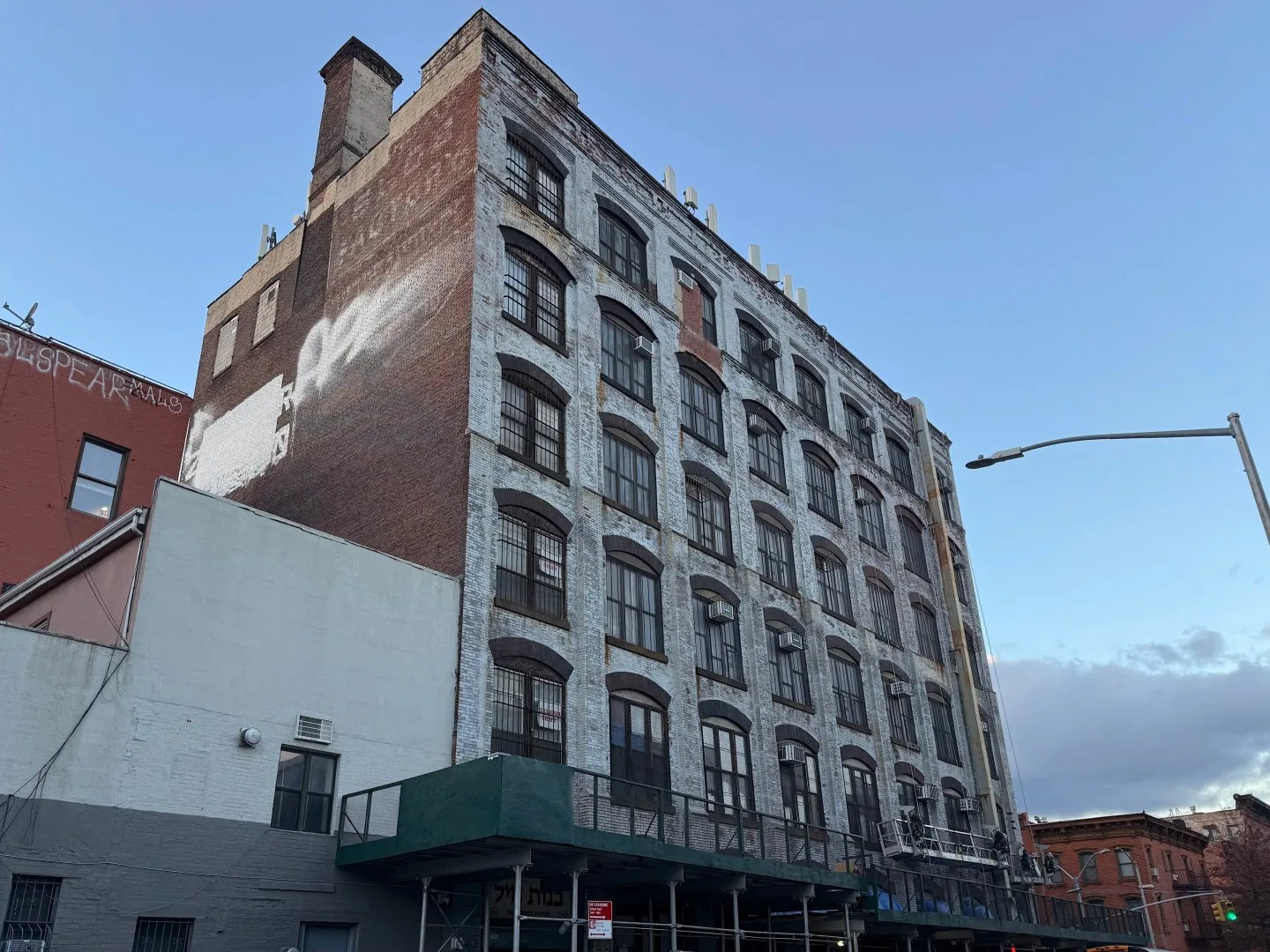
Public buildings tend to fail in three places. Drains come first, because the baskets go uncleaned between budget cycles and a sump forms. Second are parapet and cornice details on older masonry, where a coping joint opens and feeds water into the wall. Third are the add-ons: antennas, HVAC replacements and conduit runs that went through the membrane over many years and were sealed with whatever was on the truck.
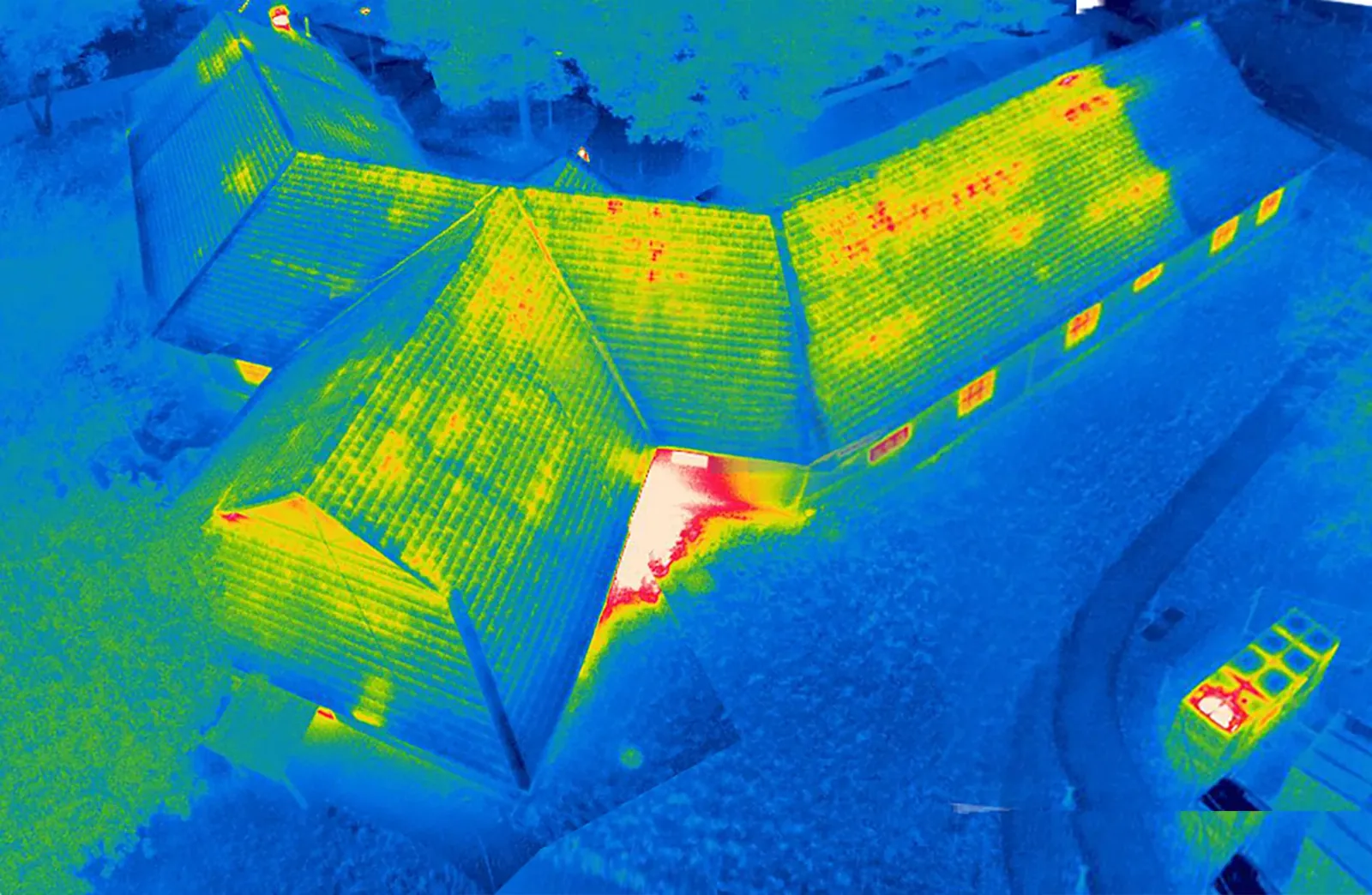
Each one leaves a stain somewhere else. We trace the water with infrared moisture surveys and a few core cuts, then separate local repairs from system failures. With the cheap items separated out, the agency can fix them now and plan the expensive one.
Equipment curbs deserve a line of their own. Rooftop units installed by one contractor and serviced by another leave sealant lines that nobody inspects. We number each curb on the plan, check the height of its base flashing and note the cap and the fasteners, so a later service call does not pierce a good membrane without a record.
A scope that holds up in review
Public work is bid, reviewed and audited. The document that goes out must say what the roof is made of, what is wrong with it, what the work includes and how success is checked. The scope names the assembly it expects and the details it must meet, citing the roof assembly chapter of the 2022 NYC Construction Codes.
We write findings in plain language with photographs keyed to a numbered roof plan, a drain and curb inventory, a rating and a priced option for each choice. The survey and the specification content give an agency, an engineer or a program manager a firm basis for bidding.
Alternates make the review easier. Pricing a recover beside a tear-off, and a coating beside both, lets the agency show why it chose one. Assumptions such as dry insulation or a sound deck are listed with the test that confirms each, so a change order does not arrive as a surprise.
Weather on a flat public roof
Snow near 30 inches a year, and a worst day of 27.3 inches on January 23, 2016, load a flat public roof. Sandy's October 2012 flooding covered about 17 percent of the city, and Ida's remnants prompted the city's first flash flood emergency on September 1, 2021. A roof does not flood, yet a building that must keep operating through a storm needs drains that move water and a membrane that stays closed. A courthouse or a municipal depot cannot shut for a leak. Overflow paths, scupper sizing and each outlet get checked, and the work is planned in zones so offices keep running. On an occupied building, public access routes stay clear.
Summer adds heat. With July highs near 85 F under a strong heat island, a dark membrane over occupied offices raises cooling load. Pricing a reflective surface as an alternate makes sense where the roof is sound.
The fix in order
First, survey and rate. Second, stabilize: clear drains, reseal the worst penetrations, dry in active leaks. Third, scope the capital item, whether that is a recover, a coating or a full replacement, and price it with alternates. Fourth, schedule it around the agency's calendar and the building's occupants.
Winter work is mostly repair. Membrane replacement wants dry surfaces and moderate temperatures, so the scope tells the agency which months suit which work. A multi-building agency can sequence its portfolio with a roof capital plan, which places the wettest roofs at the top of the list and distributes the cost across years.
Procurement shapes timing. Bidding, notices and approvals can run for months, so the survey belongs well ahead of the fiscal year in which the agency wants to spend. Emergency dry-in cannot wait for the process, and it is documented so it never becomes the permanent repair by default.
Closeout and file
After the facilities lead's final walk, with every flashing and drain photographed, the roof plan, the core log and the warranty terms change hands. Public records change hands often, so a clean file saves the next manager time. The same format serves a school board's school roof program or a college and university facilities office.
Before the sign-off we walk the roof for the punch list: loose sealant, an open lap, a missing cap fastener. Small items get fixed on the spot, and the photographs go into the file with the date.
Commercial Roofing Questions
What does an agency need to receive from a roof survey to start a bid?
A rated condition for every roof area, photographs, a numbered plan, a drain and penetration inventory and priced options with alternates are what an agency needs. With those, an engineer or program manager can write a specification without a second site visit. We format the findings to drop into that process.
Can a building stay open to the public during reroofing?
In most cases yes. Work is staged by zone, entrances and loading areas stay clear, each shift ends dried in and noise hours are agreed with the building manager. The loudest operations can move to nights and weekends if the agency prefers.
How is a roof assessed in a landmark or historic building?
We check the designation first, photograph the visible edge and note which elements may need review. Repairs that leave the exterior alone proceed more simply than changes to a cornice or coping.
What does a facilities office prepare for a field walk?
The building area, roof age and photos of the worst drain and the parapet that stays wet are enough to start, along with the repair history if one exists.