Roofing for Hotel Owners and Hospitality Groups in Brooklyn, NY
A guest calls the front desk at midnight about water dripping from the ceiling of a top-floor room. The night manager moves the guest, puts a bucket under the drip and writes down the room number. By morning the room is off the board. Trace that stain upward and it usually ends at one of a handful of places on the roof: a drain basket, a pipe boot, a terrace threshold, a pool edge. A hotel in Brooklyn, NY counts a leak in room nights lost, and the count starts at the roof. Send the room list for the top floors and a sketch of the amenity deck.
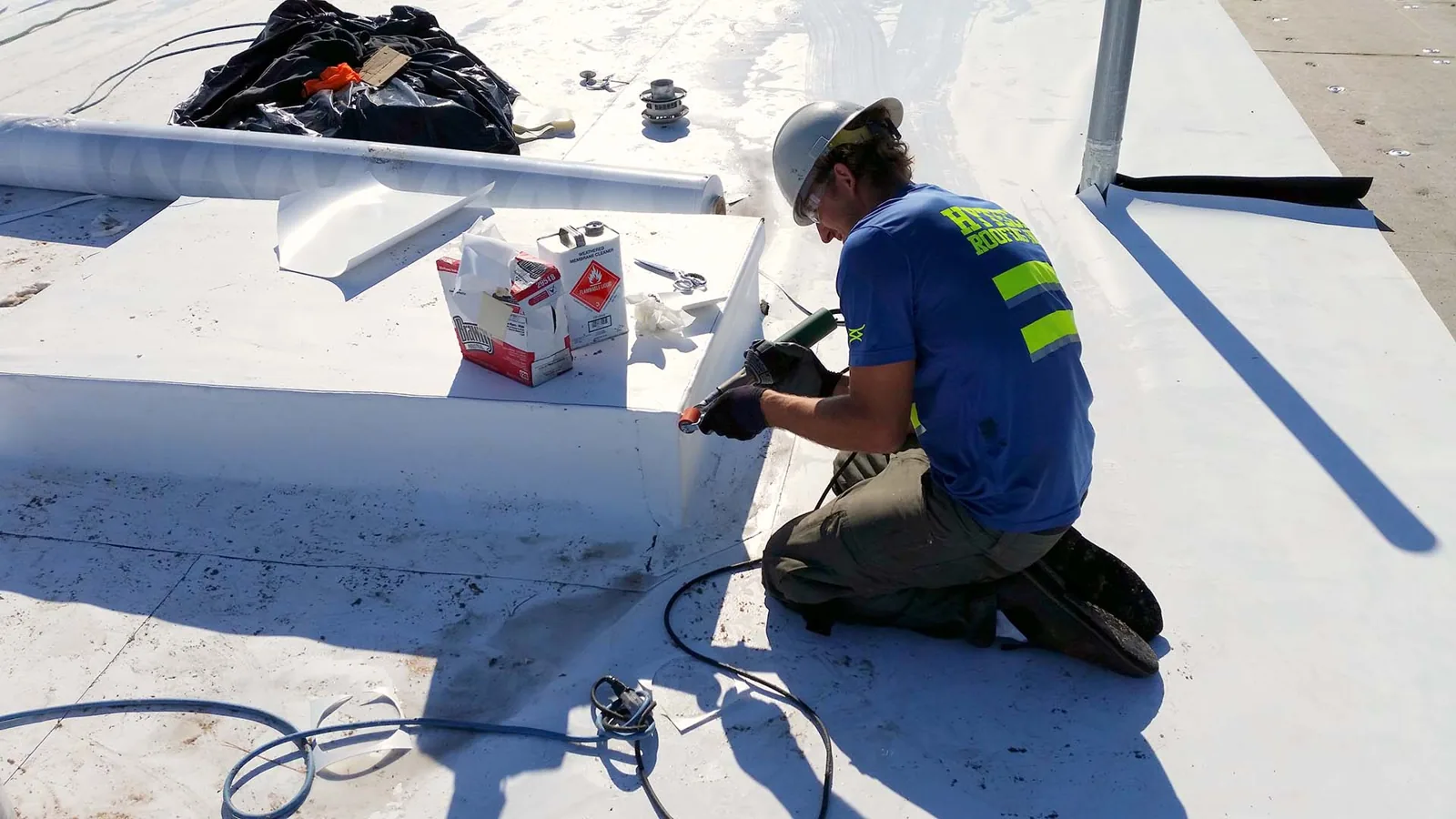
We walk, repair and replace hotel roofs and amenity decks across the borough, and we schedule around guests.
Trace the stain upward
We start with the room list. Every top-floor leak report, with date and room number, goes on a roof plan. Clusters point to a source. Three rooms in a row under one corner point to a drain or a wall flashing. Scattered rooms point to the field or to old repairs.
Then we walk the roof along the same lines. We check each drain, the parapet above the cluster and every opening. An infrared scan on a clear evening shows the wet insulation, and cores confirm it. The result is a map that ties rooms to roof areas. A commercial roof leak repair then goes where the data points, not where the stain happens to be. Ask engineering for the leak log going back as far as it goes.
Ownership layers add voices. A hotel can be owned by real estate investors and REITs, run by a management company and branded by a third party, and each wants a different report. The owner wants a capital plan, the operator wants a repair list and the brand wants proof of standards. One survey with one rating scale feeds all three, and we format the cover page for each reader.
Noise, smell and the guest experience
Guests notice sound first. Tear-off, fastening and hoist work are scheduled for the hours when top-floor rooms are least occupied, usually mid-morning through late afternoon. The general manager can block or discount the rooms under the work. We give the front desk a plain schedule with start and stop times.
Odor and dust are managed by product choice and by sealing openings. Cold-applied or mechanically attached systems go near intakes. Debris leaves by chute or hoist at set times, away from the lobby and the entrance. We coordinate with engineering and security on crew access. The occupied building method applies to a hotel that stays open. Give us the occupancy forecast so heavy tasks fall on slow nights.
Brand audits add pressure. Flag reviews and quality inspections look at ceilings, stairwells and the top floor, and a stain can cost a score. A dry roof is quiet insurance. We give engineering a short checklist for a monthly roof walk: drains clear, no ponding, no new stains below, sealant intact. A finding goes to us the same day, and a small repair costs far less than the same repair after a guest has written a review.
Amenity decks, pools and bars
An amenity deck is a roof doing a second job. Pavers, planters, a pool shell, furniture and a bar all sit on top of the membrane. A leak under the deck cannot be seen until the surface is lifted, so the survey uses moisture mapping first and then lifts a few pavers where the data points.
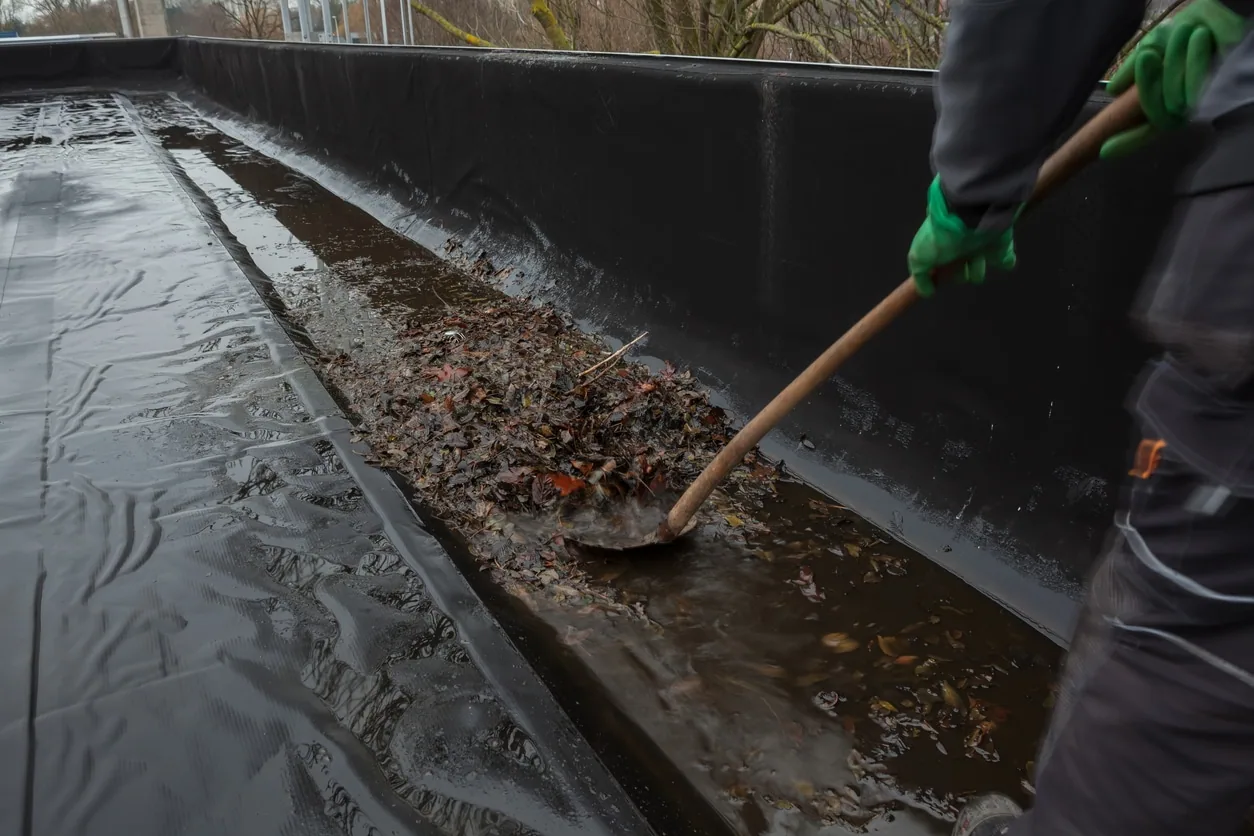
Planters and pool equipment add concentrated load. Drains under pavers clog with debris, and the drainage layer has to stay open. Drain bodies get tested, flashing at the deck edge and the pool wall gets checked, and expansion joints get a look. Repairs often mean lifting and resetting pavers, so the amenity closes for a set period. A drains and scuppers correction at deck level pays back quickly. Photograph the layout before anything is lifted.
Mechanical plant on a hotel roof gets its own line in the walk. Boiler flues, kitchen exhaust, laundry vents and cooling units each discharge heat, steam or grease, and each wears a different patch of membrane. We map the equipment, check the curbs, add walkway pads on service paths and give engineering a one-page map of the protected routes.
Storms, surge and heat
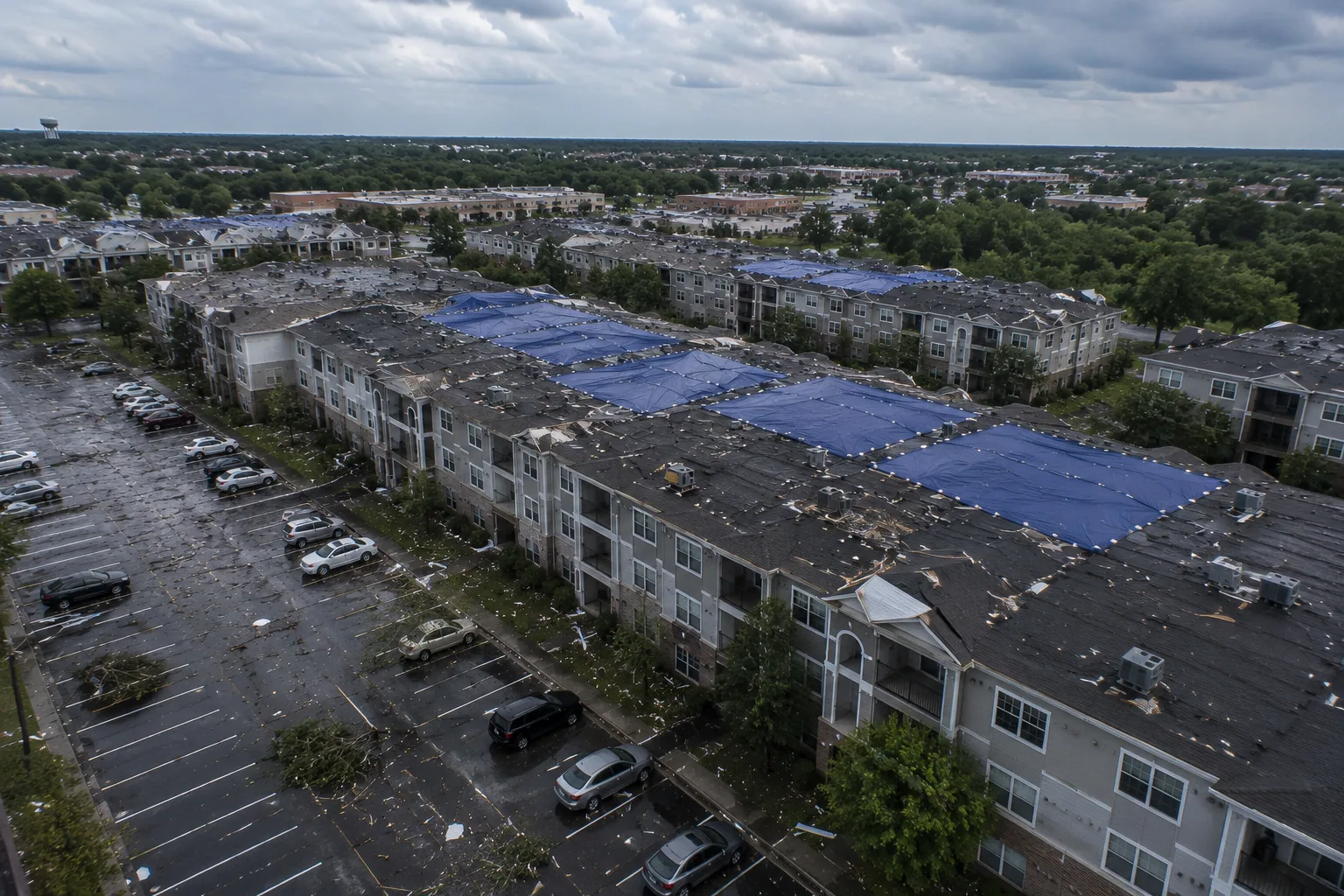
In October 2012 Sandy pushed Brooklyn flooding to 4.5 feet in the worst spot and placed Coney Island and Brighton Beach in the evacuation zone. At about 7 feet above sea level, the Coney Island peninsula asks hotels for a roof that drains fast and equipment mounted high. The cloudburst that Ida's remnants dropped in September 2021 was serious enough for a flash flood emergency. A hotel that takes water through the roof has guests to move and rooms to hold. With July highs near 85 F and a strong heat island, mechanical plant on the roof works hard all summer. A storm damage roof repair plan names who calls whom. Keep the engineering log of every leak with the room number.
Hotels in old and new buildings
Dumbo holds about a quarter of New York City-based tech firms, with Etsy and West Elm headquartered there, and its industrial district has 95 contributing buildings, early reinforced-concrete factories among them. Downtown Brooklyn ranks as the city's third-largest business district. Hotels in districts like these may sit in converted factories, in new towers or in old brick buildings with their own roof rules.
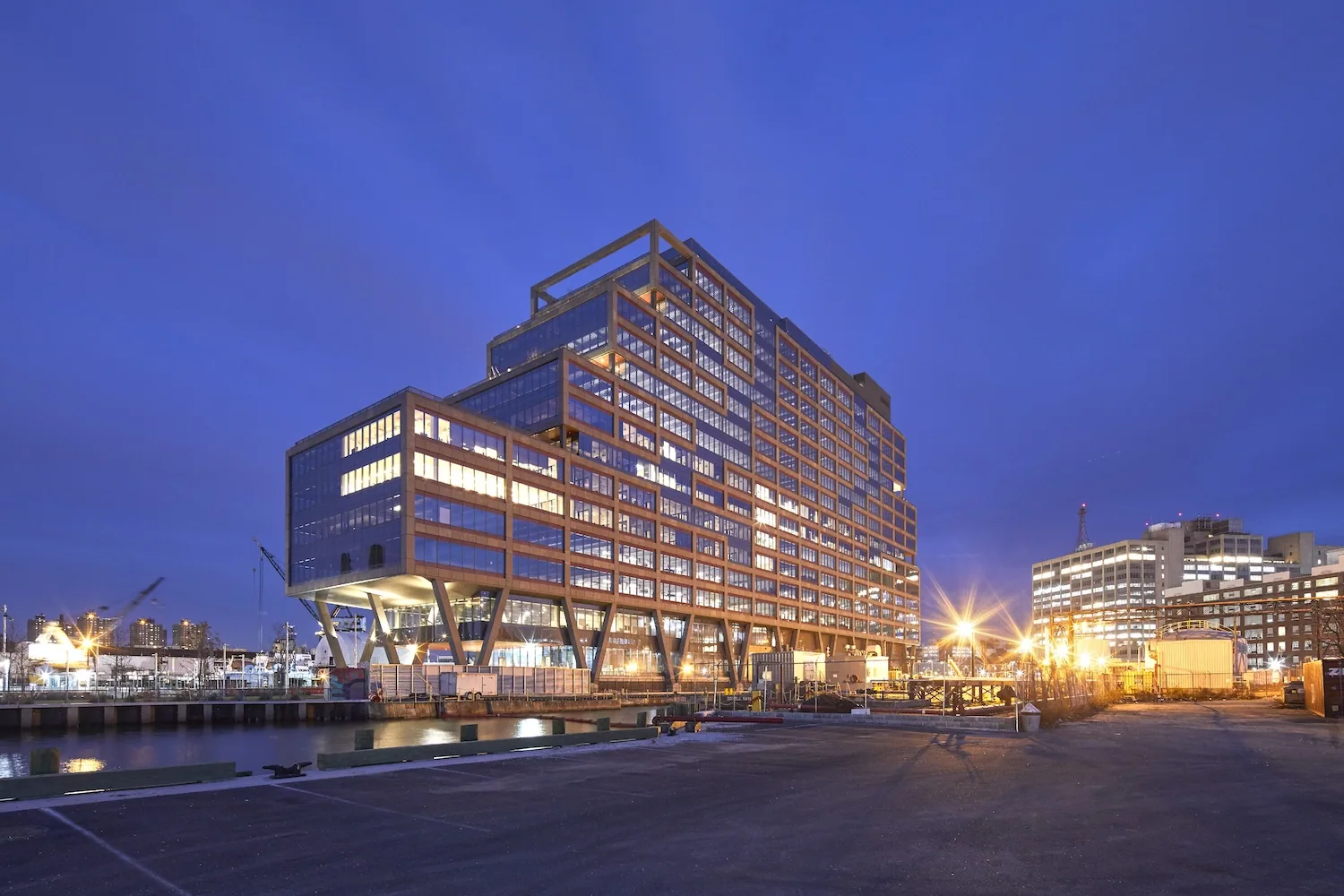
A boutique hotel in a converted loft has a roof with skylights, parapets and old layers. A tower hotel has a small roof crowded with plant. A hotel in a historic district may need review before a visible change. We ask which type each property is and which review applies. For owners in Dumbo, the landmark file sits beside the roof file. Send the building type and age.
Closeout gives the owner something to hold. We walk the finished roof with engineering, test the drains, photograph the flashings and hand over the folder: core log, material data, warranty papers and a rating.
Roof plans for a group
A group plans around renovations, flag changes and refinancing. A rated roof survey for each property fits those cycles. A hotel heading into a renovation can add the roof when the building is already empty, and a property near a sale can show a dated record. Chains under one owner can put every roof on one scale.
Roof capital planning ranks hotels by risk and by the revenue under each roof. For groups whose hotels sit above street-level shops run by retail and restaurant chains, the plan notes shared roof areas. Update the ratings after each renovation.
Commercial Roofing Questions
Should we replace the hotel roof during a renovation?
If the moisture map shows the roof will not last through the next hold period, yes. Replacing it with the renovation costs less than a separate project later, and the building is already partly empty.
Can roof work happen while the hotel is full?
Yes, with scheduling. Quiet-hour limits, protected entrances and held top-floor rooms keep disturbance down. We share the plan with the general manager before mobilizing.
What about a guest-room leak at night?
The emergency line answers all night. We trace the entry, dry in the roof and document the cause so engineering can move the guest and begin the repair below.
What happens to the pool deck during repairs?
The affected area closes for a set period. We photograph the layout, lift pavers in order, repair the membrane and reset the surface, opening the deck section by section.
What should engineering have ready?
Roof access keys, drain locations, the amenity layout and a leak log by room are the useful starting set. With those, the walk goes straight to the likely entry points.