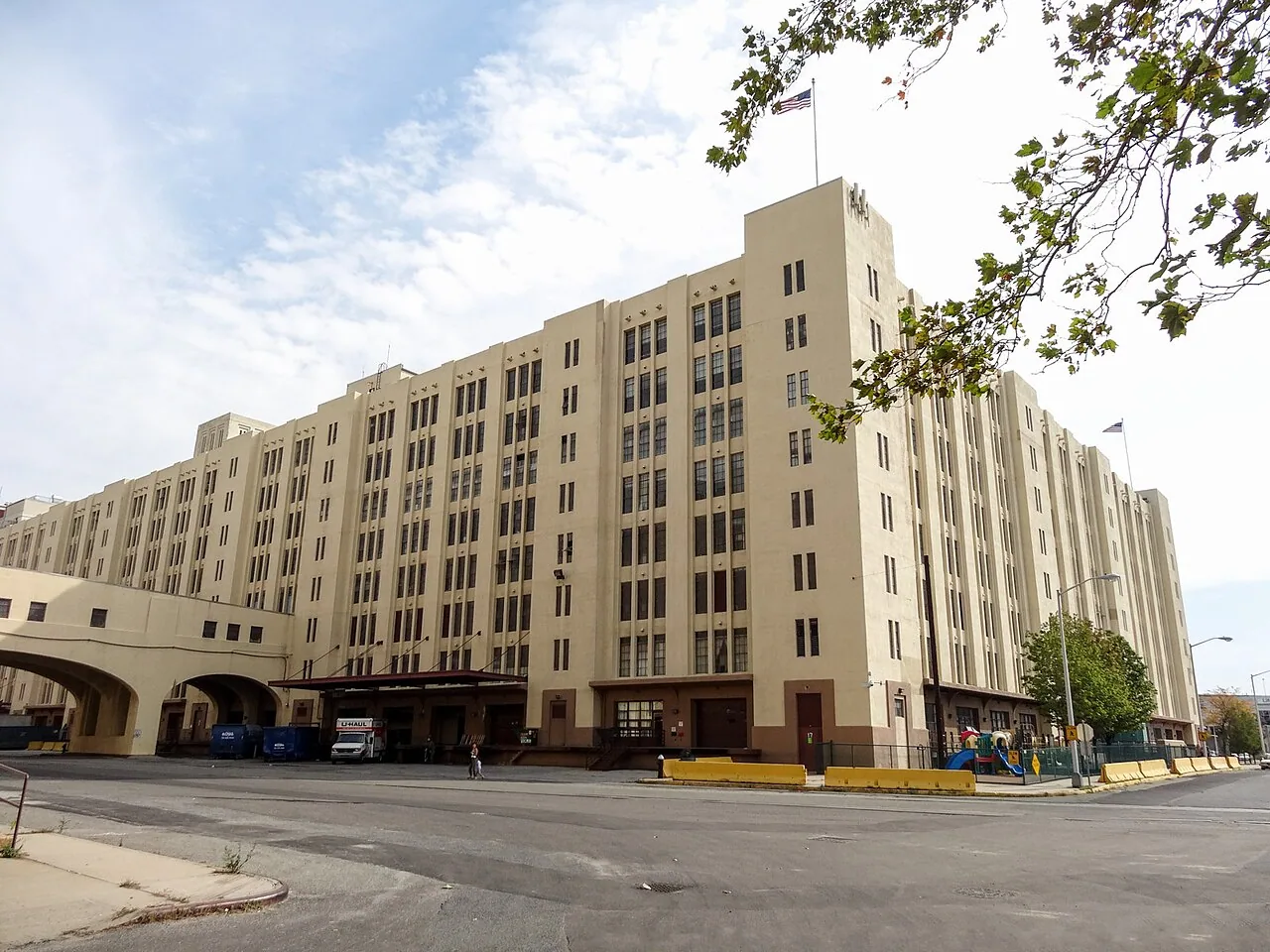
Aircraft Hangar Roofing in Brooklyn, NY
Stand inside a hangar on a windy day and look up at the roof deck. If you can see light at a panel lap, or a rust bloom around a fastener, or a drip stain above the aircraft bay, the roof has already told you most of what you need to know. A hangar is a very large room with a very large lid, and the clear span means there is nothing under the roof to catch a leak before it reaches an aircraft, a tool crib or a fire suppression line. Water that gets in has a long way to fall.
The first walk covers the field, the laps and each flashing, and the photographs come before any scope.
A very big lid
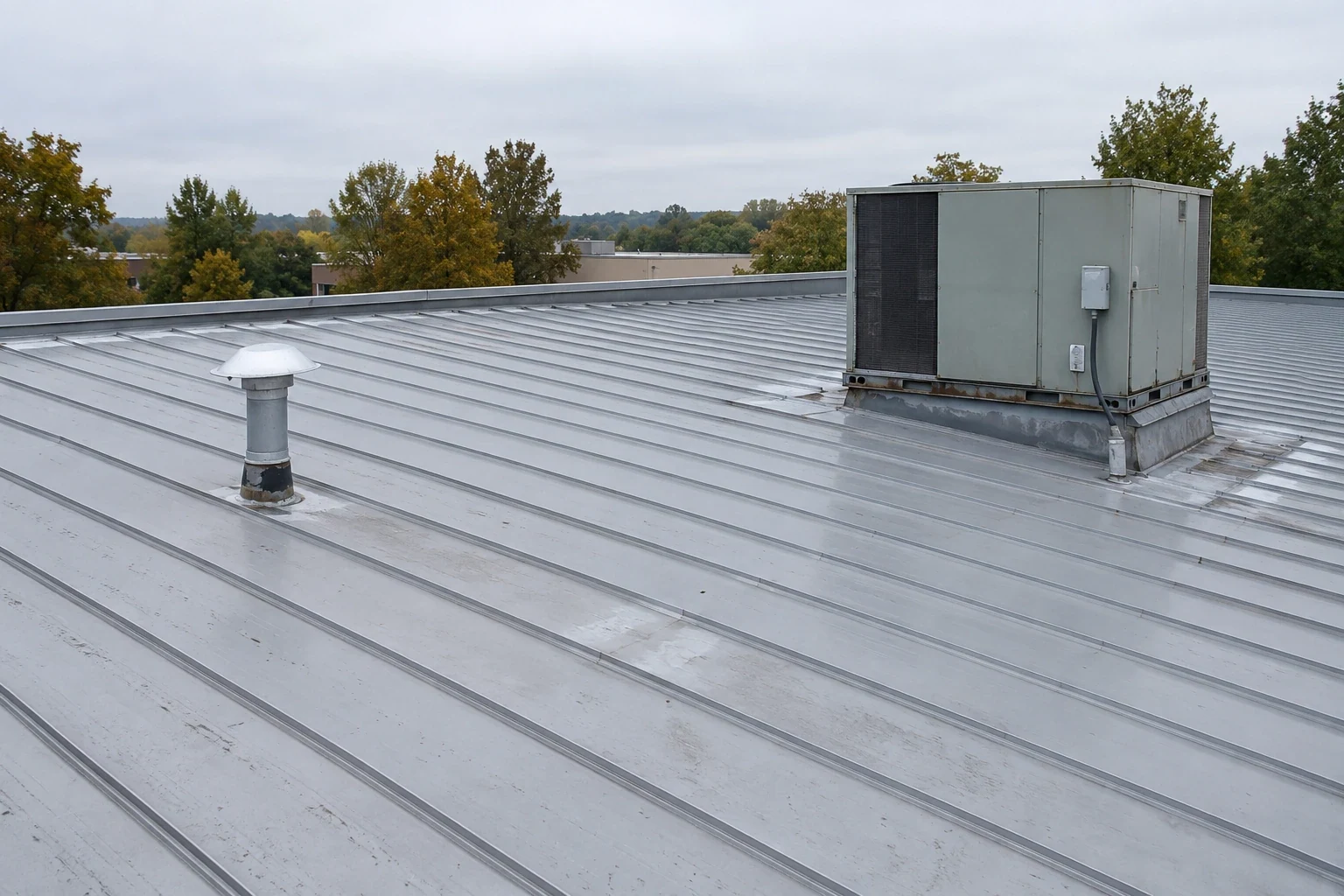
Hangar roofs come in two common forms. One is a metal roof, often standing seam or a lapped panel, on steel framing across a long span. The other is a low-slope membrane over insulation and a metal deck. Both span a lot of area and sit exposed, and each has few penetrations but important ones: skylights or light panels, fire suppression risers, exhaust vents and the heavy header over the hangar door.
A walk tells us which form a given hangar has. We look at laps, fasteners, sealants, curbs and the edge metal, then scan the roof for moisture where the assembly allows. The result is a rating by area, because a hangar roof ages unevenly. The weather side wears out first, and the door end wears out fastest.
Skylights and daylight panels deserve a separate look. A translucent panel on a metal roof has its own lap and its own sealant, and it ages faster than the steel beside it. Where a roof carries panels, the flashing at the curb is checked with the same care as any other opening, and a cracked or yellowed panel is replaced before it lets go.
Where it fails
The door head. The big opening at the front of a hangar sits under a header with flashing that works hard. Door tracks, seals and the wall above them move with every gust. A flashing that has split lets water run behind the cladding and down the door frame.
Fasteners and laps. On a metal roof, thermal movement works fasteners loose and opens the sealant at laps. A fastener that has backed out leaves a hole for water and a rust track below. Condensation. A large uninsulated or poorly vented metal roof sweats in cold weather, and a drip from condensation looks like a leak. We sort the two by timing and by moisture mapping, so the owner does not pay for a repair that cannot work.
Fire protection adds a further reason for care. Suppression piping and sprinkler heads hang from the roof structure, and a wet deck or a corroded purlin is a safety item as well as a roofing item. We note any water path that crosses a suppression line and flag it in the written finding.
Wind at the edge
A hangar sits in open ground, and the roof edge takes the full force of any storm. The 2007 EF2 tornado in Bay Ridge, with winds of 111 to 135 mph, took the roof off a dealership, which shows what an unsecured roof edge can do.
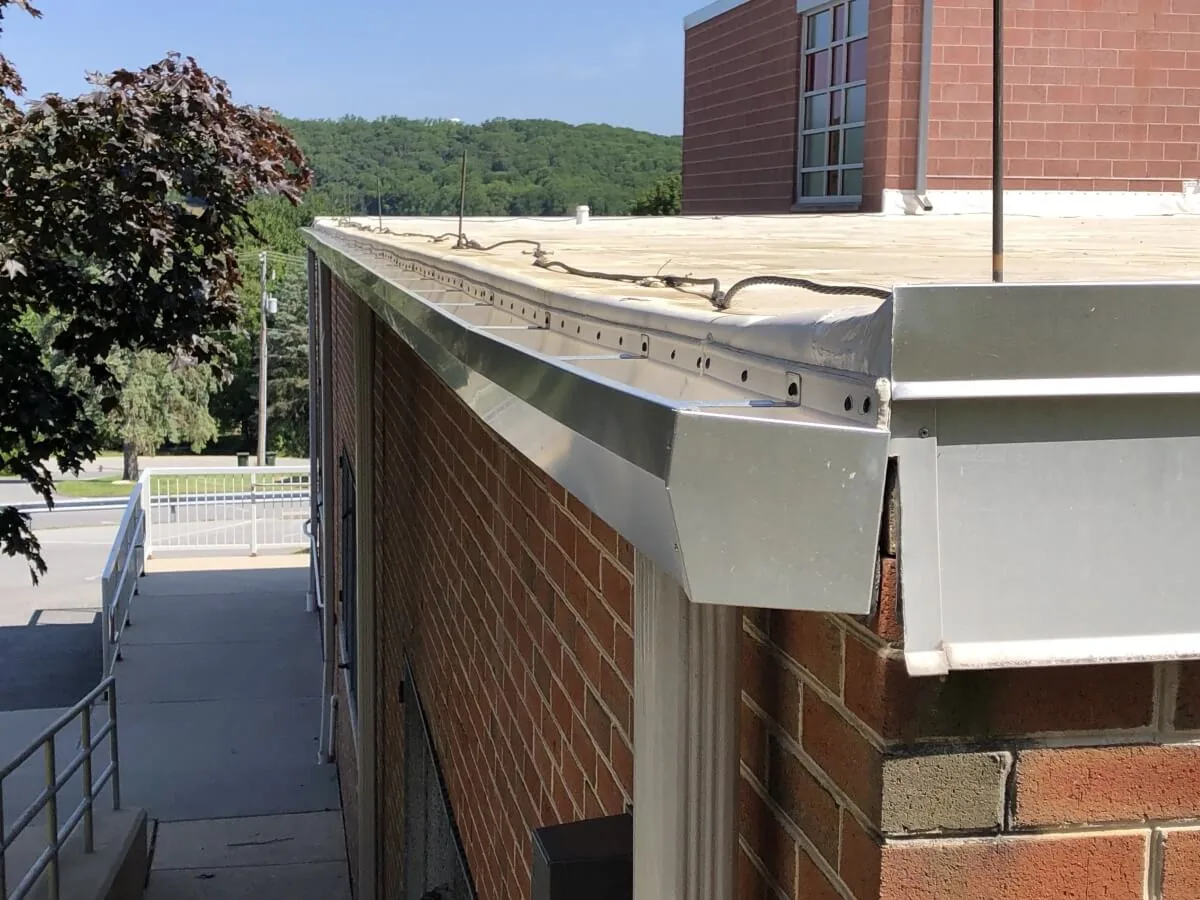
Wind uplift at the edge is the first thing we check: perimeter fasteners, edge metal, ridge and eave closures, and the attachment of the roof panels or membrane. Edge metal and gutter work gets a close read, and we write the findings with photographs so a hangar owner can document condition before a storm season.
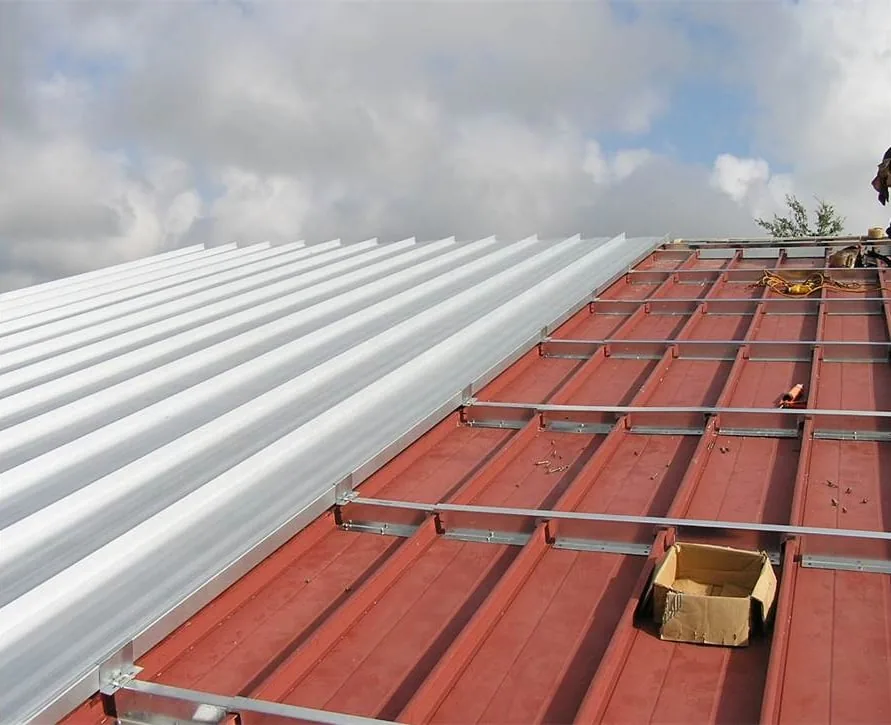
Standing seam panels resist uplift when clips and seams are intact, and a lapped panel relies on its fasteners. A standing seam metal roof that is clipped well at the perimeter performs differently from one with loose clips, which is why the edge zone gets its own line in the report.
Jamaica Bay and the southern shore
Canarsie lies on Jamaica Bay, where many home basements flooded during Sandy. The Belt Parkway runs through Mill Basin and serves Canarsie Pier. Anyone with aviation buildings near the bay deals with salt air, wind-driven rain and storm surge in the same season, and fasteners, panels and sealants in that air corrode faster than inland.
We look at corrosion at laps, fasteners and edge trim, and we recommend coatings or replacement parts that suit salt exposure. Owners near Canarsie or Mill Basin can rate each building on the same scale and fund the worst first.
Snow, heat and cloudbursts
Snow near 30 inches a year slides off a large metal roof in sheets, and ice at the eave dams the water behind it. In July highs near 85 F, a dark metal roof expands and moves through the day. After the September 1, 2021 flash flood emergency that Ida's remnants set off, a hangar gutter or scupper that handles ordinary rain is worth testing for cloudbursts, since it can overflow.
We clear gutters and downspouts, test outlets and check the roof drains and scuppers. Clean outlets are the cheapest protection a hangar roof gets.
Heat and freeze-thaw work the seams together. A metal roof expands in July and contracts in January, and every cycle moves the fasteners a little. We mark the loose ones and note the sealant that has lost its bond.
The fix in order
Dry in active leaks. Scan and probe. Sort the work into repair, retrofit and replacement. A metal roof with sound panels but failed sealant takes a laps-and-fasteners repair. A tired metal roof may take a metal roof retrofit that adds a new layer over the old. A failed assembly comes out. Work moves bay by bay, with the aircraft and equipment protected or moved by the operator.
Price follows access, the span, the height and the number of penetrations. Equipment on a hangar roof is light, but lift access and fall protection add cost, and a large clear span means long lengths of edge to attach. The schedule leaves room for wind days, since panels and membranes cannot be handled safely in strong gusts.
Closeout walk
The final walk covers every flashing and fastener line, and the manager receives a roof plan with each penetration numbered. A related warehouse roof or flex industrial roof at the same site can be rated alongside the hangar.
A clean job leaves a short punch list: sealant touch-ups, a last fastener check, a final photo set. We would rather fix an open lap on the day than leave it for the next storm.
Commercial Roofing Questions
How do I tell whether a drip in the hangar is condensation or a leak?
Timing and pattern separate them. A leak follows rain and shows at laps and fasteners. Condensation appears on cold, clear mornings and drips across a wide area. We scan the roof and log the drips against the weather.
Can a hangar roof be repaired while aircraft are inside?
Usually, with planning. We work over empty bays first, protect equipment under the work area and coordinate with the operator on aircraft movement. Hot work needs a fire watch and the operator's permission.
Is a metal retrofit allowed over an old metal roof?
It can be, if the framing carries the added weight and the old panels are sound enough to support the new layer. A survey and a structural check confirm it.
What should an owner send before a field walk?
The address area, the roof age and photos of the worst fastener line and the door head start the file, along with the type of roof if it is known.