Auto Dealership Roofing in Brooklyn, NY
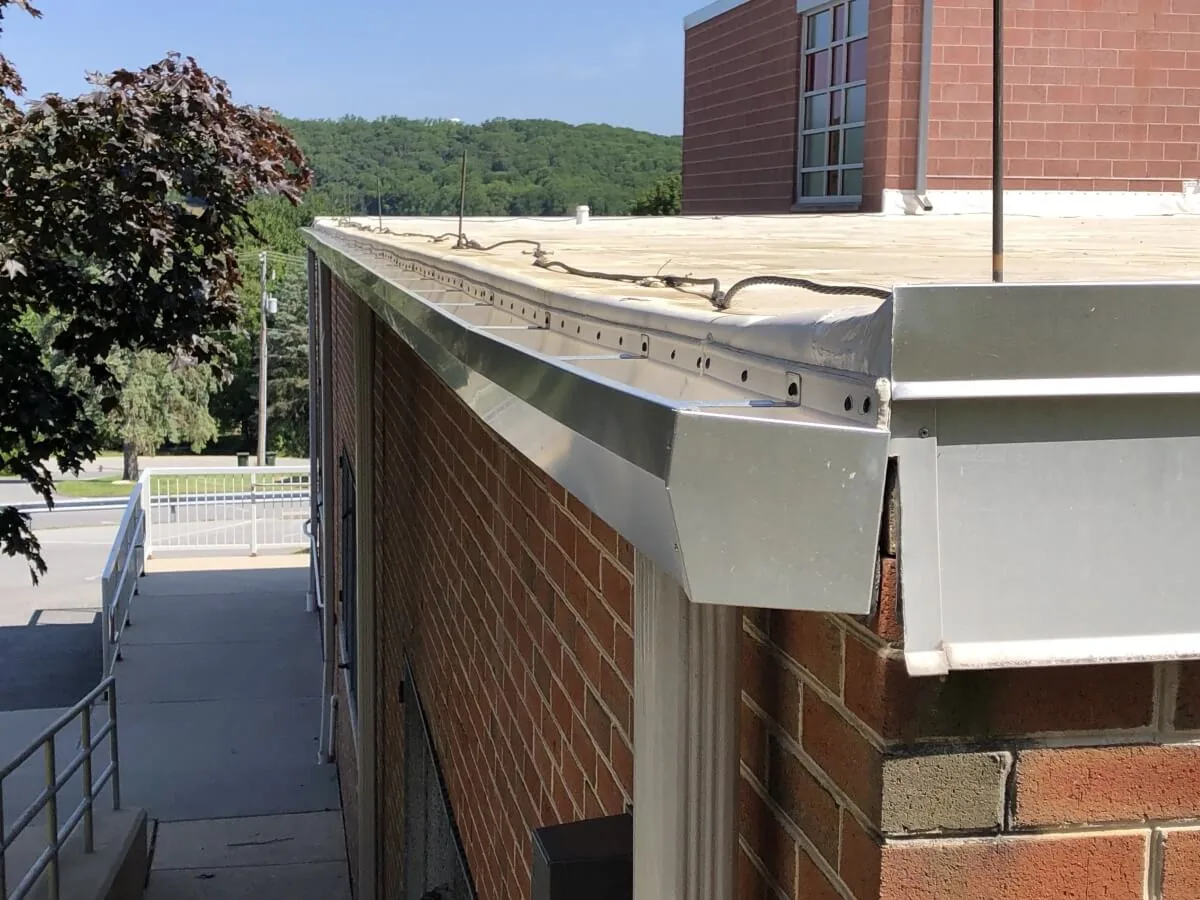
The roof edge on a dealership is where the story starts. Stand on a service-bay roof and look at the metal along the perimeter. If the fascia has lifted a quarter inch, if the coping joint has opened, if the edge flashing rattles in the wind, then the next strong gust has something to grab. When the 2007 EF2 tornado crossed Bay Ridge, a Nissan dealership nearby lost its roof. A dealership roof is often flat and exposed, with a lot of expensive inventory under or beside it. The walk covers the field, the edges and each flashing, and the photographs come before the scope.
Wind gets in at the edge
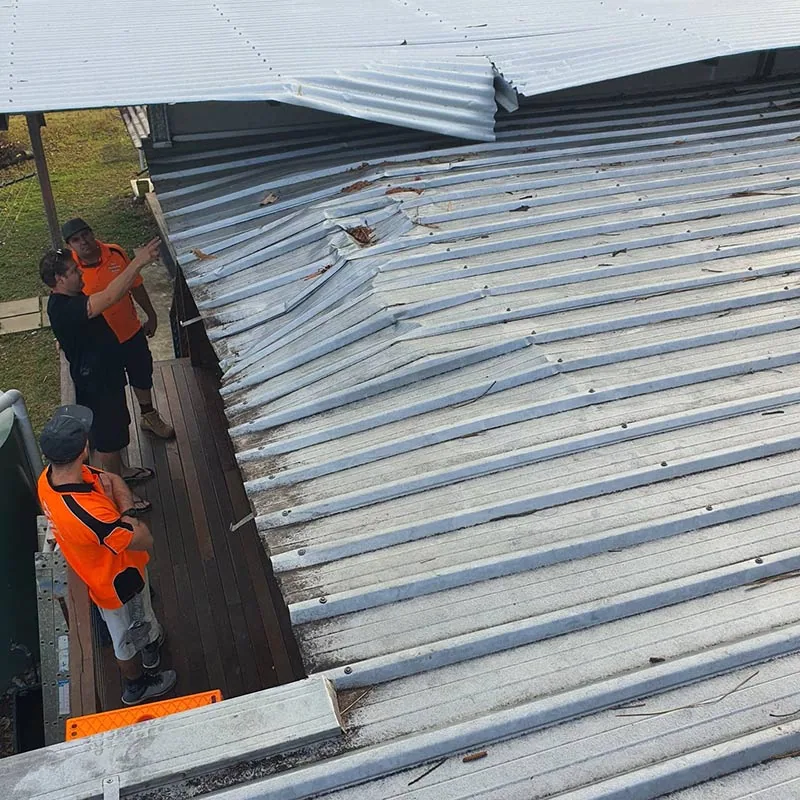
Wind lifts a roof from the perimeter and corners first. A showroom with a tall front, a service wing with a lower roof and a body shop in the back each have edges that face the weather in different ways. Where the edge metal is thin, loose or poorly fastened, a storm can peel the membrane back like a sheet.
The fix is attachment. More fasteners at the perimeter, a heavier edge metal with a continuous cleat, sealed joints and a membrane adhered or mechanically fastened to match the exposure. Edge metal, coping and gutters are the first line on the punch list, and we photograph every foot of them on the survey so the repair has a record.
Corners are the worst spot. A building with an open lot on two sides sees wind from both, and the corner zone takes a larger share of the uplift than the field. We look for stress marks, tears and lifted sealant at every corner, and we confirm that the fasteners are the right ones for the deck beneath.
Dealerships and the avenues
Atlantic Avenue on the northern border of Crown Heights is dominated by auto-oriented uses. Bay Ridge has strips along Third and Fifth Avenues. Auto buildings come in mixed shapes: showroom glass fronts, low-slope roofs over the service bays, parts rooms, and open canopies for deliveries or wash lines.
A showroom may carry a flat membrane behind a parapet, a service wing may carry a metal deck and a canopy may carry a standing seam. We read each roof separately and rate each one. A service-bay roof with exhaust and lift equipment needs a different check than a showroom roof with skylights.
Rooftop signage and lighting add penetrations. A sign frame bolted through the membrane, with failed sealant, can leak for a season before anyone connects it to the stain on the parts-room ceiling.
Where it fails
Canopies. The junction between a canopy and the main wall is a counterflashing and a sealant line that move with every temperature swing. Exhaust. Service bays vent fumes through roof fans, and each fan curb is a place where water can enter. Drains. On a wide roof a few outlets carry everything, and grit in a basket leaves water sitting at the drain.
Skylights over a showroom are another source. Glass is rarely the problem. The curb and the flashing are. Water that gets in over a showroom lands on vehicles, and the call comes fast. We test with hose water from the low side up to find which joint takes it.
Seams complete the list. A heat-welded or adhered seam that has been through many July afternoons and January mornings opens a little at a time, and we probe each lap by hand during the walk.
Storms, snow and cloudbursts
Sandy put large parts of Red Hook under water in 2012. A roof sits above flood level, but a dealership near the water takes the wind and rain that arrive with a storm. Ordinary rain drains fine, but a cloudburst such as Ida's can overwhelm the same outlet.
Weak seams open under about 30 inches of snow a year and the freeze-thaw swing that follows, and a dark membrane over the showroom adds heat once July highs reach 85 F. We check drains, seams and edges before each season and photograph the results.
Storm claims and the record
If wind or a storm damages the roof, the insurer wants dated evidence. Roof insurance claim assistance starts before the loss, with a roof plan, a rating and photographs of the edge and the flashings in their normal state. After an event, a same-week walk records what changed.
That record helps the owner and the adjuster agree on what was damaged and what was already worn. Wear that predates a storm is easy to separate when the earlier photographs exist. We keep both sets in the same file and label them by date.
The fix in order
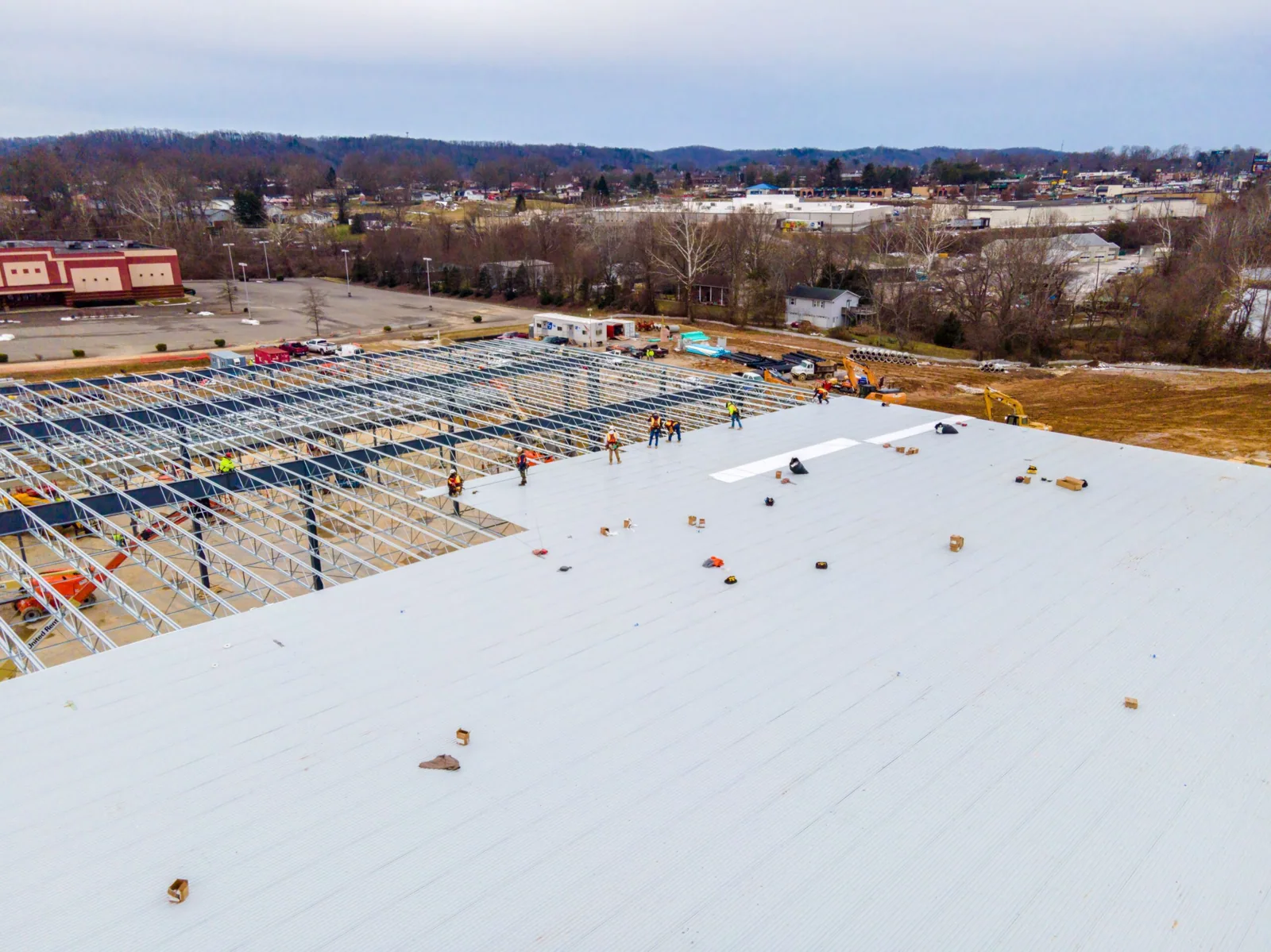
Dry in active leaks. Scan the roof for wet insulation, take a few core cuts and sort the work into repair, recover and replacement. A TPO membrane is a common single-ply choice on a large flat dealership roof, with heat-welded seams and a reflective surface. A dealership can stay open while the roof is done, because the work moves in zones and the showroom floor is protected below the active area.
Price follows access and the number of penetrations more than the choice of membrane. Roof-mounted exhaust, lift equipment and signage supports all need to be worked around, and the sequence is written into the scope.
Closeout walk
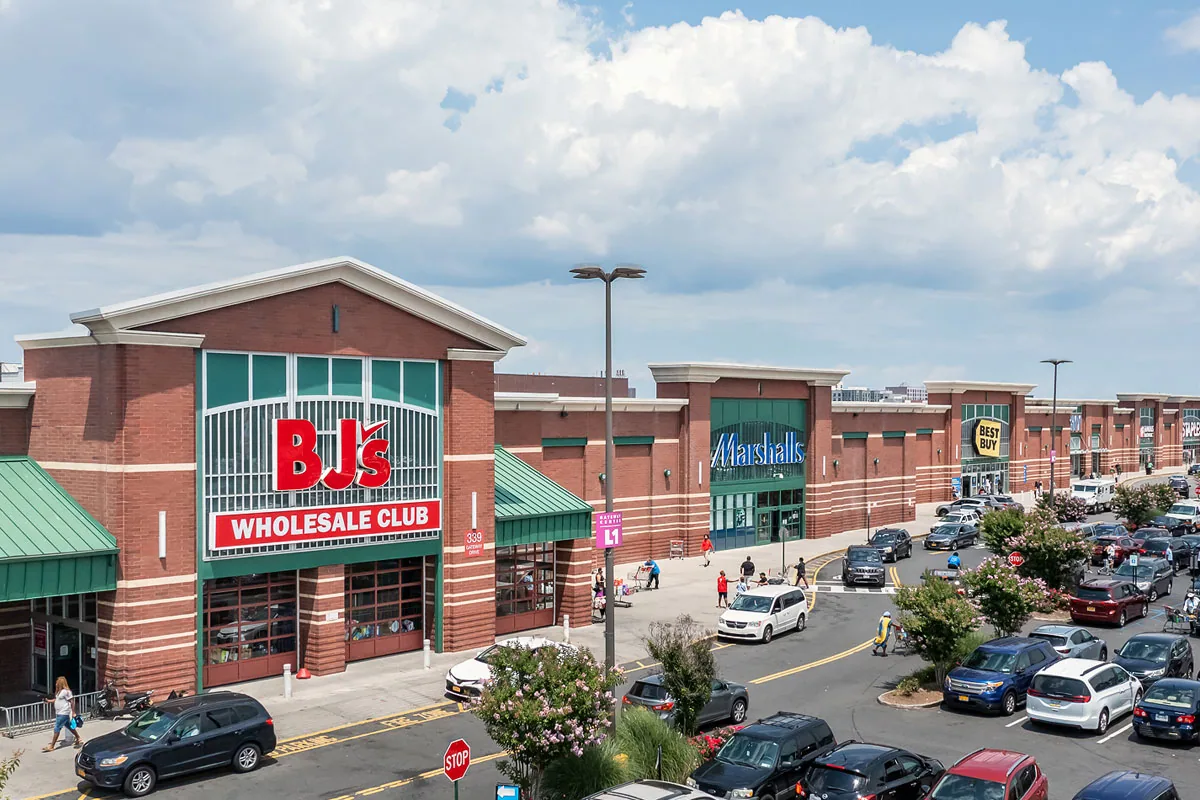
We finish with a walk, photograph every flashing and drain and hand over the roof plan and the core log. Owners who hold a showroom, a satellite lot or a share of a big-box retail or shopping center roof can score every building on one scale and fund the worst roof first.
The last item is the punch list: a few sealant touch-ups, a missing cap fastener, an open lap. Small things get fixed on the spot, and the final photographs go into the file with the date. Showroom glass and the parts room below are checked from inside as well, with a flashlight along the ceiling line, because a hairline drip that has not yet stained a tile still shows as a damp edge when the crew looks for it.
Commercial Roofing Questions
How do I know whether the edge of my roof is secure enough for a strong wind?
We pull and probe the edge metal, check the fasteners and cleat, and look at the condition of the membrane at the corners. If the metal flexes or the sealant has split, the edge is a risk. A written finding lists the stretches that need attachment work.
Can the roof be replaced while the showroom stays open?
Yes, with zoning and interior protection. We work over the service wing first, dry in each shift and keep the showroom entrance clear. Noisy work can run early morning or after closing when the dealer prefers.
What does a dealer need to send before a field walk?
The address area, the roof age, photos of the worst drain and the edge metal, and dates of any past storm repairs are the starting file.
Why photograph the roof before a storm?
Photographs taken in normal conditions show what was sound and what was worn, which keeps a claim clean and fast. We take them on the first survey and repeat them after each major event.
Does a lighter roof color matter on a dealership?
A reflective membrane lowers the heat that builds over the showroom and the parts room in July, which eases the cooling load. It works best on a sound, dry roof, so the scan comes first.