
Self-Storage Roofing in Brooklyn, NY
A storage manager finds a roof leak the way a super does, by a wet box. A customer opens a unit on the top floor, finds a cardboard carton soft at the bottom and a stain on the ceiling above it, and the call comes in before anyone has been on the roof. By then the water has been running for days. The roof on a storage building is mostly open field, with a few drains, a few vents and a long parapet, and that plainness hides trouble. One failed seam or one packed drain can soak insulation over a dozen units while the corridor stays dry.
Soft spots get marked on the field and every flashing gets photographed before anyone writes a scope.
What the roof looks like from above
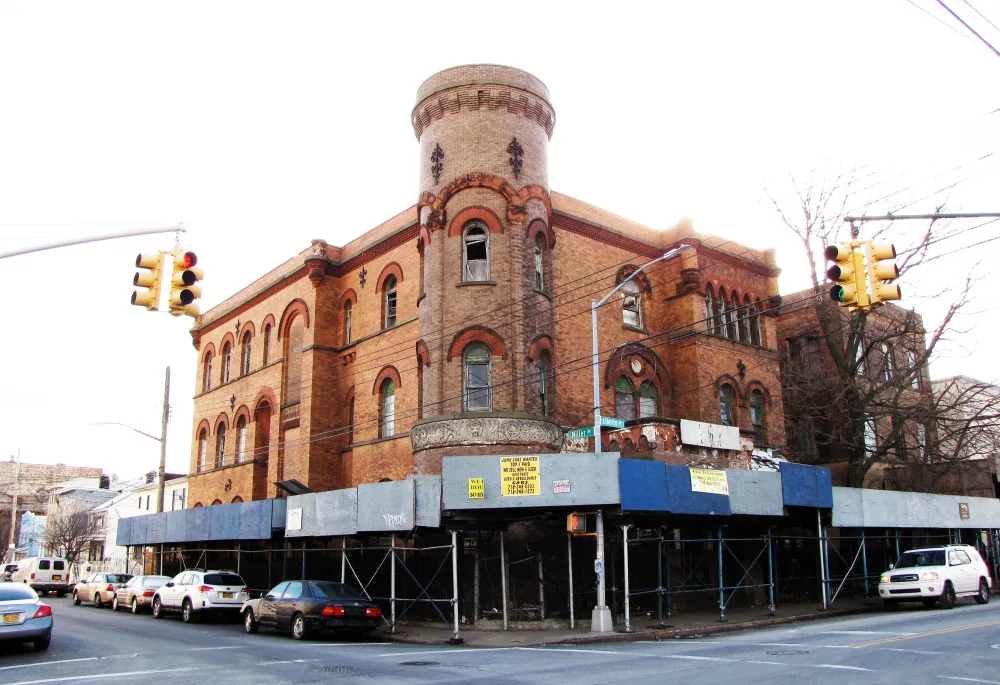
Storage buildings come in a few shapes. Some are converted industrial and film-studio space, and Midwood has a former film and television studio complex that now holds offices and self-storage. A third group is purpose-built multi-story blocks, flat-roofed with a short parapet. Some are single-story rows with a low-slope roof and a metal edge.
All of them share one trait: the roof sees little traffic. Nobody walks it. Nobody clears the drain baskets. A sump of water forms at the drain, the membrane tires from sitting wet and the first sign arrives as a stained ceiling in a unit. We start on the roof, not in the unit, and we rate each area before we price anything.
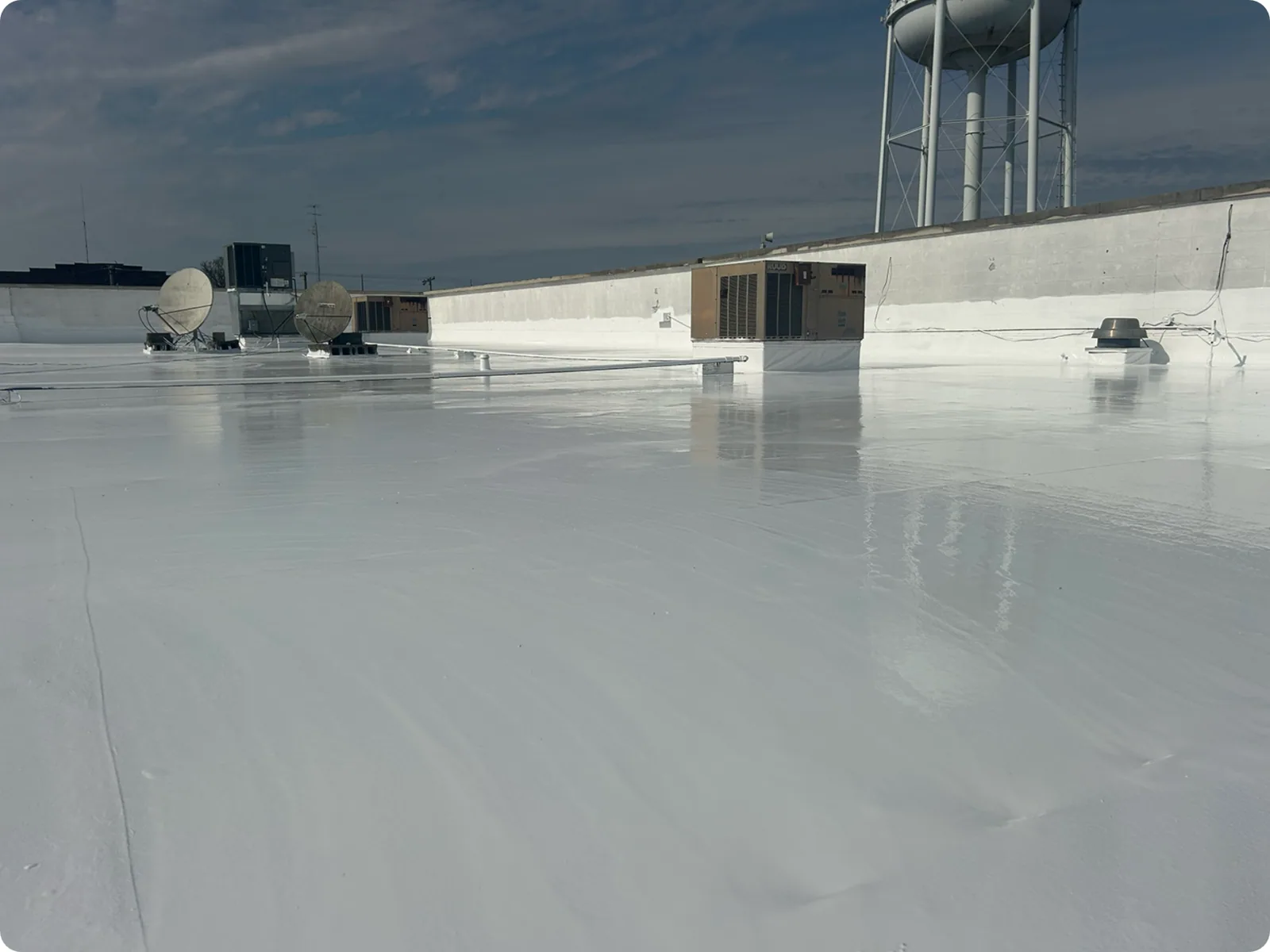
Rooftop equipment is light. Climate-controlled floors may add exhaust fans, and a vent stack, a roof hatch and a sign frame complete a short list. Light does not mean harmless. A sign frame bolted through the membrane years ago, with the sealant long gone, can leak for a season before the stain reaches a ceiling.
Where it fails first
Drains. A basket packed with grit and a leaf or two keeps water on the roof for a day after a storm, and the ponding finds every weak seam. Seams. A single-ply that has aged through a hot July and a freezing January opens at the laps, and a modified bitumen sheet opens at the side laps and end laps. Edges. A metal edge that has loosened lets wind under the membrane, and the sheet flaps and tears.
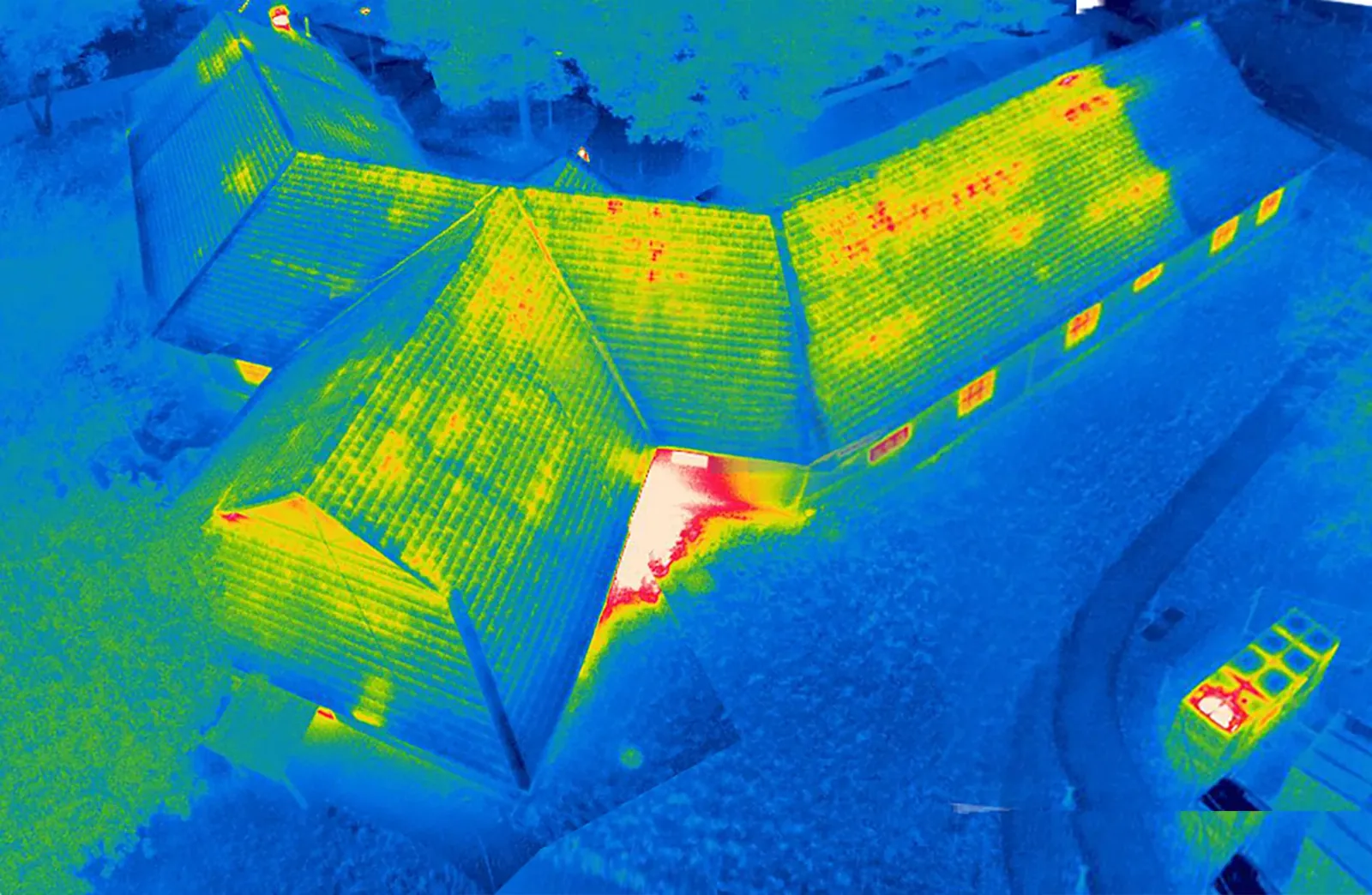
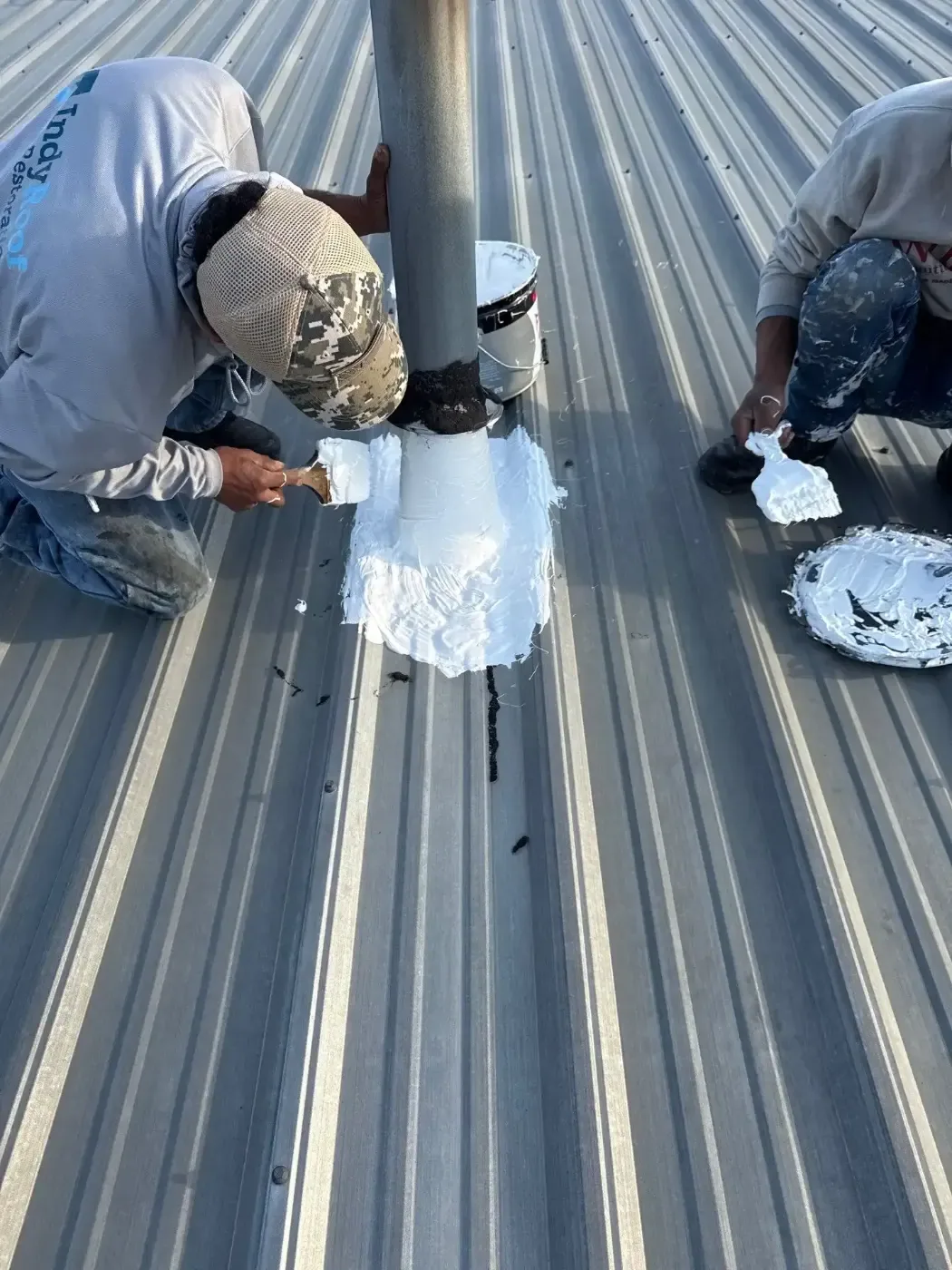
Penetrations come next. The few vents, hatches and exhaust fans on a storage roof are each a pitch pan or a curb, and a cracked sealant line is all it takes. Our infrared moisture survey finds the wet insulation these failures leave behind, and a few core cuts confirm what the scan suggests.
The parapet is the next thing we climb to. A long, low parapet means dozens of feet of coping, and each open joint lets water into the wall behind it. Once that wall stays wet it sends damage back into the roof edge, so coping joints and counterflashing get read before the perimeter walk ends.
Industrial park roofs
The East Brooklyn Industrial Park, established in 1980, takes in 44 blocks bounded by Atlantic Avenue, Sheffield Avenue, Sutter Avenue and Powell Street. The 93 acres of Flatlands Industrial Park, between East 99th and 108th Streets, date to 1969, when it opened as the city's first publicly sponsored industrial complex. Buildings in parks like these arrive in waves, and roof age varies from block to block, so the answer comes from a core cut. A dry core and a sound deck leave room for a recover or a coating to add years. If it is wet, it comes out. A storage owner with several sites near East New York or Canarsie can rate each roof on the same scale and fund the worst first.
Buildings in an industrial park can share drainage with their neighbors, and a downspout discharging into a shared line can back up in a storm. Where access allows, the leaders are traced outward from the roof drain, so the repair reaches the whole path and not only the bowl.
Weather on a big flat roof
Snow in New York City runs near 30 inches a year, and 27.3 inches fell on January 23, 2016 alone. Snow sits on a flat roof and melts toward the drains, and ice in a drain bowl backs water across the field. In July, highs near 85 F can turn upper-floor units under a dark roof into ovens, which is hard on stored goods. A cloudburst like the one Ida's remnants brought on September 1, 2021 overwhelms any drain that is half clogged. Near the water, wind arrives with any coastal storm, so edge fastening and overflow paths get checked before the season begins. The heat island holds warmth into the evening, which keeps a dark membrane hot after dark. Seams open more in a hot summer than in a mild one, and every open lap is marked on the plan so repair crews do not search twice.
The fix in order
Drains get cleared and soft spots marked, then a scan and cores sort the roof into repair, recover or tear-off. Local trouble is repaired as local trouble. Where insulation is dry and the deck is sound, a recover or a restoration coating fits, and the core decides between them. Replace where the scan shows water throughout.
Storage is easy to work around because the building is mostly empty space and customers come and go in daylight. The loading area and office entrance stay clear, work is staged in zones, and each shift ends dried in. A reflective membrane lowers heat in upper units, and a TPO membrane is a common choice for this type of roof.
Cost tracks access, the count of penetrations and the condition of the deck. Winter work is mostly dry-in and repair, because membranes install best on dry surfaces in mild weather. The schedule carries slack for rain days.
Closeout walk
The manager walks the roof at the end while each flashing and drain is photographed, and the handover package adds a roof plan with numbered penetrations. One drain clearing a year and a walk after each big storm keep it that way. Neighbors on the same block, such as a nearby warehouse roof or a flex industrial building, often share the same seam and drain problems, and the same habits apply.
Commercial Roofing Questions
How do I know whether a stain in a unit is a roof leak or a condensation problem?
A leak stains in a pattern that follows rain, with water marks that grow after storms. Condensation shows up in cold weather on metal and uninsulated surfaces. We scan the roof after rain and check the insulation, so the answer comes from a measurement.
Can the roof be repaired while customers use the building?
Yes. Work is zoned, the loading area and entrance stay clear and the roof is dried in each shift. Interior protection goes up under any open area.
Is a coating a good choice for a large storage roof?
A coating fits a roof with dry insulation and a sound deck, and it adds reflectivity. Trapped water seen in the scan means the wet layers come out first. The core log settles it.
What helps a manager prepare for the field walk?
Give the address area and the roof age, then add one photo of the worst drain and one of the worst stained unit ceiling. The scope follows the walk.
How often should drains be cleared on a storage roof?
Twice a year at minimum, in late fall after the leaves and again in early spring after the thaw. A walk after a major storm catches blocked baskets early, and the dated photos go into the file.