Commercial Roofing in Borough Park, Brooklyn, NY
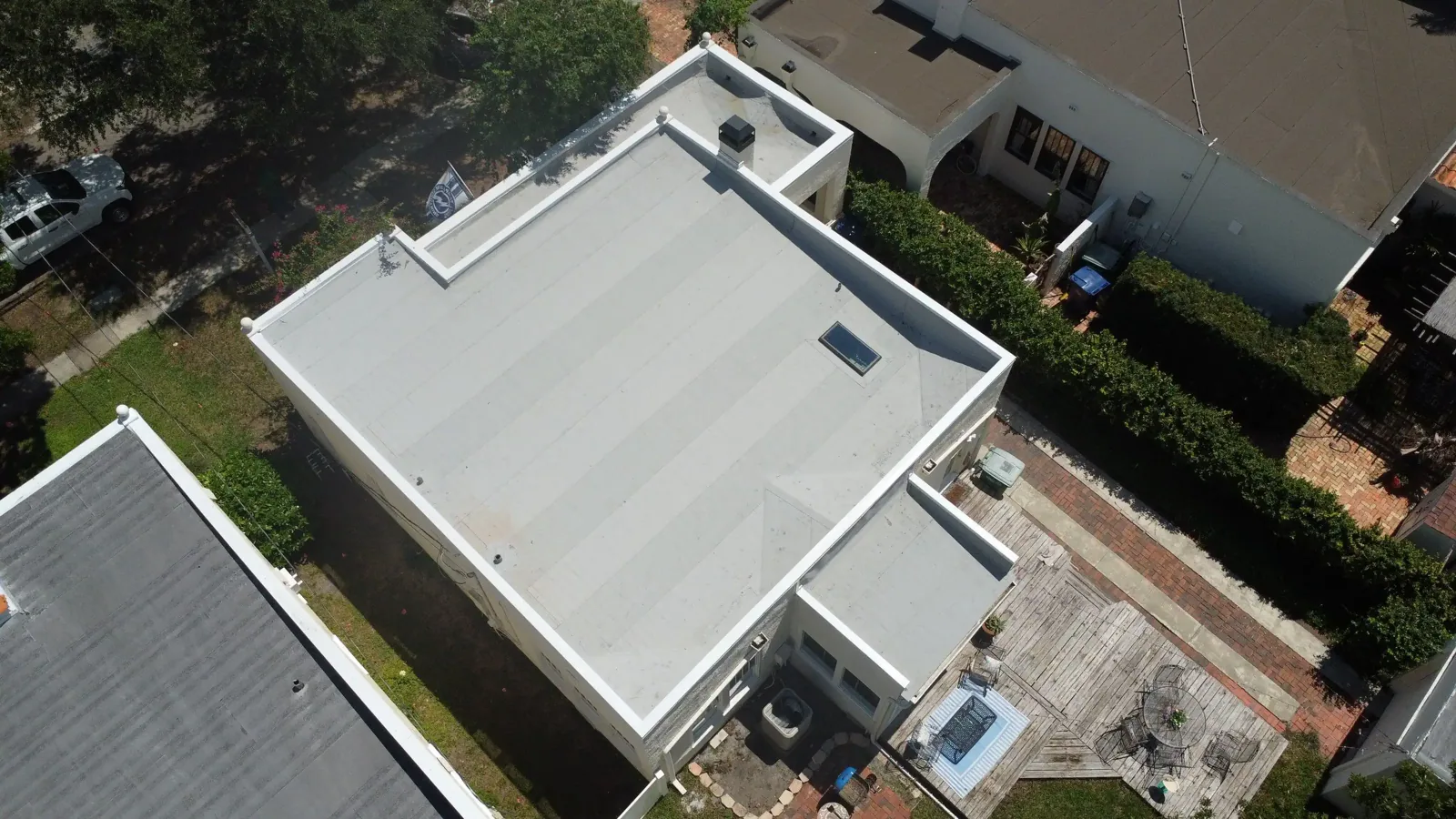
A roof that has been added to is a roof with seams in the wrong places. Since 1990 more building permits have gone to Borough Park than to any other Brooklyn residential neighborhood, and a 1992 zoning law lets owners build on 65 percent of a lot. That mix tends to produce rooftops that get cut into, extended and built over, with new walls rising against old roofs and new bulkheads set on old decks. The failure is rarely in the open field. It sits at the junction where the old roof meets the new wall, and the tie-in to the old roof is the line to read.
Scope writing waits until we have walked the field, marked the soft spots and photographed the flashings.
Where old roof meets new wall
When a building is extended or a floor is added, the roof below becomes either a terrace, a lower roof or a part of the new structure. The flashing between the old membrane and the new wall has to climb the wall, be covered by a counterflashing and be adhered with enough overlap to survive thermal movement. That detail is done well or badly, and it shows in the first heavy rain.
We probe each tie-in by hand, check the height of the base flashing and the lap of the counterflashing, and hose-test from the low side up. A failed flashing at a tie-in is a clear case for repair now, because the water enters the new construction and the old plaster at once. The report states which roof area the leak belongs to, which helps when two contractors worked on the same corner.
Rooftop additions raise a second question: what the old roof is doing under them. A terrace, a mechanical platform or a new bulkhead sits on pavers, sleepers or pedestals, and water that gets under them cannot be seen. We lift a few to read the membrane beneath, and the findings go into the file with photographs.
13th Avenue and the mixed blocks
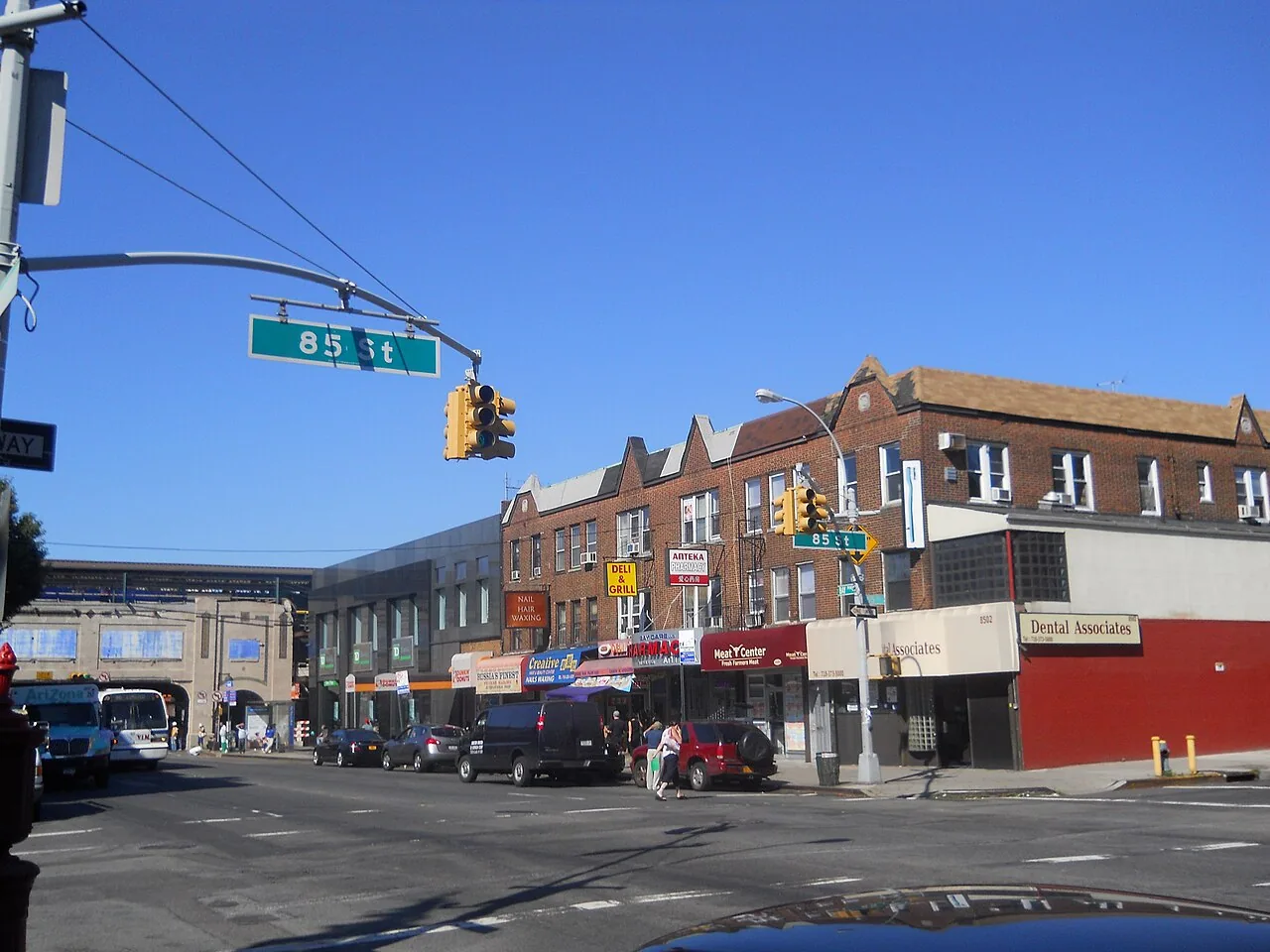
The commercial heart of Borough Park is 13th Avenue, a strip of roughly one mile from 39th to 55th Streets. Along a strip like that, shops sit under apartments or offices, and the roof serves both. A leak into a storefront often starts at the parapet or at a rooftop unit installed for a tenant. How a given building was roofed is read from the roof. A walk and a scan tell us.
Responsibility gets tangled: who owns the roof, who pays and who hired the last contractor. Moisture mapping and a staged hose test trace the water, and the entry goes on a numbered plan. The plan names the unit below. With that record, an owner and a tenant can settle a repair without a fight, and a mixed-use apartment roof gets a rating the owner can read at a glance.
Rooftop units, exhaust fans and signage supports on the avenue side add penetrations. A sign frame with a failing seal can drip for months before the stain below is traced to it.
Roofs around Maimonides
Maimonides Medical Center runs 679 beds and a level 2 trauma center, and buildings around a hospital can keep rooftop equipment running without a break. A leak into a clinic room is a continuity problem, and the schedule for roof work is set by the operator.
Zones, protected intakes, hot work kept off fresh-air paths and noise hours in writing are the plan. A medical office roof follows the same pattern, with tear-off sized to be dried in each shift and a quiet hour list from the manager. Where the building asks for it, we use a method that avoids open flame.
Parking structures, loading areas and service buildings around a hospital often share drainage with the roof, so a clogged leader can back up in more than one place. We trace the leaders where access allows and note where they discharge.
Lot coverage and roof drainage
Building on 65 percent of a lot leaves less ground for water to go and more roof to shed it. Drains that were sized for the original building now serve more roof area, and a downspout that discharged to a yard may now discharge to a neighbor's wall. A roof that sheds onto another roof loads it with water and debris.
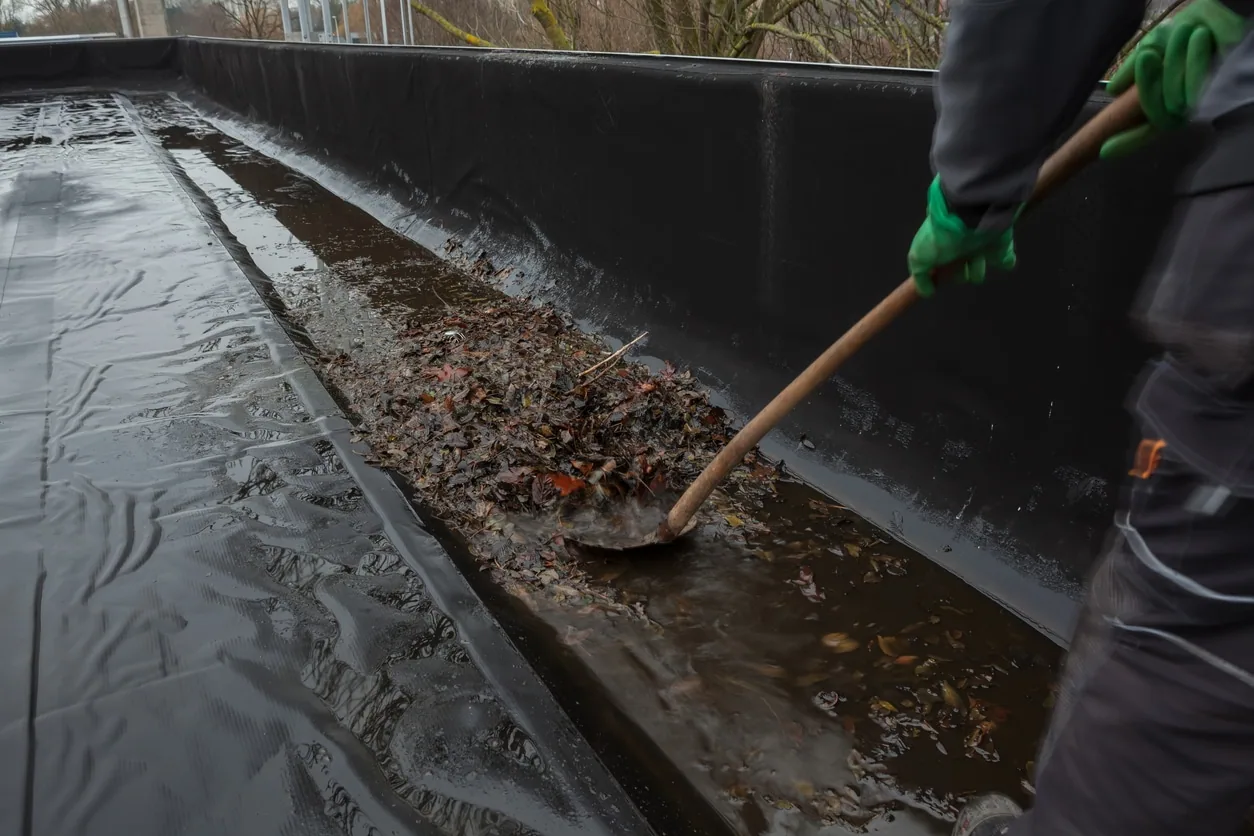
We trace the leaders from the roof drain outward where access allows and note where they end. Where an overflow path is missing, we recommend one, since an overflow is the cheapest insurance against a clogged drain. Checking roof drains and scuppers before the wet season is the first job on the list.
Parapet height is another casualty of fast building. A short parapet gives little protection against wind-driven rain, and a coping joint that opens in January lets water into a wall that nobody is watching. Coping joints and counterflashing get read on each wall that borders occupied space.
Cloudburst, snow and heat
Ida's remnants on September 1, 2021 set off the first flash flood emergency the city had ever issued. Drains sized for ordinary rain choke in a cloudburst, and the water backs up behind the parapet flashing. Snow runs near 30 inches a year, and the record day, January 23, 2016, dropped 27.3 inches. July highs near 85 F, with a strong heat island on top, push roof temperatures higher still. Apartments on the top floor under a dark roof feel the heat first, and heat opens seams in a hot summer that a mild one would leave tight. Every walk includes a close look at perimeter fastening and coping joints, with dated photographs for the file.
The fix in order
First the active leaks get dried in; afterward the scan and the cores assign the roof to repair, recover or replacement. Tie-ins and drains come first, as the cheapest leaks to fix. A worn but dry surface may take a recover, while wet insulation comes out. Neighbors in Bensonhurst and Flatbush deal with the same building type. Price follows access and the number of penetrations.
Weather sets the calendar. A short punch list closes the job: sealant touch-ups, a loose cap fastener, an open lap.
Commercial Roofing Questions
How do I know whether a leak comes from the old roof or the new wall?
Trace the water with a moisture map and a hose test staged from the low edge upward. A leak at the tie-in shows up at the junction first; a leak in the field shows up elsewhere. The numbered plan records the entry point and the area it belongs to.
Can a medical office stay open during roof work?
Yes. We work in zones, protect air intakes, avoid hot work near fresh air and agree noise hours with the manager. The tear-off is dried in each shift.
Why does an added floor change the roof's drainage?
The new roof area sheds water to old leaders that were sized for the original building. We check the leader capacity, the overflow path and where the water ends up.
Who pays when two contractors worked on the same corner?
The survey names the area where the water enters and records what each contractor built. With that, the owner can allocate cost to the right party.
What gets a walk scheduled on a Borough Park roof?
The roof age, the address area, a photo of the worst drain and a photo of the junction where the old wall meets the new one.