Commercial Roofing in Prospect Heights, Brooklyn, NY
The grease line is the first thing to check on a restaurant roof in Prospect Heights. Stand beside the exhaust fan on a Vanderbilt Avenue building and look at the membrane around its base: a dark, slick halo means kitchen grease has been landing on the surface for a long time, and some membranes soften under that load. The same halo usually shows a curb flashing that has lifted, because grease and hot air work on sealant together. Fan after fan, that is the pattern we find on the roofs of busy dining streets.
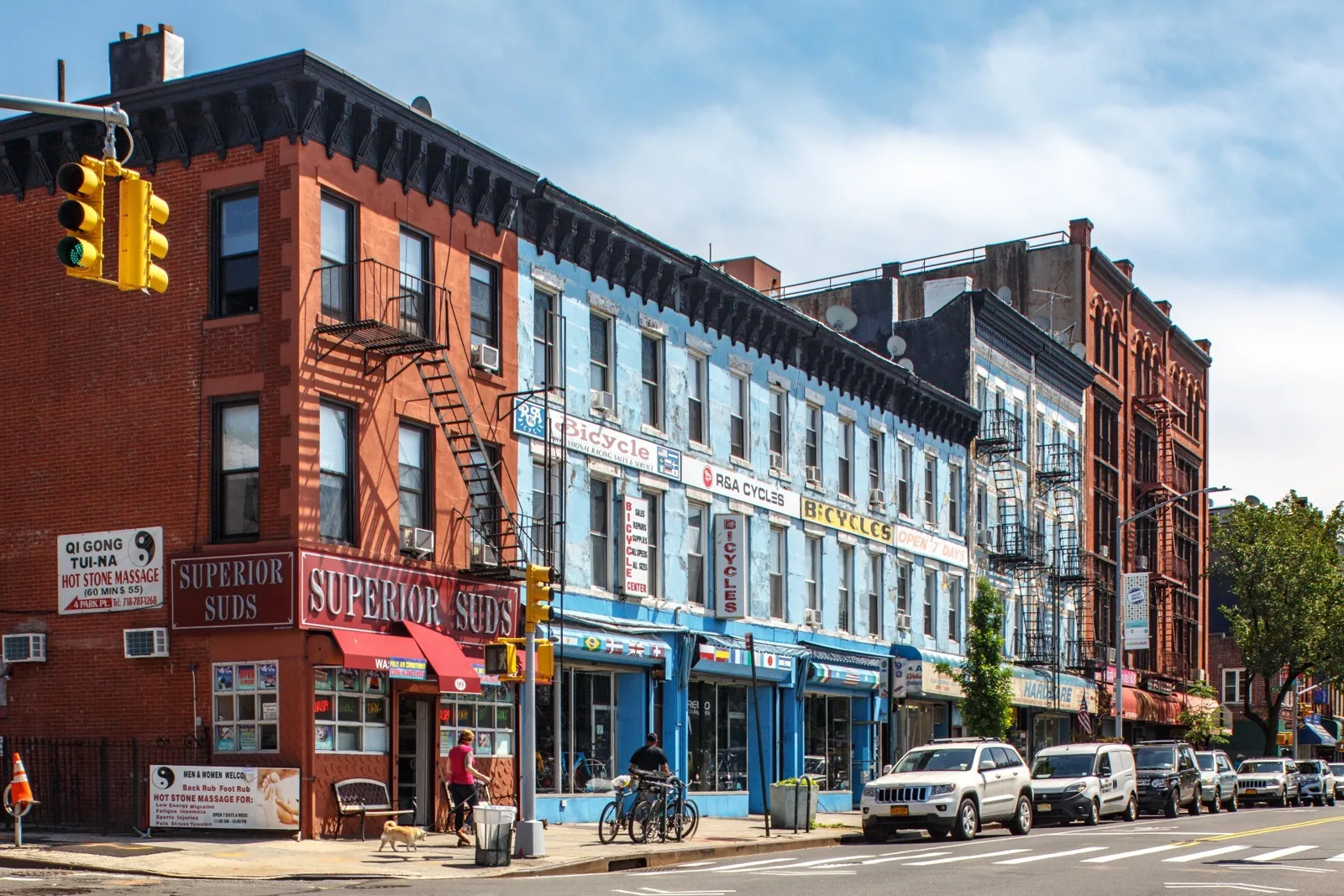
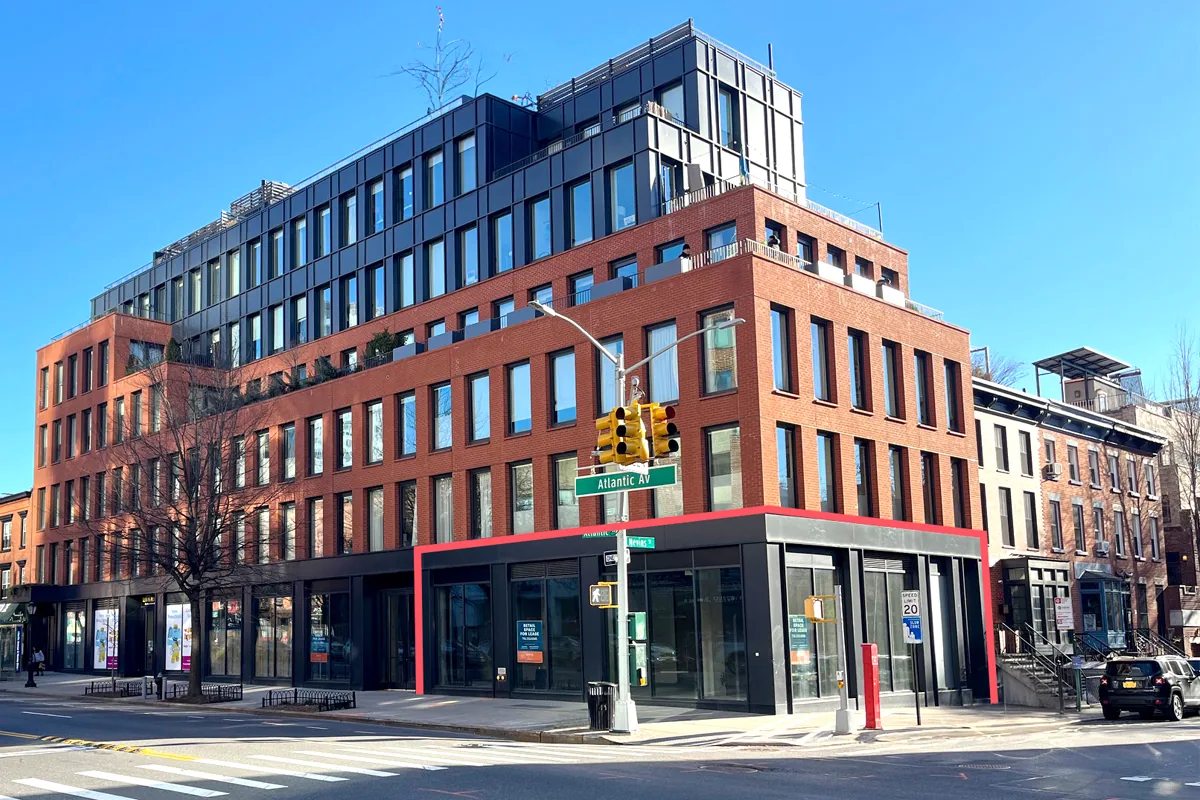
Commercial roofing in Prospect Heights, Brooklyn, NY covers a mix that few neighborhoods share. There are mixed-use rowhouses with a shop or restaurant at street level, a commercial strip of bars and eateries, and the newer construction that rose around the arena and the built-over rail yards. Each of these buildings has a flat or low-slope roof with its own weak point, and the work here is mostly about finding that point early and fixing it in the right order.
Vanderbilt and Washington, from the roof
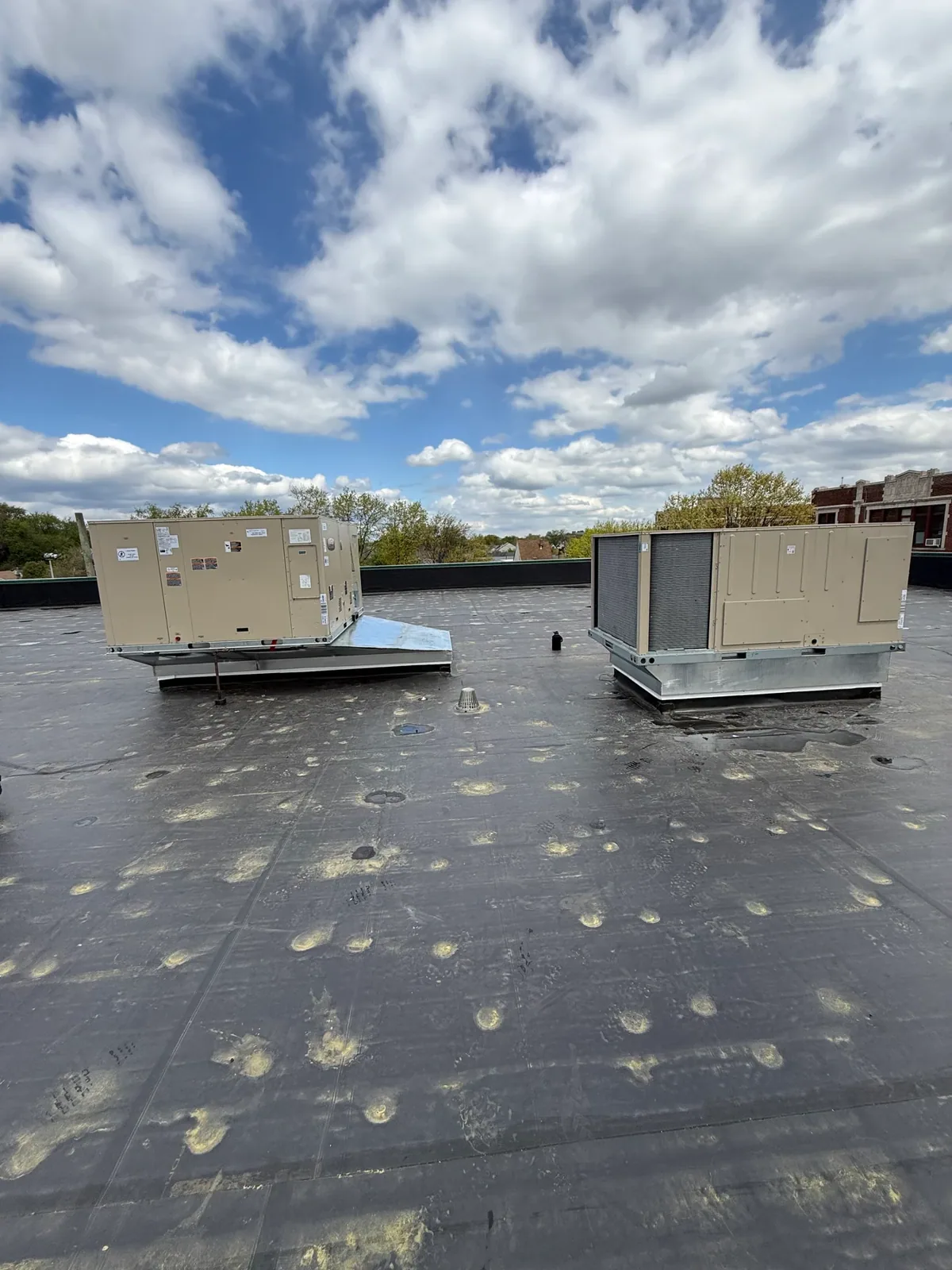
Vanderbilt and Washington Avenues form a commercial zone with bars, restaurants and shops, and the roofs above them carry the equipment that keeps those businesses running: exhaust fans, makeup air units, refrigeration condensers and vent stacks. Every unit is a penetration, and every penetration is a place water can enter. We map each one on the first walk, check the curb height, look at the counterflashing and probe the sealant for cracks. Grease-saturated membrane near a fan is cut out and replaced, since patching over grease does not bond.
Equipment also gets replaced. A new condenser set on a stand without a pad can crush the membrane under its feet, and a pipe run laid across the surface traps water. We ask the mechanical contractor to coordinate with us before the unit arrives, so the curbs and supports are set at the right height and flashed before the equipment is lifted into place.
Historic district, low roofs
The Prospect Heights Historic District is the fifth-largest in New York City, and a mixed-use rowhouse in it is a common roofing case. Work on a building in a historic district can involve approvals for anything visible from the street, which is why the first conversation on a parapet repair is about what the street can see. Hidden-from-view roof work is far simpler than a cornice or a visible coping change.
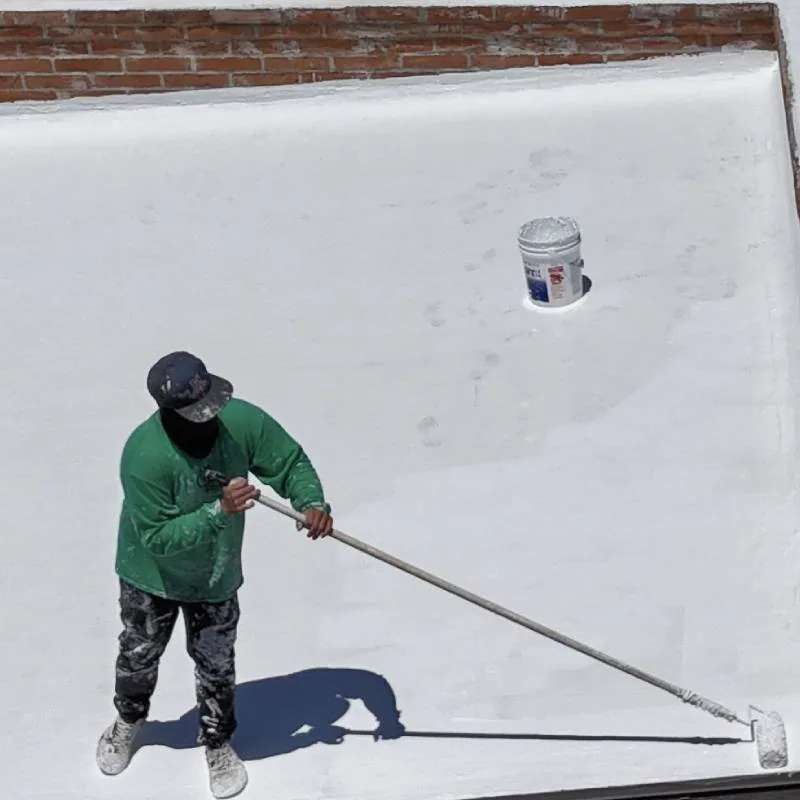
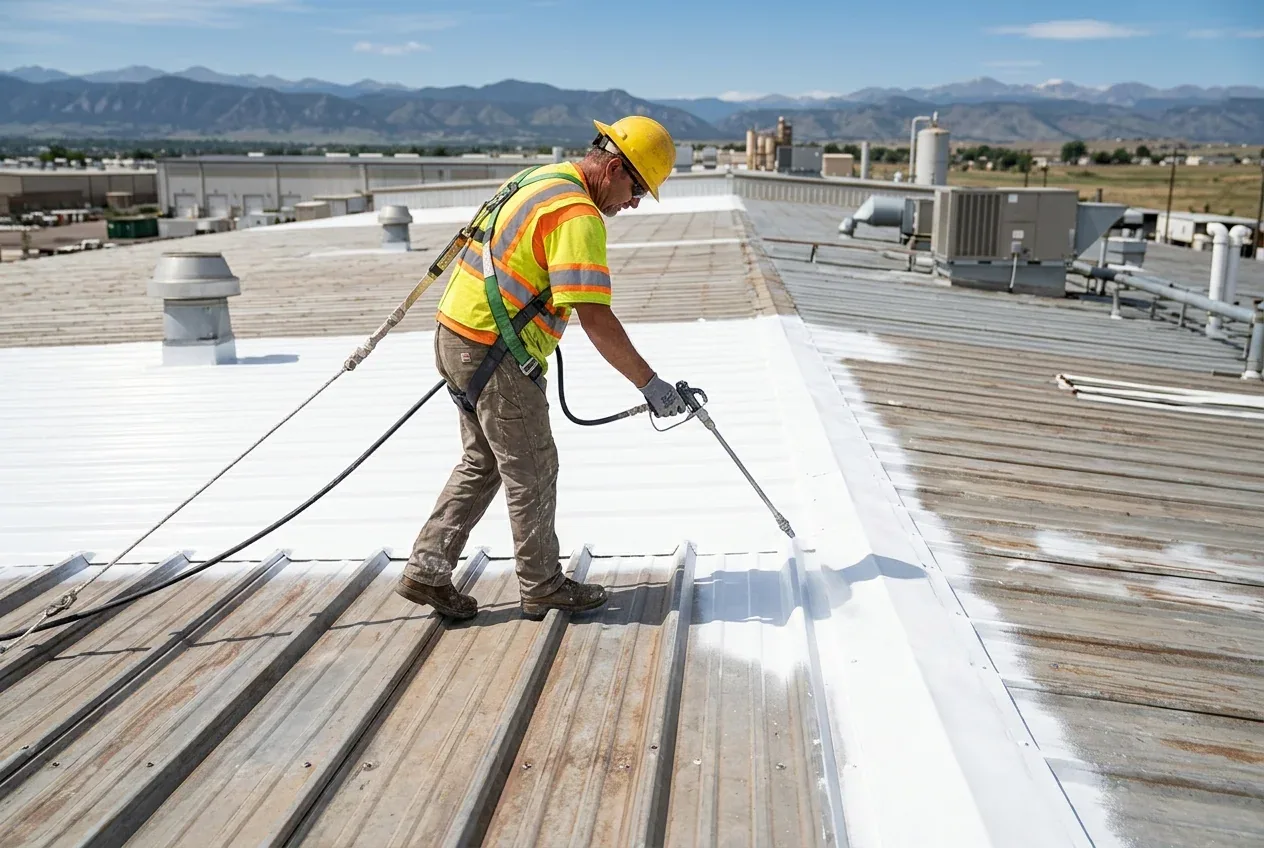
Behind the parapet, these roofs are small and tight. A low-slope roof of a few hundred square feet may drain to one outlet, with brick on three sides. The failure points are the parapet flashing, the cornice return and the junction with the neighbor. We repair those first and decide on the field of the roof afterward, because a roof with sound flashing and a tired surface often accepts a silicone coating and a roof with failed flashing needs rebuilding along its edges whatever the surface looks like.
New construction beside old roofs
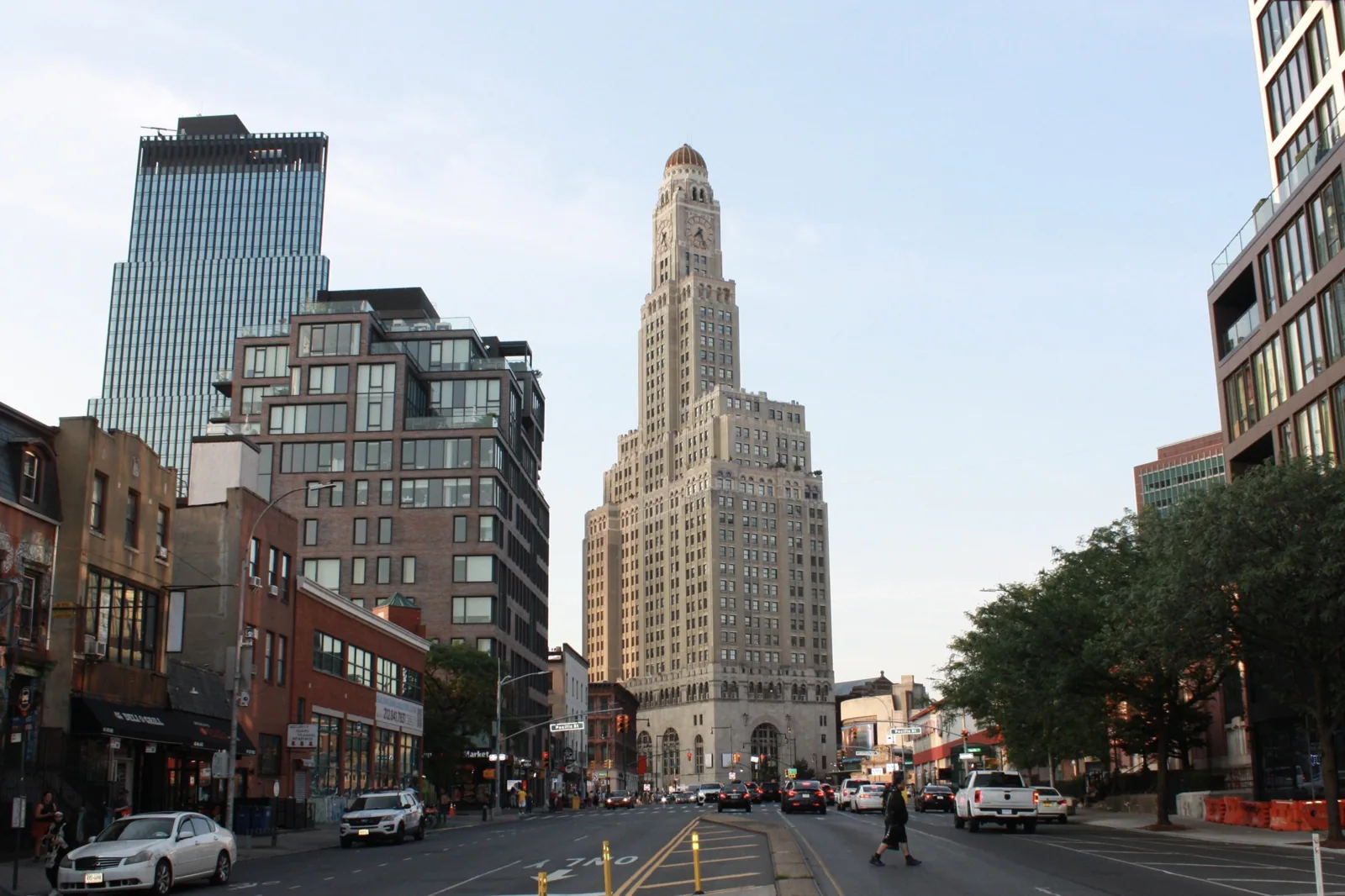
The Vanderbilt Rail Yards were built over as part of Pacific Park, where Barclays Center opened in 2012 at Flatbush and Atlantic Avenues. Development of this scale changes the roofs around it. Excavation and crane work reach neighboring buildings, taller new buildings can cast shade and shed wind onto older roofs, and construction debris ends up in gutters. The older building next to a site needs a baseline condition record before work starts nearby, and we photograph the roof, drains and parapets so a later change can be shown against that record.
Wind behaves differently beside a taller new neighbor. Gusts can funnel down its face and swirl across the lower roof, loading its edge more than before. We check edge metal, coping joints and the outer rows of membrane attachment on any older roof that now sits in the lee of a larger building.
Cloudbursts and freeze-thaw
About 49.5 inches of precipitation fall on the city in a year, and Ida's remnants added a flash flood emergency in 2021. A roof with a single drain and no overflow fills quickly in a storm of that kind, and water stands against the parapet. We confirm that every roof has a path for water to leave if a drain clogs. Brooklyn also gets about 30 inches of snow a year, so a ponded area that turns to ice lifts seams and splits laps. Our fix for repeated standing water is a ponding correction with tapered insulation or a re-pitched sump, rather than another layer of sealant on top of it.
Summer is the other stress. A July mean daily high near 85 degrees, plus a strong urban heat island, bakes dark membrane and the rubber boots around pipes. Boots crack first, usually at the south side where the sun lands longest. A pipe boot is a cheap part that does an expensive job, so we replace the weathered ones during any visit and re-seal the clamp rings before the next cloudburst arrives.
The fix in order
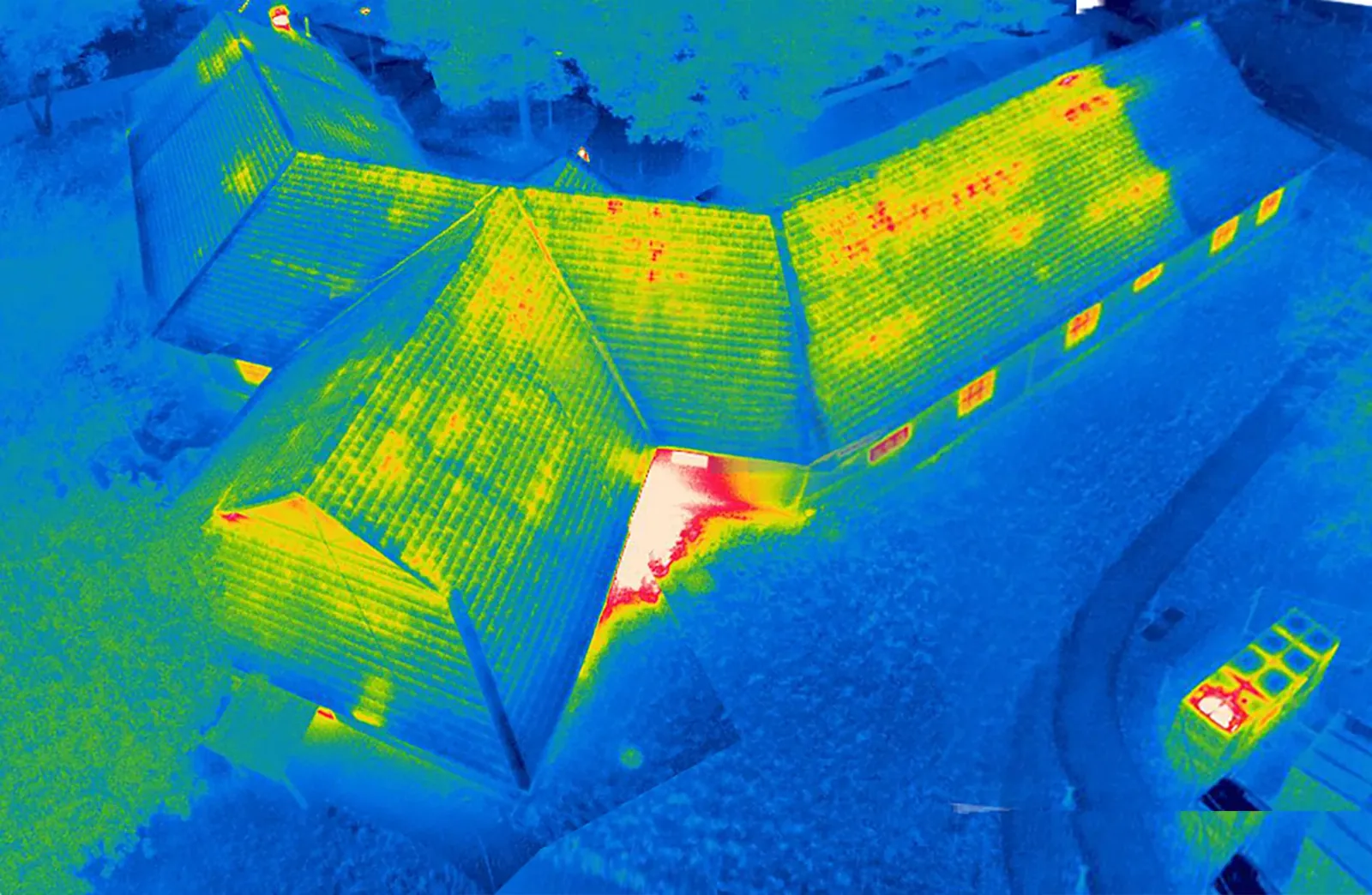
On a Prospect Heights roof the order is steady. Clear the drains. Walk the field and mark the soft spots. Probe every penetration and the parapet joints. Take an infrared moisture survey where insulation may be wet. Then sort the roof into repair, coat or replace, and put a price and a window against each. Price follows access, the number of penetrations, the parapet length and the weather window. Work around a busy restaurant is planned for the hours when the kitchen is quiet, and a Park Slope or Fort Greene owner with a similar building will recognize the sequence. We close with a walk and photographs of every corrected detail.
Commercial Roofing Questions
How do I know whether grease has damaged my restaurant roof membrane?
Look for a dark, glossy or tacky band around the exhaust fan, soft or bubbled membrane underfoot and discolored seams near the hood. We test the softness with a probe and cut a small sample if needed. Where the surface has lost its bond, the damaged area is removed and replaced, and a grease pan or fan-base curb is added so the problem does not return.
Does a historic district change how a flat roof is repaired?
The parts of the roof visible from the street are the ones that draw approvals, such as cornices, coping and parapet changes. The membrane on the flat portion behind the parapet is usually not visible. We separate the two on the scope, so the owner can start the roof work while any approval for the street-facing parts is under review.
Should I worry about a new building going up beside my roof?
Yes, enough to document the roof first. We take dated photographs of the membrane, drains and parapets, and we check again after nearby excavation or crane work. If damage appears, those photographs give the owner and any insurer a clear before-and-after record.
Why do pipe boots fail faster on some roofs than on others?
Sun, heat and movement decide it. A rubber or sealant collar on a vent pipe cycles from freezing to baking each year, and the south-facing side splits first. Boots near a hot exhaust fall short sooner still. We replace cracked collars with a flashing that can be inspected from above, which removes a repeated callout for the owner.
Can a roof above a bar or restaurant be repaired while the kitchen runs?
Most repairs are done with the kitchen open. We schedule around the busy service hours, use cold-applied materials near air intakes so fumes do not enter the dining room, and cover or relocate nothing without the chef's agreement. A full replacement needs a longer plan and a clear intake protection method.
How do I book a walk in Prospect Heights?
Photos of the worst drain, the nearest exhaust fan and any ceiling stain below, with the address area and the roof age if known. Those show whether the visit should be a repair check, a moisture scan or a condition report.